David Brooks: The GOP reverts to a bad old mood

posted in: Politics | 0

I’ve recently been reading about Warren Buffett’s father, Howard Buffett, a four-term Republican congressman from Nebraska. He seems to have been a very good father, but his political worldview was predicated on a deep pessimism. He was so convinced that federal spending was ruining the country that he bought a farm so that his family could feed itself while everyone else starved. He predicted that all government bonds would soon be worthless and bought his daughters gold jewelry so that they would have something of value after the dollar became worthless.

His pessimism manifested itself politically in several ways.

First, an intense distrust of elites and a penchant for conspiratorial thinking. He believed that Franklin Roosevelt and George Marshall had secretly maneuvered the Japanese into attacking Pearl Harbor in order to drag the United States into war.

Second, intense isolationism. A nation on the road to ruin could not afford to be active internationally.

Third, political rigidity. He refused to compromise or negotiate with the Democrats, who he thought were destroying the country. He was more willing to lose in Congress in order to make a point than to cut a deal.

He wasn’t alone

Buffett was not alone in thinking this way. The Republican Party in the 1920s, ’30s and early ’40s was steeped in pessimism, and that pessimism showed up as it often does: as nativism, isolationism and protectionism. In 1924, Republicans set strict immigration quotas with the Johnson-Reed Act. As World War II loomed, Sen. Gerald Nye urged the passage of several neutrality acts to keep us from exporting arms to warring nations and opposed Lend-Lease to Britain. Sen. Robert Taft supported the America First movement before the United States joined the war, and after the war, he opposed the Marshall Plan, NATO, the World Bank and the General Agreement on Tariffs and Trade, which was designed to lower trade barriers.

That version of the Republican Party ended in 1952, when Dwight Eisenhower defeated Taft for the Republican presidential nomination. Buffett was so dismayed by the outcome that he refused to endorse Ike, his party leader. That decision effectively ended Buffett’s political career. He ended up joining the John Birch Society, the notorious nativist group.

Ike’s confident optimism

Ronald Reagan gets most of the credit, but it was Ike, not Reagan, who transformed the GOP from an anxious, inward-looking party into a confident, outward-facing one. He and his internationalist successors believed that the only way to prevent more world wars was to build a multilateral democratic world order. They had the confidence to believe America could lead such an order. The key to success in any political conflict, political theorist James Burnham argued in 1941, is spirit and willpower: “All history makes clear that an indispensable quality of any man or class that wishes to lead, to hold power and privilege in society, is boundless self-confidence.”

Ike’s confidence launched 60 years of Republican internationalism, gradually creating a party that helped defeat communism and ushered in more global prosperity. Reagan amplified that sense of confidence and possibility. “Emerson was right,” Reagan told the 1992 Republican convention. “We are the country of tomorrow.” Reagan was confident enough to believe that America could welcome immigrants, benefit from their abilities and still remain distinctly America: “Our nation is a nation of immigrants. More than any other country, our strength comes from our own immigrant heritage and our capacity to welcome those from other lands.”

Conservatism’s swings

In his superb history of conservatism, “The Right,” Matthew Continetti describes dueling essays in 1989 between conservative commentators Charles Krauthammer and Pat Buchanan that ran in the pages of The National Interest. Krauthammer argued that America should steer the world away from an unstable multipolar order and toward a more stable “unipolar world whose center is a confederated West.” Buchanan, one of the few remaining spokespeople for the older, isolationist GOP, titled his essay “America First — and Second and Third.”

At that time, the party embraced Krauthammer’s vision and rejected Buchanan’s. Within a decade, Pat Buchanan had left the Republican Party, thoroughly marginalized. In 1999, the editors of the conservative magazine The Weekly Standard, where I worked, celebrated Buchanan’s departure from the party. In that same issue, I wrote a humor piece trying to imagine the most hilariously unlikely version of the GOP future. That piece was headlined “Donald Trump Inaugurated.”

Pessimism rising

It turns out that some political tendencies never really die; they just lie dormant for a few decades, waiting for the emotional mood to change. It’s conventional to say that Trump destroyed the postwar Republican establishment. That’s not quite right. The Tea Party’s extreme disgust with the course of American life was already flowing by 2009. The Pew Research Center detected a surge in American isolationism back in 2013. In 2004, only 8% of Republicans thought the U.S.’ power in world affairs was declining. By 2013, after Iraq and Afghanistan, 74% of Republicans thought America was in decline. By 2021, nearly one-third of Republicans thought violence might be necessary to save America.

In other words, many Americans had concluded that the country had lost its greatness before Trump entered politics, but he magnified that sense and capitalized on it. Trump didn’t remake the party in his image. He restored the 1930s version of the party, merely adding a showman’s bravura and gold-plated fixtures.

If any event could have brought back the Eisenhower-Reagan trajectory, it was the Russian invasion of Ukraine. And for a few months, it seemed to. But isolationism is still on the march. As Thomas B. Edsall noted in The New York Times recently, between March 2022 and December 2023, the share of Republicans who say America provides “too much support” for Ukraine rose to 48% from 9%. The message is eerily the same as it was in the late 1930s when the isolationists refused to confront the Nazis: America is too morally bankrupt, broke and corrupt to lead. We need to take care of our own.

A succession of moods

People often say that history is a battle of ideas, but sometimes it is just a succession of moods. It was a culture of pessimism — Trump’s belief that we’re living in an era of “American carnage” — that restored the old GOP, not any set of arguments. America has a dazzling economy and dominant military strength. Military spending as a percentage of gross domestic product is dangerously close to its postwar low. But the Republicans apparently lack the self-confidence to believe they can improve the world, or the willpower to substantially try.

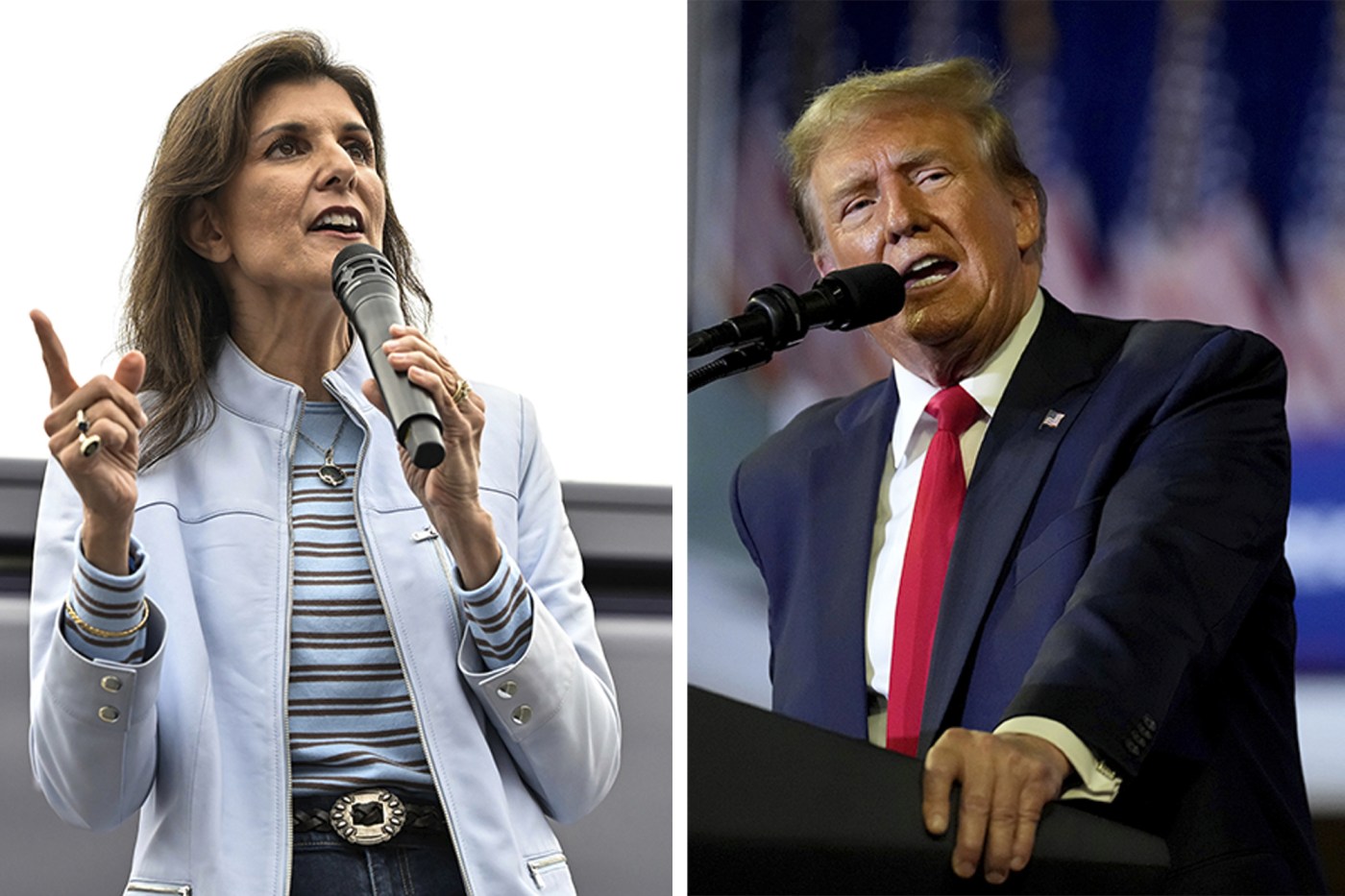
Now Mitch McConnell, a child of the Eisenhower-Reagan party, is stepping back. Nikki Haley is cruising toward defeat. Congress may pass a Ukraine aid package, but it will be mostly because of Democratic votes, not Republican ones. The postwar GOP is heaving its last breaths.

Some of my friends believe that after Trump the showman is off the stage, the future of the party will be up for grabs. I disagree. Today’s Republicanism has deep roots in American history. I suspect the post-Trump Republicans will be just as inward-looking, but drab and defeatist, without the Trumpian razzle dazzle. Howard Buffett would feel at home.

David Brooks writes a column for the New York Times.

Related Articles

Opinion |


Charan Ranganath: The surprising way to help your brain remember

Opinion |


Other voices: The Supreme Court’s sticky web

Opinion |


Lionel Laurent: Brain drain from Putin’s Russia is far from over

Opinion |


Ro Khanna: Why President Biden should be re-elected

Opinion |


Nikki Haley: We have a country to save
Editorial: We can’t help but be happy for long-suffering Detroit Lions fans

posted in: News | 0

Yes, the Detroit Lions are in the Chicago Bears’ division. Yes, the Bears play them twice a year.

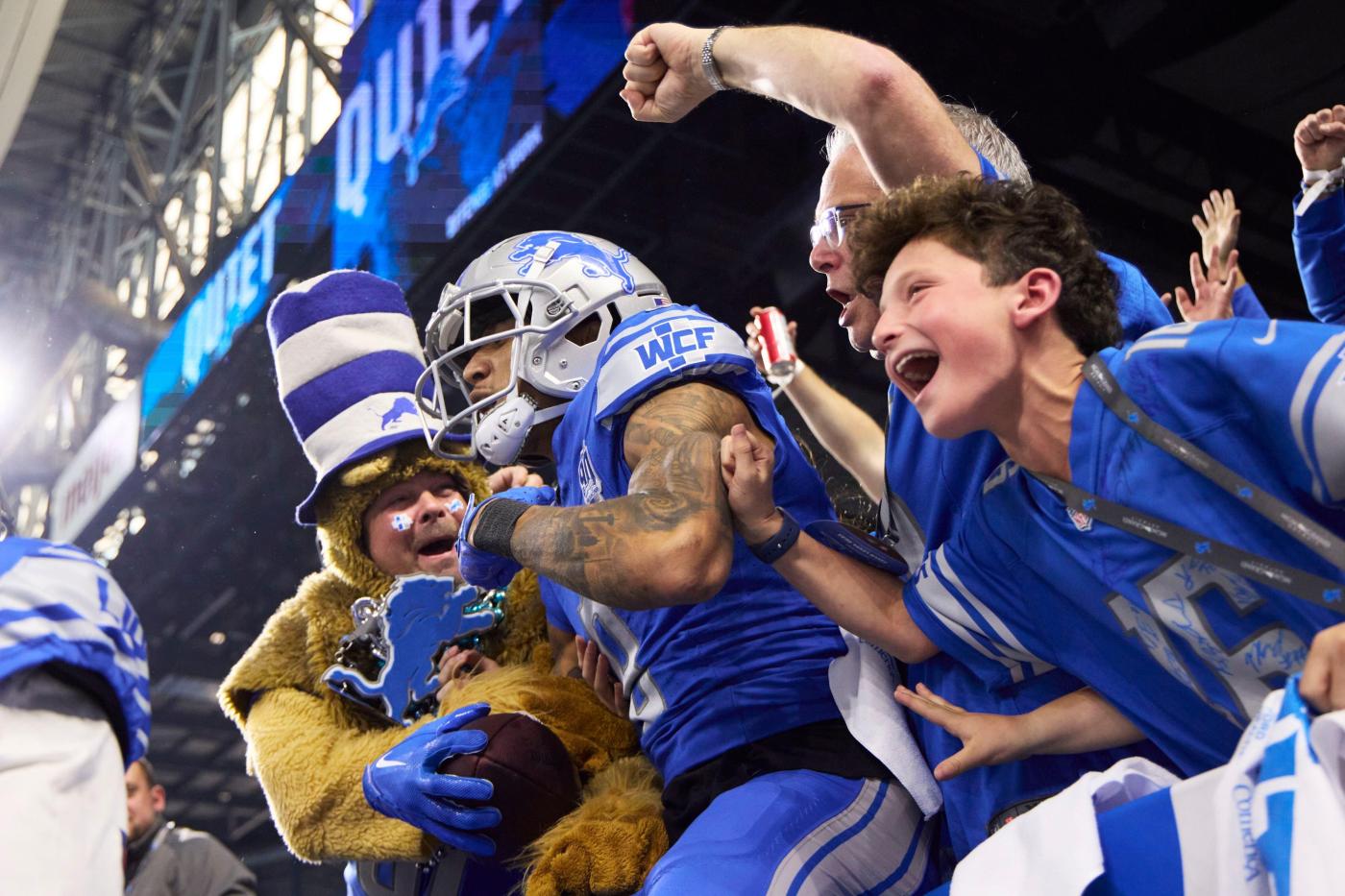
But we can’t help but root for the Lions as they make their improbable way through the NFL playoff gauntlet and are one win away from their first-ever Super Bowl appearance.

Chicagoans can relate. Lions Nation is one fan base that has seen almost nothing but failure in the nearly six decades that make up the Super Bowl era. One measly playoff win in all that time.

The Bears put their fans through a lot of disappointment on the field, verging on abject embarrassment sometimes. But we at least can (and do) continue to bask in the brutal majesty of the 1985-86 Bears. Lions fans have Barry Sanders highlights on YouTube, and that’s pretty much it.

Also, as fellow Upper Midwesterners, we ought to have each other’s backs, with the obvious exception of the Green Bay Packers, who’ve won quite enough, thank you very much.

The Lions’ success this year is sort of a football version of when the Cubs finally won it all in 2016, some 108 years after last doing so. Watching Lions fans, young and old, celebrate the two playoff victories in their own stadium reminded us a little of the multigenerational delirium that took hold when that Cubs team broke through at last.

It’s a lovely thing to see people bond over something shared, a phenomenon sports at its best promotes more often than just about anything else in this fractious age.

So have your day, Detroit! A lot of us are enjoying seeing folks in our neighboring state experience something for the first time even if they have more than a little gray in their hair.

If the Lions win it all, we will be glad for you. But that pledge is good for this season only.

Join the discussion on Twitter @chitribopinions and on Facebook.

Chicago Bears hire Seattle Seahawks assistant Kerry Joseph as their quarterbacks coach

posted in: News | 0

Whatever direction the Chicago Bears go with their quarterback situation, the new infrastructure for development at the position is coming together.

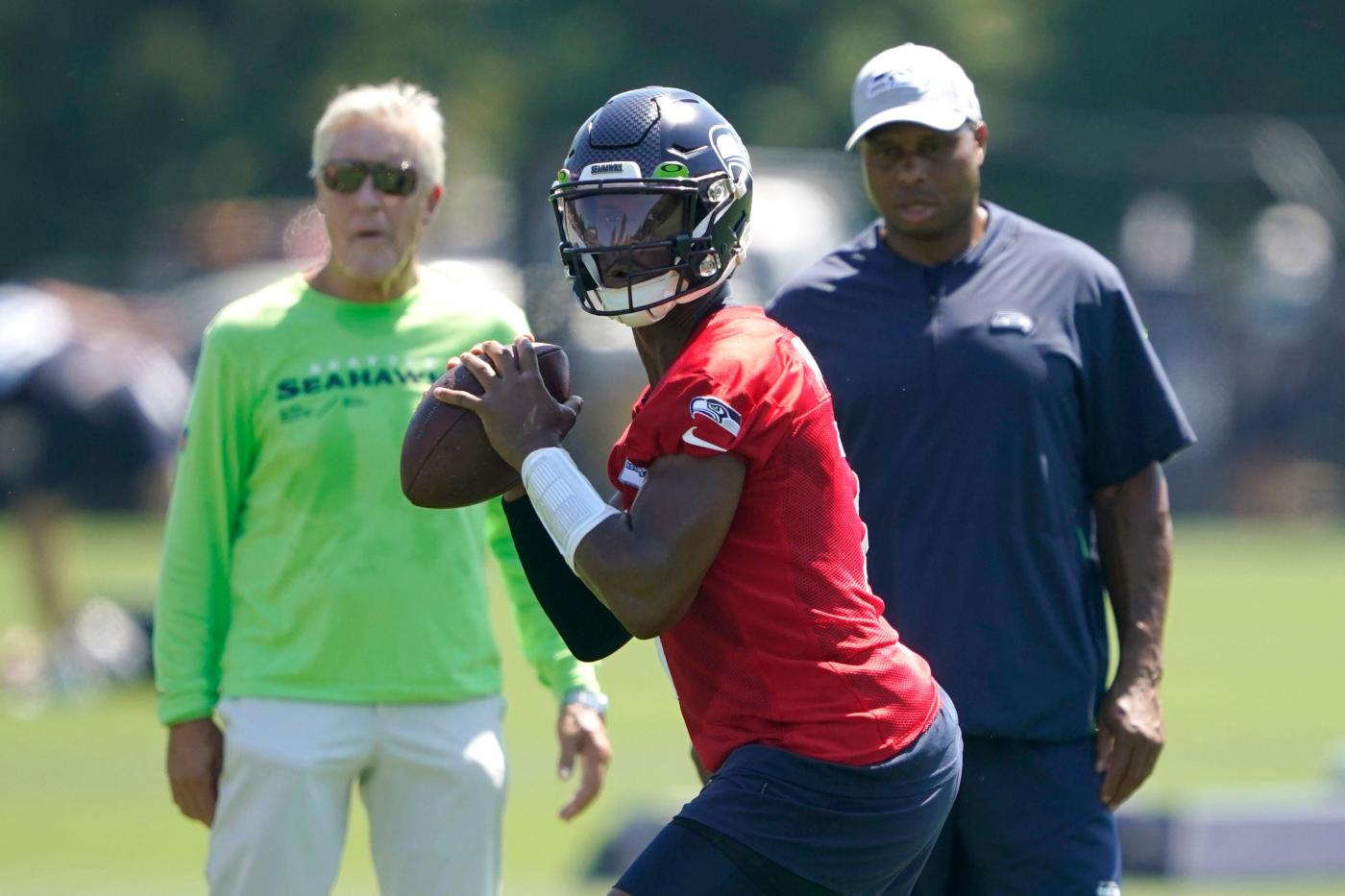
Four days after hiring Shane Waldron as their offensive coordinator, the Bears added another assistant to the mix with Kerry Joseph following Waldron from Seattle to become the new quarterbacks coach on Matt Eberflus’ staff.

The Bears announced the move Friday evening.

Waldron and Joseph coached together for the last three seasons, with Joseph serving as the Seahawks assistant wide receivers coach in 2021 and assistant quarterbacks coach in 2022 and 2023. Now he will take on much bigger responsibilities inside the quarterbacks room at Halas Hall. At a pivotal time for the organization, he will be tasked with overseeing the growth of either three-year starter Justin Fields or a prospect selected in April’s draft.

Joseph was part of the offensive staff in Seattle in 2022, with Waldron and quarterbacks coach Dave Canales, when quarterback Geno Smith revived his career with a Pro Bowl season that also earned him Associated Press Comeback Player of the Year honors.

Joseph, 50, will serve as the quarterbacks coach for the American Team at the Senior Bowl next week. He replaces Andrew Janocko, whom the Bears fired along with coordinator Luke Getsy this month after the team’s passing offense ranked 27th in the NFL averaging 182.1 yards per game.

The Bears still need to hire wide receivers and running backs coaches to fill out their offensive staff. They also are interviewing defensive coordinator candidates.

Sanjay Lal, who spent the last two seasons as the Seahawks passing game coordinator and receivers coach, was in the mix for the Bears receivers coach job but decided Friday to explore other opportunities, according to a source. The Bears remain in competition to fill out their coaching staff, as eight teams entered the month in the hunt for new head coaches. Six of those vacancies have since been filled, with those teams working to fill out their staffs.

Before his time with the Seahawks, Joseph was the passing game coordinator and running backs coach at Southeastern Louisiana in 2019. He began his coaching career at McNeese State, where he was the co-offensive coordinator for three seasons and worked with the wide receivers and quarterbacks.

Joseph was also a quarterback at McNeese State but moved to safety in the NFL. He played in 56 games over four seasons with the Seahawks. He also played quarterback in the Canadian Football League and NFL Europe.

The Bears on Tuesday officially hired Waldron, who was the Seahawks offensive coordinator for three seasons after four seasons with the Los Angeles Rams.

()

Minnesota United’s entanglement as MLS downsizes role in U.S. Open Cup

posted in: News | 0

The closest Minnesota United has gotten to winning a trophy in its MLS era came in the U.S. Open Cup final in 2019.

The Loons’ 2-1 loss to Atlanta United had them leaving Georgia with a heavy cardboard box filled with leftover “finalist” medals. But MNUFC and its supporters enjoyed that run deep in the national tournament, including a thrilling 2-1 semifinal win over Portland Timbers at Allianz Field.

On Friday, MLS upended tradition in nation’s oldest soccer competition, removing all but eight of its 26 U.S. clubs from participating in the Open Cup. MLS will now have 11 additional clubs enter developmental teams from the third tier of U.S. Soccer, including MNUFC2 of the MLS Next Pro league.

When it comes to U.S. Open Cup involvement, MLS is driving this bus, and MNUFC is among passengers bouncing around in the back seats.

Loons leaders want the club to compete for trophies, including U.S. Open Cup, and this decision from MLS clips their wings — at least for 2024.

FC Cincinnati is one of eight MLS clubs exempted from Open Cup competition because it’s competing in the Concacaf Champion Cup. But Cincinnati still spoke up on Friday.

“As we look ahead to 2025, we believe that each MLS franchise should be given the option to decide their own approach to participating in Open Cup,” the club was quoted by the Cincinnati Inquirer.

MNUFC would second Cincinnati’s suggestion, the Pioneer Press understands. The Loons would also want the flexibility to enter the Open Cup as they see fit.

MLS has called on U.S. Soccer to make bigger financial investments in the tournament. “At this point, we’re subsidizing that tournament,” MLS commissioner Don Garber said last month.

Last year, the Loons noted its big financial commitment to travel to Hamtramck, Mich., to play Detroit City in the third round of the Open Cup.

But how MLS is handling this year’s field for the Open Cup is not be considered to be its long-term solution — something MNUFC notes and appreciates.

Even with this format, MNUFC’s first team would not be left out of the Open Cup if they would have played better in 2023. But the Loons finished 21st place in the MLS Supporters Shield standings and that, too, will force them to watch other MLS teams compete in the tournament that started in 1914.

In the short term, the Loons on Saturday had headache-inducing scheduling conflict on March 20.

MNUFC2 will enter the first round of the U.S. Open Cup against Chicago House in Elmhurst, Ill., at 7 p.m. that Wednesday. And MNUFC set a date for an international friendly against Irish club St. Patrick’s Athletic at the same time in St. Paul.

The Loons, which doesn’t have an MLS game scheduled for March 23-24, also expect to have a handful of players missing for the FIFA international window from March 18-26.

If MNUFC can’t move the date for MNUFC2’s Open Cup match, the club will be stretched thin and might need to use players from its youth academy to fill out rosters.

MLS teams have typically entered the Open Cup later on in the tournament. Until MLS’ downsizing, the Loons’ first-team squad was set to come in at the third round on April 16-17.