Texas Panhandle ranchers face losses and grim task of removing dead cattle killed by wildfires

posted in: News | 0

By SEAN MURPHY and JIM VERTUNO (Associated Press)

SKELLYTOWN, Texas (AP) — First, the flames came storming across the vistas of the Texas Panhandle, burning through the grassy plains and scrub land of the region’s cattle ranches.

By Friday, ranchers faced a grim task: Search miles of scorched earth to dispose of the burned corpses of cattle. Others too badly burned and injured in this week’s historic wildfires to survive will be euthanized.

“We’re picking up deads today,” X-Cross-X Ranch operator Chance Bowers said as ranch hands used a bulldozer to move dozens of blackened carcasses into a line on the side of a dirt road. From there, a giant claw hook put them into the back of open trailer.

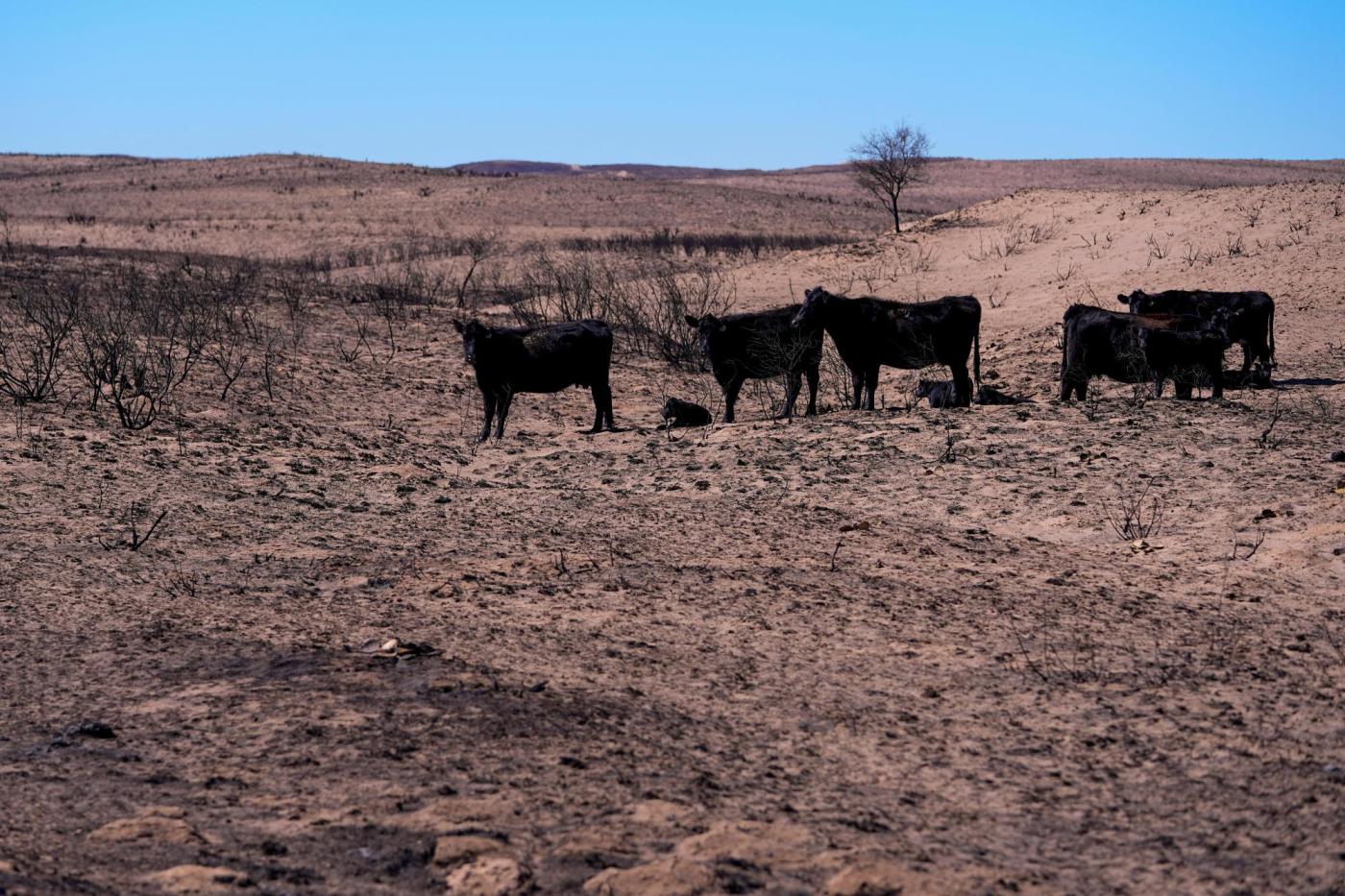
These cattle were found near a fence line that cut through a vast expanse of charred scrub brush and ash left in every direction after the flames whipped through. They will be sent to a rendering plant rather than buried.

Ranchers and state officials do not yet know the overall number of cattle killed in wildfires that have burned 1,950 square miles (5,050 square kilometers), briefly shut down a nuclear power plant, charred hundreds of homes and other structures, and left two people dead. For some ranches, the impact could be severe, though the effect on consumer beef prices is likely to be minimal.

“These cows you see dead are worth between $2,500 and $3,000 apiece,” Bowers said. “Financially, it’s a massive, massive burden on us.”

Texas is the nation’s top cattle producer. Agriculture Commissioner Sid Miller has said the number of dead “range” cattle is likely in the thousands. Although the Panhandle has more than 85% of the state’s herd, most are in feedlots and dairies that were not damaged.

The cause of the fires remains under investigation, although strong winds, dry grass and unseasonably warm weather fed them.

Bowers said the X-Cross-X ranch expects to lose at least 250 of the 1,000 cattle it had on three area ranches, either from burns or smoke inhalation.

“We were right in the middle of calving season,” Bowers said. “In a few weeks, we’ll really know what we lost. … This pasture alone, there’s 70 dead.”

The number of cattle in the region fluctuates as ranchers rent pasture for their herds. Plentiful rainfall in recent months meant a lot of grass, leading ranchers to send herds to the area, said Ron Gill, professor and livestock specialist at a Texas A&M University.

Losing all that grass to the flames, and the burning of barns and fences, will also hurt ranchers and surviving cattle, said Jay Foster, special ranger and supervisor for the Texas and Southwestern Cattle Raisers Association in the Panhandle. A mile of fence can cost $10,000 to replace, he said.

“It’s kind of like a desert here right now,” Foster said. “It’s kind of like your kids sitting at the dinner table wanting to eat, the cattle need to eat and the grass is gone.”

Bill Martin runs the Lonestar Stockyards in Wildorado, where ranchers bring their cattle to auction every week. He said the number of cows in the U.S. was already at a 75-year low because of years of drought.

“There’s a big shortage of cattle, so this is going to impact that immensely,” Martin said.

Ranchers spend years developing the genetics in their cattle, providing them with vaccines and nutrients to keep them from getting sick and supplementing their feed through the winter months to keep them well fed, he said.

“Then to see something like this … some of them lost all their cattle,” Martin said. “Most of them lost some of their cattle.” said.

___

Vertuno reporter from Austin, Texas. Ken Miller contributed from Oklahoma City.
Jury convicts first rioter to enter Capitol building during Jan. 6 attack

posted in: News | 0

By MICHAEL KUNZELMAN (Associated Press)

WASHINGTON (AP) — The first rioter to enter the U.S. Capitol building during the Jan. 6, 2021, attack was convicted on Friday of charges that he interfered with police and obstructed Congress from certifying President Joe Biden’s 2020 electoral victory.

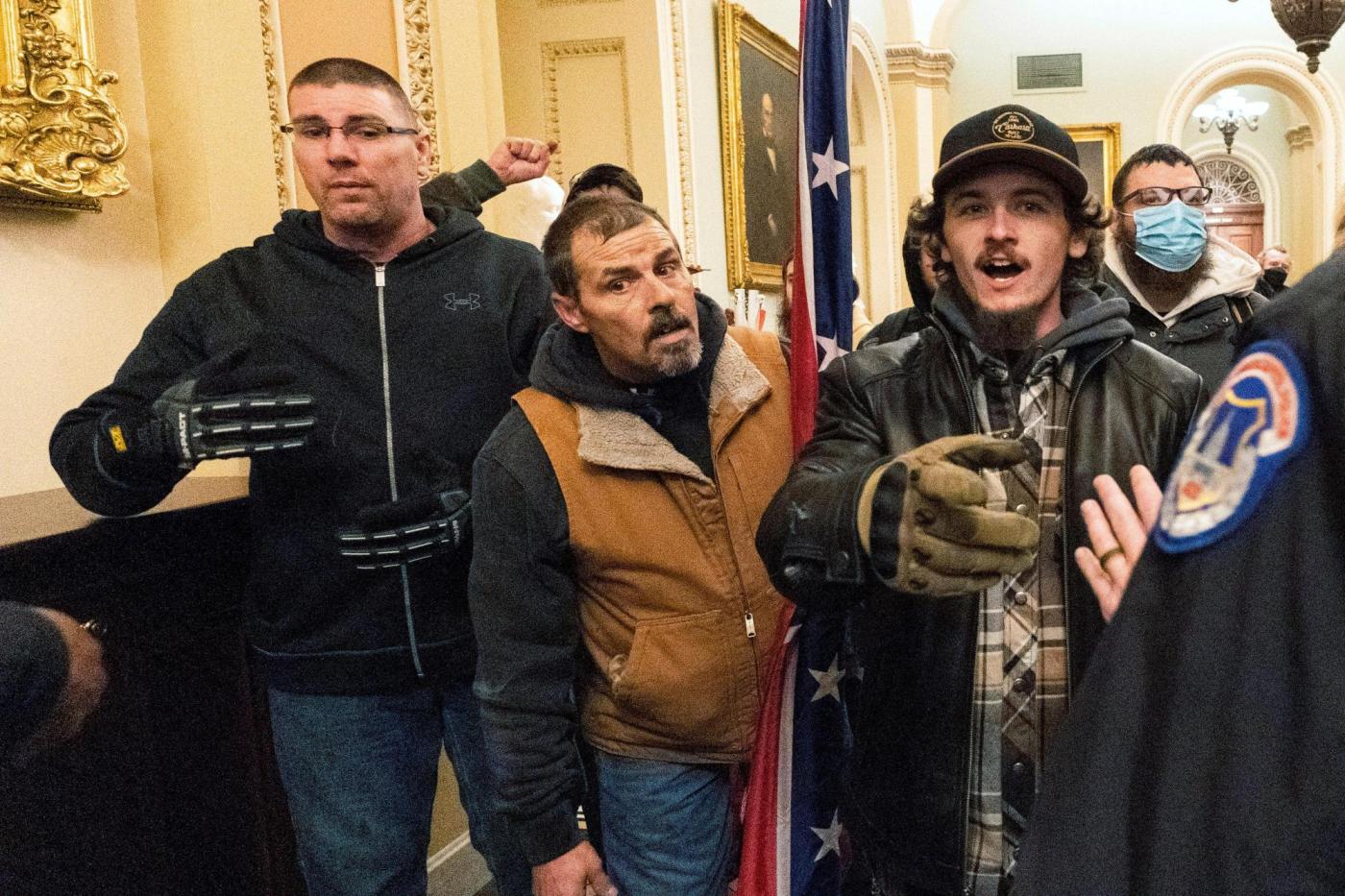
Michael Sparks, 46, of Kentucky, jumped through a shattered window moments after another rioter smashed it with a stolen riot shield. Sparks then joined other rioters in chasing a police officer up flights of stairs, one of the most harrowing images from the Jan. 6, 2021, riot.

A federal jury in Washington, D.C., convicted Sparks of all six charges that he faced, including two felonies. Sparks didn’t testify at his weeklong trial. U.S. District Judge Timothy Kelly is scheduled to sentence him on July 9.

Sparks was the “tip of the spear” and breached the Capitol building less than a minute before senators recessed to evacuate the chamber and escape from the mob, Justice Department prosecutor Emily Allen said during the trial’s closing arguments.

“The defendant was ready for a civil war. Not just ready for a civil war. He wanted it,” Allen told jurors.

Defense attorney Scott Wendelsdorf conceded that Sparks is guilty of the four misdemeanor counts, including trespassing and disorderly conduct charges. But he urged the jury to acquit him of the felony charges — civil disorder and obstruction of an official proceeding.

Wendelsdorf accused prosecutors of trying to unfairly blame Sparks for the violence and destruction perpetrated by other rioters around him. The lawyer said Sparks immediately left the Capitol when he realized that Vice President Mike Pence wouldn’t succumb to pressure from then-President Donald Trump to overturn Biden’s victory.

“Michael Sparks may have started the game, according to the government, but he was out of the game on the sidelines before the first quarter was over,” the defense attorney told jurors.

Sparks traveled to Washington with a group of co-workers from an electronics and components plant in Elizabethtown, Kentucky. They attended Trump’s “Stop the Steal” rally near the White House on Jan. 6.

After the rally, Sparks and a co-worker, Joseph Howe, joined a crowd in marching to the Capitol. A cameraman’s video captured Howe saying, “We’re getting in that building,” before Sparks added that if Pence “does his job today, he does the right thing by the Constitution, Trump’s our president four more years.”

Sparks and Howe, both wearing tactical vests, made their way to the front of the mob as outnumbered police officers retreated.

“Michael Sparks was more prepared for battle than some of the police officers he encountered that day,” Allen said.

Sparks was the first rioter to enter the building after Dominic Pezzola, a member of the Proud Boys extremist group, used a police shield to break the window next to the Senate Wing Door. Other rioters yelled at Sparks not to enter the building.

“He jumped in anyway,” Allen said.

A police officer pepper sprayed Sparks in the face as he leaped through the broken window. Undeterred, Sparks joined other rioters in chasing Capitol Police Officer Eugene Goodman as he retreated up the stairs and found backup from other officers near the Senate chamber.

Sparks ignored commands to leave and yelled, “This is our America! This is our America!”

Sparks believed that he was defending the Constitution on Trump’s behalf and that Pence had a duty to invalidate the election results, according to his attorney.

“His belief was wrong, but it was sincere,” Wendelsdorf said.

Allen said Sparks knew that he broke the law but wasn’t remorseful.

“I’ll go again given the opportunity,” Sparks texted his mother a day after the riot.

Sparks and his co-workers returned to Kentucky on Jan. 7, 2021. By then, images of him storming the Capitol had spread online. On his way home, Sparks called the Metropolitan Police Department and offered to turn himself in, according to prosecutors. He was arrested a few days later.

Sparks and Howe were charged together in a November 2022 indictment. Howe pleaded guilty to assault and obstruction charges and was sentenced in October to four years and two months in prison.

How ‘Slow Noodles’ helped a mother tell of escaping the Cambodian genocide

posted in: News | 0

When her children were younger, Chantha Nguon would often share stories from her life during meals. But they weren’t always the easiest memories to recount.

As a child, Nguon had been uprooted from her home in Cambodia. Though she made it out of the country and into Vietnam to escape the genocide being inflicted by the Khmer Rouge, more hardships followed.

In her memoir “Slow Noodles,” co-written with Kim Green, Nguon recounts not only these struggles but also her efforts to help those who currently face poverty and hunger the cofounder of Mekong Blue and Stung Treng Women’s Development Center in Cambodia.

She shares her experiences, in part, through a collection of recipes.

“In Cambodia, we have a saying, we don’t lift our shirt to show our skin,” Nguon says on a recent video call from Phnom Penh. Despite her reticence, Nguon knew that she needed to tell her story to her children. “Maybe the children – my children’s generation – they don’t know what happened to their parents, but I want my children to appreciate what they have today,” she says.

Moreover, Nguon’s personal memories are part of the greater, collective history of the terror inflicted by the dictator Pol Pot and the Khmer Rouge in the 1970s.

“That’s a very important part of the book – to tell the world about how to lose your home and become a refugee, to show the world that the Khmer Rouge, Pol Pot, tried to erase our culture,” says Nguon. “But I am the living proof that we don’t accept that and we have to survive and we have to rebuild our country.”

“Slow Noodles” refers in part to the approach to cooking that Nguon’s own mother undertook. “She despised shortcut cooking,” Nguon recalls. “Slow noodles is her dish. She made a noodle by hand, by a small piece of dough and she rolled it into a noodle one by one.”

Similarly, she says, slow noodles is a way of life. “You need extra patience, and especially hope,” says Nguon. It’s a practice she adopted after her return to Cambodia in the early 1990s, where she began working with women impacted by poverty and hunger.

“I looked around and I saw, especially women, they are so vulnerable. They are so poor and they don’t know what to do,” she says. After years of working with Doctors Without Borders, Nguon started her own organization. “We need time to rebuild our life after loss with whatever tools we have, but slow noodles is to go opposite of instant noodles,” she says. “You need time and you need patience and you need hope and you have to do it yourself.”

For Nguon, food and memory go together. “Food is the best of what I remember about my mother and my sister,” says Nguon. “The memory of my mother and my sister and the love of their cooking, it helped me to survive through the harshness, the hardship.”

She adds, “Memory about food is memory about family. It comes together.”

While writing “Slow Noodles,” Nguon and Green would focus on the story in the morning; then in the afternoon, they’d cook. “I realized that to say it out loud is therapy, because it became my belief that everything good will be taken away from me,” says Nguon, adding that, when she had children, she had prepared herself to be separated from them. “After I worked with Kim, it helped me slowly let it go.”

Nguon’s daughter, Clara Kim, is the audiobook narrator of “Slow Noodles.” Kim, who is based in London, says that she volunteered for the gig, despite never having recorded an audiobook before because it’s her mother’s story.

“It’s interesting because I heard a lot of the stories that are not even included in the book since I was very young, but it was never in order,” she says on a recent video call. “To be honest with you, some of the stories are incredibly sad. For example, if we were sitting down at a meal, it could be a really funny, happy story or it could be incredibly difficult. I never really knew which one to expect.”

Reading “Slow Noodles” gave Kim a chronological sense of the stories that she had heard earlier in life. She also learned new details. “The scene where she’s describing her mother’s death. I had never heard that before,” she says. “I can understand why. It’s incredibly difficult for her to talk about that.”

Related Articles

Entertainment |


Who is Jeremiah Brent? Meet the new ‘Queer Eye’ design expert following Bobby Berk’s exit

Entertainment |


Wolfgang Van Halen says he’s surprised by quick success

Entertainment |


What to watch: ‘Shogun’ a worthy remake of classic series

Entertainment |


Pop culture-inspired travel is a serious trend in 2024

Entertainment |


‘Mea Culpa’ review: In Tyler Perry’s Chicago, attorney-client privileges include sex and painting lessons

The book also gave Kim a sense of her father’s life. “Unlike my mom who talked a lot about her past, my father did not,” she says. “I learned everything about his past through the book, which gave me a newfound respect for him and also to understand all the things that he’s gone through as well.”

Kim hopes that “Slow Noodles” will resonate with younger readers whose parents may have gone through similar situations. “It doesn’t have to be Vietnamese refugees or Cambodian refugees,” she says, adding that wars and refugee crises persist throughout the world today.

She also hopes that the book will give people a better understanding of Cambodian culture and food, while noting that people often immediately associate the country with the Khmer Rouge. “I don’t want that to be our legacy,” she says. “I want people to know that our food is delicious. I want them to try to look for Cambodian food. I want Cambodian food to be as popular as Thai food.”

As for Nguon, the book also offers an example for navigating through difficulty.

“I hope the reader will see that it’s a recipe to find strength and also, with my own example, losing everything is not the end of your life. It’s not the end of the story,” she says. “You can always get it back slowly, like the way my mother made the slow noodles.”

‘Elsbeth’ review: ‘The Good Wife’ spinoff tries (and fails) to be a quirkier version of ‘Columbo’

posted in: News | 0

Memorable guest characters were a hallmark of “The Good Wife” during its seven-season run on CBS from 2009 to 2016, and Elsbeth Tascioni was one of the more distinctive. Quirky and easily distracted, she was underestimated and therefore a formidable advocate (or foe) in the courtroom. Played by Carrie Preston with an offbeat cadence and winning sincerity, Elsbeth was a terrific contrast to the glossier, more outwardly sophisticated lawyers in her midst. She worked like gangbusters in small doses. But can a character like that carry an entire show?

“Elsbeth” attempts an answer.

CBS’s latest procedural makes some key changes to her circumstances. She’s no longer based in Chicago (the setting for “The Good Wife” and the show’s first spinoff “The Good Fight”) but has relocated to New York to provide her services as an “outside observer” monitoring the police department after one too many wrongful arrest lawsuits.

But instead of using her legal background and impressive intelligence to weed out corruption or excessive force, creators Michelle and Robert King, along with showrunner Jonathan Tolins, have Elsbeth working in concert with the police, nosing around crime scenes and interviewing witnesses until she solves the case.

It’s a premise that borrows from shows like “Monk” or “Psych” or “Elementary” — long-running successes, all — but the execution leaves much to be desired. “Elsbeth” follows the cat-and-mouse formula of “Columbo,” with a murder unfolding at the top of each episode. This requires a certain amount of storytelling skill to pull off because the audience is already ahead of the main character. We know whodunit. The thrill is in watching our sleuth outsmart the culprit through a combination of deductive reasoning and sly but seemingly harmless questioning of the guilty party. And yet there’s nothing about Elsbeth’s approach or methods that feels intentional — or draws you in.

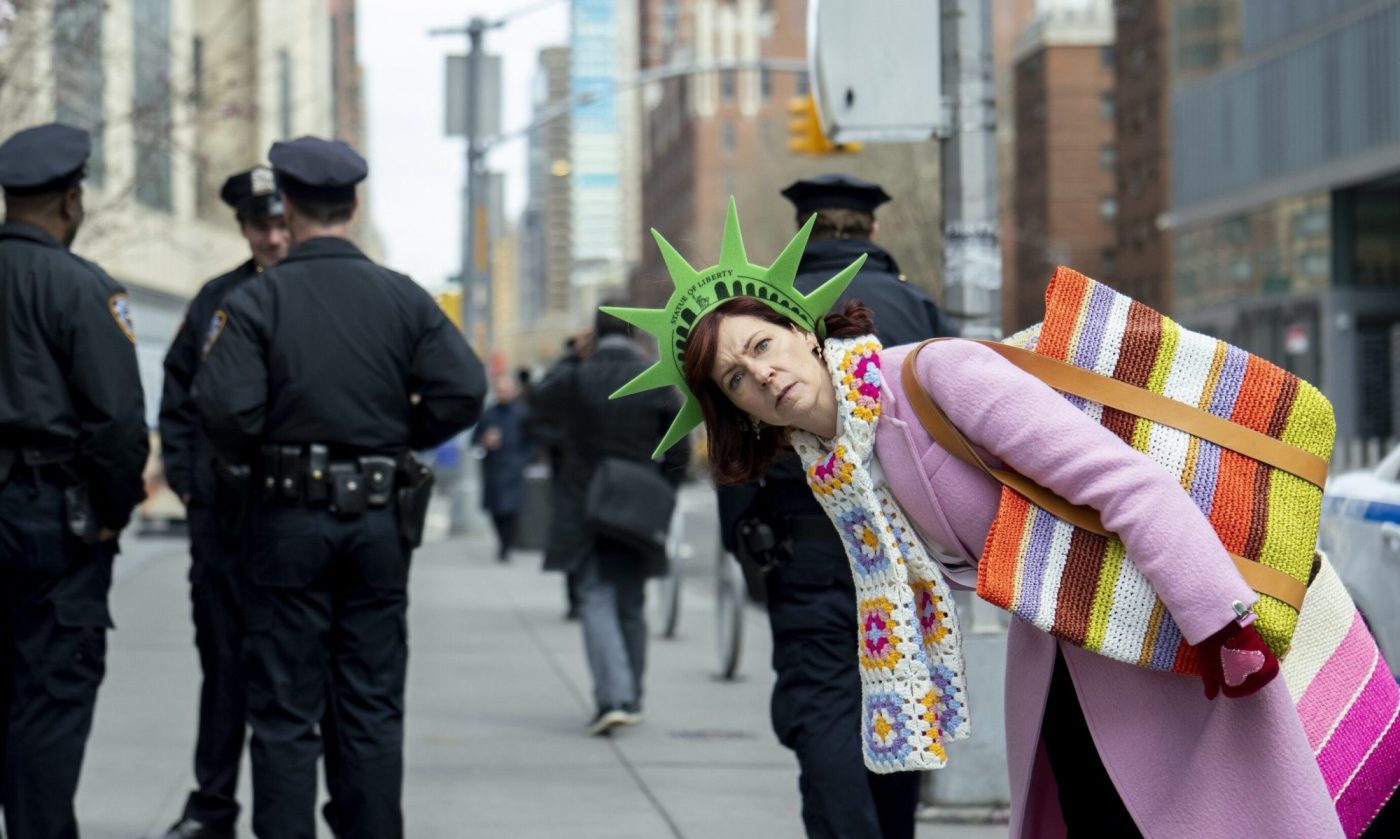
Her gung-ho presence should make her a ringer, with her fluttery affectation and tote bags loaded up on each arm — no criminal would clock her as a serious threat to their scheme. Elsbeth isn’t lacking self-awareness either, she knows she’s a bit of an oddball. This should create a more interesting dynamic than it does. If only she had a point of view or signature strategy. Something. She bumbles from one observation to the next with her confidant/chaperone, a patrol officer played by Carra Patterson. Every so often they report to Wendell Pierce’s doubting police captain.

Preston is as talented as they come, but she has little to work with here. Patterson and Pierce are given even less. This can’t be creatively fulfilling for anyone, with Elsbeth reduced to a collection of tics and unbridled enthusiasm. What happened to those fantastic chess moves that once defined her as a lawyer?

From left: Carrie Preston as Elsbeth Tascioni and Wendell Pierce as Captain Wagner in “Elsbeth.” (Elizabeth Fisher/CBS)

If you squint, you can see glimmers of the show’s potential. The Kings have a knowing and entertaining interest in pop culture and riff on it in ways that are just this side of camp. One episode is centered around a “Real Housewives”-esque series called “Lavish Ladies.” Another is a parody of “Only Murders in the Building.” The guest stars are first-rate and haveing a ball, from Linda Lavin to Jane Krakowski to Jesse Tyler Ferguson to Stephen Moyer, Preston’s old pal from “True Blood.”

But as a show, “Elsbeth” seems uninterested in capturing the humor, intelligence and fun of the Kings’ previous endeavors. Even with her perpetually sunny disposition, it makes no sense that Elsbeth would be so eager and wide-eyed to embed with the police after a 30-year career as a defense attorney. She may seem flaky at first glance, but she was never the simple-minded naif we see here.

I’ve been rewatching “The Good Wife” recently and am reminded how great the show was for most of its run. Rarely did it take itself too seriously, and it did a better job than most at threading the needle between its case-of-the-week format and servicing longer ongoing storylines. It was — and remains — smarter and tangier than almost anything else on television.

It also had a healthy suspicion of law enforcement. So why turn the wonderfully original Elsbeth into this? It’s baffling to see the Kings embrace such blatant copaganda.

“Elsbeth” — 1.5 stars (out of 4)

Where to watch: 9 p.m. Thursdays on CBS

Nina Metz is a Tribune critic.