Hacking at UnitedHealth unit cripples a swath of the US health system: What to know

posted in: News | 0

Darius Tahir | (TNS) KFF Health News

Early in the morning of Feb. 21, Change Healthcare, a company unknown to most Americans that plays a huge role in the U.S. health system, issued a brief statement saying some of its applications were “currently unavailable.”

By the afternoon, the company described the situation as a “cyber security” problem.

Since then, it has rapidly blossomed into a crisis.

The company, recently purchased by insurance giant UnitedHealth Group, reportedly suffered a cyberattack. The impact is wide and expected to grow. Change Healthcare’s business is maintaining health care’s pipelines — payments, requests for insurers to authorize care, and much more. Those pipes handle a big load: Change says on its website, “Our cloud-based network supports 14 billion clinical, financial, and operational transactions annually.”

Initial media reports have focused on the impact on pharmacies, but techies say that’s understating the issue. The American Hospital Association says many of its members aren’t getting paid and that doctors can’t check whether patients have coverage for care.

But even that’s just a slice of the emergency: CommonWell, an institution that helps health providers share medical records, information critical to care, also relies on Change technology. The system contained records on 208 million individuals as of July 2023. Courtney Baker, CommonWell marketing manager, said the network “has been disabled out of an abundance of caution.”

“It’s small ripple pools that will get bigger and bigger over time, if it doesn’t get solved,” Saad Chaudhry, chief digital and information officer at Luminis Health, a hospital system in Maryland, told KFF Health News.

Here’s what to know about the hack:

Who Did It?

Media reports are fingering ALPHV, a notorious ransomware group also known as Blackcat, which has become the target of numerous law enforcement agencies worldwide. While UnitedHealth Group has said it is a “suspected nation-state associated” attack, some outside analysts dispute the linkage. The gang has previously been blamed for hacking casino companies MGM and Caesars, among many other targets.

The Department of Justice alleged in December, before the Change hack, that the group’s victims had already paid it hundreds of millions of dollars in ransoms.

Is This a New Problem?

Absolutely not. A study published in JAMA Health Forum in December 2022 found that the annual number of ransomware attacks against hospitals and other providers doubled from 2016 to 2021.

“It’s more of the same, man,” said Aaron Miri, the chief digital and information officer at Baptist Health in Jacksonville, Florida.

Because the assaults disable the target’s computer systems, providers have to shift to paper, slowing them down and making them vulnerable to missing information.

Further, a study published in May 2023 in JAMA Network Open examining the effects of an attack on a health system found that waiting times, median length of stay, and incidents of patients leaving against medical advice all increased — at neighboring emergency departments. The results, the authors wrote, mean cyberattacks “should be considered a regional disaster.”

Attacks have devastated rural hospitals, Miri said. And wherever health care providers are hit, patient safety issues follow.

What Does It Mean for Patients?

Year after year, more Americans’ health data is breached. That exposes people to identity theft and medical error.

Care can also suffer. For example, a 2017 attack, dubbed “NotPetya,” forced a rural West Virginia hospital to reboot its operations and hit pharma company Merck so hard it wasn’t able to fulfill production targets for an HPV vaccine.

Because of the Change Healthcare attack, some patients may be routed to new pharmacies less affected by billing problems. Patients’ bills may also be delayed, industry executives said. At some point, many patients are likely to receive notices their data was breached. Depending on the exact data that has been pilfered, those patients may be at risk for identity theft, Chaudhry said. Companies often offer free credit monitoring services in those situations.

“Patients are dying because of this,” Miri said. Indeed, an October preprint from researchers at the University of Minnesota found a nearly 21% increase in mortality for patients in a ransomware-stricken hospital.

How Did It Happen?

The Health Information Sharing and Analysis Center, an industry coordinating group that disseminates intel on attacks, has told its members that flaws in an application called ConnectWise ScreenConnect are to blame. Exact details couldn’t be confirmed.

It’s a tool tech support teams use to remotely troubleshoot computer problems, and the attack is “apparently fairly trivial to execute,” H-ISAC warned members. The group said it expects additional victims and advised its members to update their technology. When the attack first hit, the AHA recommended its members disconnect from systems both at Change and its corporate parent, UnitedHealth’s Optum unit. That would affect services ranging from claims approvals to reference tools.

Millions of Americans see physicians and other practitioners employed by UnitedHealth and are covered by the company’s insurance plans.

UnitedHealth has said only Change’s systems are affected and that it’s safe for hospitals to use other digital services provided by UnitedHealth and Optum, which include claims filing and processing systems.

But not many chief information officers “are jumping to reconnect,” Chaudhry said. “It’s an uneasy feeling.”

Miri says Baptist is using the conglomerate’s technology and that he trusts UnitedHealth’s word that it’s safe.

Where’s the Federal Government?

Neither executive was sanguine about the future of cybersecurity in health care. “It’s going to get worse,” Chaudhry said.

“It’s a shame the feds aren’t helping more,” Miri said. “You’d think if our nuclear infrastructure were under attack the feds would respond with more gusto.”

While the departments of Justice and State have targeted the ALPHV group, the government has stayed behind the scenes more in the aftermath of this attack. Chaudhry said the FBI and the Department of Health and Human Services have been attending calls organized by the AHA to brief members about the situation.

Miri said rural hospitals in particular could use more funding for security and that agencies like the Food and Drug Administration should have mandatory standards for cybersecurity.

There’s some recognition among officials that improvements need to be made.

“This latest attack is just more evidence that the status quo isn’t working and we have to take steps to shore up cybersecurity in the health industry,” said Sen. Mark Warner (D-Va.), the chair of the Senate Select Committee on Intelligence and a longtime advocate for stronger cybersecurity, in a statement to KFF Health News.

_____

If you’re caught in a cybersecurity breach, here are steps to take:

– Monitor the notices and bills you receive from insurers and providers. Contact them immediately if anything seems suspicious.

– If a medical provider requests your Social Security number on intake forms, leave the space blank, and politely push back if they insist.

– If your health plan offers free credit or identity theft monitoring following a breach, take it.

If you’re concerned your data has been compromised:

– Go to the Federal Trade Commission’s identity theft site to file an identity theft report, if appropriate.

– If someone used your name to get medical care, contact every provider who may have been involved and get copies of your medical records. Correct any errors.

– Notify your health plan’s fraud department and send a copy of the FTC identity theft report.

– File free fraud alerts with the three major credit reporting agencies.

___

(KFF Health News, formerly known as Kaiser Health News (KHN), is a national newsroom that produces in-depth journalism about health issues and is one of the core operating programs of KFF 
Chicago Bears Q&A: Could Tyson Bagent be the QB of the future? Any chance they would draft Brock Bowers?

posted in: News | 0

The Chicago Bears have a new offensive coordinator, announcing the hiring Tuesday of former Seattle Seahawks coordinator Shane Waldron.

With that question answered, attention focuses even more on what the team will do at quarterback. And not surprisingly, QB questions dominate this week’s edition of Brad Biggs’ Bears mailbag.

Part of me thinks Shane Waldron is a great hire because of how Geno Smith went from castoff to enjoying a rejuvenated career. But the skeptic in me says maybe Dave Canales was behind Smith coming on and the Seahawks offense was middling despite great WRs/RBs. What do you think of the hire? — @tn5280

How the Bears will look under Waldron is one of the biggest questions surrounding the Bears. We’ll need more information and a better idea of what the roster looks like in the spring to really dive into this. As you know, a coordinator can be only as good as the parts he has to work with. I called a veteran pro scout for his take on Waldron and the work he did in Seattle over the last three seasons.

“Sean McVay is the best play caller in the NFL right now, and Waldron’s system is going to be a direct reflection of that scheme,” the scout said. “In Seattle, they did open up the offense for Geno, and Shane worked for a head coach (Pete Carroll) that would pressure him to run the ball consistently. Waldron is a good play caller. You can wonder if he worked for a head coach that didn’t allow him to really open it up. Is he going to encounter the same thing with Matt Eberflus, another defensive head coach? Maybe.

“The run game is at the foundation of what McVay does. It creates a lot of formational variance, there’s a lot of misdirection and motion and all of that builds out to the passing game. McVay has transitioned to more of a gap scheme running the ball. (Waldron is) going to need athletic linemen, and the Bears have some of those.”

A lot of folks are wondering how Waldron’s offense will differ from what the Bears did under Luke Getsy, who had similar roots. It’s possible there could be more pre-snap movement, but we won’t know that for a while. The Seahawks really struggled to run the ball this season, but a lot of that can be attributed to a rash of injuries on the offensive line.

There has been intense focus on the scheme and X’s and O’s and play calling and how all of that will fit. That’s a huge part of the job. What also cannot be overlooked is how Waldron commands the room. How he presents information to players. How he connects with players. He essentially will be the head coach of the offense, and a lot more goes into the job than a game plan and play calls. There’s a lot to learn about Waldron and a ton of ground for the Bears to cover in terms of roster decisions.

Why are you not giving more consideration to the possibility Ryan Poles decides to trade down from No. 1 and build the roster around Justin Fields, who would then have another season or two to prove himself? He’d be in position with additional draft capital to get a quarterback in the future if Fields didn’t become the right guy. — Jordan M., Fishers, Ind.

It would be foolish to rule out any possibility at this early juncture, but I don’t think the odds of your scenario happening are very high. The Bears are in the unusual position of owning the No. 1 pick for the second consecutive year, and they’ve had rocky quarterback play — for a lot of reasons — for more than two years in a row. There’s no telling what kind of draft capital Poles would have in the future if he trades down.

When the Bears traded the No. 1 pick last year, it was the 13th time the top pick had been traded since 1967. Only two of those previous deals involved a future first-round pick.

In 2016, the St. Louis Rams traded up to No. 1 with the Tennessee Titans to select quarterback Jared Goff. The Titans wound up with the fifth pick in 2017 coming back from the Rams and used it on wide receiver Corey Davis.
In 1990, the Indianapolis Colts traded up to No. 1 with the Atlanta Falcons to select quarterback Jeff George. The Falcons wound up with the 13th pick in 1991 coming back from the Colts and used it on wide receiver Mike Pritchard.

If the Bears trade down from No. 1, there’s no way of knowing how valuable the pick(s) they would get back will be. The chances of them landing the No. 1 pick again wouldn’t be very good. For the sake of discussion, let’s say in a trade-down scenario, Poles nets the No. 4 pick in 2025. If there is one elite quarterback in that class, good luck being able to move up and get that player.

When quarterback is an issue and you’re in position to address the issue, I think you have to take action. I believe that is what the Bears will do.

After watching two weekends of playoff football, the passing plays and route designs are far more creative than what we saw from the Bears. Is it the offensive coordinator and play calling, the WR corps or just a plain talent disparity? — Ron M., DeKalb, Ill.

The route concepts you have seen in the playoffs are very similar to what the Bears did with Luke Getsy and really what every offense runs. There are only so many ways you can skin the cat, and the only real differences are in formations, pre-snap movement — and, of course, skill-position talent.

What you’ve seen throughout the playoffs is more talented pocket throwers than what the Bears have had for a long stretch, predating the Justin Fields era. C.J. Stroud, Patrick Mahomes, Jordan Love, Josh Allen, Brock Purdy, Jared Goff and Lamar Jackson are all highly skilled throwing from the pocket and on time. Most of the throws Jackson made Saturday, with the exception of the pass off the quarterback sweep, were from the pocket.

That’s what you haven’t seen with a high level of consistency from the Bears. That’s what looks different.

I’m confused by the argument that resetting the QB clock — saving $30 million for three years — is more cost effective than trading down and continuing with Justin Fields. That amount will get you maybe two or three impact players for the three years of savings, right? Meanwhile, a trade like the one last year will net about four additional first/second-round draft choices on four- or five-year rookie contracts. Even with having to pay Fields in Year 3, that strikes me as more cost effective and consistent with the “build-through-the-draft” mantra. Conceding that you’ll probably upgrade the QB position using the first pick, at what cost to other positions? Your thoughts? — Glen H.

My reaction is that the whole idea of resetting the quarterback clock by drafting one to replace Fields, who has played three seasons, is only a minor part of the evaluation for the Bears. This would be an added benefit but only if the Bears wind up with the right quarterback.

The bottom line is that the Bears have had inadequate quarterback play, and if you’ve watched the playoffs even casually, you’ve seen that the remaining teams are getting high-level play at the position. It’s nearly impossible to be a consistent contender and have sustained success if you don’t get it right at quarterback.

With average quarterback play — and the Bears have had below-average play — nearly everything else needs to be elite to have a chance to make a postseason run. The Bears are in position with the first and ninth draft picks to select a new quarterback and change the trajectory of their offense. The financial ramifications of a rookie quarterback in the first year of his contract is only a small part of the equation.

The question the Bears have to ask themselves is would adding more talent through a trade down raise Fields’ play to a level that leads to sustained success. That’s possible, and Fields’ supporters certainly would push this thinking. The Bears would have to hit on those picks too.

There are so many ways to examine this scenario. I keep circling back to the fact Fields has had three years as the starter and hasn’t been good enough on a consistent basis, and here the Bears are with the No. 1 pick in what looks like a pretty darn good year to be sitting at the top of the draft if you need a quarterback. It’s really not complicated.

I’m sure there are many who are curious if Tyson Bagent could be the future quarterback. How about keeping Justin Fields next year, trading down and reevaluating things after 2024? — Joe H., Palos Park

Bagent’s development as an undrafted rookie and the fact he beat out P.J. Walker for a roster spot and then went 2-2 as the starter was a terrific story. I think Bagent has the ability to stick in the league for many years. He’s wired to succeed and the moment wasn’t too big for him in spots where we’ve seen quarterbacks with a lot more seasoning fall on their faces.

Bagent needs more time, though, and I don’t think what we saw screamed “future franchise quarterback.” The team won’t put a ceiling on his development, but it would be beyond risky to bet on Bagent for the future and use that as a rationalization to keep Fields.

You mentioned that it will not be possible to retain Justin Fields while taking a quarterback with the first pick, and the reasoning you provided makes sense to me. What is the possibility of picking up Fields’ fifth-year option and building weapons around him, and draft J.J. McCarthy late first round or in the second round? This will give Fields enough time to prove himself while McCarthy develops. This will not disrupt locker-room dynamics, and McCarthy has shown great leadership, maturity and key plays to help win the national championship. — Karthik J., Peoria

It’s possible the Bears could use the first pick on a quarterback and retain Fields. It’s my opinion they won’t choose that avenue. I don’t think the Bears are inclined to exercise the fifth-year option for 2025 in Fields’ contract because he hasn’t played well enough over three seasons for that to be a viable consideration.

There’s a decent chance McCarthy will be drafted in the top half of the first round. I’d be surprised if he lasted into Round 2, but we do see quarterbacks fall on occasion. I don’t believe the Bears would disrupt the locker room if they draft a quarterback and move on from Fields. You know what players will do if the team drafts a quarterback? Support the new guy. That’s what good teammates do. They have their quarterback’s back.

With Cole Kmet under contract for the foreseeable future and Robert Tonyan and Marcedes Lewis low-usage guys this year, is there any chance the Bears would draft Brock Bowers if he falls to them? — Mike F., Chicago

Bowers is an interesting prospect and a highly skilled tight end. The Bears would have to desire to use a ton of two-tight-end formations if they invested in Bowers. It’s more likely they would select a wide receiver as they don’t have a No. 2 opposite DJ Moore under contract right now and they probably want to create some competition for Tyler Scott for the No. 3 role.

Why is a Justin Fields trade only worth a Round 2 pick when there are so many QB-needy teams and the potential is clearly there for him to develop into something special? — @opinion4you

I don’t think anyone knows specifically what Fields would command in a trade. I’ve written that I highly doubt the Bears could get a first-round pick in return. It’s possible they could get a second-rounder, or the best offer could be a third-round pick and change or maybe a third-rounder with conditions that could improve to a second. Who knows?

The more teams potentially involved, the more negotiating power the Bears would have. Fields’ value is limited by his performance in 38 career starts and the fact he’s currently under contract for only one more season with an option for 2025. His value also would be limited if teams believe the Bears are definitely going to select a quarterback in the first round. That’s one reason I expect GM Ryan Poles to play poker for a while as he sorts through the multitude of options.

I have heard many experts say Justin Fields does not make quick enough decisions in the pocket, which leads to sacks or chunk plays that don’t materialize. I have heard that Caleb Williams will step up in the pocket and under pressure will deliver positive plays without holding on to the ball too long. Of course both can scramble when necessary. Can coaches compare what Williams does against inferior college-level talent and compare that to what Fields does in the NFL? — Ed S., Auburn, Ala.

That’s an interesting question. One of the knocks on Williams, especially this past season, was that he also had a propensity to hold the ball too long waiting for something to materialize.

I don’t know that the Bears are comparing Fields and Williams side by side. They need to complete an exhaustive review of Fields and determine what they believe his career arc to be heading into Year 4. Then they need to thoroughly study the quarterbacks in this draft class — Williams and all of the others — and project those players’ floors and ceilings. After that, they can get an idea of what the best direction would be, whether that means keeping Fields, keeping Fields and drafting a quarterback or drafting a quarterback and moving on from Fields.

They’re in an enviable position with the first and ninth picks and they control the market. When evaluating Williams (and really all of the quarterbacks), it’s a projection to determine how they would fare in the NFL after playing against college defenses. It’s also a projection when considering the players they had surrounding them. Williams didn’t have a lot around him this past season. USC had a poor offensive line and not a lot of skill talent on the outside.

If the Bears and White Sox are both looking for new stadiums, what is the chance that they would end up sharing one? — Dave, San Diego

The Oakland Coliseum, when it was home to the Raiders of the NFL and Athletics of MLB, was the last multiuse stadium. Those days are gone and I don’t see them returning in the near future. Teams desire stadiums that are designed specifically for their sport. I’d put the chances of the Bears and Sox calling the same building home at zero.

()

A House Defeated? Abbott, Paxton, Patrick Bag Rebellious State Legislators

posted in: Politics | 0

In one of the ugliest and most contentious Republican primaries in Texas history, an array of insurgent challengers—sent forth into battle by the governor and his school voucher allies and a vengeful attorney general with his radical right-wing base—got what they wanted: change, turmoil, and unease. 

Come the 2025 legislative session, the Republican-controlled state House is likely to be a much different entity. While many GOP incumbents prevailed in the face of well-funded challengers, others did not. By the end of the night, nine incumbent GOP state representatives had lost their races outright—and eight more were forced into runoffs. 

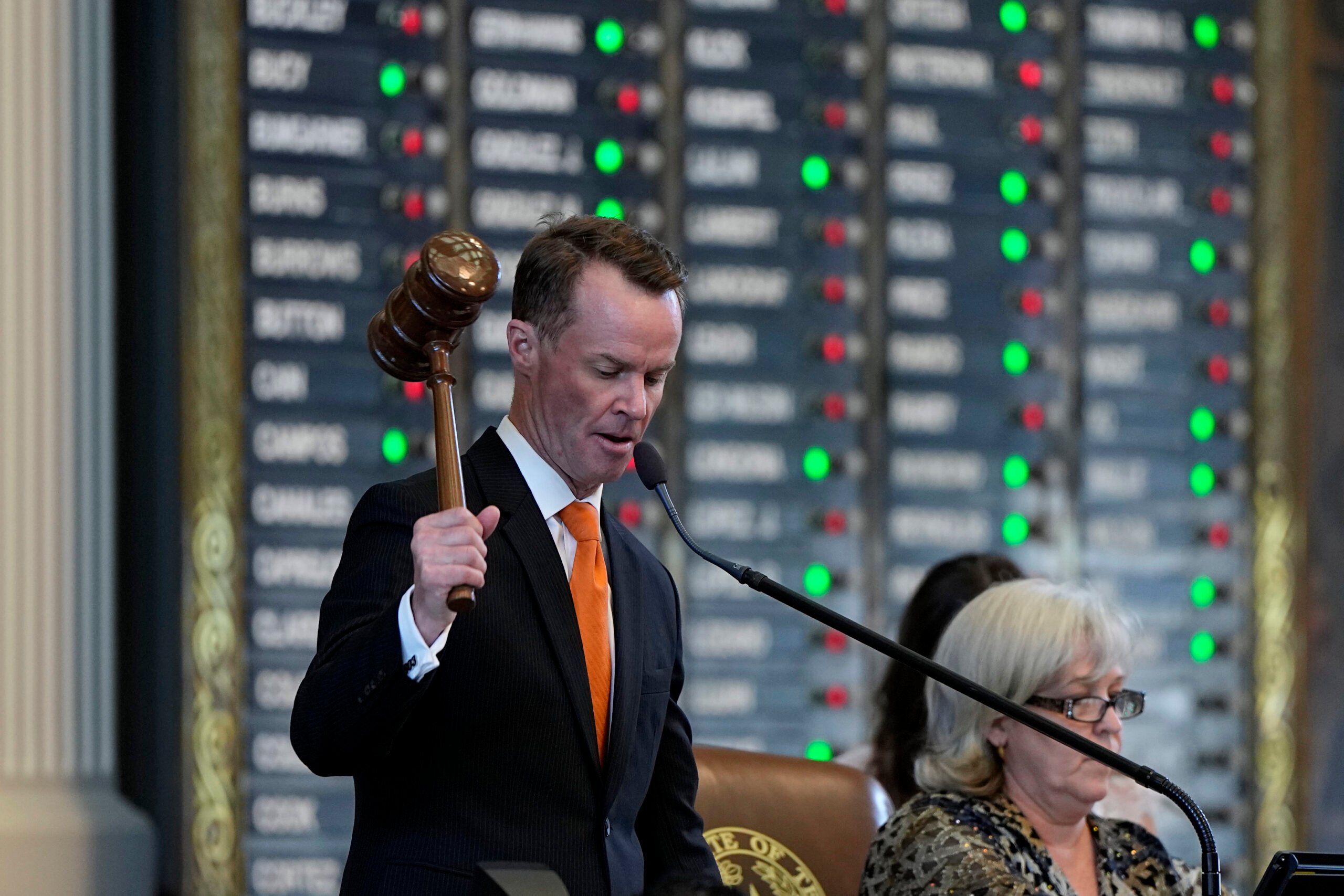
That includes the embattled Republican House Speaker Dade Phelan, of Beaumont, who was forced into a runoff after narrowly trailing his main primary rival in his southeast Texas district. 

Phelan has been at war with Attorney General Ken Paxton and Lieutenant Governor Dan Patrick for months over the House’s impeachment of Paxton, plus various political disputes between the House and Senate. Both Paxton and Patrick prominently backed Phelan’s primary challenger, who was also endorsed by former President Donald Trump. Governor Greg Abbott has left the speaker to fend for himself in that melee, angered that Phelan’s House blocked a school voucher bill. Phelan is the first speaker to face a runoff in their home district since 1972, when Democratic Speaker Rayford Price ultimately lost his seat in a fractious intra-party battle over the ethics scandal known as Sharpstown. 

Overall, Abbott came out ahead in his high-stakes campaign to take down Republican state House incumbents—many from rural Texas—who had the temerity to stand firm against his aggressive voucher push during an onslaught of special legislative sessions last year. At least six of Abbott’s anti-voucher targets lost, with three more forced into runoffs. Only a few won outright. 

Dade Phelan in the House Chamber in 2023 AP Photo/Eric Gay

Paxton also came up big in his post-impeachment vengeance campaign. Though he didn’t succeed in ousting most of his targeted House incumbents who voted to impeach him—including former allies in his home Collin County—he did pick off a couple. In particular, Mitch Little, who became famous for his ruthless interrogation of witnesses as one of Paxton’s lawyers in the impeachment trial, ousted Denton County incumbent Kronda Thimesch. Still, many of the 30-plus House candidates he backed did not win. 

Paxton’s clearest victory came in the typically low-profile elections for the Texas Court of Criminal Appeals, which he has put in his crosshairs ever since the court ruled against his power to unilaterally prosecute voting law violations. Three Republican incumbents lost to Paxton-backed insurgents, dramatically remaking the state’s highest criminal courtjudiciary—the same body that, remarkably, could one day assess a criminal conviction against Paxton himself. 

Coming off a sweeping impeachment acquittal, Paxton, who is still under FBI investigation and is set to finally go to trial for criminal securities fraud this spring, has proven yet again that he’s not to be underestimated. In his election night statement, Paxton focused on the uncompleted work of ousting the speaker. 

“Today’s election results have revealed that the battle for the soul of Texas is far from over,” Paxton said. “While David Covey [Phelan’s challenger] and Dade Phelan are headed to a runoff, it’s clear that our fight against the liberal forces in Austin must continue unabated.”

After failing to win his voucher policy on the legislative merits—despite repeated special sessions—Governor Abbott had embarked on the most expansive and aggressive primary campaign of his tenure. Akin to Patrick’s ironclad grip on the Senate, Abbott is trying to remake the House in his gubernatorial image. The governor set about making the party primary a referendum on his power and rural lawmakers’ resistance to his agenda. He spent over $6 million—thanks to a donation in the same amount from pro-voucher Pennsylvania billionaire Jeff Yass, who is a major investor in TikTok—targeting incumbents.

Yet, in his pursuit of a majority of voucher proponents in the Texas House, Abbott mostly didn’t bother talking about vouchers—which despite his and special interests’ best efforts have not become a broadly animating issue within the GOP electorate. He instead tarred his opponents by tapping into an issue that voters care more about, and which he effectively owns in Texas: border security. Despite the fact that all of his targeted reps voted in lockstep approving every ask from Abbott as he built up his Operation Lone Star empire at the border, the governor took to the airwaves and claimed they were soft-bellied cowards he couldn’t trust to seal off the border. 

Some of those incumbents tried to counter in a similarly tortured and demagogic way, claiming Abbott’s vouchers would mean paying private school tuition for illegal immigrants. Further compounding this inanity, Abbott responded by condemning their repeated support for public school budgets, which under the U.S. Constitution must fund education for kids regardless of immigration status, as a handout to the undocumented. (He ignored the fact that all of those budgets were signed by… himself.) 

The GOP primary battles of 2024 were more grievance-fueled than any other in recent memory. Unlike past campaigns where allegiances and targets were driven largely by broader ideological fights with fairly clear battle lines, this one featured a hodgepodge of special interests and agendas. It was little more than a political spite-fest waged by the state’s most powerful politicians, caring more about scoring points for themselves than what sort of chaos will come after. 

The next two months, leading up to the May 28 runoffs, will be even uglier than what we’ve seen in the prior few months. Phelan’s poor showing Tuesday portends a vicious political battle between the speaker and his mainstream conservative allies and his long list of foes, including Patrick, Paxton, and the Tim Dunn machine

“This runoff is not just another race, it’s the frontline of the battle for the soul of our district. While my opponent hides behind empty rhetoric, dishonest advertising and surrogate voices, I stand before voters with a clear record of service and conservative success for Southeast Texas,” Phelan said in a statement Tuesday. “In the next couple of months, the deceit and vitriol we’ve witnessed from my opponent and his dark money allies is poised to escalate to even greater heights. I urge the citizens of Southeast Texas to meet the coming storm with a critical eye and recognize the external forces desperate to claim what is ours.” 

Phelan’s fate as a powerful House leader is in peril—even if he manages to win the runoff. If he makes it back to Austin, he’ll have fewer friends in the chamber—and many more enemies. 

Minnesota Rep. Dean Phillips ends Democratic primary challenge and endorses President Joe Biden

posted in: News | 0

By WILL WEISSERT and STEVE KARNOWSKI (Associated Press)

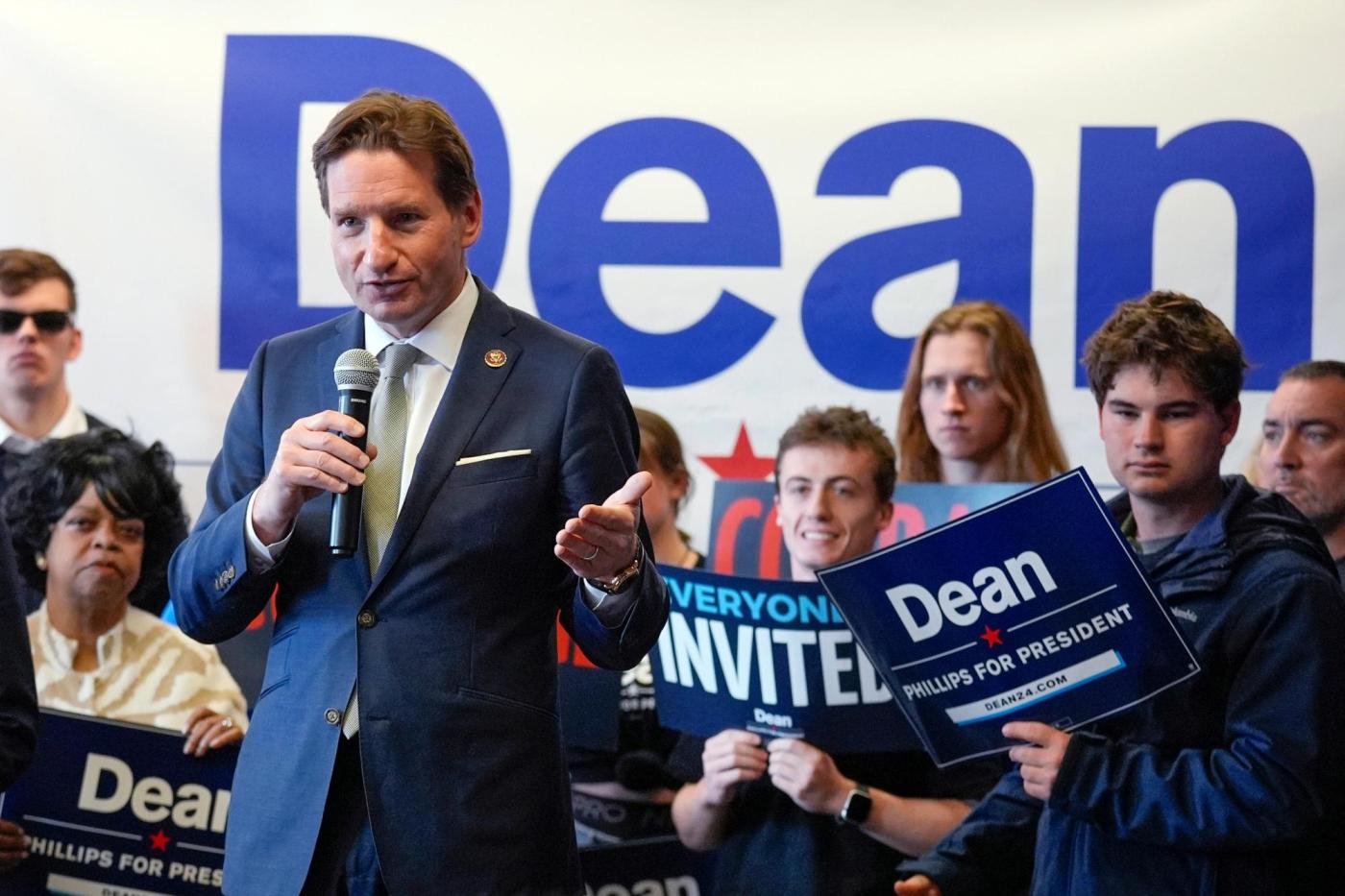
MINNEAPOLIS (AP) — U.S. Rep. Dean Phillips of Minnesota ended his long-shot 2024 Democratic presidential bid on Wednesday after failing to win a primary contest against President Joe Biden.

Phillips told WCCO Radio in Minneapolis that he was endorsing Biden.

Phillips, a 55-year-old multimillionaire who is among the richest members of Congress, built his White House bid around calls for a new generation of Democratic leadership while spending freely from his personal fortune. But the little-known congressman ultimately failed to resonate with the party’s voters.

Phillips was the only elected Democrat to challenge Biden for the presidency. Phillips’ failure to gain traction is further proof that Democratic voters are behind the 81-year-old Biden even if many have misgivings about his age or his reelection prospects.

The president has long cast himself as uniquely qualified to beat Republican Donald Trump again after his 2020 win, and his reelection campaign largely ignored Phillips except to point out that the congressman voted with the administration nearly 100% of the time in Congress.

Phillips often argued Biden was too old to serve a second term. But in a social media post Wednesday, Phillips noted that Biden had once visited his home while serving as vice president and that his “decency and wisdom were rarities in politics then, and even more so today.”

“We only have two of them,” Phillips told WCCO. “And it’s going to be Donald Trump or Joe Biden. And while indeed I think the president is at a stage in life where his capacities are diminished, he is still a man of competency and decency and integrity. And the alternative, Donald Trump is a very dangerous, dangerous man.”

Phillips’ endorsement of Biden appears to foreclose running as a third-party challenger on a potential No Labels ticket.

A centerpiece of Phillips’ campaign to upset Biden was in New Hampshire, where he campaigned hard, hoping to capitalize on state Democrats’ frustration over a new plan by the Democratic National Committee, championed by Biden, reordering the party’s 2024 presidential primary calendar by leading off with South Carolina on Feb. 3.

But instead of pulling off a New Hampshire surprise, Phillips finished a distant second in the state’s unsanctioned primary, behind a write-in campaign in which Democrats voted for Biden despite his name not appearing on the ballot.

After that defeat, Phillips pressed on to South Carolina and the primary’s formal start. But the DNC didn’t schedule any primary debates, and some states’ Democratic parties, including North Carolina and Florida, are not even planning to hold primaries — making it even more difficult to challenge the sitting president. Phillips lost South Carolina and every other state in which he competed.

Before Minnesota’s primary on Super Tuesday, hardly any of nearly two dozen Democratic voters interviewed in Phillips’ congressional district mentioned his presidential campaign. James Calderaro of Hopkins knew Phillips was a candidate but dismissed him as “a distraction.” Calderaro and others said they were backing Biden for the best chance of stopping Trump in November.

Phillips has already announced he’s not seeking reelection in his suburban Minneapolis congressional district. He is heir to his stepfather’s Phillips Distilling Co. empire and served as that company’s president, but he also ran the gelato maker Talenti. His grandmother was Pauline Phillips, better known as the advice columnist Dear Abby.

Driving a gelato truck helped Phillips win his first House campaign in 2018, when he unseated five-term Republican Erik Paulsen. While Phillips’ district in mostly affluent greater Minneapolis has become more Democratic-leaning, he stressed that he is a moderate focused on his suburban constituents.

While running for president, however, Phillips moved further to the left, endorsing fully government-funded health care through “Medicare for All.”

Weissert reported from Washington.

Related Articles

National News |


Haley’s exit from the GOP race pushes off — again — the day Americans could elect a woman president

National News |


McConnell endorses Trump for president. He once blamed Trump for ‘disgraceful’ Jan. 6, 2021, attack

National News |


Nikki Haley suspends her campaign and leaves Donald Trump as the last major Republican candidate

National News |


Former baseball star Garvey faces Democratic Rep. Schiff, and long odds, for California Senate seat

National News |


Super Tuesday takeaways: Biden and Trump momentum can’t be slowed as Haley suspends her campaign