
Robert Pearl: 3 surprising lessons for U.S. medicine from around the world

posted in: News | 0

During my residency at Stanford, I traveled to Mexico with a group of surgeons to operate on children with cleft lips and palates. On the first day, I watched in awe as the team leader meticulously realigned the tissues of the lip, mouth and nose of a 3-month-old boy, leaving behind nothing but a faint scar — all in just 90 minutes.

I immediately fell in love with plastic and reconstructive surgery. As a surgeon, I visited more than a dozen countries to repair the cleft lips and palates of children. But later, in my leadership role as CEO at Kaiser Permanente, extended travel proved impossible. And I missed those trips dearly.

Recently I made my first global surgery mission in many years. Not only did our time in the Philippines reignite my passion for global surgery, but it also left me with three surprising lessons for American health care:

Without mission and purpose, medicine proves exhausting

Surgical trips are physically and emotionally demanding. Far from the sterilized corridors of American hospitals, you are plunged into environments where resources are scarce and the needs overwhelming. In remote towns and underdeveloped cities, you operate in tight spaces with erratic electricity and limited clean water. The days stretch long, with five to seven surgeries in a 12-hour day.

Each child you treat carries a story of hardship and hope, their families’ eyes filled with a mix of fear and optimism. And just as you start to tire from the heat and yearn for a good night’s sleep, another mother arrives. She has walked for two days through the mountains with a child in her arms, praying her baby can be added to the surgical schedule. There is no saying “no” to this. You immediately become reinvigorated.

After a physically trying week, you return to the United States not exhausted, but emotionally replenished. Nearly every clinician who has participated in a surgical mission feels the exact same way.

American health care today obscures the fundamental mission and purpose that motivates clinicians. Physicians find themselves ensnared in a web of administrative tasks and insurance disputes. For many doctors, this noble calling has become just a job.

To revive the profession and address the burnout crisis that affects more than 60% of clinicians, a renaissance of purpose is imperative.

To get there, we must pivot away from the transactional “fee for service” financial model that rewards doctors for the sheer quantity of services rendered. In its place: a reimbursement model led by clinicians who are paid based on the quality of clinical outcomes achieved.

Inherent in the privilege of healing is the duty to lead this transformation. Taking on that accountability — and thereby eliminating the care restrictions that insurance companies impose — will rejuvenate, not further fatigue, health care professionals.

American doctors are excellent but so are physicians around the globe

U.S. physicians believe that training outside the States is a second-rate education. It’s time to alter that perspective.

During my week in the Philippines, I had the pleasure to work alongside five local physicians, often at adjoining operating room tables. They’d trained in residency and fellowship programs all around the world to maximize their expertise. To a person, their results matched the leading pediatric hospitals in the United States.

Although American doctors have access to the best facilities, machines and materials, physicians in other nations have a competitive advantage that comes from higher volume. The best way to hone any medical skill is through repetition and experience. American surgeons lag their global colleagues in this area.

U.S. clinicians bring a wealth of knowledge that can greatly benefit doctors worldwide, yet there are equally rich lessons to learn from the experiences and practices of physicians abroad.

In the U.S. today, doctors adhere to minimum surgical volume standards. Patient outcomes would improve tremendously if, instead, our nation set benchmarks for superior performance. Combining high-volume surgical experience with our advanced technologies and top-notch facilities would produce superlative clinical outcomes.

But first, America’s health care professionals need to embrace humility and be open to learning from our global colleagues.

U.S. resources are vast but access is still scarce

In countries like the Philippines, health care challenges are magnified by economic constraints. Despite government coverage, per-capita health care spending remains low, under $200 annually. This financial reality forces difficult choices, leaving significant gaps between the health care needs of the population and the services available.

Witnessing these disparities firsthand is a poignant reminder of the abundance the United States enjoys, with health care spending now exceeding $13,000 per American. And yet, despite our nation’s wealth, independent studies reveal that U.S. health care ranks last among a dozen wealthy nations and near the bottom of 38 OECD countries in more than a dozen health measures.

The United States has earned its distinction as home to the most expensive and least effective health care system in the developed world. This isn’t just because of our 30 million uninsured citizens (and tens of millions who are underinsured). It’s the result of decades of underinvestment in primary care, tolerance of inefficient hospital systems and exorbitant drug prices.

The challenge of transforming American health care is daunting, and it requires a willingness to embrace change and confront uncomfortable truths. Observing the efficiency and ingenuity of less affluent nations inspires a reevaluation of our own care-delivery practices and health care finances.

The biggest problem in our health care system isn’t a lack of money. It’s the deficit in leadership and innovation.

Volunteering on global missions offers invaluable perspectives that could catalyze change in the United States. I’m optimistic that by learning from countries that achieve remarkable outcomes with modest means, we can enhance clinical outcomes, reduce clinician burnout, and make quality health care accessible and affordable for all Americans.

Robert Pearl is a clinical professor of plastic surgery at the Stanford University School of Medicine and is on the faculty of the Stanford Graduate School of Business. He is a former CEO of The Permanente Medical Group. He wrote this column for The Fulcrum.
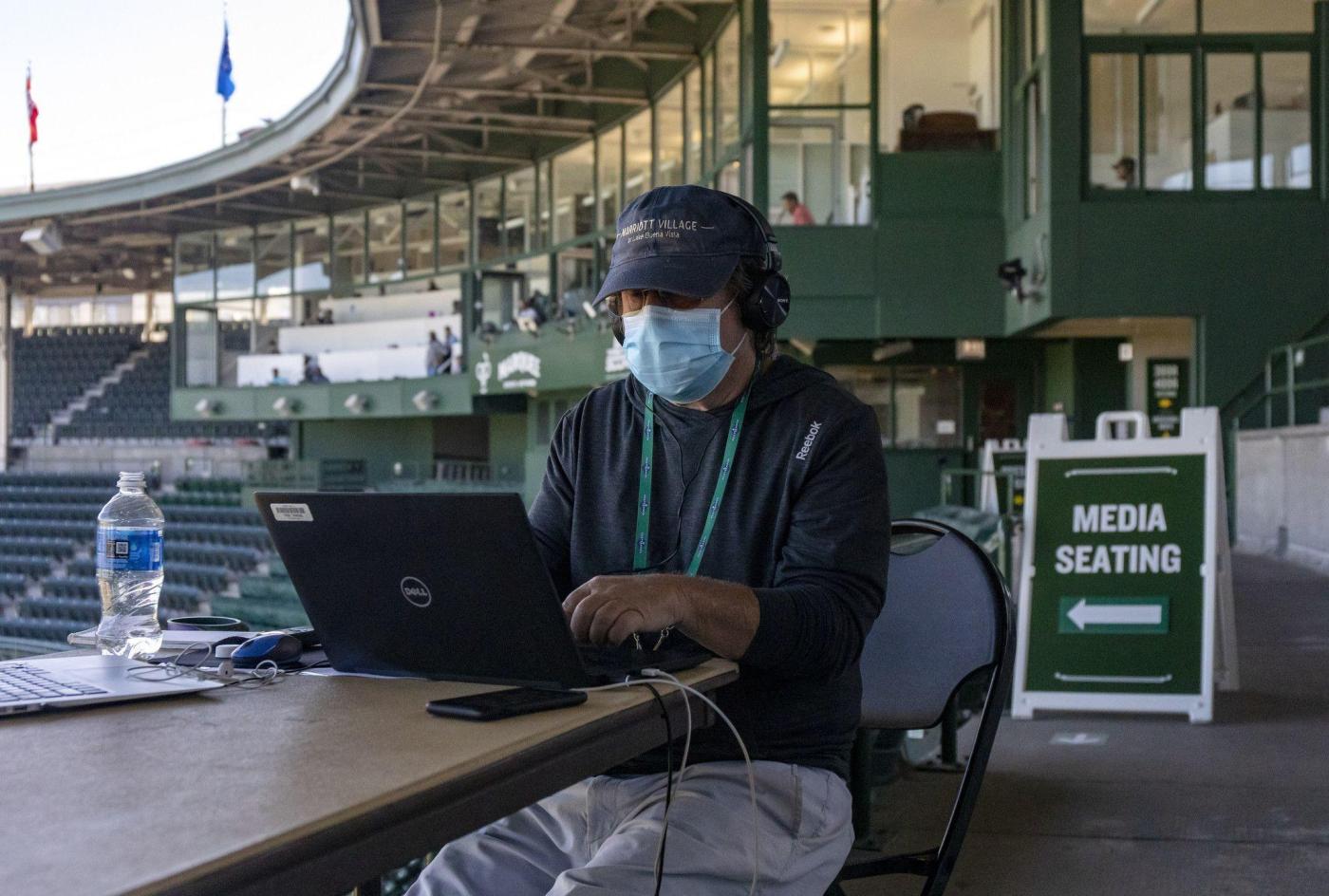

Column: Chicago Cubs announce a new hire — but no, it’s not Cody Bellinger

posted in: News | 0

The Chicago Cubs announced one of their most important offseason decisions Monday, naming John Steinmiller, formerly with the Blackhawks, as their new senior director of media relations.

It’s not exactly bringing back Cody Bellinger, but it’s newsworthy, and that counts for something during this Cubs offseason, where President Jed Hoyer has been biding his time while waiting for the prices of free agents to drop.

At least the Rickettses aren’t messing around in this key position, which serves as the bridge between the local media and manager Craig Counsell and his players.

Steinmiller, who replaces veteran Jason Carr, has been in the business since 2005 when he began with the Milwaukee Brewers. His relationship with Counsell should serve him well, and he has a familiarity with most of the Chicago media, including me.

Steinmiller still took the job, which is commendable.

There may be no more thankless job than that of media relations for a professional sports team, especially a major market team like the Cubs. You’re dealing with managers who might be in a cranky mood after a crushing loss, players who decide to leave the clubhouse without talking to the media after hitting a game-winning home run, and writers constantly asking: “Is Jed talking today?”

The relationship between the media and athletes has changed dramatically over the last 20 years, with less access for reporters, fewer stars who feel the need to talk before or after games, and front-office executives who only deal with national writers at the expense of their beat writers.

The main responsibility of a media relations boss is to make sure the team always comes out in the best light, or if it’s a particularly controversial news story to perform some damage control. Steinmiller should be well-prepared after working for the Blackhawks, where damage control has become an art form in the last few years.

The last time I saw Steinmiller at a Blackhawks game, I accidentally stepped on the Blackhawks logo in the postgame locker room, which drew a much-deserved reprimand from one of his media relations assistants: “Hey, get off the logo!” Instead of a lifetime ban, I got off with a warning to watch my step.

Everyone deserves a second chance, though I’ve avoided the Blackhawks locker room since. Fortunately, the floor of the Cubs’ clubhouse is simply a weathered carpet without any logo, so there will be no worries about a repeat offense unless stepping on Clark the Cub counts.

Steinmiller also reminded me that day of the time I wrote in the Chicago Tribune that Counsell was “tragically unhip,” apparently making fun of the new Cubs manager back when he was running the Brewers. I couldn’t remember writing anything like that, but a quick Google search revealed Steinmiller’s memory was accurate.

While writing a Cubs-Brewers series preview in August 2018, I wrote of the competing managers: ”Hipster Joe Maddon matches wits with the tragically unhip Craig Counsell.” Oof. I have no reason to believe Counsell is unhip, tragically or otherwise. The Tribune regrets the error.

Counsell has been around for a long time. He probably doesn’t need any assistance from Steinmiller on how to deal with the Chicago baseball media, which is much larger — and a bit snarkier — than our peers in Milwaukee, except for the Marquee Sports Network, the Cubs-owned outlet that treated former manager David Ross like he was part of the network and thus blameless during the team’s end-of-season collapse.

Hoyer obviously saw otherwise and made the right call on replacing Ross with Counsell, whose $40 million contract is the largest of any manager in MLB history.

Counsell seems to have a quirky sense of humor, which will likely be necessary as he begins the long grind when spring training starts in two weeks in Mesa, Ariz. As former manager Lou Piniella said in spring training 2007: “This is no push-button operation, I can tell you that.”

After an uneventful start to the offseason, the Cubs have made a couple of big moves since the calendar turned, signing Japanese starter Shota Imanaga and reliever Héctor Neris. Everyone still expects Hoyer to re-sign Bellinger, but until he’s in camp it’s mere guesswork.

“Anyone can do a deal,” Hoyer told fans at the Cubs Convention. “Anyone can say yes to an agent’s asking price. If you do that, you’re going to run out of money really quickly.”

I doubt the Rickettses will ever run out of money, no matter how much they give Bellinger or anyone else. But if Hoyer signs Bellinger at a bargain price, his strategy will have worked and most fans will be satisfied. If Bellinger signs elsewhere, the Cubs could be looking at another 80-win season.

Everything really hinges on one decision.

The 2024 season is almost here, but there’s still time to make a move or two. Hopefully Hoyer gives his new media relations director something to do as Steinmiller begins his new job on Feb. 5.

Those press releases don’t write themselves.

()

6 warning signs you’re falling for a travel scam

posted in: News | 0

Laurie Baratti | (TNS) TravelPulse

Planning a vacation can be an exhilarating experience, but amid the excitement lies the lurking threat of scams that are just waiting to prey on unsuspecting travelers.

To help travelers navigate these treacherous waters, Byrd Bergeron, founder and CEO of The Travel Byrds agency, shared some conspicuous warning signs that consumers might be on the brink of a travel scam disaster.

Last-minute getaway deals

Buyer beware! If a seemingly too-good-to-be-true deal for a last-minute vacation suddenly pops up, Bergeron advises caution. “Traveling within two weeks or less? That’s a neon sign flashing ‘scam’ at you. Legitimate deals rarely pop up for last-minute trips, so be wary of those tempting offers,” she said.

Ultra-cheap airline tickets

Do your due diligence when it comes to incredibly cheap flights, warns Bergeron. “Beware of unbelievably cheap flights as they often come with strings attached.” She said that scammers frequently use fake websites and reviews to sell non-refundable tickets laden with all sorts of restrictions. Before you invest your hard-earned money, double-check that the airfare presented to you is legitimate.

Risky vacation rentals

With the recent surge in popularity of private vacation rentals, associated scams have become rampant. Bergeron advises travelers to be wary of hosts who list the same property at different price points — they could be looking to double-book and maximize their profits. Airbnb alone removed 59,000 fraudulent listings last year. By booking directly through a property owner’s website, you can largely avoid falling for this common scam.

Requests for document photos

“Your personal information is your treasure and you should guard it fiercely,” said Bergeron. If an unverified person online requests photos of your credit card, driver’s license or passport, stop the conversation there. Scammers will often collect and then use this type of personal information for identity theft or to conduct unauthorized transactions.

Requests for confidential information:

“Legitimate businesses won’t pester you for personal information upfront,” Bergeron asserted. If you find the person on the other end of communications is pressuring you to disclose sensitive details, consider it a red flag. Protect your privacy and steer clear of deals that demand too many personal details from you suspiciously early in the conversation.

Bogus fee-for-alls

According to Bergeron, scammers like to play games with bogus fees. “They charge hefty amounts for transaction execution or minor changes, leaving you frustrated and empty-handed,” she said. To avoid falling victim to this sort of runaround, she advises travelers to steer clear of providers that demand extra fees for straightforward services.

In the unfortunate event that you come into contact with travel scammers or even fall for one of their ploys, be sure to report it to your travel agency and the proper authorities. Bergeron advises that consumers cease communication with the scammers, but be sure to keep a record and document those interactions. Always prioritize safeguarding your personal information and documentation, and always trust your instincts. These will be your best defenses when it comes to dodging the wolves in sheep’s clothing who are lurking in the world of travel.

_________

©2024 Northstar Travel Media, LLC. Visit at travelpulse.com. Distributed by Tribune Content Agency, LLC.

South St. Paul Public Schools investigating potential cybersecurity threat

posted in: News | 0

South St. Paul Public Schools alerted families this week to an ongoing technology disruption that is being investigated.

Staff and families were notified Monday of technical difficulties “that may disrupt certain services” like online platforms, emails and other digital services. On Tuesday the district said it had been made aware of “unauthorized activity within our computer network.”

Once the unusual activity was discovered, “We took our systems offline to isolate the issue,” the district said in a note to families Tuesday. “We then engaged a third-party cybersecurity firm to assist us with systems recovery and investigate the cause and scope of the unauthorized activity.”

As the investigation is ongoing, the district said it is focusing on restoring all its systems and helping students and staff maintain a productive learning environment.

“While we have proactively taken steps to create a secure online environment, we also acknowledge that cyber threats are unfortunately a part of the world we live in,” the district said in the note.

As of Wednesday afternoon, South St. Paul Public Schools officials had not returned a request for comment.

Recent cyber threats

The St. Paul school district notified more than 43,000 families last year about a “data security incident” that took place in February 2023. Student names and email addresses were the only information in the “unauthorized access,” according to St. Paul Public Schools.

The University of Minnesota acknowledged a data breach last year that resulted in compromised personal information about students, prospective students and employees across a 30-year period from 1989 to August 2021. Names, addresses, phone numbers, Social Security numbers, driver’s licenses and passport information were all potentially targeted in the breach.

Minneapolis Public Schools fell victim to a ransomware attack last year that led to confidential student documents being put online after refusal to pay a $1 million ransom, the Associated Press reported. The exposed data included sexual assault cases, medical records and discrimination complaints.

Related Articles

Education |


Memorials for 3 first responders to be removed from Burnsville City Hall lawn as grieving continues

Education |


Burnsville man gets 15 years for drug trafficking

Education |


Hastings City Council fills Ward 1 vacancy as incumbent plans future in Wisconsin

Education |


Minnesota Zoo celebrates 10 years of ZOOMS STEM Design Challenge

Education |


Second 911 call from Burnsville home: Child reported ‘there was a big shootout here’