Uninsured Country: Affordable Health Care Eludes Many Family Farmers and Ranchers

posted in: News | 0

Super glue and animal antibiotics are in the medicine cabinets of many farmers and ranchers in Texas — tools of the trade they sometimes use on themselves to avoid a trip to the doctor. It’s not that they have anything against physicians. It’s because they either lack health insurance or their coverage is so limited that a doctor visit could saddle them with a hefty bill.

I know this because I’ve seen the glue (used to seal wounds) and animal meds in first-aid kits of some of my family members who are uninsured farmers and ranchers in South Texas. And they’re not alone. Nationwide,10.7% of farm household members had no health insurance, higher than the 9.1% for the U.S. population, according to a U.S. Department of Agriculture report using 2015 data, the most recent available.

Finding adequate, affordable health insurance can be a huge challenge for people who run small, family farms or ranches, said Alana Knudson, director of the NORC Walsh Center for Rural Health Analysis. That’s because many farmers and ranchers are self-employed, with no access to affordable group plans, and have low incomes. Even other private plans with limited coverage are often inadequate and pricey. 

“It’s very cost-prohibitive for farmers and ranchers to be able to get and maintain health insurance,” Knudson said.

The problem is widespread but not often tracked closely by many states, including Texas. There are about 3.4 million farmers and ranchers in the country, according to the USDA’s 2022 Census of Agriculture. Because many are self-employed, they’re at a high risk of being uninsured or underinsured, endangering their health, Knudson said.

To gain health insurance, some farmers and ranchers take a second job off the land with an employer that offers group coverage. Or, their spouses work full time to get health insurance for the family, such as at a local school district or municipality.  

Others in middle age, like my Uncle Todd, who lives near New Braunfels, Texas, decide they’ll wait until they’re 65 and can go on Medicare, even though it means risking physical injury from their work every day. Todd has about three years to go and lives alone in a cabin on my family’s property in Comal County, about 36 miles north of San Antonio.

Texas leads the nation in the number of farms and ranches, with 248,416, and has the highest rate of uninsured residents, at about 18%. The state has refused to expand Medicaid to cover more low-income adults, so it’s likely many farmers and ranchers have little or no health insurance. The rural areas they live in suffer from shortages of doctors and hospitals. From 2005 to 2023, a total of 24 hospitals closed or reduced services across Texas, according to the University of North Carolina’s Cecil G. Sheps Center for Health Services Research.

Even if Texas expanded Medicaid, barriers to health care would remain, said Dr. Rick W. Snyder, a Dallas-based cardiologist and president of the Texas Medical Association. Many doctors in the state won’t accept Medicaid patients because the reimbursements are so much lower and slower than private health insurance.

“Coverage is not the same thing as access, and access to waiting lists is not the same thing as access to health care,” Snyder said. “So just because you have a card that says you are covered by Medicaid does not mean you’re going to find a hospital or a physician who actually accepts that.”

Dr. Doug Curran, a physician in Athens, Texas, said the low reimbursement rates are stark compared with private plans.  

“Medicaid will pay you about 28 bucks for seeing a kid with an earache,” he said. “You know, you can’t even pay the electric bill, hardly, for that.” 

Kenneth McAlister’s family farmland in Electra. McAlister, a fourth-generation farmer, is dealing with myriad challenges finding and paying for health insurance. (Kenneth McAlister)

In 2021, the Texas legislature began allowing the Texas Farm Bureau, an agricultural nonprofit, to sell its members health plans that do not have to comply with the Affordable Care Act’s consumer protections, such as rules that prohibit insurers from discriminating against people with pre-existing conditions.   

Texas Farm Bureau plans aren’t considered health insurance and operate without oversight by state insurance regulators. Monthly premiums are often lower, but the lack of ACA rules could mean higher costs for farmers and ranchers when they seek care. 

Most people who sign up for these and other alternative plans tend to be self-employed, concluded a 2023 Government Accountability Office report

Some farmers and ranchers I spoke with don’t bother with a doctor anymore, not even for medication. Instead, they use antibiotics made for livestock they buy from a veterinarian or feed store. This workaround became more difficult in June 2023, when the Food and Drug Administration tightened access to antibiotics in an effort to combat bacterial resistance; some of these drugs had long been available over the counter. A veterinarian’s prescription is now required.

Kenneth McAlister, a fourth-generation farmer in Electra, Texas, takes another tack. “I go to Mexico about twice a year and I’ll buy a lot of Mexican antibiotics.”

Before the ACA, McAlister said he and his family had private insurance through his wife’s job as a teacher’s aide. But after their children grew up and left home, it didn’t make financial sense for her to keep working.

Now, McAlister has coverage through a national insurer, but said the plan wouldn’t cover the full cost of the knee replacement he needs. So he’s waiting for five years until he can go on Medicare. 

“I can’t afford to have my knee done. If I hit the lottery and win millions of dollars, I might consider going to get it done before then,” he said. 

McAlister pays cash on the rare occasions he goes to the doctor —  like on the Sunday he went to the emergency room to get a fish hook removed from his finger. 

“I have no idea what the best thing to do is,” he said. “I’m hoping that I can find something along the way that maybe is better than what I got.”

Risks of a Rural Life

Farming and ranching have given my family financial independence – and caused some members to suffer injuries to body and spirit. 

The Centers for Disease Control and Prevention ranks farming and ranching as some of the nation’s most dangerous occupations. Since I was a kid, my mom has told me stories about family friends who were injured or killed when their tractors overturned — a leading cause of injury or death for farmers. 

Family members share that risk.

My 89-year-old Aunt Corinne told me recently that when she was a child, she was her dad’s – my great-grandfather’s – “right-hand man” on their 1,500-acre ranch in the Texas Hill Country. She helped him work the land, riding a horse named Booger Red. 

The work and risks didn’t end when she got home. At age 6 or 7, she got her arm stuck in the washing machine. Back then, people put their clothes through an electric-powered wringer. She suffered nerve damage and still can’t feel part of that arm.

“Mama finally got it stopped when it got up out of here,” she said, pointing to the scars on her upper arm. She wasn’t rushed to the hospital. “You didn’t do that. You just took your meat and pushed it down.” 

The increasing cost of health care has limited the ability of some U.S. farmers and ranchers to increase their operations because they’re unable to work the land full-time. They have to work outside jobs to get health insurance; when they come home, they must feed the animals, repair the fences, help a cow give birth and plow the fields. 

“It’s a big responsibility, you know, it’s not an eight-to-five job. It’s round the clock,” said Robin, a family friend and farmer from the Hill Country. She asked that only her first name be used.  “Farmers and ranchers just don’t have any idle time, really. There’s always something to do.”

Robin went to school with one of my aunts and attended the same Lutheran church as many of my relatives.  Her small farm, like ours, has been in her family for more than a hundred years. 

She and her husband both work outside the farm to help cover expenses and pay for health insurance. Her husband sometimes jokes that they should move into a condo. But they were both raised on a farm and that’s how they raised their children, who enjoyed wide-open spaces and learned how food is made.

“It’s bred in you,” Robin said. “It’s just something that gives me pleasure that I can keep dad’s livelihood going. The cost is big — a lot of times you don’t break even, but, you know, it is what it is.” 

Sometimes families barter for health care using what they produce.

“You can trade out some stuff — doesn’t have to be exactly equal value — and you can just figure out what’s fair and give them some help,” said Dr. Robert L. Hogue, who lives in Brownwood. 

Even when farmers and ranchers have health insurance, few are completely satisfied with the coverage — and it doesn’t fix the problems inherent in rural living.

The quality of rural care can be low.  Derisive nicknames, like the Quack Shack and Death Valley, abound. There is limited or no coverage for mental health and substance use disorders, and sometimes there are no mental health care providers nearby. It can be a long drive to a doctor’s office or hospital. In my family’s case, and others’, the roads aren’t paved and are prone to flooding by creeks, which delays or blocks ambulances. 

Aunt Carrie told me about the times she went into town with Hilda Mary Acker, her grandmother — my great-grandmother — and because it had rained so much, they couldn’t cross the creek. So they had to stay in the car until the water went down, sometimes all night.

The ambulance may not arrive.The majority of rural Texans live in so-called ambulance deserts, where they have to wait more than 25 minutes for an emergency medical team to arrive, according to a 2023 national study by the Maine Rural Health Research Center. 

In many parts of Texas, the ambulance service is staffed, at least in part, by unpaid volunteers, Knudson said. So response times depend on the availability of those volunteers, and funding is limited.

“It is supported by bake sales, spaghetti suppers, pancake breakfasts, you name it,” she said. 

Despite filling a critical need, EMS workers in Texas — and well over half the country — are not recognized by the state as an essential service. If they were, as is the case in 13 states and the District of Columbia, the state and local governments would have to fund and provide emergency medical services that meet a minimum standard of care.

A Quiet Distress

I’m a seventh-generation Texan and one of the few members of my family who isn’t a self-employed farmer or rancher. Instead, I’m a self-employed journalist who now lives in New York City. But that doesn’t mean my family’s land in the Hill Country isn’t part of who I am.

I often think about my ancestors who lived – and died – there. I have a framed photo collage of two generations of my farming and ranching family in my bedroom. I often think about how, even though I’m not in Texas, I still want my loved ones and the 261,666 other self-employed farmers and ranchers in the state to have a healthier life than their ancestors, with access to quality, affordable health care. 

This framed photo collage shows two generations of farming and ranching families in the Texas Hill Country southwest of Austin. Hilda Mary Acker, the writer’s great-grandmother—shown at left with her husband Samuel Dietert — died by suicide on the ranch. Her daughter, LaMerial Dietert (center), was raised on this ranch. The writer’s maternal great-grandparents, Nola and Bruno Gass (right), lived on a nearby ranch for most of their lives. (Courtesy of family)

One of the women in that photo is Hilda. She was, and remains, the tallest woman in my family, at 5’7”. Even though I’m 5’3”, I’ve been compared to her for most of my life. I, too, have scrawny arms, enjoy writing and smoke cigarettes. But Hilda, who was known as Omie, was a farmer who may have had lung cancer (relatives said she coughed up blood) and died by suicide only a few feet away from my childhood swingset. She was 60.

The story goes that instead of seeing a doctor, Hilda went to a psychic in New Braunfels who told her she was sick. In 1975, not wanting to burden the family, Hilda placed a shotgun between a y-shaped branch of a tree and pulled the trigger. Her son found her body. 

The rate of suicide for farmers nationwide is 3.5 times higher than the general population, according to a 2021 report by the National Rural Health Association. After Hilda died, suicide rates eased nationally but began a relentless rise after 2000, particularly among male farmers and ranchers. By 2017 they were taking their lives at 43.2 per 100,000 population versus an average 27.4 for other workers.  

Farmers and ranchers are reluctant to talk about their problems, and even when they do, care is often out of reach because they can’t afford health insurance. 

To help close the gaps in access to care, the Texas Department of Agriculture implemented AgriStress, a toll-free helpline in February 2021.

My great-grandmother never let on that she was depressed. She wrote her feelings down in diaries. Maybe she had a pre-existing condition, or experienced stress over the future of the ranch. Or, maybe it was something else entirely. 

“For the people who have been doing this for generations, and they are carrying out their great-grandfather’s legacy, now all the responsibility of that legacy falls on their shoulders. That’s hard,” said Amanda Wickman, program director of the Southwest Center for Agricultural Health, Injury Prevention and Education based at The University of Texas Health Science Center at Tyler.

I’m trying to imagine any of my family members, insured or not, who’d even consider going to talk to a shrink. They’d probably be too embarrassed, thinking somebody would see their truck parked out front. 

Maybe if they called that helpline from their tractor and could vent to a stranger they’d feel better. 

I started this article thinking of my great-grandmother, wondering if she’d still be alive today if she’d had health insurance. What I’ve found is that the demands on farmers and ranchers remain complex.

Rural life has been mythologized, and, as with any myth, there’s truth at its heart. The nation’s food system depends on farmers and ranchers. But the health care system doesn’t benefit them enough. The difficult work of farming and ranching often brings isolation, tensions with urban America, culture and political wars, blame for rising food prices, and gaps in the health care safety net that shorten lives. 

A lack of health insurance for the self-employed drove me out of Texas. Perhaps it drove my great-grandmother to an early grave. And it may be the reason my family eventually sells the land. But there’s still a chance that won’t happen. Maybe, in the future, health insurance will be widely accessible and there will be one less problem farmers and ranchers have to worry about.  

This story was produced with support from the Center for Rural Strategies and Grist.
Former Trump CFO Allen Weisselberg pleads guilty to perjury in ex-president’s civil fraud case

posted in: Society | 0

By JAKE OFFENHARTZ (Associated Press)

NEW YORK (AP) — Allen Weisselberg, the former chief financial officer of the Trump Organization, pleaded guilty Monday in New York to perjury in connection with testimony he gave in the ex-president’s civil fraud case.

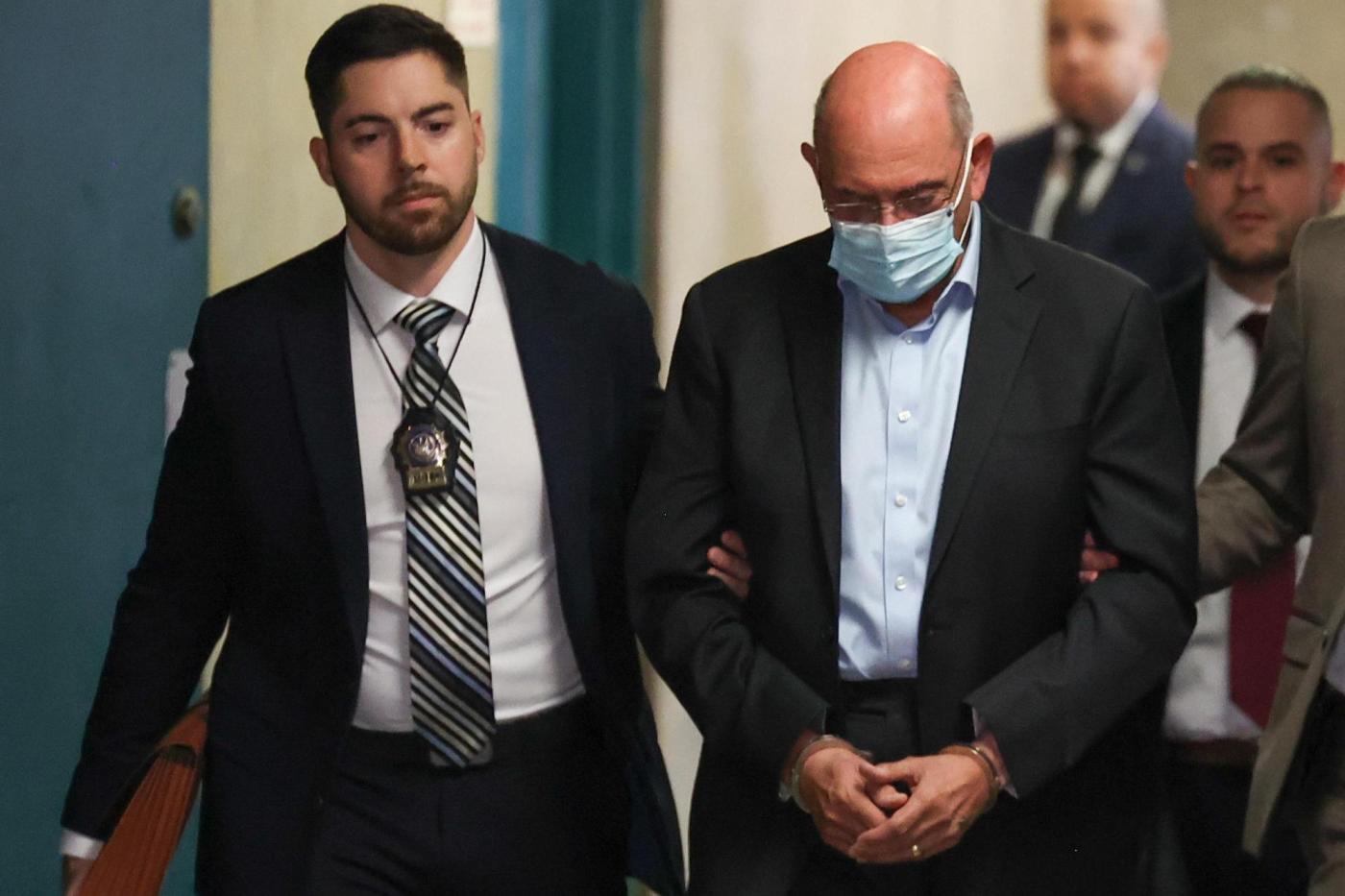
Weisselberg, 76, surrendered to the Manhattan prosecutor’s office earlier Monday and entered state court in handcuffs, wearing a mask, before pleading guilty to perjury. Prosecutors accused Weisselberg of lying under oath when he answered questions in a case about allegations that Trump lied about his wealth on financial statements given to banks and insurance companies.

Weisselberg will be sentenced to five months in jail, the judge said.

“Allen Weisselberg looks forward to putting this situation behind him,” his lawyer Seth Rosenberg said in a statement.

After The New York Times reported last month that Weisselberg was in negotiations to plead guilty to perjury, Judge Arthur Engoron, who presided over the fraud trial, ordered attorneys to provide details related to the Times’ report.

Trump is appealing Engoron’s judgment ordering him to pay more than $454 million in fines and interest for submitting fraudulent information about his asset values on years of financial records.

Weisselberg’s new criminal case comes just weeks before Trump is scheduled to stand trial on separate allegations that he falsified business records. That case involves allegations that Trump falsified company records to cover up hush money payments made during the 2016 campaign to bury allegations that he had extramarital sexual encounters. Trump has pleaded not guilty and denies wrongdoing.

Former Trump lawyer and fixer Michael Cohen has said Weisselberg had a role in orchestrating the payments, but he has not been charged in that case, and neither prosecutors nor Trump’s lawyers have indicated they will call him as a witness. That trial is scheduled to begin March 25.

Weisselberg’s case is separate from the criminal case that Manhattan District Attorney Alvin Bragg brought against Trump last year.

Weisselberg previously served 100 days in jail last year after pleading guilty to dodging taxes on $1.7 million in off-the-books compensation from the Trump Organization. He is still on probation. Prior to that he had no criminal record.

He left New York City’s notorious Rikers Island in April, days after Trump was indicted in his New York hush money criminal case.

Under that plea deal, Weisselberg was required to testify as a prosecution witness when the Trump Organization was put on trial for helping executives evade taxes. He did so carefully, laying out the facts of his own involvement in evading taxes but taking care not to implicate Trump, telling jurors that his boss was unaware of the scheme.

___

Associated Press writers Michael R. Sisak and Jennifer Peltz contributed to this report.

___

This story has been corrected to show that the counts to which Weisselberg pleaded guilty did not occur during the trial.

JetBlue and Spirit are ending their $3.8 billion merger plan after a federal judge blocked the deal

posted in: News | 0

By DAVID KOENIG and MICHELLE CHAPMAN (AP Business Writers)

JetBlue Airways and Spirit Airlines are ending their proposed $3.8 billion merger weeks after a federal judge blocked the the deal, saying it would hurt consumers who depend on Spirit’s lower fares.

JetBlue said Monday that even though both companies still believe in the deal, they were unlikely to meet the closing conditions required in the agreement before a July 24 deadline.

JetBlue’s new CEO, Joanna Geraghty, called the merger “a bold and courageous plan intended to shake up the industry status quo” and speed JetBlue’s growth.

“However, with the ruling from the federal court and the Department of Justice’s continued opposition, the probability of getting the green light to move forward with the merger anytime soon is extremely low,” Geraghty said in a memo to employees of New York airline. She said uncertainty over the merger’s fate was distracting the airline from its effort to return to profitability.

Spirit CEO Ted Christie said he was disappointed that the airlines could not combine and create a new challenger to the nation’s four biggest airlines but said he is confident that Spirit — which has been losing money since the pandemic started — can succeed on its own.

JetBlue will pay Spirit a $69 million termination fee.

The Justice Department sued to block the merger last year, saying it would reduce competition and drive up fares, especially for travelers who depend on low-fare Spirit.

In January, a federal district judge in Boston sided with the government and blocked the deal, saying it violated antitrust law.

The airlines appealed the ruling, and a hearing had been set for June.

Spirit and Frontier Airlines announced a $2.2 billion merger in early 2022 — a deal that would have combined two similar carriers that charge lower fares than the big airlines but add on fees that generate a large chunk of their revenue.

Spirit and Frontier Airlines announced a $2.2 billion merger in early 2022 — a deal that would have combined.

JetBlue jumped into the fray against the wishes of Spirit’s management, which warned that it would be difficult to win regulatory approval for a Spirit-JetBlue combination. JetBlue went over the heads of Spirit’s board, directly to Spirit’s shareholders, and won a bidding war against rival Frontier a few month later.

While the deal was taking shape and wound up in court, there were continuing losses and other problems at Spirit, which is based in Miramar, Florida. In late January, JetBlue warned that it might terminate the agreement.

JetBlue has also been losing money and faces its own uncertain future. Activist investor Carl Icahn bought nearly 10% of JetBlue stock last month and won two seats on JetBlue’s board.

The end of the JetBlue-Spirit deal raises questions about whether Alaska Airlines can pull off its proposed purchase of Hawaiian Airlines for $1 billion plus the assumption of about $900 million in debt. The Justice Department has not indicated whether it will sue to block that agreement.

Shares of JetBlue Airways Corp. rose 2% in morning trading, while Spirit sank 12%.

St. Croix County turns to voters to bolster public safety services

posted in: News | 0

As the population of St. Croix County grows, so does the demand for public-safety services, officials say.

Residents of the county, one of the fastest-growing in Wisconsin, are being asked to vote “Yes” next month on a referendum to increase property taxes to cover costs for eight public-safety positions.

“There’s a need for additional personnel that current funding levels cannot support,” said County Administrator Ken Witt.

St. Croix County Administrator Ken Witt (Courtesy of St. Croix County)

The positions include two mental-health co-responders, two sheriff’s correctional deputies, one sheriff’s office investigator, one District Attorney investigator, one youth-justice early-intervention specialist and one deputy clerk of court.

The positions are “not overly glamorous,” Witt admits, “but they are really important in order to support the whole public-safety structure. You can’t just increase one area. You have to raise all boats at the same time in order to keep things level.”

The deputy clerk of court position, for example, is essential to managing the court system’s growing caseload, he said. In 2023, almost 9,600 cases were filed in the St. Croix County Clerk of Court’s Office, up from 8,900 cases in 2022, he said.

Local governments in Wisconsin are restricted in their ability to levy taxes, so the Wisconsin Legislature “created a process for communities in this exact situation to go out for referendums to cover costs,” Witt said. “It allows us to ask taxpayers to support the reason for the increase.”

The April 2 referendum, which requires a simple majority to pass, asks voters to approve an increase of $896,000 to the tax levy cap; the increase would go into effect in 2025.

The measure will add about $15 a year to the property tax bill of a $300,000 house in St. Croix County, the median value for homes in the county.

Officials in St. Croix County went to referendum for the first time last April, seeking an increase of $3.5 million for 24 additional public-safety positions. Although that referendum failed to pass, “the state of Wisconsin came through with some additional money for us,” Witt said. “We were able to add 13 new positions, but we still have a need.”

Mental health co-responders

The county, which has a population just under 100,000, is projected to be Wisconsin’s fastest-growing in percentage terms through 2040, increasing by 41 percent (from census data in 2010), according to county officials. It ranked as Wisconsin’s top-growing county from 1980 to 2010, officials said.

“That’s due to our location — our proximity to the Twin Cities, the job availability, and the cultural draw of living in this area,” Witt said. “It still has rural character, but I can be in downtown Minneapolis in 25 minutes outside of rush hour.”

Related Articles

Crime & Public Safety |


Person stabbed on light rail train in St. Paul on Saturday night

Crime & Public Safety |


Shot fired at Ramsey County sheriff’s deputy pursuing vehicle in St. Paul, police say

Crime & Public Safety |


St. Paul defense attorney avoids prison on sexual misconduct charges; victim: ‘I live in fear’

Crime & Public Safety |


Minnesota judge wants trooper charged with killing motorist in Minneapolis to have trial this summer

Crime & Public Safety |


Why health care has become a top target for cybercriminals

The county used $17.5 million from the American Rescue Plan Act of 2021 to fund a number of different positions, including two mental-health co-responders, Witt said. “With the ARPA money, we tried a number of things that we had on our wish list — things that we could do while we had the resources,” Witt said.

The co-responders go out with law enforcement to mental-health crises, help prevent high-cost hospital detentions, reduce law-enforcement time responding to these cases and provide compassionate care to those in crisis.

Since they started in March of 2022 through January of 2024, they have responded to 280 crisis calls across the county. The ARPA funds, which cover their positions, expire at the end of this year, Witt said. “They’ve really proven to be the most effective thing that we have tried, and we would really like to continue those positions,” he said.

More crimes, more complexity

In 2019, there were 1,433 criminal referrals to the District Attorney’s Office by all agencies. In 2023, there were 2,372 cases, a 65 percent increase.

Many crimes committed in the county now include a digital element, which adds to the complexity of investigating cases, said Sheriff Scott Knudson.

St. Croix County Sheriff Scott Knudson. (Courtesy of St. Croix County)

“The complexity of our day-to-day jobs has changed with the advent of social media and digital media,” he said. “There is so much more to try and gather to put good cases together.”

If the referendum is not approved, St. Croix County investigators will have to prioritize the department’s most critical cases, Knudson said. “That will push down quality-of-life investigations, like vandalism and other property-related crimes,” he said. “They’ll take longer to complete when we can get to them.”

Additional staff also is needed at the St. Croix County Jail in Hudson to deal with the increase in mental-health and substance-abuse cases, Knudson said.

In 2020, nine new cells for inmates with special needs were added to the jail. Additional officers are needed to help in the special-needs unit, which houses inmates who have mental-health or substance-abuse issues, Knudson said.

“It’s for inmates who require special attention,” he said. “Jail is not necessarily the best placement for them, but if you add in a criminal charge and a lack of resources in our state mental-health resource area, that is where they end up.”

It can often take awhile for an inmate with a mental-health commitment to be placed at the Mendota Mental Health Institute in Madison or the Winnebago Mental Health Institute in Oshkosh, Knudson said. “Those are our extended-placement options, but until a spot opens up, they have to be held in the jail,” he said.

The population was 126 on Friday; the average length of stay is 13.4 days, but 75 percent of the inmates stay for only one to four days, Knudson said.

Another new hoped-for position is the Youth Justice Early Intervention Specialist, a person who would work with students, families, schools, and the county’s municipal courts to address the underlying causes of truancy, officials say.

“The idea is to address truancy before it becomes chronic or habitual,” said Adam Kastonek, the county’s public-information officer. “This position will help keep truancy cases out of the youth justice system and help to prevent further involvement in the justice system.”

St. Croix County levy referendum

The following question will be on the April 2, 2024, ballot:

“Under state law, the increase in the levy for St. Croix County for the tax to be imposed for the next fiscal year, 2025, is limited to 2%, based on St. Croix County’s best estimate, which results in a levy of $46,002,438. Shall St. Croix County be allowed to exceed this limit and increase the levy for the next fiscal year, 2025, for the purpose of hiring two Mental Health Co-Responders, one Youth Justice Early Intervention Specialist, two Sheriff Corrections Deputies, one Sheriff Investigator, one District Attorney Investigator, and one Deputy Clerk Of Court; to address the County’s most pressing public safety needs, by a total of 1.96%, which results in a levy of $46,898,438, and on an ongoing basis, include the increase of $896,000 each fiscal year going forward?

“A ‘Yes’ vote means that you support additional personnel being hired to address the increasing public safety needs within St. Croix County at a cost of $896,000 per year, added to the tax levy. The one-time increase creates a new authorized tax levy total amount going forward. The one-time increase is equivalent to $5 per $100,000 of property value.”

Related Articles

Crime & Public Safety |


Warmer springs, variable ice-out dates are hurting walleye spawning

Crime & Public Safety |


Wisconsin Supreme Court rejects Democrats’ congressional redistricting challenge

Crime & Public Safety |


Shirtless US Senate candidate submerges himself in Wisconsin lake, issues challenge to opponent

Crime & Public Safety |


Judge rules Hudson apartment proposal violates St. Croix River protections

Crime & Public Safety |


Eagan man convicted in 2005 stranger rape of Wisconsin college student