
Post-pandemic vaccine hesitancy fueling latest measles outbreak

posted in: Society | 0

Ariel Cohen | CQ-Roll Call (TNS)

Cases of measles are rising across the country and seem to be striking counties at random, but experts say there is one thing the public health system can do to turn the tide, and that’s to stem the post-pandemic vaccine lag and get parents to vaccinate their kids.

General vaccination rates, including measles vaccination, declined during the COVID-19 pandemic, as people had less access to health care and kids were unable to access in-school vaccine clinics.

That, combined with a new wave of vaccine skepticism and anti-vaccine sentiment, has contributed to a wave of unvaccinated kids falling sick with the once-eradicated virus.

“It sort of boggles the mind as a pediatrician,” said Jesse Hackell, chair of the Committee on Practice and Ambulatory Medicine at the American Academy of Pediatrics. “I never want to go back to practicing medicine like it’s the 1950s.”

Measles is highly transmissible, but the measles vaccine is highly effective — and thanks to vaccination efforts, the U.S. was able to officially eradicate the disease in 2000.

But that didn’t last.

Only 92% of U.S. adolescents have been vaccinated against measles, according to a 2023 Centers for Disease Control and Prevention report, and a 95% vaccination rate is considered enough to ward off future outbreaks or create herd immunity.

No one child can import a case of measles if everyone else in the school is vaccinated. But if 5%, 7% or 10% of students are not vaccinated, the disease can spread like wildfire, Hackell said.

“Unfortunately, we’re going to end up seeing some kids get very sick,” he said.

In the first months of 2024, the CDC reported a total of 35 cases in 15 jurisdictions, and that number is rising.

And states aren’t reacting the way they once did. Florida Surgeon General Joseph Ladapo encouraged unvaccinated children not to miss school during the latest Broward County outbreak.

Politicians and pediatricians have widely criticized this move, arguing it only motivates the anti-vaccine crowd and will lead to more virus spread.

“Sadly, Florida’s surgeon general stands in stark contrast to America’s proud legacy of bipartisan public health success,” Florida Democratic Rep. Debbie Wasserman Schultz said during a press conference in her home state earlier this week, during which she called on Ladapo to resign. “Ladapo instead politicizes public health and peddles risky ‘freedom of choice’ rhetoric that fuels vaccine hesitancy and downplays the public and personal health necessity for vaccination.”

The politicization of routine vaccinations

The anti-vaccine movement was supercharged during the pandemic, according to American Public Health Association Executive Director Georges Benjamin, and the effects of this are playing out across the country.

All 50 states require routine vaccinations, including measles, for children to attend school. But parents can request exemptions for religious or medical reasons, and the number of exemptions is increasing, according to the CDC.

Some states that didn’t have vaccine exemptions before the pandemic have now created some wiggle room in their policies to respond to anti-vaccine sentiment.

Related Articles

Health |


Measles Q&A: Do I need a booster? And other answers

Health |


Trader Joe’s chicken soup dumplings recalled for possibly containing permanent marker plastic

Health |


Horse sedative use among humans spreads in deadly mixture of ‘tranq’ and fentanyl

Health |


Why health care has become a top target for cybercriminals

Health |


Study: About a third of children hospitalized with COVID-19 experience persistent symptoms

For example, prior to the COVID-19 pandemic, Mississippi had one of the highest measles vaccination rates in the nation — with more than 99% of kids inoculated against the virus — because the state only allowed medical exceptions to routine vaccinations.

But last year, Mississippi added a religious exemption for all vaccines, after a federal judge ruled in favor of a medical freedom group challenging the law.

Now, more than 2,600 parents have requested religious vaccine exemptions for their kids, according to the Mississippi Department of Health.

“We know we’re certainly going to fall off a little bit,” said Greg Flynn, a Mississippi health department spokesperson of state vaccination rates. “Our concern is for the children that can’t be vaccinated for medical reasons being exposed to a disease that’s not being eradicated.”

While Mississippi has yet to see a case of measles during this current wave, Flynn said the department is concerned about the spread from Florida to nearby New Orleans.

But despite concerns about the spreading virus, experts warn that tightening vaccine requirements will only create more backlash because of how politicized vaccination has become.

“This is not a time that most states are gonna get more aggressive about tightening up any kind of mandate just because things are so polarized,” said Marcus Plescia, chief medical officer at the Association of State and Territorial Health Officials.

Missed opportunities

Before the pandemic, many kids received routine vaccinations, including measles, at back-to-school clinics.

But those opportunities disappeared during the pandemic and people also fell behind on routine pediatrician appointments. So as parents play catch-up, many states have waived the once-strict vaccine requirements to give families time to get back to the doctors.

Unlike COVID-19, measles infects almost every unvaccinated person it comes into contact with. Also, unlike COVID-19, almost every person who receives the measles shot is protected from the disease for life.

“Measles was one of those diseases that, you know, somebody walks through the room with measles, and you know, everybody’s unvaccinated; nine out of 10 people get it,” Benjamin said.

When an unvaccinated person comes in contact with measles, CDC guidance is to quarantine for 21 days — a time period that is not realistic for most children.

New York state saw a significant measles outbreak in 2019, pre-pandemic, that was isolated mainly to the Hasidic Jewish communities in Brooklyn. The New York Department of Health quickly quarantined the community.

“This outbreak could get to be just as bad if we don’t know when we need to act,” Plescia said. “And now the political environment is obviously much different.”

©2024 CQ-Roll Call, Inc., All Rights Reserved. Visit cqrollcall.com. Distributed by Tribune Content Agency, LLC.
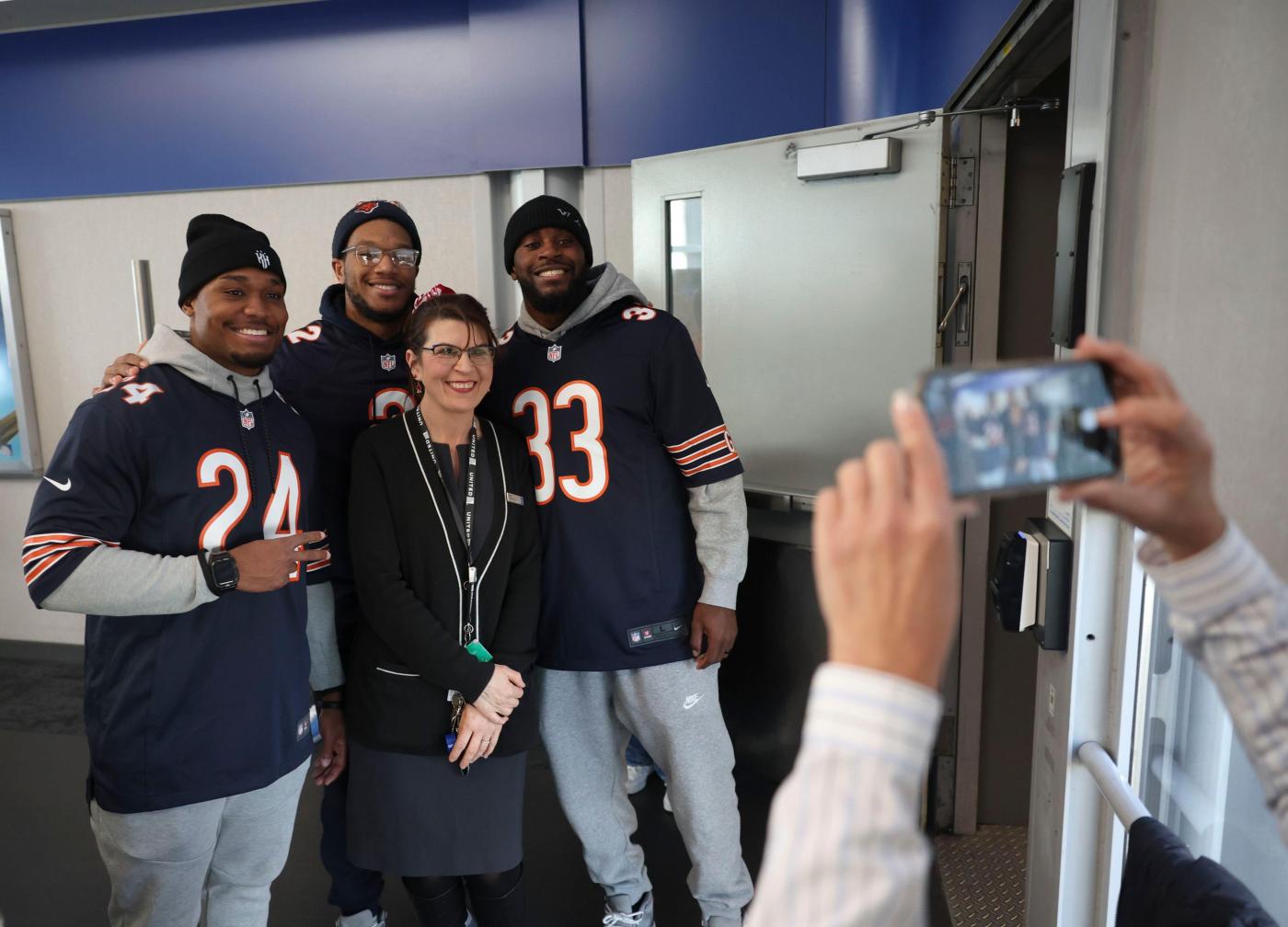
Column: Keeping Jaylon Johnson is paramount for the Chicago Bears — but will they make him the NFL’s highest-paid cornerback?

posted in: News | 0

Teams with an abundance of salary-cap room first look to invest in their own players. It’s always more sound to build from within than to chase veterans in free agency, where teams wind up overpaying for players who, in many cases, are available for a reason.

The Chicago Bears head into a seismic offseason with a healthy cap situation. They have the eighth-most “effective cap space,” according to overthecap.com, at $36.6 million. Effective cap space takes into account where a team will be after it has met what’s called the “Rule of 51,” for offseason bookkeeping purposes, and signed its projected rookie class. For the Bears, that includes the first and ninth picks in the draft.

The Bears’ figure is expected to rise. Releasing free safety Eddie Jackson and offensive lineman Cody Whitehair would create an additional $21 million in cap room. So general manager Ryan Poles has more than enough flexibility to accomplish his goals for the next phase of roster construction.

That process figures to begin with negotiations to retain cornerback Jaylon Johnson, who was voted to the Pro Bowl Games and was a second-team All-Pro after a banner season that included a career-high four interceptions.

“Jaylon’s not going to go anywhere,” Poles said last week, a sure sign the Bears are prepared to use the franchise tag if they’re unable to hammer out a multiyear contract before the window closes. Teams can apply the tag from Feb. 20 through March 5.

The franchise tag for cornerbacks is expected to be about $18.8 million in 2024, and that would set a floor for contract negotiations and buy another five months to work out more than a one-year deal. The Bears have used the franchise tag twice in the last decade — on wide receivers Allen Robinson in 2021 and Alshon Jeffery in 2016 — and placed the transition tag on cornerback Kyle Fuller in 2018.

Johnson is aiming to become the NFL’s highest-paid cornerback, a distinction currently held by Jaire Alexander of the Green Bay Packers or Denzel Ward of the Cleveland Browns, depending on how you measure it.

“The ball’s in my court, the ball’s in my favor,” Johnson said Wednesday when he appeared on the Fox Sports podcast “All Facts No Brakes” with Keyshawn Johnson. “I think it’s just a matter of time and when it happens. Going into the negotiations I don’t think there’s too much to try to talk about.

“I feel like there’s no reason why I can’t be the highest-paid corner in the league. That’s what I’m aiming for. That’s what I’m shooting for. That’s what I think can be done and should be done.”

Alexander received a four-year, $84 million extension in 2022, with the average annual salary of $21 million setting the bar atop the market. That same year, Ward got a five-year, $100.5 million extension ($20.5 million average) with a record $44.5 million fully guaranteed. Jalen Ramsey of the Miami Dolphins is the only other cornerback in the $20 million club in terms of annual average, having signed a five-year, $100 million deal in 2020.

Two years after the Alexander and Ward contracts, with Johnson having bet on himself, it stands to reason he is shooting to reset the market considering his performance and accolades and the rising salary cap. Whether he gets there remains to be seen.

Poles was reluctant to consider a market-setting deal for inside linebacker Roquan Smith in 2022. While he hasn’t spoken specifically about numbers for Johnson, cornerback is considered a more premium position and the Bears could maintain a strength by retaining Johnson with developing second-year cornerbacks Tyrique Stevenson and Terell Smith and third-year nickel back Kyler Gordon.

The cornerback market took a slight dip since Alexander and Ward were paid, but that probably had more to do with the available talent than a shift in thinking about positional value and budget allocation.

Some defensive coaches place a greater premium on cover men than pass rushers with the philosophy that it’s easier for offenses to scheme around a defensive end than an elite cornerback, especially one who isn’t a liability against the run.

That’s not to say you can play great defense without top-tier edge rushers — you can’t. It all goes hand in hand, but if forced to pick an elite cornerback or an elite edge rusher, some coaches would go with the guy who can mirror top-tier wide receivers.

That’s why it is paramount the Bears keep their talent. Johnson turns 25 in April, and he’s only eight months older than Gordon despite having two more years of experience.

The Bears love Johnson and his makeup, and he’s wired exactly how you want a cornerback to be with a desire to face the best receiver every Sunday. The only issue they will have when considering whether to make him the highest-paid cornerback in the league is durability. He missed three games this season, including the finale against the Packers when a minor shoulder injury sidelined him. He missed six games in 2022, two in 2021 and three as a rookie.

That doesn’t take away from what Johnson accomplished this season, meeting the challenge of delivering more on-the-ball production. It’s important to recognize Johnson was having an elite season before Poles acquired defensive end Montez Sweat at the trade deadline. So it’s not like his ascent was the result of a suddenly enhanced pass rush.

The front office has a lot to work through with its attention being pulled in many directions. The Bears need to fill out Matt Eberflus’ coaching staff while preparing for free agency and draft meetings.

Confidence should be high that the Bears will resolve matters with Johnson, but it could take some time. The last three players on whom the Bears used the franchise tag — Robinson, Jeffery and defensive tackle Henry Melton (2013) — played out their one-year deals. The Bears secured running back Matt Forte with the franchise tag in 2012, ultimately leading to a four-year contract.

The goal with Johnson has to be a multiyear agreement.

“We’ll work through it and get something done,” Poles said.

It’s a matter of how high the dollars — and more importantly the guarantees — go.

()

Gov. Evers signs Republican-authored bill to expand Wisconsin child care tax credit

posted in: News | 0

MADISON, Wis. — Democratic Gov. Tony Evers signed a Republican-authored bill Monday that dramatically expands the state child care tax credit, days after vetoing three other GOP bills that would have delivered $800 million in tax cuts.

The governor signed the bill at a charter school in Waukesha on Thursday morning. He said in a statement that he approved the measure because “the cost of child care is too darn high.”

“Signing this bill today will go a long way toward defraying yearly family expenses on child care, giving Wisconsinites some breathing room in their household budgets and making sure our kids have the early support and care they need,” Evers said in the statement.

The median child care cost last year in Milwaukee County, the state’s most populous county, was $19,096, equivalent to about 26% of the median family income of $62,314, according to the U.S. Department of Labor.

The cost last year in Dane County, the state’s second-most populous county, was $19,586, equivalent to about 17.6% of the $94,813 median family income.

The bill expands the state child care tax credit to 100% of the claimants’ federal child care tax credit.

Currently filers can claim only 50% of the federal credit on state taxes.

The amount of maximum eligible expenses under the state credit would grow from $3,000 to $10,000 for one qualifying dependent and from $6,000 to $20,000 for two or more dependents.

The move is expected to cost the state about $73 million in annual revenue, according to the state Department of Revenue.

The measure was part of a package of tax cuts Republicans introduced in January. The legislation included the child care tax credit expansion; a bill that would have expanded the state’s second income tax bracket to cover higher earners, resulting in at least $750 million in income tax savings annually, according to legislative fiscal analysts; a bill that would have increased the marriage tax credit; and a bill that would have increased income exemptions for retirees.

Fiscal analysts projected that taken together the four bills reduced state tax revenue by $2 billion in 2024-25 and about $1.4 billion every year thereafter.

Evers vetoed all the bills except the child care tax credit expansion on Friday, saying the cuts would drain the state’s reserves.

Evers vetoed a similar GOP tax cut plan in November. Republicans lumped all the proposals into a sweeping omnibus bill during that go-around. This time they broke the plans into separate legislation. .

The governor also used his partial veto powers in July to reduce a $3.5 billion income tax cut plan the GOP included in the state budget to just $175 million, which equated to a $3- per-month reduction for the average taxpayer.

Related Articles

Politics |


St. Croix County turns to voters to bolster public safety services

Politics |


Warmer springs, variable ice-out dates are hurting walleye spawning

Politics |


Wisconsin Supreme Court rejects Democrats’ congressional redistricting challenge

Politics |


Shirtless US Senate candidate submerges himself in Wisconsin lake, issues challenge to opponent

Politics |


Judge rules Hudson apartment proposal violates St. Croix River protections

Why don’t some millennials want kids? They say it’s too expensive

posted in: News | 0

By Erin El Issa | NerdWallet

Millennials are a favorite societal punching bag for things like destroying industries — including diamonds and casual chain restaurants — and being cringe. But another gripe some have with Generation Y is that they believe millennials aren’t having enough kids, or any kids at all.

Of millennials who are opting out, many are doing so because raising children is simply too expensive. A new NerdWallet survey finds that just a quarter of parents of minor children (25%) plan to have more children and only 27% of non-parents under age 60 plan to have any children at all. Of millennials (ages 27-42) who aren’t parents, just 25% say they plan to have kids, while 61% don’t and 14% aren’t sure. When millennials who don’t have kids or plan to have kids were asked why, nearly 2 in 5 (38%) said it’s because the overall cost of raising a child is too high.

How much are millennial parents paying for child care?

One major expense parents may have to contend with, at least in the early years, is child care. According to the NerdWallet survey, millennial parents who pay for full-time child care — care at least four days a week — report paying $665.70 a month, on average, per child. Nearly a quarter (23%) are paying $1,000 or more a month, per child.

The estimated median U.S. household income is $77,221 for 2023, according to NerdWallet’s household debt analysis. Assuming monthly child care costs of $665.70, or $7,988 annually, that represents more than 10% of gross income, per child. That’s if you make the median income, if you don’t pay more than the surveyed average for child care and if you only have one child. Plus, child care is only one expense, albeit one of the pricier kid costs you’ll likely have. It’s no wonder the survey found that a quarter of millennial parents of minors (25%) identify child care costs as their biggest financial stressor.

Options for cutting child care costs

If you’re currently struggling to pay for child care, or child care costs are holding you back from having children, there are ways to get these expenses down. Some are more ideal and some are less so, and all depend on what you want for your and your child’s life.

Related Articles

Business |


Business owners face unique challenges when going through a divorce. Here’s what you should know

Business |


Biden just erased $1.2B in student loans. Yours could be next

Business |


Retirement spending is a U-shaped curve. Here’s how to maximize it

Business |


The best time for high CD rates might be right now

Business |


How solo agers, those older people without children, can prepare for later years

According to the survey, nearly 4 in 5 millennial parents of minors (79%) took steps to lower child care costs, like working opposite shifts from their partner so they didn’t need child care (20%) and working from home while caring for their children (17%). The hard truth is that sacrifices are often made in service of keeping child care within budget, and some of them could require major upheaval. Here are some other ways parents have cut down on child care costs.

Use accounts and programs available to you. The survey found that 15% of millennial parents of minors used a dependent care FSA to pay for child care. The dependent care flexible spending account (DCFSA) allows you to deposit up to $5,000 pretax per household to be used for child care expenses within a given year. Look into the benefits your employer provides to see if you have access to a DCFSA to put some money aside for child care and lower your taxable income.

It’s also a good idea to see if you can apply for need-based financial assistance for child care costs, particularly if your family qualifies as low-income. One-tenth of millennial parents of minors (10%) say they receive/received need-based assistance for child care costs, according to the survey. You can also ask local child care centers if they offer scholarships and, if so, what criteria they use to determine eligibility.

Seek out a lower-cost child care option. According to the survey, 15% of millennial parents of minors used a lower-cost alternative to a day care center, like a co-op or home-based day care. Home-based child care may be more affordable than traditional child care centers or a dedicated nanny. This option could provide your child with a cozy environment to spend their days in with a tight-knit group of kids. A few things to know: In-home child care may include mixed-age groups and could lack a structured curriculum, compared with center-based options. Also, your point of contact for any issues at a co-op or home-based day care will be the provider themself; there likely won’t be a corporate office or formal administrator like you might find at a day care center.

Move closer to family, or to a more affordable community. The survey found that 17% of millennial parents of minors say they moved closer to their or their partner’s family to get help with child care, while 10% moved to a location with cheaper child care. This may be ideal for those parents who already want to move, particularly for those who want to be closer to family and whose family has offered assistance with child care. Whether this works for you will likely depend on your job, social and property ties in your current location, familial relationships and willingness to relocate.

Leave the workforce temporarily. According to the survey, 13% of millennial parents of minors say they left the workforce to take care of their children and 13% say their partner left the workforce. This is a highly personal decision. If you or your partner wants to be a stay-at-home parent and the other partner can earn enough to support the family, it could be a good idea. If this isn’t something you particularly want, but you’re open to the possibility, do the calculations to figure out which path makes most financial sense. Make sure to factor in the costs of missing years of career training, promotions and raises, and the challenges of reentering the workforce after several years away.

Wait it out. If you can cover child care costs but have to temporarily scale back on other financial goals to do so, that’s OK. While the hefty bill can be hard to stomach, most children won’t require long-term child care, at least not on a full-time basis. So if you can swing it, it might be worth it to cut back on other things for now and make plans for how to reallocate those funds toward making financial progress when your child no longer needs that full-time care.


Erin El Issa writes for NerdWallet. Email: erin@nerdwallet.com.