Women’s hockey: Gophers face stern test against No. 2 Wisconsin

posted in: News | 0

The fifth-ranked Minnesota Gophers (27-8-2) face a formidable opponent Friday afternoon in the WCHA Final Faceoff at Ridder Arena.

The Wisconsin Badgers (31-5-0), the No. 2 team in the country, have a high-octane offense that leads the WCHA with 188 goals, an average of 5.22 per game. And they keep the puck out of their own net at an impressive rate, with a goals-against average of 1.50.

“The camp roster for Team USA’s World (Championships) team just came out, and they have seven players on it,” Gophers coach Brad Frost said. “They have skill up and down their lineup.”

While a Gophers win would be considered an upset, they do enjoy a lofty standing in their own right. The Gophers are No. 5 in the Pairwise rankings, which mirror seeding for the NCAA tournament. A win over Wisconsin could put the Gophers in position to be one of four teams to host an NCAA regional.

“There are so many Pairwise indicators, and you plug in who wins and who loses,” Frost said. “That’s what coaches do — we get paid to worry. It’s something we obviously look at. For this team in particular, you always want to be at home. But if we’re on the road, we’re on the road.

“And we’ve had a lot of success away from Ridder Arena as well. So, for us, it’s more about wanting to have success in this tournament, to try to win the tournament. I think it’s the hardest tournament to win.

“Whoever wins it is definitely going to earn it. So, if we play well and we win a game or two and we move up because of that, great. But we certainly like the fact that we are in the NCAA tournament; it’s just a matter of where.”

The Badgers won three of the four meetings with the Gophers during the regular season. The Gophers’ victory came in the first meeting, a 5-3 win at Ridder on December 8.

“When they’ve beaten us they’ve scored four or five,” Frost said. “It’s going to be a tall task if we give up four or five. So much of it will be determined by us. If we get sloppy with the puck and turn pucks over in neutral ice, it’s going to be a long night.”

While the Gophers boast the nation’s leading goal scorer in Abbey Murphy with 33, the Badgers’ scoring depth runs much deeper. Kirsten Simms, who leads the nation in scoring, has 29 goals, followed by Lacey Eden with 26, Britta Curl with 21 and Cassie Hall and Casey O’Brien, each with 19.

“Wisconsin is a great team,” Gophers assistant captain Ella Huber said. “They’re a fast team. We’ve been working on their rushes, on all the people they bring into the zone. But relaxing, and knowing we can beat this team if we play together is really what is going to be getting us through it.”

Offensively, the Badgers excel at making the extra pass, and have made a habit this season of making defenders and goaltenders alike look bad when depositing the puck into an open net. It’s an aspect of the Badgers’ game that the Gophers have focused on in practice this week.

“Picking up people on the way back,” Frost said. “They’ll send four on the rush almost consistently. They have (Caroline) Harvey, the best D in the country, who is almost another forward for them.

“So the more time and space we give them, the worse off it is going to be. So, trying to force that puck carrier to make a decision before they want to, before they can see that open play on the back side. And our team’s awareness that we’re not laser-focused on the puck.”

A major challenge for the Gophers will be to not emphasize defense to the point of hampering their own ability to score.

“We’ll start with defense and keep it out of our net,” Huber said. “When we use each other, and the whole team is involved, that’s when we’re going at our best.”

Related Articles

College Sports |


Women’s hockey: Gophers close out MSU Mankato in WCHA quarterfinals

College Sports |


Women’s hockey: Josefin Bouveng scores five points, Gophers tie WCHA series with Mavericks

College Sports |


Women’s hockey: MSU Mankato scores 3 goals in third, shocks Gophers in Game 1 of WCHA playoff series

College Sports |


Women’s hockey: Gophers close regular season with sweep of Duluth

College Sports |


Gopher women earn extra point in shootout against Minnesota Duluth
Minneapolis City Council boosts pay for Uber and Lyft drivers

posted in: News | 0

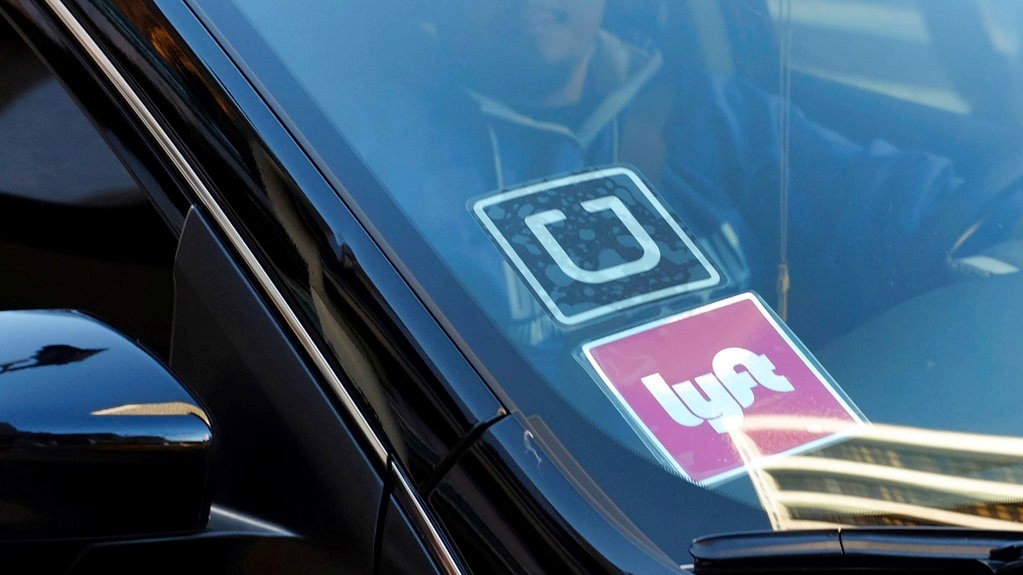
The Minneapolis City Council passed a measure Thursday that would increase wages for drivers of ride-hailing services to an equivalent of more than $15 an hour — which opponents say may increase costs to customers and fears that Uber and Lyft will follow through on their threats to leave the area altogether.

Council members passed the measure in a 9-4 vote despite Mayor Jacob Frey’s promise to veto the measure due to concerns that the ride-hailing companies could leave Minneapolis and even stop operating throughout Minnesota. If the mayor vetoes the measure, the council could override his action if they have support from at least nine members.

Uber and Lyft have threatened to leave if the measure is approved, but Council Member Jamal Osman voted for the proposal, saying the fear of their departure “does not make it OK” for companies to rely on drivers — often people of color and immigrants in the Minneapolis area — for cheap labor.

Council Member Michael Rainville voted against the measure.

“Minneapolis is not an island,” Rainville said, noting that ride-hailing customers often travel between Minneapolis and other parts of the state.

Ride costs may spike for everyone, including people with low incomes and people with disabilities who rely on ride-hailing services to get around, he added.

Many of the drivers in Minneapolis are African immigrants who have been pushing for higher wages at the state and city levels since 2022.

“We have been waiting for this for a long time. Almost two years,” said Ahmed Ahmed, one of the dozens of ride-hailing drivers who attended the meeting to see the vote and celebrate when the measure passed.

The measure requires ride-hailing companies to pay each driver at least $1.40 per mile and $0.51 per minute for the time spent transporting a rider — or $5 per ride, whichever is greater — excluding tips. This only applies to the portion of the ride within the city.

The formula intends to ensure drivers are paid the Minneapolis minimum wage equivalent of $15.57 an hour. It would take effect on May 1.

Lyft spokesperson CJ Macklin said in an email after the vote that if this measure becomes law, “it will force Lyft to cease operations” in the city on May 1.

“We support a minimum earnings standard for drivers, but it must be done in a way that allows the service to sustainably and affordably operate for riders,” the company said in a statement.

Uber did not immediately respond to a request for comment from the Associated Press.

Seattle and New York City have passed similar policies in recent years that increase wages for ride-hailing drivers. Uber and Lyft still operate in those cities.

The Minneapolis City Council tried to pass a similar measure last year, but the mayor vetoed it. Council members did not have enough votes to override his veto then.

Related Articles

Business |


Three more charged with sending $2.2M in fentanyl pills to Twin Cities hidden in stuffed animals

Business |


Burnsville man gets 15 years for drug trafficking

Business |


Man imprisoned for Minneapolis sexual assaults sentenced for 2013 abduction of teen in Andover

Business |


Twin Cities commercial janitors began a three-day strike on Monday. Here’s who could be next.

Business |


Twin Cities see earliest 70-degree day on record

Minnesota added 3,000 jobs in January; unemployment rate unchanged at 2.7%

posted in: Society | 0

Minnesota’s steady pace of job creation continued in January with the addition of 3,000 new payroll positions, the state’s Department of Employment and Economic Security reported Thursday. That marked job growth in nine of the past 12 months.

The state’s January unemployment rate remained at a low 2.7%, the same as the revised rate in December. The labor force decreased by 1,981 over the month, nudging the labor force participation rate down one-tenth of a percentage point to 67.9%.

Average hourly wages for all private sector workers in Minnesota increased 56 cents to $37.46 in January over the month, and they were up $1.78, or 5%, over the year.

The U.S. Consumer Price Index, a common inflation measure, rose 3.1% over the year in January, meaning wage increases were 1.9 points higher than inflation over the year.

“Minnesota continues to see healthy job growth and wages are outpacing inflation, both of which are great news for workers,” DEED Commissioner Matt Varilek said in a Thursday statement. “During our tight labor market, DEED’s workforce development programs help prepare more Minnesotans to enter high-demand employment with family-sustaining wages.”

In January, five major employment categories in Minnesota gained jobs on a seasonally adjusted basis:

Education and Health Services gained 2,600 jobs
Trade, Transportation and Utilities gained 1,100 jobs
Leisure and Hospitality gained 800 jobs
Professional and Business Services gained 600 jobs
Information gained 100 jobs

Related Articles

Business |


Wisconsin man gets more prison time in slaying, dismemberment of St. Paul man

Business |


Union: 1K took part in one-day strike seeking higher wages, better staffing at MN nursing homes

Business |


Bill would bar Minnesota schools, colleges, governments from removing LGBTQ+ rainbow pride symbols

Business |


Anytime Fitness parent company Self Esteem Brands announces global merger with Orangetheory

Business |


Target launches new paid membership program in a bid to drive sales at a time of cautious spending

Cannabis sales in Minnesota are likely to start later than expected.

posted in: Society | 0

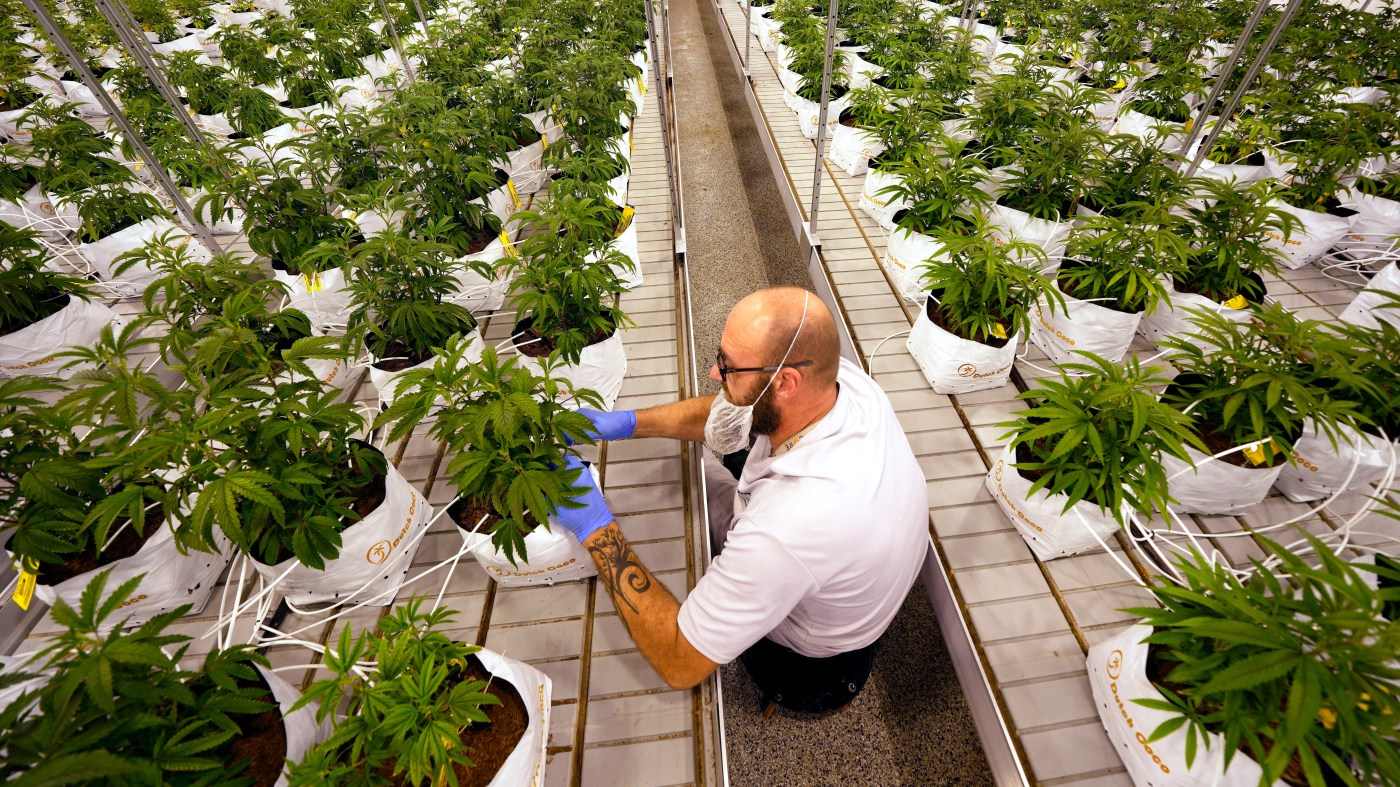
Minnesota probably won’t meet its goal of launching full-scale retail marijuana sales in the first quarter of 2025 because of the time it will take to draft regulations and issue licenses, the state’s top cannabis regulator acknowledged Thursday.

While Charlene Briner, interim director of the Office of Cannabis Management, didn’t totally rule out the possibility of some retailers opening early next year, she conceded during a briefing for reporters that she doesn’t know how long it will take until legal marijuana is widely sold across the state.

“I don’t think any of can answer that question,” Briner said.

Briner spoke during a briefing that was called to highlight legislation introduced Thursday to make a series of updates to the state law legalizing recreational cannabis for adults, which was enacted last May. Using, possessing and growing marijuana for personal use, within limits, became legal last August. But sales are still a legal gray area.

Many of the proposed changes to the law are aimed at strengthening “social equity” opportunities for people who come from communities deemed harmed by the the prohibition against marijuana to get into the industry legally.

Currently, only a few tribally owned on-reservation shops are legally allowed to sell recreational marijuana in Minnesota because tribal sovereignty exempts them from state regulation.

Depending on when the state’s regulations are put in place, and then the first licenses are issued, Briner said, well-capitalized retailers could conceivably get inspected and open their doors “within a few weeks or a couple of months.” But others may need more time to hire and train staff, she added.

“It’s not for OCM to determine the timeline between obtaining a license and when your door is open for business,” she said. “I don’t think that any of us can give that definite sort of light-switch-on date.”

There have already been bumps along the way toward establishing a legal marijuana marketplace in Minnesota. Gov. Tim Walz has yet to name a permanent director for the regulatory office. The administration reopened the application process after it emerged that his first nominee hadn’t been fully vetted.

Briner said the process in Minnesota is not going slower than in other states. But data compiled by KMSP-TV show that the average time in 20 other states has been 17 months from the vote to legalize to the first retail sales, with a median time of 14 months. It took 14 months in Colorado, the first state to legalize it, while it took Vermont 57 months. Some states took less than a year. Minnesota appears poised to need at least 22 months.

“We are working very quickly, and we’re trying to do it thoughtfully, while also mitigating the risks that we have,” Briner said. “We are intensely aware that the gap between full legalization and a regulated market is important to minimize, and we are working as quickly as we can to make that happen .”

Related Articles

Business |


Lisa Jarvis: Going ‘California sober’ may be bad for your heart

Business |


Southern Minnesota mayor and his son are charged with illegally cultivating marijuana

Business |


Study: More older adults are using cannabis post-pandemic

Business |


Did legal marijuana help or harm Californians? Here’s what the data says

Business |


Minnesota cannabis regulators say minimum of 381 dispensaries likely statewide