Names to know for the Chicago Bears in this week’s Senior Bowl, including a top edge rusher and a bevy of centers and wide receivers

posted in: News | 0

The quarterback conversation will dominate chatter for the Chicago Bears leading up to the NFL draft in three months, and that ought to be a major focus this week at the Senior Bowl in Mobile, Ala.

Even though top prospects such as USC’s Caleb Williams, North Carolina’s Drake Maye, LSU’s Jayden Daniels and Michigan’s J.J. McCarthy are not in the game, it will be a chance to get a close look at Washington’s Michael Penix Jr. and Oregon’s Bo Nix.

Add Tulane’s Michael Pratt, South Carolina’s Spencer Rattler and Notre Dame’s Sam Hartman — who aren’t candidates to be the No. 1 pick — and it would be an intriguing bunch of passers in any draft cycle.

The Bears will be able to see Penix and Nix up close four weeks before the scouting combine, and general manager Ryan Poles likely has a detailed plan to vet all options.

Penix threw for 9,504 yards over the last two seasons at Washington, and teams will have plenty of questions about knee and shoulder injuries that interrupted his first four years at Indiana. Nix also thrived after transferring, passing for 8,101 yards and 74 touchdowns with only 10 interceptions at Oregon the last two years after three up-and-down seasons at Auburn.

The Bears drafted four players who participated in the Senior Bowl last year, all in the first four rounds: right tackle Darnell Wright (first round, 10th pick), cornerback Tyrique Stevenson (second round), defensive tackle Zacch Pickens (third) and running back Roschon Johnson (fourth). They also signed undrafted quarterback Tyson Bagent, who improved his stock with a week in Mobile.

The Senior Bowl was loaded with talent last year, when 36 of the first 100 draft picks participated in the game. Overall, 100 players who were in Mobile were drafted, accounting for 39% of all selections.

While it’s unlikely the first pick in this year’s draft will be in Mobile, you can’t rule out the possibility the ninth pick — which the Bears also own — will be on display.

UCLA edge rusher Laiatu Latu is one of the highest-regarded prospects committed to the Senior Bowl. Latu had 23 1/2 sacks over the last two seasons for the Bruins, and NFL teams will have a chance to see him perform in practice and the game.

They will have a lot of medical questions for Latu that will require due diligence at the combine, as he briefly retired from football with a neck injury after beginning his college career at Washington. Latu proved to be durable at UCLA, though, and for teams comfortable with his health, he could emerge as the top edge rusher in the draft.

That’s certainly a position the Bears need to figure out as they seek a presence opposite Montez Sweat. It’s not a great draft for pass rushers overall, but Alabama’s Chris Braswell, coming off a 10 1/2-sack season, is regarded as a potential Day 2 pick and is playing in the Senior Bowl.

Center figures to be a primary need for the Bears, and there’s an interesting crop of hopefuls. Before we dive into the names, it’s worth wondering what philosophy the Bears will take. If they plan on drafting a quarterback, would they hesitate to have a rookie snapping the ball? Given the option, a lot of teams would prefer a veteran center to aid a rookie quarterback with pre-snap reads and calls.

But if Poles and the coaching staff believe there’s a savvy prospect who can be an asset to a young quarterback — assuming the Bears draft one — perhaps they like the idea of more youth on the line.

In that case, West Virginia’s Zach Frazier, Oregon’s Jackson Powers-Johnson and Duke’s Graham Barton — a left tackle in college who is expected to play center this week — are interesting possibilities. Add Georgia’s Sedrick Van Pran and Wisconsin’s Tanor Bortolini, and there’s no shortage of options.

Top wide receivers rarely head to Mobile, and you won’t see any of the elite prospects such as Ohio State’s Marvin Harrison Jr., LSU’s Malik Nabers or Washington’s Rome Odunze. But it’s not only a top-heavy wide receiver class; there’s also tremendous depth. And that’s where players such as South Carolina’s Xavier Legette, North Carolina’s Tez Walker, Arizona’s Jacob Cowing, Louisville’s Jamari Thrash and Western Kentucky’s Malachi Corley come into play.

The Bears, for the first time in a while, have the No. 1 receiver spot figured out with DJ Moore. With Darnell Mooney coming out of contract, they don’t have a No. 2 and could use some competition for Tyler Scott, who just completed his rookie season. Considering the wealth of options, the draft would seem to make more sense than a splurge in free agency, where proven options will be available.

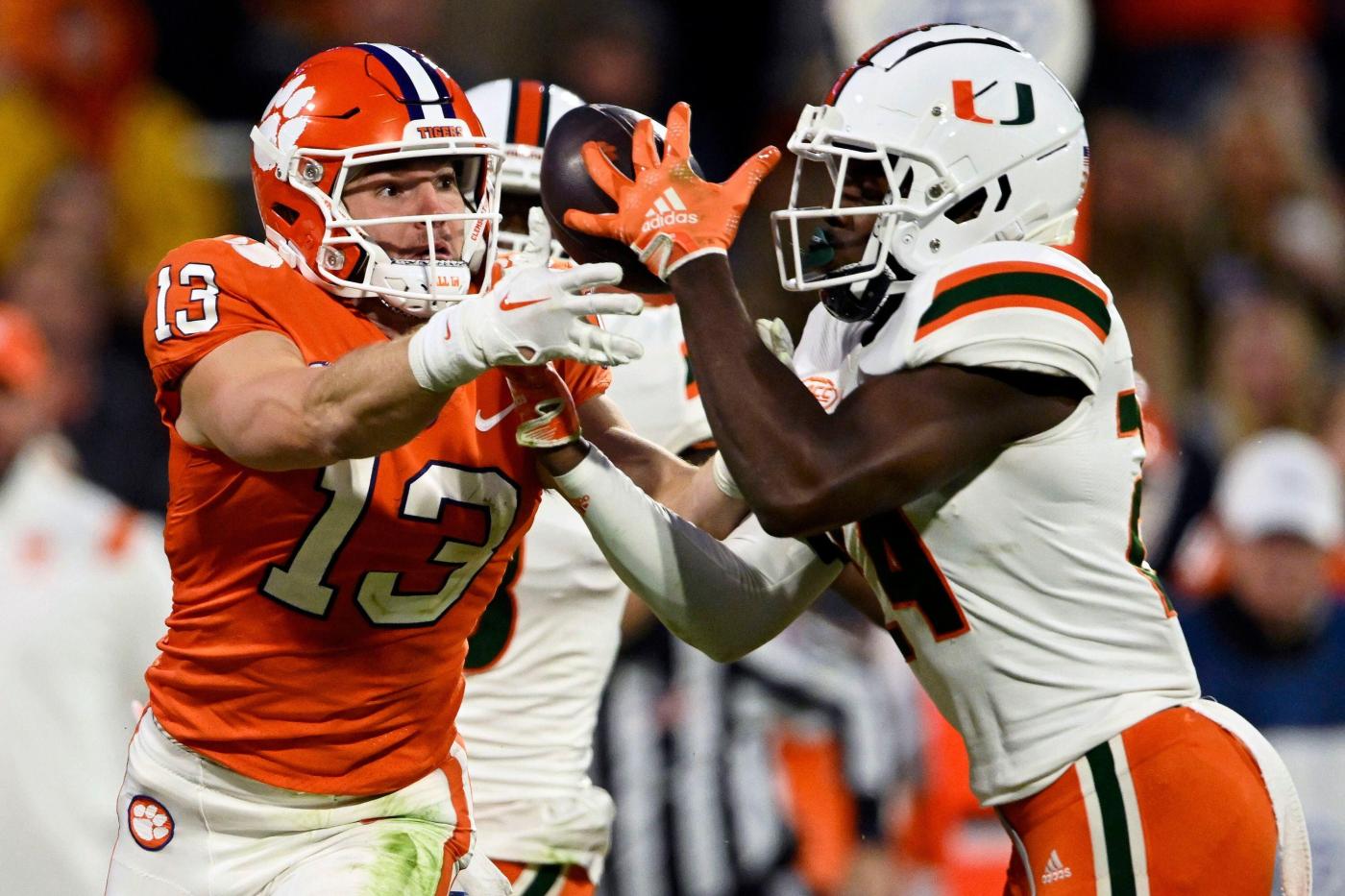
Free safety looms as a question on defense, and Miami’s Kamren Kinchens will be in the spotlight as a potential late first-round pick. He made 11 interceptions the last two seasons for the Hurricanes, and while there are questions about his consistency, few draft options possess the kind of range he has.

Teams are always seeking talent for the defensive line, and Texas’ Byron Murphy is an undersized player (6-foot-1, 297 pounds) who could be a nice fit for the Bears as a disruptive interior player. He had 15 sacks in three seasons for the Longhorns with 8 1/2 this past season.

It might be more of a want than a need — and the Bears were pleased with the development of 2023 second-round pick Gervon Dexter — but there’s no such thing as too many quality defensive linemen.

()
US forces fly in to beef up security at embassy in Haiti and evacuate nonessential personnel

posted in: Society | 0

By EVENS SANON (Associated Press)

PORT-AU-PRINCE, Haiti (AP) — The U.S. military said Sunday that it had flown in forces to beef up security at the U.S. Embassy in Haiti and allow nonessential personnel to leave.

The aircraft flew to the embassy compound, the U.S. Southern Command said, meaning that the effort involved helicopters. It was careful to point out that “no Haitians were on board the military aircraft.” That seemed aimed at quashing any speculation that senior government officials might be leaving as the gang attacks in Haiti worsen.

The neighborhood around the embassy in the capital, Port-au-Prince, is largely controlled by gangs.

“This airlift of personnel into and out of the Embassy is consistent with our standard practice for Embassy security augmentation worldwide, and no Haitians were on board the military aircraft,” according to the Southcom statement.

In many cases, nonessential personnel can include the families of diplomats, but the embassy had already ordered departure for nonessential staff and all family members in July. The personnel ferried out of the embassy may have simply been rotating out, to be refreshed by new staff.

The statement Sunday said that the United States remains focused on aiding Haitian police and arranging some kind of U.N.-authorized security deployment. But those efforts have been unsuccessful so far.

Haiti’s embattled prime minister, Ariel Henry, traveled recently to Kenya to push for the U.N.-backed deployment of a police force from the East African country to fight the gangs. But a Kenyan court ruled in January that such a deployment would be unconstitutional.

Henry, who is facing calls to resign or form a transitional council, remains unable to return home. He arrived in Puerto Rico on Tuesday after he was unable to land in the Dominican Republic, which borders Haiti.

On Saturday, the office of Dominican President Luis Abinader issued a statement saying that “Henry is not welcome in the Dominican Republic for safety reasons.” The Dominican Republic, which shares the island of Hispaniola with Haiti, has closed its land border.

“Given the current situation, the presence of the Haitian prime minister in the Dominican Republic is not considered appropriate,” according to the statement, adding that “this decision reflects the firm position of the Dominican government to safeguard its national security and stability.”

The statement described the security situation in Haiti as “totally unsustainable” and said that it “poses a direct threat to the safety and stability of the Dominican Republic.”

The statement predicted “the situation could deteriorate even further if a peacekeeping force is not implemented urgently to restore order.”

Caribbean leaders have called for an emergency meeting Monday in Jamaica on what they called Haiti’s “dire” situation. They have invited the United States, France, Canada, the United Nations and Brazil to the meeting.

Members of the Caricom regional trade bloc have been trying for months to get political actors in Haiti to agree to form an umbrella transitional unity government.

Caricom said Friday that while regional leaders remain deeply engaged in trying to bring opposition parties and civil society groups together to form a unity government, “the stakeholders are not yet where they need to be.”

“We are acutely aware of the urgent need for consensus to be reached,” according to the statement. “We have impressed on the respective parties that time is not on their side in agreeing to the way forward. From our reports, the situation on the ground remains dire and is of serious concern to us.”

In February, Henry agreed to hold a general election by mid-2025, and the international community has tried to find some foreign armed force willing to fight gang violence there.

Caricom has also pushed Henry to announce a power-sharing, consensus government in the meantime, but the prime minister has yet to do so even as Haitian opposition parties and civil society groups are demanding his resignation.

Henry, a neurosurgeon, was appointed as Haiti’s prime minister after the July 2021 assassination of President Jovenel Moise.

It was unclear whether Henry would be in Jamaica for the Caricom meeting.

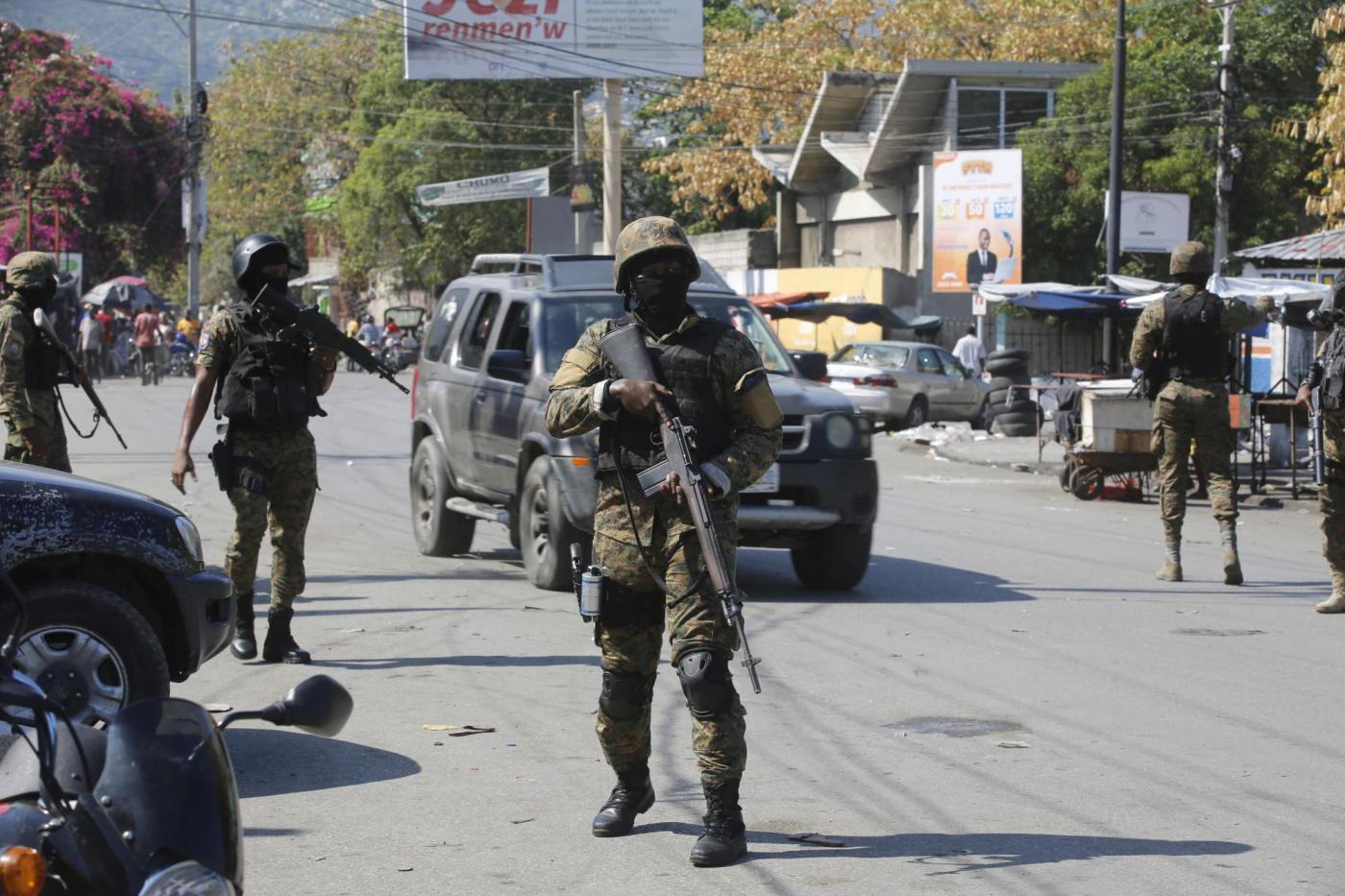
In Port-au-Prince, meanwhile, police and palace guards worked Saturday to retake some streets in the capital after gangs launched major attacks on at least three police stations.

Guards from the National Palace accompanied by an armored truck tried to set up a security perimeter around one of the three downtown stations after police fought off an attack by gangs late Friday.

Sporadic gunfire continued Saturday, and one woman writhed in pain on the sidewalk in downtown Port-au-Prince with a gunshot wound after a stray bullet hit her in the leg.

The unrelenting gang attacks have paralyzed the country for more than a week and left it with dwindling supplies of basic goods. Haitian officials extended a state of emergency and nightly curfew on Thursday as gangs continued to attack key state institutions.

But average Haitians, many of whom have been forced from their homes by the bloody street fighting, can’t wait. The problem for police in securing government buildings is that many Haitians have streamed into them, seeking refuge.

“We are the ones who pay taxes, and we need to have shelter,” said one woman, who didn’t give her name for safety reasons.

Another Port-au-Prince resident, who also did not give his name, described Friday’s attacks.

“They (the gangs) came with big guns. We have no guns and we cannot defend ourselves. All of us, the children are suffering,” said the man.

Muslims spot Ramadan crescent moon in Saudi Arabia, meaning month of fasting starts Monday for many

posted in: Society | 0

By JON GAMBRELL (Associated Press)

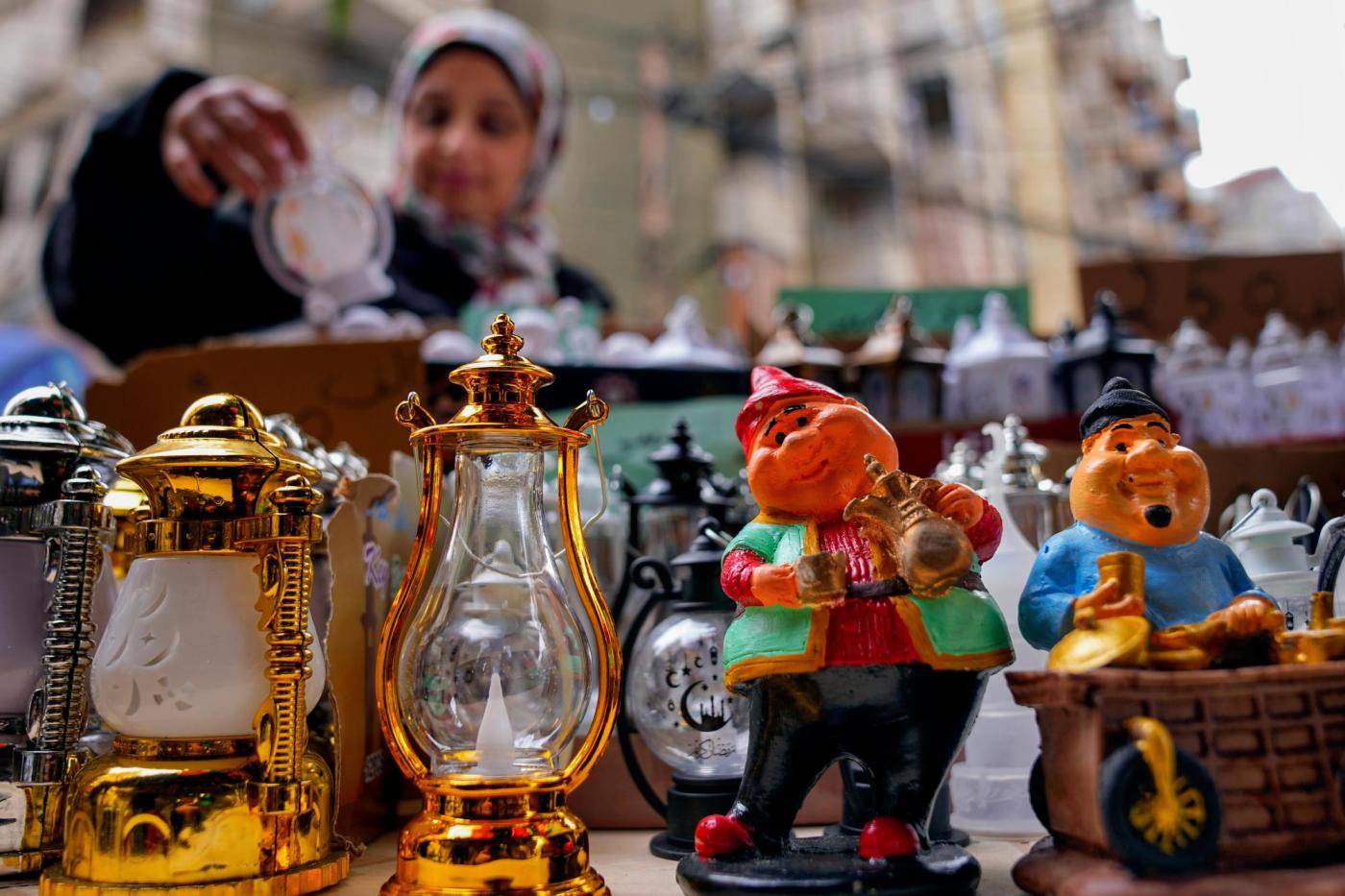
DUBAI, United Arab Emirates (AP) — Officials saw the crescent moon Sunday night in Saudi Arabia, home to the holiest sites in Islam, marking the start of the holy fasting month of Ramadan for many of the world’s 1.8 billion Muslims.

The sacred month, which sees those observing abstain from food and water from sunrise to sunset, marks a period of religious reflection, family get-togethers and giving across the Muslim world. Seeing the moon Sunday night means Monday is the first day of the fast.

Saudi state television reported authorities there saw the crescent moon. Soon after, multiple Gulf Arab nations, as well as Iraq and Syria, followed the announcement to confirm they as well would start fasting on Monday. Leaders also shared messages of congratulations the month had begun.

However, there are some Asia-Pacific countries like Australia, Brunei, Indonesia, Malaysia and Singapore, that will begin Ramadan on Tuesday after failing to see the crescent moon. Oman, on the easternmost edge of the Arabian Peninsula, similarly announced Ramadan would begin Tuesday. Jordan will also begin Ramadan on Tuesday.

This year’s Ramadan comes as the Middle East remains inflamed by the ongoing Israel-Hamas war in the Gaza Strip. That’s raised fears that the conflict may spark unrest far beyond the current borders of the war.

Saudi King Salman specifically pointed to the Israel-Hamas war in remarks released to the public after the Ramadan announcement.

“As it pains us that the month of Ramadan falls this year, in light of the attacks our brothers in Palestine are suffering from, we stress the need for the international community to assume its responsibilities, to stop these brutal crimes, and provide safe humanitarian and relief corridors,” the king said.

Meanwhile, inflation and high prices of food around the world since the pandemic began continue to pinch.

In Saudi Arabia, the kingdom had been urging the public to watch the skies from Sunday night in preparation for the sighting of the crescent moon. Ramadan works on a lunar calendar and moon-sighting methodologies often vary between countries, meaning some nations declare the start of the month earlier or later.

However, many Sunni-dominated nations in the Middle East follow the lead of Saudi Arabia, home to Mecca and its cube-shaped Kaaba that Muslims pray toward five times a day.

In Iran, which views itself as the worldwide leader of Islam’s minority Shiites, authorities typically begin Ramadan a day after Sunnis start. Already, the office of Iran’s Supreme Leader Ayatollah Ali Khamenei announced Ramadan will start on Tuesday, according to the state-run IRNA news agency.

During Ramadan, those observing typically break their fast with a date and water, following the tradition set by the Prophet Muhammad. Then they’ll enjoy an “iftar,” or a large meal. They’ll have a pre-dawn meal, or “suhoor,” to sustain themselves during the daylight hours.

Ramadan is the ninth month of the Islamic lunar calendar; the month cycles through the seasons and the months in the Gregorian calendar.

Muslims try to avoid conflict and focus on acts of charity during the holy month. However, the war in the Gaza Strip is looming large over this year’s Ramadan for many Muslims.

The war began on Oct. 7 with Hamas’ attack on Israel that killed around 1,200 people and saw 250 others taken hostage. Israel responded with a grinding war targeting the Gaza Strip that so far has seen more than 30,000 Palestinians killed and an intense siege of the seaside enclave cutting off electricity, food and water.

Scenes of Palestinians praying before bombed-out mosques and chasing after food airdropped by foreign nations continue to anger those across the Middle East and the wider world. The U.S. has been pressuring Israel, which relies on American military hardware and support, to allow more food in as Ramadan begins. It also plans a sea corridor with other partners.

The war, as well as Israeli restrictions on Muslims praying at Jerusalem’s Al-Aqsa Mosque, Islam’s third-holiest site, may further inflame militant anger. The site is also known as the Temple Mount, which Jews consider their most sacred site.

The Islamic State group, which once held a self-described caliphate across territory in Iraq and Syria, has launched attacks around Ramadan as well. Though now splintered, the group has tried to capitalize on the Israel-Hamas war to raise its profile.

War also continues to rage across Sudan despite efforts to try and reach a Ramadan cease-fire.

___

Associated Press religion coverage receives support through the AP’s collaboration with The Conversation US, with funding from Lilly Endowment Inc. The AP is solely responsible for this content.

Letters: The state of Minnesota shouldn’t be the big boss of local zoning

posted in: Society | 0

Stay out of local zoning, Bigfoot

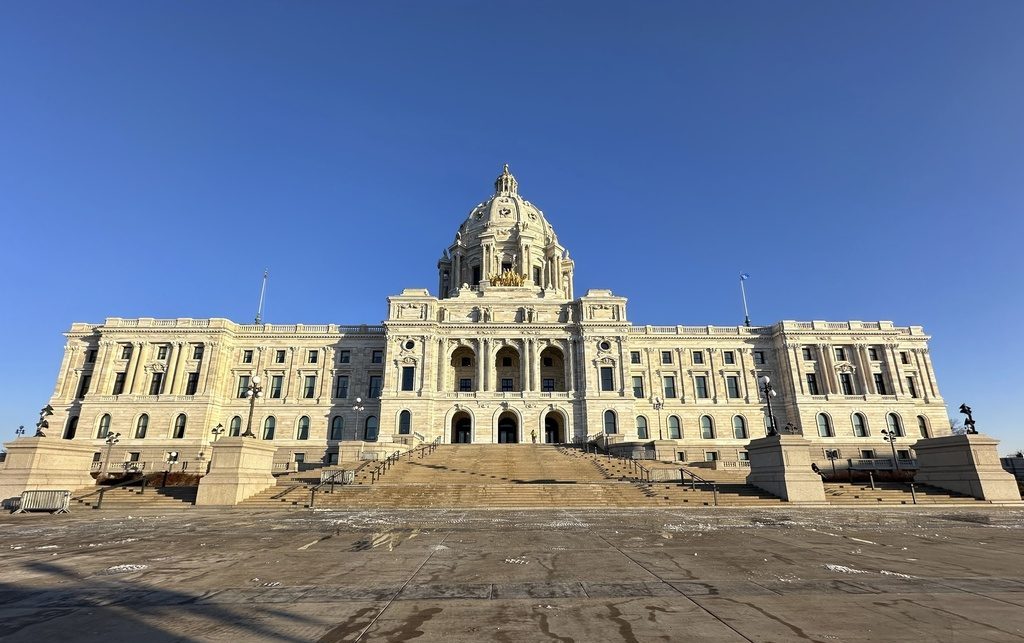
Our state Legislature is considering two bills — AF 4009 and SF 3964 — that would eliminate local control over single-family zoning in Minnesota. Decisions on parking and housing aesthetics — as well as the subdivision of lots in your neighborhood — would be controlled by the state. This legislation is needed, according to bill sponsors, for ‘the common good.’

Cities around the state — like Bemidji — would essentially lose control of city zoning and land-use authority with this legislation.

Do we need more housing? Yes. The state already passed $1 billion for housing last year. That will have a huge impact of housing availability.

There are also thousands of homes around the state and in the Twin Cities that are in disrepair. The best solution would be to offer tax incentives to update them first before passing this draconian legislation. It will provide more housing, and business to the Minnesota construction industry.

The bottom line is Minnesotans should control their own local zoning laws without interference from the state.

Jim Piga, Mendota Heights

How about a St. Paul cease-fire resolution?

The Saint Paul City Council unanimously called for a cease fire in Gaza, which is about 6,200 miles from St. Paul. With crime so high in St. Paul and on the light rail Green Line in particular, perhaps the City Council should pay more attention to things closer to home and call for a “crime cease fire” for St. Paul.

Ron Schaaf, St. Paul


Hamstringing all other needs

I agree that early childhood education is vital. Reducing St. Paul families’ ability to afford homes and apartments by raising property taxes through a ballot referendum in November so that an ill-defined, marginally funded child care program can be developed is not the appropriate response.

Program backers have yet to identify some key items that, unfortunately, will lead to the program’s (expensive) failure. Even though tax increases would be significant, only a small portion of the demand would be met. According to economist Rob Grunewald, the city needs an additional $39 million annually (for comparison, the St. Paul library budget is $21 million annually). The city council resolution calls for “performance indicators” and yet does not even require a minimum Parent Aware quality rating.

St. Paul cannot afford to tackle an issue that, because of magnitude and complexity, needs to be addressed at the federal and state levels. It will make future potential increases for roads, housing, safety or school excess levy referendums that much more difficult to address. Hamstringing all other needs to address one is not a winning strategy.

Alan Ickler, St. Paul


Pass protections for renters

As a longtime St. Paul resident, I was pleased to read the news report, “District, teachers union reach deal, avoid strike.” Now I would like to see Mayor Carter work with the City Council to pass the Safe Housing Ordinance, which provides much-needed protections for the 47% of our city’s population who rent their homes.

My husband and I own and live in a duplex where we rent out our lower unit. We strive to provide safe, secure, affordable, fair housing. Not having moved for 42 years, I can’t imagine needing to move every six months or year because my rent is raised again, my lease is unexpectedly not renewed, or the landlord can make a lot more money by selling the property. Just imagine having less than 30 days to find a new place you can afford, pack up all of your belongings, arrange to have everything moved, get your children enrolled in a new school, change your address on your mail, driver’s license, etc., all while working and handling everyday life.

Strong public schools and safe, stable and affordable housing are essential, especially for our children. I’m proud to be a resident of St. Paul where City Council President Mitra Jalali has been a champion for passing strong renter protections that help to create a city and economy that work for all of us, now and in the future. Let’s pass a Safe Housing Ordinance that we feel good about.

Yvonne Cournoyer, St. Paul


That didn’t take long

Well, it didn’t take long for the graffiti punks to put their mark on the city’s sparkling new Highland Bridge development.

This is just an early indication of what comes next. The skateboard park (whose idea was that?) on Ford Parkway and River Road is now covered in graffiti, as is the construction fencing along Ford Parkway between Mt. Curve Boulevard and Cretin Avenue. It won’t be long before homeless encampments appear in Highland Bridge along with increased crime as development and density increase.

Look around the rest of St. Paul and you can see the future for Highland Bridge. This is what cities look like when they are controlled by socialist democrats.

Kevin J. Kelly, St. Paul

Related Articles

Letters to the Editor |


Letters: There should be zero deaths from fire in modern buildings

Letters to the Editor |


Letters: To deter carjackers and assault? Issue personal bodycams at a low price

Letters to the Editor |


Letters: Meet these 3 housing goals, St. Paul Council

Letters to the Editor |


Letters: Here’s one reason for front license plates

Letters to the Editor |


Letters: Don’t let repeat offenders keep repeating, Minnesota