Real World Economics: Trump’s stated trade policy would have bad tradeoffs

posted in: News | 0

Edward Lotterman

As the 2024 presidential race nears and narrows, questions increasingly arise. What economic policies would a second-term Donald Trump follow? What about Joe Biden?

Immigration is likely to be a key issue. That is largely but not entirely an economic issue, but also a complex one that deserves treatment alone. After that, inflation is a key issue for many voters even though the annualized rate for the last three months, 3.8%, is below the average for the last four years of the Reagan administration in the 1980s or the eight of Bill Clinton in the 1990s.

Inflation is tied to the Federal Reserve, of which Biden would likely keep hands off. But what a second Trump administration would do there based on his actions in his previous term also deserves separate treatment.

Inflation also is tied to trade policy, and this is what we’ll focus on. Our nation imports large quantities of consumer goods as well as other finished goods and raw materials. Values of imports exceed those of exports — as they have for most of the last four decades.

So what would Trump or Biden do about trade? Trump promises to raise taxes on imports. Biden says little and it is safe to assume that, as with many other issues, he would “stay the course” set in his first term.

A recent episode of The Bulwark Podcast, the opinion series started by well-known conservative pundit Charlie Sykes, is good background for those interested in trade issues.

Republican Tim Miller, who worked as a campaign staffer for late senator John McCain, former governor and current Sen. Mitt Romney and former Govs. Jon Huntsman and Jeb Bush, now runs the podcast. He is an intellectual conservative who might come close to our former Gov. Tim Pawlenty on practical issues. And he is an impassioned anti-Trumper.

The episode in question, “Another Trump Economy is a TERRIBLE IDEA,” was posted earlier this week. In it, Miller queries Catherine Rampell, economics writer for the Washington Post, about Trump’s ideas for trade, immigration and the Fed.

Rampell is one of the sharpest young commentators on economic issues and the best informed on recent economic scholarship. She has a BA in anthropology from Princeton but also did graduate work there in economics, much with Alan Krueger, a brilliant scholar who, if he had not taken his own life, would have been included in the 2021 Nobel award with his collaborator David Card. Politically, she probably would align with our Sen. Amy Klobuchar and certainly is more conservative than Sens. Elizabeth Warren or Bernie Sanders.

An unfair starting point, one may say, if I’m basing a discussion on Trump trade policies on an exchange between two pundits who oppose Trump. True. But it is exceedingly hard to find any noted economist who supports Trump, especially on trade. Moreover, even if you disagree with both the Democrat and the Republican, listen to what they say on trade.

Neither candidate nor party has published a detailed platform or policy statement on trade for the fall elections. But Trump has called for higher tariffs, including a 10% tax on all imports, except for those from China which would be subject to 60%. Again, Biden’s trade stance apparently would be to continue current policies, including the tariff increases instituted by Trump in his first term that Biden chose not to reverse.

Much uncertainty stems from whether Trump really means “everything” would be taxed. Would imports of crude and refined petroleum be taxed? This would foster drilling of higher-cost wells in our country and increase production, but would also push up gas prices. It is something never done before.

Moreover, after 70 years of seamless integration of the auto industries of the U.S. with Canada, would the billions in vehicles and components that pass back and forth be taxed at 10%? Ditto for cars assembled in Mexico in plants constructed expecting NAFTA would remain in force.

What about foods largely imported from the tropics like coffee and cocoa or year-round fresh fruits and vegetables including green beans and asparagus that come from Mexico, Chile, Peru and South Africa, among others? Biden has learned painfully how touchy voters are about grocery prices. Would Trump dare to willingly spike prices of many popular foods to which we are now accustomed?

The two pundits in the podcast agree that Trump’s proposed tariffs, particularly 60% on Chinese goods, would be highly inflationary. Yes, they would be, especially in the short run before counter-adjustments from building new production capacity here or increasing domestic output of substitute products.

They fail to note that, according to Milton Friedman, a central bank such as the Fed could prevent increases in increased prices of imported goods from causing an increase in the general price level if it were willing to tighten the money supply enough to force down spending on other items not subject to tariffs. In other words, yes, sudden imposition of tariffs would touch off marked inflation unless the Fed chose to cause a sharp recession. But also there is the factor of consumer choice — would people voluntarily choose to buy lower-cost domestic produce over the imported bananas and avocados we take for granted in our stores?

The pundits also fail to notice that higher tariffs would raise tax revenues. All else being equal, this would reduce the budget deficit. But an inflation that in effect is a major tax on consumer goods would be highly regressive — it would hit lower-income households far harsher than wealthy ones.

Nor do the two discuss the effects of other nations responding to our tariff increases with retaliatory increases of their own. U.S. export sectors would be flogged, especially agriculture and manufacturing. One can imagine shipping container-sized lots of champagne on ice at the headquarters of Airbus and Embraer, Komatsu and Liebherr and in the offices of Brazilian, Argentine, Australian, South African and other nations’ farmers’ associations, waiting for the moment Donald Trump shackled U.S. exporters by taxing imports.

The economic and foreign policy ramifications of a global trade war mimicking that in the early 1930s following U.S. adoption of the 1930 Smoot-Hawley tariff are a subject in themselves, but one that concerned citizens should study.

Congress is dysfunctional and the House often near paralyzed, so citizens may wonder if a president like Trump can simply impose tariffs unilaterally. The answer is that no, under our Constitution and long history of laws, raising tariffs would need to be approved by both houses of Congress.

Tariffs are taxes, and the U.S. Constitution not only requires that only Congress can increase taxes but that any tax bill must originate in the more egalitarian House. Any student of U.S. history knows that fights over tariff levels were probably the Congress’ most contentious issue, except for slavery, until at least the 1930s.

The Reciprocal Tariffs Act of 1934 recognized that Smoot Hawley had caused tremendous damage not just to our own economy but around the globe. It gave the president authority to lower tariffs on imports as long as other nations agreed to also. The Democratic administration of Franklin Roosevelt initiated the bill but it passed with bi-partisan support although the GOP remained the party favoring high tariffs.

The 1934 act remains our basic trade legislation but with many amendments including major ones in 1974 and 1979. These, at the insistence of Democrats, then still influenced by labor unions, added Section 201, Section 301 and “Super 301” giving the president unilateral power to increase tariffs to oppose “unfair” trade practices of other nations. These are the loopholes used sparingly by most past presidents, but ones through which Trump drove trucks. The reality is that unless Congress specifically acts to overturn an executive order or some affected party succeeds in challenging presidentially decreed tariffs, a president can do whatever he gets away with.

So if Biden is elected, expect little change in trade policy. If Trump is the winner, trade will be the center of an economic maelstrom affecting all households and all trade-related businesses, including agriculture and many others important in Minnesota.

Related Articles

Business |


Real World Economics: Why drug monopolies are bad medicine

Business |


Real World Economics: 75 years of wisdom on national defense should not be discarded

Business |


Real World Economics: Craig’s Social Security bill flawed, but pay attention anyway

Business |


Real World Economics: The tango of bond prices and interest rates

Business |


Real World Economics: Ayn Rand and the Grand Canyon

St. Paul economist and writer Edward Lotterman can be reached at stpaul@edlotterman.com.
Wanted: Writers for awards show jokes. Must be skilled at diplomacy

posted in: News | 0

In the middle of struggling through the opening monologue of the Golden Globes in January, comic Jo Koy did something unusual, if not unprecedented, for the host of a major awards show: He blamed the writers.

“I wrote some of these — and they’re the ones you’re laughing at,” he said of his jokes, prompting writers across the country to grind their teeth.

Koy, who later apologized, endured some light mockery a week after the show, when his ex-girlfriend Chelsea Handler followed up a successful joke in her monologue at the Critics Choice Awards by saying, “Thank you for laughing at that. My writers wrote it.”

If something positive came from this episode, it’s that a spotlight was put on a corner of the showbiz workforce that tends to remain in the shadows: the joke writers for awards shows such as the Oscars on Sunday.

“It’s a small fraternity, and they always remained anonymous,” said Bruce Vilanch, the best known of this breed, who said his acclaim for the job, which included starring in the 1999 documentary “Get Bruce!,” had spurred resentment among his predecessors. “They were not personalities in their own way. They never talked about this stuff. I think there was almost a code.”

Indeed, two of the three veterans who wrote jokes for the Golden Globes monologue declined to comment for this article, and a third didn’t respond to a request. While the hosts get all the attention, the writers do work that is less understood and equally tricky, requiring skill, self-awareness and even diplomacy.

Not only do writers not get much credit if things go well, they also don’t always get to attend. Megan Amram wrote for the disastrous host pair James Franco and Anne Hathaway at the 2011 Oscars and didn’t get a ticket to the ceremony. “James and Anne didn’t have the same, let’s say, creative taste,” she told me, using the kind of careful language you hear from this class of writers to describe the challenges they face. Those include the balancing act of finding jokes that will kill both in the room and on television, for audiences of vastly diverse demographics.

Amram, who later wrote for host Jimmy Kimmel at the 2018 Academy Awards, likens writing jokes for the Oscars to giving a best man’s speech at the world’s biggest wedding. “You want it to be a little bit edgy, but not so much that it turns off the grandparents.”

Inside the ceremonies, the audiences are tough: self-conscious, nervous and, as the night unfolds and more of them lose, in a souring mood. Robert Wuhl, a comic and actor who wrote for Billy Crystal when he hosted the Oscars, thinks that there shouldn’t even be comedy bits after the monologue. “It stops the show cold,” he said. “It’s not our show. Do the first eight to 10 minutes and get out of the way. It’s already too long.”

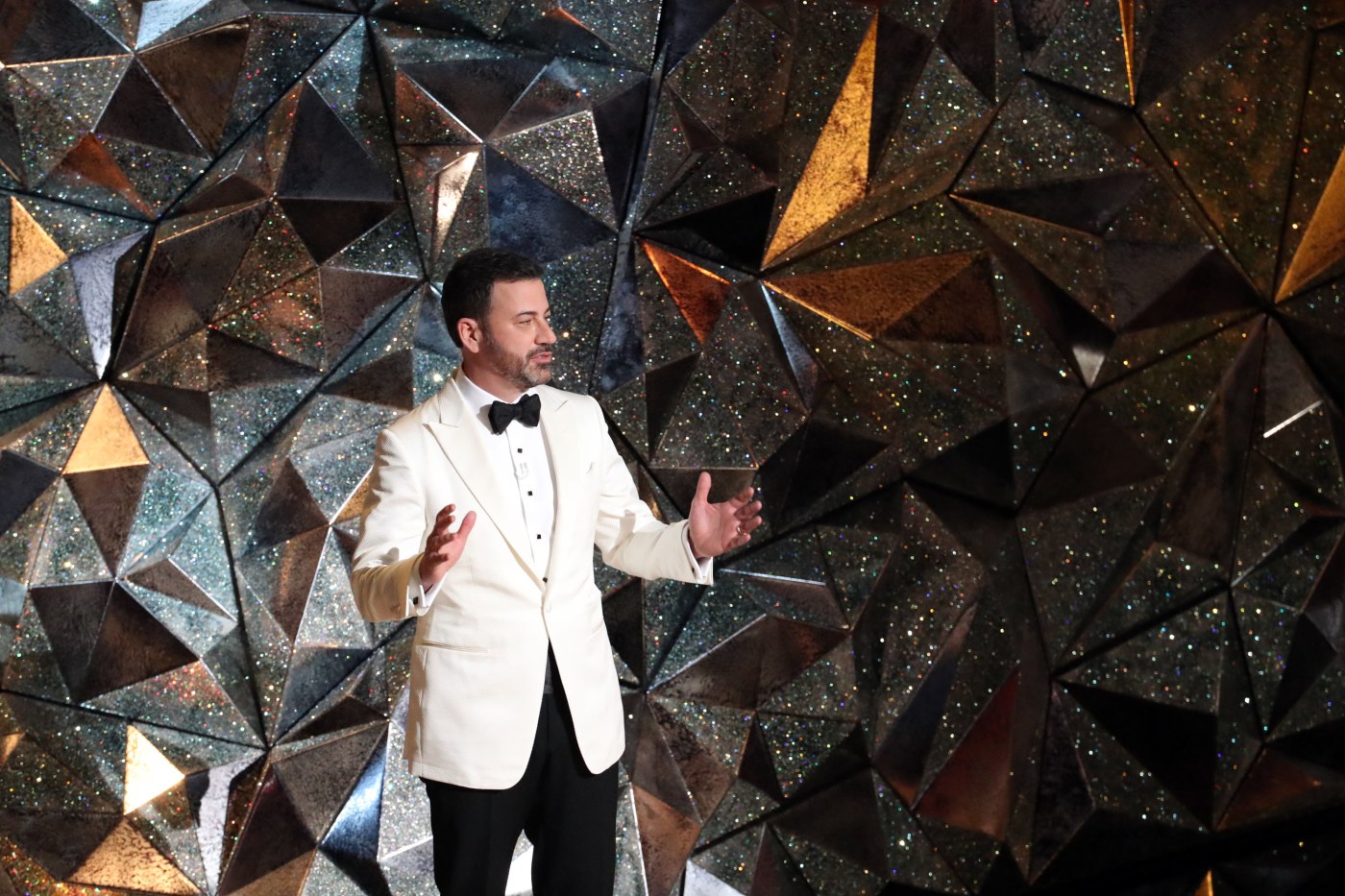
Jimmy Kimmel hosts the Oscars at the Dolby Theater in Los Angeles on March 12, 2023. Kimmel brought writers from his late-night show who know his voice. (Todd Heisler/The New York Times)

Kimmel, who is back as host of the Oscars on Sunday, benefits from bringing his late-night staff, which knows his voice. There are generally two sets of awards show writers: those who work for the host and those who write for the presenters and others on the show, and the two teams rarely intermingle. Compared with the Globes, which used three writers for the host and five overall, there is a small army for the Academy Awards on Sunday — about two dozen.

One of them, comic Jesse Joyce, said he once wrote an entire Tonys monologue for Kevin Spacey by himself despite never seeing a single show on Broadway that year. He said awards show bits demand a more formal style. In late night or stand-up, he explained, you gum up the language to make it seem conversational. “There’s a polish to award show jokes,” he added. “I think it’s a better showcase for sharp, precise jokes, so I kind of admire it on a clinical skill level.”

If writing for hosts can feel like an abstract exercise in joke construction, working for presenters is all about navigating real-world chaos.

Dave Boone, who has won three Emmys and has worked on 120 shows since 1998, spoke nostalgically of the days when producer Buz Kohan, maybe the most storied figure among these writers, would call Gregory Peck or Sophia Loren and knock out a few amusing lines.

Now, nearly every joke goes through a battalion of publicists, managers, even spouses. Some stars ask for bits but then never do them. Others agree but get cold feet at the last moment. Then there are the ones who insist on ad-libbing — and blame the writers on air when their jokes don’t land.

“What’s sometimes frustrating is when you get a note from a talent manager who says, ‘We don’t want to mention the superhero movie, and he doesn’t want to be funny,’” Boone said. “And then the talent shows up on the day and says, ‘You know, this is kind of dry. Wouldn’t it be funnier if I came out in a superhero outfit?’”

Boone said the job there is to bite your tongue. But this is what leads to stilted banter. “Unfortunately, there have been so many awkward moments that have been water-cooler conversation that award shows can get a bad rap.”

Boone’s favorite show is the Tony Awards, for which he has been head writer for the past 18 years. It’s not because the participants understand performing live (although they do), but because theater people respect the word of the playwright. He fondly recalled the time James Earl Jones contacted him to ask about adding a comma to make a line read better.

Renee Gauthier, who was one of two people writing material for presenters at the Globes, said the only person who didn’t have any notes was Oprah Winfrey.

When Koy criticized his writers, Gauthier, who had also submitted monologue jokes, told me her phone blew up with texts from outraged comics. “I didn’t think it was cool for that to be said about writers,” she said. “But as a comedian, I understand. He kind of freaked out and got in his head.” She added: “I forgive him.”

Ironically, part of the problem may have been a failure to listen to writers. Gauthier said they suggested Koy begin with a self-deprecating joke drawing attention to his status as a relative unknown next to Meryl Streep, Martin Scorsese and other major Hollywood figures in the room. Gauthier’s version was something like: “I know you don’t know who I am, but I know exactly who you are.” Echoing many of the writers I talked to, she said he would have been helped by poking fun at himself. “Jo Koy is known, but this is an A-list party. They aren’t all your peers.”

Then again, writers tend to understand their place in the pecking order better than star hosts. Koy might have been unknown to some in the audience, but as a stand-up, he regularly packs arenas. He opened by saying how thrilled he was to be there, then added that it’s “a dream come true not just for me but everybody in here.”

Vilanch, asked what he would have done, said, “The whole monologue would have been: Who am I and why am I here?”

He also expressed sympathy for Koy, pointing to the shots of stars not laughing. “Did he really need the reaction of Taylor Swift to swiftly bring condemnation upon his soul?” he said.

Related Articles

Entertainment |


A new-look circus sends in the clowns, but loses the face paint

Entertainment |


How Netflix survived the streaming wars to stay the subscription video king

Entertainment |


Picks for Oscars 2024: What will win, what should win in a year of movie riches

Entertainment |


‘Damsel’ review: Millie Bobby Brown stars in dark fantasy lacking a pulse

Entertainment |


Movie Review: ‘Kung Fu Panda 4’ is a sweet, fun and well executed passing of the torch

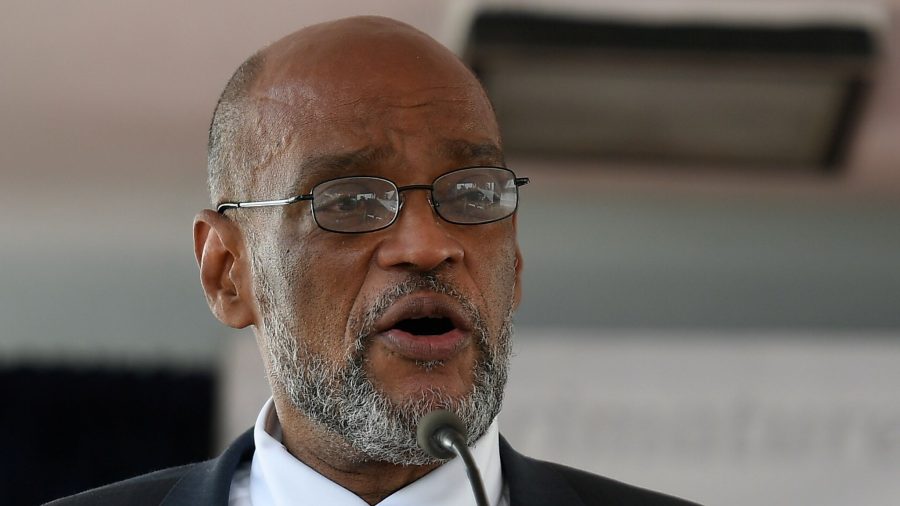
THE HAITIAN DIASPORA POLITICAL ACTION COMMITTEE (HDPAC) AND THE OFFICE OF THE HAITIAN DIASPORA (ODIHA) CALL ON THE INTERNATIONAL COMMUNITY TO SUPPORT A CONSENSUS GOVERNMENT OF TRANSITION IN HAITI 

posted in: News | 0

March 8, 2024 (New York, New York)– Since the assassination of President Jovenel Moise, a significant portion of the population in Port-au-Prince has been displaced, and the population across the nation has struggled to survive with severe shortages of food, water and medicine. In the last three years the United Nations has reported communities across Haiti terrorized and some five thousand people killed by well-armed criminal gangs. (https://www.reuters.com/world/americas/haitis-gang- wars-death-toll-doubles-nearly-5000-year-un-2024-01-23/). 

In the last two weeks this situation has evolved into a full scale civil war with organized gangs freeing thousands of dangerous inmates from two prisons and attacking government buildings, the international airport, and several police stations. Death and instability are rising at an alarming and increasing rate. 

Dr. Ariel Henry, and his current government body, has been unwilling and unable to address the pressing problems of insecurity and gang violence. (https://thehill.com/latino/4516984- haitian-advocates-call-for-us-policy-reset-as-crisis-deepens/). 

In order to effectively address the most urgent situation, Prime Minister Ariel Henry must resign immediately. A newly formed neutral organization with the support of all sectors of the Haitian population including the Haitian diaspora must be entrusted to carry out very specific mandates, such as establishing security throughout the country and organizing free and fair elections within a reasonable and specific time-table, agreed to by all stakeholder parties. 

We call upon the international community, primarily the United States of America, to support the new transitional government by providing critical humanitarian support and the deployment of a qualified police force to assist, support, equip and train the Haitian police, in conjunction with the Haitian Military. 

We further call on the United States to take immediate steps to stop the flow of illegal weapons and ammunition from the United States to the violent gangs who have murdered and terrorized thousands of our daughters and sons, mothers and fathers, sisters and brothers. “The time for talks has come and passed. This is a time for decisive actions, and a new transitional government is the first step towards avoiding an all-out civil war in Haiti” said Dr. Georges J. Casimir, President, Haitian Diaspora Political Action Committee (HDPAC). 

HDPAC has endeavored to work with all people of good conscience who would like to see a better, functioning democracy in Haiti. To that end, Ret. Lt. General Russell Honoré has agreed to serve as an advisor to help assist with re-establishing security in Haiti. (https://en.wikipedia.org/wiki/Russel_L._Honoré). 

“We in the Haitian Diaspora anticipated the worsening of the situation in Haiti; that is the reason why in 2022 we worked with General Honoré to bring the parties together in the Diaspora Unity Summit in Louisiana at Southern University in Baton Rouge in an attempt to solve the problem but the U.S. State Department, France and Canada continued to support Ariel Henry even though the people of Haiti made it clear that Ariel had to go.” (https://www.sulc.edu/news/4660). David L. Alexis, President, Office of the Haitian Diaspora (ODIHA). 

The Haitian Diaspora Political Action Committee (HDPAC), and the Office of the Haitian Diaspora (ODIHA) call on President Joe Biden and his administration specifically the U.S. State Department to actively support the transition of the new government, the extension of TPS (Temporary Protective Status) for undocumented Haitians, and the suspension of deportations back to Haiti. (https://www.wola.org/analysis/a-tragic-milestone-20000th-migrant-deported-to- haitisincebideninauguration/#:~:text=The%20Biden%20administration%20has%20kept,March %202020%20and%20December%202021). 

We hope the international community will allow Haitians to decide for themselves who should lead the transitional government of the second oldest republic in the Western Hemisphere without undue influence or unneeded intervention from foreign entities. (https://en.wikipedia.org/wiki/Core_Group#:~:text=The%20Core%20Group%20w as%20established,the%20Organization%20of%20American%20States%20.). 

Dr. Georges J. Casimir President, Haitian Diaspora Political Action Committee (HDPAC) 

David L. Alexis President Office of the Haitian Diaspora (ODIHA)

Pamela Paul: Civil discourse on campus is put to the test

posted in: Society | 0

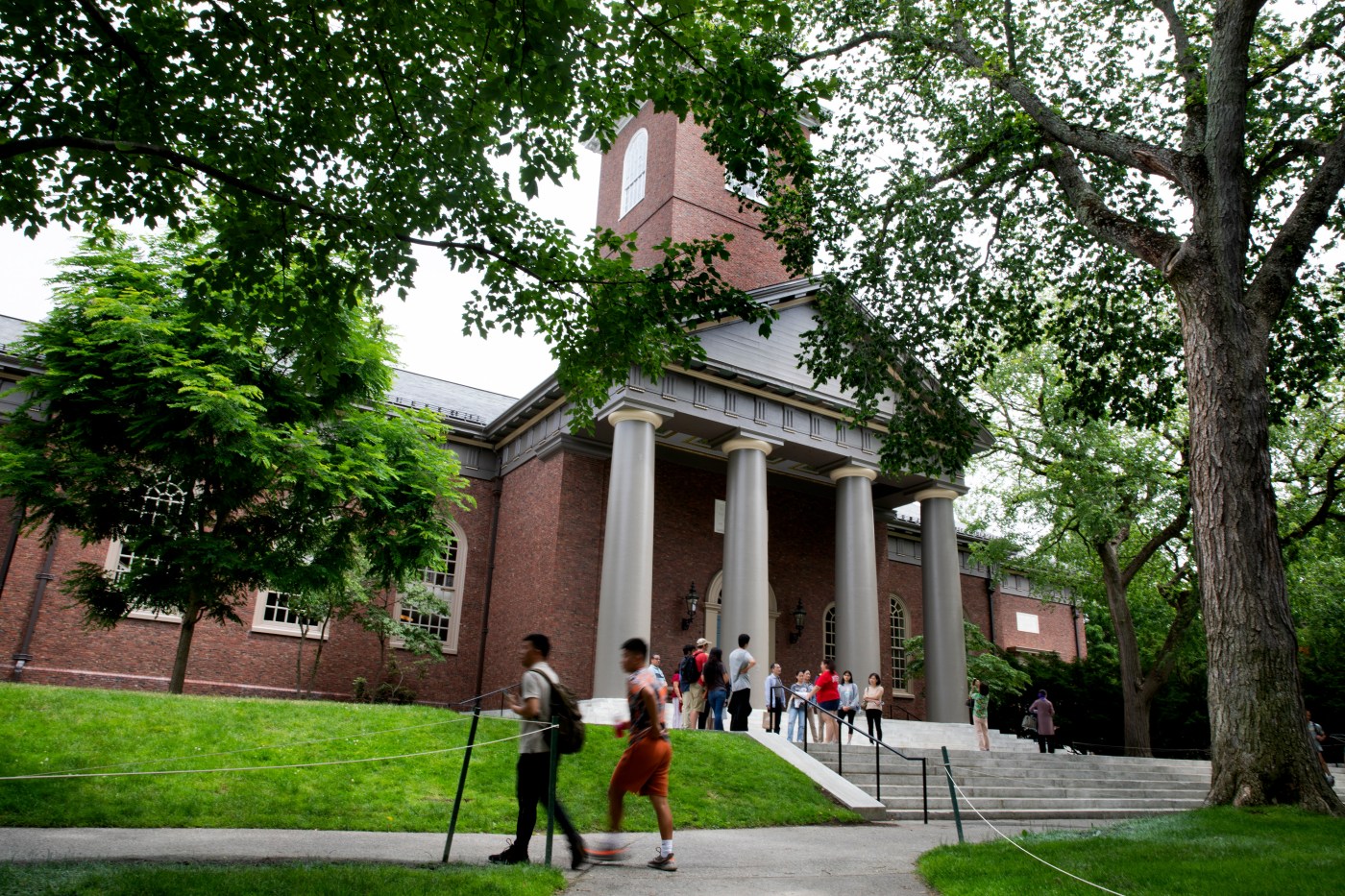
The same week that a University of California-Berkeley protest ended in violence, with doors broken, people allegedly injured, a guest lecture organized by Jewish students canceled and attendees evacuated by the police through an underground passageway, a group of academics gathered across the bay at Stanford to discuss restoring inclusive civil discourse on campus. The underlying question: In today’s heated political environment, is that even possible?

Over the course of two packed days of moderated and free discussion, we would try to test it out.

Paul Brest, a professor emeritus and former dean at Stanford Law School and one of the conference’s organizers, arrived at Stanford in 1969 in the throes of Vietnam War protests. The windows of the conservative Hoover Institution on campus had to be boarded up. In later years, violence broke out in protests over South Africa.

“Back then, it was students against the institution,” he said. “Now it’s very different because it’s student against student.”

Because I’d written about the difficulties students have had engaging in civil discourse, including a couple of columns on incidents at Stanford, I was one of two journalists invited to take part. Hosted by Stanford Law School and the Stanford Graduate School of Education, the conference brought together professors, deans and academic leaders who were largely liberal, with libertarians and a few conservatives and progressives in the mix. Unfortunately, one of the organizers said, most of the invited progressives — which is to say, the group that currently dominates campus debates — refused to come.

But those who did attend engaged in lively good-faith discussion about several hot-button topics ranging from free expression on campus to institutional neutrality. I’ll write about several of these in the future but will begin with one of the most divisive: diversity hiring statements, the requirement that all job applicants demonstrate their commitment to advancing diversity, equity and inclusion goals.

Brian Soucek, a professor at the UC Davis School of Law and an advocate of DEI statements, started the panel off by making his case. Mere statements of belief in DEI are not enough, he said. In an effort to reach consensus on what a DEI hiring statement should look like, in lieu of UC Davis’ current required statement, he proposed an abbreviated version that asked candidates specifically about DEI shortcomings and gaps in their fields of discipline and concrete steps they’ve taken or plan to take to address them.

The rest of the panel wasn’t having it.

Amna Khalid, a historian at Carleton College, endorsed the goal of diversifying staffs. The problem isn’t principle or legality, she said; it’s practice. Diversity according to whom? And in what context?

“It’s always ‘historically excluded and underrepresented,’” she said. “But historically when? Conservatives could argue they have been historically excluded. What’s underrepresented at Hillsdale College will be different from what’s underrepresented in the UC system.

“We all know that there’s a strong political orientation bias being perpetuated,” she continued. “‘Not a good fit,’ they’ll say. It’s fundamentally dishonest, and it creates more problems than it addresses.”

“People in the most elite systems know how to game the system,” Jeff Snyder, a professor of educational studies at Carleton, added. “It’s a privileged box-ticking exercise that ultimately degrades the purpose.” Together, he and Khalid filed an amicus brief for the plaintiffs against Florida’s Stop WOKE Act.

Imagine flipping the litmus test on its head, Snyder said. Suppose the requirement was a statement of patriotism at the University of Florida. Suppose they say, just as DEI advocates will say, that the definition of patriotism is expansive. And suppose he writes that his vision of patriotism is political protest in the model of Colin Kaepernick. He wouldn’t get the job. Nor would he get a job if he wrote a DEI statement for Carleton saying he mentored members of the campus NRA group or the Young Republicans Club, both of which are underrepresented minorities on campus. DEI statements are inherently ideological. A chilling effect is inevitable.

“What they want are nonstraights, nonwhites and nonmen,” said Musa al-Gharbi, a sociologist at Stony Brook University. “But they don’t say it that way. There’s a lack of forthrightness that breaks people in these situations.” In his field, men are underrepresented and queer scholarship is overrepresented. “But it strains credulity to say that anyone would read a DEI statement about someone’s queer work and say that’s an overrepresented group.”

Soucek gamely continued his defense against what he called “anecdata.” He described an approach Berkeley tried out in 2018, in which it considered candidates’ DEI statements before looking at the rest of their applications. Anyone whose DEI statement didn’t pass the first round was eliminated from the next pool.

“People criticized Berkeley afterward that Berkeley didn’t even consider the applicants’ credentials,” Soucek said. “But I would say that DEI statements are credentials.” And let’s be honest, he said. If you look at the cover letter first, you’re privileging another set of credentials first: people’s names, which can tell you a lot — their institutions, their mentors and connections. This was just another and no less valid approach to narrowing the pool.

Why not anonymize all applications? Khalid responded. In fields like history, political science and computer science, 11 universities dominate 50% of all tenure positions. Whatever they’re doing now, diversity efforts clearly aren’t working. She compared DEI statements with DEI diversity training. “The whole ‘Look into your hearts and say how racist you are’ — that does nothing,” Khalid said. “Painful, excruciating and pathetic is the only way to describe them.”

Simply requiring DEI statements gives a pass to universities for not fixing existing problems, added Carol Sumner, the chief diversity officer of Northern Illinois University. She then raised a question: “Is the statement the problem, or is it the subjectivity of the person reading the statement you don’t trust?”

Richard Thompson Ford, a professor at Stanford Law School, expressed concern that poorly designed DEI encourages essentialist thinking — the idea that all women or members of the group have similar views or experiences. In his view, DEI programs can be “a way to offload responsibility from the rest of the university and take pressure off them for what actually could be substantive policies that are harder and more expensive.”

One thing on which everyone agreed: Schools are failing at real diversity. DEI statements aren’t necessarily helping. Instead of potentially creating new problems, academia needs to fix existing ones.

“We all had the shared view that diversity and inclusion are good but that there are legitimate concerns about how we promote these things,” Soucek said when I spoke to him afterward. Addressing those knotty issues in open dialogue is a good place to start.

Pamela Paul writes a column for the New York Times.

Related Articles

Opinion |


David Brooks: Models for a generous American patriotism — and national self-confidence

Opinion |


Nicholas Kristof: The school issues we’re battling over aren’t the ones that matter

Opinion |


Paul Krugman: The rich spend differently from you and me

Opinion |


Trudy Rubin: Gaza needs humanitarian aid now — with or without a cease-fire

Opinion |


Noah Feldman: On bump stocks, the Supreme Court is divorced from reality