Managing credit cards when you grew up in a cash-only household

posted in: News | 0

By Sara Rathner | NerdWallet

As you’re growing up, you learn about money from the people who raise you. Their lessons are based on their life experiences, which means there’s likely some bias built in.

That’s not necessarily a bad thing — you may have a savvy aunt who taught herself to manage her own money after a divorce, or a parent who cautioned you about debt because they struggled to pay down theirs. Hearing their stories can spare you from making financial mistakes. Even with all that history, though, you’re likely to make some financial decisions that will cause your relatives to wince.

Credit cards in particular can be a touchy subject in families where older generations avoid them out of the fear of costly debt, while younger generations embrace them for their rewards and convenience. Managing credit cards when it feels like you’re being “bad” can be difficult. Still, it’s totally OK to forge your own financial path based partially on family lore, and partially on your own goals and experiences.

Approach credit cards with care

If you’re a first-generation credit card user, it’s essential to understand how they work — this includes learning about the types of credit cards available, how you’re billed and what happens if you get into debt. Beware of common credit card myths, like the idea that you should carry a small balance from month to month because it’s good for your credit score (there’s no need to pay interest for the sake of your credit score).

Start by using your first credit card for a basic expense or two each month, and be sure to pay the entire balance when it’s due. You can still use cash or a debit card for some expenses, and a credit card for others.

Gloria Garcia Cisneros, a certified financial planner in San Diego, recommends using technology to help you manage your card. Automate payments to avoid missing due dates, and take advantage of apps that track spending so you don’t have to do so manually in a spreadsheet, she says. Also, create the habit of checking your credit card statements each month to review your spending, and avoid saving your credit card information on merchant websites so you’re less tempted to make impulse purchases.

Credit cards are more than a way to spend — they can help you establish your credit history, provide extra protections on purchases and can earn rewards on your everyday spending. Used carefully, credit cards can be a tool that helps you move toward other financial goals.

Lea Landaverde, the founder of the Riqueza Collective, a bilingual financial education and media company, learned this at the age of 18, when she realized she first needed to build her credit history to qualify for a rental home. “I had to learn how a credit card could benefit me.”

Examine the origins of your credit card beliefs

Related Articles

Business |


Millennials, it’s time to change your investment strategy

Business |


6 ways to spring clean your bank accounts

Business |


Why don’t some millennials want kids? They say it’s too expensive

Business |


Business owners face unique challenges when going through a divorce. Here’s what you should know

Business |


Biden just erased $1.2B in student loans. Yours could be next

The messages you tell yourself about credit cards were installed in your mind long ago by loved ones who modeled certain behaviors. Credit card-related misconceptions and beliefs get passed down in families, especially when previous generations lived through difficult times. “When parents say debt is bad, they’re coming from a place of fear or trauma,” Landaverde says.

Garcia Cisneros was raised by her grandparents, who had widely different attitudes toward credit. “My grandpa was so against credit cards. He was like, ‘Cash under the mattress, cash is king,’” she says. Meanwhile, her grandmother not only used cards, but also maxed them out. “I didn’t know which one was right or wrong. When I got my first credit card, it was an emotional, impulse decision.”

Even if you’ve been financially independent for years, it’s hard to turn off that voice in your head that repeats relatives’ money beliefs that don’t match your current lifestyle. You can recognize why certain loved ones are credit card-averse, and use that family fear of debt as motivation to manage your credit cards thoughtfully.

Set boundaries with loved ones

Beware of family members who see your credit card as their funding source because they don’t understand how their actions can affect your credit. Garcia Cisneros is willing to help her family financially, but she has learned to set limits after a relative used her card while on vacation. Now, she only provides money for emergencies in the form of a loan with interest.

Celebrate your progress

As you become more confident with your credit card use, keep an eye on your credit score and pat yourself on the back when you see it go up. After all, you’re not just managing your credit card wisely, you’re creating an entirely new money mindset.

If you make a mistake or have to deal with an emergency expense and get into debt, it doesn’t have to derail your money goals forever. “You can start over,” Garcia Cisneros says. “You always have tomorrow.”

This article was written by NerdWallet and was originally published by The Associated Press.


Sara Rathner writes for NerdWallet. Email: srathner@nerdwallet.com. Twitter: @sarakrathner.

Column: Keeping Jaylon Johnson is paramount for the Chicago Bears — but will they make him the NFL’s highest-paid cornerback?

posted in: News | 0

Teams with an abundance of salary-cap room first look to invest in their own players. It’s always more sound to build from within than to chase veterans in free agency, where teams wind up overpaying for players who, in many cases, are available for a reason.

The Chicago Bears head into a seismic offseason with a healthy cap situation. They have the eighth-most “effective cap space,” according to overthecap.com, at $36.6 million. Effective cap space takes into account where a team will be after it has met what’s called the “Rule of 51,” for offseason bookkeeping purposes, and signed its projected rookie class. For the Bears, that includes the first and ninth picks in the draft.

The Bears’ figure is expected to rise. Releasing free safety Eddie Jackson and offensive lineman Cody Whitehair would create an additional $21 million in cap room. So general manager Ryan Poles has more than enough flexibility to accomplish his goals for the next phase of roster construction.

That process figures to begin with negotiations to retain cornerback Jaylon Johnson, who was voted to the Pro Bowl Games and was a second-team All-Pro after a banner season that included a career-high four interceptions.

“Jaylon’s not going to go anywhere,” Poles said last week, a sure sign the Bears are prepared to use the franchise tag if they’re unable to hammer out a multiyear contract before the window closes. Teams can apply the tag from Feb. 20 through March 5.

The franchise tag for cornerbacks is expected to be about $18.8 million in 2024, and that would set a floor for contract negotiations and buy another five months to work out more than a one-year deal. The Bears have used the franchise tag twice in the last decade — on wide receivers Allen Robinson in 2021 and Alshon Jeffery in 2016 — and placed the transition tag on cornerback Kyle Fuller in 2018.

Johnson is aiming to become the NFL’s highest-paid cornerback, a distinction currently held by Jaire Alexander of the Green Bay Packers or Denzel Ward of the Cleveland Browns, depending on how you measure it.

“The ball’s in my court, the ball’s in my favor,” Johnson said Wednesday when he appeared on the Fox Sports podcast “All Facts No Brakes” with Keyshawn Johnson. “I think it’s just a matter of time and when it happens. Going into the negotiations I don’t think there’s too much to try to talk about.

“I feel like there’s no reason why I can’t be the highest-paid corner in the league. That’s what I’m aiming for. That’s what I’m shooting for. That’s what I think can be done and should be done.”

Alexander received a four-year, $84 million extension in 2022, with the average annual salary of $21 million setting the bar atop the market. That same year, Ward got a five-year, $100.5 million extension ($20.5 million average) with a record $44.5 million fully guaranteed. Jalen Ramsey of the Miami Dolphins is the only other cornerback in the $20 million club in terms of annual average, having signed a five-year, $100 million deal in 2020.

Two years after the Alexander and Ward contracts, with Johnson having bet on himself, it stands to reason he is shooting to reset the market considering his performance and accolades and the rising salary cap. Whether he gets there remains to be seen.

Poles was reluctant to consider a market-setting deal for inside linebacker Roquan Smith in 2022. While he hasn’t spoken specifically about numbers for Johnson, cornerback is considered a more premium position and the Bears could maintain a strength by retaining Johnson with developing second-year cornerbacks Tyrique Stevenson and Terell Smith and third-year nickel back Kyler Gordon.

The cornerback market took a slight dip since Alexander and Ward were paid, but that probably had more to do with the available talent than a shift in thinking about positional value and budget allocation.

Some defensive coaches place a greater premium on cover men than pass rushers with the philosophy that it’s easier for offenses to scheme around a defensive end than an elite cornerback, especially one who isn’t a liability against the run.

That’s not to say you can play great defense without top-tier edge rushers — you can’t. It all goes hand in hand, but if forced to pick an elite cornerback or an elite edge rusher, some coaches would go with the guy who can mirror top-tier wide receivers.

That’s why it is paramount the Bears keep their talent. Johnson turns 25 in April, and he’s only eight months older than Gordon despite having two more years of experience.

The Bears love Johnson and his makeup, and he’s wired exactly how you want a cornerback to be with a desire to face the best receiver every Sunday. The only issue they will have when considering whether to make him the highest-paid cornerback in the league is durability. He missed three games this season, including the finale against the Packers when a minor shoulder injury sidelined him. He missed six games in 2022, two in 2021 and three as a rookie.

That doesn’t take away from what Johnson accomplished this season, meeting the challenge of delivering more on-the-ball production. It’s important to recognize Johnson was having an elite season before Poles acquired defensive end Montez Sweat at the trade deadline. So it’s not like his ascent was the result of a suddenly enhanced pass rush.

The front office has a lot to work through with its attention being pulled in many directions. The Bears need to fill out Matt Eberflus’ coaching staff while preparing for free agency and draft meetings.

Confidence should be high that the Bears will resolve matters with Johnson, but it could take some time. The last three players on whom the Bears used the franchise tag — Robinson, Jeffery and defensive tackle Henry Melton (2013) — played out their one-year deals. The Bears secured running back Matt Forte with the franchise tag in 2012, ultimately leading to a four-year contract.

The goal with Johnson has to be a multiyear agreement.

“We’ll work through it and get something done,” Poles said.

It’s a matter of how high the dollars — and more importantly the guarantees — go.

()

Already near top of his game, for Twins pitching ace Pablo López, the work never stops

posted in: News | 0

He was prepared that October day to be pitching the biggest game of his life in front of a raucous, sold-out crowd at Minute Maid Park in Houston. He was ready to try to pitch the Twins to the American League Championship Series for the first time since 2002.

Instead, he was in Tempe, Ariz., with sensors affixed to his body, tracking his every movement as he threw at the Driveline facility in front of a handful of people. The Twins’ season ended on a Wednesday, and a day later, López was flying down to the Phoenix area for his end-of-season assessment at the data-driven performance center.

The pitcher, who celebrated his 28th birthday on Thursday, first visited Driveline the previous offseason. He saw all kinds of year-over-year improvements in his end-of-season assessment, in everything from higher jumps to his trunk rotation speeds, giving him confidence in the work he had been putting in.

For the Twins’ pitching ace, the work really never stopped. After an October trip to Switzerland with his wife, Kaylee, he plunged headfirst into his Driveline workouts, spending the offseason looking to build off one of the best seasons of his career. López, who most importantly stayed healthy the entire season, threw nearly 200 innings, struck out a career-high 234 batters (tied for third in the majors) and posted a 3.66 earned-run average in his 32 starts.

Driveline gave him workouts to break his offseason up into three different phases: strength, explosiveness and then a deload to lead into spring training to make sure he arrived feeling athletic, and López got to work.

The work in the training room was in addition to the work he did on the mound, where he focused in on how he could improve against left-handed batters — last year they hit .271 against him with a .754 OPS compared to righties, who hit .206 with a .597 OPS — and working on understanding his five-pitch arsenal and how each pitch complements the others.

Last year, the Twins helped López introduce a sweeper after a January trade that sent him to Minnesota for Luis Arraez. He quickly introduced that pitch in game action, but given an offseason to toy with it, he’s been learning more about how to best utilize his offerings.

“With the new pitch, I was able to really (be like), ‘OK, I’m going to use this bullpen to work on how can I throw my breaking pitches in an 0-0 count with the same conviction as I would throw them in an 0-2 count,’” López said.

He’s been doing that this spring, too, experimenting with his pitch mix to ensure he can throw what he wants when he wants where he wants.

And come later this month, when López takes the ball on Opening Day, the Twins expect to see the best version of the starter, whom they expect to lead their rotation for years to come.

“When you see a guy whose desire and pursuit of perfection is at a certain level like his, it doesn’t get any better than that,” Twins manager Rocco Baldelli said. “As long as you’re seeing the same level of motivation from him, he gives you everything else. His motivation is at the top of the scale. … He sets a pretty incredible example for really everybody here.”

Related Articles

Minnesota Twins |


Twins starter Joe Ryan works on new (old?) pitch

Minnesota Twins |


Twins announce radio, broadcast schedules for 2024 season

Minnesota Twins |


One month from Opening Day, here’s what Twins’ roster could look like

Minnesota Twins |


Twins acquire outfielder Manuel Margot in trade with Dodgers

Minnesota Twins |


Longest-tenured Twin Max Kepler grateful to be back in Minnesota

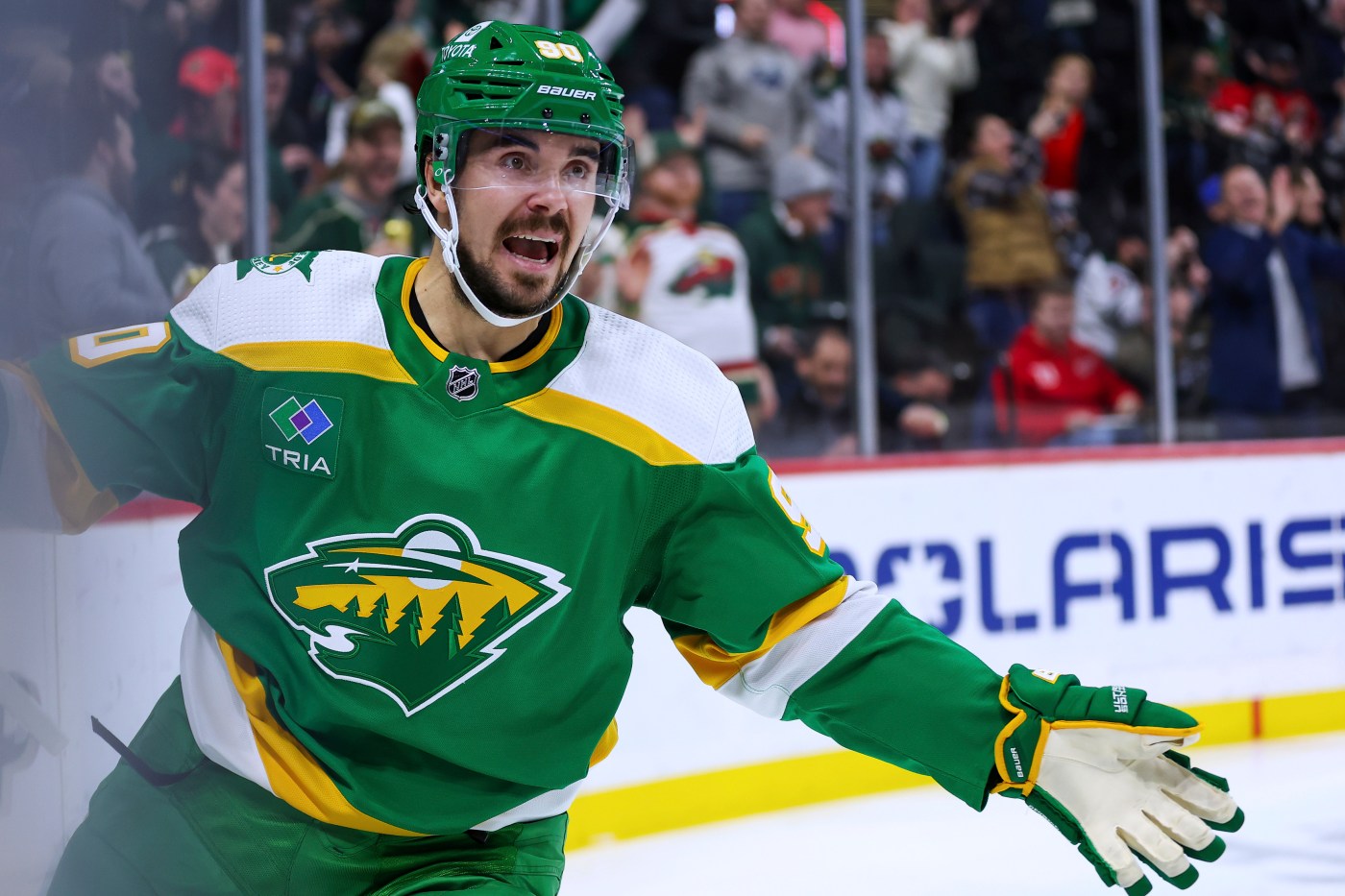
Wild place Marcus Johansson on IR, recall Adam Beckman

posted in: News | 0

TEMPE, Ariz. — The Wild on Thursday recalled forward Adam Beckman from their AHL team in Iowa and placed Marcus Johansson on injured reserve with a lower body injury.

It seems unlikely Minnesota would recall Beckman if he wasn’t expected to play in an 8 p.m. puck drop against the Coyotes at Mullett Arena. A 6-foot-2, 190 pound 2019 third-rounder, Beckman, 22, has 10 points in his past 10 games in Des Moines (7-3–10).

If Beckman plays against Arizona, it would likely be because of an injury. Marcus Foligno (lower body) hasn’t played since Feb. 9 but is with the team here after going through a full practice on Wednesday in St. Paul. Beckman has played in 12 NHL games (0-0–0) but none this season, despite a short call-up.

Johansson has nine goals and 27 points in 61 games for Minnesota this season.