Five-ingredient fudge, an ideal Easter recipe for wee kitchen helpers

posted in: Society | 0

I had no intention of writing about fudge this week. I’d been thinking about writing another Foodie Awards follow-up, like last week’s ode to burgers, but my editor wanted an Easter feature.

I thought it would be fun to find a local maker doing Easter bread. Greek, Italian, Portuguese … one of those pretty, braided brioche numbers with the brightly colored Easter eggs baked in.

“You should make one,” my boyfriend, a proficient baker, said. “It’s easy.”

You should make one,” I batted back. “Also, a pizza.”

We laughed. Neither of us was making Easter bread this year. And unfortunately, no one I reached out to around the city seemed to be doing so, either.

“We get ours from church,” one potential source for Greek tsoureki told me. “I think they get it from Hellas Bakery in Tarpon.”

Solid sourcing, of course. But not local, so no bueno. Time was ticking. And that’s the thing: It is for all of us. And in myriad ways.

Literally five ingredients: nuts, marshmallows, sweetened condensed milk and two kinds of chocolate. (Amy Drew Thompson/Orlando Sentinel)

My kids are older now, but when they were little, few things were more fun than working together on a recipe that afforded them a shot at being truly independent. Something that required neither fire nor knives. Something that would taste just fine even if it didn’t look perfect. Something with yummy ingredients — colorful, textural — that we could snack on while making it.

And so, when I spotted this 5-Ingredient Rocky Road Fudge  recipe on the Taste.com.au site, with its pastel palette and contrasting chocolates, I knew I’d found the perfect sweet for both ease of preparation and memories made in the kitchen.

You’ll notice that the package and pan sizing are a bit off for an American kitchen, but it’s easy enough to make do.

This recipe, which I found on an Australian site, calls for “marshmallow noodles.” You can order these online, of course, but these Lucky Charms marshmallows worked just fine. Make sure you check any rainbow-hued marshmallows for flavoring before you decide if you want to use them. (Amy Drew Thompson/Orlando Sentinel)

Using standard-sized cans of condensed milk (a little more than the measurements in the recipe) as the foundation, I simply upped each ingredient a bit to match.

With things like the marshmallows and nuts, it’s even easier. Just eyeball the mix-ins to where you want them. As for the harder-to-find ingredients like the “marshmallow noodles,” you can either source them online or, as I did, just find a reasonable sub, like the Lucky Charms marshmallows I dug out of the Easter display at Target.

Marshmallows and nuts set up with the white chocolate mixture in the fridge while you prepare the milk chocolate topper. I’d use dark chocolate if I made this one again. (Amy Drew Thompson/Orlando Sentinel)

This recipe came together well in a 9×13 pan, but I might even use a couple of smaller 8x8s or deep, round cake pans for a thicker, more graphic result. I’d also probably opt for dark chocolate instead of milk, a nice bitter one to better balance the sweetness of the white.

Either way, cut into strips and squares, the golden-brown nuts and colorful marshmallows give this treat a beautiful, nougat-like look that’s super appealing and sure to be a point of pride and accomplishment for parents, grandparents, uncles, aunts and even older siblings, but especially for the little hands that helped melt, mix and pour it.

So pretty for an Easter-themed table and ridiculously easy to make. (Amy Drew Thompson/Orlando Sentinel)

Five-Ingredient Rocky Road Fudge

Recipe by Kim Coverdale and Liz Macri, courtesy Taste.com.au (taste.com.au/recipes/5-ingredient-rocky-road-fudge-recipe/f91s16w0?r=baking/wuds0hfn)

Ingredients

Two 180 grams blocks white chocolate, chopped
Two 395-gram cans sweetened condensed milk
130 grams packet honey and sea salt roasted peanuts
1/2 x 280-gram packet marshmallow noodles, cut into 2 centimeter lengths (I used Lucky Charms’ marshmallows and diced up about 1/3 of them.)
350g block milk chocolate, chopped

Instructions

Grease an 18-centimeter x 28-centimeter slice pan. Line base and sides with baking paper, extending paper 2 centimeters above edges of pan.
Place white chocolate and 1 can condensed milk in microwave-safe bowl. Microwave on HIGH (100%) for 1 minute 30 seconds, stirring every 30 seconds or until melted and smooth. Add peanuts and marshmallows. Stir to combine. Pour mixture into prepared pan. Smooth surface. Refrigerate.
Meanwhile, place the remaining condensed milk and the milk chocolate in a microwave-safe bowl. Microwave on HIGH (100%) for 1 minute 30 seconds, stirring every 30 seconds, or until melted and smooth. Carefully spoon mixture over white chocolate layer and gently smooth surface. Refrigerate for 4 hours or until firm. Serve.

Have a food question? Find me on Facebook, Twitter or Instagram @amydroo or on the OSFoodie Instagram account @orlando.foodie or email me at amthompson@orlandosentinel.com, and your question could be answered in my intermittent Ask Amy Drew column. For more foodie fun, join the Let’s Eat, Orlando Facebook group.

Working-class people rarely have a seat ‘at the legislative table’ in state capitols

posted in: News | 0

Robbie Sequeira | Stateline.org (TNS)

In her first few months as a Minnesota state legislator in 2021, state Rep. Kaela Berg often wondered: “What the hell am I doing here?”

A single mother and flight attendant without a college degree or prior political experience, Berg now had a seat at the legislative table, shaping policy decisions in her home state.

As she ran against a former two-term Republican representative — a commercial real estate agent — she also was struggling for housing and living in a friend’s basement.

“I’m living in [her] basement, running for office, and the pandemic hits,” said Berg. “I went from three jobs to one. … I found that while I can pay my bills, I can’t qualify for a new apartment because you have to show two or three times the rent and I can’t do that.”

While it was gratifying to receive support from working families in her district, her transition to state policymaker felt overwhelming.

“I had the worst case of impostor syndrome,” Berg, a member of Minnesota’s Democratic-Farmer-Labor Party, said in an interview. “I’m thinking, ‘Who do I think I am? I’m a working flight attendant. I don’t have a college degree. Why did I let somebody talk me into this?’”

Minnesota state Rep. Kaela Berg. Berg, a single mother and flight attendant without a college degree, is one of the few state lawmakers across the nation who qualify as “working class,” according to recent research. (Minnesota House of Representatives/TNS)

Berg is a rarity in politics: a working-class state legislator.

Just 116 of the nearly 7,400 state legislators in the United States come from working-class backgrounds, according to a biennial study conducted by Nicholas Carnes and Eric Hansen, political scientists at Duke University and Loyola University Chicago, respectively.

The researchers define legislators as “working class” if they currently or last worked in manual labor, service industry, clerical or labor union jobs. They found that 1.6% of state lawmakers meet that definition, compared with 50% of U.S. workers. Only about 2% of Democrats and 1% of Republicans qualified as working class.

Ten states — Arkansas, Louisiana, Mississippi, North Carolina, Oregon, South Carolina, Tennessee, Texas, Utah and Virginia — have no working-class state lawmakers.

The dearth of working-class legislators raises concerns that economic challenges such as wage stagnation and the rising cost of living will get short shrift in state capitols.

Working-class politicians are more likely to have personally experienced economic hardship, so they are more interested in policies to mitigate it, Carnes said. And they often propose solutions that differ from those put forward by colleagues who aren’t working class, even if it means diverging from party doctrine.

“State legislatures make consequential decisions, and if you have an entire economic class of people that are not in the room when policy decisions are being made, that’s going to tilt the kind of problems politicians pay attention to,” said Carnes. “It also dictates the kinds of solutions they consider against the interests of whoever’s out of the room.”

Working-class representation in state legislatures has always been low, he noted, but the most recent count is even lower than it was two years ago, when the percentage was about 1.8%.

The state legislature with the highest percentage of working-class lawmakers is Alaska, with 5% — that’s three of 60 lawmakers. Maine has the highest total number of working-class legislators, eight of 151 legislators, with a transportation worker and a bartender among the ranks.

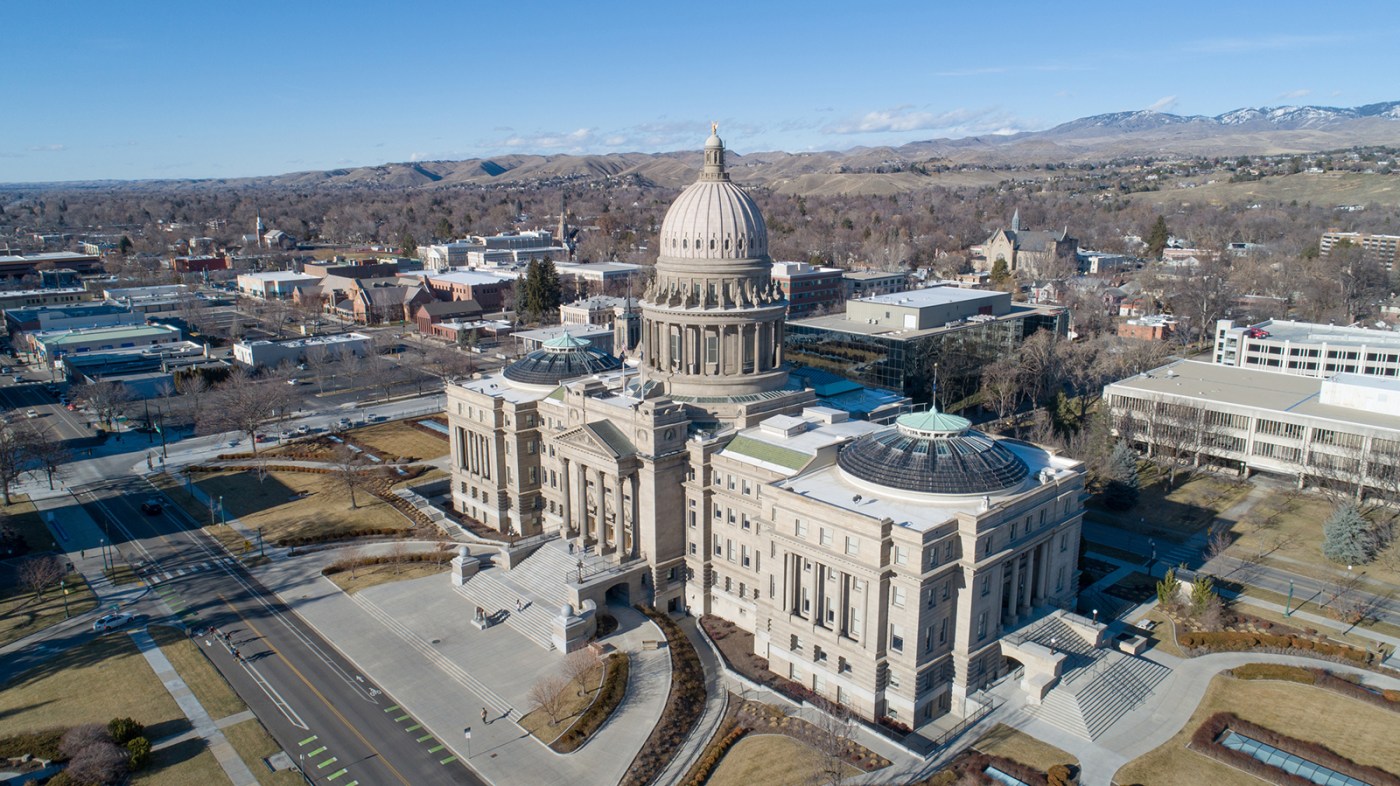
Nate Roberts is a longtime electrician who won a seat in the Idaho legislature. The Democrat is among the small number of working-class lawmakers around the country. (Idaho Legislature/TNS)

Working-class issues

After a 32-year career as an electrician, Democratic state Rep. Nate Roberts was part of a new wave of first-time Idaho lawmakers entering office in 2023.

Roberts knew that it wasn’t just his relative political inexperience that separated him from the rest of his colleagues.

He also was one of the only state lawmakers who had worked a union job. And during his first few weeks in office, he was shocked by how rarely issues such as wage theft, low pay and housing affordability had been talked about in committee meetings.

“That’s when I realized that the only person that’s going to advocate for working-class people is a working-class person,” he told Stateline. “When I moved from state to state working different jobs, I realized how differently states were influenced when it came to policies for working people.”

Roberts learned the power of unions as a journeyman — and fighting to increase worker protections has become his life, he said.

Idaho is one of 26 so-called right-to-work states, where no person can be forced, as a condition of employment, to join a union. Such laws limit unions’ bargaining power.

Roberts would like Idaho to follow the lead of Michigan, which in 2023 became the first state in decades to repeal a right-to-work law. That is unlikely in Idaho, given the state’s conservative political orientation. But Roberts also is pushing to update Idaho’s child labor laws, which were enacted in 1907 and have been superseded by the federal Fair Labor Standards Act of 1938.

Roberts said his experience as a laborer in his younger years has emboldened him to speak out against legislation such as a Senate bill that would repeal limits on the number of hours and how late in the day a child under the age of 16 can work.

“I’m still shocked when I get pushback for going against these bills, particularly ones that I feel regress our child labor laws,” said Roberts. “I’ve experienced it. We need to not only protect our kids, but we also need to protect our workers.”

Related Articles

National Politics |


Immigration is fueling US economic growth while politicians rage

National Politics |


NY AG Letitia James lays groundwork to seize Trump assets ahead of looming fraud penalty deadline

National Politics |


Trump leads in polls but badly trails in crucial 2024 money race

National Politics |


Trump’s social media company approved to go public, potentially netting former president billions

National Politics |


Biden and Trump ask voters if they’re ‘better off’ than they were 4 years ago. It’s complicated

The political climate is far different in Minnesota, where the Democratic-Farmer-Labor Party has controlled the governor’s office, the state House and the state Senate since January 2023. Last year, the state enacted a major package of labor-friendly laws.

Minnesota also passed a slew of tenant-landlord laws, with protections favoring the state’s renters.

Berg said the backgrounds of working-class legislators like herself can inform statehouse conversations, even if lawmakers with different backgrounds support pro-labor policies.

“I don’t think there’s enough value in having people with lived experience in the legislature,” Berg said. “When you take someone who … still lives paycheck to paycheck, they are bringing that personal experience to fight for a bill that will impact working families.”

For Wisconsin state Rep. Jenna Jacobson, joining the legislature in 2023 was a lot like “drinking from a fire hose,” she recalled.

One of her policy priorities — expanding aid for free school meals— was influenced by her experience as a schoolkid.

“I was one of the kids on free and reduced lunches growing up. I had the special colored cards because of that,” said Jacobson, a Democrat. “I know so many of our kids who are in a similar spot.”

Barriers abound

For working-class Americans, financial and societal barriers are a major disincentive to pursuing state offices, said Amanda Litman, co-founder and co-executive director of Run for Something, a progressive organization that recruits candidates for down-ballot races.

A 2021 national survey by Tufts University found that local candidates who experienced poverty in their youth felt especially constrained.

“Structurally, it’s really hard for people who aren’t already rich, or already independently wealthy, have rich partners or rich families to enter politics,” Litman said. “And the gatekeepers at the state level have typically recruited candidates who were safe bets, which is a candidate who can independently raise money.”

The eligibility criteria for statewide office vary greatly by state. Only five states — Arizona, Connecticut, Hawaii, Maine and Minnesota — allow public financing options for candidates vying for state legislative seats.

Becoming comfortable wielding political power as a working-class person is a transition that can take a while, Indiana Republican state Rep. Peggy Mayfield told Stateline.

Mayfield, who worked as a secretary at the insurance company she and her husband owned together, is now a 12-year veteran in the legislature who knows how to navigate state politics and get bills passed.

But running for office, much less holding state office, is time-consuming and requires sacrifices, she said.

“If I had an employee who came to me and said, ‘I wanna run for office,’ I’m faced with saying, ‘I’m gonna let you off four months a year,’ or make a difficult choice,” said Mayfield, describing how hard it is for many workers who don’t have that privilege. “Running for office itself becomes a full-time job … and for some in the working class it may not make sense to go into politics, if they can pursue more profitable opportunities in the private sector.”

Some states have worked to raise legislative pay, which could entice more working-class people to take a shot at elective office.

Earlier this year, Kansas raised salaries for rank-and-file lawmakers from about $29,000 to $57,000 after some said the lower pay wasn’t enough to live on. ArizonaKentuckyNew Jersey and Vermont are among the states with measures this session that could increase lawmakers’ pay.

New York passed legislation in 2022 that made its lawmakers the highest paid in the countryPennsylvania has cost-of-living adjustments.

Roberts, the electrician-turned-lawmaker in Idaho, said: “We don’t do this for the pay, and some of us certainly aren’t getting rich off this job. Some of us are making ends meet.

“But we have residents who are also making ends meet, and they rely on us to speak on the issues affecting them, and that’s what keeps you going,” Roberts added.

Lawmakers in Idaho make $19,927, after a pay raise passed in 2022.

Another barrier for would-be working-class lawmakers, Carnes said, is running a viable campaign against more established political candidates. The working class needs infrastructure and coalition-building to compete politically, he said, similar to women candidates who get support from EMILY’s List (a pro-abortion rights group).

“The solution is pretty straightforward,” said Carnes. “If you commit to working-class people and partner with labor unions and political parties on recruiting and training working-class people to run for office — it’s possible you will see more working-class state legislators.”

In Minnesota, Rep. Berg soon realized that her best legislative asset was her ability to vouch for the working experiences of everyday Minnesotans.

A flight attendant for Endeavor Air, Berg has signed on to a bill that, among other provisions, would delete the exemption for air flight crews in the state’s law on employee sick time. Her experience allowed her to confidently explain to legislative peers how the exemption had hurt flight crews.

“Government works best when all types of personal experience are at the legislative table,” Berg said. “I knew that I was uniquely able to speak on issues that my other colleagues never experienced.”

©2024 States Newsroom. Visit at stateline.org. Distributed by Tribune Content Agency, LLC.

Opinion:  Bloated Police Budgets Don’t Make Us Safe 

posted in: Society | 0

“The City Council must have the courage to use the budget to hold the NYPD accountable.”

Michael Appleton/Mayoral Photography Office

CityViews are readers’ opinions, not those of City Limits. Add your voice today!

Three years ago, nine NYPD officers responded to a 911 call that changed my life forever. And while I received some form of justice recently for what occurred, I am concerned that unless New York City uses the city budget to hold the NYPD accountable, their unjust treatment of New Yorkers, particularly Black and brown New Yorkers like me, will continue, costing millions in taxpayer dollars that could be better spent on services that would make residents safer and healthier.

In 2021, I was wrongfully arrested by the police. The police came to my home after a neighbor called 911 when they heard that my uncle was arguing with my nephew. The nine officers who responded barged into our home without a warrant, drew their tasers as they illegally searched for my nephew, and upon finding him, violently tackled him to the ground as I screamed in terror, begging the officers to explain why they were doing this. They responded by arresting me too.

Because I had not committed any crime, the officers needed to lie in the documents the police use to prosecute people. I felt like I was being kidnapped by the police. They left me in a cell in the precinct overnight, and I was detained for nearly two days before I was released. I was prosecuted for five months before a judge dismissed the case.

Afterwards, I filed a lawsuit against the city and the nine officers who violated my rights. The city recently agreed to pay me $125,000 for what those officers did, but the officers themselves faced no punishment. They did not contribute to the settlement, they were not fired, and they were not disciplined. 

I’m not the only one who has faced unjust treatment at the hands of the police. Just last week, a report was released that should shock and enrage every New Yorker. In 2023, the city paid over $114 million in wrongful arrest lawsuits like mine. In fact, since 2018, the NYPD’s misconduct has cost taxpayers more than half a billion dollars. These payments coincide with historic increases in lawsuits, which shows that what is happening here is an NYPD run amok.

The city should absolutely compensate New Yorkers when their rights are violated. But the city should also prevent these lawsuits from happening in the first place by holding the NYPD sufficiently accountable for its law-breaking, retaliation, and aggression.

In 2024, New Yorkers are projected to fund the NYPD at $10.8 billion to help pay for the salaries of officers like the ones who violated my rights. This bloated budget, which makes up 10 percent of the city’s overall budget, allows officers to engage in wasteful, illegal behavior: over-responding to 911 calls, entering people’s homes without a warrant and without consent, arresting people for trumped up charges, and lying on police reports.

It’s clear that without budget consequences, the NYPD will continue to pay officers’ salaries and pay out large settlements, while simultaneously demanding more taxpayer money from the city, depriving New Yorkers of both safety when interacting with the police and important services that actually keep people safe and healthy, like greater access to housing, transportation, food, jobs, and other economic and social benefits or opportunities.

The NYPD argues that the $10.8 billion budget is necessary for public safety, yet it never addresses why the department should be rewarded when so many officers fail to follow written policies and procedures, violate the law, and forge police reports that can ruin a person’s life and their family’s well-being forever, all without penalty. Such financial and legal mismanagement would never be accepted in a private corporation, and we should not accept it from the NYPD.

I filed my lawsuit against the NYPD because I want to change how it polices my community and I want them to follow the law. I do not want anyone else to have to go through what I went through. The NYPD must change its ways, or we New Yorkers will continue to pay for their salaries while they continue to break the law.

New Yorkers deserve to live in a safe and healthy city, where the police do their jobs according to the law. Instead, we have an inflated police budget and officers who trample on our rights without any accountability, leaving us less safe and with worse schools, crumbling infrastructure, and less money for services that improve all our lives.

The City Council must have the courage to use the budget to hold the NYPD accountable. Otherwise, this pattern of abuse and intergenerational trauma will continue. 

Cheyenne Lee is a native of the Bronx and an activist for positive social change.

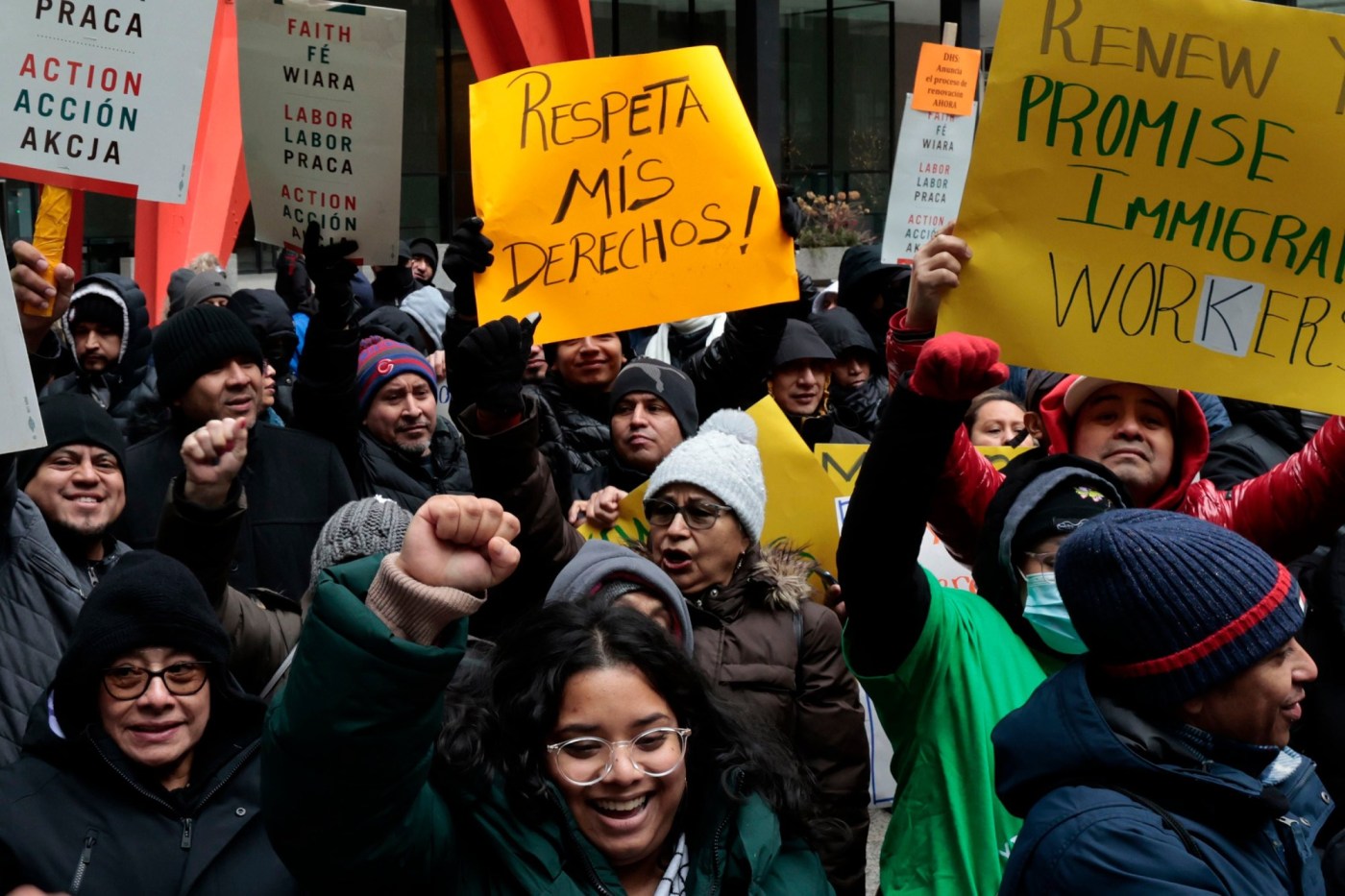
Immigration is fueling US economic growth while politicians rage

posted in: Society | 0

Augusta Saraiva and Enda Curran | (TNS) Bloomberg News

While the rising number of immigrants in the U.S. has sowed division among politicians across the country — and stoked angst among a swath of voters — there’s one place where almost everyone seems on the same, upbeat, page: Wall Street.

Last month, the nonpartisan Congressional Budget Office (CBO) calculated that immigration will generate a $7 trillion boost to gross domestic product over the next decade. The agency came to that conclusion after incorporating the recent surge in immigration.

The CBO release spurred a flurry of fresh number-crunching among investment bank economists, to account for the boost those new comers are giving to the labor force and consumer spending. Goldman Sachs Group Inc. revised up its near-term economic growth forecasts Sunday. JPMorgan Chase & Co. and BNP Paribas SA were among banks that acknowledged the economic impact from surging immigration in recent weeks.

“Immigration is not just a highly charged social and political issue, it is also a big macroeconomic one,” Janet Henry, global chief economist at HSBC Holdings Plc, wrote in a note to clients Tuesday. No advanced economy is benefiting from immigration quite like the U.S., and “the impact of migration has been an important part of the U.S. growth story over the past two years.”

Morgan Stanley economists Sam Coffin and Ellen Zentner noted this month that faster population growth fueled by immigration lends itself to stronger employment and population estimates than initially thought — though added that the full effect might not be captured by official data.

It’s hard to pin down the exact scale of the inflows of foreign-born people, thanks to many entering without visas or other documentation. But CBO statisticians incorporated data from U.S. Customs and Border Patrol to come up with their higher projected net immigration, according to Morgan Stanley analysis.

Goldman estimates that immigration was around 2.5 million in 2023, a figure that is far above the 1.6 million implied by the change in the foreign-born population in the official household survey from the Census Bureau.

The positive tone among economists contradicts that seen on the campaign trail, as a surge in the number of undocumented immigrants entering the U.S. through the southern border stokes political strife. The share of Americans who see immigration as the most important problem facing the U.S. is now matching a record high in data going back four decades, according to a recent Gallup poll.

The recent boost from immigration is the result of both more legal immigrants as the U.S. goes through unprecedented visa backlogs and the surge in illegal border crossings. The nation’s 32.5 million immigrant workers now account for roughly one in five U.S. workers, a record-high in government data going back almost two decades.

To be sure, the connection between the higher influx of foreign workers and the rapid post-pandemic recovery has been noted by economists and policymakers alike for some time now. Federal Reserve Chair Jerome Powell has repeatedly cited immigration as one of the reasons behind strong economic growth.

In a reference to the role being played by higher labor supply, Powell pointed on Wednesday to “a strong pace” of immigration as helping on that front.

“The overall picture is a strong labor market — the extreme imbalances we saw in the early parts of the pandemic recovery have mostly been resolved, you’re seeing high job growth, you’re seeing big increases in supply,” Powell said in his press conference Wednesday. Fed policymakers lifted their growth forecast for this year to 2.1% from 1.4%, their median estimate showed.

Immigration has been “important to the surprising pace of job growth, even alongside a modestly increasing unemployment rate,” according to JPMorgan chief U.S. economist Michael Feroli. “This, in turn, has been one factor behind surprisingly strong overall income and output growth.”

While there are warnings that increased immigration will undercut wages and conditions in some industries — the unemployment rate rose to a two-year high in February — businesses are ramping up calls for changes to bring in more workers through legal channels.

Almost 9 million positions are open across the economy, equal to 1.4 jobs for every job-seeker. Foreign-born workers made up a record 18.6% of the civilian workforce in 2023 and the U.S. approved a record number of work authorizations in the fiscal year through last September.

Immigration is “very policy sensitive,” Feroli cautioned, advising against extrapolating out bigger numbers beyond the end of this year. After all, policy could change after the November election, he noted.

___

©2024 Bloomberg News. Visit at bloomberg.com. Distributed by Tribune Content Agency, LLC.