‘He couldn’t have used his time any better’: Twins reassign top prospect Brooks Lee to minor-league camp

posted in: News | 0

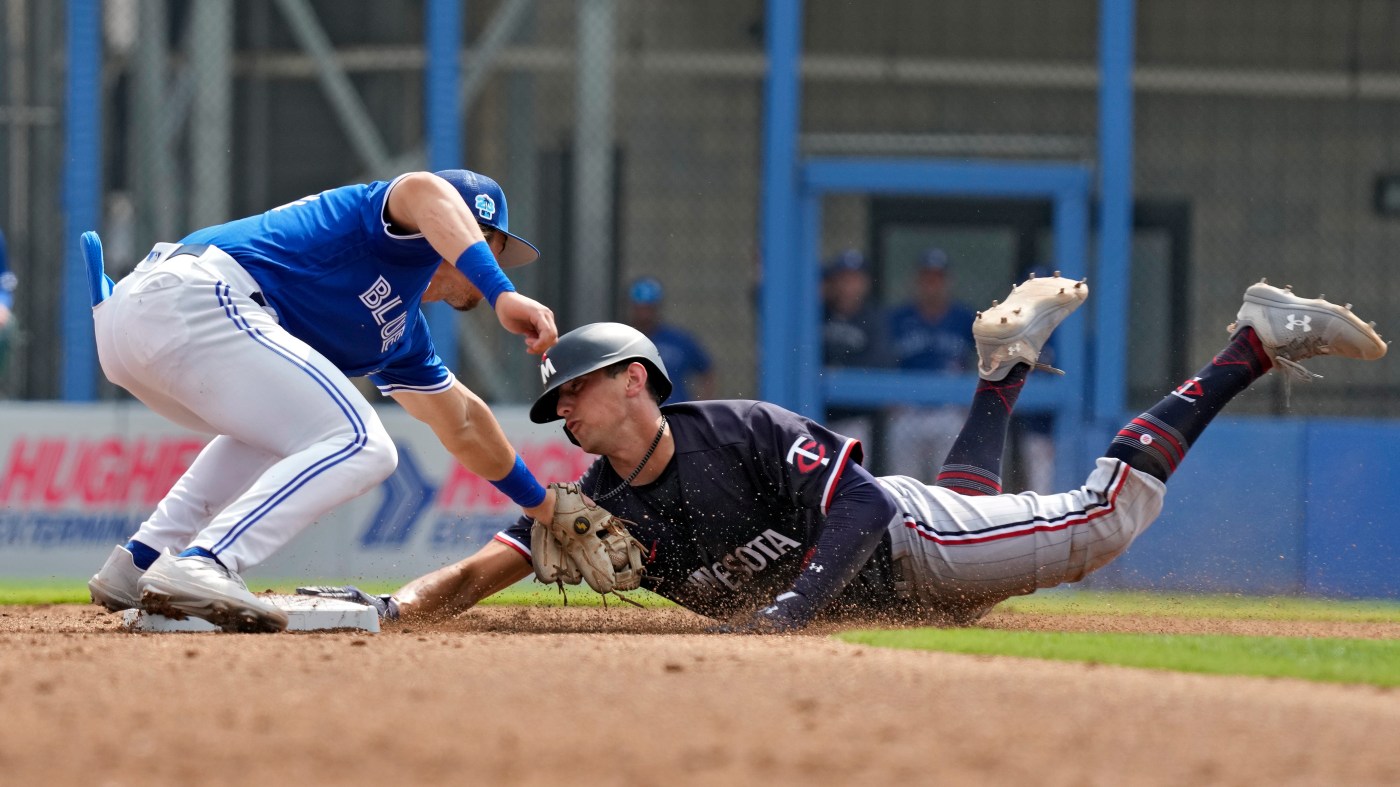
FORT MYERS, Fla. — Brooks Lee’s time at major-league camp may not have ended how anyone would have wanted — he exited Thursday’s game early with back spasms and was sent for testing on Friday — but injury aside, the top prospect took advantage of his time around the big-league club, impressing those around him.

The Twins reassigned Lee to minor-league camp on Friday after a meeting with manager Rocco Baldelli, who said he delivered “a lot of compliments” to the young infielder.

“I had nothing but positive things for him today. He had a great camp. He’s fantastic to work with,” Baldelli said. “… He’s level-headed, and he’s got a good way about him. He’s got a good baseball mind. He played well.”

The Twins drafted Lee eighth overall in 2022, and the 23-year-old infielder, who is MLB Pipeline’s No. 18 prospect, could force his way into the conversation sooner rather than later. He ended his season at Triple-A St. Paul, and will start this season there, as well, once his back is at full health.

The Twins plan to have him bounce around between shortstop (his natural position), third base and second base.

“For the people that haven’t seen him play a lot firsthand, he showed us that he can go out there and play shortstop. He showed us a lot at shortstop,” Baldelli said. “He showed us he can move around the field with ease. He did a lot in this camp. He had some good offensive days, and he handled being a young player in camp just the way you would want to see a guy do it.”

It’s a small sample size, but in the 13 games he played this spring, the switch-hitter leaves camp tied for a team-high 12 hits, with five doubles, a triple and a home run. Now, the Twins are hoping to see more of just that.

“He left everyone with an excellent feeling with his time here, and he was here almost until the end,” Baldelli said. “He couldn’t have used his time any better.”

Twins washed out

Both of the Twins’ split-squad games were rained out on Friday, called early around 9 a.m. because of a forecast that called for precipitation all day.

Pitcher Pablo López, who will start for the Twins on Opening Day next Thursday, was supposed to get his final tune-up of the spring in a game against the Tampa Bay Rays in Port Charlotte.

López had chosen to pitch in the away game in part to help simulate what he might see next weekend when the Twins open on the road. Instead, he’ll get his work in at the Twins’ facility in a minor-league game on Friday. If the field is not dry enough, he’s still expected to throw at the Lee County Sports Complex.

“We’d much prefer him to pitch with the extra day (of rest), if possible, but the weather is not cooperating,” Baldelli said. “He does want to face hitters in one form or another.”

Briefly

The Twins will return to exhibition game action on Saturday night, playing a road game against the Red Sox. It’s their last night game of the spring. Twins pitcher Chris Paddack is scheduled to start that game.

Related Articles

Minnesota Twins |


After carving out role, Twins’ Willi Castro more relaxed and setting sights on 40 steals

Minnesota Twins |


As Twins camp winds down, here’s a look at four relievers vying for a bullpen spot

Minnesota Twins |


Twins starter Anthony DeSclafani says he’s trying to “hold out optimism” as he awaits assessment on arm

Minnesota Twins |


Twins relievers ready to step up with Jhoan Duran, Caleb Thielbar sidelined by injuries

Minnesota Twins |


Twins’ rotation gets tested before season even begins
Hundreds of thousands of financial aid applications need to be fixed after latest calculation error

posted in: News | 0

By COLLIN BINKLEY (AP Education Writer)

WASHINGTON (AP) — The U.S. Education Department said it has discovered a calculation error in hundreds of thousands of student financial aid applications sent to colleges this month and will need to reprocess them — a blunder that follows a series of others and threatens further delays to this year’s college applications.

A vendor working for the federal government incorrectly calculated a financial aid formula for more than 200,000 students, the department said Friday. The information was sent to colleges to help them prepare financial aid packages but now needs to be recalculated — even as the department works through a backlog of more than 4 million other financial aid applications.

A statement from the Education Department says the problem won’t affect 1.3 million applications that were processed correctly and distributed to colleges this month. Officials said they have fixed the error and it “will not affect future records.”

Students applying for college have been left in limbo this year as they await the Education Department’s overhaul of the Free Application for Federal Student Aid. The form, known as FAFSA, is used to determine eligibility for federal Pell Grants, and colleges and states use it to award their own financial aid to students.

The update was meant to simplify the form but took months longer than expected. It gives colleges less time to make financial aid offers to students, and it gives students less time to decide where to enroll.

“This is another unforced error that will likely cause more processing delays for students,” said Justin Draeger, president and CEO of the National Association of Student Financial Aid Administrators.

After so many delays, he added, “every error adds up and will be felt acutely by every student who is counting on need-based financial aid to make their postsecondary dreams a reality.”

The latest misstep has to do with the Student Aid Index, a new formula used to determine students’ level of financial need after they submit the FAFSA application. For some students, the department forgot to factor in certain financial assets including investments, savings and total cash, according to an agency memo sent to colleges on Friday.

It resulted in a lower Student Aid Index for those students — indicating they have more financial need than they do in reality.

While the department fixes those students’ records, it’s encouraging colleges to make their own calculations and craft “a tentative aid package.”

Draeger pushed against that idea, saying colleges can only work with “valid and correct data.”

“It is not feasible or realistic to send out incorrect FAFSA data and ask thousands of schools to make real-time calculations and adjustments to the federal formula,” he said.

Advocates fear that the chaos of this year’s process could deter students from going to college at all, especially those for whom finances are a key part of the decision.

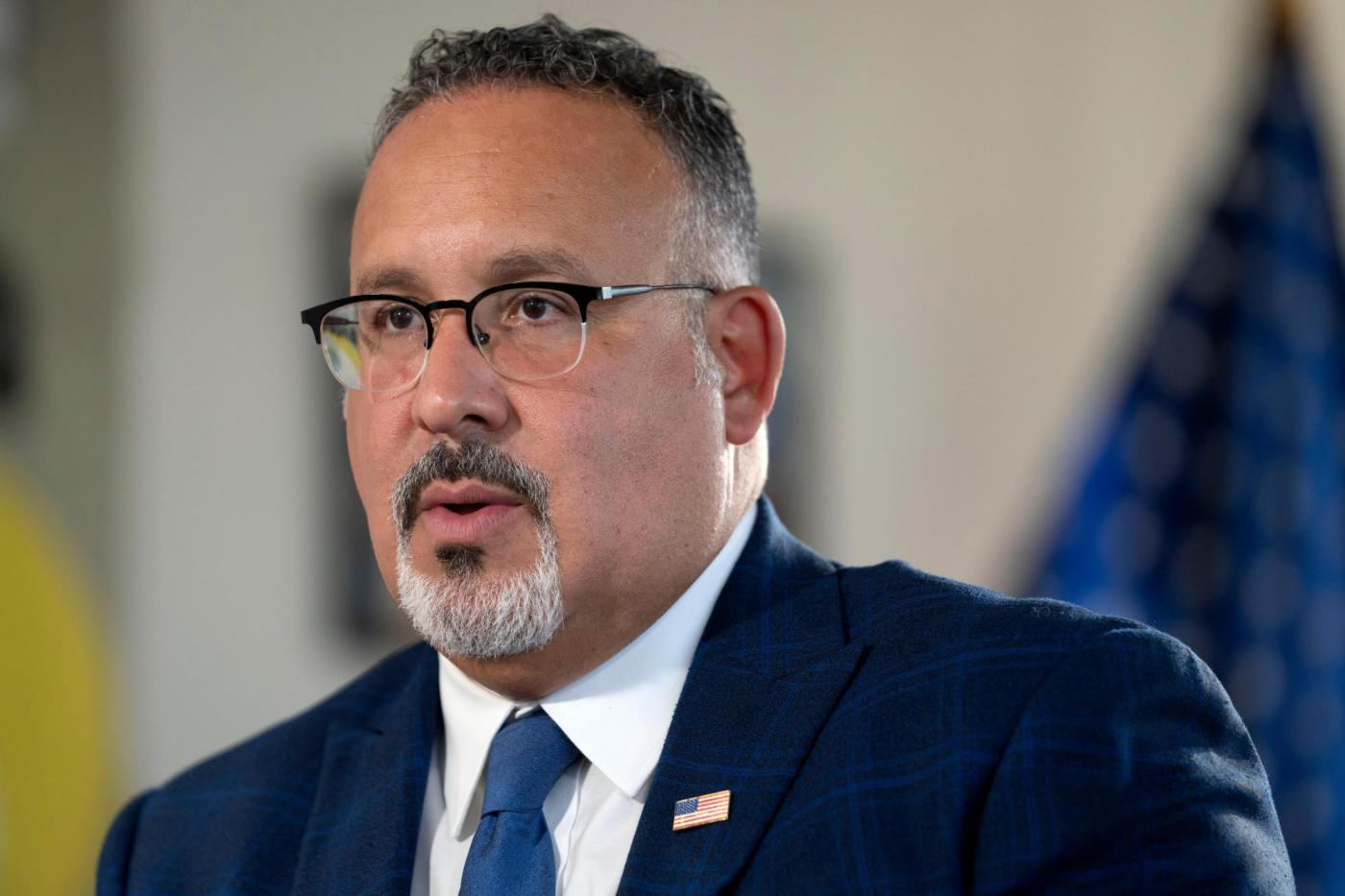
Senate Republicans are requesting a hearing with Education Secretary Miguel Cardona to discuss their “serious concerns” about the FAFSA rollout.

The notoriously time-consuming FAFSA form was targeted for an overhaul in 2020 through bipartisan legislation in Congress. The bill promised to simplify the form, going from 100 questions to fewer than 40, and it also changed the underlying formula for student aid, promising to expand it to more low-income students.

But the update has been marred by delays and technical glitches.

The form is typically available to fill out in October, but the Education Department didn’t have it ready until late December. Even then, the agency wasn’t ready to begin processing the forms and sending them to states and colleges, which only started this month.

Along the way, the department has scrambled to fix numerous bugs. Early on, the process failed to account for inflation properly. Another glitch blocked parents from filling out the form if they did not have a Social Security number. That meant many students who are U.S. citizens or permanent residents but whose parents are not could not apply.

The department says those problems have been fixed, and it’s now rushing to process millions of student applications and send them to colleges and states. The agency says it has processed 1.5 million applications out of about 6 million received so far.

The department “will continue delivering large volumes” of records in the coming weeks, its statement said. “We remain focused on helping students and families through this process and supporting colleges produce aid offers as quickly as possible.”

___

The Associated Press’ education coverage receives financial support from multiple private foundations. AP is solely responsible for all content. Find AP’s standards for working with philanthropies, a list of supporters and funded coverage areas at AP.org.

St. Paul seeks design, engineering experts to advance River Learning Center in Hidden Falls

posted in: News | 0

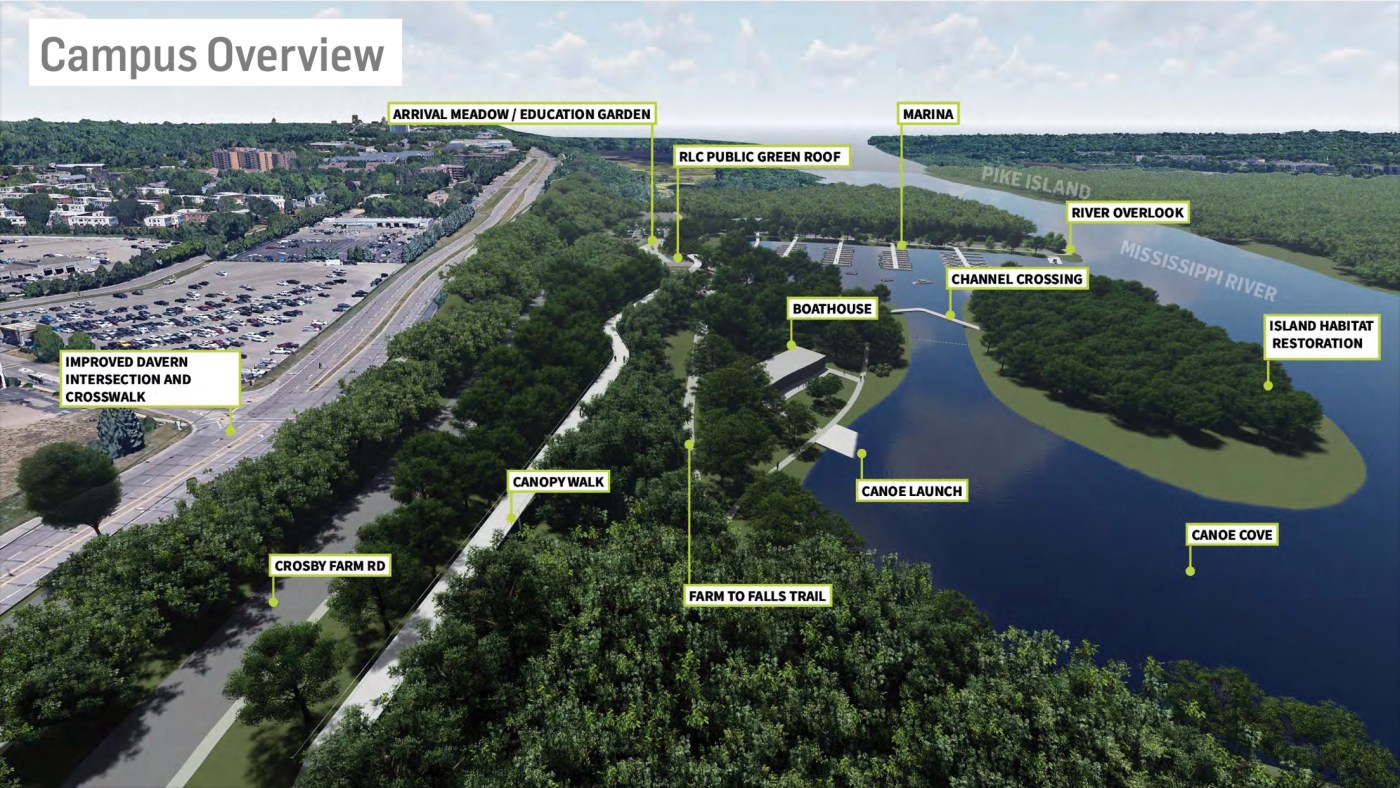
The city of St. Paul hopes to install a Mississippi River Learning Center in Hidden Falls/Crosby Farm Regional Park, and it’s looking for a multi-disciplinary team of design and engineering experts to take existing concept plans and turn them into design and construction documents. Proposals are due to the city by May 15.

The River Learning Center is envisioned as a gateway to the river, with environmental and cultural learning components linking visitors to the 600-acre park. The city is working with the Great River Passage Conservancy, the Mississippi Park Connection and the National Park Service to build on the schematic design, programming and engagement work completed to date.

The concept of a River Learning Center was first laid out in the 2013 Great River Passage master plan, which called for reorienting the city to the river. A technical study was done in 2017 and a feasibility analysis in 2018. After a yearlong process of public engagement, a design team completed a conceptual or schematic design in 2022.

Funding for the next phase was awarded by the state Legislature last year.

For more information, visit GreatRiverPassage.org.

Related Articles

Local News |


Unofficial start of Mississippi River navigation season kicks off in Hastings

Local News |


American Queen Voyages, which had made stops via the Mississippi River in St. Paul, ends operations

Local News |


Working below the water line: Crews drain Lock and Dam 2 at Hastings for periodic inspection

Local News |


St. Paul Port Authority greenlights approximately $20 million of riverfront construction

Local News |


Red Hot Chili Peppers, Gwen Stefani, Alanis Morissette to front first Minnesota Yacht Club Festival

Mild winter likely set stage for Lake Traverse fish kill

posted in: News | 0

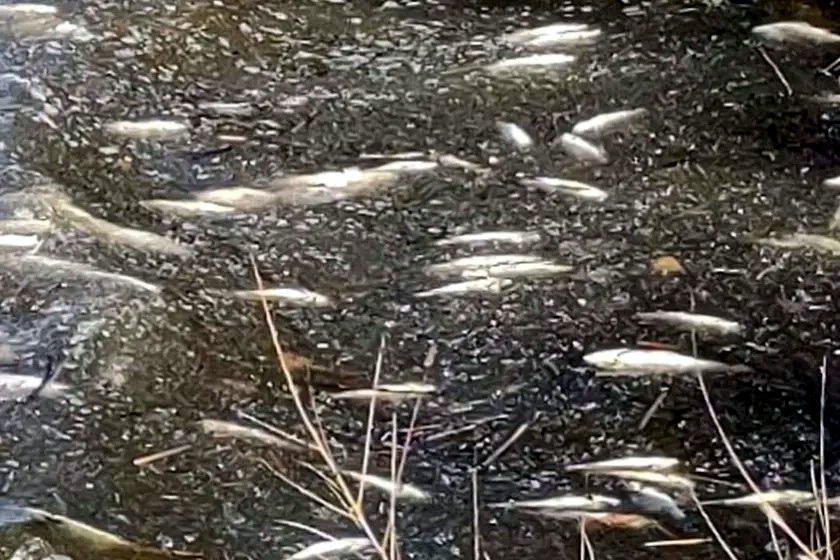
BROWNS VALLEY — An early analysis of a recent fish kill on Lake Traverse indicates that the mild winter weather likely set the stage for it.

An affliction known as “gas supersaturation trauma” is the preliminary diagnosis for the fish kill reported March 14, according to Ortonville Area Fisheries Supervisor Chris Domeier with the Minnesota Department of Natural Resources .

He estimates that there were 2,000 to 3,000 dead freshwater drum or sheepshead, and several hundred each of dead crappies, bluegills, catfish and white bass when he boated the affected area of the lake. He estimates there were also around 100 each of dead walleye and smallmouth bass.

Domeier and fisheries staff conducted a field investigation, collected water data, photographed and sampled fish.

Dr. Isaiah Tolo of the Minnesota DNR fish health laboratory analyzed the data. He concluded that gas supersaturation trauma, also known as gas bubble disease, is likely the cause of the kill.

It results when there is a supersaturation of oxygen and other gases in the lake.

“Under these conditions the dissolved gases in the blood and tissues of exposed fish can come out of solution and form gas emboli (gas bubbles) leading to various health issues, such as heart or kidney failure, and can ultimately kill a large number of fish,” Domeier wrote in a synopsis of the finding.

He added that fish have been submitted to the laboratory for a confirmation of the diagnosis.

The mild winter, sunny days and thin, clear ice provided good conditions for algae to grow in the lake. The heavy algae growth can lead to the higher-than-normal levels of oxygen and other gases in the lake, Domeier explained.

While the fish kill will affect the number of freshwater drum, bluegills and crappies available to anglers, Domeier believes that overall the lake should still provide decent fishing opportunities this coming season.

The shallow lake covers 10,848 acres in Traverse County on the Minnesota border with South Dakota.

Related Articles

Outdoors |


Sugarbeet companies sued over antitrust violation allegations

Outdoors |


Dave Thune: We need to support our public-safety people every day

Outdoors |


Letters: Why would we think a zoning sledgehammer is the right tool for Minnesota?

Outdoors |


Spring snowfall, in two parts for the Twin Cities, follows a mild winter

Outdoors |


State sanctions western Minnesota jail after unruly inmate deprived of food and water