5 takeaways from the abortion pill case before the U.S. Supreme Court

posted in: News | 0

By Matthew Perrone, Amanda Seitz and Christine Fernando, Associated Press

WASHINGTON (AP) — U.S. Supreme Court justices on Tuesday did not appear ready to limit Americans’ access to the abortion pill mifepristone, in a case that could have major implications for the Food and Drug Administration’s oversight of thousands of medications.

It’s the first abortion-related case the court has taken since a majority of the current justices struck down the constitutional right to abortion in 2022.

A group of anti-abortion doctors had asked the court to restrict access to mifepristone and to limit when in a pregnancy it could be used.

Key moments from the arguments:

ABORTION PILL SAFETY UNDER MICROSCOPE

The FDA approved mifepristone in 2000 as a safe and effective way to end early pregnancies. Last year it was used in more than six in 10 of the abortions in the U.S.

The central argument of the conservative group challenging mifepristone is that the Food and Drug Administration overlooked serious problems with the drug when it eased restrictions on the drug, including making it available via mail in 2021.

Erin Hawley, who represented the doctors and group suing the agency, argued the FDA “failed to consider or explain … its wholesale removal of safeguards” on the pill.

But the FDA has long argued its decision to drop in-person appointments to get mifepristone, among other requirements, came after 20 years of monitoring its safety. In that period the agency reviewed dozens of studies in thousands of women in which serious problems — including hospitalization — occurred less than 0.3% of the time.

Hawley pointed out that FDA’s own prescribing label mentions that 2.9% to 4.6% of women taking the drug go to the emergency room. But Solicitor General Elizabeth Prelogar pointed to studies showing that half of women who go to the emergency room don’t get any treatment at all.

“Many women might go because they’re experiencing heavy bleeding, which mimics a miscarriage, and they might just need to know whether or not they’re having a complication, ” Prelogar said.

Because of the highly technical nature of reviewing drugs, courts have long deferred to FDA’s scientific judgements on drug safety and effectiveness.

Justice Ketanji Brown Jackson pressed Hawley on the consequences of second-guessing the agency’s regulators.

“So what deference do we owe them at all with respect to their assessment that these studies establish what it is that they say they do about safety and efficacy?”

HOW FAR TO GO

Hawley ran into questions as she argued that a nationwide rule curtailing mifepristone use was needed.

She was repeatedly interrupted by Justice Neil Gorsuch, who voiced objections to such sweeping injunctions.

The case “seems like a prime example of turning what could be a small lawsuit into a nationwide legislative assembly on an FDA rule or any other federal government action,” said Gorsuch.

Normally when a court issues an injunction about a government policy it only applies to the individuals or groups in the case. But in recent years a growing number of justices on lower courts have issued “universal injunctions,” blocking federal regulations.

Gorsuch noted that there have been roughly 60 such rulings in the last four years.

Chief Justice John Roberts also seemed skeptical that a ruling reversing the FDA’s scientific judgments was necessary.

“Why can’t the court specify that this relief runs to precisely the parties before the court as opposed to looking to the agency in general and saying, ‘Agency, you can’t do this anywhere?’”

RIGHT TO SUE

The Biden administration argued that the plaintiffs — a group of anti-abortion doctors — didn’t have the right to challenge the FDA’s approval of mifepristone.

Related Articles


Supreme Court seems likely to preserve access to the abortion medication mifepristone


Supreme Court’s anti-abortion conservatives could restrict abortion pills sent by mail, even in blue states


Mifepristone access is coming before the US Supreme Court. How safe is this abortion pill?


Nearly 8 in 10 AAPI adults in the US think abortion should be legal, an AP-NORC poll finds


Trump suggests he’d support a national ban on abortions around 15 weeks of pregnancy

The doctors who brought the suit argued that they might have to treat emergency room patients who experience serious complications from mifepristone.

But Solicitor General Elizabeth Prelogar told the court that the doctors don’t have to prescribe mifepristone and they can abstain from treating patients who have taken the pill if they oppose abortion.

“They don’t prescribe mifepristone,” Prelogar said. “They don’t take mifepristone, obviously. The FDA is not requiring them to do or refrain from doing anything. They aren’t required to treat women who take mifepristone.”

Justice Samuel Alito, however, repeatedly pressed the government on who did have the right to sue over FDA’s decisions.

“Is there anybody who can sue and get a judicial ruling on whether what FDA did was lawful?” Alito, who wrote the 2022 ruling that overturned Roe v. Wade, asked.

REAL-LIFE EXAMPLES, PLEASE

Several justices pressed Hawley to provide real-life examples of doctors who oppose abortion being forced to treat patients who had suffered from abortion pill complications.

They also took issue with how many hypothetical problems Hawley raised in her argument against the FDA’s loosening of abortion pill restrictions.

“I don’t want to hypothesize,” Jackson said to Hawley, asking her to provide an example of a doctor who was unable to object to providing an abortion.

At one point, Justice Amy Coney Barrett also questioned an example one of the doctors provided of a colleague who had to perform a “dilation and curettage” procedure on a patient with complications. Barrett pointed out that those procedures are not just performed in cases of abortions but for miscarriages as well.

Some of the justices also pointed out that doctors are already protected from performing abortions when they don’t want to by voicing conscience objection.

Justice Brett Kavanaugh raised that point early on: “Under federal law, no doctors can be forced against their consciences to perform or assist in an abortion, correct?”

MORE DRUGS AT RISK

The FDA is the government agency responsible for assessing the safety of drugs and approving their sale in the United States.

It originally approved mifepristone in 2000. In 2016, FDA said it could be prescribed up to 10 weeks of pregnancy and allowed nurses and other medical professionals to prescribe. It allowed sales through the mail in 2021.

Jessica Ellsworth, an attorney representing the New York-based Danco Laboratories, which makes mifepristone, asked the justices to consider how the case could upend the country’s entire pharmaceutical regulatory structure.

“I think this court should think hard about the mischief it would invite if it allowed agencies to start taking action based on statutory responsibilities that Congress has assigned to other agencies,” she said.

U.S. District Judge Matthew Kacsmaryk’s decision last year marked the first time a court has ever ordered the agency to withdraw the approval of a drug. An open letter signed by nearly 300 biotech and pharmaceutical company leaders last year slammed the ruling as undermining Congress’ delegated authority to the FDA to approve and regulate drugs. If justices can unilaterally overturn drug approvals, they said “any medicine is at risk.”

Fernando reported from Chicago.
Timberwolves coaching staff flexing its collective muscle in Karl-Anthony Towns’ absence

posted in: News | 0

Timberwolves defender Kyle Anderson was constantly looking over both shoulders as Golden State was set to inbound the ball with 10 seconds left in Sunday’s game at Target Center, seemingly waiting for something specific.

Trailing by three points, the Warriors needed a triple. And Anderson was guarding Klay Thompson at the top of the floor. It’s no surprise Golden State would look the way of Thompson, one of the NBA’s all-time great sharpshooters. But Anderson was prepared for Steph Curry’s screen and Thompson’s flare out toward the opposite extended elbow. Anderson was on Thompson like glue as the veteran guard caught the ball and fired up a 3-point shot, which clanked off the rim, effectively sealing the Timberwolves’ victory.

Anderson is a heady player, but how was he so prepared for the Warriors’ in-bound play? In the timeout just moments prior, Timberwolves assistant coach Micah Nori showed the team the play the Warriors were likely to run.

“Micah, they didn’t even go to the coaches’ huddle. Micah came to our huddle and was like, ‘This what they’re gonna run. Be ready for this,’ ” Timberwolves guard Anthony Edwards said. “And they came out and ran the exact play. Micah is a genius. That was the first time he ever did that.”

Chalk it up as another stroke of genius for Minnesota’s coaching staff, which repeatedly has flexed its collective muscles over the past couple weeks.

The Wolves have yet to break stride after losing star player Karl-Anthony Towns to injury. They’re 6-3 since the big man went down with a torn meniscus, with two of those losses coming in the first three games without him.

Minnesota was also without fellow big men Naz Reid and Rudy Gobert for multiple games in this recent stretch. And yet it rarely seems to matter who the Wolves have at their disposal. They always find a way to make it work.

Defensively, the adept coaching has been on display all season. Sure, the Timberwolves’ No. 1 defensive rating is largely a product of Minnesota being armed with Gobert and a host of elite perimeter defenders. But on a game-by-game basis, the Wolves’ defensive game plans often exceed whatever their opponents put together.

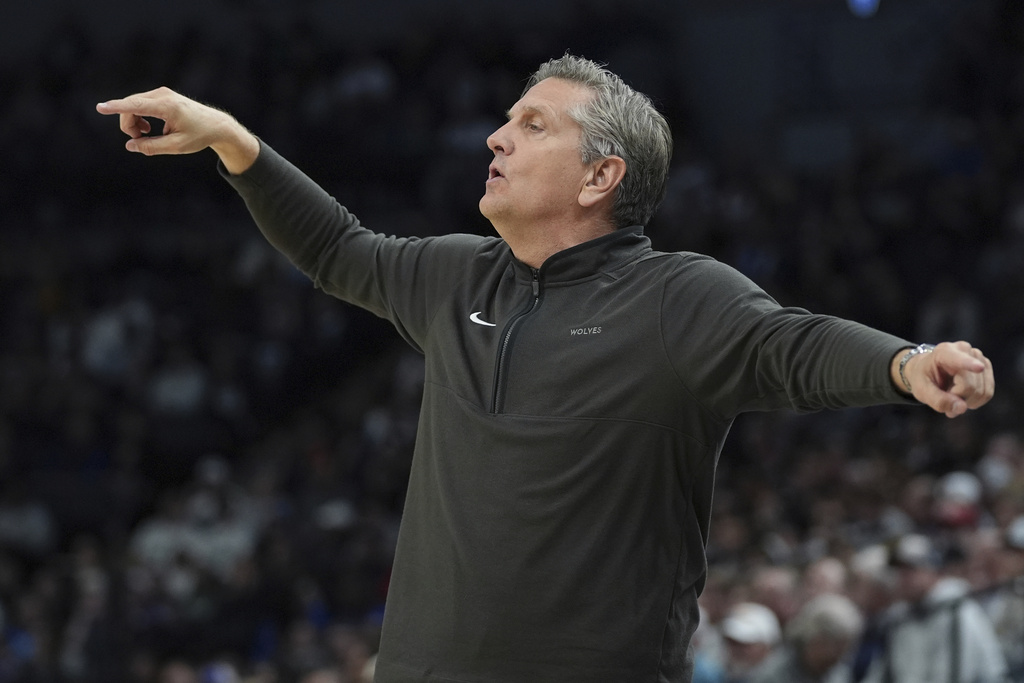
“Especially with the way we’re built, every day we have to think about how we’re going to approach this with matchups and coverages and stuff like that. Our staff does an amazing job of really coming to the meeting in the morning being super creative when they need to be, but also not straying too far away from our foundation, which is also important. But yeah, there’s a lot that goes into it,” Timberwolves head coach Chris Finch said in January. “A lot of teams kinda roll out the same defense every night, but we’re not built that way, so we gotta really kinda pick out certain points of emphasis that we’re focusing on.”

Much of what the Timberwolves do well defensively — with assistant coach Elston Turner heading that end of the floor — is centered on Gobert. But when Gobert was out for games against Utah and Denver, Minnesota found other ways to get stops, mimicking the fly-around brand of basketball that made the team successful during the 2021-22 season.

On the other end, the Wolves have done more than survive on offense without Towns — they’ve thrived. Minnesota’s 3-point volume is up, and the ball movement has increased. The team’s offensive rating, a concern for much of the season, has ticked up as a result.

“I think it’s a byproduct of the way we’ve had to play since KAT’s been out,” veteran point guard Mike Conley said.

The Timberwolves are rotating between Kyle Anderson and Naz Reid at the power forward spot, using their differing strengths depending on the lineups. When Gobert is off the floor, Minnesota is running a five-out offense that opens the lane for anyone aiming to attack. Even when Gobert is in the game and not involved in direct screen-and-roll action, he often is working from an extended dunker spot position that helps keep the floor spread.

“I don’t think I’ve called a post-up play for a while. We’re playing a little bit faster in transition. I think we have multiple handlers out there to be able to initiate and the ball is kind of flowing through everyone’s hands a little bit earlier through that,” Finch said. “But we played this way a lot last year. So we’re pretty comfortable with it.”

The Timberwolves are executing screen and rolls where Kyle Anderson or even Anthony Edwards is the screener at the top of the floor. A key possession in the Golden State victory came with a minute to play, when Edwards set a screen at the top of the floor, rolled, caught the ball at the elbow and dumped a pass down to Gobert, who made a pair of free throws to extend Minnesota’s lead to five.

Edwards as the screener is the type of ingenuity the Wolves’ coaching staff has displayed to compensate for the lack of Towns. The outside-the-box thinking has continued to rotations, where the Wolves have trotted out a three-point-guard lineup featuring Conley, Monte Morris and Jordan McLaughlin that shined as all three floor generals played seamlessly off one another. Conley noted that’s not a look he has experienced often.

“But sometimes on certain nights, it’s what’s working for us, and we’ve got three really good ones, and every one of them knows how to play and find each other,” Conley said. “We play off of each other very well, and hopefully we get more opportunities.”

If it continues to work, they will. Because as Finch and Co. have shown, they’ll do whatever is necessary to maximize Minnesota’s chances of success with whoever is available on that given night.

“Like everybody, we have things we’re lacking,” Finch said. “But the collective is better than all the individual parts, and that’s what any team should be.”

Related Articles

Minnesota Timberwolves |


‘He is the offense’: Rudy Gobert’s size the difference as Minnesota out-lasts Golden State

Minnesota Timberwolves |


Timberwolves again benefitting from the ‘otherworldly’ play of Jordan McLaughlin

Minnesota Timberwolves |


Timberwolves have six in double figures in win over Cleveland

Minnesota Timberwolves |


Timberwolves’ evolving Anthony Edwards is playing some of best basketball of his career

Minnesota Timberwolves |


Alex Rodriguez, Marc Lore submit financial documents to buy Timberwolves and Lynx, report says

Why your favorite streaming shows are showing up on old-fashioned TV

posted in: News | 0

Stephen Battaglio | Los Angeles Times (TNS)

In the late 1990s, NBC ran a promotional campaign with the slogan, “If you haven’t seen it, it’s new to you,” aimed at boosting summer reruns of such hits as “Mad About You” and “Frasier.”

Updated for 2024, the line would be, “If you haven’t streamed it, it’s new to you.”

Original series created to drive new subscribers to streaming platforms are showing up more frequently on linear broadcast and cable TV networks. Media companies are looking to expose the programs to broader audiences and fill out their lineups to help pay the freight as they battle to keep pace with Netflix.

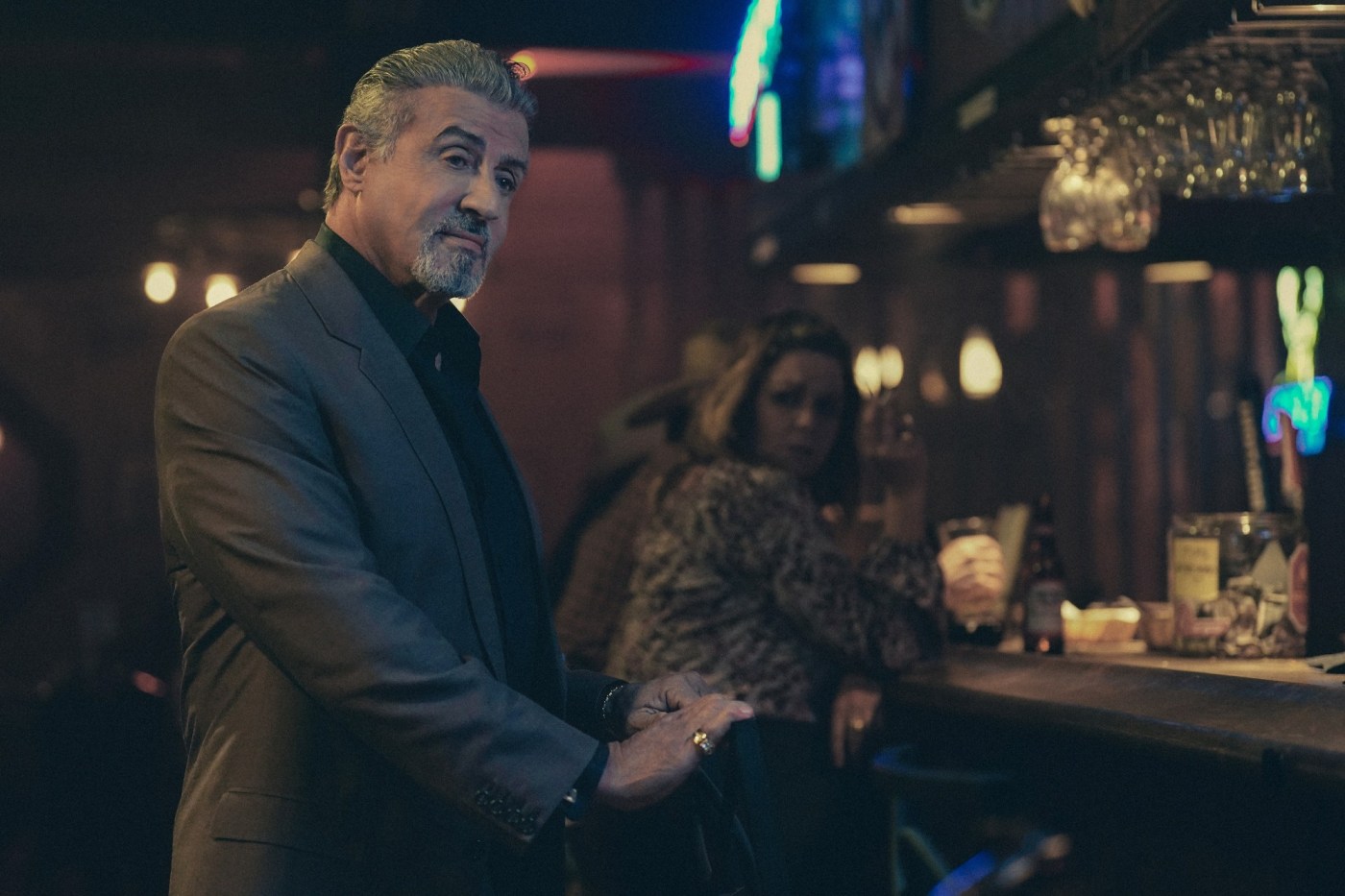
This summer, CBS will be running the first season of the Taylor Sheridan crime drama “Tulsa King” starring Sylvester Stallone — a show that was made for streamer Paramount+. You can binge rival Peacock’s new reality series “The McBee Dynasty,” but if you want to kick it old school, individual episodes air weekly on parent company NBCUniversal’s USA Network.

From left, Jesse McBee, Steve McBee, Steven McBee Jr., Cole McBee, James “Jimmy” McBee in an episode of “The McBee Dynasty: Real American Cowboys.” The Peacock streaming original series is also getting a run on USA Network. (Emerson Miller/Peacock/TNS)

In January, ABC aired the first season of the Hulu hit “Only Murders in the Building,” It performed well enough for the network to plan on airing another season at some point in the future.

The trend runs counter to the perception that viewers looking for non-sports entertainment programming have abandoned linear TV.

It may be true that many younger consumers who have grown up with streaming don’t even own a TV set, which they see as a gadget to bombard their parents and grandparents with pharmaceutical drug commercials all day. But for media companies, linear TV, while on the decline with shrinking ratings and cord-cutting, has turned into a marketing tool that expands public awareness of their streaming shows.

Meanwhile, the streaming businesses owned by legacy media companies such as NBCUniversal parent Comcast Corp., Paramount Global and Disney are all under pressure from Wall Street to generate profits. Turning to linear networks is a means of generating more revenue to help monetize their investments in streaming.

“These companies are hemorrhaging money [on streaming],” said Doug Herzog, a veteran cable and broadcast executive. “None of it is working great. That’s the issue. They are trying things out because that’s what they should be doing.”

Paramount Global Chief Financial Officer Naveen Chopra summed up the approach at an investor conference where he said his company aims to get “the most we possibly can out of every single dollar that we invest in content.”

Executives say viewers can expect to see more original programs created exclusively for streaming services pop up on broadcast and cable channels.

That’s because the broadcast networks have the ability to reach more than 95% of the homes in the U.S. While cord-cutting has reduced the number of homes getting pay TV, major cable networks are connected to about 70 million homes, still more than most subscriber-based streaming services. Peacock, for example, has about 30 million paying subscribers.

Streaming shows can become hits and cultural touchstones, but it’s harder for them to reach the kind of critical mass that big network TV series such as “Friends” once achieved. That’s why the legacy companies are finding that shows already exposed on streaming can pass as original programming on linear TV.

“It’s something we will continue to do because what you see in a fragmented marketplace — as popular as these shows are — there are still people who have not seen them,” said Craig Erwich, who as president of the Disney Television Group oversees ABC and Hulu. “Putting them in different places and telling people they are there is always additive. It’s never cannibalistic.”

With a cast that includes Martin Short, Steve Martin and Selena Gomez, “Only Murders in the Building” is a show with the kind of broad appeal linear TV networks still seek, requiring just a few edits of foul language.

Disney found that half of the viewers who watched “Only Murders” on ABC were not signed up to Hulu, which has almost 50 million subscribers. After the series aired on the broadcast network, viewers wanted more. The hours of viewing for the first two seasons of the program rose by 40% on its original streaming home.

“It was new to a lot of people,” Erwich noted. “It surprises me because the show is so wildly popular in both consumption and critical acclaim that you start to think that everybody who wants to see this has seen it. But it’s a big country and there are many different types of people who want to watch TV in many different types of ways.”

NBCUniversal similarly saw viewers flock to Peacock to watch the second season of the medical anthology drama “Dr. Death,” after episodes from Season 1 aired on NBC. Viewing of the show on Peacock rose 58%.

“Only Murders” came in handy for ABC, as last year’s strikes by Hollywood screenwriters and actors had shut down production for months and cut off the pipeline of fresh programming. But the network was looking for a way to deploy the show well before the labor stoppages became a factor, executives said.

Streaming shows are likely to show up on the networks during the summer months, when repeats can no longer draw a sizable crowd. Rather than investing in original series for a smaller available audience, CBS can turn to a streaming show with a high-profile star such as “Tulsa King,” which features Stallone as a crime boss.

Last week, NBCUniversal’s Peacock unveiled a new serialized reality show, “The McBee Dynasty,” which tells the story of a family ranch and the four brothers vying to take over the business from their patriarch. The entire series is available to stream on Peacock while individual episodes air Monday nights after “WWE Raw” on USA Network.

Funneling the nearly 2 million WWE fans per week into the Peacock series uses one of the most time-honored stunts in the TV playbook.

The notion of a TV schedule where viewers are compelled to make an appointment to watch shows has almost become an anachronism in the age of streaming video on demand. But pulling an audience from one time period to the next remains the most efficient way to drive millions of viewers into sampling a new program, especially following live events or reality competition shows that are best enjoyed by watching in real time.

“The concept of a show-to-show audience flow is real,” said Frances Berwick, chairman of NBCUniversal Entertainment. “There is still a tremendous amount of value in it.”

Related Articles

Entertainment |


Photographer’s new book offers a unique look at Aretha Franklin

Entertainment |


The old ‘Road House’: ridiculous trash. And fun. The new one with Jake Gyllenhaal: just plain vicious

Entertainment |


Movie review: ‘Ghostbusters: Frozen Empire’ a lukewarm franchise entry

Entertainment |


‘Yellowjackets’ and ‘Girlfight’ filmmaker Karyn Kusama’s advice to young directors? Get more sleep

Entertainment |


‘Apples Never Fall’ review: Annette Bening as a retired mom who goes missing

NBCUniversal has been aggressive in using its linear channels to boost Peacock shows. “Bupkis,” the comedy series with Pete Davidson, has gotten several runs after “Saturday Night Live,” the show that made him a star. Episodes of Kevin Hart’s Peacock talk show “Hart to Heart,” have show up on the celebrity-focused cable network E!

Bravo aired the first season of the Peacock reality competition “Traitors” ahead of the streaming debut of its second batch. It was an easy fit, Berwick noted, as several of the players on the program come from the Bravo slate of reality shows such as “Below Deck.”

“We’ll do it where it makes sense and we have the right content,” Berwick said.

Most streaming shows making it to linear TV are staying under the same corporate umbrella. But it may be only a matter of time before networks regularly provide a second window for original shows created for platforms that they do not own. It’s already happening.

Fox recently cut a deal with Amazon’s Prime Video to get a broadcast run of the game show “The 1% Club” a week after episodes make their streaming debut. The CW is currently airing the Canadian sitcom “Children Ruin Everything,” which was created for the Roku Channel.

Similar deals and experiments are probably ahead in the effort to get programs in front of enough viewers to build them into profitable assets.

“We’re going to see a lot of creativity,” Berwick said. “Good content is good content.”

©2024 Los Angeles Times. Visit latimes.com. Distributed by Tribune Content Agency, LLC.

Letters: In Cobb case, was deadly force authorized?

posted in: Politics | 0

A response to Soucheray’s question

In Joe Soucheray’s Jan. 27 column, he asks, “How would you have handled the Ricky Cobb stop, County Attorney Moriarty?

In seeking answers to how the arrest could have been approached without murdering Ricky Cobb II, we can look to Minnesota Statute 629.33, which outlines when force may be used to make an arrest. Soucheray describes how “Cobb attempted to drive away, a trooper clinging to the car on both sides.” According to MN Statute 629.33 “if the defendant then flees or forcibly resists arrest, the officer may use all necessary and lawful means to make the arrest but may not use deadly force unless authorized to do so under section 609.066.”

Use of deadly force was not authorized under 609.066 clause (1) either, as the “threat” did not need to be “addressed through the use of deadly force without unreasonable delay.” The officers could have been protected from “death or great bodily harm” by letting go of the car. Therefore to answer Soucheray’s question, “are officers then obliged to let a suspect drive away, Ramsey County’s instructions be damned?” Yes. In fact the state law says so.

The Department of Justice report shows that law enforcement has violated the civil rights of non-white Minnesota residents for years and created closed-loop accountability processes where officers are allowed to investigate themselves and avoid accountability when they break the law. We need a democratically elected Civilian Police Accountability Commission to ensure they do their jobs properly and are beholden to the communities they are supposed to serve.

Elowyn Pfeiffer, St. Paul, and Jae Yates, Minneapolis


Divorced from reality?

I read with interest “Will AG take over trooper’s case?” This excellent and balanced Pioneer Press story addressed the possibility that Gov. Walz may remove the murder case against State Trooper Ryan Londregan from Hennepin County’s jurisdiction and give it to the state attorney general. This would be because of Walz’s concerns whether Hennepin County Attorney Mary Moriarty would approach the case in a fair manner.

Mary Moriarty is an zealot with unabashed anti-law enforcement bias. The fact that she is in a position of substantial public authority is profoundly alarming.

I am a life-long Democrat. The fact that we Democrats continue to elect divorced-from-reality ideologues like Moriarty will make us culpable if Donald Trump becomes our president in November.

Peter Langworthy, St. Paul


An experience they’ll never forget

How astounding! A politician making a positive impact. Vice President Kamala Harris made a pop-in appearance to the Jimmy Lee Recreation  Center in St. Paul, where the St. Paul Central High School girls softball team was practicing and invited them for a visit to her residence in Washington, D.C. Here is a woman, a politician, who gets it. Teach by example. Positive role models  help create positive change. This is an experience these young women will never forget. The kindness and generosity shown to them will be carried forward. Go, girls!

Ursula Krawczyk, St. Paul


One picture doesn’t show all

Recently, the Minnesota legislators took up a bill, Death with Dignity. After reading Pioneer Press opinions and letters to the editor, it gave me pause to reflect upon the role of suffering. There are a core of people who value suffering and believe when you suffer difficult circumstances and pain, it is valuable as it prepares you for life. Then there is Albert Camus who says there is no such thing as great suffering.

A number of years ago I worked in hospice and witnessed the suffering of the dying, family and friends. The grief, suffering and loss is intense and more so when a family member has a slow painful death. I worked in a special unit where we were challenged to get a person’s pain under control. Morphine sulfate is not always the panacea nor a solution to intractable pain. Unfortunately, there are a core of people who suffer no matter what pain medication you give them. We need to address the role of suffering (and it’s more than just pain) of the dying as well as their family and friends and welcome their concerns and the choices they wish to make during this journey;

Dying is about living, a time to reminisce  about a relationship maintained. a life of kind, loving gestures, shared stories and a celebration of love and a life well lived. There will be a time, often long before we know, that the dying person believes or says, I am no longer living, I wish to suffer no more  and it’s time for me to say goodbye. I believe we must give a person control over how they die. There’s never one picture fits all. Yet each of us should have the freedom to choose.

Geri Minton, Roseville


College loan forgiveness? Why?

I recently saw the president gave loan forgiveness to another 153,000 Americans. My question is why?

First and foremost, let’s make clear that loan forgiveness is not free and the cost is paid by the American taxpayer. Here are three questions I have about this topic as it pertains to me and my family.

One: As a blue collar factory worker for 38 years who never went to college, should I have to pay for someone else to go to college?

Two: Since my wife worked 60-hour work weeks at a printing press in the summer and held two jobs while going to college, does she deserve a monetary refund of some of the student loans she took and paid off?

Three: Our daughter is a sophomore at a state school which was chosen for fiscal responsibility. She works full time in the summer and 24 hours a week while taking a heavy course load at school. Surviving on her own, she has taken minimal student loans the last two years and is on pace to graduate with less than $25k in manageable student loan debt. My question is, why does she have to work so hard and take such great financial responsibility when the government is rewarding people who don’t?

Brian Aherns, River Falls


If we’re so worried about age …

Here’s a point to ponder: If such a large majority of 2024 voters are so concerned about the ages of the current president and his rival contender … both of whom were voted into office … then why aren’t we all concerned about the lack of an age cap for the Supreme Court justices … who are all appointed… for life!

Don’t you think that their advanced ages may have an influence on their due-process thinking and decisions, which we all have to live with, like it or not? It doesn’t make any sense to me.

Let’s hear it for an age term limits ruling for all SCOTUS members … and soon.

J. Lemke, Shoreview

Related Articles

Opinion |


Real World Economics: How Haiti now reflects age-old economic teachings

Opinion |


Skywatch: The wily rabbit of winter

Opinion |


Working Strategies: Nine career management steps for women

Opinion |


Joe Soucheray: Reckless car thieves, streetlamp wreckers … we’re tired of this

Opinion |


Dave Thune: We need to support our public-safety people every day