Trump ally Jeffrey Clark was adamant about fraud in 2020 election despite evidence, superior said

posted in: Politics | 0

By GARY FIELDS (Associated Press)

WASHINGTON (AP) — The second day of the disciplinary hearing for former Justice Department official Jeffrey Clark painted a picture of someone who, despite numerous attempts by his superiors to convince him otherwise, remained adamant that there were irregularities and fraud in the 2020 election that required deeper examination.

Testifying before the three-member Board of Responsibility, then-acting Attorney General Jeffry Rosen said he and Richard Donoghue, the acting No. 2, met multiple times with Clark in the aftermath of the 2020 presidential election to change his stance regarding how the department should handle allegations of voter fraud.

Clark is accused of attempting to engage in dishonest conduct during his role in the aftermath of the last presidential election. At issue is a letter he drafted in the aftermath of then-President Donald Trump’s 2020 presidential election loss and attempt to overturn the 2020 election. The letter said the department was investigating “various irregularities” and had identified “significant concerns” that may have impacted the election. He was trying to convince Rosen and Donoghue to send the letter to Georgia.

In one meeting the men held with Clark, they asked why he was pushing an issue that was outside his purview and role as then acting head of the department’s civil division.

“Mr. Clark wasn’t very forthcoming. He just indicated these were his ideas. He thought they were good ones,” Rosen said.

The pair tried to explain why the department had concluded that while there was fraud and misconduct in the election it was not enough to have cost Trump the election. In addition, the men learned Clark had spoken with Trump, a violation of department policy on who should have contact with the White House.

Rosen said the meeting ended with Clark saying, “Well, I thought these were good ideas, but if you don’t like them, then okay.” Rosen and Donoghue thought Clark had accepted their explanation and the issue was closed.

That was not the case. Clark’s continued his efforts and maintained contact with Trump.

Rosen changed tact and at one point Clark received a classified briefing from the Office of the Director of National Intelligence over one concern he’d had.

But his efforts continued, along with his contact with Trump.

Clark had wanted an intelligence briefing from the Office of the Director of National Intelligence on one allegation he had heard. Rosen and Donoghue decided to grant him the access and also suggested he speak with the U.S. Attorney in Georgia on how he had pursued allegations there.

“He had expressed interest in the ODNI report, so I thought that was a way to both prevent him from giving poor advice to the president and perhaps to see why it was that the rest of the department had the position we had,” Rosen testified.

Clark did not waiver, disagreeing with the report. He did not contact the U.S. Attorney.

The issue reached a head when Trump considered firing Rosen and replacing him with Clark. That was averted when the senior leaders at the Justice Department and lawyers within the White House said they would quit if Trump took that step.

Rosen’s testimony took up most of the day, although Clark was called to testify by Hamilton Fox III, the disciplinary counsel at the hearing, over the objections of Clark’s attorneys, who indicated their client had made clear he would invoke privilege.

Clark answered the initial question about when he joined the Washington, D.C., bar and about his work history up until his time at the Justice Department.

He invoked several privileges, including executive privilege, law-enforcement privilege, deliberative-process privilege, attorney-client privilege and the Fifth Amendment, which protects people from providing self-incriminating testimony, during more than 30 minutes of questioning from Fox, focusing on the letter and Clark’s role in the aftermath of the election.

At one point, following Fox’s questioning, board member Patricia Mathews asked who Clark’s client was for his invocation of attorney-client privilege and Clark responded, “President Trump. The head of the executive branch. The sole and the unitary head of Article Two, the executive branch of the United States government.”

One of his lawyers interceded and asked that Clark continue invoking the privileges he used during the rest of questioning.

Clark is facing criminal charges in Georgia for his role in the attempt to overturn the election there. Trump is one of the co-defendants.

Clark could be sanctioned, including being disbarred. He can appeal any action taken against him to the D.C. Court of Appeals.

Clark’s attorney, Harry MacDougald, has said the action being taken against his client for engaging in the normal back and forth between lawyers would have a chilling effect on the profession.

The case resumes Thursday with defense witnesses.

St. Paul to offer free youth swimming lessons this summer

posted in: News | 0

Through a free teen fitness academy, the city of St. Paul already trains more than 225 lifeguards year-round, leading the state in lifeguard certifications while keeping pools open throughout the city and beyond it.

The city’s aquatics initiatives are about to take another deep dive, so to speak, with St. Paul offering free youth swimming lessons this summer. Registration will be open to all St. Paul youth on a first-come, first-served basis beginning April 1.

The goal is to improve water safety — Black youth are about three times as likely to drown as their white peers, according to Centers for Disease Control and Prevention — while aligning with St. Paul Mayor Melvin Carter’s stated goals of removing fees for youth sports programming.

“In the land of 10,000 lakes, cost should never be a barrier to water safety skills,” said St. Paul Parks and Recreation Director Andy Rodriguez, in a written statement.

Summer lessons will be offered at the Como Regional Park Pool and the Highland Park Aquatic Center. Youth swimming lessons are open to St. Paul residents only and registration will be available online at stpaul.gov/swimminglessons, or by calling 651-642-0650, or in-person at Great River Water Park starting at 9 a.m. on April 1, which will heretofore be known as “April Pools Day.”

A water safety and swimming course also will be offered at Lake Phalen Beach this summer.

In addition to free lifeguard training for ages 14 to 18 and free summer lessons for kids, the city has launched five free or low-cost swimming programs aimed at making aquatics accessible to different populations. Among them, there’s a women’s swim night for women and girls who might not otherwise utilize the pools due to religious beliefs or cultural practices.

There’s also a sensory friendly swim time designated for individuals with sensory sensitivities, and a free open swim from 12 noon to 5 p.m. on Sundays at the Oxford Community Center/Jimmy Lee Rec center on Lexington Parkway. The open swim includes free water safety education training from 3 to 3:25 p.m.

The city offers free and reduced rate aquatics memberships for St. Paul residents ages 62 and up with a financial need.

New this year, St. Paul Parks and Recreation launched the “St. Paul Sunnies” developmental swim team, with the goal of prepping kids ages 10 to 14 who might not otherwise have access to a competitive swim team. The team, which held try-outs in January, is led by high school mentors.

More information on each program is online at stpaul.gov/GreatRiverWaterPark.

Related Articles

Local News |


Yia Xiong’s daughter says she’s ‘devastated’ by no charges against St. Paul officer in fatal shooting

Local News |


Bigos Management reopens former downtown St. Paul YMCA to 1,500 tenants as ‘Lowertown Skyrec’

Local News |


As the Twin Cities slam poetry scene rebuilds, top local competitors will prove their poetic prowess during BuckSlam’s upcoming Grand Slam Finals

Local News |


St. Paul man found guilty of ‘heinous’ murder at downtown light-rail platform

Local News |


After 22 years on the air, Lori Barghini and Julia Cobbs announce they’re ending ‘Lori and Julia’

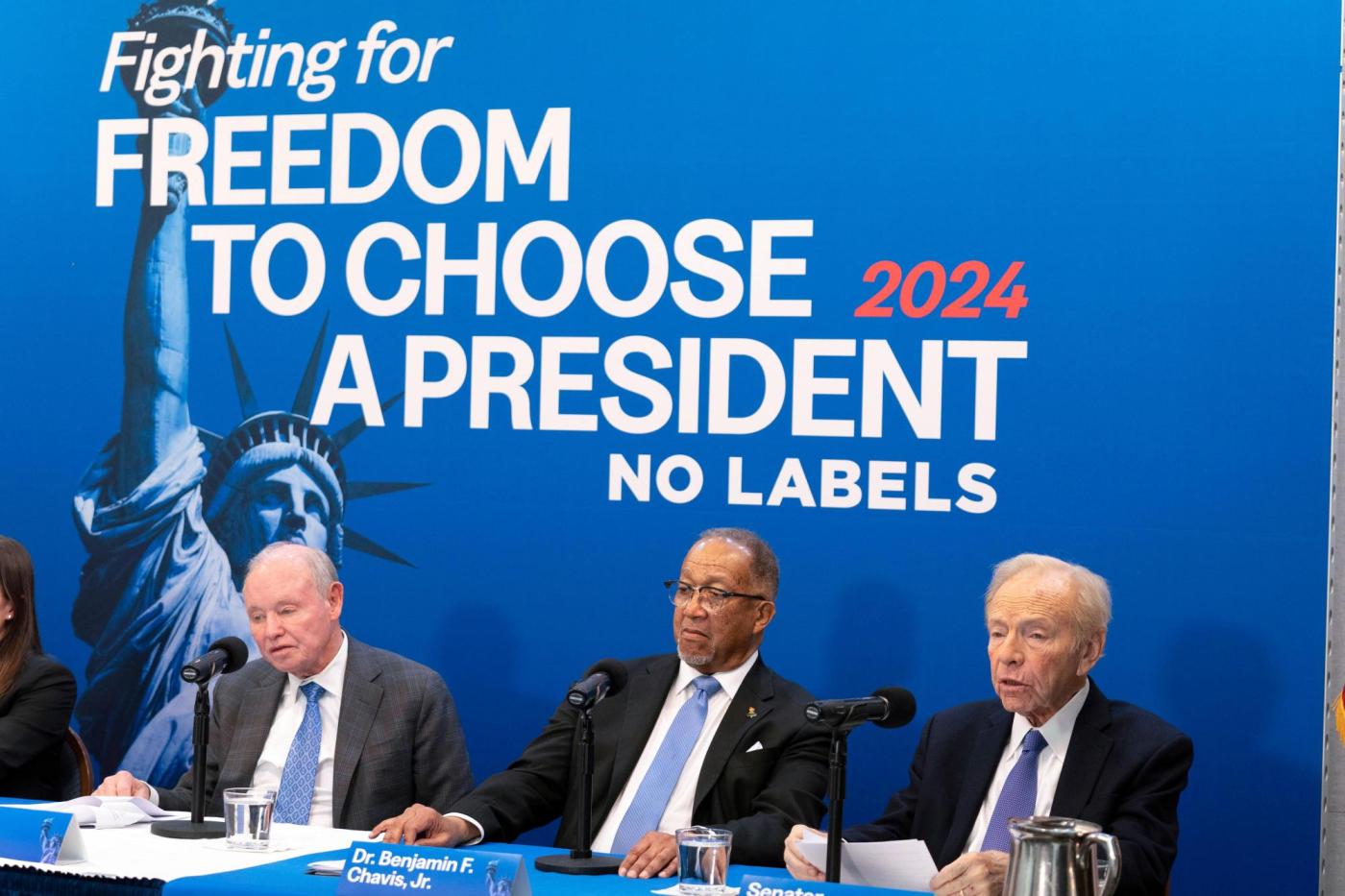
Former Sen. Joe Lieberman, Democrats’ VP pick in 2000, dead at 82

posted in: Politics | 0

NEW YORK (AP) — Former U.S. Sen. Joe Lieberman of Connecticut, who nearly won the vice presidency on the Democratic ticket with Al Gore in the disputed 2000 election and who almost became Republican John McCain’s running mate eight years later, has died, according to a statement issued by his family.

Lieberman died in New York City on Wednesday due to complications from a fall, the statement said. He was 82.

The Democrat-turned-independent was never shy about veering from the party line.

Lieberman’s independent streak and especially his needling of Democratic presidential nominee Barack Obama during the 2008 presidential contest rankled many Democrats, the party he aligned with in the Senate. Yet his support for gay rights, civil rights, abortion rights and environmental causes at times won him the praise of many liberals over the years.

Lieberman came tantalizingly close to winning the vice presidency in the contentious 2000 presidential contest that was decided by a 537-vote margin victory for George W. Bush in Florida after a drawn-out recount, legal challenges and a Supreme Court decision. He was the first Jewish candidate on a major party’s presidential ticket and would have been the first Jewish vice president.

He was also the first national Democrat to publicly criticize President Bill Clinton for his extramarital affair with a White House intern.

Lieberman sought the Democratic presidential nomination in 2004 but dropped out after a weak showing in the early primaries. Four years later, he was an independent who was nearly chosen to be McCain’s running mate. He and McCain were close pals who shared hawkish views on military and national security matters.

McCain was leaning strongly toward choosing Lieberman for the ticket as the 2008 GOP convention neared, but he chose Sarah Palin at the last minute after “ferocious” blowback from conservatives over Lieberman’s liberal record, according to Steve Schmidt, who managed McCain’s campaign.

Lieberman generated controversy in 1998 when he scolded Clinton, his friend of many years, for “disgraceful behavior” in an explosive speech on the Senate floor during the height of the scandal over his relationship with Monica Lewinsky. Yet Lieberman later voted against the impeachment of Clinton.

He defended his partisan switches as a matter of conscience, saying he always had the best interests of Connecticut voters at heart. Critics accused him of pursuing narrow self-interest and political expediency.

In announcing his retirement from the Senate in 2013, Lieberman acknowledged that he did “not always fit comfortably into conventional political boxes” and felt his first responsibility was to serve his constituents, state and country, not his political party. He had a tortured relationship with Democrats.

During his final Senate speech, Lieberman urged Congress to look beyond party lines and partisan rancor to break Washington gridlock.

“It requires reaching across the aisle and finding partners from the opposite party,” said Lieberman. “That is what is desperately needed in Washington now.”

Harry Reid, who served as Senate Democratic leader, once said that while he didn’t always agree with the independent-minded Lieberman, he respected him.

“Regardless of our differences, I have never doubted Joe Lieberman’s principles or his patriotism,” Reid said. “And I respect his independent streak, as it stems from strong convictions.”

Privately, some Democrats were often less charitable about Lieberman’s forays across party lines, which they saw as disloyal. He bolted his party and turned independent after a 2006 Senate primary loss in Connecticut.

Lieberman’s strong support of the Iraq War hurt his statewide popularity. Democrats rejected Lieberman and handed the 2006 primary to a political newcomer and an anti-war candidate, Ned Lamont.

Defying Democratic leaders and friends, Lieberman ran successfully for reelection as an independent and drew support from some Republican allies. Lieberman won praise from the White House and fundraising help from prominent Republicans, such as then-New York Mayor Mike Bloomberg, who himself later ran as an independent.

Lieberman made his Senate experience and congressional clout a strong selling point, saying he’d fight hard for the state’s defense jobs and its fair share of federal largesse. The strategy paid off.

Lieberman won reelection to a fourth term, even though many of his Democratic allies and longtime friends, including former Sen. Chris Dodd, supported Lamont. Lieberman was candid about what he considered a betrayal by old pals such as Dodd, but the two men later reconciled.

After his rebound reelection in 2006, Lieberman decided to caucus with Democrats in the Senate, who let him head a committee in return because they needed his vote to help keep control of the closely divided chamber. But it wasn’t long until Lieberman was showing his independent streak and ruffling his Democratic caucus colleagues.

Despite the decision of Democrats to let him join their caucus as an independent, Lieberman was an enthusiastic backer of McCain in the 2008 presidential contest.

Lieberman’s speech at the 2008 GOP presidential nominating convention criticizing Obama, the Democratic presidential nominee, struck a deep nerve with many Democrats.

Lieberman cast Obama as a political show horse, a lightweight with a thin record of accomplishment in the Senate despite his soaring eloquence as a speaker.

“In the Senate, during the 3 1/2 years that Sen. Obama has been a member, he has not reached across party lines to … accomplish anything significant, nor has he been willing to take on powerful interest groups in the Democratic Party to get something done,” Lieberman said at the convention.

“Eloquence is no substitute for a record,” he said.

Lieberman campaigned heartily across the country for McCain. Many Democrats considered it a betrayal to Obama and his former party colleagues.

“Joe Lieberman has said things that are totally irresponsible when it comes to Barack Obama,” House Democratic leader Nancy Pelosi of California said in a radio interview during the 2008 race.

After the election, there was speculation Senate Democrats might strip Lieberman of his chairmanship of the Senate Homeland Security and Governmental Affairs Committee as payback. Sen. Patrick Leahy, D-Vt., chair of the Judiciary Committee, was among those who said Lieberman should lose his chairmanship. Leahy branded Lieberman’s attacks on Obama as “beyond the pale.”

But at Obama’s urging, Senate Democrats decided not to punish Lieberman for supporting McCain and the GOP ticket. Obama was eager to strike a bipartisan tone for his presidency and giving Lieberman a pass helped reinforce that message.

Yet Vermont Sen. Bernie Sanders, an independent and staunch liberal, called it a “slap in the face” for millions of Americans who backed Obama.

Lieberman was known in the Senate for his hawkish foreign policy views, his pro-defense bent and his strong support for environmental causes.

Five weeks after the Sept. 11, 2001, attacks, he became one of the first politicians to call for the ouster of Iraqi leader Saddam Hussein and later voted in favor of the military invasion of Iraq. His vocal support for the war would later help doom his candidacy in the 2006 Connecticut Democratic primary.

Lieberman tended to vote with Democrats on most issues and was a longtime supporter of abortion rights, a stance that would have proved problematic with conservatives had McCain chosen him as his running mate in 2008.

He played a key role in the legislation that created the Department of Homeland Security.

Lieberman grew up in Stamford, Connecticut, where his father ran a liquor store. Lieberman graduated from Yale University and Yale Law School in New Haven As Connecticut’s attorney general from 1983 to 1988, he was a strong consumer and environmental advocate. Lieberman vaulted into the Senate by defeating moderate Republican incumbent Lowell Weicker in 1988.

After leaving the Senate in 2013, Lieberman joined a New York City law firm.

Lieberman and his wife, Hadassah, have four children.

___

Former Associated Press writer Andrew Miga contributed to this report.

Zach McCormick has taken over the midday shift at 89.3 The Current

posted in: News | 0

Zach McCormick is the new midday host at 89.3 The Current.

“The bloom is still very much on the rose,” McCormick said with a laugh. “It’s a little intimidating joining a station full of such experienced DJs. It’s been a blast so far.”

Zach McCormick (Sara Fish / Minnesota Public Radio)

McCormick, 33, replaces Jade Tittle, who left the station in October after 15 years due to issues with a stalker who had also harassed former Current DJ Mary Lucia.

As a teenager in Minneapolis, McCormick was already active in the local music scene, volunteering at the youth music venue TC Underground, attending all-ages punk shows with his dad and landing a gig as a youth host at the University of Minnesota’s Radio K. He continued to work on-air at Radio K while he attended the U.

After graduating in 2013, McCormick spent three years covering music for the now-defunct City Pages. He later returned to radio part-time doing weekends and overnights on the late Go 96.3. He was hired in early 2023 to fill a similar role at The Current. McCormick said he never thought he’d go into radio full time.

“Honestly, I kind of thought radio was something I did for fun,” he said. “It’s a really tough industry and there’s not a ton of jobs out there.”

McCormick began the 10 a.m. to 2 p.m. shift on Monday.

“I’ve got some great feedback from people at the station and listeners,” he said. “Someone compared me to (former Current DJ) Sean McPherson, which was great.”

McCormick’s hire is the latest move in a near-complete overhaul of the Minnesota Public Radio station’s weekday lineup. Two of The Current’s original DJs left abruptly. Evening host Mark Wheat departed in June 2020 while in the middle of a vacation. He wrote he was going to “take the plunge and follow my dreams” in a message posted to the station’s website.

Lucia left the evening drivetime shift in April 2022. In a Facebook post, Lucia wrote that she was “concerned with equity and fair treatment of all of my sisters at the station.” She took several shots at management during her final on-air shift, soon after which the station fired program director Jim McGuinn.

McCormick joins late afternoon host Jessica Paxton and evening DJ Ayisha Jaffer along with “Morning Show” host Jill Riley, who stands with Bill DeVille as the final two remaining DJs who’ve been at The Current since it debuted in January 2005.

Related Articles

Music and Concerts |


After 22 years on the air, Lori Barghini and Julia Cobbs announce they’re ending ‘Lori and Julia’

Music and Concerts |


SPNN cable access finds new roommates in Sahan Journal, Listen Up! Youth Radio at Vandalia Tower site in St. Paul

Music and Concerts |


Longtime Twin Cities DJ Brian Oake is out at Cities 97.1

Music and Concerts |


Much-loved KS95 afternoon DJ Larry ‘Moon’ Thompson dies after long battle with multiple sclerosis