Northwest Angle one-room schoolhouse to remain open after questions about its future

posted in: News | 0

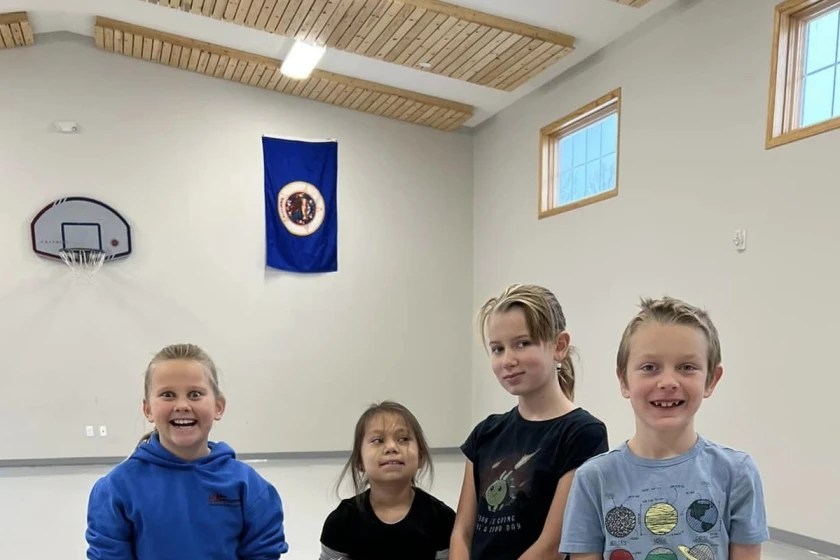
ANGLE INLET, Minn. — After concerns about the future of Angle Inlet Elementary School, the last one-room schoolhouse in Minnesota, Warroad Public Schools’ Superintendent Shawn Yates said a solution to keep the schoolhouse open has been found.

The school, which is expecting four students next year between kindergarten and sixth grade, will have a new teacher.

“I think we’ve got a sort of a temporary fix that will become a long-term solution,” Yates said.

The teacher lives in the Northwest Angle and has experience at the schoolhouse as a paraprofessional. She will begin working at the school next year with a tier one license given to her by the state, Yates said. Minnesota teachers licenses have four tiers, and she will work her way up those tiers through her time at the school, Yates said.

There will be a public meeting about the school at the Northwest Angle at 6 p.m., April 11. Yates said it’s an opportunity for the ISD 690 School Board to visit the facility and discuss its future.

Keeping the school open has been a frequent topic of discussion, he said, and there are still questions about the cost related to its operation, as it only has 10 students who attend. On the other hand, Yates said it’s important the facility remains open so the young students don’t have to be bussed long distances to larger schools.

A school bus that goes up the Angle every day to collect seventh- through 12th-graders already crosses the Canada-U.S. border eight times a day.

“It’s something we have to evaluate every year,” he said. “It’s quite a distance for those kids to come down and whatnot. It also becomes cost prohibitive if we don’t have enough students.”

The school operates as traditional one-room schoolhouses do, Yates said, with one teacher giving lessons to students from kindergarten through sixth grade. There are four students enrolled this year. Without the building there, the students would have to travel an hour and a half to the nearest school and the same time back home, Yates said.

“Obviously, we want to be smart with our spending, but we also have to recognize the human element of sending a kindergartener on a one-and-a-half-hour bus ride one way,” he said. “That becomes a lot of time for little people to be on a bus. This is the best solution, we believe, for those kids.”

Related Articles

Education |


Letters: Speed up energy permitting in Minnesota

Education |


National public lands group to hold annual gathering in Minnesota

Education |


Duluth mayor wants to avoid escalating war of words with Kathy Cargill on Park Point

Education |


Fraser Festival at St. Paul RiverCentre is a sensory-friendly event for people of all abilities

Education |


Col. Matt Langer, among State Patrol’s longest-serving chiefs, is leaving but says he isn’t running from job

What to stream: ‘Girls State’ the latest fascinating project from documentary filmmakers

posted in: News | 0

Katie Walsh | (TNS) Tribune News Service

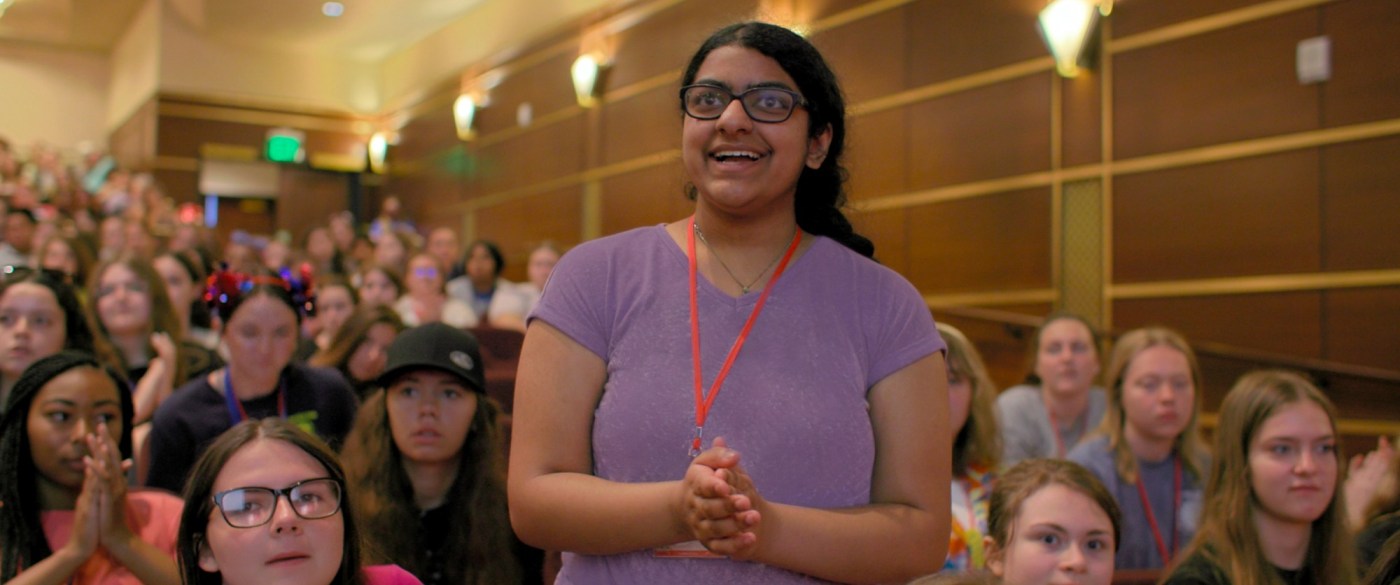
On Friday, April 5, the documentary “Girls State” premieres on Apple TV+, the much-anticipated sequel to the lauded 2020 documentary “Boys State,” also on Apple TV+. Directed by accomplished documentarians Jesse Moss and Amanda McBaine, the film takes an anthropological approach to studying the inner workings of the weeklong political camps for American high schoolers sponsored by the American Legion. During each session the teenagers are required to create a fully working government through a series of elections, a microcosm of our own system.

While structured in the same way, with fly-on-the-wall cameras following a select few students during their experience, “Girls State” is naturally a very different film. Filmed at a Missouri university just weeks before the Supreme Court’s Dobbs decision overturned Roe v. Wade, women’s rights and reproductive issues are a hot-button issue for the girls, among the other teenage troubles such as social anxieties, future worries and other personal issues that are thrown into stark relief in such a setting. But once again, it’s a fascinating documentary that argues that while the kids might be alright, there are certain aspects of the system that need an overhaul.

It’s yet another fascinating film from the duo of Moss and McBaine, who have collaborated on many documentaries, which intersect at the juncture of the political and personal.

Directors and producers Amanda McBaine, left, and Jesse Moss behind the scenes of “Girls State,” premiering Friday, April 5, 2024, on Apple TV+. (Whitney Curtis/Apple TV+/TNS)

Their most recent film was last year’s “The Mission,” a complicated portrait of the young American missionary John Chau, who was killed in 2018 when he attempted to make contact with the isolated Sentinelese tribe on North Sentinel Island. Using interviews with loved ones and John’s diaries and letters, the filmmakers offered a look at why Chau set out on such a dangerous trip, diving in headfirst to examine his complex motivation. Released by NatGeo, “The Mission” is streaming on Disney+ and Hulu.

McBaine has been a longtime producer for Moss, and before they collaborated as co-directors on “Boys State” and “The Mission,” she produced several films he directed including 2021’s “Mayor Pete,” a campaign trail doc about the presidential run of current Secretary of Transportation Pete Buttigieg. Stream it on Prime Video.

Moss’ breakout documentary was the 2014 Sundance hit “The Overnighters” (also produced by McBaine), about a North Dakota pastor offering shelter in his church to nomadic workers arriving in his oil boomtown looking for work. Once again a complex portrait of a complicated person whose life reflected a specific political reality, “The Overnighters” is a moving, surprising film that captures this moment in time in such granular detail because Moss immersed himself in the culture of this town. Stream it on Kanopy or rent it elsewhere online.

Moss also directed all five episodes of the 2019 Netflix documentary miniseries “The Family,” following the work of journalist Jeff Sharlet, who has written about a secretive conservative Christian group known as “The Family” and their influence on American politics. It’s a chilling and sobering uncovering of one of the shadowy organizations that has an outsize influence on our country. He also directed an episode of the 2018 Netflix miniseries“Dirty Money,” which looks at scandal and corruption in business, with Moss’ episode (Season 1, Episode 2) examining payday lenders. Stream both on Netflix.

Moss has an upcoming film called “War Game” on the way, but check out “Girls State” and “Boys State” on Apple TV+, and the rest of he and McBaine’s political docs, covering a wide array of fascinating topics.

———

(Katie Walsh is the Tribune News Service film critic and co-host of the “Miami Nice” podcast.)

©2024 Tribune Content Agency, LLC

Judge sides with conservative group in its push to access, publish voter rolls online

posted in: News | 0

By MORGAN LEE (Associated Press)

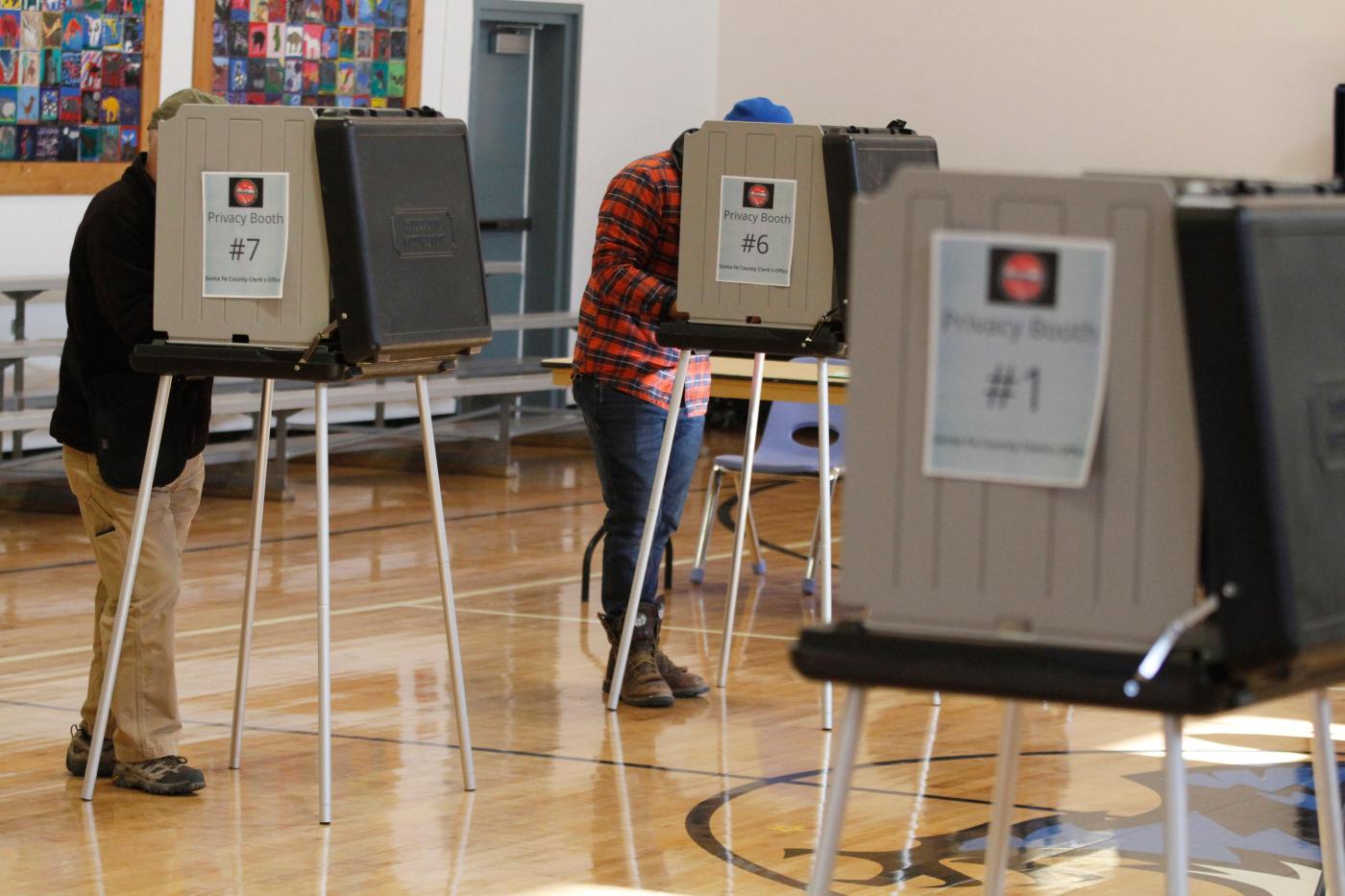
SANTA FE, N.M. (AP) — New Mexico election officials violated public disclosure provisions of the National Voter Registration Act by refusing to provide voter rolls to a conservative group and its public online database, a federal judge has ruled.

The opinion and order Friday from Albuquerque-based U.S. District Court Judge James Browning mostly sided with the Voter Reference Foundation and its efforts to expand a free database of registered voters so that groups and individuals can take it upon themselves to try to find potential irregularities or fraud.

Election officials in several states and privacy advocates have raised alarms about a push by several conservative groups to gain access to state voter rolls, saying the lists could find their way into the hands of malicious actors and that voters could be disenfranchised through intimidation, possibly by canceling their registrations to avoid public disclosure of their home addresses and party affiliation.

New Mexico election law bans the publication of voter registration data. It restricts the use of the data to political campaigning and noncommercial government purposes. But Browning ruled that system “severely burdens the circulation of voter data among the public” and violates federal disclosure requirements.

“The data sharing ban largely deprives individuals and entities of the ability to engage with disclosed records in such a way that facilitates identification of voter registration-related irregularities,” Browning wrote.

His ruling builds on a federal appeals court ruling in February that Maine must release its voter list to another conservative-backed group, the Public Interest Legal Foundation, that’s conducting independent audits by comparing voter rolls in one state against those in another.

The Voter Reference Foundation’s VoteRef.com database so far includes information from 32 states and the District of Columbia. It is run by Gina Swoboda, an organizer of former President Donald Trump’s 2020 re-election campaign in Arizona who was chosen in January as chair of the Arizona Republican Party.

“We are very gratified that the court has upheld the right of the public to have meaningful access to vote rolls,” Swoboda said in a statement by email. “The intent of the public disclosure provision of the National Voter Registration Act is clear: namely, to allow the public to view the voter lists and associated list maintenance records to ensure proper voter list maintenance is being conducted. With this opinion the citizens of New Mexico can be assured of transparency in this key part of our elections process.”

Swoboda did not say how soon New Mexico voter list might be posted online. The foundation obtained New Mexico voter rolls through a vendor and first posted the records online in 2021, leading to a referral for potential prosecution. The foundation took the information offline and sued.

The New Mexico secretary of state’s office will appeal the order, said agency spokesman Alex Curtas.

Secretary of State Maggie Toulouse Oliver, a Democrat, “will continue to do everything in her power to advocate for the protection of voters’ personal information and ultimately encourage voter participation,” Curtas said in an email.

Curtas praised portions of the judge’s order that dismissed the foundation’s allegations that New Mexico engaged in free speech violations under its restrictions on the use of voter information.

Baseless claims of widespread voter fraud largely fueled by Trump’s insistence the 2020 presidential election was stolen are part of what’s driving conservative groups’ efforts to obtain the voter rolls, leading to lawsuits seeking voter registration data in several states, including Pennsylvania.

The Pennsylvania Office of Open Records has refused to hand over voter information to the Voter Reference Foundation, saying that publishing it would put every registered voter at greater risk of identity theft or misuse of their information.

Pennsylvania officials prevailed in state court, and the foundation in February sued in federal court to obtain the voter rolls, citing provisions of the National Voter Registration Act.

Young voters are more concerned with the economy. That’s bad for Biden

posted in: All news | 0

Jarrell Dillard | Bloomberg News (TNS)

WASHINGTON — They’re weighed down by student debt. They’re shut out of the housing market. They’re hit by higher costs of living. And they want President Joe Biden to listen.

At a time when Donald Trump is cutting into Biden’s 2020 advantage with young adults, the growing list of grievances among those between the ages of 18 to 29 is a worrying sign for Biden as he seeks a second term.

People in that age cohort are more than twice as likely to cite the economy as their top concern compared with older adults in recent Gallup data. And while all voters are more worried about the economy now than they were heading into the 2020 presidential election, the pessimism has spiked the most among those under 30.

That concern is being reflected in polls. Trump is currently leading the president 47% to 40% with voters aged 18 to 34 in swing states, according to a March Bloomberg News/Morning Consult poll. By contrast, Biden won 61% of voters under 30 last cycle.

Though the November election is months off and attitudes can shift, there’s no doubt Biden will need support from Generation Z and Millennial voters to win.

Incumbents get the blame when voters are dissatisfied with the economy. The challenge for Biden is that even though economic growth has been solid in the past year, the job market is robust and the inflation rate is cooling, polls after polls show many people don’t feel like it.

Younger Americans have a long list of headwinds: stunted action on student-loan forgiveness, the highest interest rates since they’ve been in diapers and expensive rents.

Older Americans, who are more likely to live in houses they own with low mortgage rates and who have benefited from years of housing and stock market appreciation, are less pessimistic about the economy. The contrasting way generations emerged financially from the coronavirus pandemic may provide a playbook for Biden on how to hone his political message to young adults.

Christian Martin, a 22-year-old college senior from Atlanta, said he hasn’t yet felt the impact of Biden’s economic policies. He’s worried about making student-loan payments after he graduates while keeping up with the elevated costs of living.

“If Biden can address the issues that the youth are feeling, then the turnout can be stronger than what it’s projected to be,” he said in an interview. “This is Biden’s chance to hear what we have to say, because that’s essentially all it is, you know, unfulfilled promises.”

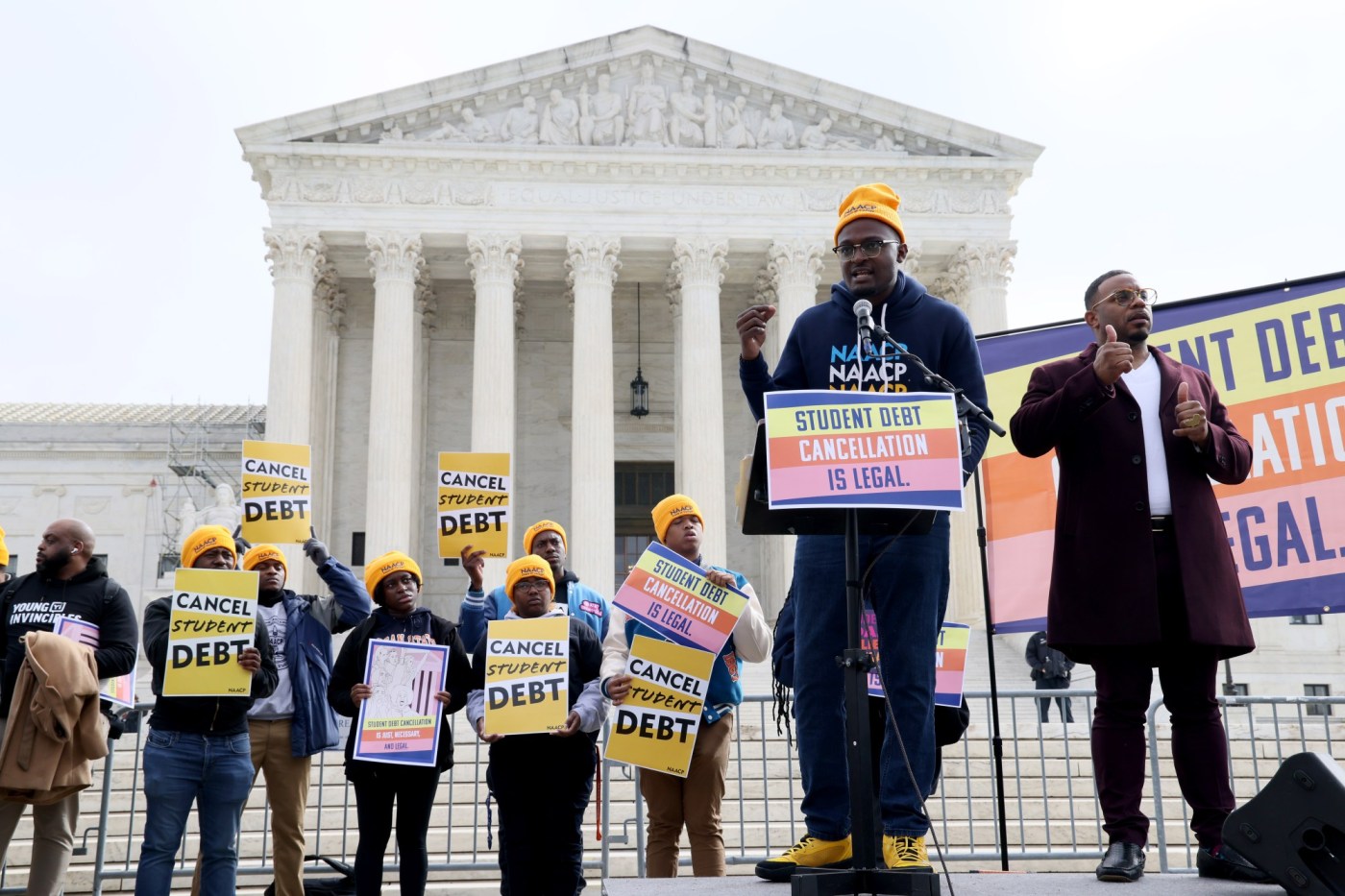
Biden’s plan to forgive billions of dollars in student debt was struck down last year by the Supreme Court, which rejected one of his signature initiatives as exceeding his power.

“The President is fighting to lower costs for young Americans — forgiving student debt, lowering health and eliminating junk fees,” Seth Schuster, a Biden campaign spokesperson, said by email. “Meanwhile, Donald Trump appointed the Supreme Court Justices who denied student-debt relief and ensured that young people now have less rights than the generations before them.”

In a statement, Trump campaign spokesperson Karoline Leavitt said that “President Trump will create a safe, prosperous, and free nation that helps all young people achieve their American Dream.”

The pandemic upended the economy when young voters were just entering adulthood, endangering their job prospects as businesses locked down and complicating their housing options as rents skyrocketed.

“They had a more severe impact of COVID itself in a direct economic way,” said Kei Kawashima-Ginsberg, Newhouse director of Tufts University’s Center for Information & Research on Civic Learning and Engagement. “Whether it’s gas, or housing, or rent or health care, they’re having a really hard time having affordability for that because of the lack of stored wealth.”

Inflation has eased significantly in the past year, including for necessities such as food, but prices remain considerably higher than they were before the 2020 election. And while wages have grown for all age groups in recent years, young adults have the lowest earnings in addition to having fewer assets.

Related Articles

National Politics |


Expect to see AI ‘weaponized to deceive voters’ in this year’s presidential election

National Politics |


Why Trump’s alarmist message on immigration may be resonating beyond his base

National Politics |


News Analysis: Supreme Court has right- and far-right wings. Their justices might not be those you’d guess

National Politics |


A poll asked voters if democracy is the ‘best system.’ Then came all the unexpected responses.

National Politics |


Biden, at risk with young voters, is racing to shift marijuana policy

Much of those wage increases have also been eaten up by higher rent costs, which rose about 18% between October 2020 and January 2024, according to Redfin. Buying a property is increasingly out of reach for many young adults, with home prices up 21% over the same period, according to the Federal Reserve Bank of Atlanta. Swing-state voters ages 18 to 34 are more likely than any other age cohort to list housing costs as important for their vote in 2024, according to the Bloomberg News/Morning Consult poll.

Debt is also souring some younger Americans’ views about the economy, according to EY Chief Economist Gregory Daco. Adults in their twenties and thirties have higher rates of credit-card debt that have deepened into serious delinquency, meaning the debt is 90 days or more past due, according to data from the New York Fed.

Many young adults are making payments on federal student debt that they had hoped would be forgiven by Biden’s plan. The White House has used more narrow methods to approve nearly $144 billion in forgiveness, targeting specific groups, including those with disabilities, some former for-profit college students and public servants who have been paying their loans for years.

Student loans and rent prices weigh on Ariela Lara, an 18-year-old high school senior from San Leandro, California, as she debates which college to attend. Lara said her family cannot afford to take on debt, so she will attend the school that offers her the most in aid.

“As I’ve been getting into this world of adulthood, it’s hard to achieve financial stability in our country,” she said, adding that climate change and the economy are her top issues as she considers her first vote in a presidential election. “We’re telling Biden to wake up and to start saying that he needs the youth vote. He needs us immensely.”

(Christian Hall contributed to this story.)

©2024 Bloomberg L.P. Visit bloomberg.com. Distributed by Tribune Content Agency, LLC.