Plans for Superior natural gas plant stalled by city council

posted in: News | 0

SUPERIOR — The Nemadji Trail Energy Center project stalled Wednesday before the Superior City Council.

Councilors failed to set public hearings required by state law to make land use changes for the project.

Minnesota Power, one of the companies involved in the project that would build a 625-megawatt power plant on the banks of the Nemadji River, requested a zoning change and to vacate undeveloped streets and alleys in the project area. Dairyland Power Cooperative of La Crosse and Basin Electric Power Cooperative of Bismarck, North Dakota are partners in the project.

When the Plan Commission recommends land use changes, Mayor Jim Paine said that triggers a requirement to set a public hearing before the council considers the changes.

The Plan Commission made no recommendation on the land use changes requested by Minnesota Power or an amendment to the city’s comprehensive plan that would have been required if a zoning change was made.

“We are under no obligation to take up these public hearings if you do not believe that we should make these changes,” Paine said. He said councilors could do nothing if they were not in favor of making the land use changes.

“The Plan Commission has not asked you to do this,” Paine said. “This is entirely up to you. The reason I’ve listed it here is to give the minority the opportunity to argue for why the council should nonetheless make these changes.”

Paine said he understands the process is a little confusing after the majority of plan commissioners did not favor the land use changes.

Councilor Brent Fennessey, one of two plan commissioners who voted in favor of the zoning change and street vacations, said the only thing making the process confusing was the mayor.

“We never talk about the merits of the actual project,” Fennessey said. “All we’re doing tonight is voting to hold a public hearing or not.”

Fennessey said the question before the council is not whether individual councilors oppose the NTEC project.

“To my knowledge, I don’t think we have ever denied an applicant for a rezone request or an alley vacation, street vacation, an opportunity for a public hearing,” Fennessey said. “The applicant here has a right to due process, and what you’re suggesting here is eliminating that right to due process.”

Fennessey made the motion to set three public hearings to consider the zoning change, alley and street vacations and an amendment to the city’s comprehensive plan.

Councilor Garner Moffat, one of the plan commissioners who voted against approving those proposals, said he’s heard ample public comment after proponents and opposition have provided hours of comment before the council and Plan Commission in recent weeks.

He joined three city councilors — including Nicholas Ledin, Jenny Van Sickle and Lindsey Graskey — in opposing setting the public hearings.

Fennessey and councilors Jack Sweeney, Tylor Elm, Mike Herrick and Mark Johnson voted in favor of setting the hearings, but the motion to approve failed because six votes are required to adopt the motion.

“As a long-standing business partner in this region, we were disappointed by the lack of transparency and communication surrounding the hearing, and with the city’s disregard for conducting a fair process involving all interested parties,” said Amy Rutledge, a spokesperson for Minnesota Power. “We are evaluating next steps with our project partners to ensure we meet our commitment to safe, reliable and affordable power in this clean-energy transformation.”

Related Articles

Business |


The teaching of Hmong and Asian American histories to be required in Wisconsin under a new law

Business |


In day 3 of Apple River tubing murder trial, jurors see stabbing victims’ scars, hear from suspect’s ex-wife

Business |


Stillwater teen’s mom, friend who recorded stabbing give emotional testimony in Nicolae Miu murder trial

Business |


Tuesday’s Wisconsin presidential primary clears the way for main event in November

Business |


Apple River stabbing trial begins, with two starkly different views of the fatal confrontation
Lake Elmo chooses finalists for city administrator position

posted in: News | 0

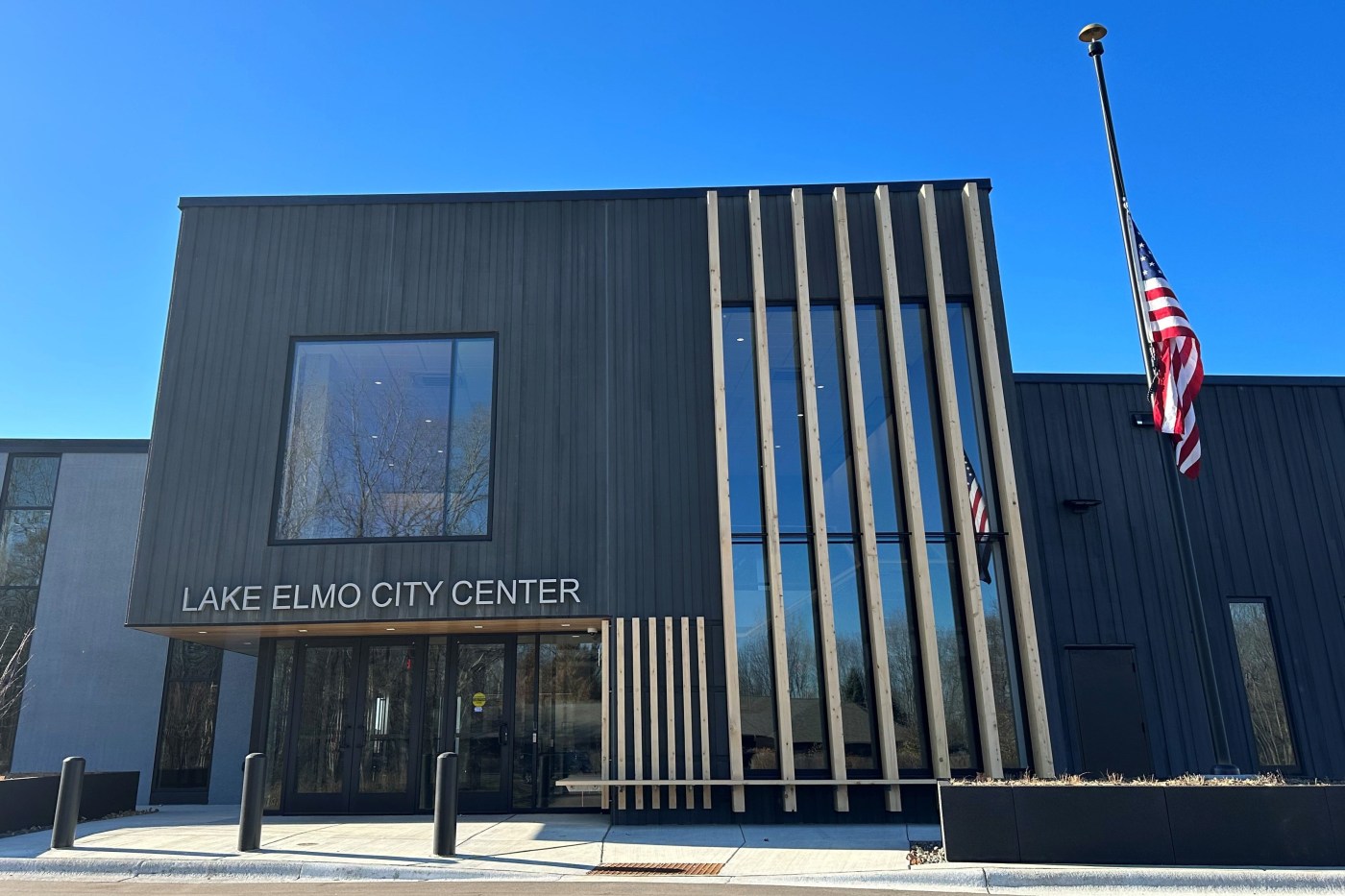
The Lake Elmo City Council has selected three finalists for the position of city administrator.

The three finalists are Renae Fry, former city administrator in North Branch, and former administrative coordinator in Sauk County, Wis.; Nicole Miller, assistant to the city manager at the City of St. Anthony Village; and John Young, tribal administrator of the Lac du Flambeau Tribe in Lac du Flambeau, Wis.

Final interviews for the position will be on April 9, said Clark Schroeder, the city’s interim city administrator.

A total of 25 applicants applied for the job. The advertised salary range is: $145,000-$165,000.

Kevin Brunner, the president of Public Administration Associates in Whitewater, Wis., is overseeing the search; the city is paying PAA $15,600 for their services.

Former Lake Elmo City Administrator Kristina Handt was let go in November. Handt is now interim administrator in Forest Lake.

Related Articles

Local News |


Mahtomedi: Officials investigating death of man found on sidewalk

Local News |


Q&A: Books For Africa founder Tom Warth marks 60-million milestone

Local News |


In day 3 of Apple River tubing murder trial, jurors see stabbing victims’ scars, hear from suspect’s ex-wife

Local News |


Ramsey and Washington County’s food scrap recycling program expands to more communities

Local News |


Stillwater teen’s mom, friend who recorded stabbing give emotional testimony in Nicolae Miu murder trial

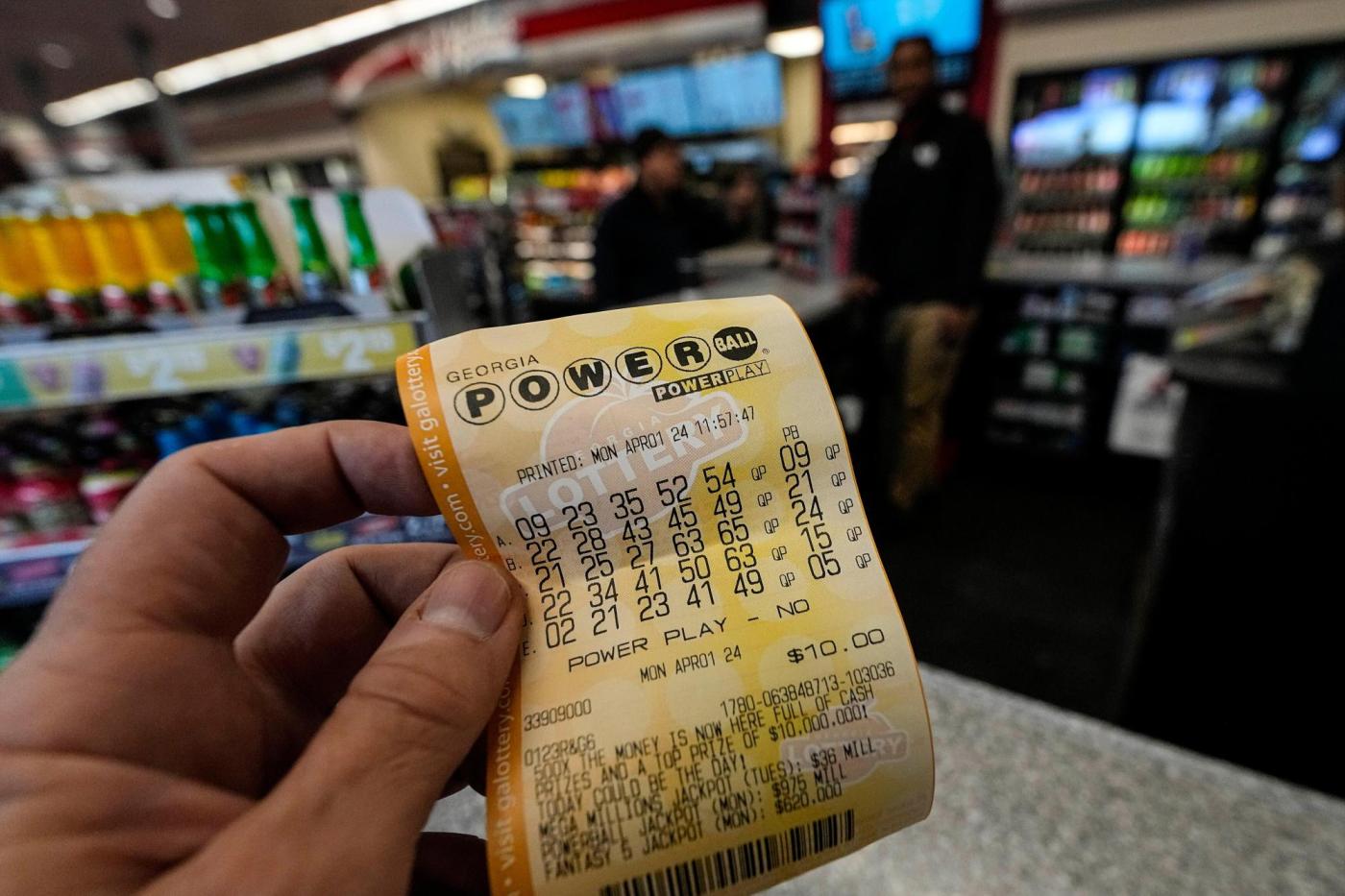
Powerball jackpot reaches $1.23B as long odds mean lots of losing, just as designed

posted in: Adventure | 0

By SCOTT McFETRIDGE (Associated Press)

Powerball will match a record for lottery drawings Saturday night with a stretch of more than three months without a jackpot winner.

It’s that string of futility that has enabled Powerball’s top prize to reach $1.23 billion, the 8th largest in U.S. lottery history. And it’s a sign that the game is operating exactly as designed, with long odds creating a massive jackpot that entices people to drop $2 on a ticket.

It means no one should ever expect to match all six numbers and hit it rich, though it’s likely someone eventually will.

The last time someone won the Powerball jackpot was on New Year’s Day, when a player in Michigan hit an $842.4 million jackpot.

Since then, there have been 40 consecutive drawings without a jackpot winner. The 41st on Saturday night will match the record for most drawings, set twice before in 2022 and 2021.

The winless streak isn’t a fluke. Lottery officials set the odds at 1 in 292.2 million in hopes that jackpots will roll over with each of the three weekly drawings until the top prize becomes so enormous that more people take notice and play.

The odds used to be significantly better, at 1 in 175 million, but were made tougher in 2015 to create the humongous jackpots. Lottery officials at that time also made it easier to win smaller prizes, and they note that the overall odds of winning something are about 1 in 25.

It’s hard to envision what odds of 1 in 292.2 million mean.

One way is to think of the roughly 322 million people who live in spots where they can buy Powerball tickets — five states don’t participate. If each person bought one ticket, you would expect one person to win and hundreds of millions of people to lose.

Put another way, the odds of winning the jackpot are a little worse than flipping a coin and getting heads 28 straight times, according to Andrew Swift, a University of Nebraska-Omaha mathematics professor.

Of all the people who bought lottery tickets for the last drawing Wednesday night, only 22.6% of the 292.2 million possible number combinations were covered, according to the Multi-State Lottery Association. That means that 77.4% of number combinations were not covered, and it’s an indication of why people so rarely win a jackpot.

Remember, the odds of an individual ticket winning never changes, but as more people play, more number combinations will be covered and the odds of someone winning rise.

And as bad as Powerball odds are, they’re a little better than Mega Millions, the other nearly national lottery game, which has jackpot odds of 1 in 302.6 million. And, to be fair, someone won a $1.13 billion Mega Millions prize last month.

Without a doubt, the Powerball jackpot is an incredible amount of money, but it’s also less than you might expect.

That’s because while officials tout the $1.23 billion prize, that is for a sole winner who chooses to be paid through an annuity, with an immediate payment and then annual payments over 29 years. Winners almost always opt for cash, which for Saturday night’s drawing would be an estimated $595.1 million.

Regardless of the payment option, a big chunk of the winnings would go toward taxes, though that amount would vary depending on winners’ other assets and whether their state taxes lottery winnings. Just note that the top federal tax income tax rate is 37%, meaning a lot of the winnings would go to Washington.

Metro Transit expands Northstar service to Twins, Vikings games

posted in: Adventure | 0

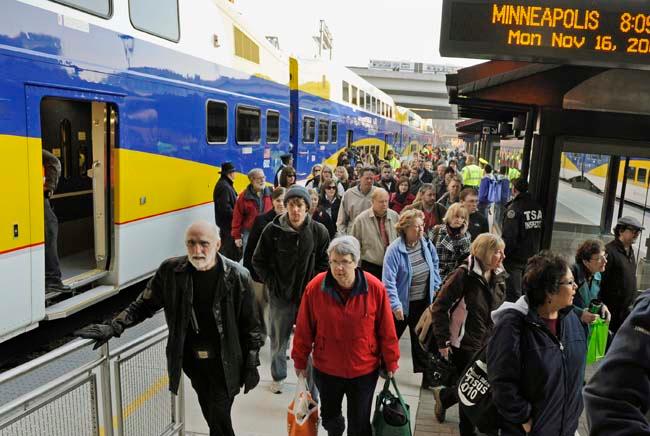
Metro Transit, the metro area’s regional public transit authority, pitched a couple of items this week that may be of note to transit and sports fans alike. The Northstar Commuter Rail, which travels to downtown Minneapolis from Big Lake and the northwest suburbs, will service most Minnesota Twins games at Target Field this baseball season, as well as every Minnesota Vikings game at U.S. Bank Stadium.

The full list of Twins games that will be supported by commuter rail in 2024 is online at metrotransit.org/northstar. For cost savings, groups traveling together can purchase a Northstar Roundtrip Family Pass.

In addition to the extra Northstar service, light rail trips will roll out around major concerts and when demand dictates because of large events.

The added departures are a bit of an about-face for Metro Transit, which cut back heavily on services when the pandemic hit in 2020. Northstar lost 67% of its departures and 97% of its ridership in the early days of the pandemic, and building back has been a slow climb.

Still, a new regional sales tax approved last year by state lawmakers is expected to provide a windfall for public transit. Northstar is now entirely funded by Metro Transit, freeing it from dependence on Anoka County and three other former funding partners. Northstar carried 97,000 riders last year, a 26% increase from 2022, but still nowhere near the more than 767,000 riders it carried in 2019.

State Fair Express Bus services will be announced closer to the State Fair, but Metro Transit has said the goal is to offer more buses than in 2023. Overall, Metro Transit ridership climbed 16% last year, and has shown continued growth so far this year, especially on the Green Line light rail and bus rapid transit lines.

Several bus routes are on long-term detours due to construction on Hennepin Avenue South and in downtown St. Paul. Keep in mind there’s free parking at every Northstar Station and the Metro Blue Line’s 30th Avenue and Fort Snelling stations. See MetroTransit.org for more information.

Related Articles

Local News |


Millions of recalled Hyundai and Kia vehicles with a dangerous defect remain on the road

Local News |


Ready to MOOV? Alternatives to Uber, Lyft face a long road ahead

Local News |


Older Boeing plane found to have missing panel after flight from California to southern Oregon

Local News |


Will they stay or will they go? Uber threatens to quit all of Twin Cities — including St. Paul, MSP

Local News |


Uber, Lyft say they will pull out of Minneapolis after council overrides veto of minimum wage rule