Ora by Nixta and chefs Ann Ahmed and Christina Nguyen nominated for James Beard awards

posted in: News | 0

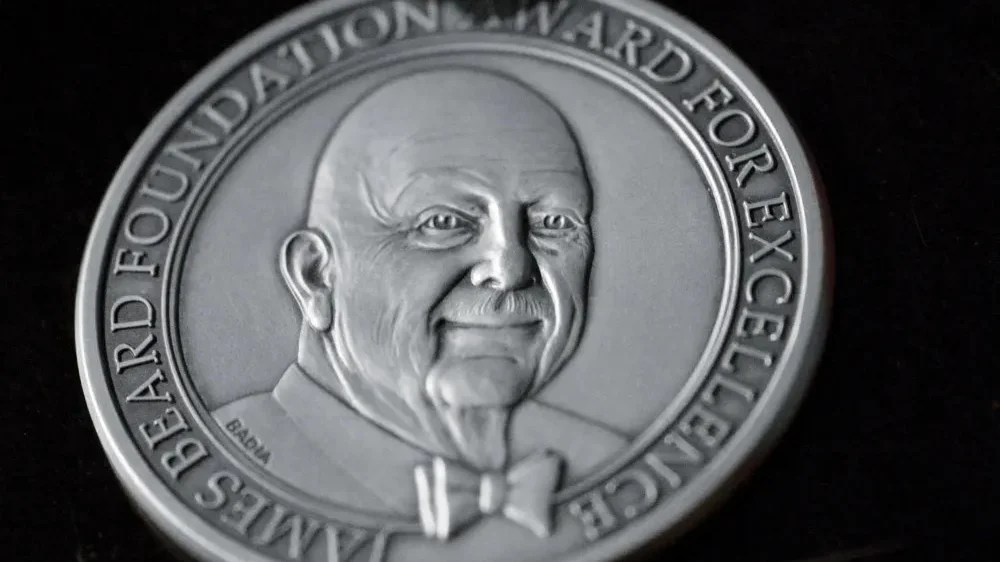
The nominees for the 2024 James Beard Awards have been announced, and the Twin Cities have a few restaurants and chefs on the list.

Ora by Nixta in Northeast Minneapolis has been nominated in the national Best New Restaurant Category, and chefs Ann Ahmed (Khaluna, Gai Noi, and Lat 14) and Christina Nguyen (Hai Hai and Hola Arepa) have been nominated for Best Chef Midwest. They represent two of the five nominees in the category.

The awards, widely considered to be the Oscars of the food world, consist of 22 categories — 10 national and 12 regional. The Best Chef Midwest category encompasses Iowa, Kansas, Minnesota, Missouri, Nebraska, North Dakota, South Dakota and Wisconsin.

Awards are held June 10 at the Lyric Opera of Chicago.

Related Articles

Restaurants, Food and Drink |


Three festive main dishes for any spring party

Restaurants, Food and Drink |


Five weeknight dishes: The rice bowl you need for dinner and more

Restaurants, Food and Drink |


Quick Fix: Sweet and Tangy Sauced Pork Tenderloin with Green Beans and Barley

Restaurants, Food and Drink |


Minnesota Twins’ 2024 new food lineup: Baked potato bar, banh mi brat, chicken tinga arepas and more from local chefs

Restaurants, Food and Drink |


Kickoff to Summer at the Fair returns May 23-26


Yes, we’re divided. But new AP-NORC poll shows Americans still agree on most core American values

posted in: News | 0

By GARY FIELDS and AMELIA THOMSON DEVEAUX (Associated Press)

WASHINGTON (AP) — Despite the country’s deep political polarization, most Americans share many core beliefs about what it means to be an American, according to a new poll.

The poll from The Associated Press-NORC Center for Public Affairs Research found that about 9 in 10 U.S. adults say the right to vote, the right to equal protection under the law and the right to privacy are extremely important or very important to the United States’ identity as a nation. The survey also found that 84% feel the same way about the freedom of religion.

The results, which included perspectives on a number of different freedoms and rights, have only small variances between Republicans and Democrats except on the right to bear arms, which Republicans are more likely to see as core to the nation’s identity. The overall findings are striking because they come at a time of extreme partisanship when political agreements seem rare and concerns are heightened over the potential for violence during a volatile presidential election year.

“If you get a bunch of normal people at random and put them in a room together and chat about issues, there’s a lot more convergence than you might imagine,” said Michael Albertus, a political science professor at the University of Chicago.

A more pessimistic assessment of the country was reflected in another finding — that only about 3 in 10 Americans believe the nation’s democracy is functioning well. About half say the U.S. is a poorly functioning democracy, while 14% say the U.S. is not a democracy.

The tension between the broad consensus on the country’s fundamental values and discontent with how well its form of government is working is not a surprise, experts say.

“Part of it is really our leaders are not reflecting the electorate, and they behave in a way that’s much more polarized than what the electorate is,” said Lilliana Mason, a political scientist at Johns Hopkins University.

Most Americans, she said, “are pretty moderate, but they’ve been riled up to hate people of the other party for being different from them culturally, racially and religiously.”

The AP-NORC poll also found broad agreement on the importance of some key values for the U.S.’s identity as a country. About three-quarters of U.S. adults agree that a democratically elected government is extremely or very important, and about 8 in 10 think the same about the ability of people living in the U.S. to get good jobs and achieve the American dream.

But what achieving that dream means — and which values are most fundamental to American culture — isn’t something all Americans agree on.

Democrats are more likely than Republicans — 71% to 38% — to believe that the ability to come to the U.S. from elsewhere in the world to escape violence or find economic opportunities is core to the country’s identity. A majority of Republicans, 58%, think a culture grounded in Christian values and beliefs is an essential characteristic, compared to only 18% of Democrats.

Juan Sierra, 51, a naturalized citizen whose family immigrated from the Dominican Republic after a hurricane destroyed his father’s cement business, said it is very important to him that the U.S. be seen as a place of opportunity.

The industrial technician in Port St. Lucie, Florida, said he believes democracy is working and will continue to do so “as long as there are good people in government.”

Sierra also said it was extremely important that people have freedom of religion, although he had concerns over the nation’s identity being tied to Christianity.

“We’re seeing what happens right now when laws are passed and decisions are made based on someone’s religion,” he said, citing the Alabama Supreme Court ruling in February that frozen embryos can be considered children and be afforded legal protections, a decision that temporarily halted IVF procedures in the state.

Susan Johnson, a 76-year-old Republican living in the Dallas suburbs, said the nation’s standing as a beacon to others who need refuge is very important, but said that could not override concerns about border security.

“We need people working,” she said. “We just need them to come the right way.”

Johnson also said she believes it’s extremely important that the nation’s identity be grounded in spirituality.

“Whether or not you’re Mormon or a Muslim or a Christian, they just have to have some higher power to reach up to,” she said. “The country is going to fall apart if we don’t believe in God.”

Related Articles

National Politics |


Prosecutors in Trump’s classified documents case sharply rebuke judge’s unusual and ‘flawed’ order

National Politics |


Trump accuses Biden of causing a border ‘bloodbath’ as he escalates his immigration rhetoric

National Politics |


Biden and Trump win Rhode Island, Connecticut, New York and Wisconsin primaries

National Politics |


Young voters are more concerned with the economy. That’s bad for Biden

National Politics |


Expect to see AI ‘weaponized to deceive voters’ in this year’s presidential election

The poll found few divisions on democracy as a system in theory, but it identified one notable gap: younger Americans between the ages of 18 to 29 were less likely than those 60 and older to say the U.S. is a well-functioning democracy. They’re also less likely than older Americans to believe that some characteristics are essential to the U.S.’s character as a nation, including having a democratically elected government. About 6 in 10 younger adults see this as important, compared to about 9 in 10 older adults.

Palakjot Singh, a 21-year-old college student in Fresno, California, identified himself as a Republican and said he had a better quality of life when Donald Trump was president. He said the U.S. is not a well-functioning democracy in part because people are not open to debating different points of view compared to previous generations.

“There is not good communication,” he said. “Nobody is sitting together trying to get to one point.”

Howard Lavine, a political science professor at the University of Minnesota, said the generational split is understandable. Many younger people don’t remember a time when those with opposing views and from different political backgrounds could get together and “come over to your house.” Their frame of reference is the hyper partisanship of the Trump years, he said.

Joe Lagle, 55, a retired Air Force veteran in Colorado Springs who said he has not voted for either President Joe Biden or Trump, said the nation’s various rights are “all important” but believes they are being eroded by intolerance and well-meaning but shortsighted people.

Mike Maloy, 41, an engineer in Greensboro, North Carolina, said having those rights and freedoms “doesn’t necessarily mean the U.S. is a functioning democracy.”

“Everything is run by a handful of people and their corporations,” he said. “That’s not a democracy.”

A Democrat, Maloy cited as an example this year’s presidential primary in North Carolina, when Biden was the lone candidate on the ballot. He called that “frustrating” and said the result was that voters “had no choice.”

The poll of 1,282 adults was conducted March 21-25, 2024, using a sample drawn from NORC’s probability-based AmeriSpeak Panel, which is designed to be representative of the U.S. population. The margin of sampling error for all respondents is plus or minus 3.8 percentage points.

Associated Press polling writer Linley Sanders contributed to this report.

The Associated Press receives support from several private foundations to enhance its explanatory coverage of elections and democracy. See more about AP’s democracy initiative here. The AP is solely responsible for all content.

Elon Musk’s X has a new safety leader, nine months after predecessor left the social media platform

posted in: News | 0

NEW YORK (AP) — Elon Musk’s X, the platform formerly known as Twitter, has named a new head of safety nine months after the last executive to hold the position departed from the social media company.

X said that company veteran Kylie McRoberts will oversee the global safety team. The platform also announced that Yale Cohen, who previously worked for media firm Publicis Media, would become head of brand safety and advertiser solutions.

The last executive heading what was formerly called the trust and safety team, Ella Irwin, left the company in June 2023. While Irwin did not point to specific reasoning at the time, her resignation arrived just days after Musk publicly complained about the platform’s handling of posts about transgender topics.

Since Musk’s $44 billion purchase of the platform in October 2022, X has seen several leadership shakeups.

The appointments, first announced Tuesday, arrive amid ongoing concerns about content moderation on X as well as the spread of misinformation and hate speech on the platform, which some researchers say has been on the rise under Musk.

The issue has driven away some big-name advertisers. In November, brands including IBM, NBCUniversal and its parent company Comcast, said that they stopped advertising on X after a report from the liberal advocacy group Media Matters said their ads were appearing alongside material praising Nazis. It was yet another setback as X tries to win back big brands and their ad dollars, X’s main source of revenue.

Later that month, Musk went on an expletive-ridden rant in response to companies that had halted spending on X in response to antisemitic and other hateful material, accusing them of “blackmail” and, using a profanity, essentially told them to go away.

Beyond advertiser battles, X has also attempted to some sue those who have documented the proliferation of hate speech on the platform — including Media Matters and the non-profit Center for Countering Digital Hate. A federal judge dismissed the suit against the center last week, ruling that X cannot seek damages for the independent acts of third parties based on the nonprofit’s reports, or its “speech.”

Prosecutors in Trump’s classified documents case sharply rebuke judge’s unusual and ‘flawed’ order

posted in: Politics | 0

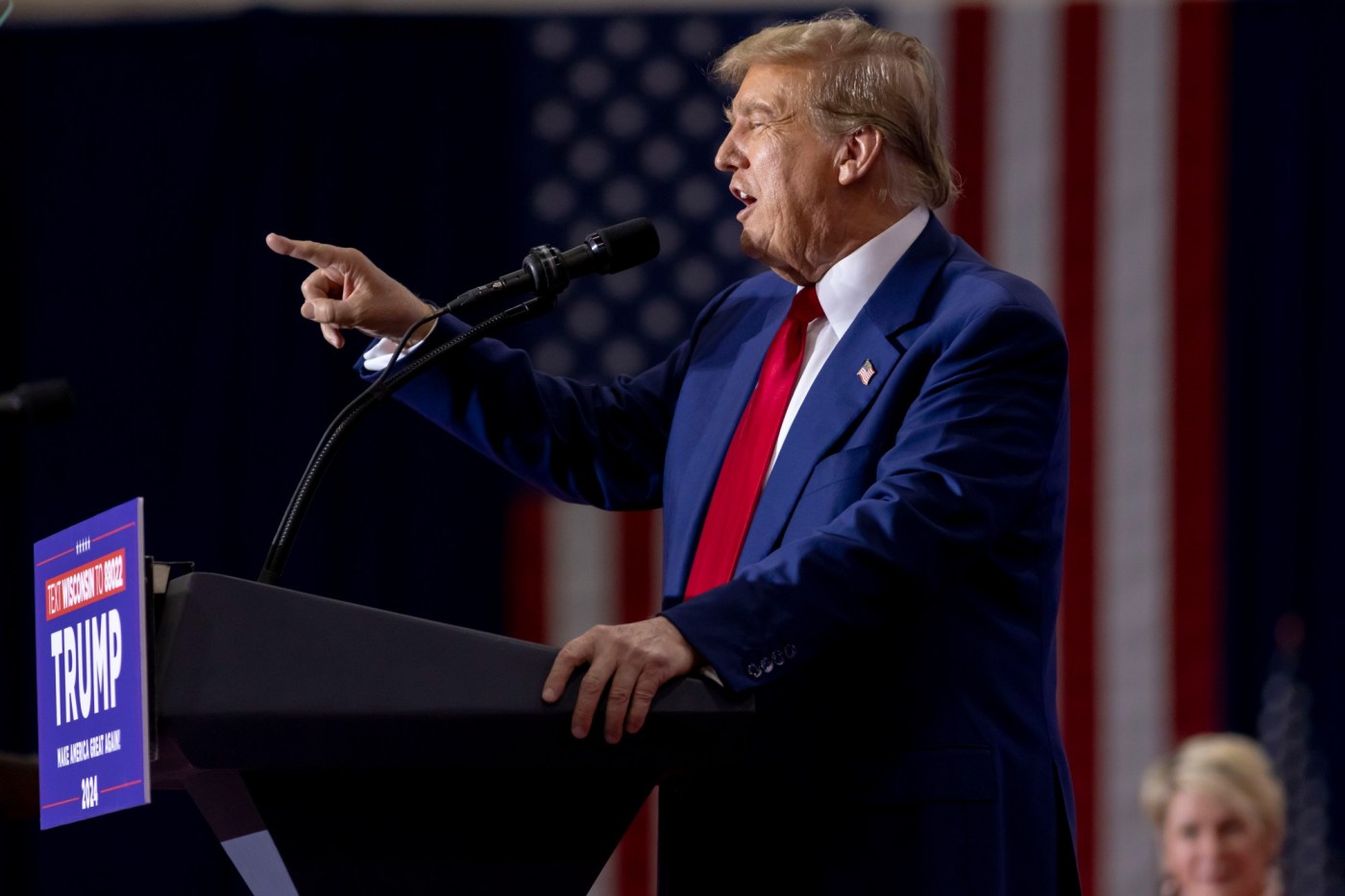
WASHINGTON (AP) — Federal prosecutors chided the judge presiding over former President Donald Trump’s classified documents case in Florida, warning her off potential jury instructions that they said rest on a “fundamentally flawed legal premise.”

In an unusual order, U.S. District Judge Aileen Cannon had asked prosecutors and defense lawyers to file proposed jury instructions for most of the charges even though it remains unclear when the case might reach trial. She asked the lawyers to respond to competing interpretations of the law that appeared to accept the Republican ex-president’s argument that he was entitled under a statute known as the Presidential Records Act to retain the sensitive documents he is now charged with possessing.

The order surprised legal experts and alarmed special counsel Jack Smith’s team, which said in a filing late Tuesday that that 1978 law — which requires presidents to return presidential records to the government upon leaving office but permits them to retain purely personal ones — has no relevance in a case concerning highly classified documents.

Those records, prosecutors said, were clearly not personal and there is no evidence Trump ever designated them as such. They said that the suggestion he did so was “invented” only after it became public that he had taken with him to his Mar-a-Lago estate in Palm Beach, Florida, after his presidency boxes of records from the White House and that none of the witnesses they interviewed in the investigation support his argument.

“Not a single one had heard Trump say that he was designating records as personal or that, at the time he caused the transfer of boxes to Mar-a-Lago, he believed that his removal of records amounted to designating them as personal under the PRA,” prosecutors wrote. “To the contrary, every witness who was asked this question had never heard such a thing.”

Smith’s team said that if the judge insists on citing the presidential records law in her jury instructions, she should let the lawyers know as soon as possible so they can appeal.

The filing reflects continued exasperation by prosecutors at Cannon’s handling of the case.

The Trump-appointed judge has yet to rule on multiple defense motions to dismiss the case as well as other disagreements between the two sides, and the trial date remains in flux, suggesting that a prosecution that Smith’s team has said features overwhelming evidence could remain unresolved by the time of the November presidential election.

Related Articles

National Politics |


Trump accuses Biden of causing a border ‘bloodbath’ as he escalates his immigration rhetoric

National Politics |


Young voters are more concerned with the economy. That’s bad for Biden

National Politics |


Expect to see AI ‘weaponized to deceive voters’ in this year’s presidential election

National Politics |


Why Trump’s alarmist message on immigration may be resonating beyond his base

National Politics |


News Analysis: Supreme Court has right- and far-right wings. Their justices might not be those you’d guess

Cannon, who earlier faced blistering criticism over her decision to grant Trump’s request for an independent arbiter to review documents obtained during an FBI search of Mar-a-Lago, heard arguments last month on two of Trump’s motions to dismiss the case: that the Presidential Records Act permitted him to designate the documents as personal and that he was therefore permitted to retain them.

The judge appeared skeptical of that position but did not immediately rule. Days later, she asked the two sides to craft jury instructions that responded to the following premise: “A president has sole authority under the PRA to categorize records as personal or presidential during his/her presidency. Neither a court nor a jury is permitted to make or review such a categorization decision.”

An outgoing president’s decision to exclude personal records from those returned to the government, she continued, “constitutes a president’s categorization of those records as personal under the PRA.”

That interpretation of the law is wrong, prosecutors said. They also urged Cannon to move quickly in rejecting the defense motion to dismiss.

“The PRA’s distinction between personal and presidential records has no bearing on whether a former President’s possession of documents containing national defense information is authorized under the Espionage Act, and the PRA should play no role in the jury instructions on the elements of Section 793,” they said, citing the statute that makes it a crime to illegally retain national defense information.

“Indeed, based on the current record, the PRA should not play any role at trial at all,” they added.

Trump, Republicans’ presumptive nominee for 2024, is facing dozens of felony counts related to the mishandling of classified documents, according to an indictment alleging he improperly shared a Pentagon “plan of attack” and a classified map related to a military operation. The Florida case is among four criminal cases against the former president, who has insisted he did nothing wrong in any of them.