Why trekking poles are the most underrated piece of outdoor gear

posted in: News | 0


The first time I ever used trekking poles, they felt cumbersome, clunky and, at times, downright annoying.

It was February 2017 and my then-boyfriend (now husband) had convinced me to trade a day riding on the slopes in Telluride for a snowshoeing adventure. I had never snowshoed before and recall feeling like a newborn deer, shakily trying to navigate the placement of my large foot apparatuses alongside my poles.

“Right foot, left hand. Left foot, right hand,” I repeated under my breath as I tried to avoid stepping on one piece of equipment or another, and attempted to keep both my balance and my cool ascending several hundred feet up the Jud Wiebe Trail.

I was inexperienced for sure – there are pictures to prove I wore jeans during the excursion – but also frustrated. Why would anyone use these seemingly impractical poles that only added chaos when hiking?

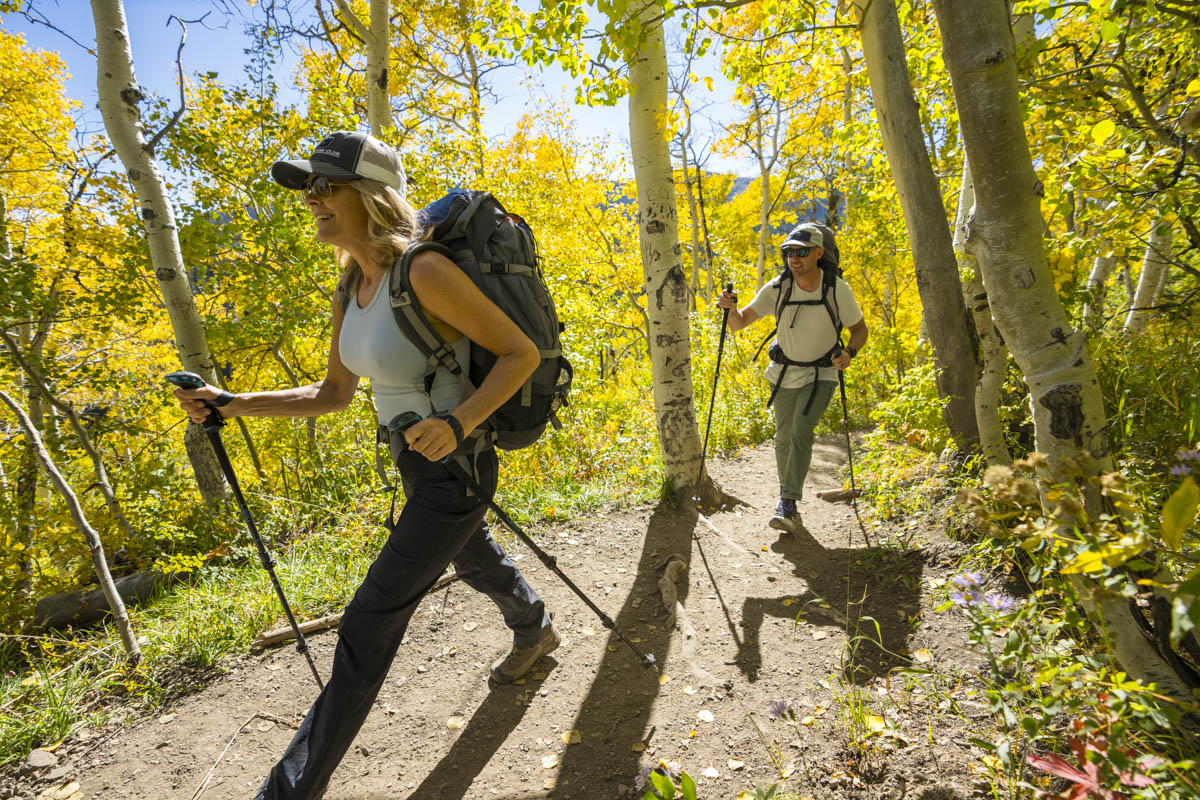
Turns out there are a lot of reasons, from increasing stability to alleviating pressure from knees and joints to achieving a full-body workout. The use of trekking poles increases hikers’ heart rates, several studies have found, and some researchers suggest that it also increases blood flow to the upper extremities.

This last point has recently transformed me into a pole evangelist. When I hike without them, my fingers bloat — and painfully so —  as though they’re latex gloves blown up like balloon animals. With hiking poles, my hands feel great. Simple as that.

My revelation about the benefits of trekking poles is, of course, nothing new. Walking sticks and staves “have been around in many forms for as long as people have been walking,” said Rachel Gross, an assistant professor of history at the University of Colorado Denver and co-director of the school’s Public History Program. Throughout history, walking sticks, staves and canes were also used as tools for self-defense, storytelling and as status symbols.

“In that sense, this is an old technology with new materials, and it looks different but serves the same function as it did before, which is extra support and easing the weight on joints,” she said.

For her new book, “Shopping All the Way to the Woods: How the Outdoor Industry Sold Nature to America,” Gross researched the history of recreational gear and its cultural significance. She said guidebooks from the 1950s through the 1980s suggest poles were historically seen as luxuries – not necessities. Most referred to using a single walking stick and often suggested picking up a piece of bamboo or wood at the trailhead to suffice.

“The terminology is pretty new because ‘trekking poles’ doesn’t exist in any of those materials. Usually, ‘walking staff’ is the preferred terminology from the 1950s to ‘80s. That indicates something important, which is trekking poles are used in pairs and walking sticks and staves are used singularly,” Gross said.

That’s why Gross also credits cross-country skiing, in particular, with helping evolve the accessory from an optional tool to a sought-after commercial product sometime in the late-20th century.

Perhaps not-so-coincidentally, ski poles were also made of bamboo in the mid-1900s, and mountaineers, especially in Europe, sometimes used them to hike alpine terrain. According to Sven Brunso, spokesperson for pole manufacturer LEKI, it wasn’t until 1978 that people began taking their utility seriously.

While the basics of the hiking pole have remained constant, LEKI has experimented with various types of grips to alleviate hand cramping, prevent blisters and wick moisture. (Provided by Scott Markewitz)

That year, mountaineers Reinhold Messner and Peter Habeler climbed Mount Everest using a pair of LEKI poles, engineered in 1974 from aluminum. (The company still makes that model, the Makalu, to this day.) Their expedition was notable not only for that, but also because they were the first adventurers to climb Everest without using contained oxygen.

“A lot of people thought using poles was kind of a crutch. That (expedition) launched the platform for us,” Brunso said.

Using poles for everyday hiking and mountaineering took off in the Alps in the 1970s and ’80s, Brunso said, and that may also be where the modern vernacular originated.

“It started in mountaineering and trickled down into ‘trekking,’ which is the European term for what we call hiking,” he said.

Since its inception in 1948, LEKI has created dozens of different poles as technology and materials have evolved. Brunso maintains that the basics of hiking poles have not changed much in the last 50 years, but the company has innovated to make the equipment more comfortable and useful.

One of its proudest innovations was the integration of the speed lock, which enabled poles to be adjusted on the fly. That way hikers can shorten their poles when climbing uphill and lengthen them going downhill to maintain the ergonomic benefits.

Over the years, the company also experimented with various types of grips to alleviate hand cramping, prevent blisters and wick moisture, and created numerous tips to make poles appropriate in more settings, even indoors. Brunso said LEKI sells more than 50 pole models designed for trekking, trail running and Nordic walking.

“It’s all about giving you the feeling you’re comfortable and supported,” he said.

I don’t have a specific brand that I prefer. There are innumerable styles and weights; some fold down to fit in backpacks and others remain a static height. It’s really up to your personal preference and budget, as well as the outdoor activities you plan to use them for.

Brunso, however, said that you get what you pay for in this space. Depending on what the poles are made of, they could be at risk of bending under stress, he said. And if you’re traveling by airplane to a recreation destination, the poles need to fold down to fit in your checked luggage.

He suggested testing or renting a pair at your local outdoor outfitter and ensuring they are the right size before buying.

Or, as Gross notes, there’s always the option to pick up a stick at the trailhead.
Metro Transit to use 2-car trains for Blue, Green lines on weekends

posted in: Adventure | 0

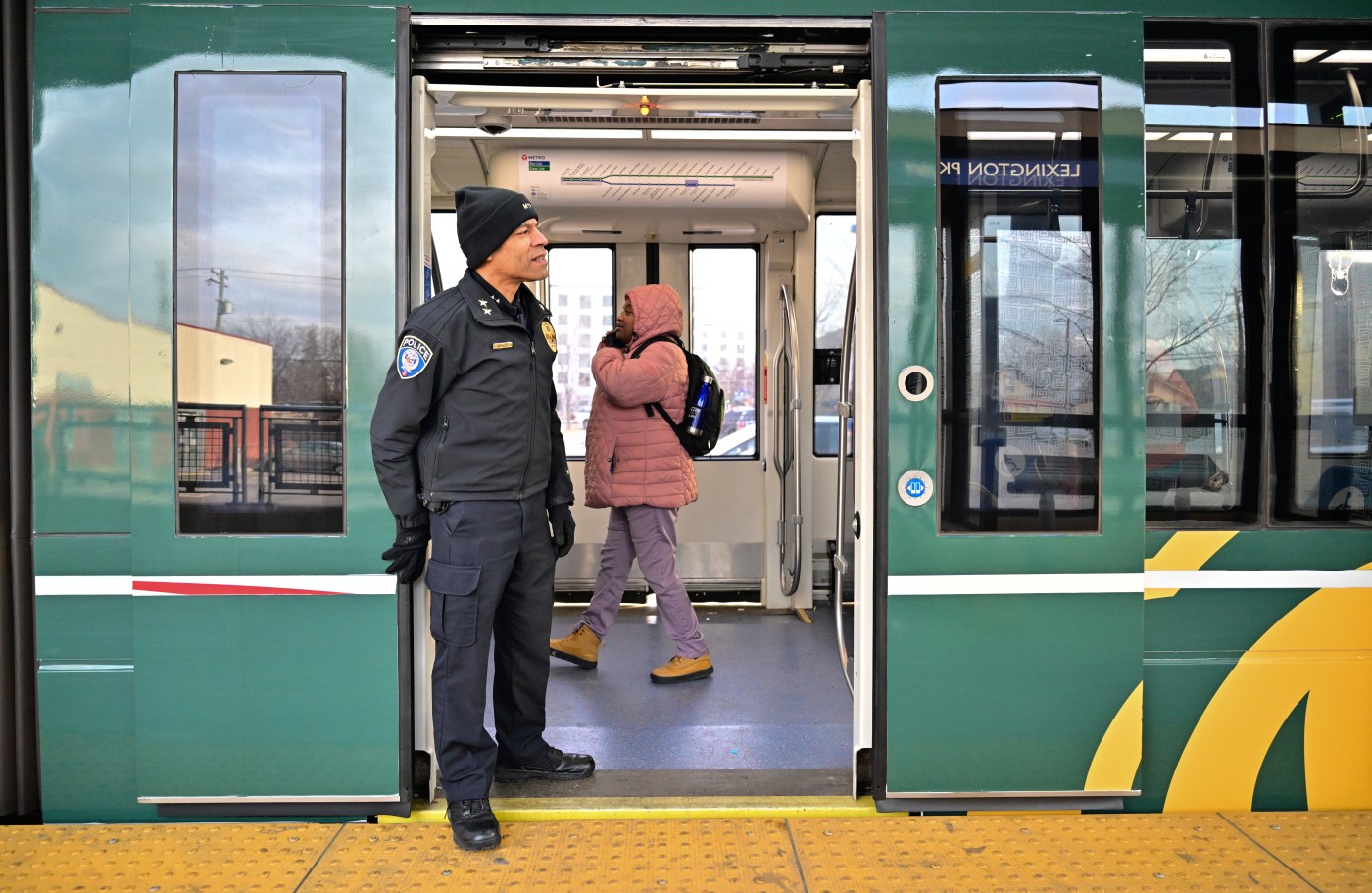
Metro Transit light rail passengers will see some changes on the Blue and Green lines this weekend — namely, two-car trains. It’s a taste of what’s to come this summer.

Beginning Saturday, the metro’s public transit authority is switching from three cars down to two on weekends only, unless higher ridership is expected for special events. The goal is to both reduce unnecessary wear-and-tear on vehicles during lower-demand periods and to cut down on maintenance needs at a time when Metro Transit is still hard-pressed to fill open maintenance positions.

An ancillary benefit?

Officials and passengers alike have long bemoaned the so-called “center car problem,” where smokers and others engaged in behavior that violates the Passenger Code of Conduct tend to gather to avoid drivers who operate, alternately, at either end of a three-car train. Transit officials said the two-car trains will be easier to clean between trips and increase the visibility of Metro Transit police, trainees, Transit Rider Investment Program agents and other outreach workers.

Beginning June 15, Metro Transit will use both two-car and three-car trains interchangeably seven days per week, based on demand. The goal, by August, is to run trains every 12 minutes most of the day, up from the current 15-minute service schedule, with the hope of growing service.

Shorter trains pull deeper into the departing ends of stations, so passengers will be advised through recorded announcements and signage to position themselves accordingly on platforms. Priority seating is reserved for seniors and customers with disabilities.

Other changes

Other changes are lining up.

Metro Transit has begun posting bus and train car numbers in larger letters inside vehicles, making it easier for passengers to identify where they are when they text Metro Transit to silently report concerns at the non-emergency line: 612-900-0411.

The transit authority is working with Cubic Transportation Systems of San Diego to upgrade all of its farecard readers for contactless debit and credit card payments. New York City, Chicago, the San Francisco Bay area and other transit authorities have already adopted the technology, which allows passengers to download their credit card onto Apple Wallet or Google Wallet and pay their fare with a quick tap of their smartphone, without having to buy a ticket or even a physical farecard.

“The easier it is to use something, the better chance you’ll use it,” said Matt Newsome, a vice president with Cubic, on Tuesday.

The software upgrade for what’s known in the transit industry as an “open payment” system could be complete by late 2026, though no firm schedule has been established.

Related Articles

Local News |


3 months after launch, sales of Minnesota blackout plates near 50,000

Local News |


Minneapolis Mayor Jacob Frey, hospitality industry urge compromise on Uber, Lyft wages

Local News |


Justus Ramsey Stone House could rise again — with $500,000 in proposed Legacy Act backing

Local News |


Lime, Spin to roll scooters, electric-assist bike-sharing back to St. Paul

Local News |


Metro Transit to debut St. Paul-to-Woodbury Gold Line on March 22, 2025

Former Minnesota Sen. Calvin Larson dies at 93

posted in: Adventure | 0

Sen. Cal Larson sits in a committee hearing at the State Capitol in St. Paul on April 6, 2005. (Scott Takushi / Pioneer Press)

DETROIT LAKES — Calvin Larson, who served a total of 28 years in the Minnesota Legislature, died on April 1 at an assisted living facility in Detroit Lakes.

Born in Glyndon, Larson served in the Navy before making his home in Fergus Falls. That’s where he was first elected to the Minnesota House of Representatives in 1966 with a Nonpartisan Election-Conservative Caucus party affiliation, serving District 55 from 1967-72 and District 11 A from 1973-74.

After his time in the Minnesota House, Larson took a break from politics, during which time he grew an insurance company and a family.

He re-entered the state Legislature in 1987 as an Independent Republican after being elected to the Minnesota Senate. He’d remain in that office for two decades before being defeated in 2006 by DFL challenger Dan Skogen.

Throughout his time in office, Larson served Becker, Douglas, Grant, Otter Tail, Pope, Stearns, Traverse and Wadena counties.

Larson and his family shared their time between Fergus Falls and their cottage outside Pelican Rapids.

On April 4, the Minnesota Senate held a moment of silence for Larson, with Sen. Jordan Rassmuson, R-Fergus Falls, talking about the big impact Larson had in Otter Tail County and his community.

“He helped establish the Fergus Falls Veterans Home and Glendalough State Park, and he was instrumental in opening the door to the first Minnesota High School League girls sports,” said Rassmuson, who said Larson was known for his bipartisan work and lasting friendships with his colleagues.

“Cal Larson was a wonderful senator,” said Sen. John Marty, DFL-Roseville. “I think members of both parties saw him as fair and honorable … somebody we all trusted and loved.”

Former U.S. Sen. Norm Coleman posted a message on social media, saying Larson was an inspiration and mentor to him.

“He set a shining example for what a public servant should be — good common sense, humility, a deeply rooted commitment to do good — and an ability to work with folks on both sides of the aisle to better serve the community he represented,” Coleman wrote.

A memorial service will be held at 1 p.m. June 7, with an ice cream social to follow at Zion Lutheran Church on Franklin Lake in Pelican Rapids.

Related Articles

News Obituaries |


3 months after launch, sales of Minnesota blackout plates near 50,000

News Obituaries |


Marijuana law modifications are on tap before legal sales take root in Minnesota

News Obituaries |


For ‘public safety crisis’ of copper wire theft, MN legislators proposing licenses for sellers

News Obituaries |


Corrections officials, inmates say MN prison conditions a matter of public safety

News Obituaries |


Letters: ‘Little money to work with’? What the heck?

Matchbox Twenty added to Minnesota State Fair Grandstand lineup

posted in: News | 0

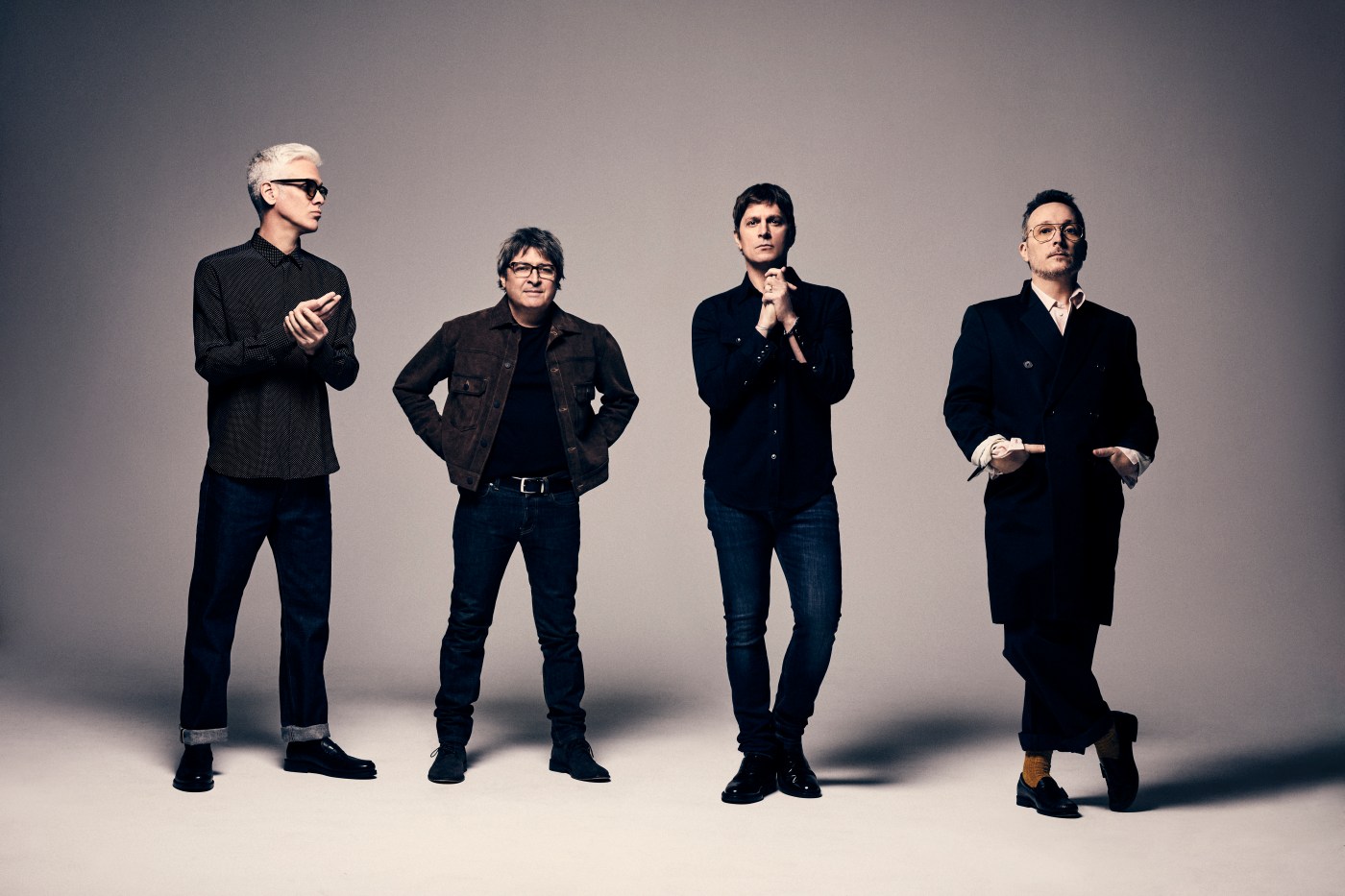
Matchbox Twenty, one of the biggest rock bands of the late ’90s, will headline the Minnesota State Fair Grandstand on Aug. 30.

Tickets are priced from $134 to $67 and go on sale at 10 a.m. Friday through Etix or by calling 800-514-3849. Other Grandstand performers announced so far include Blake Shelton, Chance the Rapper, the Happy Together Tour, Motley Crue, Nate Bargatze and Kidz Bop Live.

Formed in Florida in 1995, Matchbox Twenty released their debut album “Yourself or Someone Like You” the following year. After a slow start, the record took off with a string of hits including “Push,” “3 A.M.,” “Real World” and “Back 2 Good.”

Prior to work on the band’s second album, lead singer Rob Thomas was asked to co-write the song “Smooth” for Carlos Santana’s album “Supernatural.” Santana himself asked Thomas to sing it after hearing his voice on the demo and it went on to become a massive hit that won three Grammy Awards, including record and song of the year. That success set the stage for Thomas’ solo career, which he kicked off in 2005 with the album “Something to Be.”

Matchbox Twenty went on to release three more albums in the ’00s and early ’10s and returned to the charts with “Bent,” “If You’re Gone,” “Unwell,” “How Far We’ve Come” and “She’s So Mean.” In 2017, drummer/guitarist Paul Doucette said the band wasn’t going to record again and instead focus on touring.

The pandemic forced the group to postpone a joint tour with the Wallflowers three times, prompting the group to record their fifth album, “Where the Light Goes,” in 2023.

Related Articles

Music and Concerts |


Upcoming Minnesota Orchestra season to celebrate Nordic composers, 50 years of Orchestra Hall

Music and Concerts |


Concert review: Chris Stapleton keeps the focus on his songs at U.S. Bank Stadium

Music and Concerts |


Spring and summer concert calendar includes Foo Fighters, Metallica, Nicki Minaj

Music and Concerts |


Spring and summer arts and entertainment: Pick out an adventure in classical music

Music and Concerts |


Concert review: Dan + Shay deliver high-energy cheer at Xcel Energy Center