
Minnesota United vs. Real Salt Lake: Keys to the match, projected starting XI and a prediction

posted in: All news | 0

Minnesota United vs. Real Salt Lake

When: 7:30 p.m. Saturday
Where: Allianz Field
Stream: Apple TV Season Pass
Radio: KSTP-AM 1500
Weather: 51 degrees, clear skies, 15 mph west wind
Betting line: MNUFC plus-110; draw plus-250; RSL plus-215

Form: The Loons (3-1-1, 10 points) lost for the first time this season, 2-0 to Philadelphia last week. RSL (3-1-2, 10 points) has won two straight, including 3-1 over St. Louis last week.

Best start? If Minnesota beats Salt Lake, MNUFC would set a record with 13 points in its opening six matches of a season.

Series history: Minnesota is 5-3-7 in MLS regular season games against RSL and is winless in three straight. Justen Glad’s goal in the 98th minute in Utah last June made for a 2-2 draw. A handful of Loons players dropped to the grass when Glad’s shot rippled the roof of the net in stoppage time.

Absences: Four Loons remain out: Emanuel Reynoso (U.S. green card), Micky Tapias (hamstring), Kervin Arriaga (knee) and Zarek Valentin (hamstring).

Projected XI: In a 4-3-3 formation, LW Bongi Hlongawne, CF Teemu Pukki, RW Sang Bin Jeong; CM Hassani Dotson, CM Robin Lod, CM Wil Trapp; LB Joseph Rosales, CB Victor Eriksson, CB Michael Boxall, RB DJ Taylor; GK Dayne St. Clair.

Scouting report: Defensive breakdowns led to both Philadelphia goals last weekend, and those issues will be under the spotlight with striker Chicho Arango recording a hat trick against St. Louis a week ago. Arango’s five total goals this season is one off the MLS golden boot lead (six from New York Red Bulls’ Lewis Morgan). With Tapias out, Eriksson (or Devin Padelford) and the Loons’ back line will have their hands full with Arango and Co.

Check-in: Going into Friday night games, former Loons and current Mazatlan striker Luis Amarilla was tied for the Liga MX scoring lead with seven goals.

Stat: With MNUFC2 losing 2-0 to Michigan Stars in the U.S. Open Cup on Tuesday, only three of the 11 MLS Next Pro teams remain in the national tournament for the third round.

Quote: The players are “really positive, really energetic and really willing — and that has not changed from my Day 1,” head coach Eric Ramsay said Friday, coming off his first lost with MNUFC. “Fingers crossed that remains to be the case. But they remain a great group to work with.”

Prediction: Arango has contributed to a goal in five consecutive games this season and MNUFC has defensive holes for a second straight week, but Jeong gets on the score sheet to salvage a point in St. Paul. A 1-1 draw.
Opinion: Stop Insurance Carriers From Discriminating Against Affordable Housing

posted in: News | 0

“Our findings also show jarring evidence that insurance carriers blatantly discriminate against affordable housing projects, in some cases completely refusing to provide coverage to homes just based on where they are located.”

Adi Talwar

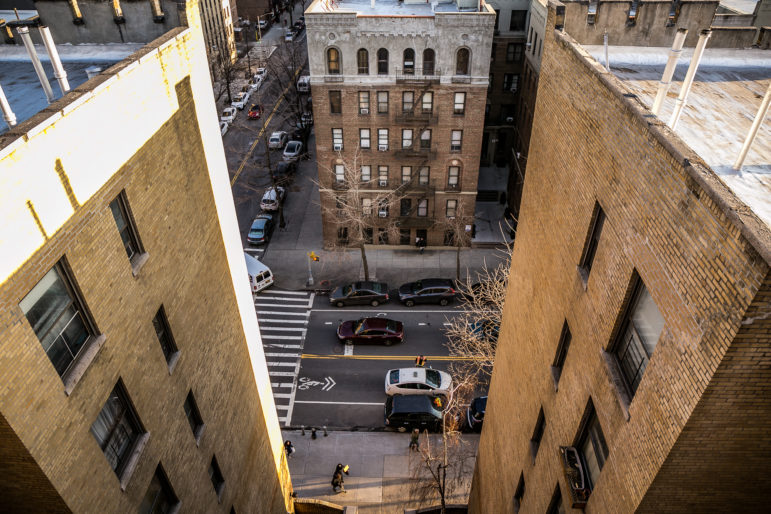
Apartment buildings in Manhattan.

CityViews are readers’ opinions, not those of City Limits. Add your voice today!

New York’s subsidized affordable housing is a critical tool to fight the housing crisis. It provides safe and decent homes for low-income New Yorkers who cannot afford market rate housing. But rising costs—specifically insurance costs—threaten this vital resource, putting the financial stability of these buildings at risk while driving up development costs and requiring more government funding.

In the face of this crisis, the New York Housing Conference recently completed an analysis of insurance costs for affordable housing. We found that insurance premiums have doubled over the past four years, increasing an average of 26 percent every year. The average annual cost to insure an affordable unit is now $1,770, compared to $869 just four years ago. In some instances, in the Bronx, we saw rates as high as $3,081 per unit.

Our findings also show jarring evidence that insurance carriers blatantly discriminate against affordable housing projects, in some cases completely refusing to provide coverage to homes just based on where they are located.  

In market outreach conducted for insurance coverage, nine of 23 insurance carriers declined to offer coverage due to Section 8 or subsidized affordable housing. One insurance company declined to cover a property in the Bronx, citing that it is “no longer writing new business in the Bronx.” Another wouldn’t offer coverage unless the housing provider acquired an additional $5 million in liability insurance just because the building included Section 8 tenants.

If discriminating against a renter who uses a Section 8 voucher is illegal in New York (thanks to the NYS Legislature’s statewide source of income discrimination ban in 2019), it should also be illegal for insurance providers to discriminate against buildings just for offering affordable housing. This is modern-day redlining. It continues a destructive legacy that segregates and excludes low-income renters and people of color.

Insurance premium increases are so steep that it is putting the financial stability of the buildings at risk. Based on our calculations, the average increase in insurance costs would decrease cash flow by 60 percent or more for affordable housing built in 2019 or earlier. Significantly reduced cash flow means less money for building reserves, repairs, and difficulty refinancing or selling the property.

As premiums are going up, coverage is decreasing. In both new policies and renewal options, owners are being forced into higher deductibles or lower coverage amounts while more items are being excluded from coverage.

We also saw no evidence that increasing costs are due to increased payouts of claims. For example, in the data we received for over 13,000 units, there are minimal losses for excess or umbrella insurance, while their premiums per unit doubled or tripled over that time.

A few years ago, the Legislature required the State Department of Financial Services to investigate the issue. In late 2022, the agency quietly offered very little information about either insurance costs or discriminatory practices and suggested no recommendations for holding insurance companies accountable or requirements for greater transparency. This complacent response is completely unacceptable given the urgency of the situation, and yet insurance providers can continue making unjust and offensive assumptions about low-income renters as an indicator of risk.

Thankfully, Gov. Kathy Hochul included housing insurance reform in her 2025 Executive Budget, banning insurance companies from using tenant insurance sources and levels or the presence of income-restricted units to discriminate against affordable housing.

As budget negotiations continue in Albany, we need the Legislature to put teeth behind its efforts to ban source of income discrimination and its harmful effects on our housing market, and that includes preventing insurance companies from discriminating against affordable housing. We need urgent government intervention to ban harmful practices and to start exploring alternative frameworks for insurance—including affordable housing captives and a public, state-run insurance option.

Escalating insurance costs have been a growing problem for years, and New Yorkers can literally no longer afford to be complacent. Insurance reform today is essential to ensuring residents have housing security and stability for years to come.

Rachel Fee is executive director of the New York Housing Conference. 

Justus Ramsey Stone House could rise again — with $500,000 in proposed Legacy Act backing

posted in: Adventure | 0

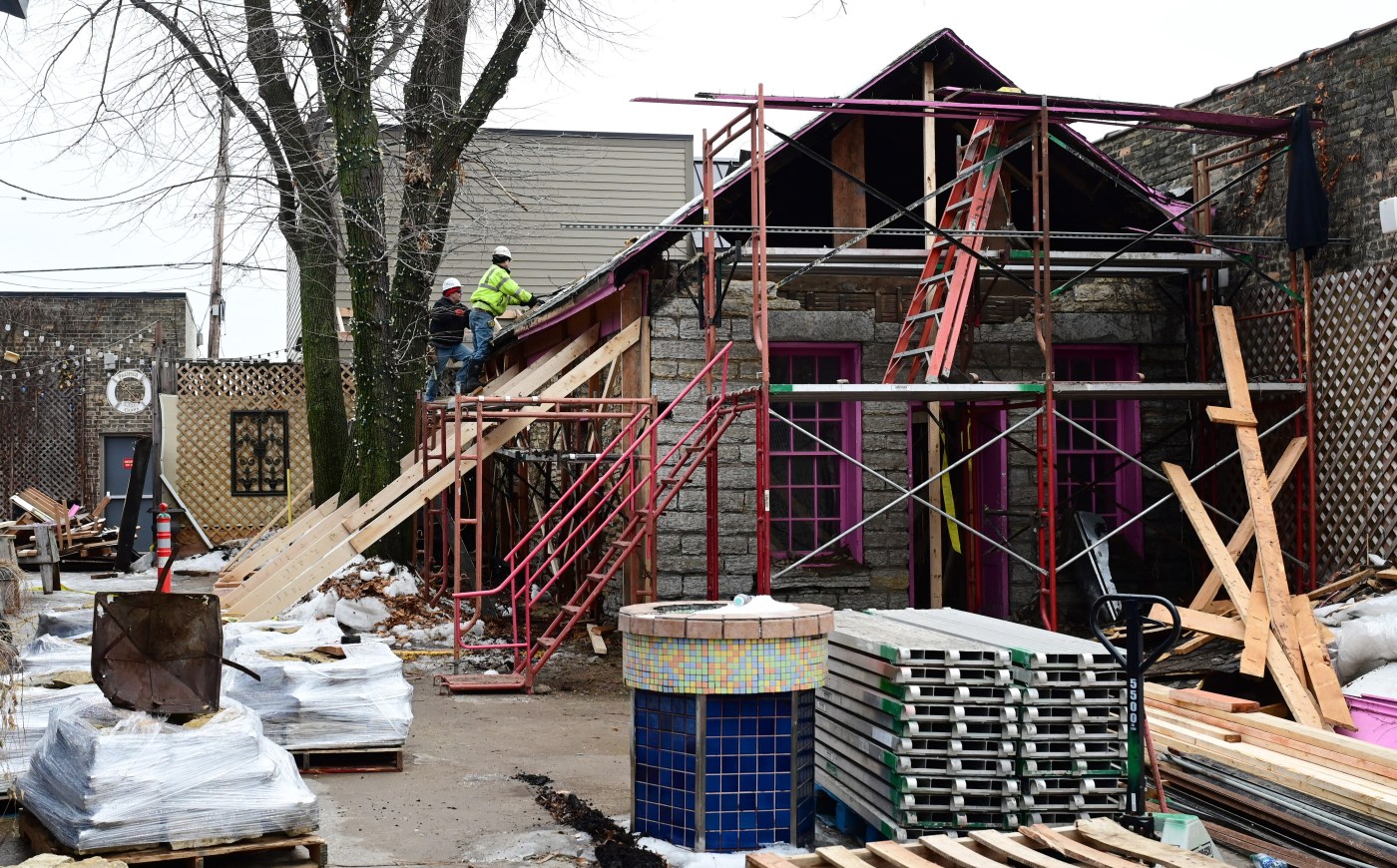
In recent years, much has been written about the Justus Ramsey Stone House, the limestone cottage that until a year ago sat on the patio of Burger Moe’s restaurant on St. Paul’s West Seventh Street. Erected around 1857, the one-room house was owned by Justus Ramsey, brother to Alexander Ramsey, the first territorial governor of Minnesota and the state’s second official governor after Henry Hastings Sibley.

The irony?

“He never lived there,” said Frank White, a board member with Historic St. Paul, a preservation organization.

Much less has been written about the community of Black railroad workers, Red Caps, Pullman porters, commissars and construction workers who once called the Seven Corners area of St. Paul their home. Many were transplants from the south who been recruited for their labor in the years after the abolition of slavery. Some were hired to build the State Capitol.

From 1890 to 1933, the Justus Ramsey House housed at least 14 known families, all of them somehow associated with the railroad industry, which at one time owned the land it sits on.

Saved from demolition

After a vocal fight between historic preservationists and the city, the badly-damaged house was saved from demolition and taken apart, stone by stone, in February 2023 and placed in storage some 30 minutes north of the Twin Cities. The Minnesota Transportation Museum, home of the Jackson Street Roundhouse, has agreed to adopt the house and make it a cornerstone of a permanent outdoor Pullman porter exhibit, which would be installed next to its Rutledge depot.

That effort will require funding. State Rep. Samakab Hussein, DFL-St. Paul, has sponsored a bill to use $500,000 from the state’s Legacy Amendment — a longstanding state sales tax that funds arts and cultural projects, as well as water and land conservation — to back the relocation and reassembly of the Justus Ramsey House. State Sen. Sandy Pappas, DFL-St. Paul, is a co-sponsor. The bill was laid over in the House Legacy Committee for possible inclusion in a future committee bill.

“This is St. Paul history, not only African-American or Black history,” said Hussein, flanked by a coterie of the city’s Black leaders on Friday during a media event at the Rondo Commemorative Plaza off Concordia Avenue.

Aggressive timeline

The speakers included White, City Council Member Anika Bowie, Ramsey County Commissioner Rena Moran, educator-advocate Robin Hickman-Winfield and Rondo Days founder Marvin Roger Anderson, executive director of the Rondo Center of Diverse Expressions.

Hussein, who is vice chair of the House Legacy Committee, said he was optimistic the money would be appropriated and the limestone cottage will rise again, perhaps even by the end of the year.

“Once we get the funding in place, we’d like to get going right away,” said Larry Paulson, a board member with the Transportation Museum and coordinator of the Justus Ramsey project. “It’s a very aggressive timeline, but it’s possible.”

Related Articles

Local News |


St. Paul man charged with manslaughter after single punch sent man to ground

Local News |


Obituary: St. Paul author and historian Judy Yaeger Jones believed in ‘women and their rights’

Local News |


St. Paul’s Grand Old Day set to return June 2, with headlining band Yam Haus, a parade and pro wrestling

Local News |


Family of St. Paul man, 41, seeking justice after his fatal shooting

Local News |


Letters: ‘Little money to work with’? What the heck?

Day 5 of Miu trial: Best friend testifies that he asked Miu to bring knife

posted in: Politics | 0

A photo of 17-year-old Isaac Schuman is displayed in front of the jury during the Nicolae Miu trial at the St. Croix County District Court in Hudson, Wis., on Monday, April 1, 2024. (Elizabeth Flores, Pool via Star Tribune)

Nicolae Miu’s best friend testified on Friday morning that he was the one who asked Miu to bring his folding pocket knife on a tubing trip on the Apple River so they could cut the cords tying the tubes together at the end of their trip.

“Who’s the guy who tends to have a pocket knife in your group of friends?” defense attorney Aaron Nelson asked Ernesto Torres-Chaguez.

“Nic,” Torres-Chaguez said through an interpreter.

Torres-Chaguez was the first witness for the defense to testify in the murder trial of Nicolae Miu in St. Croix County, Wis., Circuit Court. Miu, 54, of Prior Lake, is charged with fatally stabbing Isaac Schuman, 17, of Stillwater and injuring four others during a river confrontation with tubers in Somerset on July 30, 2022.

Torres-Chaguez testified out of order – the prosecution still has additional witnesses to call – because of witness availability. He was the 34th witness overall to testify at the trial, which entered its fifth day on Friday.

Miu’s friend testifies

Miu and his then-wife, Sondra Miu, went tubing with Torres-Chaguez and other friends on July 30, 2022, Torres-Chaguez said. He said his friend is a handyman who helps him fix things around his house, including his swimming pool.

“He’s always there helping things in his house or he goes to other houses to help fix things,” he said.

Miu has used his pocket knife to fix things in the past, Torres-Chaguez said, and he said he called Miu the morning of the tubing trip and asked Miu to bring his pocket knife with him.

“The last time we went to the river, we had all the inner tubes tied together, and we couldn’t cut the cords, so we had to pull them out of the river all together and bring them up to the place where we had to leave them,” Torres-Chaguez said.

Torres-Chaguez said there was “no reason” for him to be worried about Miu having a knife. His friend, he said, has a “character of peacefulness.”

Torres-Chaguez testified that their group, which included Nic and Sondra Miu, Miu’s then-wife, was floating down the river Ariel Chaguez accidentally dropped his phone in the water. Miu took his mask and snorkel and began to look for the phone, Torres-Chaguez said.

Confrontation

Torres-Chaguez said he didn’t realize Miu had encountered another group and was involved in a confrontation until Sondra Miu said, “Nic is in trouble.”

“I looked down where people were, and I saw Nic in the water,” Torres-Chaguez said. “I stood up, and tried to get there. He was in the water, and there were people around him … maybe there were 10, 15, I don’t know.”

Torres-Chaguez heard people yelling at Miu, “but didn’t see anyone hit him,” he said. When he tried to walk over to check on Miu, he said he lost his shoes in the river. Miu eventually came back, but someone from the other group was following him and pointing at him, he said.

Torres-Chaguez said he twice told the person to “stay there” and not approach Miu.

“I tried to prevent that person from approaching us because I thought maybe the problem was going to continue,” Torres-Chaguez said.

“And you thought the solution to that problem was to keep Nic separated from the group that was pointing at you?” Nelson asked

“Yes,” he responded.

Miu “looked worried, and he was pale,” Torres-Chaguez said.

“I think there was a time when you also (said) he looked white or he looked wide-eyed,” Nelson said. “Did you see those things when you looked at Nic?”

“Yes,” he responded.

Torres-Chaguez said he has known Miu for 10 years and that he had never seen his friend scared before.

“Did he look like he was scared then?” Nelson asked.

“Yes,” he responded.

Torres-Chaguez said the trip down the river to the exit point — which took about 30 to 35 minutes — was “totally quiet. As far as I remember, nobody talked until we got to the exit.”

When they reached the exit, Torres-Chaguez said he saw a number of police officers. When the group got out, an officer approached Miu and said, “He has to come with us,” he said.

“He was walking normally with them,” Torres-Chaguez said. “We were in shock because we didn’t know why they were detaining him. We didn’t know what had happened.”

“And you couldn’t believe your friend who’s peaceful would have done anything to harm someone?” Nelson asked.

“Never,” he responded.

Related Articles

Crime & Public Safety |


Osceola apartment plan nixed by judge over St. Croix River protections, river bluff views

Crime & Public Safety |


Witnesses, officers describe chaotic scene after Apple River stabbing

Crime & Public Safety |


Plans for Superior natural gas plant stalled by city council

Crime & Public Safety |


The teaching of Hmong and Asian American histories to be required in Wisconsin under a new law

Crime & Public Safety |


In day 3 of Apple River tubing murder trial, jurors see stabbing victims’ scars, hear from suspect’s ex-wife