Compassion to go around
Nearly every day I read articles in the Pioneer Press describing ICE activities as “massive, chaotic or aggressive,” and perhaps they are, sometimes even inappropriately so, but why are there no articles reminding readers that such “massive and aggressive action” is the necessary reaction, primarily to massive and aggressive illegal immigration orchestrated by the Biden administration, and secondarily to the massive, aggressive and often violent protests against ICE taking place in the Twin Cities?
Had not Biden illegally disregarded long-standing immigration law, millions of unvetted illegal immigrants, including thousands of violent criminals, terrorists and gang members, would not be in the U.S., Renee Good would not be dead and hundreds of documented violent crimes, perpetrated by some of those here illegally, would not have happened.
Obviously from my comments, I am a conservative, but do people really think that conservatives have no compassion for the large majority of those immigrants who are simply people seeking a new and better life? Of course we have compassion. President Trump stated Wednesday and has stated previously, that he, as do most conservatives, “has a heart” for such people, indicating that exceptions to deportation, allowed in immigration law, may be considered for some people here illegally.
Also obviously, those non-violent protestors who are not paid outside professional protestors, have great compassion for those being detained, arrested or deported, but where is their compassion for the hundreds of thousands of people assaulted, raped, murdered, killed from heat and cold, or trafficked enroute to the U.S.? Where is the compassion for the many people who have been, or will be, victimized by violent immigrants? Where is the compassion for the people who have lost jobs to immigrants, or for those seeking legal immigration who are bypassed for, or delayed in, the process of legal immigration? Where is the recognition that border control is necessary for the very existence of the US and for any country?
Richard M. Powell, Owatonna
To induce chaos?
I am wondering about whether there is a false flag set-up being instituted at the ongoing ICE protests.
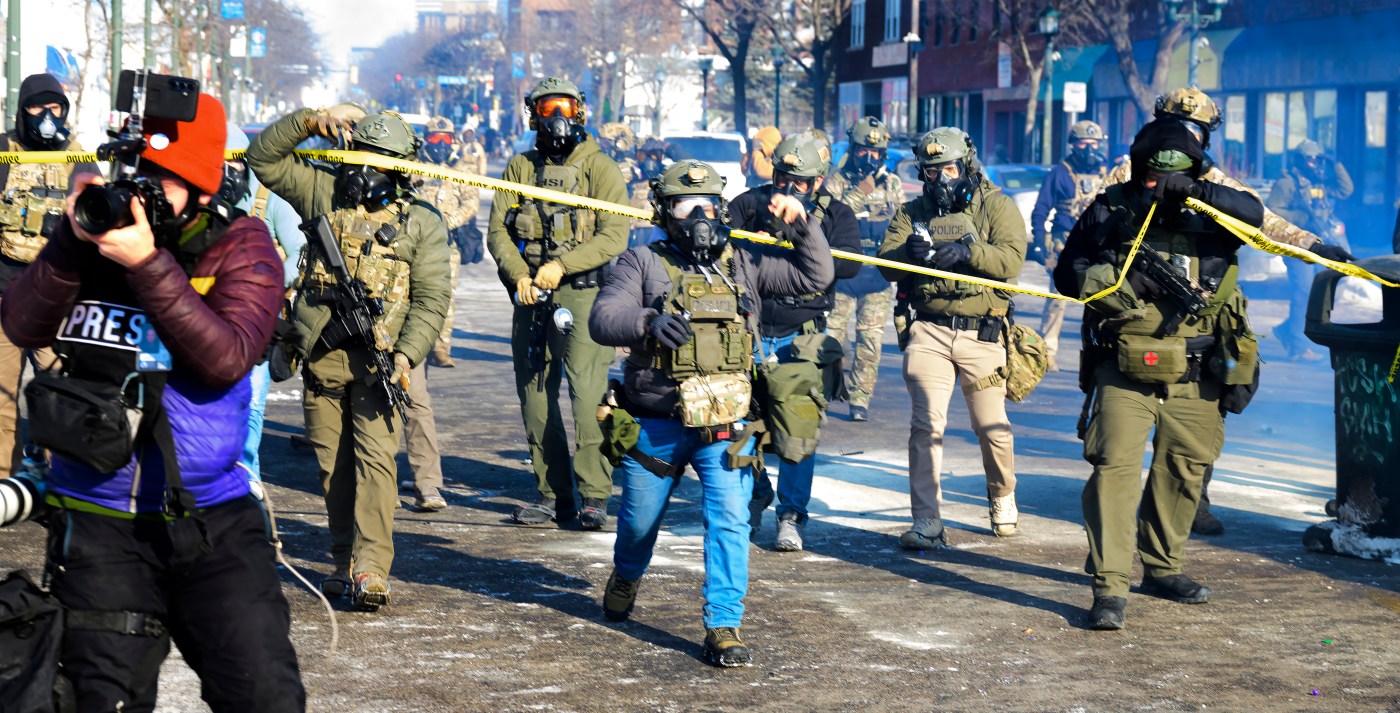
It’s been said that there are professional agitators within the crowds to want to induce chaos and anarchy. Local, state and federal law enforcement would intervene with violence to put down protests should it move from peaceful assembly to rioting, chaos and destruction of property.
On the other hand, I wouldn’t put it past the Trump administration to embed its own paid professionals in these crowds to induce chaos and anarchy with the goal of invoking the Insurrection Act. The FBI, DEA, ATF and other federal agencies have been known to embed people in terrorist, cartel and other criminal groups. Militarily these tactics are used to create false-flag conditions. This possibility does exist.
Donald Trump has been itching to pull the trigger to invoke Insurrection Act, especially if these professional agitators managed to cause the crowds to cross a line and start widespread violence, destruction, vandalism and damage.
It’s strange that the federal actions by the ICE, Border Patrol and others are seemingly trying to get the crowds beyond the threshold to cause Insurrection kinds of activities. It feels like a powder keg waiting for someone to light the fuse.
In this day and age, it seems that we cannot trust anybody. I am looking forward to the mid-terms to change the direction that our federal government has been heading. I am disappointed at our current Congress inability restrain the overreach that our Trump administration has demonstrated domestically over and over again. And now Trump is overreaching internationally, which threatens world peace, world trade and goodwill.
I hope with a changed Congress, our elected officials hopefully would act promptly to preserve our Constitution and our democracy. Enough already.
Barry Siebert, St. Paul
It may be hard to see right now, but …
A letter for my grandchildren:
I saw photographs of you and your school chums at St. Paul Central marching to protest ICE the other morning. Hundreds of you with creative sign boards, goofy hats, smiling faces of all colors and origins. Teenagers on the move. I am so proud of you. And at the same time, so sad and heartbroken at the world we are handing you.
This is not the America we once knew. It is not what our forefathers had in mind. Your parents scraped and borrowed to get you through school, to teach you to work hard, to care, to be honest, to love and appreciate your family, your neighbors, your country. Their parents did too. Your grandparents and great grandparents taught school, started businesses, created advertising, flew in the Pacific, invented things, raised dairy cows, worked on ore-freighters, ran for city council and applied their skills and intellect to improve the lives of their families, their country, their world.
That’s not what you’re seeing on your TV screens or I-phones today. You’re witnessing a dark period in American history — one filled with greed and hate and selfishness. One where the leader insults citizens with foul language and rude gestures, where government officials order and condone violence, where they dress up in makeup and jewelry for TV appearances, rationalize their crimes, and lie. And sadly, many support this behavior.
It is easy to get depressed about these events. Easy to give up, or to ignore what’s happening, or to rationalize it, or to excuse it. But it is not hopeless. You and your friends are coming along, full of hope, energy, caring and empathy. It may be hard to see right now, but your time will come.
Jim Force, Wausau
A Fair proposal …
A special welcome to Paul Hendrickson as new manager of the Washington County Fair.
Our former company had the pleasure of working with the great folks at both the Washington County and Ramsey County Fairs for many years prior to Covid. Now would be the time to bring forth the much talked about subject or merging the former Ramsey County Fair with the Washington County Fair.
I would guess that there are hundreds of food growers and exhibitors in Ramsey County that would like the opportunity to be involved in this great summertime event especially from the East Side of Saint Paul.
I like the sound of The Washington / Ramsey County Fair!
Gary Murphy, Vadnais Heights
Related Articles
James Seifert: It’s time for the federal courts to do their duty
Real World Economics: Venezuela is a lesson we’ve learned before
Skywatch: Jupiter’s dancing moons
Working Strategies: What Gen Z can expect as it enters the workforce
Joe Soucheray: We need our borders, but you need a better plan, ICE