Special election for St. Paul House 64A seat Tuesday

posted in: All news | 0

A special election for a vacant St. Paul legislative seat will be held Tuesday.

The 64A seat was vacated by Kaohly Her after she won the St. Paul mayor’s race in November. District 64A, which includes the Union Park,

Dan Walsh. (Courtesy of the candidate)

Macalester-Groveland and Summit-University neighborhoods.

Meg Luger-Nikolai, a labor lawyer who won a December DFL primary, will face the sole Republican candidate, business owner Dan Walsh.

Luger-Nikolai received nearly 30% of the vote in a six-candidate contest last month. Walsh was the only Republican candidate so a primary was not needed.

Related Articles


Sen. John Hoffman announces 2026 re-election campaign months after assassination attempt


Tuesday special primary will pick DFL candidates for vacant MN House seats


7 candidates vie for vacant St. Paul House seat; DFL primary on Tuesday


Special MN House elections set for St. Paul, Woodbury seats


DFL holds on to Senate majority in special elections; GOP holds Wright County seat

DFLers generally dominate elections in St. Paul. Her won four consecutive two-year terms with more than 80% of the vote.

Meg Luger-Nikolai. (Courtesy of the candidate)

More information on the candidates can be found at their web sites — megfor64a.com/ and walshfor64a.org/about.php.

Prior to Her’s resignation, the state House has been tied 67-67.

To find out what’s on your ballot, where to vote and other election information, visit the Minnesota Secretary of State’s elections page at sos.state.mn.us/elections-voting.

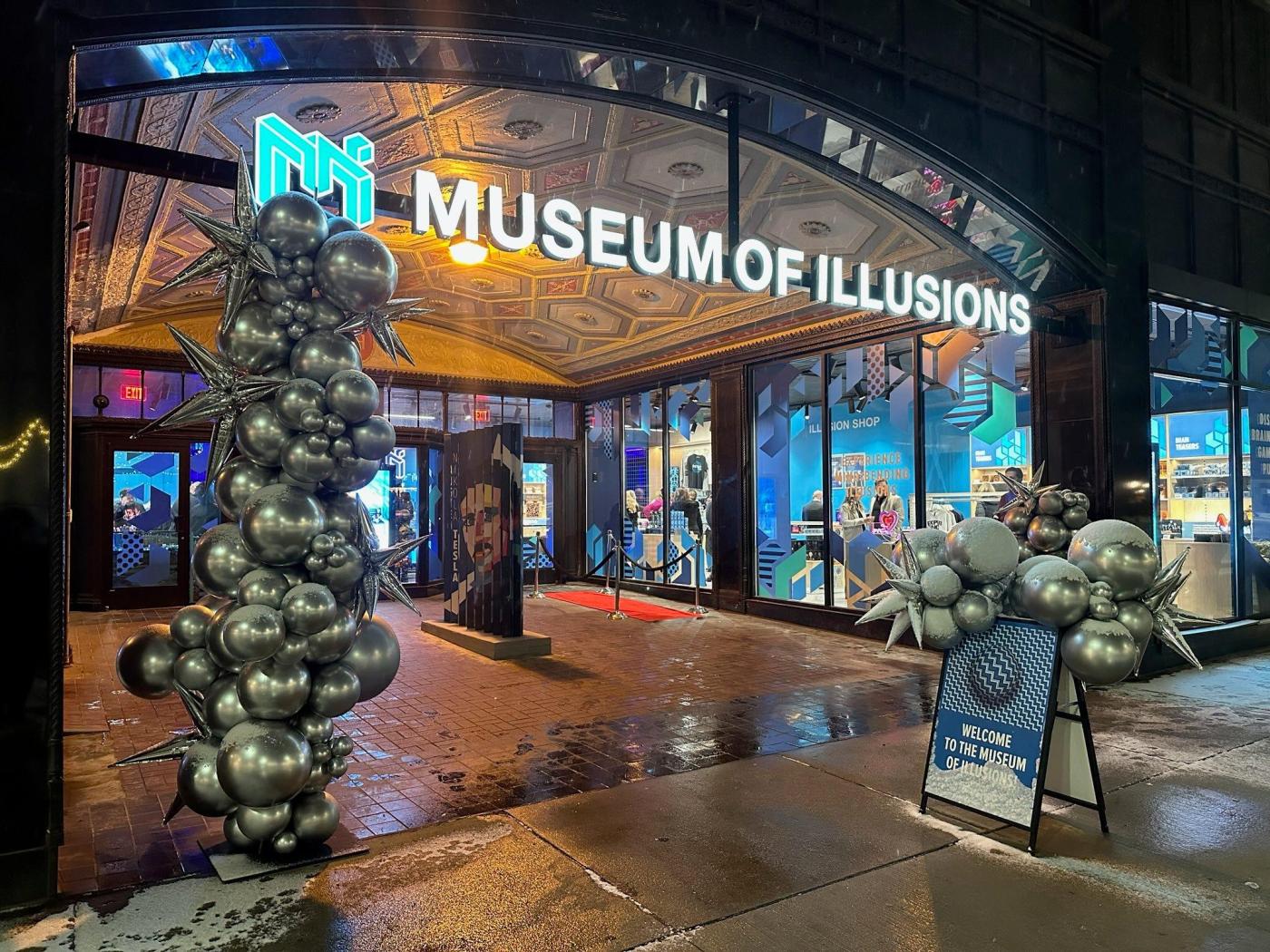
New Museum of Illusions brings mind-boggling fun to downtown Detroit

posted in: All news | 0

By Melody Baetens, The Detroit News

DETROIT — Change your perspective heading into the new year with a visit to Detroit’s new Museum of Illusions.

The attraction debuted on Woodward in the Himelhoch building near Grand Circus Park in early December. It’s the 67th Museum of Illusions that has opened around the world. Each location features exhibits and artwork specific to the city.

In Detroit, there’s a vibrant mural of what looks like a Motown singer with eyes that are always locked on you, and a “reversed room” inspired by the auto industry. Look for the illusion that makes you look like you’re sitting on — or hanging from — the marquee of the historic art deco Majestic Theatre a few blocks up Woodward.

“We have received the warmest welcome from the Motor City,” said Museum of Illusions CEO Kim Schaefer at a museum preview in December. “We feel like we are truly family here.”

“We’ve been around for a decade now and this is number 67 and we are proud of being all over the globe,” she said, adding that the museum is filled with “nods to the beautiful, vibrant, historic nature of what makes Detroit so special. We’re excited to be here.”

The first Museum of Illusions opened in Zagreb, Croatia, a decade ago, and it has become the largest and fastest-growing chain of privately held museums in the world.

The wheelchair-accessible, hands-on museum is set up like a path, with guests taking about an hour to get through and experience everything, depending on how crowded it is. Visitors are invited to touch, climb and take plenty of photos.

Your camera is as essential to your visit as your eyeballs, because some of the illusions aren’t fully effective until you see your photo. This includes the Beuchet Chair, which places two people in a room for a forced-perspective trick that works best once a third person takes a photo. The museum walls give tips on taking the best photographs.

Others don’t require a camera, like the giant pinscreen, a full-body-size version of the famous desk toy; strike a pose, press yourself into it and then view your impression on the other side. Gaze at the grid illusion and see dancing black spots that aren’t really there. Like many of the installations, the museum offers text that explains the science behind it.

Hold on tight in the vortex tunnel, which is a stationary platform with a revolving tunnel around it that makes you feel like you’re spinning into oblivion. (Just close your eyes to recenter yourself.)

Like any museum, there’s a gift shop, which is a whole Woodward-facing storefront. They sell Museum of Illusions apparel and giftable toys that challenge the mind. The museum is rentable for weddings, birthdays, corporate team building and field trips.

Related Articles


Inside Super Bowl week’s concerts, parties and celebrity scene heading into big game


Historic love letters from royals, rogues and romantics go on show at Britain’s National Archives


Six must-see travel destinations for 2026


7 epic ski trips you can still plan for this winter


Will unseasonably hot weather dash Southern California’s hopes for a 2026 superbloom?

If you go

Museum of Illusions

Open 10 a.m. daily

1545 Woodward, Detroit

moidetroit.com

Admission starts at $24.72

©2026 www.detroitnews.com. Visit at detroitnews.com. Distributed by Tribune Content Agency, LLC.

Kindness at work can mean giving honest feedback, limiting meetings and bending rules

posted in: All news | 0

By CATHY BUSSEWITZ

NEW YORK (AP) — Beth Brown was assigned to a major project at work when hardship struck. First, her 6-month-old daughter fell ill with COVID-19. A few days later, her mother passed away.

Related Articles


Stranded by winter weather? Here’s what airlines owe you


Businesses face pressure to respond to immigration enforcement while also becoming a target of it


Trump administration invests in another US rare earth miner to loosen China’s grip on supply


US stocks rise as gold hits another record and the dollar’s value sinks again


European Union opens investigation into Musk’s AI chatbot Grok over sexual deepfakes

Brown, director of health and well-being at a company that provides employee mental health programs and absence management services, sent a note to the senior ComPsych director who was her partner on the project, explaining she would have to miss work to care for her daughter and to make funeral arrangements. “The guilt that I felt for knowing I was going to leave her dry on my end,” she recalled.

Instead of calling to go over remaining tasks, the director reached out to ask whether Brown was OK and to tell her not to worry about the project. “In the grand scheme of things, this is not important,” Brown recalled her colleague saying. “It’ll be here when you get back. I’ll be there when you’re back.” Hearing the kind words, Brown “felt like there was a brick taken off my chest.”

The importance of treating others with kindness is one of the first lessons most parents and guardians try to teach children. But the skill sometimes falls by the wayside in work settings that encourage competition and where adults face deadlines and pressure. Financial worries and fears of layoffs also can stifle generous impulses.

Perhaps that’s why acts of kindness on the job often are so memorable for those on the receiving end. Molly MacDermot, director of special initiatives at Girls Write Now, a nonprofit mentorship and writing program, feels lucky to have a boss who was kind to her when MacDermot’s father died eight years ago and her mother passed away six months ago.

As technology accelerates the pace of many types of work, “it’s really important to feel human, to be allowed to be human, which is getting the grace to just deal with the bumps in life,” MacDermot said.

Kindness can also mean sharing hard truths in a productive way, going out of the way to welcome a new coworker or bending the rules for the sake of love.

Here are some examples of kindness in action and ideas for spreading goodwill at work.

Create safe spaces

Treating others with warmth and consideration may be especially meaningful at a time of heightened political divisions that has many people feeling like they have to choose sides, said Anna Malaika Tubbs, a sociologist and author of “The Three Mothers” and “Erased.”

“Especially in a workplace, where you can level the playing field and really make sure people know, ‘Hey, you’re welcome here and you’re seen here,’ that can really make a difference at a time when on a national level people feel really divided from each other,” Tubbs added.

One way to encourage empathy at work is to create an environment where people get to know each other, Tubbs said. Organizing staff retreats where family members are welcome, bringing in guest speakers, starting book clubs and scheduling fun offsite activities like going to an escape room are ways to generate shared experiences and facilitate healthy dialogues, she said.

The goal isn’t “to erase political difference or erase being able to disagree with each other” but to promote a cultural shift by encouraging behavior and actions different from the ones that often get rewarded at work, Tubbs said.

“Let’s not show up to meetings thinking that we have to compete and show who’s going to be the loudest and who’s going to be the most dominant,” she said. “What would look differently if we were collaborating with each other? If we were more focused on community?”

Creating a supportive culture within an organization requires daily attention, said Maya Nussbaum, the founder of Girls Write Now and MacDermot’s boss. She starts meetings with “heart warmers,” a time for staff members to share their thoughts on topics as simple as a favorite candle. She also encourages actively listening to different perspectives.

“Productivity is better when people feel that they’re valued and they’re listened to and they matter,” Nussbaum said. “They’re going to work harder and they are going to care, and they’re going to channel their passion as opposed to feeling dismissed.”

Provide real feedback

Compassion can mean sharing hard truths in a tactful way. For example, it’s challenging to let people know they aren’t meeting performance expectations, but “sometimes kindness is getting out of your comfort zone and telling someone the truth so they can shine,” said Chantel Cohen, founder and CEO of Atlanta-based CWC Coaching and Therapy, a counseling and life coaching practice in Atlanta.

When providing feedback as a manager, give specific examples to illustrate the behaviors that need improvement, she said. “Kindness isn’t a conflict-free workplace. Kindness is a workplace where repair is possible or improvement is possible,” Cohen said.

However, remember to acknowledge successes. Karla Cen recalls a former boss who she says criticized her several times a day. She learned a lot, but felt unrelenting pressure.

A manager at the retirement community in Florida where Cen works now brought her a potted plant on her first day after driving four hours to meet her. Another manager provides encouraging feedback daily.

“Having her pass by and say, ‘You did that really well today,’ it just really uplifts the mood of the whole department and makes us ready to come in for the next challenges,” Cen said.

Give back time

Before scheduling a meeting, consider whether the goals can be accomplished another way. For example, a manager can tell a working group, here’s what’s on the agenda, take time to think about it and send your ideas in writing, Cohen suggested.

“Sometimes, the gift of time is such a kindness,” she said. “Maybe you can’t give your team time off right now, but what you could do a couple times a quarter is just say, ‘Hey we’re going to skip tomorrow’s meeting and here are the things I want you all to think about. Submit this in writing so that you can have the time for yourselves.’”

Keeping meetings structured and focused also frees up time, Nussbaum said.

Reconsider rules

Meher Murshed began dating a colleague, Anupa Kurian-Murshed, more than two decades ago when they both worked at Gulf News in Dubai. The couple wanted to marry, but the newspaper prohibited spouses from working in the same department. They feared one of them would have to quit if they wed.

So they appealed to their editor-in-chief, who raised the issue with the managing director. The top managers decided the couple could keep their jobs and get married as long as one of them didn’t report to the other.

“It changed our lives. Life could have been very different,” Meher Murshed said.

Share your stories and questions about workplace wellness at cbussewitz@ap.org. Follow AP’s Be Well coverage, focusing on wellness, fitness, diet and mental health at https://apnews.com/hub/be-well

Thomas Friedman: Minneapolis and Gaza now share some of the same violent language

posted in: All news | 0

Every day now, I sit at my computer and ask myself: What is there left to say about the two news stories I care about most? One is unfolding in my hometown, on the banks of the Mississippi River; the other is unfolding on the West Bank of the Jordan and on both banks of the Wadi Gaza.

Which video should I linger on longest? The footage of Renee Good, shot in the face by an Immigration and Customs Enforcement officer in Minneapolis while she was clearly trying to evacuate the scene? Or the video from Saturday of federal agents shooting Alex Jeffrey Pretti, an intensive care nurse, after he tried to help a woman who was being pepper-sprayed? Or perhaps the video from Wednesday showing the aftermath of Israeli strikes that killed three Palestinian journalists, among others, in the Gaza Strip? The journalists had been working for a committee providing Egyptian aid and were documenting its distribution at a displacement camp. Or perhaps the videos of Hamas executing rivals and refusing to yield, despite that the war the group ignited Oct. 7, 2023, has resulted in nothing but catastrophe for Palestinians?

These stories have much more in common than you might think. All are driven, in my view, by terrible leaders who prefer easy, violent solutions to the hard work of negotiated problem-solving. These leaders see an ironfisted approach as the best way to win their next elections: President Donald Trump in the 2026 midterms; Prime Minister Benjamin Netanyahu of Israel, who is expected to call elections around the same time; and Hamas, in its desperate effort to lead the Palestinian movement in the postwar era, despite having lost the war.

Hamas and ICE also share one very visible trait that I never thought I’d see in the United States: Almost all of their foot soldiers wear masks. My experience as a reporter in the Middle East taught me that people wear masks because they are up to something bad and don’t want their faces captured on camera. I saw it often in Beirut and in Gaza; I never expected to see it in Minneapolis. Since when have America’s domestic policing forces, charged with defending the Constitution and the rule of law, felt the need to hide their identities?

I understand why Hamas fighters wear masks — they have both Israeli and Palestinian blood on their hands and fear retribution. But if you placed a photo of an ICE officer next to a Hamas militiaman in a news quiz, I would defy you to tell them apart. Memo to the homeland security secretary, Kristi Noem: That is not a good look. What are you hiding?

Good and Pretti were both clearly present as observers — and trying to defend others — yet both were drawn into the chaos and shot at close range by agents who should never have pulled a trigger. Yet the Trump team insists that ICE is blameless. That is not how you build legitimacy for a government effort to track down and deport immigrants lacking permanent legal status.

That same instinct for “fire, ready, aim” is one of the morally corrupting legacies of Israel’s war in Gaza. One of the Palestinian journalists killed by the Israeli airstrike Wednesday, Abdel Raouf Shaath, had worked for years as a cameraman for CBS News and other outlets; the others were local journalists Mohammad Salah Qishta and Anas Ghneim. They were reportedly on assignment to film aid distribution by the Egyptian Relief Committee when their vehicle was targeted.

Really? Was that the only way to handle the situation during a ceasefire? Immediately launch an airstrike and ask questions later? Israel can assassinate nuclear scientists in Iran in the dead of night from 1,200 miles away, yet it can’t distinguish a journalist from a combatant in broad daylight next door? It’s shameful. This comes only months after Israeli forces killed Reuters journalist Hussam al-Masri on the stairs of Gaza’s Nasser Hospital in August.

Netanyahu apologized for that earlier killing. But regarding the three journalists killed last week, the Israeli military released a boilerplate statement saying troops identified “several suspects who operated a drone affiliated with Hamas” and “struck the suspects who activated the drone.” The military added that details are being reviewed. That is what it always says. That is how a nation and an army loses its soul.

Here is what is really happening: Netanyahu is running for reelection. Israel currently occupies approximately 53% of the Gaza Strip, with Hamas holding the other 47%. Trump — with help from Egypt, Qatar and Turkey — is pushing for Hamas to disarm, for its military leaders to leave and for the organization to become a purely political entity. In return, Trump expects Israel to begin a withdrawal toward its own border.

Netanyahu knows that if he runs for election with Hamas still holding political influence in Gaza and the Israeli military pulling back, he will be savaged by the far-right extremists in his coalition. Those allies don’t just want to stay in Gaza; they want to annex the West Bank. So Netanyahu wants the war to continue; he wants to provoke Hamas into fighting so he never has to withdraw.

Meanwhile, Hamas is clinging to its weapons to maintain control on the ground. Even if forced to become a political entity, it will do everything in its power to hijack the technocratic Palestinian government the Trump administration is trying to install.

Back at home, Trump seems to believe the chaos in Minneapolis will work for him in November — even though polls show a majority of Americans disapprove of ICE’s tactics. He is betting he can run on a “law and order” platform fueled by anti-immigration sentiment.

There is, however, another view inside the White House. Vice President JD Vance visited Minneapolis last week to urge local officials to cooperate with federal agents to “lower the temperature and lower the chaos.” Suddenly, the cynical Vance — of all people — was the voice of calm and reason. I suspect he was channeling the fears of Republican lawmakers who worry that ICE’s activities could lead to an electoral disaster in the midterms.

To my friends and family in Minnesota: Stay proud of the way you are documenting abuses and standing up for your neighbors — those with legal papers and those without them — who abide by the law, work hard and enrich our city. But it is vital that this campaign be accompanied by a loud commitment to immigration reform that both controls the border and creates a legal pathway to citizenship.

The winning message remains: high wall, big gate. Control the border, but increase legal immigration. Democrats must never forget that one reason Trump returned to power was the previous administration’s failure to control illegal immigration. Independent voters still care deeply about that.

Trump, Netanyahu and Hamas each have their eyes on the prize: the 2026 elections. The people of Minnesota, Israel and Gaza must keep that in mind. Because if Trump maintains control of Congress, if Netanyahu wins reelection and if Hamas seizes control of the Palestinian movement, all three societies will head into a darkness from which recovery will be agonizingly difficult.

Thomas Friedman writes a column for the New York Times.

Related Articles


James Seifert: It’s time for the federal courts to do their duty


Editorial: After Venezuela, another Latin American dictatorship frets about its future


Julie Roland: We can’t let Pete Hegseth win his war on women in combat


Kenneth Seeskin: AI can’t do soul-searching. Here’s why we need philosophy


Aaron Coy Moulton: This time the US isn’t hiding why it’s toppling a Latin American nation