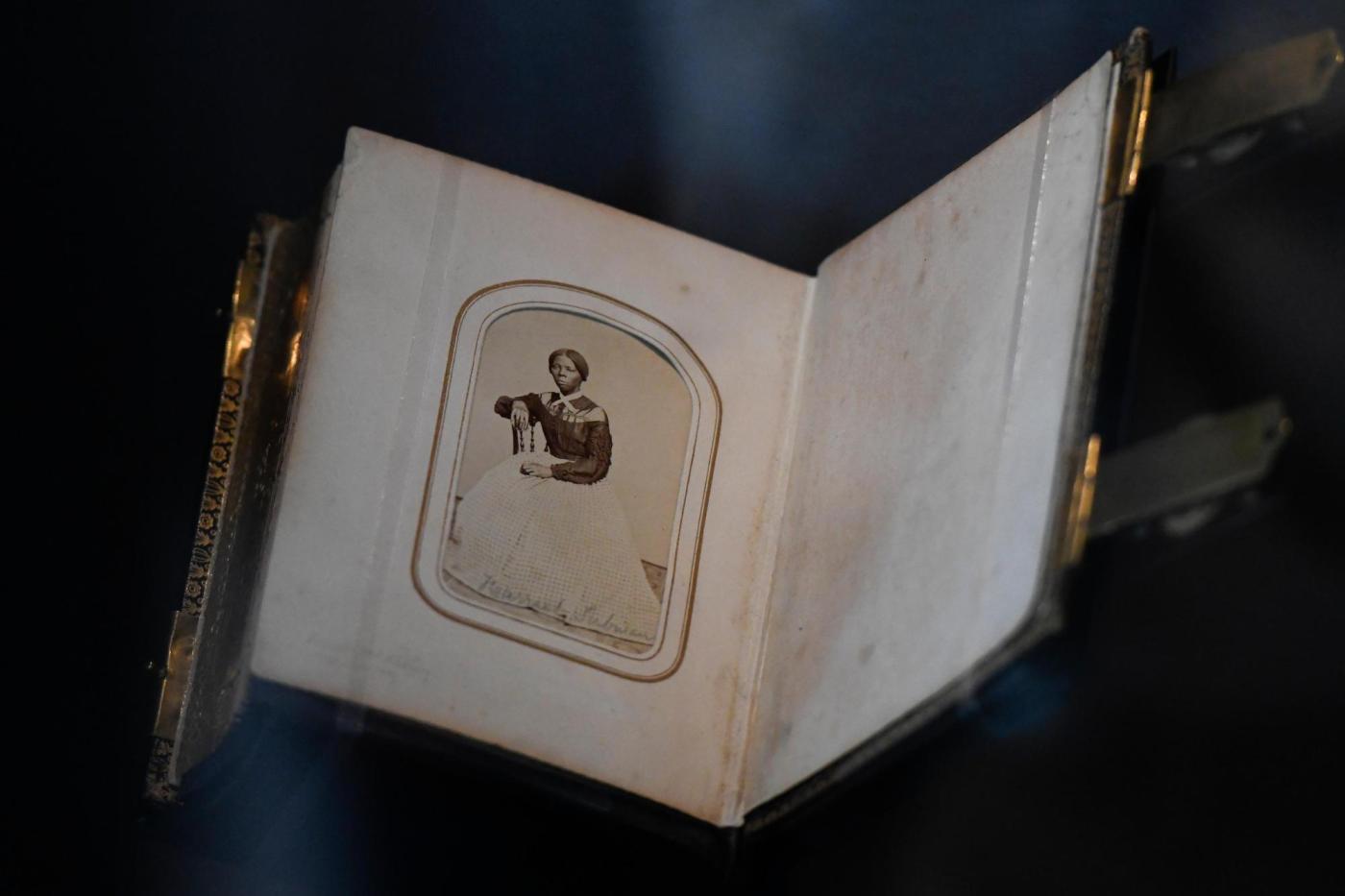
WASHINGTON (AP) — The National Park Service has reversed edits and restored content to its webpage about Harriet Tubman and the Underground Railroad in the wake of news reports and public backlash over the changes.
Related Articles
Supreme Court blocks order requiring Trump administration to reinstate thousands of federal workers
White House keeps world guessing as clock ticks down to Trump’s new tariffs
Trump says high tariffs may have prevented the Great Depression. History says different
Trump is expected to sign executive orders to boost coal, a reliable but polluting energy source
‘If they cut too much, people will die’: Health coalition pushes GOP on Medicaid funding
“Changes to the Underground Railroad page on the National Park Service’s website were made without approval from NPS leadership nor Department leadership,” NPS spokeswoman Rachel Pawlitz said late Monday in an email. “The webpage was immediately restored to its original content.”
She did not say who ordered the changes or for what reason. The changes — first reported by The Washington Post — included removing Tubman’s picture from the top of the page and making multiple edits to the text. A side-by-side analysis of the pages, using the Internet Archive’s Wayback Machine, revealed changes that removed references to slavery and changed descriptions about the issue and its brutal realities.
For example, the original opening sentence referenced the railroad’s core role in “the resistance to enslavement through escape and flight.” The edited version called the railroad “one of the most significant expressions of the American civil rights movement” and described how it “bridged the divides of race, religion, sectional differences, and nationality.”
The issue comes amid sweeping government changes to comply with President Donald Trump’s campaign against so-called diversity, equity and inclusion policies in the federal government. In some cases, officials have scrambled to remove and then restore online content as changes came to light.
Trump has also targeted the Smithsonian network of museums, which includes the National Museum of African American History and Culture. He has tasked Vice President JD Vance with heading up the effort to purge what Trump termed “improper ideology” in the Smithsonian’s depictions of American history.
When the Harriet Tubman edits first came to light, NPS officials acknowledged the changes but denied any intention to downplay her role or soften the realities of America’s history with slavery.
“We celebrate her as a deeply spiritual woman who lived her ideals and dedicated her life to freedom,” Pawlitz said, citing dozens of pages about her, as well as two parks named for her. “The idea that a couple web edits somehow invalidate the National Park Service’s commitment to telling complex and challenging historical narratives is completely false.”
The revelation of the NPS edits drew an immediate backlash from civil rights figures. Bernice King, daughter of the Rev. Martin Luther King Jr., posted on Instagram Monday that the changes constitute “an attack on truth, an attempt to erase history that would help us improve society today, a refusal to be uncomfortable.”
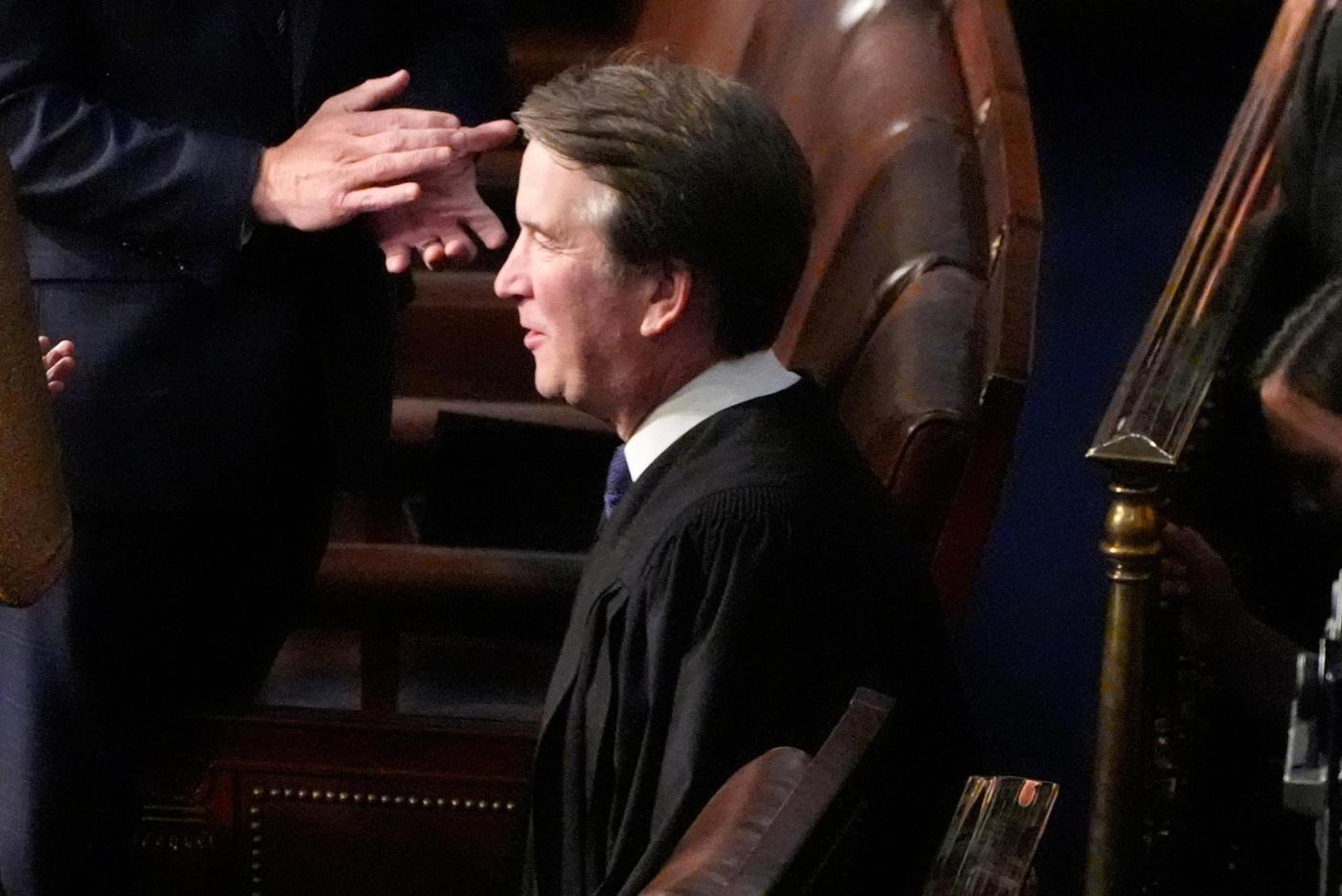
GREENBELT, Md. (AP) — A California man pleaded guilty on Tuesday to trying to kill U.S. Supreme Court Justice Brett Kavanaugh at his home in a suburb of Washington, D.C., nearly three years ago.
Nicholas John Roske was arrested near Kavanaugh’s home in Chevy Chase, Maryland, in June 2022. Roske was armed with a gun and a knife, was carrying zip ties and was dressed in black when he arrived in the neighborhood by taxi just after 1 a.m., authorities said.
U.S. District Judge Deborah Boardman is scheduled to sentence Roske on Oct. 3. Prosecutors say federal sentencing guidelines call for a term of 30 years to life in prison
Roske, 29, of Simi Valley, California, pleaded guilty to attempting to murder a justice of the United States without reaching a plea agreement with federal prosecutors.
A trial for Roske had been scheduled to start on June 9.
Killing one judge could change the decisions of the nine-member court “for decades to come,” Roske wrote over an encrypted messaging platform to another user in May 2022. Roske added, “I am shooting for 3.”
Roske was apprehended after he called 911 and told a police dispatcher that he was near Kavanaugh’s home and was having suicidal and homicidal thoughts. He was spotted by two U.S. marshals who were part of 24-hour security provided to the justices.
During his plea hearing, Roske told the judge that he was being treated in jail for an unspecified mental illness.
“Are you thinking clearly?” the judge asked him.
“I believe so,” he said.
In a court filing last Thursday, Justice Department prosecutors laid out Roske’s planning for his trip to Kavanaugh’s neighborhood:
Roske searched the internet for justices’ home addresses and other information, including techniques for breaking into homes and quietly killing somebody. He also wrote about killing judges in encrypted messages sent to another user, who isn’t named in the filing.
“The thought of Roe v Wade and gay marriage both being repealed has me furious,” Roske wrote.
In late May 2022, Roske purchased tactical gear, a lock pick, black face paint, a glass cutter, a suction cup and other items that he took to Maryland.
On June 2, 2022, Roske bought a Glock 9 mm pistol from a gun store in Camarillo, California. The following day, he practiced firing the pistol at a Simi Valley shooting range, where he also purchased pepper spray.
Two days later, Roske booked a one-way flight from Los Angeles to Dulles International Airport in northern Virginia.
“Roske also saved a map on his Google account that contained location pins marking the residential addresses of Associate Justices in Maryland and northern Virginia,” prosecutors wrote.
After arriving at Dulles on June 7, 2022, he took a taxi directly to Kavanaugh’s home. He texted his sister on the way, telling her that he loved her.
Roske was still on the phone with the police dispatcher when officers arrested him and seized his backpack and suitcase. He later told investigators that he was thinking about how to give his life “a purpose” when he decided to kill Kavanaugh.
Two months into the cuts, some workers and organizations, who once carried out those programs, are developing a variety of initiatives to stand in the breach left by the dismantling of U.S. foreign aid.
Direct cash to laid off workers
Laura Meissner had worked as a contractor for USAID since 2010 and specialized in humanitarian assistance, specifically programs that give cash directly to people in need.
In early February, a friend approached her to help start a fundraiser to benefit other USAID workers who, like her, had lost their jobs. USAID employed 10,550 people in Washington and at offices around the world, with about half coming from other countries.
Meissner along with a small group of organizers eventually set up The Solidarity Fund with the Greater Washington Community Foundation, which will actually make grants directly to former workers. The grants will start at $650 and increase depending on the size of the household.
“We want to make it a meaningful enough sum that it’ll make a real difference in their ability to buy groceries, pay medical bills, pay the rent or mortgage, or keep the lights on,” Meissner said.
So far, the fund has raised about $16,000 from 140 donors and has already recommend 10 applicants to receive funds.
“It’s so easy to feel like nothing that you do matters because there’s so many big problems and it feels like they’re happening all at once. But everything does matter, even if it’s just to somebody,” she said.
Research to help foundations and funders with more money
Even for people who study international development, it’s been hard to understand all the ways U.S. cuts have impacted the field. The think tank Rethink Priorities, which prioritizes cost-effectiveness in charitable interventions, studied the gaps created by the cuts to help donors respond.
They provide a chart showing how big of a share U.S. funding was in any given area and encourage funders to consider how urgently the impacts of the cuts will be felt. They also suggest donors consider if others might fill the gap.
Tom Vargas, a senior researcher at the think tank, said he hopes the research helps to, “spread the money around in a way that makes sense. We’re funding things that other people will not fund.”
They hope their research influences donors, big and small, while also recommending giving to emergency funds.
Bridge funds to get money to programs that could still operate
Within a month of the pause on USAID programs, a number of nonprofits started emergency funds to get money to life-saving programs or to stabilize organizations that would otherwise close. Even the World Food Program, the United Nations agency that responds to conflicts and famines, has started a fundraiser, hoping to bring in $25 million from U.S. donors.
So far, emergency funds have raised between several hundred thousand dollars to over $3 million, mostly from individual donors, and some have already granted out hundreds of thousands of dollars.
The amount raised by the bridge funds does not come close to replacing the tens of billions lost in the U.S. aid cuts.
Many international development organizations, even those who did not directly receive funds from USAID, face existential funding shortages, said Blair Glencorse, founder and co-CEO of Accountability Lab, whose organization has been tracking the impact of the U.S. cuts.
More than a third of nonprofits who responded to their survey said they had less than three months of funding.
“The data from the beginning indicated that it would be around now that organizations are going to fall off a cliff,” he said. “And that’s exactly what we’re beginning to see.”
His organization has heard from more than 70 nonprofits, mostly in the Global South, who want to explore merging, spinning off programs, winding down or otherwise partnering to try to prevent their most valuable assets from being lost. Those assets could include employees, property, systems, contacts or intellectual property.
Glencorse said they estimate it will cost between $30,000 and $50,000 for each transaction or merger and have assembled a team of experts, who can help organizations. They have gotten some funding from foundations for the “ partnership matching service,” and estimate that they have between 6 to 9 months to help nonprofits make these big organizational changes.
“The snowball effect is really beginning to pick up at this point,” he said of the cascading impacts of the U.S. foreign aid cuts.
Associated Press coverage of philanthropy and nonprofits receives support through the AP’s collaboration with The Conversation US, with funding from Lilly Endowment Inc. The AP is solely responsible for this content. For all of AP’s philanthropy coverage, visit https://apnews.com/hub/philanthropy.
Olja Ivanic looked forward to welcoming some cousins from Sweden to her Denver home in June. Ivanic and the four travelers were planning to go hiking in Colorado and then visit Los Angeles and San Francisco.
But then President Donald Trump berated Ukrainian President Volodymyr Zelenskyy in a February meeting at the White House. Ivanic’s four relatives immediately canceled their scheduled trip and decided to vacation in Europe instead.
“The way (Trump) treated a democratic president that’s in a war was beyond comprehensible to them,” said Ivanic, who is the U.S. CEO of Austria-based health startup Longevity Labs.
The U.S. tourism industry expected 2025 to be another good year in terms of foreign travelers. The number of international visitors to the United States jumped in 2024, and some forecasts predicted arrivals from abroad this year would reach pre-COVID levels.
But three months into the year, international arrivals are plummeting. Angered by Trumps’ tariffs and rhetoric, and alarmed by reports of tourists being arrested at the border, some citizens of other countries are staying away from the U.S. and choosing to travel elsewhere.
The federal government’s National Travel and Tourism Office released preliminary figures Tuesday showing visits to the U.S. from overseas fell 11.6% in March compared to the same month last year. The figures did not include arrivals from Canada, which is scheduled to report tourism data later this week, or land crossings from Mexico. But air travel from Mexico dropped 23%.
Tourists take pictures with the Donald Trump star on the Hollywood Walk of Fame in Los Angeles, Friday, April 4, 2025. (AP Photo/Jae C. Hong)
A street performer dressed as Spider Man walks past TCL Chinese Theatre on the Hollywood Walk of Fame in Los Angeles, Friday, April 4, 2025. (AP Photo/Jae C. Hong)
A hot dog vendor takes money from a customer on the Hollywood Walk of Fame in Los Angeles, Friday, April 4, 2025. (AP Photo/Jae C. Hong)
Tourists walk along the Hollywood Walk of Fame in Los Angeles, Friday, April 4, 2025. (AP Photo/Jae C. Hong)
Silvia Camino, visiting from Argentina, takes photos with the Donald Trump star on the Hollywood Walk of Fame in Los Angeles, Friday, April 4, 2025. (AP Photo/Jae C. Hong)
Tourists ride a double-decker bus along the Sunset Strip in Los Angeles, Friday, April 4, 2025. (AP Photo/Jae C. Hong)
A street performer dressed as Spider Man walks along the Hollywood Walk of Fame past the Donald Trump star and Trump merchandise in Los Angeles, Friday, April 4, 2025. (AP Photo/Jae C. Hong)
1 of 7
Tourists take pictures with the Donald Trump star on the Hollywood Walk of Fame in Los Angeles, Friday, April 4, 2025. (AP Photo/Jae C. Hong)
For the January-March period, 7.1 million visitors entered the U.S. from overseas, 3.3% fewer than during the first three months of 2024.
The travel forecasting company Tourism Economics, which as recently as December anticipated the U.S. would have nearly 9% more international arrivals this year, revised its annual outlook last week to predict a 9.4% decline.
Tourism Economics expects some of the steepest declines will be from Canada, where Trump’s repeated suggestion that the country should become the 51st state and tariffs on close trading partners have angered residents. Canada was the largest source of visitors to the U.S. in 2024, with more than 20.2 million, according to U.S. government data.
Flight Centre Travel Group Canada, a travel booking site, said leisure bookings to U.S. destinations were down 40% in March compared to the same month a year ago. Air Canada has reduced its schedule of spring flights to Florida, Las Vegas and Arizona due to lack of demand.
The National Travel and Tourism Office gave a rosier forecast last month for international travel to the U.S. Based on 2024 travel patterns, the office said it expected arrivals to increase 6.5% to 77.1 million this year and surpass 2019 levels in 2026.
But Tourism Economics said the impact of the less favorable view of the U.S. from abroad could be severe enough that international visits won’t surpass pre-pandemic levels until 2029.
“The survey data is all indicating a significant mix of cancellations and a massive drop in intent to travel,” Tourism Economics President Adam Sacks said.
Ian Urquhart, a professor emeritus at the University of Alberta in Edmonton, Canada, was supposed to go to Las Vegas for five days in June and see Coldplay in concert. He canceled the trip to protest Trump’s “incredibly disparaging tone” toward Canada even though it meant losing a $500 deposit on the vacation package.
His oldest daughter similarly nixed a planned May trip to Sedona, Arizona, while his brother-in-law decided not to go on his usual weeklong golf trip to Scottsdale, Arizona, according to Urquhart.
“None of us jumped for joy when we made those decisions, but it seemed to be one of the few ways we could signal how we felt about the bullying that has been directed towards Canada by your president,” Urquhart said.
For Pepa Cuevas and her husband, who live in Madrid, Trump’s election in November was a turning point. The couple had planned to spend a month skiing in Colorado over the winter holidays. They went to Japan instead.
“Trump’s victory left us, especially me, very shocked,” Cuevas said. “For the moment, we have lost the desire to return. I don’t know what will happen in the future, but for the moment we are still shocked, and it doesn’t look like this is going to be resolved.”
Related Articles
As China and the US spar, countries brainstorm over how to cope with the trade war
Trump says high tariffs may have prevented the Great Depression. History says different
5 top mistakes to avoid during a market sell-off
S&P 500 rises 1% after paring a much bigger, early gain as uncertainty about Trump’s tariffs reigns
Kids under 16 will no longer be allowed to livestream on Instagram without parental consent
According to the government data released Tuesday, international arrivals from China were down nearly 1%. Leisure trips by Chinese citizens to places like Disneyland, Hawaii and New York are decreasing dramatically and likely won’t pick up again until Trump has left office, said Wolfgang Georg Arlt, the CEO of the China Outbound Tourism Research Institute. He dubs it the “Trump Slump.”
That slump has financial consequences. Tourism Economics expects U.S. spending by international visitors to drop by $9 billion this year.
Marco Jahn is the president and CEO of New World Travel, a California company that works with overseas tour operators on vacation packages and activity planning. It arranges the hotels and rental cars for a family that wants to take a driving tour of U.S. national parks, for example.
Jahn said bookings have dropped between 20% and 50%, depending on the source market, over the last eight to 10 weeks. He notes particular declines from Scandinavia, where Trump’s repeated threat to take control of Greenland, a self-governing territory of NATO ally Denmark, has antagonized citizens.
“The U.S. is not perceived as a welcoming destination,” Jahn said.
Beyond, a revenue management platform for vacation rental owners, said Canadian searches for short-term rentals in the U.S. plunged 44% after Feb. 1, when Trump first announced a since-paused 25% tariff on goods from Canada and Mexico. Florida, Texas and New York were among the hardest-hit markets, Beyond said.
American Ring Travel, a tour operator based in California, offers carbon-neutral bus tours of the U.S. that often attract eco-conscious travelers from Europe, said Richard Groesz, the company’s director of contracting. But bookings from Germany flattened starting in January after Elon Musk threw his support behind a far-right political party in that country’s federal election, Groesz said.
There are other issues impacting foreign visits. The U.S. has been the top destination by country for Japanese tourists for years, but data compiled by JTB Tourism Research & Consulting showed South Korea topped the U.S. in January.
The weak yen – not Trump – is likely the biggest factor dampening the attraction of the U.S., said Takaaki Mitamura, a spokesperson for Tokyo-based travel agent Veltra Corp. Travelers are picking destinations where the currency effect isn’t as big, like South Korea, Taiwan, Thailand and Australia, he said.
Haruka Atomiya, a Tokyo resident, visits Los Angeles at least once a year. Last year, she brought her young children for the first time and did a lot of research to find affordable places to stay. The exchange rate made some hotels double or triple the price she paid in the past.
Atomiya, who went to college in Vermont, has always loved the diversity and the freedom in the U.S. She said she doesn’t understand why Americans elected Trump, but doesn’t plan to stop visiting unless she senses any physical danger.
“If America changes in a way that’s clearly visible, that’s a reality, too, and I will likely keep visiting,” she said. “What will happen to America after Trump intrigues me.”
AP Writers Yuri Kageyama in Tokyo and Teresa Medrano in Madrid contributed.