Audio of Keith Ellison with Feeding Our Future defendants draws scrutiny

posted in: All news | 0

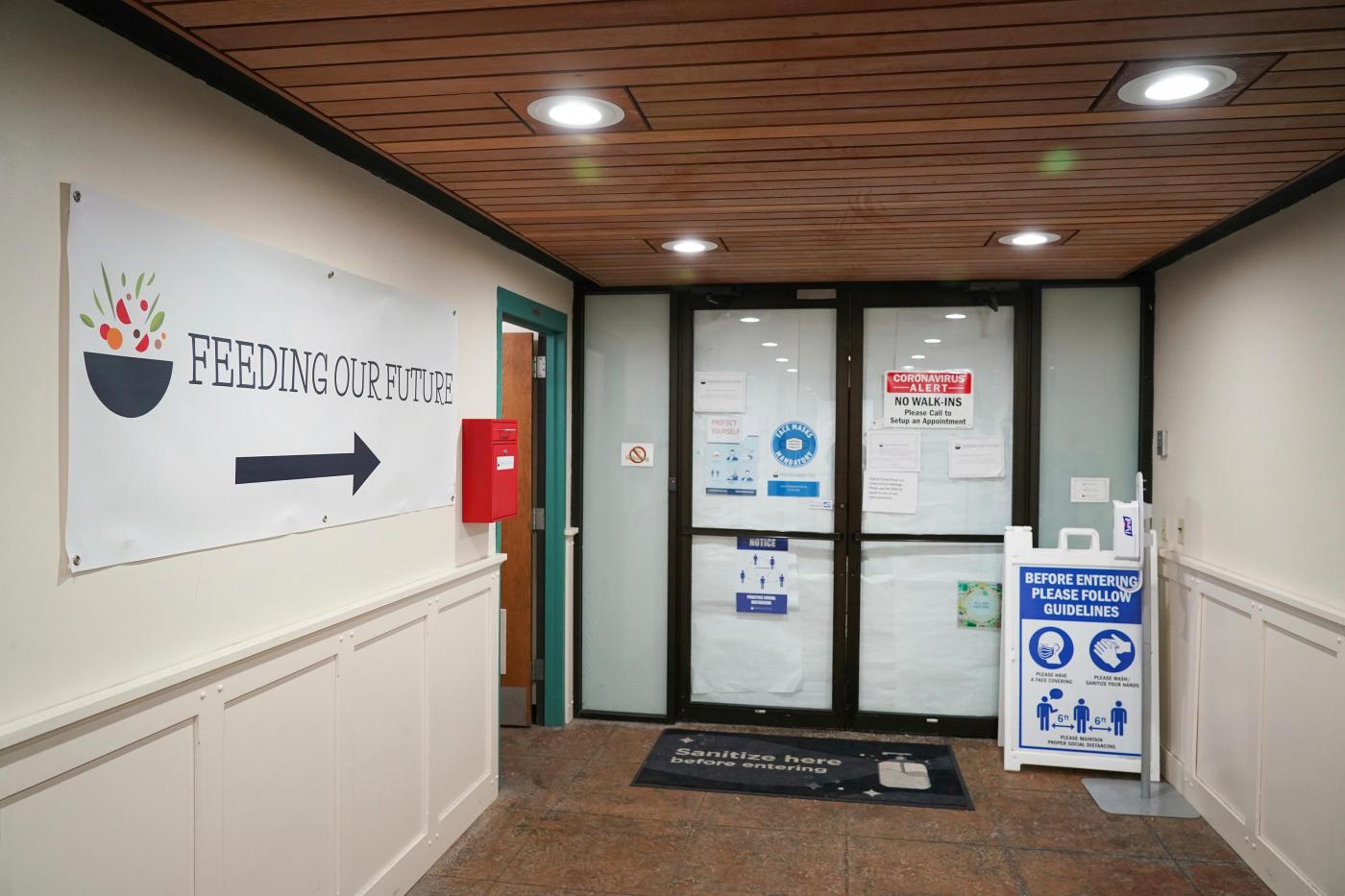
A recording of Minnesota Attorney General Keith Ellison’s meeting more than three years ago with a group including eventual defendants in the $250 million Feeding Our Future fraud case has House Republicans renewing calls for transparency at the Attorney General’s office.

During a December 2021 meeting, a group of East African businesses that lost government funding amid suspicion of fraud flexed their political fundraising abilities and asked Ellison to help push back against state agencies standing in their way, audio that recently came to light shows.

The meeting came just a month before the FBI raided Feeding Our Future’s offices in January 2022.

The 54-minute recording is unused evidence from the trial of Aimee Bock, the alleged ringleader of the $250 million Feeding Our Future fraud scheme, and was first published online this week by the conservative Minnesota think tank the Center of the American Experiment. But the recording was never presented at trial because no state government witnesses ended up testifying.

Aimee Bock, left, who founded and was executive director of the nonprofit Feeding Our Future, and her attorney Kenneth Udoibok enter the U.S. District Courthouse in Minneapolis before jury selection Feb. 3, 2025. (Ben Hovland / MPR News)

House Republicans and the think tank have suggested that Ellison’s telling the group he would check into their concerns with state officials conflicted with his duty to represent state government. They also point to later political contributions from an eventual defendant in the case to his campaign.

“The Attorney General must immediately release all public documents and correspondence related to his meetings and conversations with these individuals, and explain to the public why he felt it was necessary or appropriate to meet with them, let alone offer the support of his office,” said House Floor Leader Harry Niska, R-Ramsey.

Ellison’s office has claimed the attorney general himself was not aware of the ongoing dispute at the time, but that his office had been defending the state against Feeding Our Future in court.

Brian Evans, a spokesman for the Attorney General’s Office, said the recording showed Ellison acted appropriately during the meeting, despite “the Center for the American Experiment’s best efforts to smear Attorney General Ellison for partisan political reasons.”

“The Attorney General regularly meets with constituents, hears their concerns in good faith, and does his best to help people who need it, which is exactly what the recording of this meeting shows,” he said in a statement. “It is a shame that these fraudsters tried to exploit the Attorney General’s good faith engagement, but they were not successful.”

A little less than a month after the meeting, the FBI raided the offices of Feeding Our Future. Ellison’s office said it never acted on any of the group’s requests from the meeting and has said it has “no intention” of keeping funds contributed by someone tied to the meeting that was charged more than two years after the initial raid.

Federal authorities have charged 70 people in the case since September 2022. As of March, 37 had pleaded guilty, 7, including Bock, were convicted at trial, and two have been acquitted.

December 2021 meeting

In the recording, a group calling itself the Minnesota Minority Business Association pushes on Ellison to help them challenge state officials freezing reimbursements to meal sites, claiming agencies were discriminating against East Africans.

The Minnesota Department of Education attempted to freeze money going to rapidly growing meal sites that were reporting what officials saw as improbable levels of growth under looser rules during the pandemic.

However, in June 2021, a Ramsey County judge found the department in contempt and ordered it to continue providing Feeding Our Future reimbursements for meals — millions of which were never served, according to federal prosecutors.

Ellison spent much of the meeting asking the group questions about their issues, despite his office representing MDE against them.

“This is the first I’m really hearing about it,” Ellison said, telling the group his office has about 400 staff and that he doesn’t check on every single case they receive.

When someone on the recording mentions the Child and Adult Care Food Program, which provided the federal money the state was giving to Feeding Our Future, Ellison asked for an explanation.

“Wait a minute, what is that?”  Ellison asks.

At the meeting were soon-to-be federal fraud defendants in the Feeding Our Future case, including Selim Said, who was convicted at trial last month alongside alleged ringleader Bock and owned Safari Restaurant, one of the main meal sites in the case. Also present was Ikram Mohamed, who was indicted in February 2024.

Throughout the recorded conversation, the group repeatedly touted its potential for fundraising and offered financial support to Ellison’s campaign, though Ellison is never heard asking for contributions or engaging in discussion about taking money.

Less than two weeks after the meeting, Ellison received a $2,500 contribution from Gandi Mohamed, the brother of Ikram Mohamed, who was also charged last year, the Center of the American Experiment noted in its online article containing the audio.

Others present at the meeting also made contributions, though they haven’t been charged in the fraud case, according to the article.

Ellison’s office says it has returned contributions tied to other Feeding Our Future fraud defendants, and that his campaign has “has no intention of keeping the funds” from Gandi Mohamed, who was charged in February 2024.

In response to the group’s requests for help with challenging state agencies, Ellison first asked for information on which agencies and administrators were a problem for the group, and in which programs. He also asked for information on which meal provider nonprofits were struggling most so he could bring them to the attention of Education Department officials.

“I’ll call them in my office and demand some explanations,” he said.

Kenneth Udoibok, Bock’s defense attorney at the trial, said the reason they had considered using the recording as evidence during the trial was that it would help show that his client was “as surprised” as some state officials claimed they were by the fraud at Feeding Our Future.

But the recording was never presented at trial because no state government witnesses ended up testifying, Udoibok said.

Following the publication of the audio, House Republicans on Thursday attempted to reintroduce a bill they tried to pass earlier in the session which would open more investigative records at the Attorney General’s office — a move which they argue would boost transparency.

DFLers opposed that bill when it first came up in February, and it failed again in a tied party line vote as Republicans have 67 seats, requiring at least one member of the other party to join. House DFLers say they oppose the bill because it could reveal sensitive investigative data.

Related Articles


Proposed tax on social media platforms in Minnesota could raise over $300M


New MN office for missing, murdered Black women and girls aims to build awareness


MN House bill aims to assist families with child care costs


Push to release Sen. Nicole Mitchell arrest video gets new chance on appeal


St. Paul nonprofit pays $7.3M to turn Bandana Square hotel into emergency shelter

Anthony Edwards picks up 18th technical, could be suspended for Sunday’s finale

posted in: All news | 0

Anthony Edwards played with fire, and eventually got burnt.

The guard had numerous exchanges with officials in the first half of Friday’s tilt — and hung on the rim for numerous seconds after a dunk after he disagreed with a call and wasn’t “T’d” up — but finally the officials had enough, and gave Edwards a technical midway through the second quarter.

It’s especially significant because that’s Edwards’ 18th technical foul of the season. And, if it isn’t rescinded by the NBA, will result in another one-game suspension. That would mean Edwards would have to sit out Minnesota’s regular season finale on Sunday against Utah.

That’s a game the Wolves will likely need to win to secure a top-six seed in the Western Conference playoffs and dodge the play-in tournament.

Minnesota players and coaches pleaded with the officials immediately after the call was made, to no avail.

Minnesota figures to be able to beat the Jazz — who have every incentive to lose the game to maintain the best possible draft position — even without its star guard. Utah is sitting the majority of its notable, productive players down the stretch run of the season. But having Edwards on the floor would certainly give the Wolves’ a larger margin for error.

Edwards already missed a game after picking up his 16th technical foul in February. At that point, a player is suspended for another game for every two subsequent techs he receives. The count resets at the outset of the playoffs.

Related Articles


If the Wolves win out, who do they play? Every Western Conference playoff scenario (making a few assumptions)


Record-breaking third quarter propels Timberwolves big win in Memphis


Timberwolves must get off the mat, dust themselves off for game of the year


Timberwolves fall apart in fourth, blow 24-point lead in loss to Bucks


Jace Frederick: It’s time to learn about these Timberwolves

Here’s what some exporters in China say about Trump’s trade war

posted in: All news | 0

By NG HAN GUAN

YIWU, China (AP) — The trade war between the world’s two largest economies is escalating as China on Friday slapped a 125% tariff on U.S. goods in response to President Donald Trump’s 145% tariff on Chinese products.

Caught in the crosshairs are businesses that are part of the more than $582.4 billion trade between the countries, with Chinese exporters making up the bulk of that exchange.

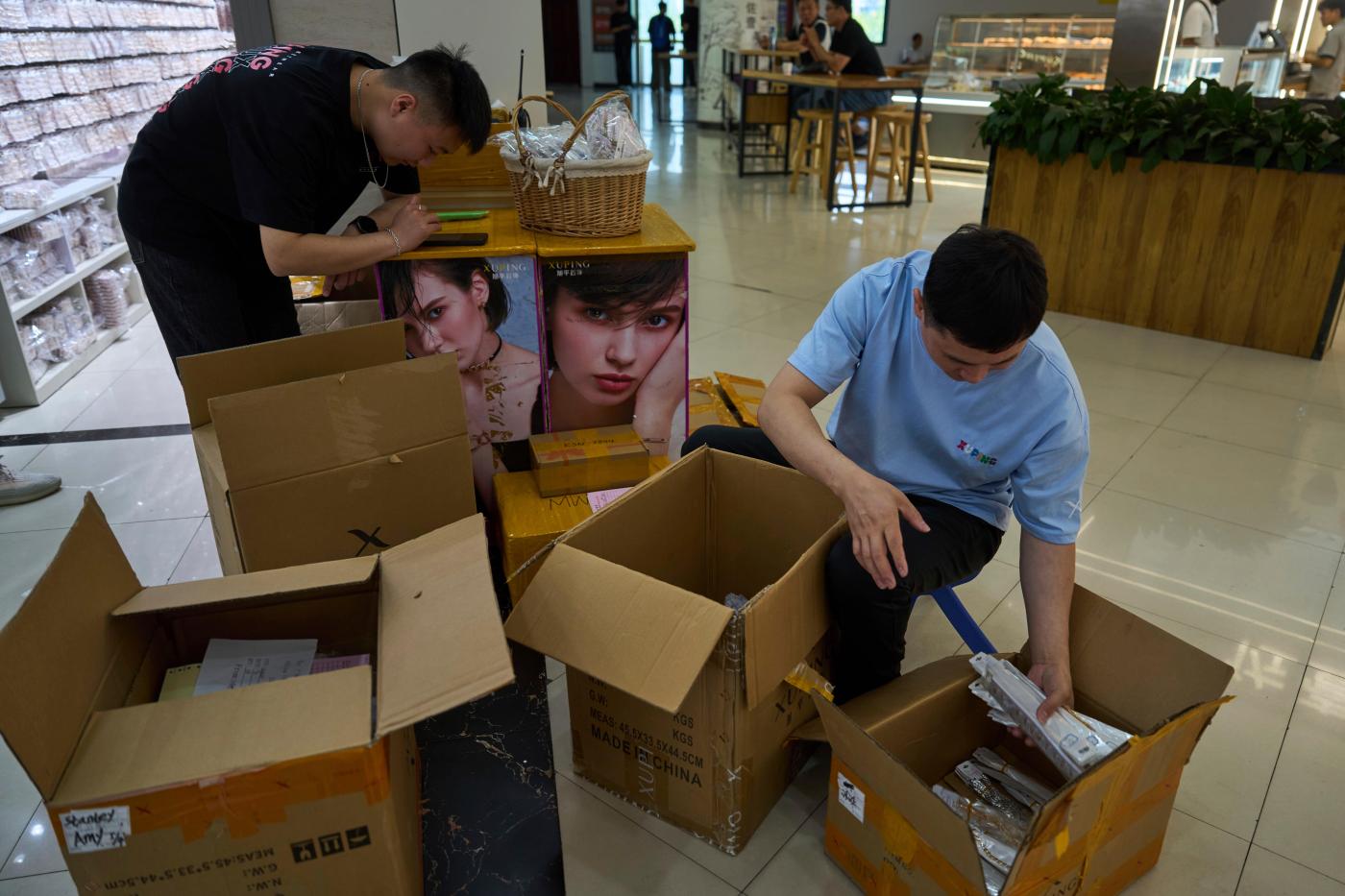
Here’s what some of them had to say. Most of them spoke in the eastern city of Yiwu, known as home to the world’s largest wholesale market:

Jiang Jiayu, owner of Yiwu Jiayu Festive Supplies Co.

American customers would normally be placing their Christmas orders at this time of year, she said, but right now, there is no sign of them. U.S. customers make up about 10% of Jiang’s business. She said she didn’t understand the purpose of Trump’s tariffs.

“Can the U.S. produce what China, or Yiwu is producing now? Ordinary people are the ones who will get hurt the most by the tariffs,” she said. “I don’t think he can continue his behavior for long.”

But she said she would rather pull out of the market completely than pay the hefty U.S. tariffs.

“At worst, we just quit,” she said. “We will not lose money just to keep this market.”

Wu Liying, owner of Xinyue Socks Co.

Wu runs a shop selling socks of all hues, printed with cartoon characters, stripes or Christmas-themed ornaments. She said she is yet to feel the impact from the new levies, but knows it is only a matter of time before overseas trade becomes more complicated.

Related Articles


Freak sell-off of ‘safe haven’ US bonds raises fear that confidence in America is fading


Irish privacy watchdog investigates Elon Musk’s X’s use of personal data to train Grok AI chatbot


Potential impact of Trump’s trade war on jobs and inflation sends US consumer sentiment plunging


US wholesale inflation fell last month as price pressures eased, but trade war clouds outlook


4 best money apps for teaching kids financial literacy

“Our clients will have no profit to make, and neither will we,” she said. “We are all in the business to make money, but if nobody makes money, the purpose of win-win cooperation will no longer exist.”

Margaret Zhuang, an employee in a kitchen supplies factory

“The tariffs are so high that it is the same if adding another 200%,” said Margaret Zhuang, an employee who handles foreign sales at a factory for wooden kitchen supplies in Dongyang in southern Guangzhou province.

Zhuang said her American client asked the company to stop manufacturing on Monday, when Trump raised the tariffs to 125%, even after paying a 30% deposit for the order.

Comparing the trade war to Trump’s first presidency in 2018, Zhuang said things are much worse this time around, because China’s economy is in a slump. She’s worried that she and her 40 colleagues will have no income when work stops, and that she could lose her job.

Zhuang used to hope the U.S. and China would negotiate to “give each other a lifeline.”

“But now we all know, the U.S. just want to break it off,” she said.

Ding Dandan, Christmas decorations seller

An exporter of Christmas decorations, Ding Dandan believes U.S. customers will still buy from Yiwu, at least in the short term, because they have nowhere else to go.

“Do you know 90% of Christmas-related goods in the U.S. are from China?” said Ding, who often sells to the U.S. market via intermediaries in third countries such as Mexico.

“If China does not export them, the U.S. will not be able to import such large amount of goods from elsewhere, right?”

Associated Press journalists Wayne Zhang in Yiwu, China, Huizhong Wu in Bangkok and Fu Ting in Washington contributed to this report.

Isaac Howard bringing the Hobey to Hudson

posted in: All news | 0

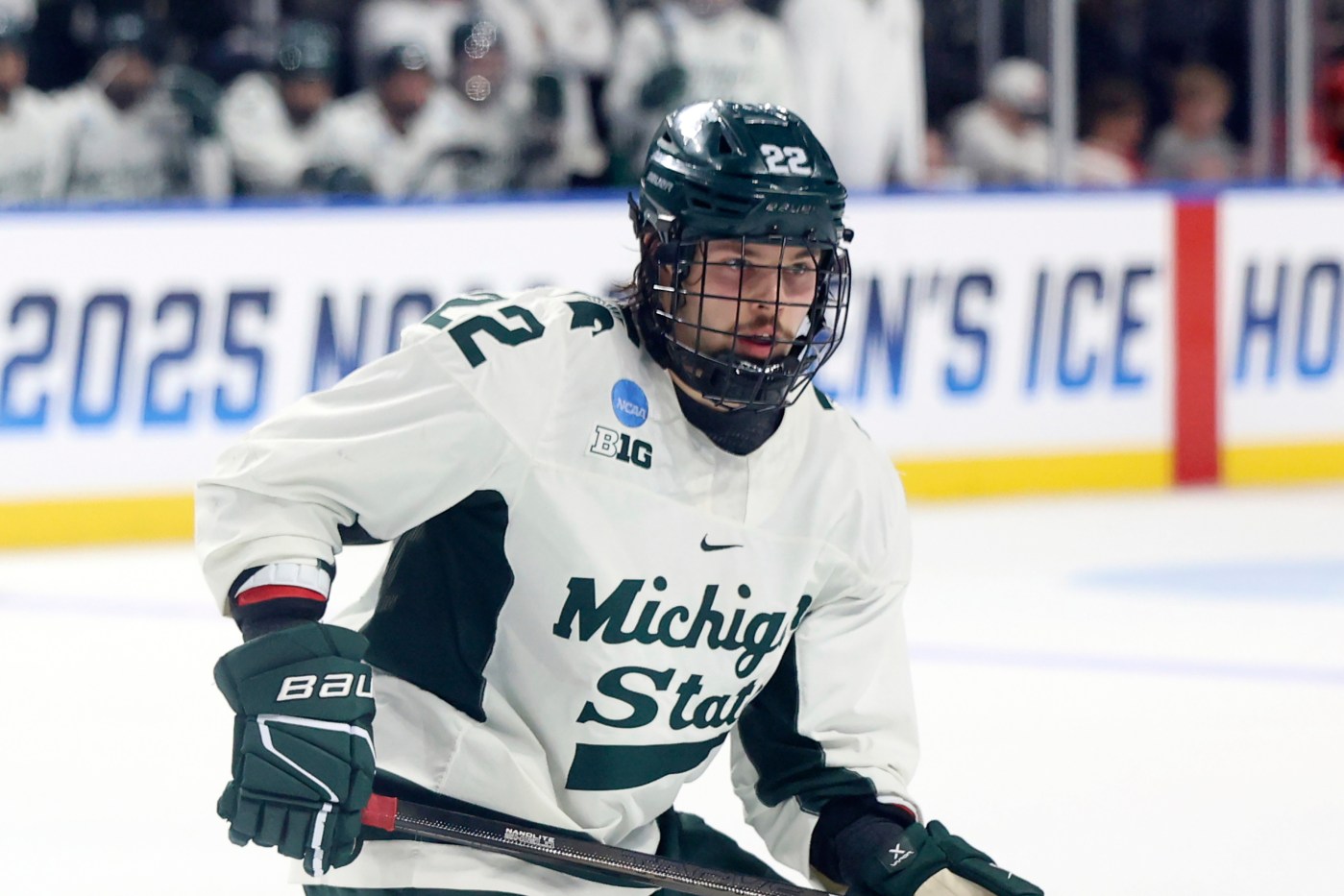
Isaac Howard has never done things quietly. That includes his introduction to much of the hockey world in 2022, when he arrived at the NHL Draft decked out in a flashy white suit and declared himself the best-looking player available just in time for the Tampa Bay Lightning to grab him in the first round.

So, it was a bit of a surprise on Friday at a theater in downtown St. Louis when he reservedly and humbly accepted the Hobey Baker Award given annually to college hockey’s top player.

Originally from Hudson, Wis., the Michigan State junior was named the Big Ten’s most valuable player this season after helping the Spartans capture their second consecutive conference title. He cut his hockey teeth at Shattuck-St. Mary’s in Faribault and with USA Hockey’s National Team Development Program prior to college hockey.

On stage at the theater adjacent to Enterprise Center, where Western Michigan and Boston University will play for the NCAA title on Saturday night, Howard singled out Spartans head coach Adam Nightingale, who worked with Howard at MSU and with the NTDP before that.

“You taking me into Michigan State was awesome,” Howard said. “You’ve been a great role model for me, my favorite coach, and I can’t (express) how important you’ve been to me. And also to the boys watching, you guys make it an awesome place to play. I absolutely love being a Michigan State Spartan for life.

“It’s an individual award, but it comes from teammates, linemates — it’s a collective group. So, I couldn’t do it alone.”

Howard, 21, played his first college season at Minnesota Duluth before transferring to Michigan State two years ago. He is the first Spartans player to win the trophy since hall of fame goalie Ryan Miller in 2001. As he piled up points and wins this season, the Spartans promoted Howard’s candidacy for the Hobey with t-shirts and other merchandise bearing the slogan “Be Like Ike” and showing one of his flashy on-ice celebrations.

“I’m excited and I’m proud,” Nightingale said. “It’s pretty rare that you get to coach a kid like this for four years. … From a coach’s perspective, seeing a kid that’s that committed and doing what he does on a daily basis, it’s a culmination to a moment like this.”

Howard put up 26 goals and 26 assists in 37 games for the Spartans this season, and recently announced he will return to Michigan State for his senior season.

Runners up for the award were Boston College forward Ryan Leonard and Denver defenseman Zeev Buium. Picked by the Wild 12th overall in the 2024 NHL Draft, Buium is expected to sign with Minnesota in the coming days and could join the team for their Monday practice in St. Paul.

The Hobey Baker Award, named after a legendary Princeton hockey player and aviator killed in World War I, was created by the now-defunct Decathlon Athletic Club in Bloomington in 1981 and first awarded to Gophers forward Neal Broten.

Among the other award recipients on Friday at the Frozen Four were:

– Boston College sophomore Jacob Fowler won the Mike Richter Award, given to college hockey’s top goalie.

– Michigan defenseman Jacob Truscott won the Derek Hines Unsung Hero Award, which honors a former Army West Point player killed in Afghanistan 20 years ago.

— Retired coach Dick Umilie was named the Hobey Baker Legend of College hockey after leading New Hampshire to the Frozen Four on four occasions and coaching 1999 Hobey winner Jason Krog.

— Syracuse forward Sarah Thompson won the Hockey Humanitarian Award, which honors players’ community service efforts in addition to their on-ice work.

— Boston University defenseman Cole Hutson won the Tim Taylor Rookie of the Year Award, given to college hockey’s top first-year player.

Howard becomes the third Wisconsin native to win the Hobey in its 45-year history, following Lane MacDonald (Harvard, 1989) and Cole Caufield (Wisconsin, 2021)

Related Articles


Gophers wanted Colorado State transfer Kyan Evans, but North Carolina offered millions


Gophers add center via transfer portal, Robert Vaihola from San Jose State


Gophers star safety Koi Perich’s role on offense is more than ‘a gadget’


Gophers football: New defensive coordinator Danny Collins wants ‘HAVOC’


Resilient Florida relies on defense and playmakers to overcome frustration in NCAA title game