Burnsville graduation still scheduled on major Islamic holiday, despite objections

posted in: All news | 0

Burnsville High School notified students and families Wednesday that its graduation date will remain on June 6, despite religious conflicts for some students and their families.

Community members urged the school board last week to reschedule graduation as it coincides with Eid al-Adha, one of the two most important Islamic holidays, but after hearing from the community the June 6 ceremony will continue as planned, according to a note sent to students and families from ISD 191 Superintendent Theresa Battle and BHS Principal Jesús Sandoval.

“While our goal in planning an academic calendar is to avoid major conflicts, at this time it’s not feasible to change the date of graduation to avoid these conflicts. In addition, it’s not clear that adding a second graduation ceremony would result in many students participating who wouldn’t otherwise participate in a Friday ceremony,” read the note.

The decision, which was made by Battle in consultation with the school board, took into consideration the “difficulty in rescheduling services like photography and livestreaming the ceremony, and other logistical concerns,” said Aaron Tinklenberg, communications director for the district, in an email Thursday.

“It’s disappointing,” Jaylani Hussein, executive director of the Minnesota Chapter of the Council on American-Islamic Relations, said of the decision, calling it “another unnecessary burden on Muslims.”

Hussein also noted that this scheduling conflict only affects one group of seniors as Eid will likely not fall near a graduation date for another 30+ years. “There is absolutely no requirement for them to hold (graduation) on June 6,” he said.

Eid al-Adha, the second of the two most important festivals in Islam, commemorates the sacrifice made by Prophet Ibrahim. Generally a three-day celebration, the dates of Eid al-Adha vary based on moon sightings. This year it is expected to occur June 6 to June 10, according to Islamic Relief Worldwide, a faith-based development agency.

Muslims celebrate Eid al-Adha, also known as the “Feast of Sacrifice,” with special prayers and by giving gifts and food to the poor. The other major festival, Eid al-Fitr, celebrating the end of Ramadan fasting, was observed at the end of March.

Second ceremony considered

At a listening session last week that preceded a school board meeting, community members spoke out against the planned graduation date.

“This issue isn’t just about ISD 191, it’s about who we are as a community,” said Salma Hussein, the principal of Gideon Pond Elementary School in Burnsville. “Rescheduling graduation to recognize Eid sends a powerful message that every student matters.”

Tinklenberg said Burnsville’s June 6 graduation date has been set for nearly two years and noted the district does not keep track of students’ religious identifications.

Tinklenberg said the district had heard from Muslim students and families “who preferred we kept graduation on June 6.”

Burnsville seniors were asked Monday if they’d be more likely to attend graduation if a second ceremony was scheduled on Monday, June 2. Of the roughly 200 responses, 76% said they’d be more likely to attend June 6 and 12% said June 2, Tinklenberg said.

ISD 191 serves about 8,000 students, 14% of whom speak Somali at home, the Sahan Journal reported in 2022. More than 99% of Somalia’s population are Sunni Muslim, according to a 2023 report from the U.S. State Department.

Eden Prairie rescheduled

Burnsville was not the first school to hear this particular concern.

Related Articles


Lakeville Area Schools OKs $30,000 settlement on Black Lives Matter posters


South St. Paul murder charge: Man called 911 to say he shot roommate, 72


Police say one man dead, another arrested in South St. Paul shooting


South St. Paul group launches petition for Pam Bakken recall election


MN robotics teams preparing to compete in the big one: FIRST Championship

Eden Prairie Schools originally scheduled its graduation for June 7, but reconsidered after hearing similar concerns, as reported by Eden Prairie Local News, which also noted that an estimated 20% of Eden Prairie’s high school students are Muslim.

After sending out three alternate dates, Eden Prairie rescheduled its ceremony to June 4, which was chosen by 84% of seniors, according to the school.

“As we create future calendars, the district will continue to solicit input from a variety of sources with the goal of supporting equitable access and high participation among students for regular school days and major events like graduation,” the note to Burnsville families said.

Ending 30 Years of Resistance, Trump and Abbott Break the ‘People’s House’

posted in: All news | 0

The morning of the Texas House vote on school vouchers Wednesday included, among other last-minute maneuvering, a phone call from President Donald Trump. 

“It’s one of the most important votes you’ve ever taken,” Trump told the House GOP caucus in a meeting that Governor Greg Abbott had called. 

Standing around Abbott, House Republicans listened as Trump rambled on about Texans, freedom, families, and how he would return education policy back to the states. He then promised to back them if they voted for school vouchers: “I’ll be endorsing you. … Everybody that I endorsed, every single person that I endorsed in the state won.” 

And with that, Abbott assured passage of his pet project: a universal school voucher program. In an 86-63 vote, with only two Republicans opposing—Representative Dade Phelan and Representative Gary VanDeaver—the House passed Senate Bill 2 amid widespread opposition from Texans across the political spectrum. From there, the bill will go to the Senate, which could quibble with some changes but is all but certain to ultimately move the measure to Abbott’s desk.

Since deciding to make school vouchers his top priority for the 2023 legislative session, Abbott has pulled out all the stops to ram the proposal through the House, where a bipartisan coalition of Democrats and rural Republicans has for 30 years defeated such efforts. During the last Legislature, Abbott tied school vouchers to a $7.6 billion school funding bill. He dragged House members through an onslaught of special sessions, but still he failed when 21 Republicans joined Democrats to kill the bill. Abbott then launched a targeted primary offensive in 2024—waged through deceptive ads on unrelated subjects—that ultimately ousted 9 Republican House incumbents who’d held their ground, replacing them with more hard-right candidates, a revenge campaign partly bankrolled by $12 million from billionaire Pennsylvania hedge-fund investor Jeff Yass. 

Claiming a new pro-voucher majority in the Texas House, Abbott has insisted for the past several months that his top political priority was as good as passed. But, earlier this week, support grew within his own party for a Hail Mary move to kick the issue onto a statewide ballot later this year. Abbott called some House Republicans into his office Tuesday “to threaten vetoes of their unrelated bills if any of them offer amendments or vote for changes to the bill on the floor,” Quorum Report revealed. 

Mary Lowe, part of a conservative anti-voucher group called Families Engaged, told the Texas Observer: “The governor showed us that he will be punitive to anyone who doesn’t fall in line with what he orders.” She said she had voted for Trump, but “He does not understand or respect state sovereignty.” 

Charles Johnson, a North Texas pastor and director of Pastors for Texas Children, which has fought against school vouchers since 1995, said: “Governor Abbott and President Donald Trump may have bullied lawmakers behind closed doors, but they cannot silence the people. They blocked a proposal to put vouchers on the ballot because they know it would fail.”

Zeph Capo, the president of the Texas American Federation of Teachers, added in a statement that “Greg Abbott relied on a last ditch phone call from Donald Trump to bully Republican lawmakers to fall in line.” 

All day long Wednesday, the Capitol building was swarmed with Texans like Lowe who drove across the state to urge lawmakers to let Texas voters decide the school vouchers issue in the fall. They wore red and hoisted posters and banners that read, “Let the People Vote,” “Students Over Billionaires,” and “Don’t mess with Texas Public Schools.” Standing a few feet outside the House gallery, Angelica Rios held a sign that said, “We the people say no to school vouchers.” Rios told the Observer she had taken time off of work because “We have a voice too.” Jamie Lavarta, who worked as a school paraprofessional, drove from North Texas to tell legislators, “It should be a vote for the people.” 

Leading up to the decisive vote, opposition had been growing. Three weeks prior, the House Public Education Committee heard nearly 24 hours of public testimony on the voucher proposal from around 700 people, 70 percent opposed to the bill. In a March poll, two-thirds of Texans surveyed said they opposed “A private school voucher program that would take tax dollars away from public schools to subsidize a student’s private school education.” 

Lowe said members of her group had delivered to legislators water bottles wrapped in labels that read: “Liquid Courage to Vote for Amendment on SB2 to Bring it to the People.” 

But, by the evening, Lowe said, “There is no courage.”

The previous day, there had been as many as 85 House members who supported the ballot measure move, Quorum Report wrote. But, by Wednesday evening, it became clear the House would pass the school voucher bill when only one Republican, former House Speaker Dade Phelan, voted with the Democratic minority for Representative James Talarico’s amendment to bring the issue to a statewide vote. 

Talarico told House members he had decided to carry the amendment because Abbott “threatened to make their [GOP members’] primaries a bloodbath.” 

Noting that there are multiple precedents for putting proposals that are not constitutional amendments (which always require voter approval) to a popular referendum, Talarico said, “When an issue is going to have such an impact, such a historic impact on such a critical service, like public education, when an issue may raise, and I think will raise people’s property taxes across the state, then that issue, especially when there is bipartisan opposition, especially when there is historical controversy about the issue … this body is justified in sending this issue to the voters for their approval.” 

Talarico reminded members, “The last time I checked, this was still the people’s house, not the governor’s house. All of that is at risk with this vote on this amendment.”

Past midnight, the voucher bill author, Salado Republican Brad Buckley, continued to kill off Democrats’ efforts to limit spending on the program and restrict eligibility to low- and middle-income students by successfully tabling their amendments to the bill. 

“The people of Texas, working-class families, deserve to see us fight and debate on the issues, and unfortunately, when we table these motions, we’re also silencing debate and really shutting down democracy,” said Democratic Representative Ana-María Rodríguez Ramos.

Democratic Representative Vikki Goodwin added, “It’s almost as though some members have been told how to vote, and they aren’t looking at the policy. They’re just following directions.” 

The bill finally passed, with ease, at 2 a.m.

The House has appropriated $1 billion for the first biennium of the voucher program, but the bill’s fiscal note estimates the net cost will grow past $6 billion in the second biennium. Three percent of funds would go to the Comptroller, and five percent would go to private vendors who manage the program. 

While the state currently has a budget surplus of $24 billion, Democrats warned that ballooning costs to the general revenue fund may affect public school funding if the economy faces a recession. Impending changes for federal funding to school districts will also have an impact. Democratic Representative Donna Howard’s proposed amendment to make up future public school funding shortfalls with money appropriated for private school vouchers was rejected. 

SIGN UP FOR TEXAS OBSERVER EMAILS

Get our latest in-depth reporting straight to your inbox.

Each child in the program would receive 85 percent of the estimated statewide average of state and local funding for students—$10,330 per student in the program’s first year, growing to $10,889 by 2030, per the fiscal note. Homeschool students would receive $2,000, and students with disabilities in private school would receive up to $30,000, though private schools are not mandated to enroll or provide services for students with disabilities. The bill caps the portion of program funds that can go to families at 500 percent or more of the federal poverty level at 20 percent, and it deprioritizes those families compared to those with lower incomes or whose kids have disabilities. Democratic Representative John Bucy’s amendment to simply exclude high-income families was dismissed.

According to Josh Cowen, a Michigan State University professor, data collected from states with a universal voucher program shows only a quarter of participants were previously in public schools. “The rest had either never been in public school because they were kindergartners, or, more commonly, were coming into the voucher system from a private school,” Cowen said.

House Democratic Caucus leader Gene Wu denounced the bill, saying, “When we say that this bill is about helping the needy, helping the poor, helping people who are living paycheck to paycheck, this is not what this bill does. This bill is a trough, a feeding trough for the rich.” 

In a statement, Wu said, “Today, Texas House Republicans chose to bow to a call from Donald Trump rather than the call of Texans for a public vote. …This is a disgraceful day for freedom and the voice of the people of Texas.”

The post Ending 30 Years of Resistance, Trump and Abbott Break the ‘People’s House’ appeared first on The Texas Observer.

Appeals court calls Trump administration’s defiance over mistakenly deported man ‘shocking’

posted in: All news | 0

By MICHAEL KUNZELMAN, Associated Press

WASHINGTON (AP) — The Trump administration’s claim that it can’t do anything to free Kilmar Abrego Garcia from an El Salvador prison and return him to the U.S. “should be shocking,” a federal appeals court said Thursday in a scathing ruling in favor of the Maryland man.

A three-judge panel from the 4th U.S. Circuit Court of Appeals unanimously refused to suspend a judge’s decision to order sworn testimony by Trump administration officials to determine if they complied with her instruction to facilitate Abrego Garcia’s return.

Related Articles


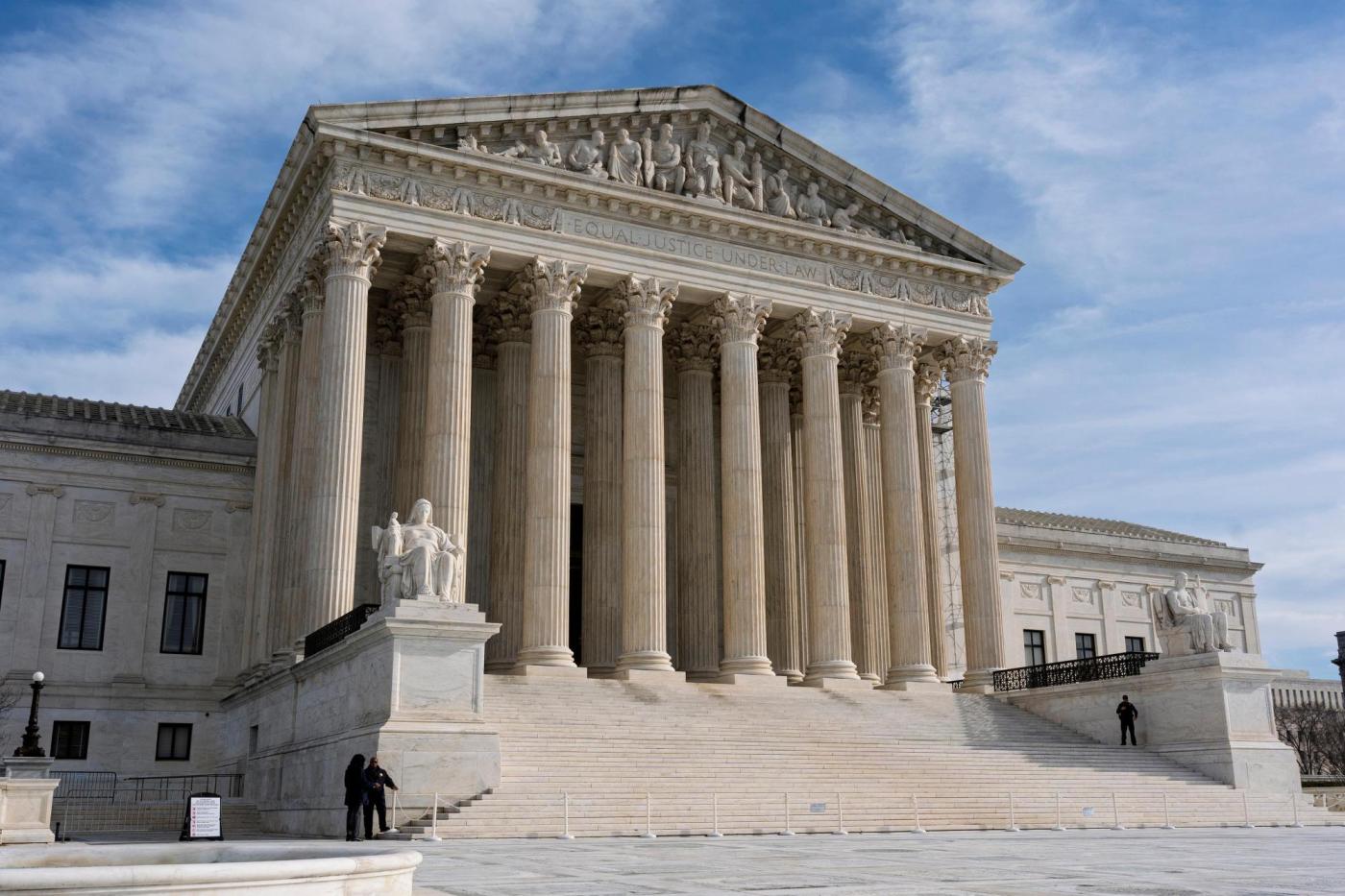
Supreme Court keeps hold on Trump’s restrictions on birthright citizenship but sets May arguments


Federal judge will hear arguments as groups try to block Trump’s executive order on elections


Trump says he’s in ‘no rush’ to end tariffs as he holds talks with Italy’s Meloni


How war, money and the quest for discovery entwined the US government and universities


Draft budget plan proposes deep cuts across federal health programs

The panel said Republican President Donald Trump’s government is “asserting a right to stash away residents of this country in foreign prisons without the semblance of due process that is the foundation of our constitutional order.”

“Further, it claims in essence that because it has rid itself of custody that there is nothing that can be done. This should be shocking not only to judges, but to the intuitive sense of liberty that Americans far removed from courthouses still hold dear,” they wrote.

The Justice Department appealed after U.S. District Judge Paula Xinis on Tuesday ordered sworn testimony by at least four officials who work for U.S. Immigration and Customs Enforcement, the Department of Homeland Security and the State Department.

The 4th Circuit panel unanimously denied the government’s request for a stay of Xinis’ order while they appeal. Its opinion says the executive and judicial branches of the federal government “come too close to grinding irrevocably against one another in a conflict that promises to diminish both.”

“This is a losing proposition all around,” they wrote. The Judiciary will lose much from the constant intimations of its illegitimacy, to which by dent of custom and detachment we can only sparingly reply. The Executive will lose much from a public perception of its lawlessness and all of its attendant contagions.”

Aaron Rodgers waiting on Vikings? ‘Not accurate,’ he says

posted in: All news | 0

Aaron Rodgers joined “The Pat McAfee Show” on Thursday afternoon, live from his home in Malibu, Calif. It marked the first time the future Hall of Fame quarterback has spoken publicly this offseason with his future still very much up in the air.

The appearance from Rodgers spanned roughly 45 minutes and he covered a wide variety of topics, including a meeting with the New York Jets that went quickly went sideways, a conversation with the New York Giants that went well, and a visit with the Pittsburgh Steelers that he tried to keep under wraps as best he could.

There wasn’t much mention of the Vikings aside from the fact that Rodgers confirmed he had some discussions with Kevin O’Connell.

“We’ve got a great friendship,” said Rodgers, who has known O’Connell for nearly 20 years, dating back to when they used to work out together in San Diego. “We’ve talked outside of this offseason. We keep in touch. We’ve got good communication.”

The discussions with Rodgers were already confirmed by O’Connell this month at NFL owners meetings before he quickly shifted the focus to J.J. McCarthy and his future with the Vikings.

“We were able to have some conversations on the hunt to always improve our football team,” O’Connell said at the time. “You’re constantly acknowledging and evaluating all of the opportunities that may be out there.”

There were some other interesting nuggets that Rodgers shed light on. He denied a recent report that suggested he pitched the Vikings on the idea of being a willing mentor for McCarthy if he signed. He also pushed back on a notion that he is waiting to see if the Vikings change their mind down the road.

“No,” Rodgers said. “That’s not accurate.”

In fact, Rodgers made clear that the only reason he hasn’t made a decision about his future is because some people in his inner circle are dealing with some issues, and that is where he’s been focusing most of his attention.

“I’m not holding anybody hostage, and I really want to emphasize that,” Rodgers said. “I’m just going through a lot in my personal life that has to take precedence at this point.”

Interestingly, asked by McAfee if potentially hanging up the cleats for good was on the table, Rodgers replied, “I’m open to anything and attached to nothing. So, yeah, retirement still could be a possibility for me.”

Related Articles


Everything you need to know about the Vikings ahead of the 2025 NFL Draft


Charley Walters: Vikings’ backup definitely won’t be Rodgers


Dates set for Vikings’ OTAs, mandatory minicamp


Five takeaways from Vikings coach Kevin O’Connell at NFL owners meetings


Vikings want to strike a deal with general manager Kwesi Adofo-Mensah