
Some plants cause more suffering than others for gardeners with pollen allergies

posted in: All news | 0

By JESSICA DAMIANO, Associated Press

For many, the return of the spring garden brings with it a sneezy, itchy, foggy-headed feeling that hits the moment a warm breeze stirs up. I’m fortunate not to suffer much, but my blue car turned a chartreuse shade of yellow last week, and a $32 car wash provided results that lasted only two hours. Sigh.

These seasonal allergies often go by the old-fashioned name hay fever, but it’s not the hay that causes misery for so many, it’s the pollen.

This July 9, 2023, image provided by Jessica Damiano shows a zinnia flower in bloom. (Jessica Damoano Via AP)

And not just any pollen, but the nearly weightless kind that floats up our noses and engages our immune systems. Trees, weeds, grasses and even some of our favorite flowers are culprits.

But pollen isn’t all bad. It’s essential to the reproduction of plants, the survival of insects and the entire food web. We humans could not survive without it, so we absolutely shouldn’t avoid high-pollen plants as a general rule. However, if you’re an allergy sufferer who has had to forgo planting a garden due to health reasons, plants that release the least pollen may enable you to smell the flowers.

Plants that might bring sneezes

Allergy-inducing plants are those that rely on wind rather than bees or butterflies to spread their pollen. Ragweed, which strikes in late summer and early fall, gets the most notoriety, but its springtime counterparts can be at least as irritating.

Related Articles


Give salt-and-pepper pork chops a crunchy coating without the deep frying


5 weeknight dishes: Turkey meatballs so tender you can cut them with a fork


Concert review: Katy Perry offers garish, migraine-inducing spectacle at Target Center


Evanescence will headline the 93X Family Reunion concert at Xcel Energy Center


Willie Nelson, Neil Young and John Mellencamp to play first Farm Aid in Minnesota

Trees most likely to cause symptoms include birch (Betula), catawba (Catalba), cypress (Cupressus), elm (Ulmus), hickory/pecan (Carya), oak (Quercus), sycamore (Platanus) and walnut (Juglans), according to the Ogren Plant Allergy Scale (OPALS), created by horticulturist Thomas Ogren and published in his 2020 book, “The Allergy-Fighting Garden.”

Palm trees, too — but only the males. In fact, female trees don’t produce pollen at all, so seek them out when possible.

Grasses can irritate eyes and sinuses, too. The scale ranks Bermuda (except sterile male varieties), Johnson, Kentucky, orchard, sweet vernal and timothy grasses among the highest for allergens.

Weeds like ragweed, curly dock, lamb’s quarters, pigweed, plantain, sheep sorrel and sagebrush are also big pollen producers, Ogren found.

Not all plants are irritating to allergy sufferers

On the other hand, plants with “double” flowers or heavier pollen that doesn’t travel far are less likely to release much pollen.

Among trees, apricot (Prunus armeniaca), fig (Ficus), fir (Abies), fruiting pear (Pyrus), fruiting plum (Prunus domestica, Prunus insititia), redbud (Cerus), serviceberry (Amelanchier laevis), female ash (Fraxinus), female box elder (Acer negundo), female cottonwood/poplar (Populus), female maple (Acer), female palm (Arecaceae) and female willow (Salix) are easier on the respiratory system.

This June 3, 2023, image provided by Jessica Damiano shows a rose bush in bloom. Roses are among the flowers least likely to cause seasonal allergy symptoms. (Jessica Damiano via AP)

St. Augustine and sterile male Bermuda are safer bets in the grass department.

As for flowers, you’ve got options: Begonia, female clematis, columbine, crocus, daffodil, delphinium, hibiscus, impatiens, iris, bird of paradise, pansy, petunia, phlox, poppy, snapdragon, tulip, verbena and zinnia are friends. Roses, too — especially tightly packed, dense-petaled varieties, which exude even less pollen than those with single or semi-double flowers (rose allergies are more often fragrance-related than due to pollen, according to Ogren).

This March 19, 2024, image provided by Jessica Damiano shows daffodils in full bloom. Daffodils are among the flowers least likely to cause seasonal allergy symptoms. (Jessica Damiano via AP)

And if you suffer from seasonal allergies, keeping windows closed and getting someone else to mow the lawn will also help to nip your symptoms in the bud.

Jessica Damiano writes weekly gardening columns for the AP and publishes the award-winning Weekly Dirt Newsletter. You can sign up here for weekly gardening tips and advice.

Give salt-and-pepper pork chops a crunchy coating without the deep frying

posted in: All news | 0

By CHRISTOPHER KIMBALL, Associated Press

The salt-and-pepper treatment is a Cantonese technique that can be applied to give almost any meat, seafood or tofu a crunchy exterior and tongue-tingling flavor.

The protein typically is deep-fried, but in this recipe from our cookbook “Milk Street 365: The All-Purpose Cookbook for Every Day of the Year,” we opt to pan-fry pork that we first dust in cornstarch seasoned generously with Sichuan pepper, black pepper and cayenne.

Related Articles


5 weeknight dishes: Turkey meatballs so tender you can cut them with a fork


St. Anthony Park cafe Hey Bear to shutter abruptly over rent dispute with landlord


Burnsville Cub to celebrate revamped grocery store with fanfare


The innovative ice-cream makers at Salt & Straw serve up secrets and recipes in a new cookbook


Budget meal: One-pot spaghetti makes inexpensive weeknight cooking a cinch

The starch granules swell when they come in contact with moisture released by the pork as it cooks; as the water evaporates, the starch settles into a rigid, locked network, creating a crunchy coating.

In a classic salt-and-pepper dish, chilies and garlic are quickly fried and tossed with the cooked protein for big, bold, in-your-face flavors. We, however, finish the pork with a fresh, punchy, uncooked mix of sliced scallions, chopped cilantro, minced chilies, rice vinegar and grated ginger. The easiest way to grind the tongue-tingling Sichuan peppercorns for this recipe is in an electric spice grinder.

Don’t use thick-cut or bone-in pork chops for this recipe. Look for boneless pork loin chops that are ¼ to ½ inch thick. They sometimes are called pork cutlets. Serve with steamed jasmine rice.

Salt-and-Pepper Pork Chops with Spicy Scallions

This image released by Milk Street shows a recipe for salt-and-pepper pork chops with spicy scallions. (Milk Street via AP)

Start to finish: 45 minutes

Servings: 4

Ingredients:

1 bunch scallions, thinly sliced

1 cup lightly packed fresh cilantro, roughly chopped

1 Fresno or jalapeño chili, stemmed, seeded and minced

2 tablespoons unseasoned rice vinegar

1 tablespoon finely grated fresh ginger

Kosher salt and ground black pepper

3 tablespoons cornstarch

1 tablespoon Sichuan peppercorns, finely ground

½ to 1 teaspoon cayenne pepper

½ teaspoon Chinese five-spice powder

8 boneless (about 1½ pounds) thin-cut pork loin chops/cutlets (¼ to ½ inch thick), patted dry

⅓ cup grapeseed or other neutral oil

Directions:

In a medium bowl, toss together the scallions, cilantro, chili, vinegar, ginger and ¼ teaspoon salt; set aside. In a wide, shallow dish, mix together the cornstarch, Sichuan pepper, cayenne pepper, five-spice, 2 teaspoons black pepper and 1 teaspoon salt. Dredge the cutlets in the cornstarch mixture, turning to coat both sides and pressing so the mixture adheres, then transfer to a large plate, stacking or shingling as needed.
In a 12-inch nonstick skillet over medium-high, heat the oil until barely smoking. Add half of the cutlets and cook until browned on the bottoms, 2 to 3 minutes. Using tongs, flip the cutlets and cook until golden brown on the second sides, about 1 minute. Transfer to a platter and tent with foil. Cook the remaining cutlets in the same way, using the oil remaining in the skillet. Spoon the scallion-cilantro mixture onto the chops and serve.

EDITOR’S NOTE: For more recipes, go to Christopher Kimball’s Milk Street at 177milkstreet.com/ap

What to expect at RFK Jr.’s first Senate hearing as health secretary

posted in: All news | 0

By AMANDA SEITZ, Associated Press

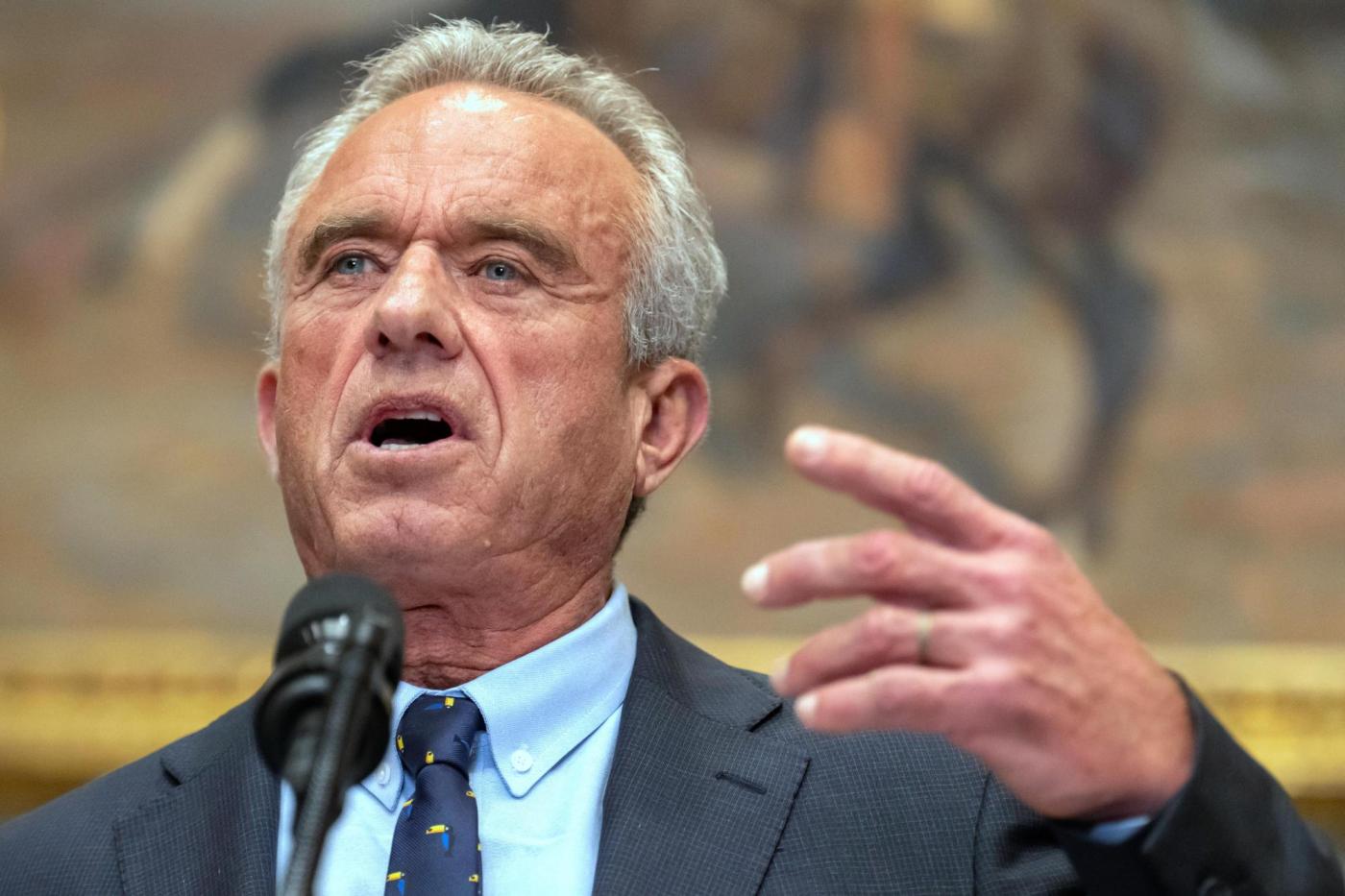
WASHINGTON (AP) — Republican Sen. Bill Cassidy wanted an assurance from Robert F. Kennedy Jr. before he would vote to put him in charge of the nation’s $1.7 trillion health department.

Kennedy’s history of promoting conspiracy theories or misspeaking about vaccines alarmed Cassidy, he said during a confirmation hearing earlier this year.

FILE – Sen. Bill Cassidy, R-La., votes aye at the final moment as the Senate Finance Committee holds a roll call vote to approve the nomination of Robert F. Kennedy Jr. to lead the Health and Human Services Department, at the Capitol in Washington, Feb. 4, 2025. (AP Photo/J. Scott Applewhite, File)

So, the Louisiana senator asked: “Can I trust that that is now in the past?”

Kennedy didn’t give a direct answer that day. Now three months into the job, however, Kennedy’s habit of casting doubts on vaccines has returned in interviews on television shows, public speeches and social media posts.

Kennedy will make his first appearance as health secretary before Cassidy’s powerful Senate health committee on Wednesday, when he’s expected to face intense scrutiny about the thousands of job he’s eliminated at the Department of Health and Human Services, the steep cuts he’s made to vaccination campaigns and his response to a measles outbreak that’s sickened 1,000 people.

He will speak about the agency’s budget request for the year, which includes a $500 million boost for his “Make America Healthy Again” initiative to promote nutrition and healthier lifestyles. The proposed budget also makes deep cuts, including to infectious disease prevention, maternal health and preschool programs.

Related Articles


House works into the night as Republicans push ahead on Trump’s big bill


Trump tells Gulf leaders Iran must cease support of proxy groups as part of any nuclear deal


Trump meets with Syria’s insurgent-turned-leader in Saudi Arabia


Other voices: DOGE’s damage makes way for serious government reform


Timothy Shriver: If you want to solve problems, lose the contempt

The secretary plans to “share his vision on how HHS’ transformation will improve health outcomes, eliminate redundancies to save the American taxpayer, and streamline operations to improve efficiency and service,” HHS said in a statement to The Associated Press.

Kennedy’s supporters, meanwhile, have viewed his first three months in the job as a successful delivery of “MAHA” agenda items: He’s pressured food companies to ditch artificial dyes, promised to study the cause of autism, vowed to reverse fluoride recommendations and earned buy-in from several Republican governors to ban soda from the food stamp program, for example.

But many eyes and ears will be on Kennedy’s dialogue with Cassidy, who extracted a number of guarantees from Kennedy about his approach to vaccines. Those included promises to keep the current childhood vaccination schedule, use the current vaccine monitoring system and not remove statements that say vaccines do not cause autism on the Centers for Disease Control and Prevention website.

“I will watch carefully for any effort to wrongfully sow public fear about vaccines between confusing references of coincidences and anecdote,” Cassidy said earlier this year, after voting in favor of Kennedy’s nomination.

Kennedy has since delivered a mixed message on vaccines that public health experts have said are hampering efforts to contain the measles outbreak. He’s offered endorsements of vaccinations but continued to raise questions about their efficacy or safety. He’s said the childhood vaccine schedule will be examined in a study of autism’s causes. He’s called the measles, mumps and rubella vaccine — a shot given to children to provide immunity from all three diseases — “leaky,” although it offers lifetime protection from the measles for most people. He’s also said they cause deaths, although none has been documented among healthy people.

At the agency, too, he’s made moves that support the anti-vaccine movement. He hired a man who has published research that suggests vaccines cause developmental delays to oversee a study on autism. And he’s terminated some research and public health funds dedicated to vaccines.

Kennedy, who has rejected the anti-vaccine label, has regularly said that he is “pro-safety” and wants more research on vaccines, although decades of real-world use and research have concluded they safely prevent deadly diseases in children.

“His longstanding advocacy has always focused on ensuring that vaccines, and other medical interventions, meet the highest standards of safety and are supported by gold-standard science,” HHS said in a statement. “As he did during confirmation, Secretary Kennedy is prepared to address questions surrounding this topic.”

The Menendez brothers had their sentences reduced. What’s next?

posted in: All news | 0

By JAIMIE DING, Associated Press

LOS ANGELES (AP) — The 1989 shotgun murders of Jose and Kitty Menendez in Los Angeles gripped the nation.

The killings of the entertainment executive and his wife in their wealthy Beverly Hills neighborhood were brutal. Their son Lyle Menendez was the one who called 911, with the brothers initially claiming the killing was Mafia-related or connected to their father’s business dealings.

Lyle Menendez was attending Princeton University, and his younger brother Erik Menendez was a tennis star.

FILE – This combination of two booking photos provided by the California Department of Corrections shows Erik Menendez, left, and Lyle Menendez. (California Dept. of Corrections via AP, File)

The brothers were later arrested, charged and convicted for their parents’ deaths.

The brothers have argued that they committed the crimes in self-defense after years of abuse by their father.

On Tuesday, the brothers were granted their first chance at freedom in decades. A Los Angeles judge reduced the brothers’ sentences from life in prison without parole to 50 years to life, making them immediately eligible for parole.

Attorney Mark Geragos, center, representing Erik and Lyle Menendez, gets a hug as leaves the courthouse after the brothers’ resentencing hearing Tuesday, May 13, 2025, in Los Angeles. (AP Photo/Damian Dovarganes)

Here’s what to know:

Why is the case famous?

Coming on the heels of the O.J. Simpson trial, the nation was hungry for true crime TV. The brothers’ first trial was one of the first to be almost entirely televised on Court TV. It spawned documentaries, television specials and dramatizations.

The Netflix drama “ Monsters: Lyle and Erik Menendez Story ” and the documentary “The Menendez Brothers,” released in the fall of 2024, have been credited for bringing new attention to the case.

What happened at resentencing?

The brothers’ lawyers turned to family members and those who knew the brothers since their conviction to speak to their character and rehabilitation in prison in front of Los Angeles County Superior Court Judge Michael Jesic.

The Menendez family have supported the brothers and called for their release since their resentencing effort began last fall.

Prosecutors, who have opposed the brothers’ resentencing, did not call any witnesses. They’ve argued the brothers haven’t taken full responsibility for their crimes.

Erik and Lyle Menendez appeared virtually to read their statements to the court.

“You did not deserve what I did to you, but you inspire me to do better,” Erik Menendez said, addressing his family.

Jesic issued his decision immediately after the brothers spoke, granting them a new sentence of 50 years to life.

How soon could they go before the parole board?

The brothers are immediately eligible for parole under California’s youthful offender law because they committed the crime at ages 18 and 21, both under the age of 26.

Parole suitability hearings are conducted by a state board to determine if a person should be released. An inmate will be scheduled for their first hearing no later than six months following their eligibility date, according to board policy.

They already have a hearing before the board scheduled for June 13 in a clemency petition they’ve submitted to Gov. Gavin Newsom. It’s not yet clear if that will serve as their formal parole hearing or if a separate one will be scheduled.

Newsom ordered the state parole board to conduct a comprehensive risk assessment for him to determine their danger to the public if released.

Anne Bremner, a trial lawyer in Seattle, said the brothers will have some pressure on them to prepare for the parole board and impress upon them that they should be let out.

“My guess is the parole board has been watching this and of course they’ve done these risk assessments already,” she said. They know “who these two are, what their alleged crimes were and what they’ve done since the time that they were incarcerated until today.”

What happens if parole is denied or granted?

If they are denied at their first parole hearing, they will continue to receive subsequent hearings until they are granted release.

If parole is granted, Newsom could still move to override the board. If he lets the parole decision stand, the brothers would be released from prison.

What other avenues do they have for release?

In May 2023, the brothers’ attorneys also filed a petition for habeas corpus to the court, asking for a new trial in light of new evidence of their sexual abuse. LA prosecutors have filed a motion opposing that petition, but its status is unclear.

Associated Press writer Hallie Golden in Seattle contributed.