Internet and phone outage in much of Gaza disrupts humanitarian operations and deepens isolation

posted in: All news | 0

BY FATMA KHALED

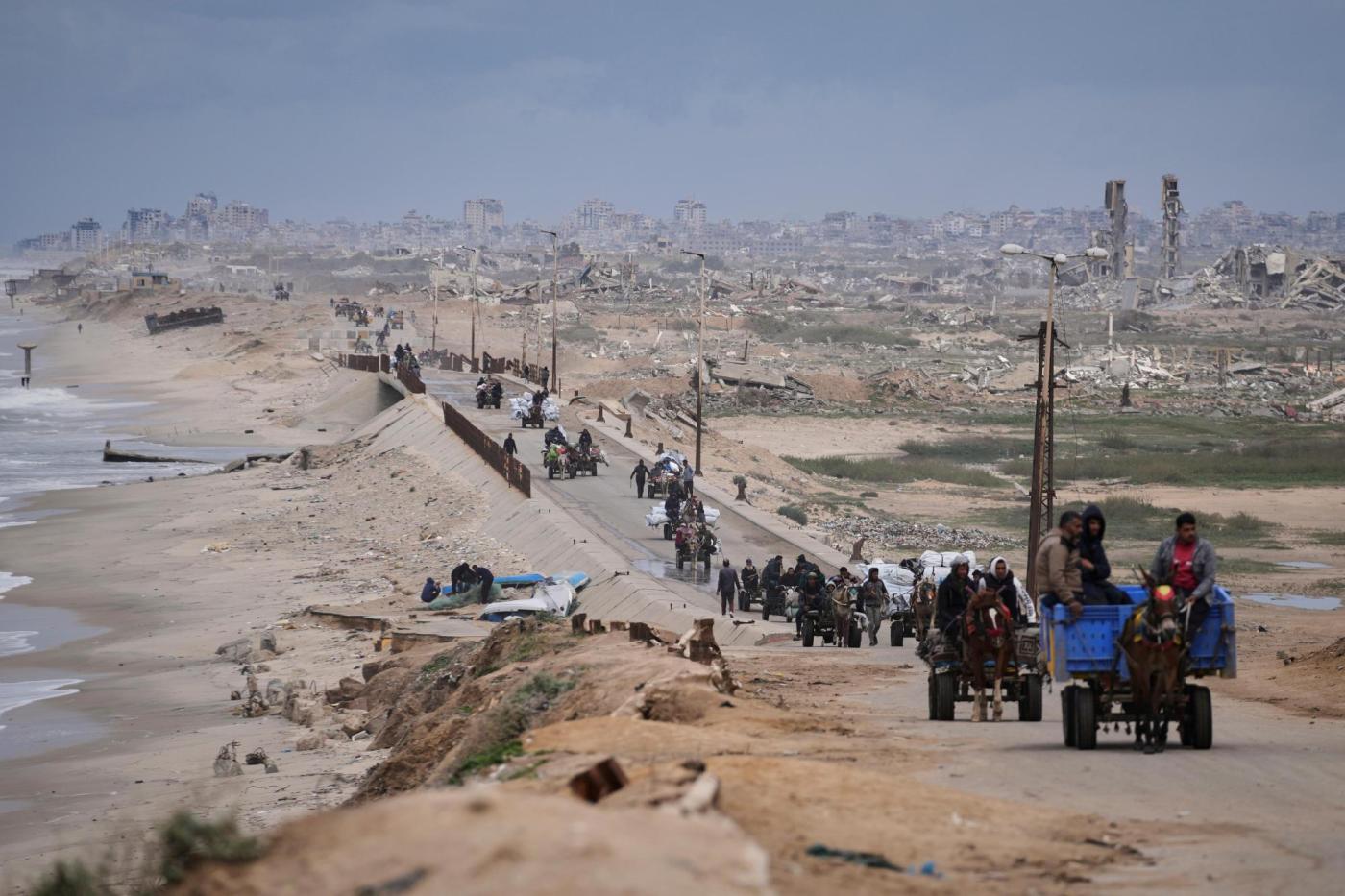
CAIRO (AP) — A breakdown in communications networks in central and southern Gaza has cut many Palestinians off from the outside world for the past week, further straining aid efforts and emergency services amid continuing Israeli bombardment.

Related Articles


Thomas Friedman: The smart way for Trump to end the Israel-Iran war


Hal Brands: Iran’s four possible responses to Israel — and their risks


34 Palestinians killed in new shootings near food distribution centers, medics say


Thomas Friedman: Ways to think about what’s happening with Iran and Israel


Israel targets Iran’s Defense Ministry headquarters as Tehran unleashes deadly missile strike

Israeli strikes damaged a main connection, cutting off communications in large areas of the strip since Tuesday, according to the Telecommunications Regulatory Authority, based in the Israeli-occupied West Bank. The telecom company Paltel said Friday that internet and landline services were restored in some areas in southern Gaza, including Khan Younis, with repairs ongoing in other southern and central areas.

Paltel warned in a statement to AP that ongoing attacks on the main network could make future maintenance impossible, especially due to a shortage of essential materials and resources.

The Gaza Strip has experienced at least 10 communications partial and full outages since the war began in October 2023, according to Palestinian telecom company Paltel. This week’s outage has impacted aid efforts, emergency services, suspended academic classes, and cut off displaced Palestinians from the rest of the territory.

Palestinians in Gaza rely heavily on cell service, as unsafe roads and fuel shortages limit movement across the enclave. Humanitarians say those in affected areas will struggle to access information on aid and medical services or call for ambulances.

“Telecoms have been used as a weapon of war against civilians,” said Juliette Touma, communications director at UNRWA, the U.N. agency for Palestinian refugee that is the main service provider in Gaza.

The IDF didn’t immediately respond to request for comment.

The vast majority of UNRWA workers don’t have connectivity in the areas affected by the outages. As a result, they and other aid workers have struggled to deliver aid and coordinate with one another, Touma told the AP.

“Sometimes we get a signal when a team member has the courage to go on the rooftop of a building, which is extremely dangerous under strikes, and they send us a message that they’re alive. I can’t tell you how much of a relief it is, but they’re more sporadic and less regular,” said Touma. Some people rely on E-sims, but they are not compatible with all devices and can only work in certain areas.

Unreliable mobile service

Over 70% of telecommunications networks in Gaza has been partially or completely destroyed as of August 2024 since the war began, according to statistics released by the Palestinian Ministry of Telecommunication and Digital Economy, cited by the Palestine Economic Policy Research Institute. However, Paltel said technical teams offered some technical solutions that would restore services.

When they hear nearby strikes, Palestinians without connection don’t know whether evacuation orders are issued and where should they relocate to, said Shaina Low, the Norwegian Refugee Council’s communications adviser.

“This also means that people are isolated. They can’t communicate with their family and friends inside of Gaza and understand what the current situation is or get external support from networks outside,” she said.

Limited or unreliable mobile service has made it difficult for ambulances and civil defense teams to reach people in need of life-saving assistance, Low added.

Fikr Shalltoot, Gaza director for the group Medical Aid for Palestinians, said its doctors working in hospitals and clinics in effected areas can’t document or share their work with managers.

‘Targeted daily’

Meanwhile, with Gaza’s university campuses heavily damaged, the internet has become the only way to continue education. But outages have forced educators to cancel classes and exams.

“It is, unfortunately, like a never-ending vicious cycle of suffering because when this issue is resolved in the north, the problem appears in the south,” said Mohammed Shbair, vice president for administrative and financial affairs, at al-Azhar University in Gaza.

“Students cannot reach universities because they are destroyed, and they can’t even reach areas where the internet is available in cafes or displacement tents, as they are now being targeted daily and systematically by Israeli strikes,” said Shbair, an associate professor of public law.

Online banking, a key alternative amid cash shortages, has also become unavailable. Palestinians who rely on online transfers to pay suppliers can no longer do so under the current conditions, according to Low.

The outage complicates humanitarian operations and adds to the “toxic stress” families face daily, said UNICEF spokesperson Tess Ingram.

“In a context of incessant bombardments, mass casualty events linked to food distributions, rising malnutrition and dwindling access to clean water, connectivity is a real lifeline for families in Gaza,” she said.
Daniel DePetris: Iranian supreme leader’s options are limited in war with Israel

posted in: All news | 0

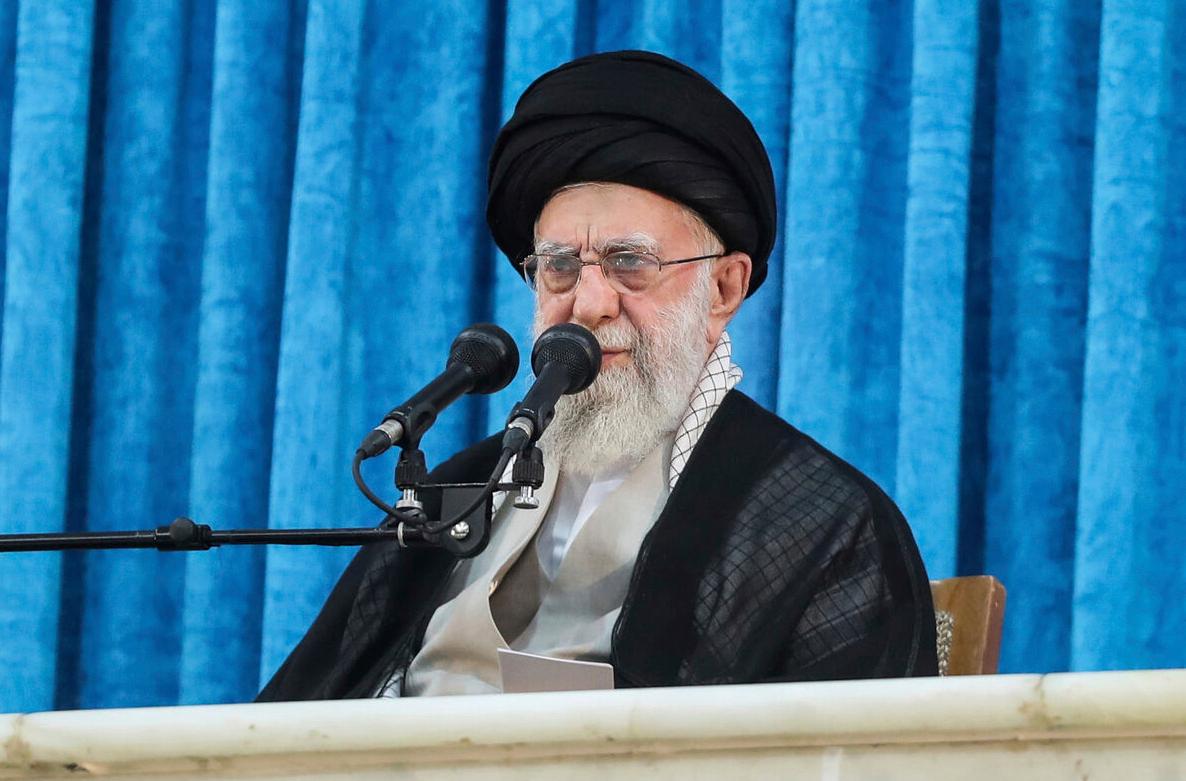
Iran’s supreme leader, Ayatollah Ali Khamenei, and the Islamic regime he has led for more than 35 years now face their biggest test since the eight-year war with Iraq in the 1980s.

Since last week night, Iran has been bombarded by Israeli airstrikes that show no signs of abating anytime soon. In connection with the Israeli air campaign, the Mossad, Israel’s foreign intelligence service, has been operating on Iranian soil and targeting senior Iranian nuclear scientists and military officers in an attempt to shatter the Iranian military’s chain of command. Iran’s armed forces chief, the intelligence chief of the elite Islamic Revolutionary Guard Corps (IRGC) and the supreme leader’s senior foreign policy adviser have all been killed. Khamenei himself was in Israel’s crosshairs, although President Donald Trump dissuaded the Israelis from assassinating him, fearing an even deeper escalation.

Over the last several days, Israeli Prime Minister Benjamin Netanyahu stepped up the air campaign by striking sites such as the South Pars natural gas field and refineries on the outskirts of Tehran. Netanyahu seems to be ever more enamored with going beyond Israel’s original objective, telling Fox News last weekend that regime change in Tehran could very well be the ultimate result.

In terms of conventional military power, the Iranians are by far the weaker party. Iran’s air force is diminished due to decades of U.S. sanctions and export controls. The Iranian navy is essentially a collection of small boats that have difficulty projecting power beyond the Iranian coastline. And the country’s ground forces haven’t fought a war in more than three decades.

What Tehran does have, however, is the largest ballistic missile stockpile in the Middle East. To date, Iran has kept its retaliation limited to launching periodic volleys of missiles toward Israel’s major population areas in the hope that a few of them will breach the country’s sophisticated air defense system. Indeed, the first days of conflict took on a familiar rhythm, with Israel striking military, energy and nuclear-related targets in Iran and Tehran responding with ballistic missile attacks on Tel Aviv, Haifa and towns in central Israel.

Yet if those attacks are designed to push Israel into suspending its military campaign or at least reevaluating the need for diplomacy, then they’ve failed. Based on his rhetoric as well as the intensity of the Israeli operation, Netanyahu is in no mood for a face-saving exit and appears to genuinely believe that the Islamic Republic is on its last legs. Rather than pushing the Israelis into a negotiation, every Iranian ballistic missile sent toward Israel provides Netanyahu with more ammunition to continue the war and press his central argument: Iran is led by fanatical mullahs bent on Israel’s destruction.

Khamenei isn’t a stupid man; he knows all of this already. While the octogenarian may sound like a zealot when he gives speeches at the pulpit, in practice he’s actually a wily figure who is more pragmatic than he lets on. He keeps all options close to his chest and isn’t immune to backing down if it means preserving his regime or buying time to plan next steps.

In 1988, for instance, then-President Khamenei supported signing a ceasefire with Iraq’s Saddam Hussein after eight years of war and nearly a million casualties. (In 2010, he referred to that decision as “one of the most rational events in Iran’s history.”) After the 9/11 attacks, he authorized Iranian officials to coordinate with the United States against the Taliban in Afghanistan. From 2012 to 2013, Khamenei agreed to dispatch his senior advisers to meet with Washington to explore whether a nuclear agreement was possible, culminating in the 2015 nuclear deal. (Trump withdrew from the deal in 2018.) And in April, Khamenei did so again, despite strong reservations the talks would lead anywhere.

Yet the supreme leader is now in a position in which his options are quite limited. His runway is short, any decision he takes will have consequences and he’s at the mercy of Netanyahu, who views the current military campaign as a way to severely degrade Israel’s biggest strategic adversary.

One option would be to throw out feelers to regional mediators and perhaps the United States directly that Iran wants to deescalate and will stop firing missiles toward Israel if the Israelis end bombing operations. This would be the most logical step for the Iranians to take, and it’s one Trump, who wants the fighting to wind down, would likely support. But it runs into the problem of Netanyahu, who has the wind at his back and is demonstrating no urgency to sign a ceasefire. Begging for peace also exposes Khamenei as a weak leader in the eyes of regime hard-liners, who are already preparing succession scenarios for the day when the longtime leader passes from the scene.

Fighting it out is an option as well. Khamenei may bet that Israel doesn’t have the capacity, stamina or will to maintain a war of attrition with Iran over the long term and that the longer the missile exchanges go on, the more political pressure Netanyahu will feel to come to the table.

Even so, this is a very risky bet for the Iranians to make and underestimates Netanyahu’s ability to withstand public opinion. After all, Netanyahu remains committed to the 20-month-old war in Gaza despite the Israeli public increasingly prioritizing the return of all the hostages over the defeat of Hamas. If the ultra-right ministers in Netanyahu’s cabinet want to continue bombing Iran, it’s likely the Israeli premier will do so, if only to save his political skin.

Iran’s supreme leader has confronted crises before. But this is his biggest to date.

Daniel DePetris is a fellow at Defense Priorities and a foreign affairs columnist for the Chicago Tribune.

Related Articles


David M. Drucker: Will Republican gains among Hispanic voters last?


Abby McCloskey: Vouchers aren’t enough to fix U.S. schools


Andreas Kluth: Republicans are (almost) ready for maximum pressure on Russia


Adrian Wooldridge: Reagan wasn’t the conservative he’s made out to be


Thomas Friedman: The smart way for Trump to end the Israel-Iran war

Elizabeth Shackelford: East African governments turn up repression as the U.S. turns away

posted in: All news | 0

I met Agather Atuhaire, a Ugandan human rights defender, in late May at the Oslo Freedom Forum, an event celebrating activists against authoritarianism. She was petite but powerful, bruised but not broken. Traveling to this event was her latest act of defiance.

Only days earlier, she and Boniface Mwangi, a high-profile Kenyan activist, had been dumped near the Tanzanian border after being detained and tortured for days by Tanzanian police when they tried to attend the trial of Tanzania’s main opposition leader. The abuse was excruciating. They recounted being stripped, hung by their bound feet and hands, brutally raped and beaten. The entire sick process was recorded to elicit shame and more fear.

I spent years working in East Africa, so I’m familiar with its explosive politics and the authoritarian tendencies of those clinging to power. But this felt like something new. Atuhaire received the U.S. State Department’s International Women of Courage Award just last year.

Where was the outrage? Once, the U.S. government used its influence to prevent these abuses. Now, Washington is practically silent.

Repression has been on the rise across the region. When governments stop trying to hide or temper their abuse, the dangers escalate. Cross-country cooperation in governmental repression is ticking up too.

Tundu Lissu, the politician Atuhaire and Mwangi were in Tanzania to support, was arrested in April and charged with treason after spearheading a campaign ahead of Tanzania’s upcoming elections. Tundu was fighting for reforms to unrig a system that has enabled the ruling party to win every election since independence.

Several other critics of the Tanzanian government have been abducted over the last year. One opposition party official was killed after being taken from a bus in September. His body was later found soaked in acid and beaten.

Maria Sarungi Tsehai, a prominent Tanzanian activist, was abducted in January in Nairobi, Kenya, where she had been living since seeking asylum there in 2020 because of threats from the Tanzanian government. After a few hours of assaulting her as they tried to gain access to her phone and social media, Tsehai’s abductors dumped her on a side road. Tsehai was also in Oslo and told me she was certain the Tanzanian and Kenyan authorities were working together to repress their citizens, so nowhere was safe now.

In November, Ugandan opposition politician Kizza Besigye and his aide were also abducted in Nairobi, only to emerge four days later in military court in Kampala, Uganda. Kenyan authorities have since admitted to cooperating in the kidnapping. These are just some of the hundreds of civilian opposition actors to face military courts in Uganda, even though the country’s supreme court has ruled it unconstitutional.

Yoweri Museveni has ruled the country since 1986. His son, Muhoozi Kainerugaba, is the chief of Uganda’s Defense Forces and recently bragged on social media of capturing an opposition leader, holding him captive in his basement, and torturing him.

Perhaps the Kenyan government has become more amenable to facilitating repression in the region since it’s upped its own at home. Last June, Kenya saw a wave of antigovernment protests led by Kenya’s youth. Kenyan police killed dozens in their aggressive response. Waves of protests continued throughout the year, and in the final weeks of 2024, at least 10 young activists were abducted.

As a former U.S. diplomat, I expected more of an American response to these events. It wouldn’t prevent all the abuses, but it would have mattered. Activists I’ve spoken with have assured me, for example, that the abuse of Mwangi and Atuhaire wouldn’t have occurred under prior U.S. administrations (even Donald Trump’s first administration), since the Tanzanian government would have anticipated consequences.

The United States has provided these countries with military assistance and development and humanitarian support for many years. But America has a very different relationship with the region today. Though some advocates in Congress continue to speak up, the Trump administration has made clear that it will not use its influence to fight human rights abuses. Not only has it gutted foreign assistance, which could previously be used as an incentive for better behavior, but it also has explicitly stepped back from promoting human rights at all.

The weight of America’s moral leadership has been weakening for years, but it is now wholly broken. And the consequences, on individuals and democracy movements across the globe, are real and likely to worsen.

You may think it isn’t America’s business to promote human rights internationally, but it was never much of an investment. Prior to the Trump administration’s draconian cuts, the entire foreign aid budget amounted to less than 1% of the country’s expenditures, and only 3.2% of that went to democracy, governance and human rights programs.

But by using our diplomats and assistance to impose even a small cost for the worst repression, we once helped protect and uplift those fighting for values we used to hold dear.

What will we gain by not doing so? Nothing, but it will cost others plenty.

Elizabeth Shackelford is senior policy director at Dartmouth College’s Dickey Center for International Understanding and a foreign affairs columnist for the Chicago Tribune. She was previously a U.S. diplomat and is the author of “The Dissent Channel: American Diplomacy in a Dishonest Age.”

Related Articles


David M. Drucker: Will Republican gains among Hispanic voters last?


Abby McCloskey: Vouchers aren’t enough to fix U.S. schools


Andreas Kluth: Republicans are (almost) ready for maximum pressure on Russia


Adrian Wooldridge: Reagan wasn’t the conservative he’s made out to be


Thomas Friedman: The smart way for Trump to end the Israel-Iran war

Judge says he will order Columbia University protester Mahmoud Khalil freed from detention

posted in: All news | 0

By PHILIP MARCELO, Associated Press

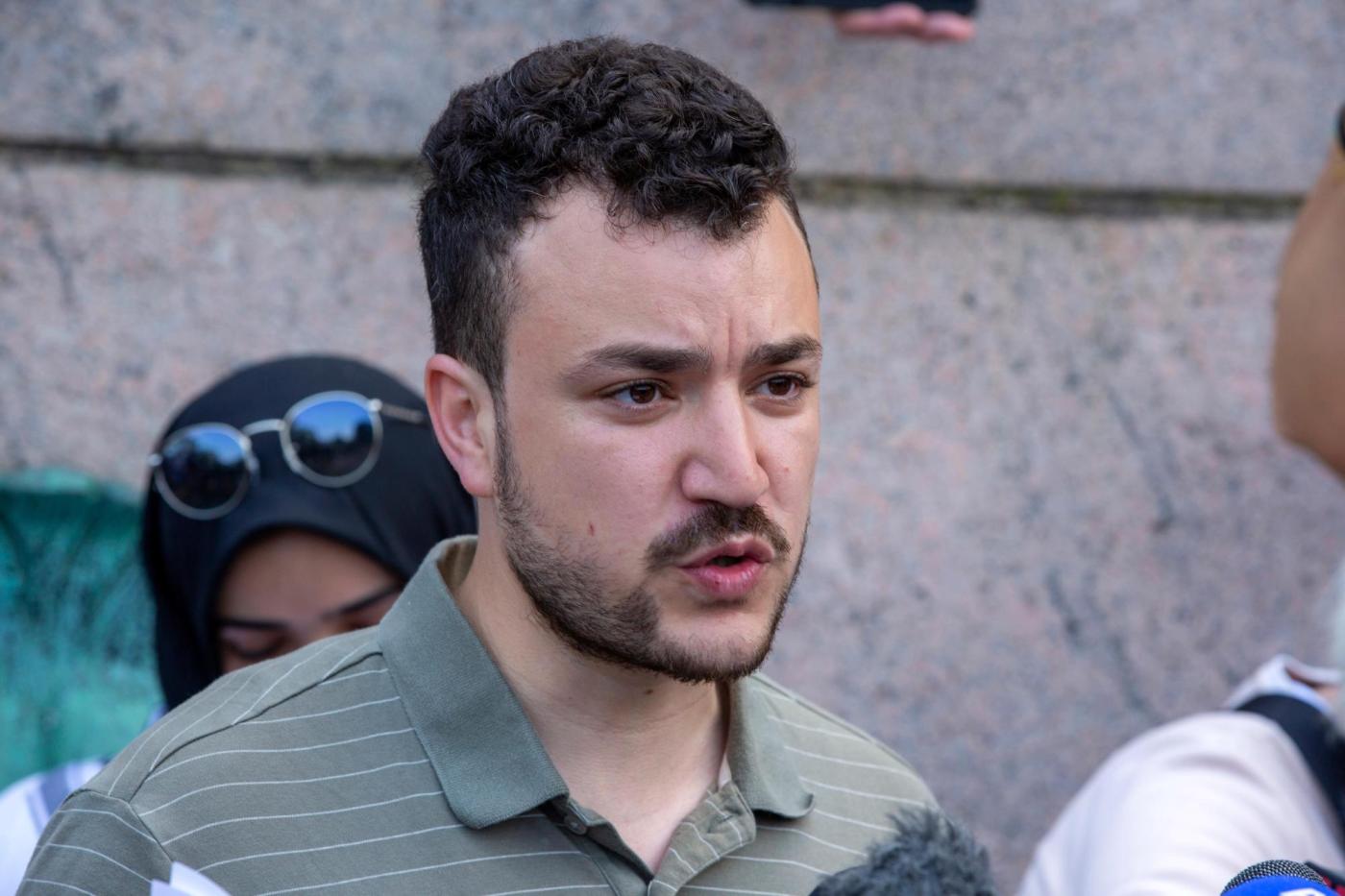
NEW YORK (AP) — A federal judge on Friday ordered the U.S. government to free former Columbia University graduate student Mahmoud Khalil from the immigration detention center where he has been held since early March while the Trump administration sought to deport him over his role in pro-Palestinian protests.

Related Articles


Man with Taser and rope charged in attempted kidnapping of mayor, Memphis police say


An ex-college basketball player testifies that Sean ‘Diddy’ Combs got ‘extremely creative’ on drugs


Billions of login credentials have been leaked online, Cybernews researchers say


Aflac finds suspicious activity on US network that may impact Social Security numbers, other data


Investigator and jurors speak out about Karen Read murder trial in aftermath of not guilty verdict

U.S. District Judge Michael Farbiarz announced the decision from the bench in New Jersey, responding to a request from Khalil’s lawyers to free him on bail or, at the very least, move him from a Louisiana jail to New Jersey so he can be closer to his wife and newborn son.

Khalil was the first arrest under President Donald Trump ’s crackdown on students who joined campus protests against Israel’s devastating war in Gaza. U.S. Secretary of State Marco Rubio has said Khalil must be expelled from the country because his continued presence could harm American foreign policy.

Farbiarz had ruled earlier that the government can’t continue to hold Khalil on those grounds, but the government argued the legal U.S. resident was instead being held based on allegations that he lied on his green card application. Khalil disputes the accusations that he wasn’t forthcoming on the application.

Khalil, a legal U.S. resident, was detained on March 8 at his apartment building in Manhattan over his participation in pro-Palestinian demonstrations. His lawyers say the Trump administration is simply trying to crack down on free speech.

Khalil isn’t accused of breaking any laws during the protests at Columbia. The international affairs graduate student served as a negotiator and spokesperson for student activists. He wasn’t among the demonstrators arrested, but his prominence in news coverage and willingness to speak publicly made him a target of critics.

The Trump administration has argued that noncitizens who participate in such demonstrations should be expelled from the country as it considers their views antisemitic.