Three shot and injured on St. Paul rooftop pool area Saturday night

posted in: All news | 0

Three people were shot and injured late Saturday night at a St. Paul apartment building, police said.

At about 11:45 p.m. 911 calls reported shots fired at a rooftop pool on the 100 block of Kellogg Boulevard, said Nikki Muehlhausen, a public information officer with St. Paul police.

Officers arrived to find two people with non-life threatening gunshot wounds. They were taken to Regions Hospital.

Not long afterward, a third person with a non-life threatening wound arrived at the hospital.

Police said two of the victims are men and the third is a 16-year-old boy.

The police department’s non-fatal shooting unit is investigating.

Related Articles


How client advocates are quietly reshaping criminal defense


Suspected assassin was one of thousands Walz appointed to various boards


Suspect in Minnesota lawmaker attacks was a doomsday prepper, investigator says


N.D. man charged with threatening federal official, in wake of Minnesota violence


Lobbyist accused of threatening shooting at MN Capitol charged with felony

Kevin Durant is going from the Suns to the Rockets (not Timberwolves) in trade, AP source says

posted in: All news | 0

By TIM REYNOLDS

The Houston Rockets are acquiring 15-time All-Star and four-time Olympic gold medalist Kevin Durant from the Phoenix Suns in a blockbuster deal struck Sunday, a person with knowledge of the agreement told The Associated Press.

The Rockets are giving up Dillon Brooks, Jalen Green and six future picks — including the No. 10 selection in Wednesday’s opening round of this year’s draft — according to the person who spoke to the AP on condition of anonymity because the deal was still pending NBA approval.

It ends weeks of speculation about where Durant would end up. Many teams were involved at various times, including Miami and Minnesota, but in the end Phoenix accepted the Rockets’ offer.

ESPN first reported the trade.

Fans learned of the news while Durant was on stage in New York at Fanatics Fest NYC, and when they began reacting, Durant started smiling broadly.

“We’re gonna see, man,” Durant said from the stage. “We’re gonna see.”

Boardroom, the ever-growing media company that Durant and his business partner, Rich Kleiman, co-founded in 2019, teams up with Fanatics on a number of projects. The panel that Durant was set to appear on there Sunday was called “Global Game Changers.”

He certainly figures to change the game for the Rockets.

Houston finished No. 2 in the Western Conference in the regular season, albeit 16 games behind No. 1 Oklahoma City. It now adds a two-time champion to its young core as it looks to make another jump next season.

Durant averaged 26.6 points this season, his 17th in the NBA — not counting one year missed because of injury. For his career, the 6-foot-11 forward is averaging 27.2 points and seven rebounds per game.

The move brings Durant back to the state of Texas, where he played his one year of college basketball for the Longhorns and was the college player of the year before going as the No. 2 pick in the 2007 draft by Seattle.

Houston will become his fifth franchise, joining the SuperSonics (who then became the Oklahoma City Thunder), Golden State, Brooklyn and Phoenix. Durant won his two titles with the Warriors in 2017 and 2018, and last summer in Paris he became the highest-scoring player in U.S. Olympic basketball history and the first men’s player to be part of four gold-medal teams.

Durant is a four-time scoring champion, a two-time Finals MVP and one of eight players in NBA history with more than 30,000 career points, joining the club on Feb. 11.

Durant is under contract next season for roughly $50 million before becoming a free agent in 2026.

His departure from the Suns was expected and ends a disappointing 2 1/2 years in the desert. Durant never enjoyed consistent team success despite being part of a trio that included star guards Devin Booker and Bradley Beal.

Durant was acquired by the Suns from the Brooklyn Nets in a four-team trade-deadline deal in 2023, just days after new owner Mat Ishbia bought the team for roughly $4 billion. Phoenix gave up a lot to acquire the then-34-year-old, sending young standouts Mikal Bridges and Cam Johnson, along with four future first-round picks, to Brooklyn.

___

AP Sports Writer David Brandt in Phoenix contributed to this report.

___

AP NBA: https://apnews.com/hub/NBA

Business People: Dunn Brothers Coffee names Benjamin Anderson president

posted in: All news | 0

COFFEE

Benjamin Anderson

Dunn Brothers Coffee, a Minneapolis-based coffee brand and operator of a national chain of coffee shops, announced Benjamin Anderson as president. Anderson most recently served as vice president of operations at Pentex Restaurant Group, a franchisee of Taco John’s and HuHot Mongolian Grill restaurants.

ADVERTISING/PUBLIC RELATIONS

The Lacek Group, a Minneapolis-based Ogilvy One agency specializing in customer loyalty communications and Customer Relationship Management, announced the appointment of Randy Gunderson as chief executive officer. Gunderson succeeds Bill Baker, who transitions from CEO to a chairman. Gunderson most recently served as SVP of Client Services at the agency. Additionally, Lacek announced that Michelle Wildenauer will take on an expanded role as executive vice president, Client Services and Strategy.

AIRPORTS

The Metropolitan Airports Commission announced the promotion of Mike Wilson to director of integrated operations. Wilson most recently served the MAC as assistant director for field maintenance from July 2023 to May 2025. MAC owns and operates Minneapolis-St. Paul International Airport and six general aviation airports in the Twin Cities.

EDUCATION

MacPhail Center for Music, a music school in Minneapolis, announced the appointment of Michael Cain as vice president of music education. Cain, a pianist, composer and educator, is the founding director of MacPhail’s Electronic Music and Recording Arts program.

FINANCIAL SERVICES

Bloomington accounting firm BGM announced that Daniel Hurtado will lead a new Tax Credit and Incentive Program practice. Hurtado’s background includes founding a specialty tax consulting firm and leadership roles at accounting firms.

HEALTH CARE

Minnetonka-based health insurer Medica announced is has received the 2024 Partner Carrier Award from Marsh McLennan Agency, a national workforce employee benefits consultant with operations in Golden Valley.

LAW

Fredrikson, Minneapolis, announced that attorney Abdulla A. Ali has joined the firm’s Mergers & Acquisitions and Private Equity groups. Prior to joining Fredrikson, Ali held a position at Qualtrics, a technology company, where he managed a portfolio of enterprise accounts. … Janet Dorr has been appointed to serve on the Hennepin County Bar Association board of directors for a three-year term beginning in July 2025. Dorr is a shareholder and member of the Labor and Employment law group at Fredrikson, which announced the appointment.

MANUFACTURING

BioMADE, a developer of biological-based commercial and industrial products and processes sponsored by the U.S. Department of Defense, announced Owen Barwell as chief financial officer. Barwell joins BioMADE from the U.S. Nuclear Regulatory Commission, where he managed a $1 billion operational budget and licensee fee recovery. BioMADE is based jointly in St. Paul and Emeryville, Calif. … Donaldson Co. Inc., a Bloomington-based maker of filtration systems for industry, announced the promotion of Richard Lewis to chief operating officer, effective Aug. 1. Lewis currently is president of the company’s Life Sciences segment and will continue to perform that role until a successor is named.

MEDICAL TECHNOLOGY

Sanuwave Health, an Eden Prairie-based developer and maker of electronic wound care products, announced the addition of Greg Bazar to its board of directors. Bazar currently serves as chairman of Simpatico Systems, an advanced IT and cybersecurity company he founded.

OPENINGS

Albertville Premium Outlets announced that Ulta Beauty, a national specialty personal care products retailer, plans a July opening of a store at 6415 Labeaux Ave. NE, Albertville, Minn.

REAL ESTATE

Coldwell Banker Realty announced that MKT Real Estate Advisors has affiliated with the company’s Minneapolis Lakes office. It include founder and CEO Michael Kaslow, sales agents Shelley Horstman, Kari Shaw Aker, Aaron Freer, Gisela Santana and Chris Ross; Director of Operations Josh Pennington, Listing Manager Sarah Johnson, Buyer Manager Tyler Thompson and Marketing Assistant Angelica Nuera.

SPONSORSHIPS

nVent Electric PLC, a electrical supply company headquartered in London and St. Louis Park, announced its return as a Minnesota Lynx Changemakers partner with the WNBA’s Minnesota Lynx professional basketball team; Lynx Changemakers is focused on nurturing female leadership and elevating women’s sports in Minnesota.

Related Articles


Business People: Suresh Krishna takes over as CEO at Proto Labs


Sonnen’s Pet Shop, among city’s oldest stores, closes after over 130 years downtown


Business People: Jennifer Lauerman to head up Canterbury Park marketing


Darts welcomes new president with strong Dakota County ties


Business People: Catherine Penkert named chief of staff at Twin Cities Habitat for Humanity

EMAIL ITEMS to businessnews@pioneerpress.com.

US bombs Iran’s nuclear sites: What led to Trump pulling the trigger – and what happens next?

posted in: All news | 0

Javed Ali

(The Conversation is an independent and nonprofit source of news, analysis and commentary from academic experts.)

Javed Ali, University of Michigan

(THE CONVERSATION) In the early hours of June 22, 2025, local time, the United States attacked three nuclear facilities in Iran with “bunker buster” bombs and Tomahawk missiles.

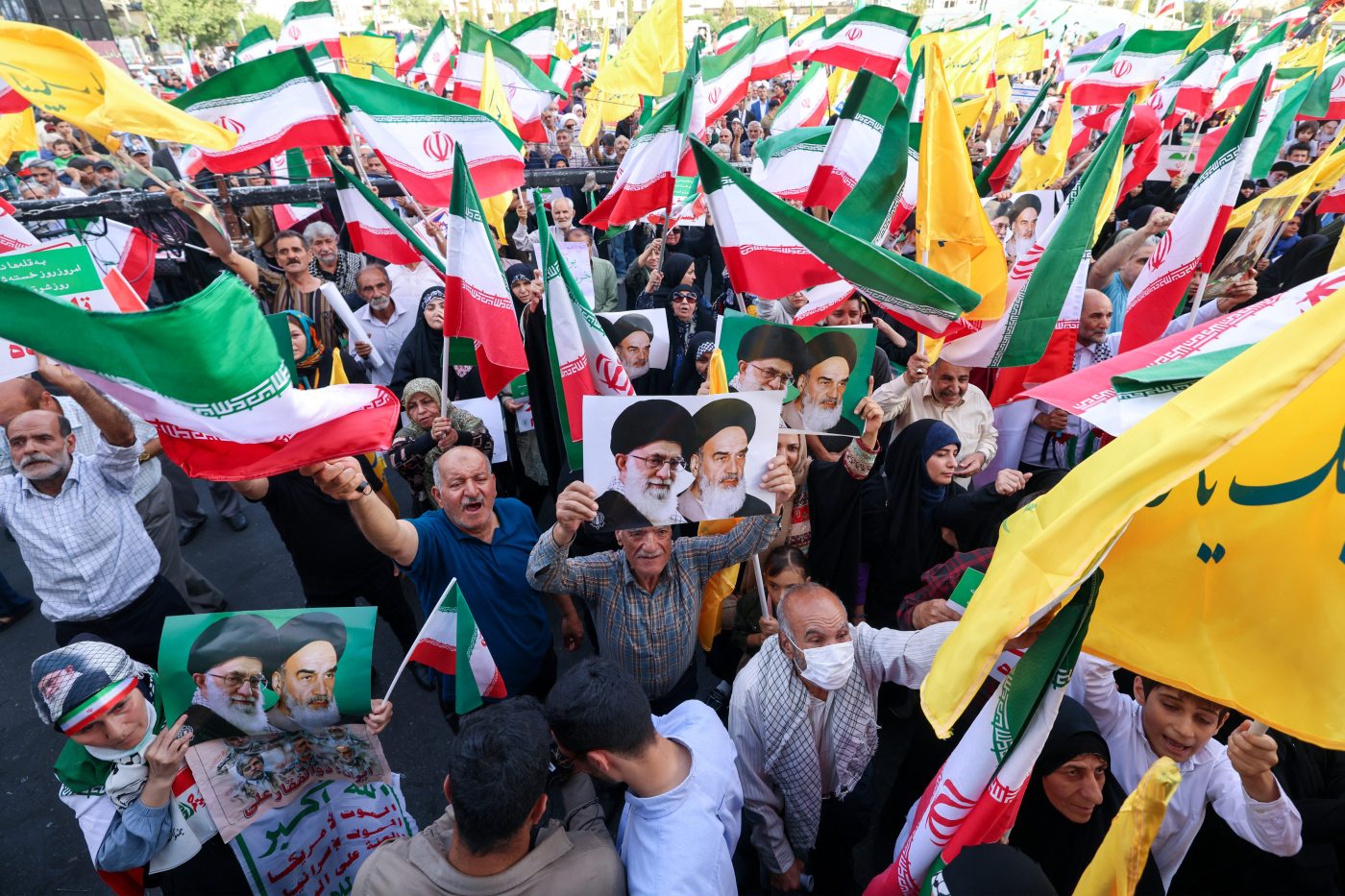
Following more than a week of Israeli strikes on various targets in Iran – which had prompted retaliatory strikes from Tehran – the U.S. move marks a possible inflection point in the conflict. In initial comments on the strikes at the Fordo, Isfahan and Natanz facilities, President Donald Trump said that Iran’s nuclear program had been “completely and fully obliterated.” In response, Iran’s Foreign Minister Abbas Araghchi said the U.S. had “crossed a very big red line.”

The Conversation U.S. turned to Javed Ali, an expert on Middle East affairs at the University of Michigan and a former senior official at the National Security Council during the first Trump administration, to talk through why Trump chose now to act and what the potential repercussions could be.

What do we know about the nature and timing of US involvement?

President Trump has been forcefully hinting for days days that such a strike could happen, while at the same time opening up a window of negotiation by suggesting as late as June 20 that he would make a decision “within the next two weeks.” We know Trump can be very unpredictable, but he must have assessed that the current conditions presented an opportunity for U.S. action.

Trump met with the National Security Council twice in the days leading up to the strike. Typically at such meetings the president is presented with a menu of military options, which usually boil down to three: a narrow option, a middle ground and a “if you really want to go big” strike.

The one he picked, I would argue, is somewhere between the narrow option and the middle ground one.

The “go big” options would have been an attack on nuclear sites and Iranian leadership – be that senior members of Iran’s Revolutionary Guard, or possibly the Supreme Leader Ayatollah Ali Khamenei. The more narrow approach would have been just one facility, likely to have been Fordo – a deeply fortified uranium enrichment site buried within a mountain.

What did occur was a strike there, but also at two other sites – Isfahan and Natanz.

U.S. military chiefs confirmed that that 12 GBU-57s – the so-called 30,000-pound bunker busters – were dropped by B-2 bombers on Fordo, and two on Isfahan.

That suggests to me that the military goal of the operation was to destroy Iran’s ability to produce and or store highly enriched uranium in a one-time strike rather than drag the U.S. into a more prolonged conflict.

Has the strike achieved Trump’s objectives?

It will take some time to properly assess the extent to which Iran’s ability to produce or store highly enriched uranium has been damaged.

Certainly we know that the bombs hit their targets, and they have been damaged – but to what extent is not immediately clear. General Dan Caine, chairman of the Joint Chiefs of Staff, said that all three target sites had suffered “extremely severe damage and destruction” – possibly rolling back from Trump’s “fully obliterated” assessment. Perhaps most tellingly, Iran has not commented yet on the extent of the damage.

But to Trump, the objective was not just military but political, too. Trump has long said “no” to a nuclear Iran while at the same time has expressed that he has no desire to drag the U.S. into another war.

And this strike may allow Trump to achieve those seemingly contradictory goals. If U.S. initial assessments are correct, Iran’s nuclear program will have been severely compromised. But the strikes won’t necessarily pull U.S. into the conflict fully – unless Iran retaliates in such a way that necessitates further U.S. action.

And that is what Iran’s supreme leader and his military generals will need to work out: Should Iran retaliate and, if so, is it prepared to deal with a heavier U.S. military response – especially when there is no end in sight to its current conflict with Israel.

What options does Iran have to retaliate against US?

Iran has in the past tried to respond proportionately to any attack. But here is the problem for Iran’s leaders: There is no feasible proportionate response to the United States. Iran has no capability to hit nuclear plants in the U.S. – either conventionally or through unconventional warfare.

But there are tens of thousands of U.S. troops in the region, stationed in Iraq, Syria, the United Arab Emirates, Oman, Qatar and Jordan. All are in range of Iran’s ballistic, drones or cruise missiles.

But that military inventory has been depleted – both by using ballistic missiles in waves of attacks against Israel and by Israel hitting missile launch and storage sites in Iran.

Similarly, Tehran’s capacity to respond through one of its proxy or aligned groups in the region has been degraded. Hezbollah in Lebanon and Gaza’s Hamas – both of whom have ties to Iran – are in survival mode following damaging attacks from Israel over the past 18 months.

The Houthis in Yemen are in many ways the “last man standing” in Iran’s so-called “Axis of Resistance.” But the Houthis have limited capability and know that if they do attack U.S. assets, they will likely get hit hard. During Operation Rough Rider from March to May this year, the Trump administration launched over 1,000 strikes against the Houthis.

Meanwhile Shia militias in Iraq and Syria that could be encouraged to attack U.S. bases haven’t been active in months.

Of course, Iran could look outside the region. In the past the country has been involved in assassinations, kidnappings and terror attacks abroad that were organized through its Quds Force or via operatives of MOIS, its intelligence service.

But for Iran’s leaders, it is increasingly looking like a lose-lose proposition. If they don’t respond in a meaningful way, they look weak and more vulnerable. But if they do hit U.S. targets in any meaningful way, they will invite a stronger U.S. involvement in the conflict, as Trump has warned.

The parallel I see here is with the killing of Iranian general and commander of the Quds Force, Qassem Soleimani, in January 2020 by a U.S. drone strike.

On that occasion, Iran promised a strong retaliation. Its retaliatory attack against the U.S. Ain al-Asad air base in Iraq involved 27 ballistic missiles and caused the physical destruction of some of the facilities on base as well as traumatic brain injury-type symptoms to dozens of troops and personnel, but no deaths. Nevertheless, after this both the U.S. and Iran then backed off from deepening the conflict.

The circumstances now are very different. Iran is already at war with Israel. Moreover, the U.S. went after Iran’s crown jewels – its nuclear program – and it was on Iranian territory. Nonetheless, Khameini knows that if he retaliates, he risks provoking a larger response.

Trump suggested ‘further attacks’ could occur. What could that entail?

The U.S. has suggested that it has the intelligence and ability to hit senior leadership in Iran. And any “go big option” would have likely involved strikes on key personnel. Similarly there could be plans to hit the Iranian economy by attacking oil and gas targets.

But such actions risk either damaging the global economy or drawing the U.S. deeper into the conflict – it would evolve from a “one and done” strike to a cycle of attacks and responses. And that could widen political cracks between hawks in the administration and parts of Trump’s MAGA faithful who are against the U.S. being involved in overseas wars.

Is there any opportunity of a return to diplomacy?

Trump has not closed his “two weeks” window for talks – theoretically it is still open.

But will Iran come to table? Leaders there had already said they were not willing to entertain any deal while under attack from Israel. Araghchi, Iran’s foreign minister, said after the U.S. strikes that the time for diplomacy had now passed.

In any event, you have to ask, what can Iran come to the table with? Do they have much of a nuclear program anymore? And if not, what would they try to negotiate? It would seem, using one of Trump’s phrases, they “don’t have the cards” to make much of a deal.

This article is republished from The Conversation under a Creative Commons license. Read the original article here: https://theconversation.com/us-bombs-irans-nuclear-sites-what-led-to-trump-pulling-the-trigger-and-what-happens-next-259519.