NEW YORK (AP) — The U.S. stock market is drifting near its record heights on Tuesday as the floodgates open for companies reporting how much profit they made during the summer.
The S&P 500 slipped 0.1% in morning trading and is sitting 0.4% below its all-time high set earlier this month. The Dow Jones Industrial Average was up 155 points, or 0.3%, as of 10:30 a.m. Eastern time, and the Nasdaq composite was 0.3% lower.
Related Articles
What’s the best way to help a family member in financial trouble?
Warner Bros. Discovery confirms it has received buyout offers and is considering its options
Walz, Prairie Island Indian Community sign cannabis compact
Cleveland-Cliffs to search for rare earths in Minnesota, Michigan
What to know about the Amazon Web Services outage
General Motors rallied 14.3% after reporting stronger quarterly results than analysts expected, while also raising its forecasts for some full-year financial targets. CEO Mary Barra said it’s moving quickly to reduce its losses in 2026 and beyond for its electric-vehicle business, as “it is now clear” that EV adoption will be lower than planned.
RTX, the aerospace and defense company, and Danaher, the life sciences and diagnostics company, also jumped to gains of more than 6.5% after delivering better profit for the latest quarter than analysts expected. Coca-Cola rose 3.3% after likewise topping Wall Street’s profit expectations.
Warner Bros. Discovery leaped 9.2% after the company said it’s now considering other options besides its previously announced split of Discovery Global off Warner Bros. that could be more profitable for shareholders. The company said it made the move after hearing from “multiple parties” interested in either the entire company or Warner Bros.
They helped offset a drop for PulteGroup, which fell 2.2% even though the homebuilder delivered a stronger profit than analysts expected. Northrop Grumman slipped 0.8% after its revenue for the latest quarter fell short of analysts’ forecasts.
Several Big Tech stocks lost momentum, taking a break from their own rallies, and also kept the market in check. A 1.9% drop for Google parent Alphabet from its all-time high was one of the heaviest weights on the S&P 500. Nvidia sank 1.3%.
Other big recent winners in financial markets also took a pause. The price of gold fell 4.4% from its latest record, dropping back to $4,167.00 per ounce. It’s still up nearly 58% for the year so far.
The pressure is on companies to show that their profits are growing following a torrid rally of 35% for the S&P 500 from a low in April. It’s one way they can justify their high stock prices amid criticism that they’re too expensive.
Despite the shutdown, the Commerce Department will release its consumer prices report on Friday, which could help guide the Fed’s interest rate policy. It’s the government’s first data release since the shutdown began on Oct. 1.
In stock markets abroad, indexes rose across much of Europe and Asia.
Japan’s Nikkei 225 added 0.3% and crept closer to the 50,000 level as conservative lawmaker Sanae Takaichi became the country’s prime minister. Investors expect her to push for lower interest rates and other policies that could help the market.
Indexes rose 1.4% in Shanghai and 0.7% in Hong Kong amid expectations that President Donald Trump will meet with Chinese President Xi Jinping later this month during a regional summit. That’s raised hopes for an easing of trade tensions between the world’s biggest economies.
In the bond market, the yield on the 10-year Treasury eased to 3.95% from 4.00% late Monday.
AP Business Writers Matt Ott and Elaine Kurtenbach contributed.
Tom Gunderson was training for an upcoming bike race — a 50-mile, gravel-road race called the Filthy 50 in Lanesboro, Minn. — when he was struck by a minivan on Washington County Road 96 in Stillwater Township on Sept. 27.
Gunderson, 65, of Stillwater, died Oct. 9 at Regions Hospital in St. Paul from injuries sustained in the crash.
The crash, which occurred around 8:45 a.m., happened when Gunderson, biking west on 96, turned south at the intersection of Neal Avenue. He was struck by a woman who also was driving west on County Road 96, said Cmdr. Kyle Schenck of the Washington County Sheriff’s Office.
The driver remained at the scene of the crash, Schenck said. “At this point in the investigation, it appears she was not at fault,” Schenck said. “No arrests have been made or are expected to be made.”
Gunderson had multiple bikes and rode five days a week, sometimes logging 200 or more miles a week, said Levon Kalemkiarian, a longtime friend and Gunderson’s trainer and coach.
“He was very fit, but it was also just his consistency over time,” said Kalemkiarian, the owner of Premier Training Systems in Stillwater. “That’s what got him to where he was. It wasn’t one or two years. It was how consistent he was over the course of a decade — just being a student of his sport, taking care of himself on the bike and off the bike, and then also enjoying life between all the training, too.”
Volunteer coach
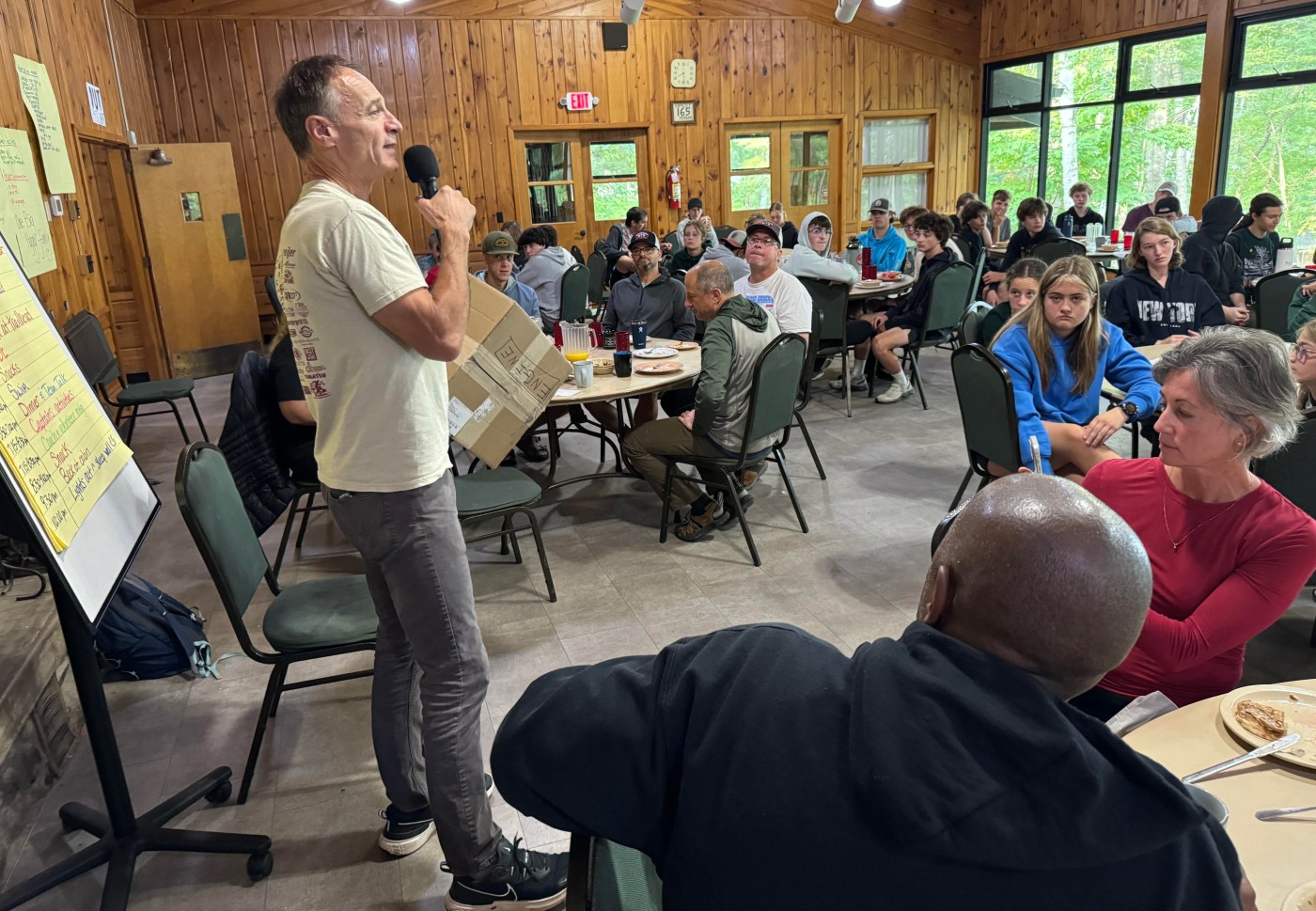
Gunderson was a volunteer coach with the Stillwater Mountain Bike Team, a competitive co-ed riding program for students in sixth to 12th grades in the Stillwater district. Gunderson was assigned to the fastest group of student riders because he was the fastest coach, said Todd Lunneborg, the team’s director and head coach.
“The hard part of my job is finding a coach that kids can’t keep up with, and Tom was a monster rider,” Lunneborg said. “He was fast and dedicated and easygoing, and he was a really great asset. I didn’t ride with Tom. He was too fast for me. His whole life was on that bike.”
Before arriving at Stillwater Area High School to meet student riders for a workout, Gunderson would log a 15- to 20-mile ride “as a warmup,” he said,
Gunderson was an organ donor, and “we joke that whoever got his heart woke up wanting to do 60 miles,” Lunneborg said.
“Tom’s mantra was ‘I’ll do it until I can’t,’” his obituary states. “Elite bike racer, All-American swimmer, ski racer, coach, talented water skier, wealth management adviser, horse barrel racer, and volunteer – he did it all at a very high level. Yet he always kept a healthy perspective and humbleness about his impressive accomplishments.”
Gunderson grew up in West St. Paul, and graduated from Henry Sibley High School. At St. Olaf College in Northfield, Minn., Gunderson studied economics, played varsity soccer and was captain of the swim team. He received NCAA All-American honors in swimming while at St. Olaf. He later got a master’s degree in business administration with a concentration in finance from the Stephen M. Ross School of Business at the University of Michigan.
“Tom sought challenge and was a doer, not an observer,” according to his obituary. “He excelled at generously giving time to others, knowing that kind thoughts require kind action. Volunteering as a mountain bike coach at Stillwater High School was one of his joys as he helped numerous bikers develop their confidence, just as he had.”
Related Articles
Ramsey County to pay $875,000 to Little Canada foster parents in data practices dispute
Closure of Grand Avenue segment ends Tuesday with free community celebration
City altered criteria to accelerate Summit Avenue bike trail, opponents claim
Adam Dullinger, 29, a political newcomer, seeking to be St. Paul mayor
St. Paul’s mayor took over Pioneer Press newsroom 100 years ago
Gunderson was treasurer of the Chilkoot Velo Cycling Club in Stillwater and had been a member since 2015. “For seven years, I competed as a triathlete, drawing on my collegiate NCAA All-American swimming background,” Gunderson wrote in his bio on the club’s website. “After spending 20 years breeding, raising, and training barrel racing horses, I returned to cycling in 2014. I enjoy group rides and races on my road, mountain, and gravel bikes, and I also help coach the Stillwater High School mountain bike team. You’ll occasionally spot me adding some excitement to the Thursday evening group rides, especially on the way back to the barn.”
Gunderson was president and founder of Nason Hill Wealth Management in Stillwater. He previously worked for Inflection Capital Management, Foundry Partners, Oxford Financial Group and Lowry Hill/Abbot Downing, among others. He spent 19 years at Advantus Capital Management, the investment division of Securian in St. Paul.
‘Discipline and principle’
The night before the crash, Gunderson and his wife, Lynn Peterson Gunderson, sat on their front porch “to enjoy the beautiful fall evening,” Lynn Peterson Gunderson wrote in a CaringBridge post.
Gunderson was reading “Poems & Prayers” by actor Matthew McConaughey and asked to read a passage out loud that “really resonated” with him, she wrote. “There’s a difference between a good man and a nice guy,” he read. “A good man stands for certain ideals. And when those beliefs are contested, a good man is not a nice guy.”
Tom Gunderson (Courtesy of Crescent Tide)
“Tom was a man of great discipline and principle,” Lynn Peterson Gunderson wrote. “Tom left us two of the greatest gifts a human could ever give: organ donation and hearts full of love. … We are at peace knowing Tom has completed this journey on earth. He has moved onto the bright light of eternity, and we look forward to meeting him there.”
Two days after Gunderson died, Kalemkiarian rode the Filthy 50 in Lanesboro in his friend’s honor, racing with Gunderson’s number in addition to his own.
“He gave Tom one final ride, one final finish time, and one final Top-50 finisher 50-cent-piece medal to give to Tom’s family,” Lunneborg said.
Related Articles
Stillwater Lift Bridge closes for the season
Washington County: November elections include 9 candidates for South Washington County school board
New MN tool highlights school financial impact of federal shutdown
2025 Election: South Washington school board
Woodbury Topgolf set to open at the end of the month
Kalemkiarian said Monday that he stopped mid-race on Oct. 11 to help a friend who had crashed, but when another rider came along to help, both riders encouraged him to get back on his bike and finish the race in order to get Gunderson his Top 50 finish and a 50-cent-piece medal for Gunderson’s family.
“It was one of the last races that Tom had planned to ride this year,” he said. “It just seemed fitting to take the number and carry it for the duration of the race for him, so he could have one last finishing time.”
Gunderson is survived by his wife and his son, Austin Peterson.
Nathaniel Whitfield’s friend from the climbing gym in Los Angeles recommended checking out the “Merry Go Round” the next time he was in the quaint mountain community of Lone Pine, California.
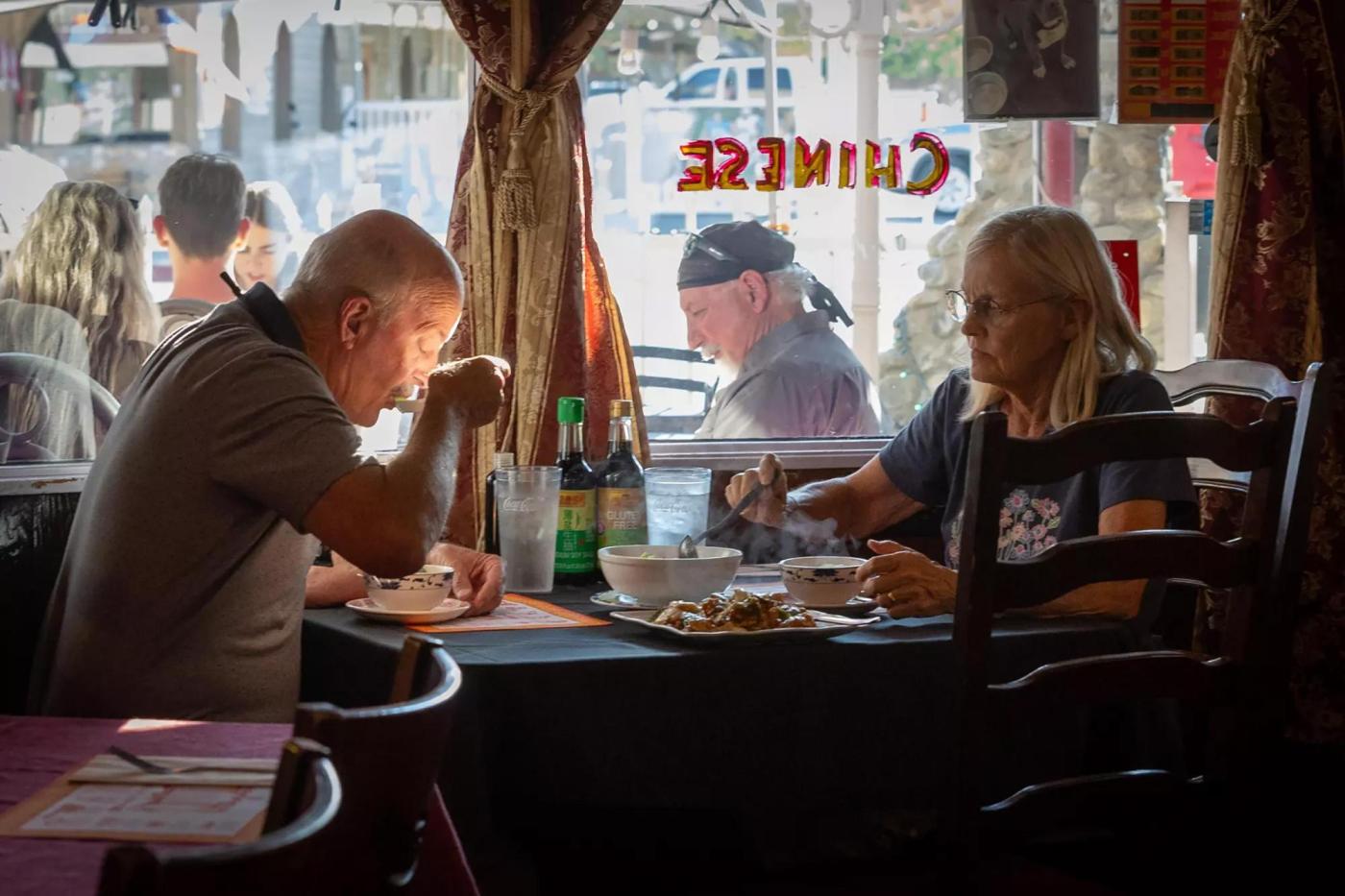
So the 33-year-old found himself eating pan-fried noodles 200 miles north of the megalopolis in a restaurant shaped like a carousel. Inside, dainty horse figurines painted in pastels peek out from nooks and crannies. Buddhas, too. Though a vintage neon sign out front advertises steaks, barbecue and lamb chops, the fare is Chinese.
From the patio, diners can gaze at the jagged crown of Mt. Whitney, the tallest mountain in the contiguous U.S. at 14,505 feet. And just down the road roll the epic, rounded Alabama Hills, famed in part for their rocks twisted into natural arches. Once a backdrop for countless western films, the rugged Eastern Sierra landscape is now more likely to draw rock climbers and hikers than real or silver-screen cowboys.
Whitney appears above the Eastern Sierra town of Lone Pine, drawing roughly 30,000 people hoping to summit it each year. (Jason Armond/Los Angeles Times/TNS)
Dan Siegel’s service dog, Blue, joins a customer in her booth. (Jason Armond/Los Angeles Times/TNS)
Today, the family-owned restaurant serves up American-style Chinese fare along Highway 395, which connects communities in the Eastern Sierra. (Jason Armond/Los Angeles Times/TNS)
Current Merry Go Round owners say these horse figurines were part of the restaurant’s original decor. (Jason Armond/Los Angeles Times/TNS)
Kuei Chu, 75, cooks shrimp in the sole wok at the restaurant. Chu hails from Taiwan, where she studied cooking. (Jason Armond/Los Angeles Times/TNS)
Merry Go Round owners Kuei Chu, second from left, and her husband, Dan Siegel, third from left, along with Chu’ s son, Michael Quan, and family friend and employee Marrisa Watterson, right, in Lone Pine. (Jason Armond/Los Angeles Times/TNS)
People start hiking at the Mt. Whitney trailhead. (Jason Armond/Los Angeles Times/TNS)
Lone Pine creek. (Jason Armond/Los Angeles Times/TNS)
Rock formations in the Alabama Hills near the eastern slope of the Sierra Nevada. (Jason Armond/Los Angeles Times/TNS)
Night falls on the Merry Go Round restaurant while its vintage neon sign glows on. (Jason Armond/Los Angeles Times/TNS)
1 of 10
Whitney appears above the Eastern Sierra town of Lone Pine, drawing roughly 30,000 people hoping to summit it each year. (Jason Armond/Los Angeles Times/TNS)
Whitfield, like many adventurers who seek to replenish calories in the ‘50s-era joint, looked weary. He had hiked for 3.5 hours to Lone Pine Lake with Alex Cardoza, a friend he was dining with.
The food was good, “but also it was nice just chatting to folks,” said Whitfield, a UCLA lecturer. “It’s a good vibe. I find in Lone Pine I just meet people that I don’t meet in Los Angeles.”
Earlier in the meal, Dan Siegel, one of the restaurant owners, sat with Whitfield and Cardoza, regaling them with some of the establishment’s history. Siegel’s service dog, a chill American Bully named Blue, splayed out next to 37-year-old Cardoza along the red booth’s cushioned bench. Blue is as much of a fixture as the mountains in the distance.
Before Siegel and his wife, Kuei Chu, bought the oddball restaurant in 2010, it was the steakhouse that the sign outside advertises. A fancy one at that. Siegel relayed a story about an old-timer saying the original owner — a proprietor named Margie — wouldn’t seat him until he donned a coat and tie.
Once upon a time, western icon John Wayne would swing by and always sit in the same booth tucked in the back, according to the proprietors. Wayne would swagger into town to shoot flicks like “Blue Steel,” a 1934 western starring The Duke as a U.S. marshal who pursues a baddie named the Polka Dot Bandit.
Some of the restaurant’s origin story appears to be obscured by time. None of the current owners could recall Margie’s last name. But all were certain of her love for carousels, and say that’s why the building took its unusual form.
“Margie had a collection of merry-go-round horses,” Siegel said. “She built a restaurant around her horses.”
The funky, carousel shape of the building is reminiscent of mimetic, or programmatic, architecture that began cropping up in Los Angeles in the early 20th century. Some relics remain. The Idle Hour bar in North Hollywood, constructed in 1941, resembles a large whiskey barrel.
Times have changed. The pandemic fueled a boom in people seeking social-distanced diversion in the Great Outdoors. Places like Lone Pine, the gateway to bucket-list destination Mt. Whitney, saw a surge in visitors that locals say hasn’t receded. Roughly 30,000 people attempt to summit the peak each year, according to a recent estimate.
Chu, a native of Taiwan, is the force behind the food. She said she’s been cooking since she was 17, studying it in her homeland. At 75, she’s been at it for more than half-a-century and still frequently works the sole wok at the Merry Go Round.
On a recent Saturday night in the shoebox-size kitchen, she spent hours deftly tossing ingredients into the steaming pan for hungry hikers, off-road jeepers, rock climbers and national parkgoers — alongside locals and longtime customers who are drawn to the hospitable owners just as much as they are to the flavorful dishes.
Chu changed some recipes to suit Americans’ taste, noting, “Chinese people don’t eat as sweet.”
Still, even American-style Chinese food is somewhat of a rarity along Highway 395, the artery that connects the communities along the east side of the jagged Sierra Nevada mountains. Burgers and barbecue are still king. Merry Go Round further stands out by offering vegetarian, vegan and gluten-free options.
Recent Merry Go Round diner Lensa Tresnak said she was surprised to see a menu item called Zhen fish — swai fillets resting on a bed of bok choy and snow peas, topped with fresh-cut ginger and green onions. Born in South America to Chinese parents, she said it was a dish her dad made.
Related Articles
Take a ‘stormcation’ in the dramatic Faroe Islands, where James Bond died
The vacation spots you keep returning to, from Zion to the ‘very best beach’ in Hawaii
Sip your way through California’s Midpeninsula Wine Trail
A Theodore Roosevelt library is opening soon. Visitors must pack a bag for North Dakota
Greece’s famed Parthenon free of scaffolding for first time in decades
Michael Quan, Chu’s son, said the restaurant’s sauces, all handmade, are what makes it shine. Anise, coriander and other flavorings lent a subtle complexity to the “special soy sauce” set out on the tables. The orange sauce — almost candy-sweet with a citrus tang — is cooked with real orange peels and dried Szechuan peppers. Chicken smothered in it is heaven for those raised on the comfort-food staple — or those who just crushed several vertical miles.
Quan, 32, cooks, too. His mother said she taught him; he says he mostly picked it up himself.
A welder by trade, he said he returned to working at the restaurant full time after his mom was diagnosed with breast cancer. He wanted to lend a hand as she underwent treatment.
“She’s good now, thank God,” he said. “She’s back to her scrappy self.”
Siegel, 81, met Chu as a customer at her previous restaurant in Ridgecrest, a high desert city a little over an hour south of Lone Pine.
“She came out to schmooze with the customers, and I went, “This is the one,’” said Siegel, who hails from what he billed “the Jewish Alps” — the Catskill Mountains in New York. “Unfortunately, we were both married to other people at the time, so I had to wait a while.”
They were recently closing in on their 16-year anniversary.
Chu came out of retirement to run the Merry Go Round, which she acquired from a friend. Bored, she had already begun cooking Chinese food there on Tuesdays to serve the locals.
Siegel wasn’t thrilled by the prospect of a new venture. He was ready to retire.
Now Chu is ready to step back again. Siegel said the family is trying to sell the restaurant to buyers who Chu can teach her sauce recipes to.
It would mark the end of an era for customers — and servers — who have come to know and love the owners.
Jedidiah Womack, 40, began working at the restaurant about seven years ago, after returning to the town to be with his now-late father, a larger-than-life personality who scaled mountains and leaped from planes. Sometimes Womack performs magic tricks for kids at the restaurant. There’s some leeway to be himself in the noncorporate environment, he said.
“I felt sort of adopted into a larger family when I had no other,” Womack said with a characteristic lyrical flourish. “And that’s continued on.”
On a warm Saturday night in September, Myles Moser strolled in wearing flip-flops as the restaurant neared its official closing time. The staff often serves latecomers. A seasoned rock climber, he also works in construction and helps Siegel out with repairs from time to time.
“We’ve known Myles for a couple of years,” Quan joked.
“A couple years? My ass,” said Moser. “We’re family.”
So what will the family do if the Merry Go Round is passed into new hands?
Siegel whipped out a photo of a 30-foot RV on his phone.
“It’s time to go investigate the United States,” he said.
NEW YORK (AP) — “Being bald is sexy. It’s an attitude. It’s a luxury. It’s a lifestyle.”
Related Articles
Mt. Whitney hikers love this Chinese restaurant pitstop that looks like a merry-go-round
Quick Fix: Sheet Pan Orange-Honey Salmon with Broccoli and Sweet Potatoes
Microplastics found throughout Minnesota lakes, new report finds
St. Paul native Tommy Brennan makes his first big ‘SNL’ appearance
Take a ‘stormcation’ in the dramatic Faroe Islands, where James Bond died
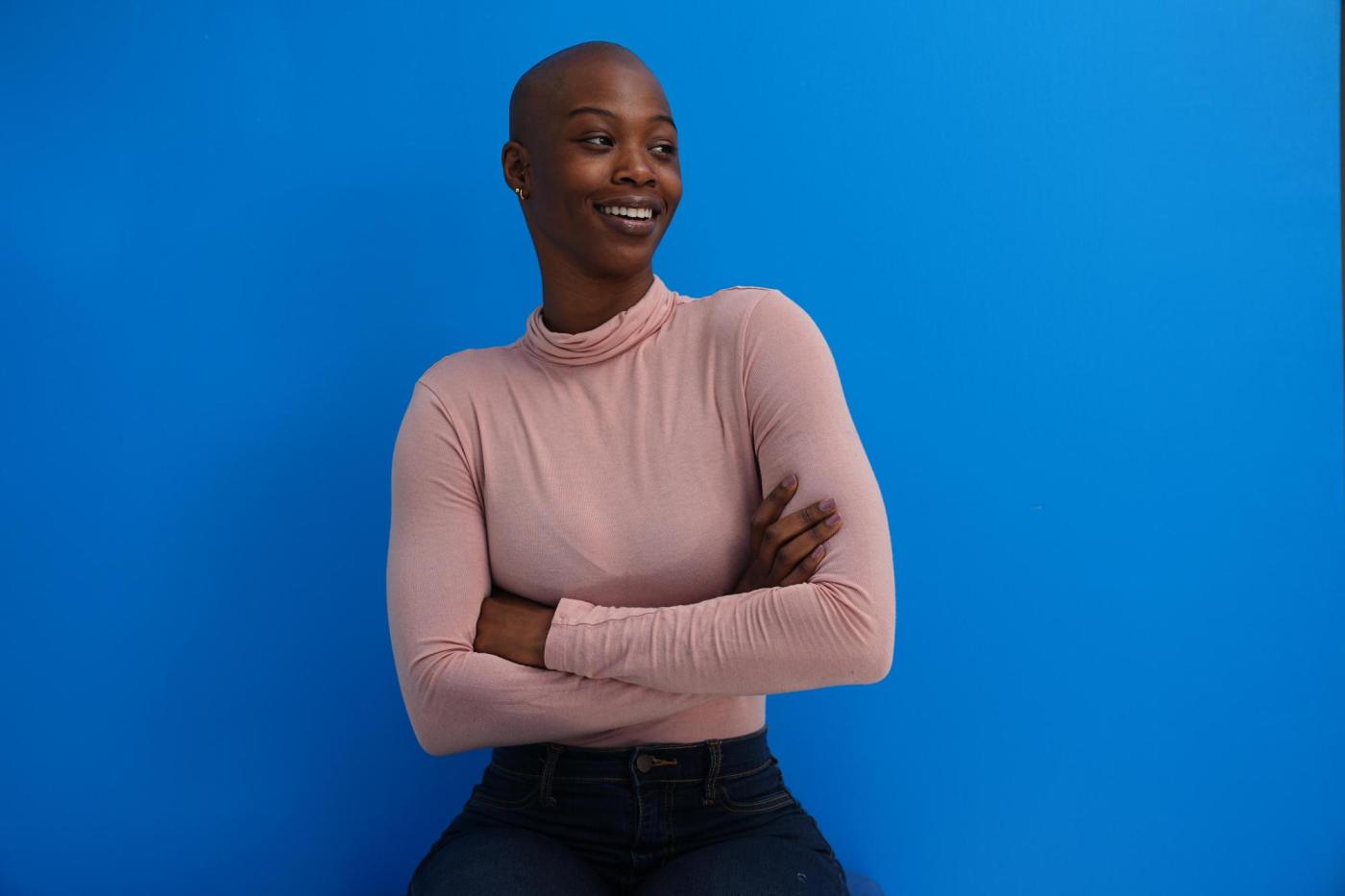
That’s how Brennan Nevada Johnson, who shaved her head voluntarily 14 years ago, opens the video podcast she launched last November to celebrate the advantages of choosing a bald look.
Sensuous, self-assured and glamorous are not the adjectives typically assigned to women with shorn hair. For centuries, many cultures have viewed long hair as a symbol of femininity, health and fertility. But more women are defying that traditional beauty standard and finding empowerment by baring their heads.
“Once you do it, it brings all this confidence into your life,” Johnson, 34, said. “Whenever you see someone who’s bald and not wearing a wig, just know that they have fully embraced themselves, and I think that’s something that’s really challenging to do.”
Her initial decision to go baldheaded was practical. Johnson played competitive volleyball in college and found the sweating she did on the court affected the expensive hair relaxing treatments she often had done. Once she started shaving off her hair, though, she was hooked. She was relieved to save money on salon trips.
Johnson now owns a New York public relations firm. “Bald and Buzzed with Brennan,” the video podcast she posts on YouTube, was an attempt to fill a void in social media content that affirmed bald people, especially women. She says she always thought baldness was sexy.
“It’s such a fashion statement, and it’s a really powerful look,” Johnson said.
Other women without hair, whether voluntarily or due to medical conditions, also have sought ways to support each other, attending conferences, joining “baldie” groups and swapping grooming and scalp care tips.
“There’s a whole community of us out there,” said Dash Lopez, a content creator who posts a weekly video series of her shaving routine called “Fresh Cut Friday.” “We need to talk about it because we do find comfort and empowerment and beauty in what some people think is weird.”
Redefining beauty
Lopez said members of her family praised the long curly hair she had growing up. Some of her friends played with different hair colors and styles, but Lopez said she didn’t have the same freedom. And she didn’t enjoy detangling her hair or spending long afternoons at the salon.
As soon as she turned 18 and could get a haircut without permission, she chopped her locks into a pixie cut. Then she shaved it all off during the COVID-19 pandemic.
“It makes me feel powerful in the sense that I’m able to detach from the things that people place so much emphasis on,” Lopez, 29, said. “I’m not sitting here planning, ‘Oh my gosh, when am I going to get my next color appointment done? That’s gonna cost me $300. Oh my gosh. I’ve got to get my hair done before I go to this event.’”
Lopez signed a contract with a modeling agency in 2020, a time when brands wanted to showcase diversity, she said. Back then, being bald worked for her professionally.
“There was an appreciation for quirks and if you had a gap in your tooth, if you had a bald head, if you had a face full of freckles, that’s what casting directors were looking for,” Lopez said.
She noticed the tide shifting last year, when her bookings for modeling jobs decreased. “Let’s be honest, the odds were stacked against me in the modeling world,” Lopez said. “I was 5′ 4″, 5′ 5″ on paper, no hair.”
A client suggested she wear wigs to land more work. Lopez did not want to do that or grow out her hair. Her modeling contract ended. Since then, she has shared glimpses of her life as a bald woman on Instagram and TikTok, where some of her videos have been watched millions of times.
“I feel powerful in the sense that I’m making my own choices,” Lopez said. “I’m doing it for my own self-empowerment, I am doing it from my own self-clarity, for a deeper understanding of what it is that I value, a deeper understanding of what beauty means to me.”
Creating community
Many women are confronted with how they define beauty when they lose hair due to health conditions such as alopecia or during chemotherapy treatment for cancer.
Felicia Flores, a flight attendant who lives in Atlanta, was diagnosed in 2001 with alopecia, an autoimmune disorder that causes hair to fall out. Six years later, all her hair was gone. Initially, she wore wigs.
Then she came across a group called The Baldie Movement on Facebook. “The ladies just really inspired me,” Flores, 47, said. “They really did help to encourage me and give me strength, … and they were just so confident.”
She eventually decided to stop wearing wigs and embrace being bald in 2015, after a romantic breakup. “I was tired of lying. I felt like I was hiding something. I felt like I wasn’t myself,” she said.
To help uplift and inspire other women, Flores founded an annual conference called Baldie Con. The fourth one drew drew more than 200 attendees to Atlanta last month for a fashion show, guest speakers, a jazz brunch and a black tie gala, she said.
Managing reactions
Aicha Soumaoro, who works in Philadelphia as a nurse on weekdays and as a mechanic on weekends, said some of her patients call her “sir” instead of “ma’am,” but she doesn’t let it bother her. “It’s new to them, girls that are bald.”
Aicha Soumaoro poses in West Chester, Pa., Friday, Oct. 17, 2025. (AP Photo/Matt Rourke)
Soumaoro, 27, said that after she shaved her head, her mother told her that most men wouldn’t want to marry a woman with no hair. She focuses instead on the compliments she’s received while out in public, including “You wear it with confidence” and “Your face is gorgeous.”
“Being bald, it’s like a boost of confidence out of nowhere,” said Soumaoro, who cuts her hair every Sunday. “It’s like a new skin, a new layer, a new personality. I just feel fresh. Like I was born again.”
She also hikes on Sundays, savoring the feeling of cold breezes on her scalp. “Having that connection with Earth, it feels amazing,” Soumaoro said. “I feel like I can hear everything more clearly. It’s like I have a clear mindset when my head is bald.”
Tiffany Michael Thomas, an Atlanta-based performer who goes by the stage name Amor Lauren, shaved her head in a show of support when her mother was undergoing treatment for pancreatic cancer.
After her mother died, Thomas continued receiving compliments from other women. She decided to keep the bald look.
“Once I began to really embrace it, it just made me feel like I was unstoppable,” Thomas, 37, said. “There’s nothing that I have to hide behind anymore. … It forced me to deal with all of my insecurities.”
If you’re thinking about shaving your head, don’t hesitate, Thomas advises. Women tell her they’re concerned that their head isn’t the right shape, or they have a lump or a scar. “Do it without thought,” she said. “Do it scared. Everything in life, just do it scared. The best way to get through that fear is to actually do it.”
Send your wellness questions and story ideas to cbussewitz@ap.org. Follow AP’s Be Well coverage, focusing on wellness, fitness, diet and mental health at https://apnews.com/hub/be-well.