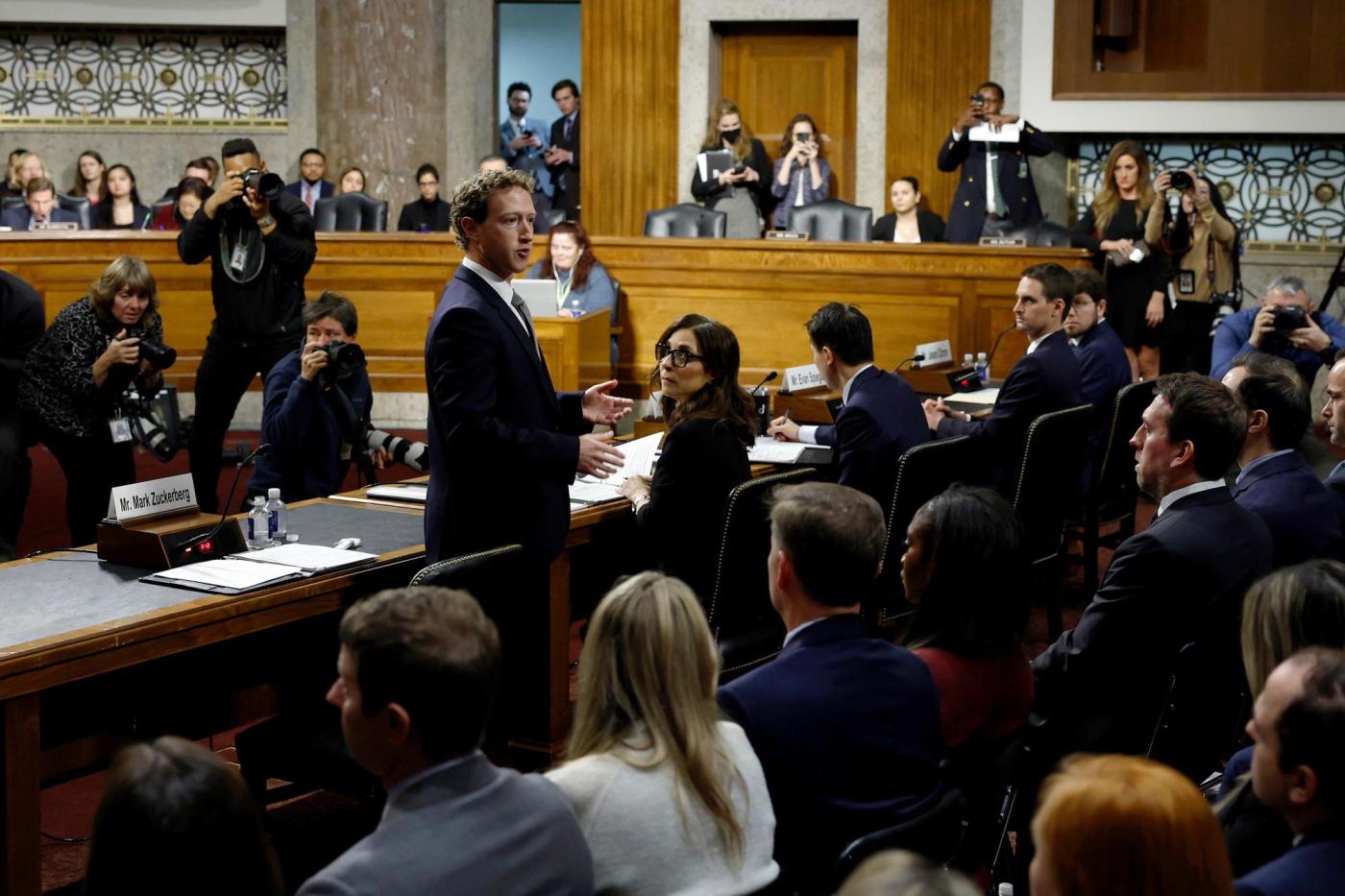
Will tariffs slow the U.S. economy in 2026?

posted in: All news | 0

The U.S. economy has largely weathered historically high tariffs so far this year, but a new study says tariffs will hit Americans in 2026.

The Paris-based Organization for Economic Cooperation and Development said it expects the U.S. economy to grow 1.8% this year, and 1.5% next year. It mostly based its prediction for slower growth on tariff effects.

The organization estimated that the overall effective U.S. tariff rate on imports rose to 19.5% at the end of August from 15.4% in mid-May, reaching its highest level since 1933. Tariffs have yet to greatly hit the U.S. consumer, the organization said, because of companies using up inventories.

Yet many economists were wrong when the Trump tariffs were announced and most predicted a recession this year. “History tells us that free markets can cope with wars, plagues and revolutions,” wrote financial columnist Matthew Lynn for The Washington Post. “It was always slightly absurd to argue that 20% levies on Vietnamese-made Halloween masks would be the end of the world.”

Question: Will tariffs slow the U.S. economy in 2026?

Economists

James Hamilton, UC San Diego

YES: The good news is that the tariffs implemented so far have been much more modest than was originally threatened. But the possibility of big new tariffs is in the news daily, and the uncertainty itself holds businesses back. Much of the impact of the tariffs already implemented won’t show up until the end of the year. And retaliatory actions by other countries, such as China’s threat to withhold supplies of rare-earth elements, could have quite serious effects.

Norm Miller, University of San Diego

YES: It is already slowing the economy, albeit more slowly than many thought. Advanced purchasing helped many wholesalers. Some foreign suppliers have actually been eating the tariff by reducing prices, and a strong dollar in early 2025 helped keep prices down, but as we enter 2026 there will be no inventory left at pre-tariff prices and the dollar is weakening. This means imports will be more expensive and this negatively affects both inflation and our average standard of living.

Caroline Freund, UC San Diego School of Global Policy and Strategy

YES: But the impact of current tariffs — unlike the harsher ones announced in April — will be limited. Retaliation has been avoided, and exemptions and trade deals are softening the blow. Imports make up only 11% of U.S. consumption, so major price effects are unlikely. The bigger drag is uncertainty: Firms are delaying investment and hiring until policies stabilize, while the Fed waits to cut rates until the inflation impact is clearer.

Kelly Cunningham, San Diego Institute for Economic Research

YES: Tariffs will have detrimental effect on economic growth imposing artificial costs on goods and services crossing borders, ultimately forcing consumers to pay higher prices. Uncertainty over the actual amount of rates to be imposed on trading partners somewhat delayed things in 2025, as well as the momentum of companies building inventories and consumers rushing to buy before tariff costs were imposed, sustained economic growth, but the negative impacts will be manifest in the coming year.

David Ely, San Diego State University

YES: U.S. firms increased their inventories of foreign-produced goods in advance of higher tariffs and initially absorbed the cost when it was unclear where trade policies would land. While firms can absorb higher tariffs in the short term, they will eventually need to raise prices to help offset their higher costs. The tariffs will probably not cause a recession, but higher prices will impact spending by consumers and businesses that rely on imported components.

Executives

Phil Blair, Manpower

YES: The tariffs will result in huge price increases that will put a huge damper on U.S. spending. Think about the threat now for 100% tariffs on merchandise from China.

Jamie Moraga, Franklin Revere

YES: The U.S. economy has shown resilience this year despite higher tariffs and policy uncertainty. Should these increased tariffs persist and the labor market cools, we could see an economic slowdown next year. Consumer spending and business investment will continue to be key indicators to watch. However, a recession in 2026 is unlikely, as continued investments in artificial intelligence and the effects of tax cuts are expected to offset some of the downward pressures on growth.

Related Articles


Ford recalls more than 290,000 vehicles in US due to issue with rearview camera system


Big Tech is paying millions to train teachers on AI, in a push to bring chatbots into classrooms


Trump called Digital Equity Act ‘racist.’ Now internet money for rural Americans is gone


Wall Street steadies after its slide as banks recover some of their losses


How Promote Giving, a new investment model, will raise millions for charities

Gary London, London Moeder Advisors

YES: Tariffs are either a contributing factor or a causal factor in what appears to be a slowing economy. The impact of tariffs has lagged as suppliers have been reluctant to pass on the costs of tariffs to their customers. But that can’t last forever. Even the president stated that there will be a period of economic pain while the economy adjusts to these new global rules. It seems that we are entering that period.

Bob Rauch, R.A. Rauch & Associates

NO: Tariffs may have short-term effects, but the economy is poised to accelerate in 2026. A major spending bill, stabilized tariff expectations, and renewed consumer activity will fuel growth. Lower interest rates will revive housing and business investment, while midterm elections typically spur economic optimism. With record net worth, 65% homeownership, 60% stock ownership, rising retail sales, and low unemployment, the fundamentals remain strong and suggest resilience despite tariff concerns. Q3 and Q4 will be powerful.

Austin Neudecker, Weave Growth

YES: Tariffs are a tax on imports, both finished goods and inputs. With the effective rate nearing 100-year highs, the OECD expects the impact to substantially land in 2026. In 2025, firms buffered costs with existing contracts and inventories. As those roll off, companies will re-price and pass costs on to consumers. Retaliation and uncertainty will also weigh on exports. I expect slower growth, not a collapse, as higher costs ripple through supply chains.

Chris Van Gorder, Scripps Health

YES: It’s hard to know with on again/off again tariffs and now another battle between the U.S. and China. I think many in the U.S. will start to notice during the holidays. The result will be a continued slowdown in hiring and an increase in prices. And if Congress doesn’t act, ACA subsidies will expire at year’s end. Resulting increased health insurance costs will further impact the economy and public perception of the economy.

With no takers yet, White House sets meeting with colleges still weighing an agreement with Trump

posted in: All news | 0

By COLLIN BINKLEY, AP Education Writer

WASHINGTON (AP) — The five universities that are still weighing President Donald Trump’s higher-education compact have been asked to join a White House call Friday to discuss the proposed deal, according to two people familiar with the matter.

The people spoke on condition of anonymity to discuss details of the private call.

It follows a flurry of rejections from four of the nine universities invited to be “initial signatories” of the agreement. The White House asked university leaders to provide initial feedback by Oct. 20, yet as the deadline approaches, none have signed on to the document.

Those that have not yet announced a decision are Dartmouth College, the University of Arizona, the University of Texas, the University of Virginia and Vanderbilt University. They did not immediately respond to questions about Friday’s call.

Leaders of the University of Texas system said they were honored to be included, but other universities have not indicated how they’re leaning.

Officials at the University of Virginia invited campus feedback as they weighed the offer. Dartmouth President Sian Beilock acknowledged the need for reforms but said she would “never compromise our academic freedom and our ability to govern ourselves.”

The Massachusetts Institute of Technology was the first to decline the deal last week, saying it would limit free speech and campus independence. Similar concerns were cited in rejections from Brown University, the University of Pennsylvania and the University of Southern California.

The compact — which aims to reshape higher education through negotiation rather than legislation — has stirred a wave of pushback from academia and beyond. It has been protested by students, condemned by faculty and drawn the ire of Democrats at all levels. Gov. Gavin Newsom in California and Democrats in Virginia have threatened to cut state funding to any university that signs on.

It’s unclear exactly what universities have to gain by agreeing to the deal — or what they stand to lose if they don’t. In a letter sent alongside the compact, Trump officials said it provided “multiple positive benefits” including favorable access to federal funding. In exchange, colleges were asked to adopt 10 pages of commitments aligned with Trump’s political priorities.

It asked for commitments to eliminate race and sex from admissions decisions, to accept the government’s binary definition of “man” and “woman,” to promote conservative views on campus and to ensure “institutional neutrality” on current events, among other provisions.

“Institutions of higher education are free to develop models and values other than those below, if the institution elects to forego federal benefits,” the compact said.

Many of the terms align with recent deals the White House struck with Brown and Columbia universities to close investigations into alleged discrimination and to restore research funding. But while those agreements included terms affirming the campuses’ academic freedom, the compact offers no such protection — one of the roadblocks cited in Brown’s rejection.

Related Articles


Trump called Digital Equity Act ‘racist.’ Now internet money for rural Americans is gone


A war on drugs or a war on terror? Trump’s military pressure on Venezuela blurs the lines


US blocks a global fee on shipping emissions as international meeting ends without new regulations


Democrats say Trump needs to be involved in shutdown talks. He’s shown little interest in doing so


Orbán celebrates Hungary as ‘the only place in Europe’ where a Trump-Putin meeting can be held

White House officials described the offer as a proactive approach to shape policy at U.S. campuses even as the administration takes enforcement action against colleges it accuses of antisemitism and liberal bias. The White House has cut billions of dollars at Harvard and other prestigious schools, and then entered negotiations to restore it if colleges agree to wide-ranging settlements in line with the administration’s views.

Trump on Sunday said colleges that sign on will help bring about “the Golden Age of Academic Excellence in Higher Education.” Speaking on his Truth Social platform, he said it would reform universities that are “now corrupting our Youth and Society with WOKE, SOCIALIST, and ANTI-AMERICAN Ideology.”

The Associated Press’ education coverage receives financial support from multiple private foundations. AP is solely responsible for all content. Find AP’s standards for working with philanthropies, a list of supporters and funded coverage areas at AP.org.

Ted Cruz claims ‘Christian mass murder’ is occurring in Nigeria. The data disagrees

posted in: All news | 0

By OPE ADETAYO, Associated Press

LAGOS, Nigeria (AP) — U.S. Sen. Ted Cruz has been trying to rally fellow evangelical Christians and urge Congress to designate Nigeria as a violator of religious freedom with unfounded claims of “Christian mass murder,” which the government of the West African nation has vehemently rejected as false.

Cruz, a Republican member of the Senate Foreign Relations Committee, wants Nigeria to be designated a country of particular concern as one with “severe violations” of religious freedom. Designated countries include Pakistan, Afghanistan and China. A designation could result in U.S. sanctions. The bill he introduced last month is awaiting action by the Senate and there is no certainty of it being approved.

Cruz’ claims have been amplified by some celebrities and commentators in the U.S., without evidence, with some going as far as alleging a “Christian genocide.” Cruz’ office did not respond to questions, including about his motivation for the allegations.

FILE- Onlookers gather around burnt out cars at the site of a bomb blast at St. Theresa Catholic Church in Madalla, Nigeria, Sunday, Dec. 25, 2011. (AP Photo/Sunday Aghaeze, File)

Here’s what to know.

Both Christians and Muslims are killed

Nigeria’s 220-million-strong population is split almost equally between Christians and Muslims. The country has long faced insecurity from various fronts including the Boko Haram extremist group, which seeks to establish its radical interpretation of Islamic law and has also targeted Muslims it deems not Muslim enough.

Attacks in Nigeria have varying motives. There are religiously motivated ones targeting both Christians and Muslims, clashes between farmers and herders over dwindling resources, communal rivalries, secessionist groups and ethnic clashes.

While Christians are among those targeted, analysts say the majority of victims of armed groups are Muslims in Nigeria’s Muslim-majority north, where most attacks occur.

Both Muslim and Christian communities, and groups, have at various times alleged “genocide” during religiously motivated attacks against both sides. Such attacks are often in the north-central and northwestern regions struggling, among other forms of violence, with farmer-herder conflict that is between farming communities — predominantly Christians — and Fulani herders who are mainly Muslims.

Related Articles


Italy’s anti-Mafia police investigate after a journalist’s car explodes


After winning Trump’s $20 billion, President Milei must win votes as Argentine industry reels


Russians and Ukrainians expect no major breakthrough at planned Trump-Putin summit


US has seized survivors after strike on suspected drug-carrying vessel in Caribbean, AP sources say


A war on drugs or a war on terror? Trump’s military pressure on Venezuela blurs the lines

Joseph Hayab, a former chairman of the Christian Association of Nigeria in Kaduna state, among the worst hit by the insecurity, disputed claims of “Christian genocide.”

While thousands of Christians have been killed over the years, “things have been better than what they were before,” Hayab said, warning, however, that every single death is condemnable.

Nigeria’s government rejected Cruz’ claims, which have been discussed among Nigerians. “There is no systematic, intentional attempt either by the Nigerian government or by any serious group to target a particular religion,” Information Minister Idris Muhammed told The Associated Press.

Nigeria was placed on the country of particular concern list by the U.S. for the first time in 2020 in what the State Department called “systematic violations of religious freedom.” The designation did not single out attacks on Christians. The designation was lifted in 2023 in what observers saw as a way to improve ties between the countries ahead of then-Secretary of State Antony Blinken’s visit.

Responding to the latest claims from U.S. commentators, the Christian Association of Nigeria said it has worked to draw attention over the years to “the persecution of Christians in Nigeria.”

In its 2024 report, the U.S. Commission on International Religious Freedom highlighted attacks targeting both Christians and Muslims in what it called systematic religious freedom violations in Nigeria. “Violence affects large numbers of Christians and Muslims in several states across Nigeria,” the commission added.

What the data says

Data collected by the U.S.-based Armed Conflict Location and Event Data program shows 20,409 deaths from 11,862 attacks against civilians in Nigeria between January 2020 and this September.

Of those, 385 attacks were “targeted events against Christians … where Christian identity of the victim was a reported factor,” resulting in 317 deaths, ACLED says.

In the same period, there were 417 deaths recorded among Muslims in 196 attacks.

While religion has been a factor in Nigeria’s security crisis, its “large population and vast geographic differences make it impossible to speak of religious violence as motivating all (the) violence,” said Ladd Serwat, senior Africa analyst at ACLED.

Analysts reject claims of genocide

Analysts say Nigeria’s complex security dynamics do not meet the legal definition of a genocide. The U.N. convention on preventing genocide calls it acts “committed with intent to destroy, in whole or in part, a national, ethnical, racial or religious group.”

“If anything, what we are witnessing is mass killings, which are not targeted against a specific group,” said Olajumoke Ayandele, an assistant professor at New York University’s Center for Global Affairs who specializes in conflict studies. “The drumming-up of genocide might worsen the situation because everyone is going to be on alert.”

Chidi Odinkalu, a professor at Tufts University’s Fletcher School of Law and Diplomacy and a former chairman of Nigeria’s National Human Rights Commission, said Nigerian authorities, however, need to address the rampant violence.

Italy’s anti-Mafia police investigate after a journalist’s car explodes

posted in: All news | 0

By NICOLE WINFIELD and PAOLO SANTALUCIA, Associated Press

ROME (AP) — A car belonging to one of Italy’s leading investigative journalists exploded outside his home overnight, prompting an investigation by Italy’s anti-Mafia authorities and condemnation Friday from Prime Minister Giorgia Meloni and others. No one was injured.

The explosion late Thursday targeting Sigfrido Ranucci, lead anchor of state-run RAI3’s Report investigative series, occurred on the eighth anniversary of the car bomb slaying of Maltese investigative journalist Daphne Caruana Galizia.

The investigative program said the explosion was so powerful that it could have killed anyone passing by. Ranucci had just returned home at the time and his daughter had walked by a half-hour before, Report said in a statement. The blast destroyed the car, damaged another family car next to it, as well as the front gate of Ranucci’s home in Pomezia, south of Rome.

Police, firefighters and forensic crews reported to the scene and magistrates from the Rome district of the anti-Mafia police were investigating, Report said. Video shot by Ranucci, who has been under police protection since 2021 because of his hard-hitting investigations, showed the mangled remains of the cars and gate.

Meloni expressed her solidarity with Ranucci and condemned what she called “the serious act of intimidation he has suffered.”

“Freedom and independence of information are essential values of our democracies, which we will continue to defend,” she said in a statement.

In comments to journalists outside the offices of RAI, Ranucci said the explosion was an “escalation” of what he said were two years of threats that he believed were related to Report’s investigations into the links between the Cosa Nostra, ‘ndrangheta and far-right crime groups and notable past Mafia hits.

Asked if the explosion would have a chilling effect on Report’s work, he said his colleagues were used to working under difficult conditions.

Related Articles


Ted Cruz claims ‘Christian mass murder’ is occurring in Nigeria. The data disagrees


After winning Trump’s $20 billion, President Milei must win votes as Argentine industry reels


Russians and Ukrainians expect no major breakthrough at planned Trump-Putin summit


US has seized survivors after strike on suspected drug-carrying vessel in Caribbean, AP sources say


A war on drugs or a war on terror? Trump’s military pressure on Venezuela blurs the lines

“Whoever thinks they can condition the work of Report by doing something like this will get the opposite effect,” he said. “The only thing this does is maybe makes us waste some time.”

Italian journalist unions, politicians and others also expressed solidarity.

Report is one of the few investigative programs on Italian television and regularly breaks news involving prominent Italian politicians, business leaders and public figures. Ranucci has been sued multiple times for defamation and just this week was absolved in the latest case he had faced.

The blast occurred on the eighth anniversary of the Oct. 16, 2017 murder of Caruana Galizia, who wrote extensively about suspected corruption in political and business circles in Malta. Like Ranucci, she had faced dozens of libel suits intended to silence her reporting. Two men were sentenced to life in prison earlier this year after being convicted of complicity in the murder. Two other people pleaded guilty in 2022 to carrying out the murder and were sentenced to 40 years in prison.