Imagine, for a moment, that you’re an American pilot flying an F-16 over Iraq. The troops on the ground have been pursuing a small group of Iraqi insurgents. They report that they’ve cornered the insurgents in a small farmhouse. Rather than take the risk of assaulting the house on the ground, the commander has called you in to make a precision strike from the air — to blow up the entire building.
But you have concerns. You’ve been briefed over and over again about the law of war, and you’re worried that there might be civilians in the house. You can’t see any, but you don’t know for sure. A legal principle called “distinction” requires you to discriminate between military and civilian targets, and you’re worried about who might be behind those walls.
In fact, since you were called in after the insurgents reportedly entered the house, you’ve never seen them. You’re being asked to trust that the commander on the ground has identified the proper target.
So you make a quick inquiry. “Are civilians present?”
The response is immediate. “We’ve got the JAG (military lawyer) in the TOC (tactical operations center), and you’re cleared to engage.” That response tells you that a legal analysis has been done, and the lawyer thinks the strike is acceptable.
What do you do?
Now, switch gears and imagine that you’re on the ground, the leader of an infantry platoon. You capture a man you believe to be the mastermind of a series of suicide bombings, including an explosion at a wedding last week that killed dozens of women and children.
Just when you’re about to load your prisoner into a vehicle to take him to your forward operating base, the company commander arrives. He takes one look at your prisoner, turns to you, and says, “I’ve seen what that man did. I picked up the body parts of babies. Kill him. He doesn’t deserve to live.”
What do you do?
On Tuesday, six Democratic lawmakers released a video message to members of the military. The group was organized by Sen. Elissa Slotkin, D-Mich., a former CIA analyst who served in Iraq during the height of the war there. The group included Sen. Mark Kelly, D-Ariz., a former fighter pilot and astronaut, and Rep. Jason Crow, D-Colo., a former Army Ranger. All six lawmakers were veterans of either the military or the intelligence services.
The message of the video was simple: Soldiers do not have to follow illegal orders.
There is nothing radical about that statement. Members of the military are trained on the basics of the law of war. Over the course of my JAG career, I briefed thousands of soldiers, and in each of those briefings I told them that if they were ordered to violate any of the clear requirements of the law, they didn’t just have the right to refuse; they had an obligation to refuse.
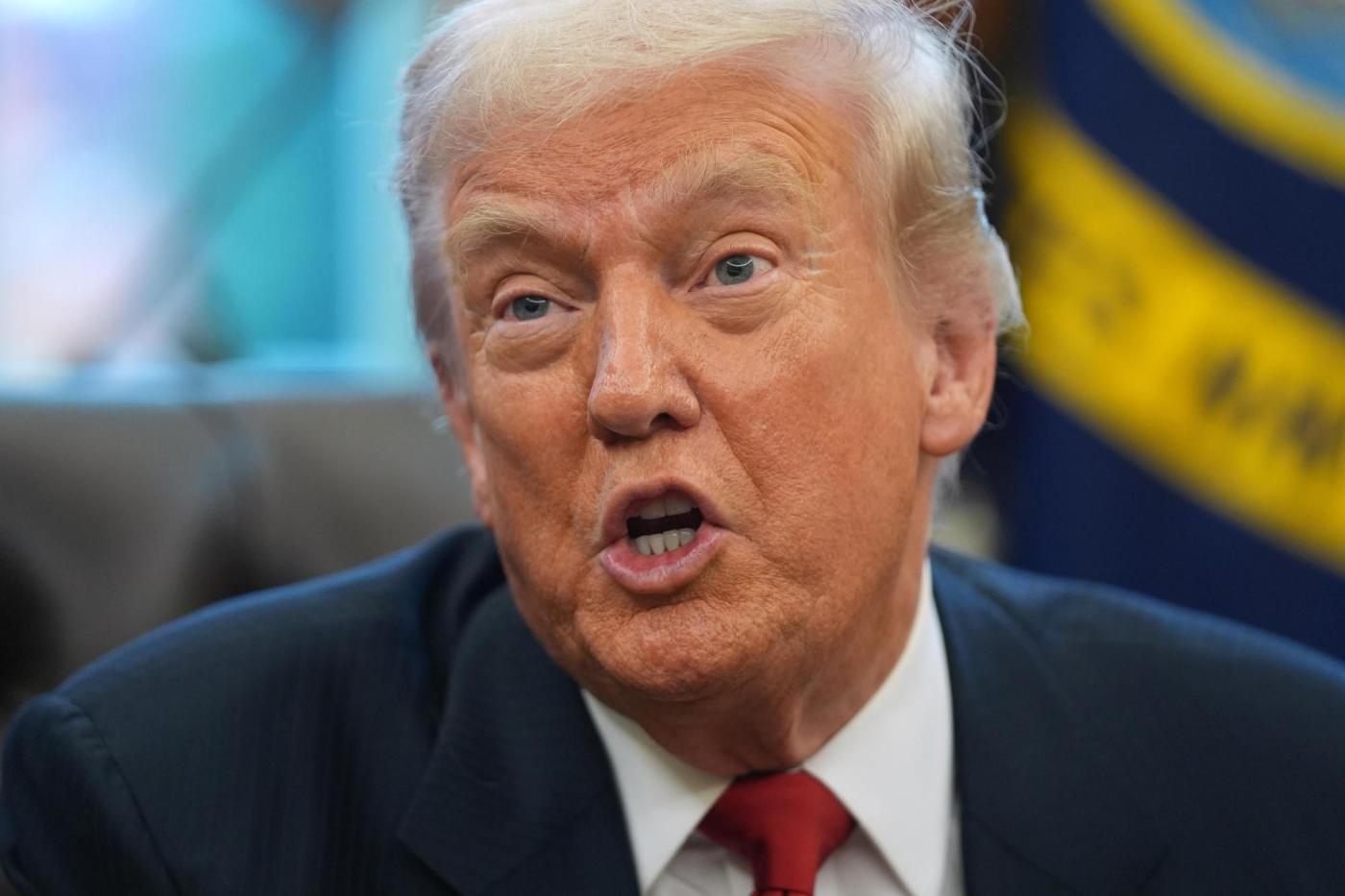
President Donald Trump’s reaction to the video was unhinged. On social media, he posted, “SEDITIOUS BEHAVIOR, punishable by DEATH!” Another post he shared said, “HANG THEM GEORGE WASHINGTON WOULD !!”
Those statements are ridiculous. It is not “seditious” to repeat a simple legal truth to the U.S. troops. And Slotkin said that she’d been getting questions from active duty soldiers about their legal obligations.
But Trump’s statements aren’t just unhinged; they are putting the lawmakers at risk. Slotkin said that her office was flooded with threats after Trump’s posts. Also, as we’ve seen, Trump is not above ordering his Department of Justice to file frivolous criminal charges against his perceived political foes.
I had a different issue with the lawmakers’ message, though. While there is certainly some value in assuring service members that members of the House and Senate would support them in the event that they properly defied unlawful orders, the video didn’t provide any clarity. Soldiers already know that they must not obey illegal orders. But the video doesn’t shed light on a separate and equally important question: Which orders are illegal?
Let’s go back to the hypothetical situations above, which are, in fact, not hypothetical at all. The first scenario was extremely common when I served in Iraq. In fact, I was frequently the JAG officer in the TOC who evaluated and legally approved airstrikes, artillery strikes and other uses of deadly force. As a result, I know better than most what tough judgment calls these can be. But once a good faith judgment is made and the order is given, it must be executed.
You can’t fight a war — especially a counterinsurgency like the one we faced in Iraq — if every soldier acts as an independent legal check on every order he or she receives. Individual service members don’t have sufficient knowledge or information to make those kinds of judgments. When time is of the essence and lives are on the line, your first impulse must be to do as you’re told.
But not always. In the two scenarios above, the pilot should drop his bomb, but the platoon leader should refuse the order to shoot the prisoner.
The legal difference between those two scenarios can be explained in a case called United States v. Calley, the best-known case to emerge from the Vietnam War, a conflict that also contained both conventional and counterinsurgency elements. First Lt. William Calley Jr. was facing charges related to the My Lai massacre in Vietnam, and he presented a classic military defense — that he was following orders to clear the village.
In response, the Court of Military Review said, “The acts of a subordinate done in compliance with an unlawful order given him by his superior are excused and impose no criminal liability upon him unless the superior’s order is one which a man of ordinary sense and understanding would, under the circumstances, know to be unlawful, or if the order in question is actually known to the accused to be unlawful.”
As Maj. Keith Petty, then an Army judge advocate, explained in an excellent summary of the law in a 2016 piece in Just Security, this is called the “manifestly unlawful” test, and — as Petty described it — the rule means that “the legal duty to disobey is strongest when the superior’s order is unlawful on its face.”
Shooting a prisoner, for example, is unambiguously illegal. Bombing a home that is thought to contain insurgents is not.
When I was in Iraq, though, we were fighting under a clear congressional authorization in a combat environment in which individual airstrikes and other uses of deadly force were routinely subject to legal review.
What if you’re a service member ordered to strike a suspected drug boat off the coast of Venezuela or Colombia, and you know that Congress has not been consulted and has not authorized your mission?
As Petty writes, the answer comes from the Nuremberg Trials — the trials of Nazi leaders after World War II. In the High Command Trial, the court put it well, “Somewhere between the dictator and supreme commander of the military forces of the nation and the common soldier is the boundary between the criminal and the excusable participation in the waging of an aggressive war by an individual engaged in it.”
Affirming this principle, the International Criminal Court has said that the crime of aggression applies to a “person in a position effectively to exercise control over or to direct the political or military action of a State.”
This means that when it comes to the decision to initiate hostilities, the responsibility rests with the senior leaders of the nation (in this case, ultimately, with Trump). At the same time, however, members of the military bear responsibility for how they conduct those operations.
These distinctions make a lot of sense. A military can’t function if individual members get to decide — according to their own legal analyses — if the war they’re fighting is legal. We can’t reasonably share with all members of the military the often highly classified intelligence that presidents and senior leaders review when they issue orders to strike.
Even if the facts are clear, the law is often complex. Do we really expect individual pilots or sailors to know that the statutes Trump is relying on to designate various narcotics gangs as international terrorist organizations do not also contain an authorization to use military force?
Do we expect them to know the differences between these strikes and strikes in other conflicts where Congress didn’t authorize military action? (Such as the Korean War, for example, or President Bill Clinton’s intervention in the Balkan States, or President Barack Obama’s intervention in Libya.)
Do we expect individual pilots and sailors to know when criminal activity rises to the level of a true military threat under international law?
No, we do not.
In reality, junior officers and enlisted soldiers are often like the proverbial blind man feeling the elephant. We are given only partial information when we’re ordered to war. Our military couldn’t function if individual members adjudicated these questions themselves based on information gleaned from news reports or from their own incomplete review of the relevant intelligence.
But we do expect our most senior leaders to know these distinctions. And it is quite telling that the commander of the U.S. Southern Command, Adm. Alvin Holsey, decided to step down in October, shortly after the administration started targeting suspected drug boats in the Caribbean. Holsey had reportedly raised concerns about the strikes.
It is also telling that the most senior military lawyer in the Southern Command, which is responsible for military operations in South America, apparently disapproved of the strikes but was “ultimately overruled by more senior government officials, including officials at the Justice Department’s Office of Legal Counsel.”
Trump’s Justice Department has drafted a classified legal memorandum justifying its strikes. As a practical matter, this memo — as Jack Goldsmith, a Harvard Law School professor and a former senior Justice Department official, explained last month — acts as a “golden shield” from legal prosecution for subordinates who operate within the scope of the legal guidance.
The memo, however, cannot repeal the laws of armed conflict, which are binding on members of the military through the Uniform Code of Military Justice. Presidents have no power to repeal statutes. Pilots and sailors still can’t kill prisoners, for example, or open fire on known civilians when there is no conceivable military justification.
That means if the evidence of their eyes contradicts the intelligence from above (for example, if they see a clear indication that the boat they’re targeting isn’t carrying drugs or they see children on board), there may be an obligation to hold their fire. And even if the command to open fire is binding, no legal opinion can remove the moral discomfort from service members who are under orders to fight in a war that is almost certainly illegal.
Trump has put the military in an impossible situation. He’s making its most senior leaders complicit in his unlawful acts, and he’s burdening the consciences of soldiers who serve under his command. One of the great moral values of congressional declarations of war is that they provide soldiers with the assurance that the conflict has been debated and that their deployment is a matter of national will.
When the decision rests with the president alone, it puts members of the military in the position of trusting the judgment of a person who may not deserve that trust. I have heard from several anguished members of the active duty military. They feel real moral doubt and are experiencing profound legal confusion.
So here’s the bottom line: No legal opinion can compel any member of the military to commit “manifestly unlawful” acts during a war. But when it comes to the decision to begin an armed conflict, the responsibility doesn’t rest with individual soldiers, sailors, airmen or Marines; it rests with Trump and his most senior military and political advisers — the men and women who ordered them to fight.
David French writes a column for the New York Times.
Related Articles
Trudy Rubin: As Ukraine falters, Trump tries to hand the country to Putin with a shamefully pro-Russia peace plan
Lisa Jarvis: Why can’t we get hormone therapy right?
Cory Franklin: What will AI automation of health care mean for patients?
Mary Ellen Klas: The property tax fight is a power grab in Texas and Florida
F.D. Flam: AI thinks it’s smart. Chimps may beg to differ