Trump holds an event with Rubio and Hegseth during vacation as tensions with Venezuela mount

posted in: All news | 0

By AAMER MADHANI, REGINA GARCIA CANO and EMMA BURROWS, Associated Press

WEST PALM BEACH, Fla. (AP) — President Donald Trump is gathering with top national security officials on Monday, a meeting that comes as the U.S. Coast Guard steps up efforts to interdict oil tankers in the Caribbean Sea as part of the Republican administration’s escalating pressure campaign on Venezuelan President Nicolás Maduro’s government.

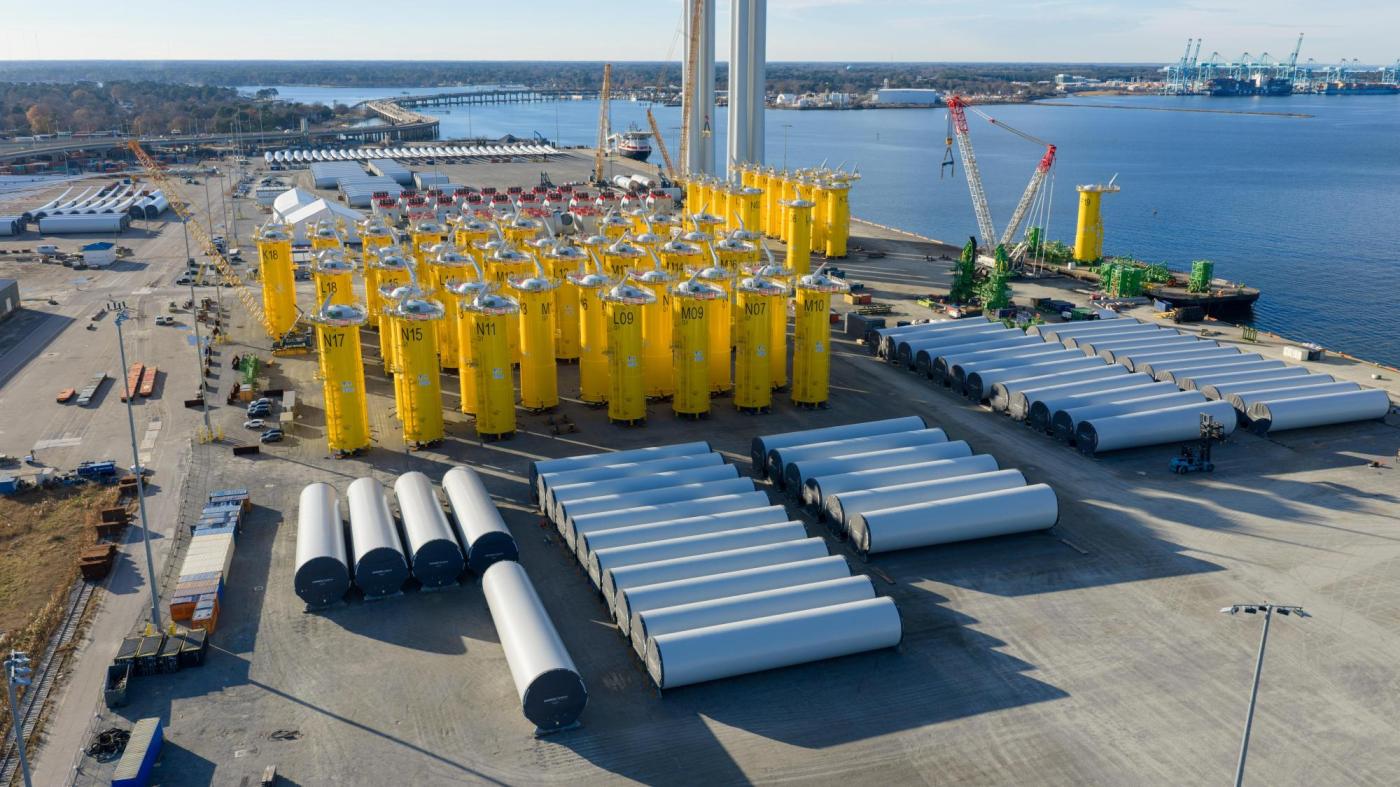
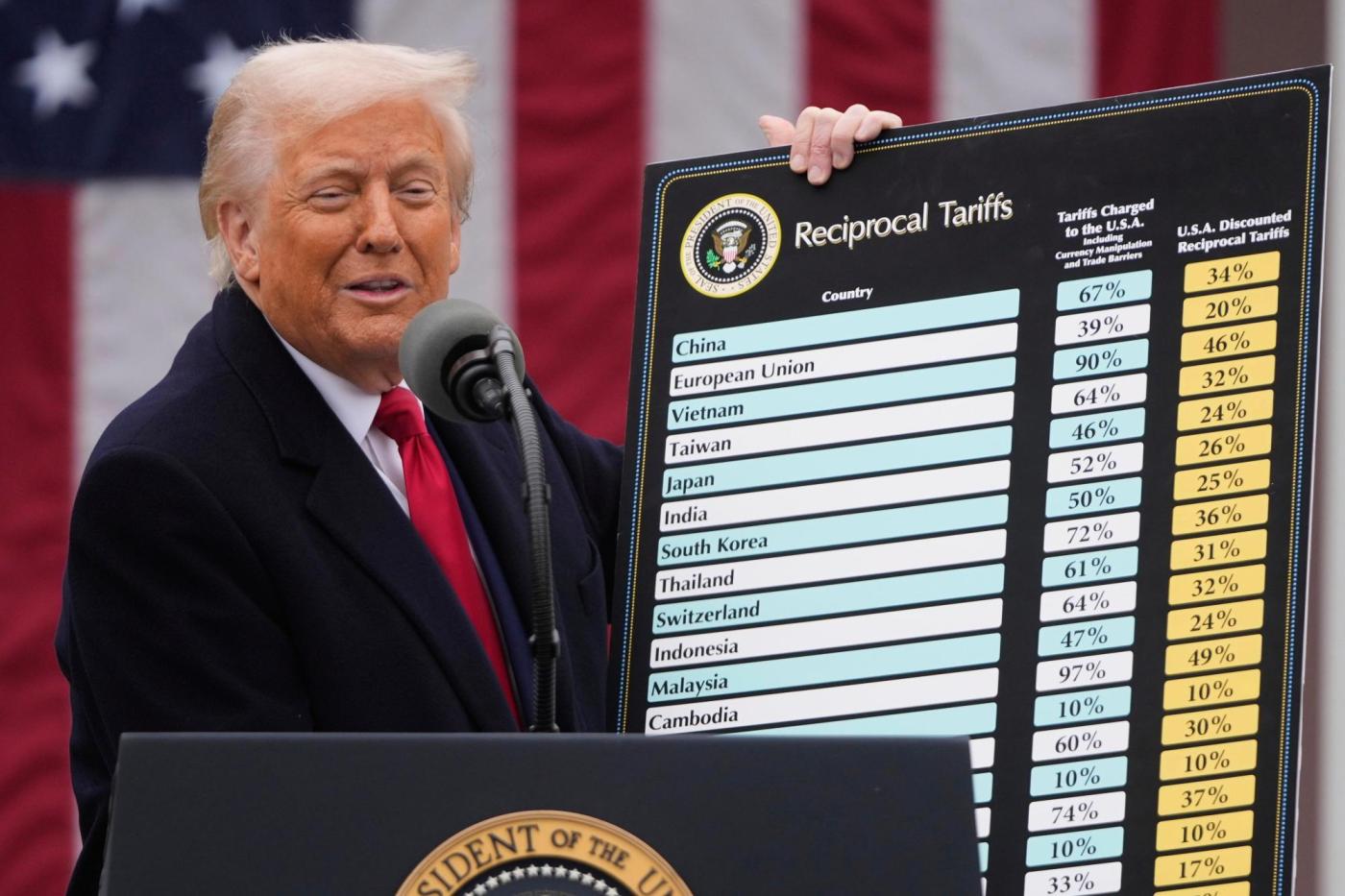
Secretary of State Marco Rubio, Defense Secretary Pete Hegseth and Navy Secretary John Phelan are scheduled to join Trump, who is vacationing at his Mar-a-Lago resort, for what the White House called a “major announcement.” Trump plans to discuss a shipbuilding initiative at the event, according to a White House official, who was not authorized to comment publicly and spoke on condition of anonymity.

But Trump’s gathering of key members of his national security team also comes at yet another inflection point in Trump’s four-month pressure campaign on the Maduro government, which began with the stated purpose of stemming the flow of illegal drugs from the South American nation but has developed into something more amorphous.

Russia’s Foreign Ministry has started evacuating the families of diplomats from Venezuela, according to a European intelligence official speaking on condition of anonymity to discuss sensitive information.

The official told The Associated Press the evacuations include women and children and began on Friday, adding that Russian Foreign Ministry officials are assessing the situation in Venezuela in “very grim tones.” The White House and Kremlin did not immediately respond to requests for comment.

US pursues a shadow fleet of oil tankers

In the Caribbean, the U.S. Coast Guard on Monday continued for the second day to chase a sanctioned oil tanker that the Trump administration describes as part of a “dark fleet” Venezuela is using to evade U.S. sanctions. The tanker, the official added, is flying under a false flag and is under a U.S. judicial seizure order.

It is the third tanker pursued by the Coast Guard, which on Saturday seized a Panama-flagged vessel called Centuries that U.S. officials said was part of the Venezuelan shadow fleet.

The Coast Guard, with assistance from the Navy, seized a sanctioned tanker called Skipper on Dec. 10, also part of the shadow fleet of tankers that the U.S. says operates on the fringes of the law to move sanctioned cargo. That ship was registered in Panama.

Trump, after that first seizure, said the U.S. would carry out a “blockade” of Venezuela. Trump has repeatedly said that Maduro’s days in power are numbered.

Last week, Trump demanded that Venezuela return assets that it seized from U.S. oil companies years ago, justifying anew his announcement of a “blockade” against sanctioned oil tankers traveling to or from the South American country.

Homeland Security Secretary Kristi Noem, whose agency oversees the Coast Guard, said in a Monday appearance on “Fox & Friends” that the targeting of tankers is intended to send “a message around the world that the illegal activity that Maduro is participating in cannot stand, he needs to be gone, and that we will stand up for our people.”

The scene on a Venezuelan beach near a refinery

While U.S. forces targeted the vessels in international waters , a tanker that’s considered part of the shadow fleet was spotted moving between Venezuelan refineries, including one about three hours west of the capital, Caracas.

The tanker remained at the refinery in El Palito through Sunday, when families went to the town’s beach to relax with children now on break from school.

Music played on loudspeakers as people swam and surfed with the tanker in the background. Families and groups of teenagers enjoyed themselves, but Manuel Salazar, who has parked cars at the beach for more than three decades, noticed differences from years past, when the country’s oil-dependent economy was in better shape and the energy industry produced at least double the current 1 million barrels per day.

“Up to nine or 10 tankers would wait out there in the bay. One would leave, another would come in,” Salazar, 68, said. “Now, look, one.”

Related Articles


Trump removes nearly 30 career diplomats from ambassadorial positions


Nicki Minaj surprises conservatives with praise for Trump, Vance at Arizona event


Schumer urges Senate to take legal action over Justice Department’s staggered Epstein files release


US pursuit of third oil tanker intensifies Venezuela blockade


Trump’s appointment of envoy to Greenland sparks new tension with Denmark

The tanker in El Palito has been identified by Transparencia Venezuela, an independent watchdog promoting government accountability, to be part of the shadow fleet.

Area residents on Sunday recalled when tankers would sound their horns at midnight New Year’s Eve, while some would even send up fireworks to celebrate the holiday.

“Before, during vacations, they’d have barbecues; now all you see is bread with bologna,” Salazar said of Venezuelan families spending the holiday at the beach next to the refinery. “Things are expensive. Food prices keep going up and up every day.”

Meanwhile, the Defense Department, under Trump’s orders, continues its campaign of attacks on smaller vessels in the Caribbean and eastern Pacific Ocean that it alleges are carrying drugs to the United States and beyond.

At least 104 people have been killed in 28 known strikes since early September. The strikes have faced scrutiny from U.S. lawmakers and human rights activists, who say the administration has offered scant evidence that its targets are indeed drug smugglers and that the fatal strikes amount to extrajudicial killings.

Garcia Cano reported from El Palito, Venezuela, and Burrows reported from London.

Trump removes nearly 30 career diplomats from ambassadorial positions

posted in: All news | 0

By MATTHEW LEE, Associated Press

WASHINGTON (AP) — The Trump administration is recalling nearly 30 career diplomats from ambassadorial and other senior embassy posts as it moves to reshape the U.S. diplomatic posture abroad with personnel deemed fully supportive of President Donald Trump’s “America First” priorities.

The chiefs of mission in at least 29 countries were informed last week that their tenures would end in January, according to two State Department officials, who spoke on condition of anonymity to discuss internal personnel moves.

All of them had taken up their posts in the Biden administration but had survived an initial purge in the early months of Trump’s second term that targeted mainly political appointees. That changed on Wednesday when they began to receive notices from officials in Washington about their imminent departures.

Ambassadors serve at the pleasure of the president although they typically remain at their posts for three to four years. Those affected by the shake-up are not losing their foreign service jobs but will be returning to Washington for other assignments should they wish to take them, the officials said.

Related Articles


Trump holds an event with Rubio and Hegseth during vacation as tensions with Venezuela mount


Nicki Minaj surprises conservatives with praise for Trump, Vance at Arizona event


Schumer urges Senate to take legal action over Justice Department’s staggered Epstein files release


US pursuit of third oil tanker intensifies Venezuela blockade


Trump’s appointment of envoy to Greenland sparks new tension with Denmark

The State Department declined to comment on specific numbers or ambassadors affected, but defended the changes, calling them “a standard process in any administration.” It noted that an ambassador is “a personal representative of the president and it is the president’s right to ensure that he has individuals in these countries who advance the America First agenda.”

Africa is the continent most affected by the removals, with ambassadors from 13 countries being removed: Burundi, Cameroon, Cape Verde, Gabon, Ivory Coast, Madagascar, Mauritius, Niger, Nigeria, Rwanda, Senegal, Somalia and Uganda.

Second is Asia, with ambassadorial changes coming to six countries: Fiji, Laos, the Marshall Islands, Papua New Guinea, the Philippines and Vietnam affected.

Four countries in Europe (Armenia, Macedonia, Montenegro and Slovakia) are affected; as are two each in the Middle East (Algeria and Egypt); South and Central Asia (Nepal and Sri Lanka); and the Western Hemisphere (Guatemala and Suriname).

Politico was the first to report on the ambassadorial recalls, which have drawn concern from some lawmakers and the union representing American diplomats.

With new memoir, Tom Freston hopes to show young people there are multiple paths to success

posted in: All news | 0

By DAVID BAUDER, AP Media Writer

NEW YORK (AP) — Tom Freston could easily fill a book with stories from the formative days of MTV and his celebrity encounters — Bono would merit a few chapters on his own. Ultimately, though, Freston feels that his life has a more valuable lesson to offer.

His memoir, “Unplugged,” shows by example that trying to follow a straight line to success is not the only path.

Freston, 80, was at MTV from the start and became its leader, along with sister networks Comedy Central, VH1 and Nickelodeon, at their greatest periods of success. He rose to become CEO of parent corporation Viacom before chairman Sumner Redstone’s impatience led to his ouster in 2006.

Since then Freston has largely freelanced, advising the likes of Oprah Winfrey and Vice, before its implosion. He made a memorable return to business in Afghanistan, and has been chairman of the ONE Campaign, the anti-poverty organization devoted to Africa that Bono spearheaded, for nearly two decades.

“I was improvising,” he said. “It was like a bebop lifestyle, hitting notes instead of having a long, set classical structure.”

His wanderlust unsettled Freston’s suburban Connecticut parents when he took a gap year after earning an MBA at New York University. They had reason to believe he had gotten it out of his system when he took a job at a Madison Avenue advertising agency in the early 1970s.

FILE – Tom Freston, left, and Carey Lowell attend the PAC NYC Icons of Culture Gala at Perelman Performing Arts Center on Oct. 28, 2025, in New York. (Photo by Evan Agostini/Invision/AP, File)

Saying no to a life convincing people to squeeze the Charmin

He soon faced a crossroads when he couldn’t muster enthusiasm for a role on his agency’s important Charmin account. An old girlfriend said to him: “All those years of school, that fancy MBA degree, and you are selling toilet paper? You’re better than that.”

She had a point. It was January 1972, and the woman invited him to hitchhike through France and Spain, then eventually into the Sahara Desert. He left the agency behind.

Thus began several years of travel, where he particularly fell in love with Afghanistan and India. Freston started a business importing clothing from Asia. The company, Hindu Kush, was successful for a time before restrictions on imports during the Carter administration killed it.

Related Articles


Readers and writers: Great fiction and a primer on AI


Anthony Jeselnik loves reading great books. So he’s starting a book club.


‘Popcorn Disabilities’ author Kristen Lopez looks at disability portrayals in movies


So you’ve been ripped off? Raymond Biesinger has just the book for you.


Literary calendar for week of Dec. 14

Freston landed back in New York. He read an interview where an executive in the nascent cable television industry talked about starting a music network built on videos and reached out for an interview for a marketing job. He met with a 26-year-old Bob Pittman, who wondered about the appearance of “Afghanistan” on his resume.

Pittman suspected Freston was a hashish smuggler, but that “seemed to make him like me more,” he wrote. Hey, it was rock ‘n’ roll. Freston got the job.

To encourage cable systems to carry the new network, Freston directed film crews that ambushed Pete Townshend on a London Street and David Bowie on a Swiss ski slope to record ads saying “I want my MTV.” Its rapid rise has been well documented, and by 1987 Freston was running MTV Networks.

Music always played in Freston’s office, giving the young, creative employees the sense that it wasn’t a suit in charge. Former employees say he wasn’t afraid to take risks and empower people. It was almost a requirement — particularly

once MTV decided it needed to reinvent itself every few years to appeal to young people, rather than follow its original audience as it aged.

His international experience helped him create MTVs for different countries all around the world.

“It was irreverent and edgy and nonhierarchical, a lot of creative people,” he said. “If you tried to run it in a classic MBA style, it would have been rejected.”

Looking in on a ghost network

Several factors led to MTV’s demise, among them the rise of streaming that turned many once-popular cable destinations into ghost networks. Record companies wouldn’t grant MTV’ streaming rights to play music videos online, undermining chances for a digital transformation, he said.

Now, when Freston lands on MTV, “it’s like seeing your old high school burning down,” he said.

From his book, Freston is clearly still stung by his sudden ouster from Viacom. He makes it a point to tell of attempts to get him back. But in retrospect, the timing couldn’t have been better.

“It was a good thing, because I’m a loyal guy and I probably would have stayed longer,” he said. “In a way I got fired at the apex of the TV revolution. The digital guys were just starting to have an impact in a big way. So I really didn’t have to deal with those unpleasant facts and challenges.”

He was suddenly a free agent, but in demand. Most rewarding was a return to Afghanistan, and working with an entrepreneur, Saad Mohseni, on a television network for the people there. The Taliban put an end to that when they returned to power in 2021 but recently have let Mohseni produce educational programming for girls.

Freston hasn’t been back since the takeover. “I had a death sentence put on me by the Taliban,” he said. “They say we’re all friends now, but I don’t want to take the chance.”

I still haven’t found what I’m looking for

It’s hard to resist one Bono anecdote. The singer’s seduction of Freston to join the ONE Campaign’s board was sealed on a late night of partying in the Riviera. It was 5 a.m., closing time at a disco and Bono, a Dublin buddy and Freston were the only ones left besides a few busboys and a waitress.

On the way out, Bono spied a microphone connected to a karaoke machine. “Pick a U2 song,” Bono told the server. “Any one!” She chose “I Still Haven’t Found What I’m Looking For,” and the famous frontman channeled Frank Sinatra as he sang his classic. The waitress was the only one left to clap.

Who wouldn’t want to have this CEO’s life?

Readers of Freston’s memoir probably won’t greet the dawn with rock stars. He hopes they appreciate the musical notes of his life and apply it to their own.

“Ideally, younger people would find some inspiration in the fact that you don’t have to graduate from college and start the next day at Goldman Sachs, and if you don’t you have a panic attack,” he said.

“If you’re young, you should take some chances,” he said. “Take a risk. Go see the world. The world is the best classroom. Look at the United States from another person’s perspective. You’ll make yourself more interesting as a candidate for a job when you come back.”

David Bauder writes about the intersection of media and entertainment for the AP. Follow him at http://x.com/dbauder and https://bsky.app/profile/dbauder.bsky.social.

Ukraine is leveraging its powerful – and cheap – new drone killers for air defense

posted in: All news | 0

By DMYTRO ZHYHINAS, DEREK GATOPOULOS and VASILISA STEPANENKO

KYIV, Ukraine (AP) — The icy ground crackling under their feet, members of an elite Ukrainian drone-hunting team set up for a long night.

Related Articles


Singer-songwriter Chris Rea, known for ‘Driving Home for Christmas,’ dies at 74


Starlink in the crosshairs: How Russia could attack Elon Musk’s conquering of space


Car bomb kills Russian general in Moscow


Trump’s appointment of envoy to Greenland sparks new tension with Denmark


Today in History: December 22, French Jewish army captain unjustly convicted of treason

Antennas and sensors are clipped to a light stand. Monitors and controls are pulled from hard cases, and a game-changing new weapon is readied for deployment.

The Sting, shaped like a flying thermos, is one of Ukraine’s new homegrown interceptors.

The unit’s commander says the interceptors can effectively counter Russia’s fast-evolving suicide drones, which are now flying faster and at higher altitudes.

“Every destroyed target is something that did not hit our homes, our families, our power plants,” said the officer, known only by the call sign “Loi,” in line with Ukrainian military protocol. “The enemy does not sleep, and neither do we.”

Nightly attacks on Ukrainian cities and power infrastructure have forced Kyiv to rewrite the air defense rule book and develop cut-price drone killers costing as little as $1,000.

Interceptors went from prototype to mass production in just a few months in 2025 and represent the latest shift in modern warfare.

Effective defense in Ukraine depends on mass production, rapid adaptation and layering low-cost systems into existing defenses instead of relying on a few expensive, slow-to-replace weapons.

Models like the Sting – made by the volunteer-driven startup Wild Hornets – and the newly appeared Bullet can surge in speed before crashing into enemy drones. They are flown by pilots watching monitors or wearing first-person-view goggles.

An engineer assembles interceptor drone of “General Cherry” company at the workshop in Ukraine, on Dec. 4, 2025. (AP Photo/Evgeniy Maloletka)

The economics are crucial. Andrii Lavrenovych, a member of the strategic council of the fast-growing startup General Cherry which develops the Bullet, says the drones they destroy cost anywhere from $10,000 to $300,000.

“We are inflicting serious economic damage,” he said.

Russia favors the Iranian-designed Shahed suicide drone and has produced multiple variants of the triangle-winged craft, armed with jammers, cameras and turbojet engines in a constant battle of innovation.

“In some areas they are one step ahead. In others, we invent an innovative solution, and they suffer from it,” Lavrenovych said.

Federico Borsari, a defense analyst at the Washington-based Center for European Policy Analysis, says interceptors are a valuable addition to Ukraine’s — and Europe’s — anti-drone arsenal.

FPV drones are seen in a storage of the workshop of “General Cherry” company in Ukraine, on Dec. 4, 2025. (AP Photo/Evgeniy Maloletka)

“Cheap interceptor drones have become so important, and so quickly, that we can consider them a cornerstone of modern counter-unmanned aerial systems,” he said. “They realign the cost and scale equation of air defense.”

Their mobility and low cost allow them to defend more targets, but Borsari added: “It would be a mistake to see them as a silver bullet.”

Their success, he said, depends on sensors, fast command and control as well as skilled operators. They can be used in a menu of options that starts with multimillion-dollar missiles and ends with nets and antiaircraft guns.

Defense planners in Ukraine and NATO expect the hyper-scaling of drone production on both sides of the conflict to continue in 2026, adding urgency to European plans to create a layered air-defense system known as the “drone wall.”

An interceptor drone of “General Cherry” company takes off at the polygon in Ukraine, on Dec. 4, 2025. (AP Photo/Evgeniy Maloletka)

The network along Europe’s eastern borders, to be rolled out over two years, is designed to detect, track and intercept drones, with Ukrainian-style interceptors playing a potentially central role in destroying threats.

Ukrainian drone makers are set next year to expand coproduction with U.S. and European firms. Merging battle-tested designs and valuable data with Western scale and funding, the collaboration would boost output and embed Ukraine in NATO-member supply chains.

Another inevitable trend, Lavrenovych argues, is increased automation.

An engineer assembles FPV drone of “General Cherry” company at the workshop in Ukraine, on Dec. 4, 2025. (AP Photo/Evgeniy Maloletka)

“Our mobile groups shouldn’t have to approach the front line, where they become targets,” he said.

“Drones must become fully autonomous robots with artificial intelligence — as scary as that may sound — to help our soldiers survive.”

Volodymyr Yurchuk and Efrem Lukatsky contributed to this report.