Abdirashid Ahmed: In a time of dangerous rhetoric, Somali Minnesotans are among Minnesota’s success stories

posted in: All news | 0

In 2015, I penned an article for the Pioneer Press titled, “Somalis are resilient Americans, not terrorists.” At the time, Minnesota’s Somali community was facing a wave of politically motivated rhetoric that cast them as terrorists and called for their deportation. Despite significant changes over the past decade, divisive and racially motivated attacks against minority communities persist, particularly against immigrant communities.

Minnesota is home to the largest Somali population in the United States, with over 100,000 Somali Minnesotans across the state. Notably, data from Minnesota Compass indicates that 47% of Somali Minnesotans are under 18, compared with 23% of the overall Minnesota population, making Somali Minnesotans one of the youngest and fastest-growing communities in Minnesota’s demographic landscape. With Minnesota facing a shrinking workforce and aging demographics, Somali Minnesotans have emerged as a vital force, driving long-term economic vitality, and promising a bright future for all.

Economically, Somali Minnesotans play a vital role in the state’s prosperity. Minnesota Compass data indicate 70% of Somali adults are employed, contributing significantly to essential industries such as health care, transportation, production, retail and manufacturing. These sectors were instrumental in maintaining Minnesota’s operations during the pandemic and continue to support its recovery. Concurrently, Somali entrepreneurship has experienced substantial growth. At present, over 3,000 East African businesses, predominantly Somali-owned, operate in Minnesota, revitalizing commercial corridors in Minneapolis, St. Paul, and the surrounding suburbs. They have created employment opportunities and transformed previously struggling neighborhoods into vibrant cultural and economic hubs.

Educational advancement among the Somali community reflects a narrative of both challenges and upward mobility. Many first-generation Somali adults arrived in the United States with disrupted educational backgrounds due to war and displacement. However, the second generation is swiftly bridging this educational gap. Somali students are exhibiting improved graduation rates, enhanced academic performance, and increased enrollment in higher education institutions. The commitment Somali parents place on education remains one of the community’s most powerful forces for change.

Civic participation presents a compelling story of transformation. Approximately a generation ago, voter turnout among Somali Minnesotans lagged behind the state average. Through dedicated grassroots mobilization, civic education initiatives, and successful integration into political discourse, the community has fostered a culture of democratic engagement. Somali Minnesotans currently demonstrate one of the state’s highest voting rates, influencing outcomes in municipal, state and federal elections.

Somali Minnesotans are significantly shaping democracy, as seen in Ilhan Omar’s election to Congress, Omar Fateh becoming Minnesota’s first Somali American state senator, and Nadia Mohamed’s historic role as the first Black mayor of St. Louis Park. In various state representative, city council, school board, and state leadership positions, Somali Minnesotans have progressed beyond mere participation in the democratic process, actively influencing its direction and development.

Despite facing significant challenges and genuine obstacles, the Somali community in Minnesota has made notable strides in integration and is outperforming many of its peers. The assertions made by President Trump and his MAGA base lack factual basis. As I argued in my 2015 commentary, resilience is at the core of Somali identity, born from conflict but transformed into civic participation, entrepreneurship and opportunities here in Minnesota. This observation remains increasingly relevant today: Somalis are resilient Americans. They are students, workers, business owners, public servants and taxpayers. They are neighbors, parents, innovators and elected leaders. They are Minnesotans.

Minnesota has long been defined by its ability to welcome newcomers and allow them to thrive. Somali Minnesotans are carrying that legacy forward, rebuilding neighborhoods, reinvigorating civic life, and enriching the state’s cultural and economic landscape. They are not on the margins of Minnesota’s story. They are essential to it.

Abdirashid Ahmed of Maplewood is a former City of Minneapolis employee and a public policy practitioner with extensive experience across Minnesota’s public assistance systems. He has worked with public assistance programs in Ramsey, Hennepin, and Dakota counties. He holds a master’s degree from the Humphrey School of Public Affairs at the University of Minnesota.

Related Articles


Your Money: Resolution: New year, no (bad) debt


Real World Economics: Banking, investment are great but need regulation


One last cast: Brad Dokken reflects on nearly 30 years of covering the outdoors


Skywatch: Season’s greetings


Joe Soucheray: Ho, ho, ho, merry TIFness!

Bowl games: Schedules, matchups, where to watch

posted in: All news | 0

2025-26 BOWL SHEDULE

Today

Famous Idaho Potato Bowl: Washington State vs. Utah State, 1 p.m., ESPN

Tuesday

Boca Raton Bowl: Louisville vs. Toledo, 1 p.m., ESPN
New Orleans Bowl: Western Kentucky vs. Southern Miss, 4:30 p.m., ESPN
Frisco Bowl: UNLV vs. Ohio, 8 p.m., ESPN

Wednesday

Hawai’i Bowl: Cal vs. Hawai’i, 7 p.m., ESPN

Friday

GameAbove Sports Bowl: Central Michigan vs. Northwestern, noon, ESPN
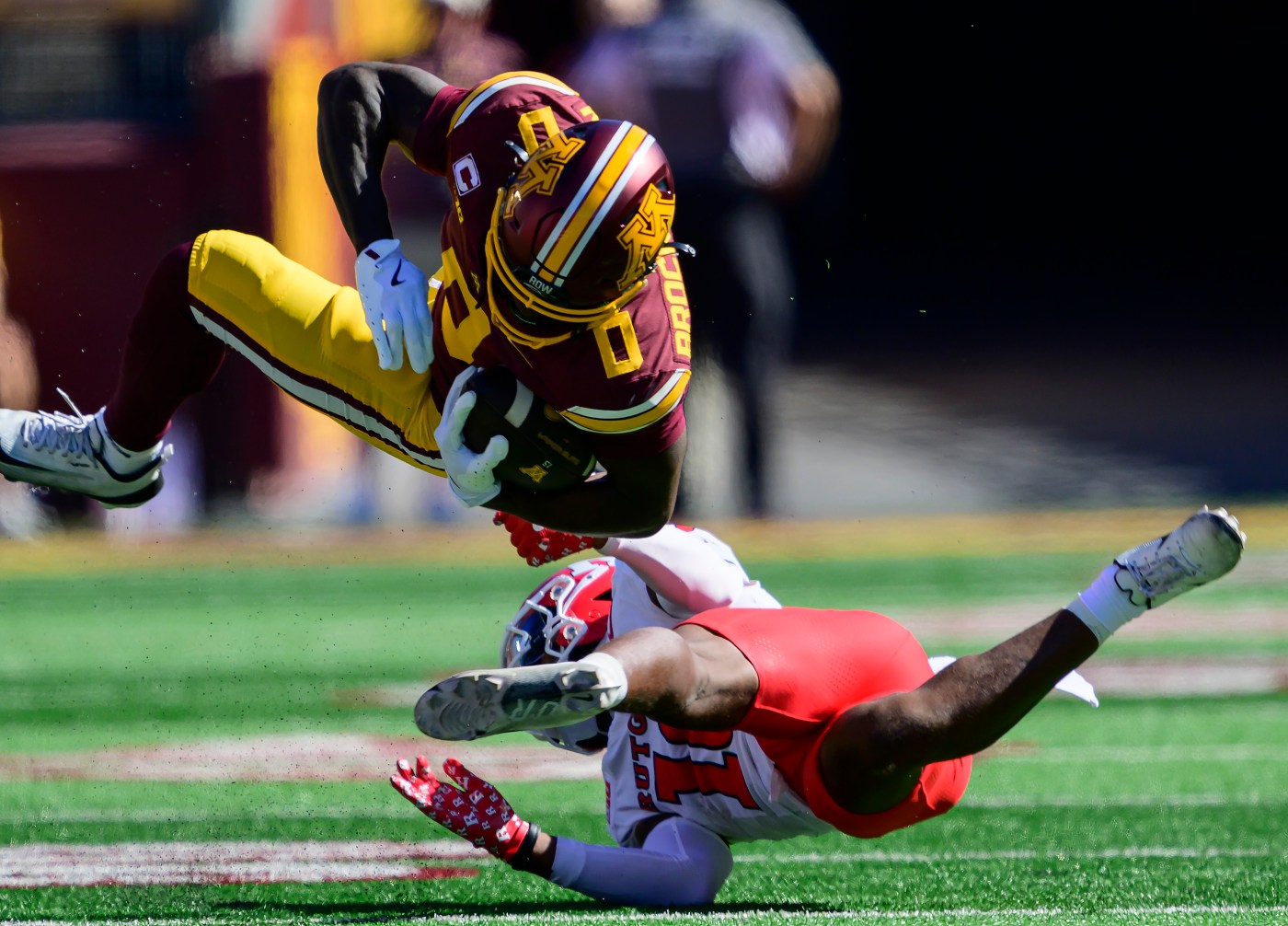
Rate Bowl: New Mexico vs. GOPHERS, 3:30 p.m., ESPN
First Responder Bowl: FIU vs. UTSA, 7 p.m., ESPN

Saturday

Military Bowl: Pitt vs. East Carolina, 10 a.m., ESPN
Pinstripe Bowl: Clemson vs. Penn State, 11 a.m., KSTP-Channel 5
Fenway Bowl: UConn vs. Army, 1:15 p.m., ESPN
Pop-Tarts Bowl: No. 12 BYU vs. No. 22 Georgia Tech, 2:30 p.m., KSTP-Channel 5
Arizona Bowl: Miami (Ohio) vs. Fresno State, 3:30 p.m., The CW Network
New Mexico Bowl: No. 25 North Texas vs. San Diego State, 4:45 p.m., ESPN
Gator Bowl: Missouri vs. No. 19 Virginia, 6:30 p.m., KSTP-Channel 5
Texas Bowl: LSU vs. No. 21 Houston, 8:15 p.m., ESPN

Monday, Dec. 29

Birmingham Bowl: Georgia Southern vs. App State, 1 p.m., ESPN

Tuesday, Dec. 30

Independence Bowl: Coastal Carolina vs. Louisiana Tech, 1 p.m., ESPN
Music City Bowl: Tennessee vs. Illinois, 4:30 p.m., ESPN
Alamo Bowl: No. 16 USC vs. TCU, 8 p.m., ESPN

Wednesday, Dec. 31

ReliaQuest Bowl: No. 23 Iowa vs. No. 14 Vanderbilt, 11 a.m., ESPN
Sun Bowl: Arizona State vs. Duke, 1 p.m., WCCO-Channel 4
Citrus Bowl: No. 13 Texas vs. No. 18 Michigan, 2 p.m., KSTP-Channel 5
Las Vegas Bowl: Nebraska vs. No. 15 Utah, 2:30 p.m., ESPN
CFP Quarterfinal: No. 2 Ohio State vs. No. 10 Miami (Fla.), 6:30 p.m., ESPN

Thursday, Jan. 1

Orange Bowl, CFP Quarterfinal: No. 4 Texas Tech vs. No. 5 Oregon, 11 a.m., ESPN
Rose Bowl, CFP Quarterfinal: No. 1 Indiana vs. No. 9 Alabama, 3 p.m., ESPN
Sugar Bowl, CFP Quarterfinal: No. 3 Georgia vs. No. 6 Ole Miss, 7 p.m., ESPN

Friday, Jan. 2

Armed Forces Bowl: Texas State vs. Rice, noon, ESPN
Liberty Bowl: Navy vs. Cincinnati, 3:30 p.m., ESPN
Duke’s Mayo Bowl: Mississippi State vs. Wake Forest, 7 p.m., ESPN
Holiday Bowl: No. 17 Arizona vs. SMU, 7 p.m., KSMP-Channel 9

Sunday, Jan. 4

Amos Alonzo Stagg Bowl: North Central vs. Wis-River Falls, 8 p.m., ESPN

Monday, Jan. 5

FCS Championship, Illinois State vs. Montana State. 6:30 p.m., ESPN

Thursday, Jan. 8

Fiesta Bowl, CFP Semifinal: TBD, 6:30 p.m., ESPN

Friday, Jan. 9

Peach Bowl, CFP Semifinal: TBD, 6:30 p.m., ESPN

Monday, Jan. 19

CFP Championship, TBD, 6:30 p.m., ESPN

Source: NCAA

Related Articles


Gophers football: Which young players are stepping up?


Gophers basking in warm sun before Rate Bowl in Phoenix


Gophers expected to promote C.J. Robbins to defensive line coach


College Football Playoff begins this weekend with first-round games


Gophers football: Will star Anthony Smith enter transfer portal?

Betty Reid Soskin, oldest National Park Service ranger, dies at 104

posted in: All news | 0

RICHMOND, Calif. (AP) — Betty Reid Soskin, who rose to national fame as the oldest National Park Service ranger and used the spotlight to talk about the African American experience during World War II, has died. She was 104.

Her family and the park service announced her death through social media, saying she was surrounded by loved ones at her home in California when she died Sunday. They did not release a cause of death.

“She was a powerful voice for sharing her personal experiences, highlighting untold stories, and honoring the contributions of women from diverse backgrounds who worked on the World War II Home Front. Thank you for your service, Ranger Betty,” the park service said in a statement.

When she was 85, the longtime community activist was hired as an interpretive ranger at the Rosie the Riveter WWII Home Front National Historical Park in Richmond, California. The site at a former shipyard and other parts of the working-class city honors American civilians, including the women who worked in war-related industries, who worked on the homefront during the war.

Soskin helped plan the park while working as a state legislative aide. She played a key role in shaping and designing the park by ensuring that it included the oftentimes overlooked contributions of Black men and women.

They include the 202 Black sailors who were killed in the July 1944 explosion at Port Chicago, on the northeastern flank of San Francisco Bay, where they were assigned to a segregated unit, loading munitions onto cargo ships bound for the Pacific Theater. Unsafe working conditions led 50 survivors of the blast to refuse loading munitions. They were court-martialed and convicted of mutiny in a trial that exposed systemic racial inequality in the Navy.

As a Black woman, Soskin worked as a clerk for the all-Black boilermaker’s union in Richmond. She advocated for telling the stories of the “non Rosies” who didn’t get to help build the battleships because who didn’t get to help build the battleships because of the color of their skin.

“Rosie the Riveter represents the white woman’s experience on the homefront during the war, but as a woman of color, I was never recognized for my work,” she wrote in an October 2020 essay for Newsweek.

“I had never understood that I had been involved in the building of the ships. Because at the time, I was 20 years old. I didn’t realize what my role was until I began to go back and recount it for others. It was rather amazing.”

Those who got to meet Soskin during visits to the park took to social media Monday to say it was an honor and that she was an amazing woman. One described her as a jewel of the park system, while others said she served as a great inspiration for young rangers.

Born in 1921, Soskin wore many hats throughout her life — a mother, daughter, musician, author, political activist, wife, record store owner, songwriter, painter, grandmother, great-grandmother, prolific blogger and more, as her family recounted.

Her family posted on social media that she had led “a fully packed life and was ready to leave.”

While a public memorial has yet to be announced, the family said people can share their affection for Soskin through donations to a school that had been renamed in her honor: Betty Reid Soskin Middle School in El Sobrante, California.

She had just celebrated her birthday with a visit to the school in September, cheers erupting as she waved to excited children.

In 1995, Soskin was named Woman of the Year by the California State Legislature and about a decade later she received the National WWII Museum’s Silver Service Medallion.

She explored her nine decades of living through extraordinary moments of history in her 2018 autobiography “Sign My Name to Freedom: A Memoir of a Pioneering Life.”

Related Articles


A small town’s American Dream is at risk. What happens when its biggest employer shuts down?


Most US adults aren’t making year-end charitable contributions, new AP-NORC poll finds


Boys at her school shared AI-generated, nude images of her. After a fight, she was the one expelled


Here’s what stores are open, and which ones are closed, on Christmas


Department stores try to distinguish themselves as beauty lovers turn to TikTok and Amazon

Her experiences included opening Reid’s Records, an influential Black-owned record store in Berkeley with her first husband, Mel Reid, and being the first Black family to live in suburban Walnut Creek.

Someone burned a cross on their lawn, she wrote, but her family refused to move. She pointed out that the same community that tried to drive her family away elected her 20 years later to serve as a delegate to the 1972 Democratic National Convention.

“That is how fast social change occurred,” she said.

At the park, her weekly lectures drew large audiences. They also garnered national attention, including the chance to introduce then-President Barack Obama at the Christmas tree lighting ceremony in 2015. In 2008, Glamour Magazine named her one of its women of the year.

“I became a ranger when most people retire so I had no idea what it required of me, but it opened up a lot of opportunities that would have been closed to me otherwise,” she wrote in her essay.

She retired on March 31, 2022.

Soskin is survived by two of her four children: Bob and Dorian Reid.

Biographical material in this story was written by AP journalist Daisy Nguyen. Susan Montoya Bryan in Albuquerque, New Mexico, contributed to this report.

Ukraine’s Zelenskyy says progress in US-led peace talks is ‘quite solid’

posted in: All news | 0

By SAMYA KULLAB and VASILISA STEPANENKO, Associated Press

KYIV, Ukraine (AP) — Initial drafts of U.S. proposals for a peace deal between Ukraine and Russia meet many of Kyiv’s demands, Ukrainian President Volodymyr Zelenskyy said Monday, although he suggested that neither side in the almost four-year war is likely to get everything it wants in talks on reaching a settlement.

“Overall, it looks quite solid at this stage,” the Ukrainian leader said of recent talks with U.S. officials who are trying to steer the neighboring countries toward compromises.

“There are some things we are probably not ready for, and I’m sure there are things the Russians are not ready for either,” Zelenskyy told reporters in Kyiv.

U.S. President Donald Trump has for months been pushing for a peace agreement. However, the negotiations have run into sharply conflicting demands from Moscow and Kyiv. But U.S. envoy Steve Witkoff said Sunday he held “productive and constructive” talks in Florida with Ukrainian and European representatives.

Zelenskyy said that “nearly 90%” of Ukraine’s demands have been incorporated into the draft agreements.

The backbone of the proposed deal is a 20-point plan, he said. There is also a framework document on security guarantees between Ukraine, European countries, and the United States, as well as a separate document on bilateral security guarantees granted to Ukraine by the U.S.

Several provisions are being discussed, according to Zelenskyy. They include the Ukrainian army remaining at a peacetime level of 800,000; membership in the European Union; and European forces, under the leadership of France and the U.K. and with a “backstop” from Washington, ensuring “Ukraine’s security in the air, on land, and at sea.”

“Some key countries will provide presence in these domains; others will contribute to energy security, finance, bomb shelters, and so on,” the Ukrainian president said.

Ukraine is arguing that the bilateral document with U.S. should be reviewed by the U.S. Congress, with some details and annexes kept classified, Zelenskyy said.

The U.S. team is now in talks with Russian envoys, and Washington has asked that no details be released, he added.

In this photo taken on Saturday Dec. 20, 2025 and provided by Ukraine’s 24th Mechanized Brigade press service, ruins of buildings in the town of Kostyantynivka, in the Donetsk region, Ukraine. (Oleg Petrasiuk/Ukraine’s 24th Mechanized Brigade via AP)

Ukraine strikes deep inside Russia

Zelenskyy said Monday he met with his military commanders who reported that defensive lines are holding firm against the Russian onslaught.

“In (recent) weeks, the Russian army has significantly increased the intensity of attacks, and the number of Russian losses has increased accordingly,” he said in a post on Telegram.

Ukrainian forces hit an oil terminal, a pipeline, two parked jet fighters and two ships in a series of strikes on Russian soil, officials said Monday.

The attacks are part of an ongoing campaign to disrupt the Russian war effort and sow fear behind the front line, where outnumbered Ukrainian troops are straining to hold back Russia’s bigger army.

The strikes also seek to undermine President Vladimir Putin’s attempt to portray Russia as negotiating from a position of military strength in U.S.-led peace efforts, which have yet to make a breakthrough on key points.

The killing of a top Russian general by a car bomb in Moscow on Monday, with investigators suspecting Ukraine was behind it, could be another instance of Kyiv picking surprise targets.

In this photo taken on Saturday Dec. 20, 2025 and provided by Ukraine’s 24th Mechanized Brigade press service, ruins in the town of Kostyantynivka, the site of heavy battles with the Russian troops in the Donetsk region, Ukraine. (Oleg Petrasiuk/Ukraine’s 24th Mechanized Brigade via AP)

Ukrainian partisans burn Russian fighter jets

Ukrainian forces struck the Tamanneftegaz oil terminal, an ammunition depot and a launch site for attack drones inside Russian territory and Russian-held Ukrainian territory, Ukraine’s General Staff said in a statement Monday.

A pipeline, two docks and two ships were damaged in the southern Krasnodar region, and a large blaze broke out, the statement said, without specifying what kind of weapons were used in the attack.

It added that a Ukrainian-made missile also hit a temporary base for Russia’s 92nd River Boat Brigade in Olenivka, in the occupied Crimean Peninsula.

A separate strike targeted an ammunition depot in a Russian-controlled portion of the Donetsk region, aiming to slow the Russian advance there, the General Staff said. A Russian launch site for attack drones was also hit.

Ukrainian partisans set fire to two Russian jet fighters in an operation on Sunday evening at a base near Lipetsk, a city in western Russia, according to Ukraine’s military intelligence.

Russia’s Ministry of Defense said only that its forces shot down 41 Ukrainian drones overnight, three of them over the Krasnodar region.

Related Articles


Ukraine is leveraging its powerful – and cheap – new drone killers for air defense


Singer-songwriter Chris Rea, known for ‘Driving Home for Christmas,’ dies at 74


Starlink in the crosshairs: How Russia could attack Elon Musk’s conquering of space


Car bomb kills Russian general in Moscow


Trump’s appointment of envoy to Greenland sparks new tension with Denmark

Russia targets the power grid again

Meanwhile, Russian forces kept up their targeting of Ukraine’s energy sector, aiming to deprive civilians of heat and running water during the frigid winter. Russia has tried to knock out power in Ukraine throughout the war, in a tactic that Ukraine refers to as “weaponizing winter.”

Energy infrastructure across five regions were attacked during the night, Ukraine’s Ministry of Energy said.

Russia struck Ukraine with 86 drones of different types overnight, Ukraine’s air force said. Ukrainian forces stopped 58 of them, it said.