World shares are mixed following Wall Street’s losses, as oil continues to climb

posted in: All news | 0

By CHAN HO-HIM, AP Business Writer

HONG KONG (AP) — World shares were mixed Friday following a retreat on Wall Street, while the price of oil resumed its upward climb, hitting its highest level in nearly two years.

U.S. futures fell as the war with Iran entered its seventh day, with Israeli airstrikes pounding the capitals of Iran and Lebanon. The future for the S&P 500 dropped 0.3% while that for the Dow Jones Industrial Average was down 0.2%.

Related Articles


US employers likely added 60,000 jobs last month, subdued but a marked improvement over 2025 hiring


Berkshire Hathaway resumes buybacks and CEO supports Kraft’s decision to pause its split


Elon Musk defends tweets in lawsuit alleging they caused Twitter stock to fall before acquisition


Average US long-term mortgage rate ticks up to 6%, ending a three-week slide


Best tax software of 2026

In early European trading, Britain’s FTSE 100 added 0.1% to 10,423.95. Germany’s DAX slipped 0.2% to 23,775.35, while the CAC 40 in Paris fell 0.2% to 8,030.10.

In Asian trading, South Korea’s Kospi edged up less than 0.1% to 5,584.87, after a roller coaster week with a record 12% loss on Wednesday followed by a nearly 10% rebound on Thursday. The index had shot above 6,000 in recent weeks before the war began to rattle financial markets.

Tokyo’s Nikkei 225 index gained 0.6% to 55,620.84.

Hong Kong’s Hang Seng jumped 1.7% to 25,757.29, while the Shanghai Composite index rose 0.4% to 4,124.19.

Australia’s S&P/ASX 200 declined 1% to 8,851.00.

Taiwan’s Taiex shed 0.2% and India’s Sensex lost 0.8%.

Oil prices rose after dipping earlier after soaring earlier this week as production and supply worries over the war with Iran intensified.

Benchmark U.S. crude surged 4.1% to $84.36 per barrel. Brent crude, the international standard, gained 1.7% to $87 per barrel. It was trading near its its highest level since April 2024.

If oil prices spike further, perhaps to $100 per barrel, and remain at that level, some analysts and investors expect that would weigh on global economic growth. Uncertainty over what will happen with the war has caused frenetic swings across financial markets this week.

Before oil prices started rising again, ING analysts Warren Patterson and Ewa Manthey wrote in a note that Friday’s brief easing of crude prices followed a 30-day temporary waiver from the U.S. for Indian refiners to buy Russian oil. It’s not a “game-changer,” they said, but reflects U.S efforts to cap oil prices.

Oil prices will hinge on a steady resumption of oil flows through the Strait of Hormuz following disruptions of tanker activities there, the ING analysts wrote. Roughly one fifth of the world’s seaborne oil is estimated to flow through the waterway located between Iran and Oman.

On Thursday, the S&P 500 fell 0.6% and the Dow industrials lost 1.6%. The Nasdaq composite dropped 0.3%.

Airline stocks were among Wall Street’s biggest losers, as higher oil prices pushed up fuel costs while hundreds of thousands of passengers have been stranded across the Middle East due to the war.

American Airlines fell 5.4%, United Airlines lost 5% and Delta Air Lines was down 3.9%.

In other dealings early Friday, the U.S. dollar rose to 157.84 Japanese yen from 157.56 yen. The euro fell to $1.1582 from $1.1611.

The price of gold rose 0.4% and the price of silver climbed 1.1%.

Sri Lanka takes custody of an Iranian vessel off its coast after US sank an Iranian warship

posted in: All news | 0

By BHARATHA MALLAWARACHI, SHEIKH SAALIQ, KRISHAN FRANCIS and ROD McGUIRK

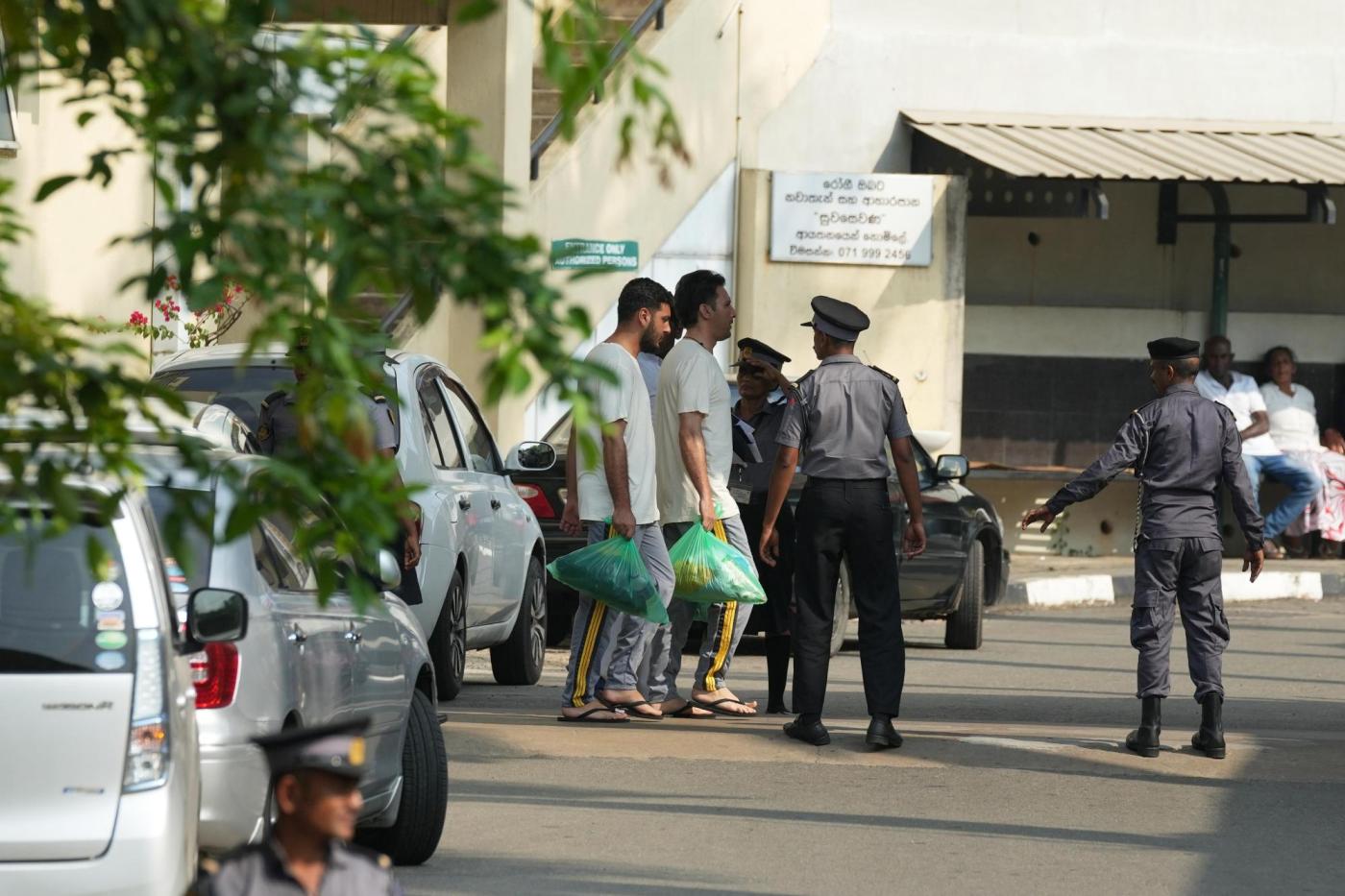
COLOMBO, Sri Lanka (AP) — Sri Lanka began transferring more than 200 sailors from an Iranian vessel to shore Friday after the ship sought assistance while anchored outside the country’s waters, as tensions mounted in the Indian Ocean following the sinking of an Iranian warship by a U.S. submarine.

Related Articles


Today in History: March 6, Walter Cronkite signs off for the last time


Intense Israeli strikes hit Iran and Lebanon as US warns the bombardment will ‘surge dramatically’


US and Venezuela agree to reestablish diplomatic relations in major shift after Maduro’s ouster


Mexico and US will start talks March 16 on reviewing their free trade agreement


On Iran, Trump officials say the US mission is ‘that simple.’ It depends who’s doing the talking

Sri Lankan navy spokesperson Cmdr. Buddhika Sampath said 204 sailors of the IRIS Bushehr were brought to the Welisara Naval Base near the capital, Colombo. They underwent border control procedures and medical tests, but none were found to have health issues.

About 15 others have been left aboard the ship with Sri Lankan naval personnel for assistance because they had reported a fault with the ship.

The Iranian sailors are interpreting operational instructions, manuals and logs for their Sri Lankan counterparts because the ship will be in Sri Lankan custody until further notice, Sampath said.

The ship will be taken to the port of Trincomalee in eastern Sri Lanka, Sampath said.

Iranian ship was taking part in naval exercises

The Sri Lankan government took custody of the Bushehr after the U.S. sank an Iranian warship, the IRIS Dena, off Sri Lanka’s coast Wednesday. The strike marked one of the rare instances since World War II in which a submarine sank a surface warship, and highlighted the expanding scope of the U.S.-Israeli military campaign against Iran.

The Dena had participated in naval exercises hosted by India before heading into international waters on its way home. At least 74 countries had joined the events, according to India’s Defense Ministry, including the U.S. Navy, which conducted reconnaissance aircraft and maritime patrol drills.

The Indian navy received a distress signal from the Dena but by the time it launched a search and rescue operation, the Sri Lankan navy had already begun its own rescue efforts, the ministry said.

The Sri Lankan navy rescued 32 sailors and recovered 87 bodies.

Iran’s Foreign Minister Abbas Araghchi said the Dena had been carrying “almost 130” crew. The normal crew size for a warship of that class is 140.

Araghchi called the sinking an “atrocity at sea” and said the US would “bitterly regret” the attack.

Sri Lanka says it acted under international law

Sri Lankan President Anura Kumara Dissanayake said late Thursday that authorities decided to take control of the IRIS Bushehr after discussions with Iranian officials and the ship’s captain, after one of its engines failed.

“We have to understand that this is not an ordinary situation. It’s a request by a ship belonging to one party to enter into our port. We have to consider that according to the international treaties and conventions,” he told journalists Thursday night.

Separately on Friday, he wrote on X: “No civilian should die in wars. Our approach is that every single life is as precious as our own.”

The IRIS Bushehr had been described in previous Iranian media reports as a navy logistics ship equipped with a helicopter pad.

Dissanayake said Sri Lanka was guided by neutrality while seeking to uphold humanitarian principles.

“We have followed a very clear stance. We will not be biased to any state nor we will be submissive to any state,” he said.

Sri Lanka’s neutrality is tested

The broadening Middle East conflict is putting strategically located Sri Lanka in a delicate position as it tries to balance humanitarian obligations, international maritime law and its longstanding policy of non-alignment.

H.M.G.S. Palihakkara, Sri Lanka’s retired former foreign secretary who also served as its permanent representative to the United Nations, said the country had acted responsibly and impartially.

“There has been a distress call from the ship. So naturally Sri Lanka, as a party to the Law of Sea and The Hague Convention, had no option but to do what it did by mounting a humanitarian operation to provide assistance to save lives and provide medical care to the affected,” he said.

Palihakkara said parties to the conflict would understand that Sri Lanka was not taking sides.

“You could not have ignored the distress call. Even the attacking powers cannot leave shipwrecked sailors dying. That is the law,” Palihakkara said.

Katsuya Yamamoto, director of the Strategy and Deterrence Program at the Sasakawa Peace Foundation in Tokyo, said Sri Lanka, which is not at war with either the U.S. or Iran, is considered a neutral state. As such, the Bushehr can enter a Sri Lankan port if granted permission by the government, he said.

Yamamoto said that once the vessel is docked, it falls under Iranian jurisdiction, leaving Sri Lankan authorities without legal grounds to inspect it unless Colombo decides to side with the U.S.

Australians aboard submarine

Australia’s government confirmed on Friday that three Australians were aboard the submarine that sank the IRIS Dena. The Australians were there as part of the trilateral U.S., Australian and British training program under the AUKUS security pact.

The Australian government has maintained it was not warned that the U.S and Israel planned to attack Iran. Australia has not commented on the legality of the attack, but supports the objective of preventing Iran from gaining nuclear weapons.

Neil James, executive director of the Australian Defense Association policy think tank, said it is “reasonably rare” for Australians embedded with another nation’s military to go to war against a country such as Iran that Australia wasn’t at war with.

He said an Australian would not have fired the torpedo that sank the Iranian ship

“The Australians wouldn’t have a job where they had to push the button on the torpedo because the captain of the boat gives the order and someone else, perhaps the weapons officer, presses the button but they’re not going to be Australian,” James said.

Saaliq reported from New Delhi and McGuirk reported from Melbourne, Australia. Associated Press writer Mari Yamaguchi contributed from Tokyo, Japan.

Trudy Rubin: Beware the similarities between the wars in Iraq and Trump’s Iran war

posted in: All news | 0

President Donald Trump and his administration insist their war of choice in Iran bears zero similarity to the bitter Iraq War the U.S. plunged into 23 years ago. I disagree.

Both wars were based on lies about imminent threats from nuclear weapons to justify wars of choice. In 2003, the intelligence on Saddam Hussein’s nuclear program was cherry-picked and false. In 2025, Trump himself told Americans that Iran’s nuclear program had been “obliterated” by U.S. and Israeli airstrikes in June, and there is no evidence that Tehran is able to reconstitute the program — so there was no “imminent threat” to America.

The new White House line that Israeli pressure prompted Trump’s decision to bomb, has already been rejected by the president (although it may contain several kernels of truth).

In 2003 as today, the U.S. president had trouble clarifying the strategic goals of the war. Unlike George W. Bush, Trump denies he seeks “regime change” (after calling for it). But then as now, there was little to no preparation for “the day after” the war ends.

Such lack of vision — or ample self-delusion — propelled Americans to disaster in Iraq, even with some competent advisers in the White House. As Trump directs policy solo, based on whim and ill-informed whispers from Jared Kushner and Steve Witkoff, it’s hard to see a happy ending in Iran.

Yet, having covered the 1991 Gulf War and the 2003 Iraq War (in all its phases through 2017), what I find most tragic is the potential for ordinary Iranians to be harmed as badly by Trump as Iraqis were hurt by Bush’s war.

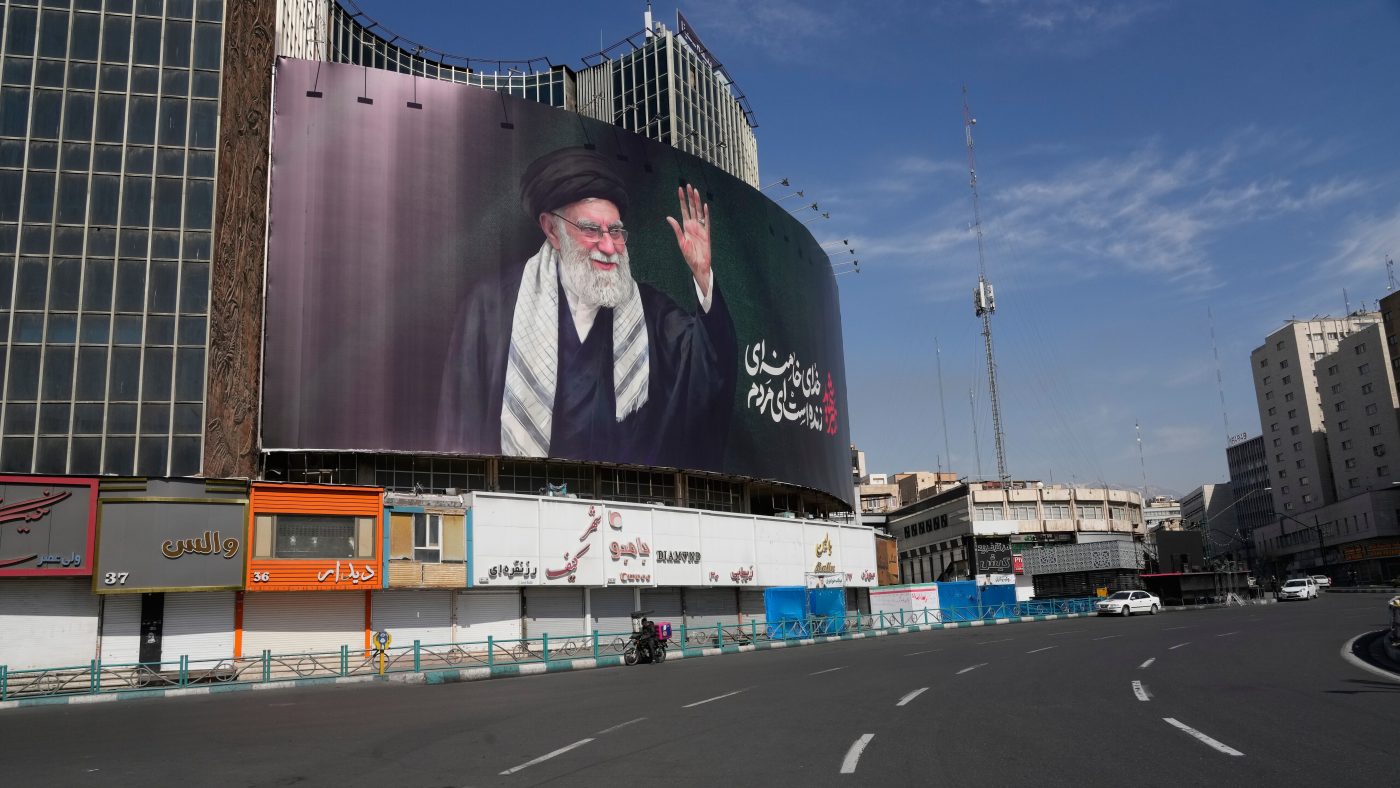
Few Iranians will mourn the demise of the cruel and murderous Ayatollah Khamenei or his cohorts, and a large segment of Iranians want the corrupt religious regime gone. But despite Trump’s treacly protestations of sympathy with the brave Iranian civilians whom he keeps urging to rise and overthrow the ayatollahs, all signs point to his willingness to abandon them if he needs a quick exit from his new war.

It is this aspect of Trump’s Iran war that hits me hardest in the gut, because I saw it happen in Iraq.

In 1991, when I was covering the first Iraq War, President George H.W. Bush called for Iraqi Kurds and Shiites to revolt against Saddam Hussein (whose mainly Sunni followers controlled Iraq), as the United States pushed into southern Iraq from liberated Kuwait. They followed his call.

But Bush 41 chose not to continue on to Baghdad and depose the Iraqi regime, because his advisers warned this would set off an Iraqi civil war. Moreover, he left much of Hussein’s army intact, along with their attack helicopters. Around 10,000 Shiites were slaughtered; several hundred Kurds in Iraq’s north had to flee into the freezing mountains in winter, until the U.S. Air Force established a no-fly zone over Iraqi Kurdistan and they could return home.

In February 2003, I crossed from Iran into Iraqi Kurdistan to await the invasion of Iraq by Bush 43, who claimed he had to destroy the (non-existent) Iraqi nuclear program and bring democracy to the country. At the time, it was hard not to get swept up in the enthusiasm of Iraqi Kurds for the regime change the Americans were promising in Baghdad.

America’s regional allies, especially Israel, urged us to decapitate the Baghdad dictatorship — and White House hawks insisted “regime change” would quickly bring peace and democracy to the entire Mideast. So did exiled members of multiple Iraqi opposition groups, with whom I had been in contact since covering the 1991 Gulf War.

Bush disbanded Iraq’s military and fired much of its government. But he had no grasp of the complex ethnic and religious politics of Iraq, which engulfed U.S. forces and created an internal Iraq civil war between Shiite and Sunni Muslims.

Fast forward to Trump, who (at least for today) says his goal isn’t regime change. He insists he will not put boots on the ground and that the war will last a few weeks.

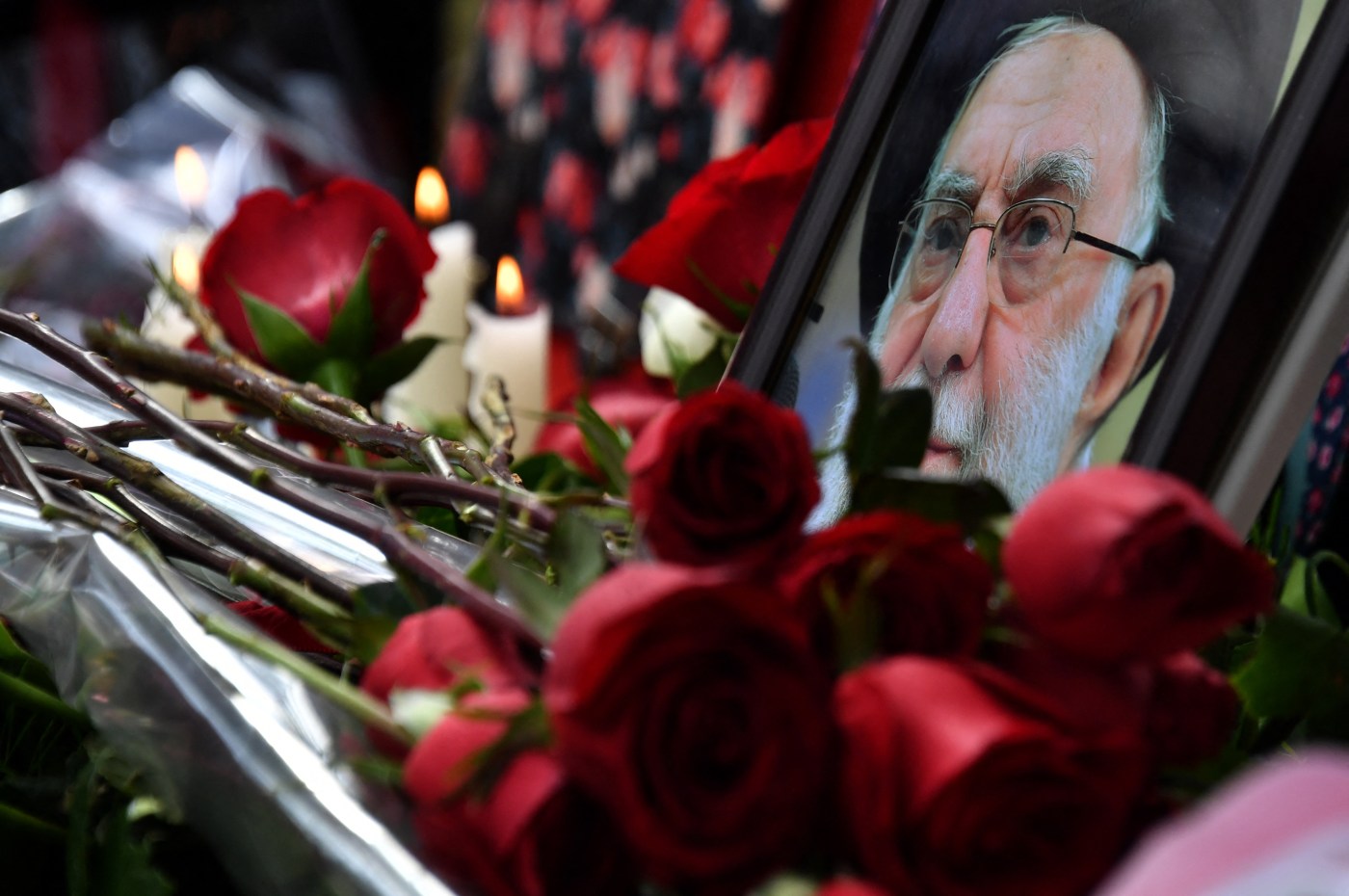
Even though Iran’s 86-year-old supreme leader, Ayatollah Khamenei, was killed by an Israeli airstrike, along with around 40 other Iranian leaders, that’s not likely to end the regime, but more likely to produce a military-backed dictatorship. Both sides may need a breather in a few weeks as Iranian missiles, and U.S. interceptors run short.

But the president has already made clear he has little interest and no concrete plans for what should happen in Iran after the death of its religious leaders. Trump has upturned the famous doctrine that the late Secretary of State Colin Powell applied to 2003 Iraq, namely “If you break it, you own it.” The Trump Doctrine posits: “We break it, you own it. Goodbye and good luck.”

He has stressed that it is up to Iran’s people to rise up and take over their country, even though civilians are bereft of leaders, organization, guns or even internet connections (and Reza Pahlavi, the exiled son of the last Shah, who hasn’t stepped foot in Iran for decades, has no armed forces of his own).

Squeezed by the MAGA faithful, and partial to quick hits, Trump insists there will be no long-term U.S. involvement. This may avoid U.S. military casualties but will probably leave Iran in chaos, ruled by hard men who still retain weapons.

That’s because the strongest remaining military force in Iran is the hard-line Iranian Revolutionary Guard Corps (IRGC), which is deeply rooted throughout the country. Behind them are hundreds of thousands of Basij militiamen, who have proved ready to kill demonstrators.

Trump has told journalists he would like to model the Iran venture on the U.S. intervention in Venezuela, where the top leader, Nicolás Maduro, was kidnapped, and Trump then made a deal with his vice president. In Caracas, Trump eliminated a leader he disliked, but kept the previous regime, which in turn handed him control over Venezuelan oil.

Iran, however, could not be more different. Trump would like to see the IRGC, or one faction, make a deal to totally eliminate Iran’s nuclear weapons program and missile production. The president told journalists, apparently with regrets, that some potential new leaders had been killed in the bombing, and speculated that Iran’s future leader could be “as bad” as the last.

More likely, the IRGC will fight to the end to maintain power and won’t be dislodged without sending ground troops. It has proved willing to slaughter tens of thousands of civilians to keep power and would be willing to do so again.

I worry that Trump’s continued call for a civilian uprising to “take over” Iran only holds out the prospect that Iranian civilians will once again be slaughtered, even as Trump chooses to declare victory and send the fleet home when missile interceptors run short and his followers grow antsy. Israel may continue bombing, but that won’t help Iranian protesters.

In a further sign of how the administration may use and abuse Iranians, CNN reported that the CIA is arming Iranian Kurds to spark a wider uprising vs. the regime (even as Trump abandons Syrian Kurds, who helped U.S. forces fight ISIS 10 years ago, but now are of no more use to him). Would Trump then abandon Iran’s Kurds if he decided to ink a pact with some IRGC general whom he thought could become a flexible dictator of Iran?

For Trump, the Iran war is an exhibition of U.S. power, designed to enhance his imperial stature as the GOP faces dicey midterms and the Epstein hangover. For Iran’s people, Trump’s reality show is a life threatening matter. His “we break it, you fix it” doctrine could consign many of them to death.

Trudy Rubin is a columnist and editorial-board member  for The Philadelphia Inquirer, P.O. Box 8263, Philadelphia, Pa. 19101. Her email address is trubin@phillynews.com.

Related Articles


Thomas Friedman: How to think about Trump’s war with Iran


Noah Feldman: Decades of presidents ignoring the War Powers Act led us here


Callais, Routledge: The economic common ground America isn’t talking about


Amanda Cats-Baril: Warrantless home searches sparked the Revolution – now ICE wants to bring them back


Lisa Jarvis: What adults get wrong about girls and autism

Nolan Finley: Tyranny doesn’t end when tyrants are killed

posted in: All news | 0

Killing the tyrant doesn’t assure the tyranny will end.

Regime change efforts by the United States in this century confirm that when despots are toppled, it is likely one form of oppression will be replaced by another.

Instead of peace and democracy, externally driven nation-building most often ends in chaos. One set of bad guys goes, and another set marches in. Or the old ones come back.

Americans should look to that history in setting expectations for what happens next in Iran now that another batch of maniacal Middle East murderers have been sent hurtling through the gates of hell.

In 2001, the United States and its allies stormed into Afghanistan, aiming to destroy the Taliban and round up the instigators of the 9/11 terrorist attacks. Twenty years later, after spending $2.3 trillion and losing nearly 2,500 American troops, then-President Joe Biden ordered a hasty withdrawal. Now, the Taliban are back exporting terror, women are shrouded and girls have again been shut out of classrooms.

Remember the jubilation in Baghdad in 2003 as long-abused citizens tore down the statue of Saddam Hussein and the real-life strongman was driven into hiding and eventually killed? Iraqis breathed a few gulps of freedom before secular warfare between Sunni and Shia militias began tearing the country apart.

Americans sent to help reconstruct the country and build a functioning government were relentlessly attacked.

The Islamic State, or ISIS, the most vicious terror group ever, found Iraq to be the perfect launching pad for its marauders. Today, the country is considered a shaky democracy at best, and civil rights abuses abound.

Bringing “freedom” to Iraq cost America just under 4,500 troops and nearly $3 trillion.

A U.S.-led NATO coalition aided a 2011 military coup in Libya that left the sadistic dictator Muammar Gaddafi dead in a ditch. The North African nation today is in a power vacuum and roiled by conflicts between rival armed gangs, some with ties to international terrorism.

That history should inform American decisions and its expectations as it moves ahead with extracting the Islamic radicals from Iran.

While the Iranian people have demonstrated fervently for freedom, there seems to be an endless line of mullahs willing to step into the shoes from which Supreme Leader Ayatollah Ali Khamenei was just blown out.

President Donald Trump has rallied the Iranians to rise up and take over their country. But the people lack significant arms. Their economy is being shattered along with their infrastructure. They have to work. They have to eat. They have to focus on survival.

They have watched up to 30,000 of their countrymen be slaughtered for protesting the regime, including many who might have led Iran’s rebuilding.

There’s bound to be an extended period of chaos, power struggles and hardship even under the best scenario.

Removing the Iranian Revolutionary Guard and the radical clerics with bombs alone will be an arduous and uncertain process. A ground war seems inevitable, and Trump has not ruled one out.

But the principle of “you broke it, you own it,” will be hard to resist. The argument will be that some form of peace-keeping force will be necessary to restore order in the country and keep it from re-radicalizing. It will be another dangerous, expensive quagmire, despite assurances from the administration that things will be different this time.

Considering the poor return on investment of previous regime change mobilizations, will America be willing to sacrifice more of its children to a cause with such a dubious chance of success?

Nolan Finley writes for the Detroit News.

Related Articles


Thomas Friedman: How to think about Trump’s war with Iran


Noah Feldman: Decades of presidents ignoring the War Powers Act led us here


Callais, Routledge: The economic common ground America isn’t talking about


Amanda Cats-Baril: Warrantless home searches sparked the Revolution – now ICE wants to bring them back


Lisa Jarvis: What adults get wrong about girls and autism