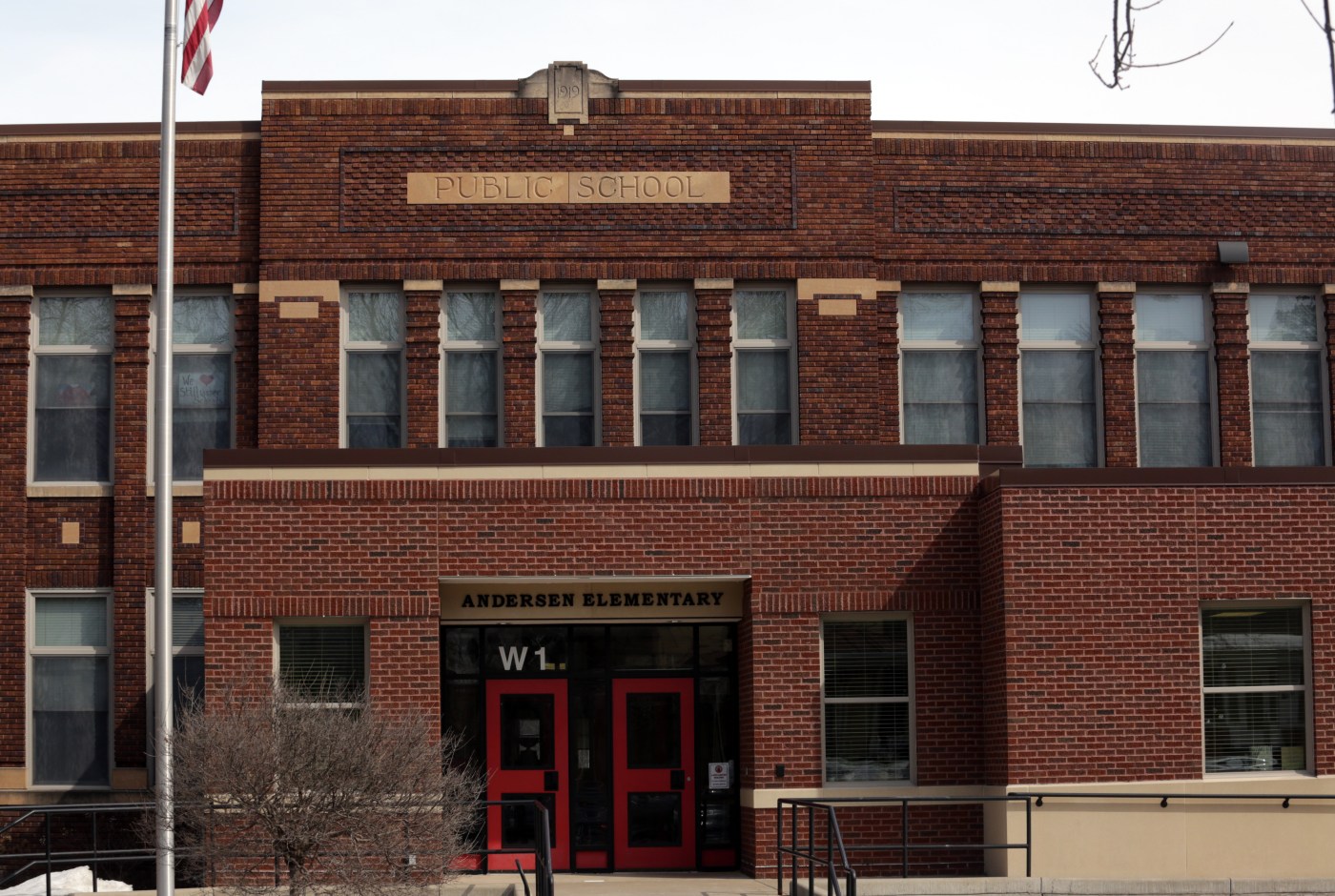
Stillwater schools consider boundary changes

posted in: All news | 0

To prepare for the opening of the new Lake Elmo and Bayport elementary schools next fall, Stillwater Area Public Schools officials say they plan to change attendance boundaries “to balance enrollment across the district’s southern schools and make room for future growth.”

The district is considering three scenarios. One would affect 135 students, and the other two would affect 39 students each, said Carissa Keister, the district’s chief of staff and director of communications.

To the extent possible, each elementary school will have a minimum enrollment of 400 students, Keister said. “It’s just better programmatically when we have at least 400,” she said. “We can have full-time staff for our specialists, and three sections of each grade level. It’s just more efficient.”

Much of the district’s growth will be in Lake Elmo, so district officials are purposely building the new 150,000-square-foot elementary school at 10928 10th St. N., “intentionally large,” Keister said.

“We’re actually trying to keep room there knowing that we don’t have growth for next year, but we will have growth in five, six, seven years from now,” she said. “We don’t want to overcrowd it now when we know that the growth is coming.”

An open house on the plan will be held at 6 p.m. Thursday at Oak-Land Middle School. Families are invited to come learn about the options and share feedback. District leaders and members of the boundary committee will be in attendance.

Parents and family members also can provide feedback online prior to Dec. 2 at: https://my.thoughtexchange.com/scroll/132099563/welcome.

The school board plans to hold a study session on the proposed changes at 5:30 p.m. Dec. 2 at the Oak Park Learning Center, 6355 Osman Ave. N., in Stillwater.  A final decision is expected Dec. 16.

District officials have put the current Lake Elmo Elementary School up for sale; the asking price is $5 million.

Related Articles


Parents threaten to sue Stillwater school district after employee accused of producing AI child porn


Oakdale-Lake Elmo road project aims to improve safety


Retired longtime Woodbury Police Chief Bill Hering dies at 76


Cottage Grove City Council OKs environmental statement for proposed mine in Mississippi River bed


Stillwater City Council denies cannabis shop permit near rec center

District officials plan to move into the current Andersen Elementary School building in downtown Bayport next year when the new 98,000-square-foot school – which will be called Bayport Elementary – opens at 1003 Fifth Ave. N., in Bayport.

District officials are currently split between the Oak Park Learning Center and the Central Services Building on Greeley Street; the Central Services Building will be put up for sale, Keister said.

“That would allow all of our central services staff to be together,” she said. “We’re kind of divided up between two buildings right now.”

The Oak Park Learning Center will continue to be used for the district’s Alternative Learning Center, the district’s Transition program, professional development and other meetings. In the future, it could be used for some daytime community-education programming, Keister said.

Judge signals hundreds of people detained in Chicago immigration crackdown could be released on bond

posted in: All news | 0

By SOPHIA TAREEN

CHICAGO (AP) — Hundreds of people who have been arrested and detained in the Chicago area during the Trump administration’s immigration crackdown could soon be released on bond while they await immigration hearings, a federal judge signaled Wednesday.

Related Articles


2 Federal Reserve officials oppose an interest rate cut in December


South Carolina lawmakers not only lose raise but also $1,000 a month in pay after court ruling


At ‘Make America Healthy Again’ summit, Vance praises RFK Jr.


These are the 37 donors helping pay for Trump’s $300 million White House ballroom


With their government contracts in limbo, small businesses await a historic shutdown’s end

During a hearing in Chicago, U.S. District Judge Jeffrey Cummings said he would order the full release of 13 detained individuals based on a 2022 consent decree outlining how U.S. Immigration and Customs Enforcement can make so-called warrantless arrests.

He also gave government attorneys a Friday deadline to comb through a list of 615 people detained at county jails and federal facilities nationwide to see if they qualify for alternatives to detention under the decree, such as using an ankle monitor, while their immigration cases proceed. The judge said he’d issue an order for their release next week, and in the meantime would temporarily pause any deportation proceedings for people who might qualify for bond under the decree.

Attorneys for the detainees hailed Cummings’ move as a win and said they plan to bring more cases.

“All of the tactics of ICE have been unlawful in the vast majority of arrests,” said Mark Fleming, a lawyer with the Chicago-based National Immigrant Justice Center.

Attorneys said they were racing against the clock, as many of the more than 3,300 people suspected of immigration violations who have been arrested in Chicago and its suburbs since “Operation Midway Blitz” began in September have already been deported or left of their own accord.

“We’re concerned they have no access to counsel and no understanding of what their situation is,” Fleming told the judge.

Will Weiland, a Justice Department attorney, told Cummings that at least 12 people on the list of 615 were “high risk” and shouldn’t be released into communities.

“Nothing has been easy with this case your honor,” he said.

Protesters gather outside an ICE processing facility in Broadview, Ill. a suburb of Chicago, Friday, Oct. 24, 2025. (AP Photo/Nam Y. Huh)

Cummings previously determined that ICE had violated the consent decree which, among other things, requires the agency to show documentation for each arrest it makes for people besides those being specifically targeted in an operation.

During Wednesday’s hearing, Cummings listed instances since the crackdown started in which immigration agents have arrested people while they were at work, out walking or pulling through the drive-thru lane at a fast-food restaurant.

“It also seems highly unlikely to me that any of these foreign nationals … fall into the category of what ICE has called the ‘worst of the worst,’” he said.

The Trump administration has touted its federal intervention efforts as effective at fighting crime and applauded agents’ aggressive tactics that have been challenged in court. But leaders in Illinois say violent crime had already been trending downward in the Chicago area and that federal agents only inflamed tensions.

While the consent decree covers arrests by ICE, it doesn’t include U.S. Customs and Border Protection, which has been behind the most controversial tactics used during the immigration operation, including the liberal use of chemical agents.

A police guards the designated protest area as protesters gather outside an ICE processing facility in the Chicago suburb of Broadview, Ill., Friday, Oct. 31, 2025. (AP Photo/Nam Y. Huh)

The Department of Homeland Security, which oversees both agencies, hasn’t offered details about its arrests, only highlighting a handful of people living in the country without legal permission who also had criminal histories.

DHS Assistant Secretary Tricia McLaughlin deemed Cummings an “activist judge,” a common Trump administration label for judges who’ve down struck parts of the Republican’s agenda.

In a Wednesday statement, McLaughlin claimed that an order to release the detainees put “the lives of Americans directly at risk.”

The consent decree, which expired earlier this year, was extended until February. Although its policy on ICE’s warrantless arrests applies nationwide, remedies for individual cases have been focused in six states covered by the ICE field office in Chicago, where the original lawsuit over immigration sweeps was filed. Those states are Illinois, Indiana, Kansas, Missouri, Kentucky and Wisconsin.

Metro Transit increases officer visibility during winter months

posted in: All news | 0

Public transit riders can expect to see more uniformed officers and agents on light rail systems and stations this winter.

“Nothing is more important to us than providing a consistently safe, clean and welcoming experience on transit,” Metro Transit General Manager Lesley Kandaras said during a press conference. “Our customers have told us they feel safer when we are highly visible, so we are working hard to coordinate and expand all our layers of official presence this winter and beyond.”

In an effort to promote safety on public transit systems in the Twin Cities, Metro Transit announced Wednesday that there will be an increase in Metro Transit police officers, agents and staff presence on rides during peak travel times and toward the end of operational hours. The effort is a part of the agency’s Safety and Security Action Plan.

“Our message is clear,” Interim Metro Transit Police Chief Joe Dotseth said during the conference. “Crime will not be tolerated on Metro Transit, and those who commit crimes will be held accountable. But we also recognize some people in our system need help, not handcuffs.”

Reducing crime and providing resources

Earlier this year, officers implemented a new initiative, Safe and Strong University Avenue, which involved coordination between law enforcement, service providers and prosecutors aimed at reducing crime and providing resources, including addiction treatment and housing services to those in need. Dotseth said the Safe and Strong model has become a part of the department’s normal practice in their approach to public safety.

“Our officers want to get people the help they need,” Dotseth said.

Dotseth referred to the partnership initiative between Metro Transit police officers and Community Service Officers, Transit Riders Investment Program (TRIP) Agents, and supplemental security officers as a multi-layered approach.

Officers are expected to not only increase their visible presence on rides, but also show an increase in proactive enforcement, Dotseth said. Community Service Officers, TRIP Agents and outreach workers are tasked with educating riders on codes of conduct, providing people with support services, are available to answer riders’ questions and are trained in de-escalation tactics to ensure the safety of passengers, according to Dotseth.

“This coordinated approach means we can, we will, and we are improving the rider experience,” Dotseth said.

More officers and staff employed

According to Metro Transit, the agency is at its highest staffing rate since 2021, with a current total of 116 police officers and 26 Community Service Officers, close to 100 TRIP Agents by the end of the year and more than 200 supplemental security officers who “are being trained to provide coverage at high-traffic locations,” according to the agency.

Security officers who “serve as eyes and ears on the system, discouraging behavior like smoking, and contacting police when there is criminal activity,” have been contracted to add to the onboard presence from police officers, Community Service Officers and TRIP Agents, according to Metro Transit. Metro Transit has to have security officers stationed at 15 “busy boarding locations” for up to 24 hours a day, according to the agency.

Security officers are currently at nine locations and will be added on the Green Line’s Snelling Avenue Station and the Blue Line’s Warehouse District and Nicollet Mall stations.

“We’re more visible and present than anytime that I can recall in my 21 years,” Dotseth said during the conference. “With the signs of this progress, we know we still have work to do. The job is not done until every rider feels safe on every trip.”

Metro Transit’s 2025 budget for public safety-related expenses, including the Metro Transit Police Department, Transit Rider Investment Program and supplemental security was close to $74 million. The proposed 2026 budget would increase spending to more than $93 million, according to the agency. The operating budget relies on a mix of funding from the motor vehicle sales tax revenue, federal grants, a regional sales tax, fares and state general funds, according to Metro Transit.

Rider perceptions

Dotseth said that serious crime on public transit is down 21% percent in the Twin Cities and officer-initiated calls for service are up 129% compared to 2024.

“We are making a difference,” Dotseth said. “There is still work to do, but we’re making a difference.”

Kandaras and Dotseth said many riders have already expressed feeling safer with the increased visibility of officers on public transit. Kandaras said the agency conducts an annual customer satisfaction survey and is currently running one for 2025. Based on responses from last year’s survey, Kandaras said riders reported feeling safer than they had before.

Related Articles


Lawsuit filed after St. Paul City Council unanimously approves firearms regulation ordinance


Driver speeds off I-94 in St. Paul, collides with vehicle, killing other driver


MN lawmaker shootings: Independent investigation to review law enforcement response


St. Paul’s Rondo Library to close Dec. 15 for up to a year of renovations


Car blast near New Delhi’s historic Red Fort kills at least 8 people, India’s police say

“We’re eagerly awaiting results from the survey out now,” Kandaras said.

Dotseth said that on top of pursuing initiatives to encourage rider safety, Metro Transit’s marketing team is actively trying to find new ways to encourage people to take public transit.

“If people have ideas on what we should do, they should definitely send them to Metro Transit,” Dotseth said.

An additional campaign focused on attracting more police officers to the department will launch this fall, and a program that provides Community Service Officers with tuition assistance as they pursue law enforcement degrees will continue, according to Metro Transit.

Allison Schrager: Cash is no longer king. It’s cringe

posted in: All news | 0

A friend once complained to me that people would sigh and roll their eyes when she used a credit card to pay for her $3 coffee. This was about a decade ago, and I admit, at the time I silently judged her. What kind of psychopath, I thought to myself, forces everyone in line to wait for their coffee while her credit card transaction is approved?

How times have changed, and I’m not talking about that $3 coffee. Today I feel that same impatience when someone ahead of me rummages through their wallet to find exact change to make a cash purchase. Electronic payments are much faster and have become the norm, even for small purchases.

Now it is cash that carries a social stigma — as this survey of Generation Z consumers makes clear. Conducted in September, it finds that 53% use physical cash only as a last resort, and 29% believe that people who pay with cash are “cringe.” I will ignore the generational insult and focus on the implications of this shift for both consumer behavior and public policy.

The first thing to note is that, while Cash App certainly has an interest in people using an app instead of cash, the survey results mirror trends tracked by the Federal Reserve. In 2024, only 17% of respondents to a survey said they preferred cash for in-person transactions, down from 27% in 2016.

Older and lower-income Americans are still more likely to use cash, but even for them it is becoming less common. Only about a quarter of transactions by people with income under $25,000 involve cash, and they amount to only 19% of transactions made by people over age 55.

With more phone-based payments and almost every merchant taking electronic payments (with the notable exception of several Italian restaurants in New York City, you know who you are), cash is destined to become even more obscure and old-fashioned. That means consumer spending patterns may change, as well as federal regulations.

The prevailing presumption is that people spend less when they use cash, because it makes them more aware of what things cost. It also puts a hard constraint on what they can buy, since they are limited to what fits in their wallet. The evidence in support of this view, however, is mixed, with some studies finding little impact on spending depending on means of payment. That may be because most day-to-day transactions are fairly small.

Credit card transactions, meanwhile, have explicit costs: swipe fees, the term for what banks charge merchants to accept cards (usually 2.5% to 3.5%). This cost is often passed on to customers.

Some members of Congress are taking aim at these fees, but new technology will probably do some of the work their proposed legislation aims to do. The passage of the Genius Act means that stablecoins may replace credit cards, especially for people who don’t have access to credit. But to make them viable, customers will either have to bear some risk on their accounts or pay fees that are at least comparable to credit or debit cards.

The data also show that lower income Americans are already using electronic payments for most of their transactions. A more viable option that could disrupt credit cards is digital currency issued by a central bank.

But it would be a mistake to overlook the drawbacks of cash — or the benefits of non-cash. Cash involves what economists call shoe-leather costs, basically the time and effort it takes to go to a bank. Cash also carries a greater risk of theft. And electronic payments make it easier to track spending, which brings the promise of much more accurate inflation data than current survey methods can produce (as well as the potential for more invasions of privacy).

The bottom line is that, cringe notwithstanding, cash will never totally disappear. Like gold, it satisfies some deep primal desire for security. We humans need cash just in case things go horribly wrong and the global economic system crashes — or the power grid is taken out and our credit cards are rendered useless. According to the Fed, on any given day, four out of five Americans still have some cash on them, and nine out of 10 have no plans to give it up. That is their right, just as it is mine to silently judge them when they are ahead of me in line at the coffee shop.

Allison Schrager is a Bloomberg Opinion columnist covering economics. A senior fellow at the Manhattan Institute, she is author of “An Economist Walks Into a Brothel: And Other Unexpected Places to Understand Risk.”