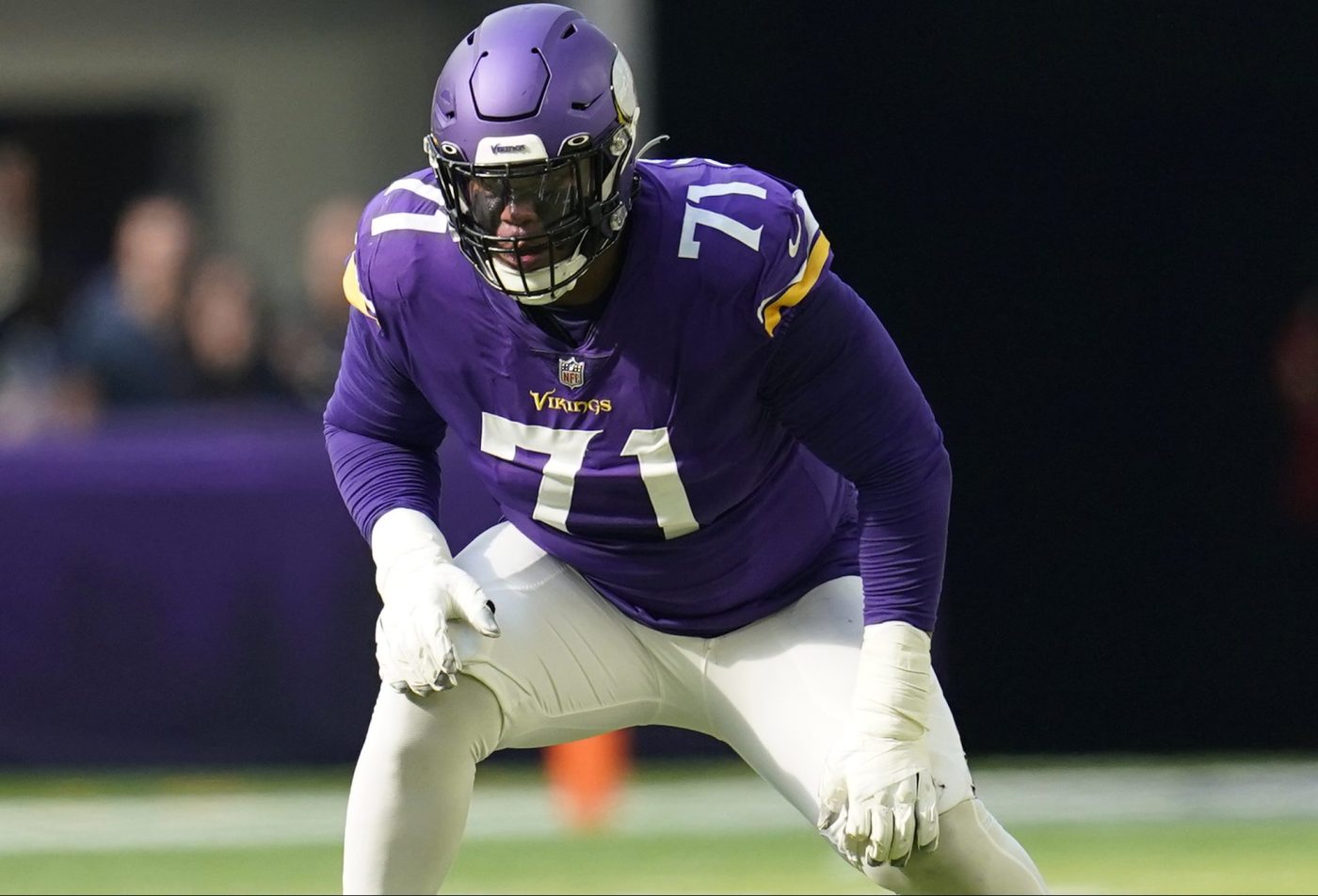
Vikings left tackle Christian Darrisaw ruled out for game against Falcons

posted in: News | 0

ATLANTA — In the first start of his NFL career on Sunday afternoon, rookie quarterback Jaren Hall was without the man that was supposed to be blocking his blindside.

After suffering a groin injury late this week, left tackle Christian Darrisaw was ruled out for the Vikings in the game against the Atlanta Falcons.

The likely replacement for Darrisaw is veteran left tackle David Quessenberry.

The other inactives for the Vikings included safety Lewis Cine, running back Kene Nwangwu, linebacker Brian Asamoah, tight end Nick Muse, receiver Jalen Nailor, and defensive tackle Dean Lowry.

‘The most high stakes’ school board elections are already coloring 2024

posted in: News | 0

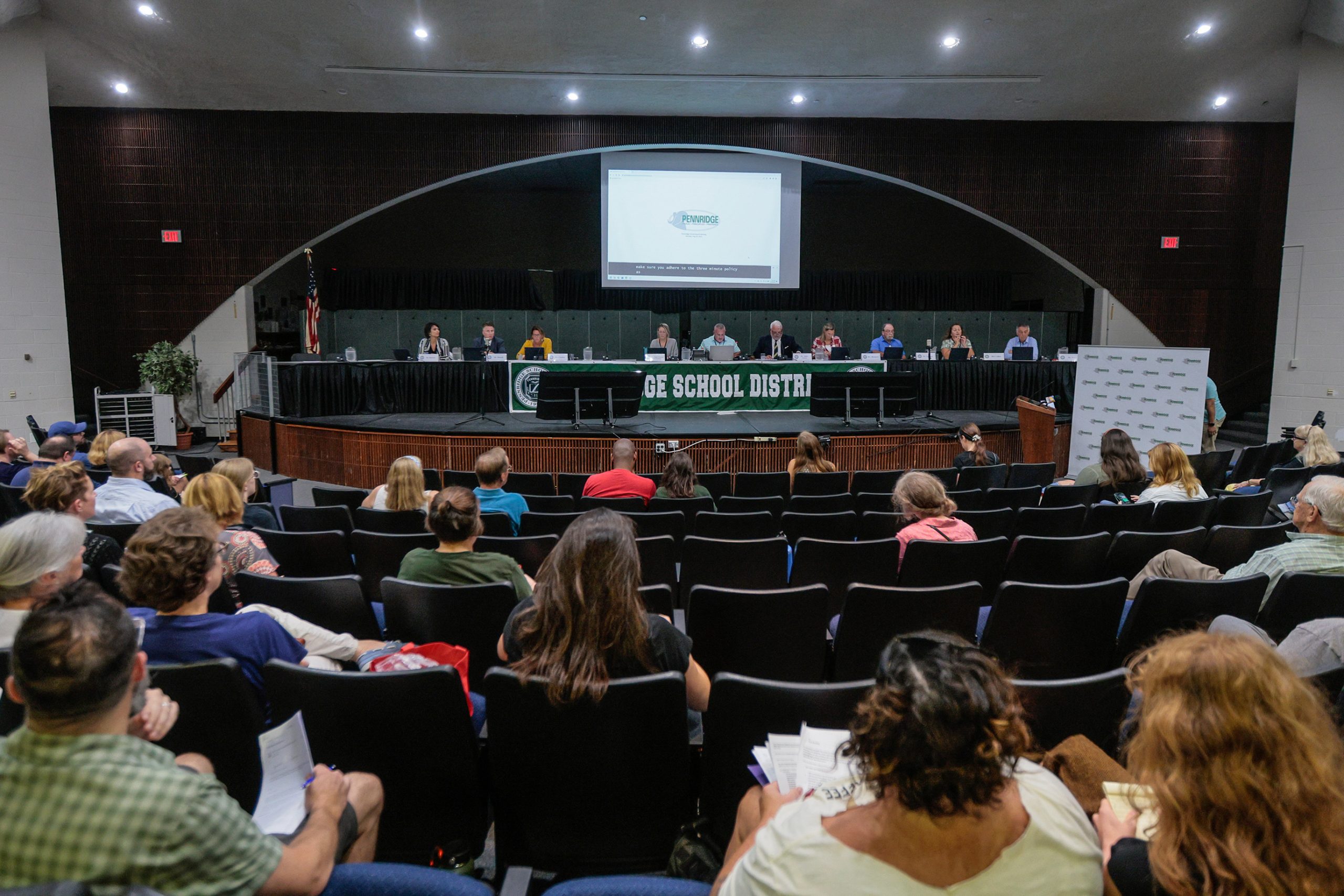
Pennsylvania conservatives are about to test the voltage of education politics. 

School board elections are set to occur across the country on Tuesday. But few of these once-quiet contests have become as vicious, sophisticated, expensive and injected with dueling endorsements from political committees and national organizations quite like campaigns in the Keystone State.

A venture capitalist put up hundreds of thousands of dollars to defend conservative control of his hometown Philadelphia-area board and support other school campaigns. A Republican political committee is supporting candidates in Cumberland County, a red-leaning area west of Harrisburg where Democrats made gains during recent gubernatorial and presidential elections.

Local chapters of Moms for Liberty, a national group that’s grown into the biggest name in Republican school politics, and the conservative 1776 Project PAC have endorsed candidates in counties throughout the state. Progressive organizations, teacher unions and groups linked to federal Democratic lawmakers including Sen. Elizabeth Warren (D-Mass.) are fighting back through races in State College and big-city suburbs.

All that action has turned low-level school board campaigns in a swing state President Joe Biden and his Republican challenger likely need to win next year into a laboratory for the vitality of education-drenched politics.

“For children in Pennsylvania, this is the most high-stakes election of their entire lives,” said Susan Spicka, the executive director of the Education Voters of Pennsylvania nonpartisan group. “Because once you get five people on a school board who are going to operate as a bloc, they can do pretty much anything they want.”

Conservatives galvanized by Covid-shuttered schools have made book restrictions and LGBTQ student expression into a live wire in this election. A recent Brookings Institution analysis concluded Pennsylvania was one of Moms for Liberty’s biggest strongholds outside of Florida and New York, following the group’s raucous summertime rally with GOP presidential candidates in Philadelphia.

There are problems beyond culture wars, too: This year, a state judge underscored a long-running crisis by declaring Pennsylvania’s school funding system unconstitutional.

Now the resources needed to compete in these school board races look a lot like bigger-profile campaigns.

“You need mailers, you need signs, you need training for poll workers, you need Facebook ads, you need websites built — it’s all of that stuff,” said Paul Martino, a venture capitalist who formed a political committee to bankroll school board candidates dedicated to school reopening in 2021.

“2021 was the year it all got changed, and this is the world we’re now in,” said Martino, who this year has used his committees to invest hundreds of thousands of dollars in board races throughout the state, but mostly a conservative slate running in a Bucks County district where his wife is also a candidate. “My guess is that we’re going to see a turnout of 45 percent, in an off-year election. Like, nobody sees that.”

Some operatives say Pennsylvania’s school board elections are also testing a new kind of “upballot” momentum, where motivated voters first look to local boards before directing their attention to critical municipal, judiciary and legislative seats higher on the ballot.

“We’ll learn a lot from Pennsylvania,” said Hannah Riddle, the director of candidate services for the Progressive Change Campaign Committee, which is backing local candidates throughout the state, plus Ohio and Virginia, on the Nov. 7 ballot. “We’ll learn a lot not just on what to expect in school board races next year, but what to expect up and down the ticket as well.”

This dynamic is playing out in Virginia’s Loudoun County, where pandemic-era fights over critical race theory and transgender students upended the once-mundane politics of school governance near Washington D.C. Voters are now in line to reshape that school board with help from competing Democratic and Republican party endorsements.

In Ohio, the 1776 Project PAC has endorsed 16 candidates running for office in suburban communities near Cincinnati, Cleveland and Columbus while supporting conservatives in Kansas and Virginia. Moms for Liberty chapters are also endorsing in Iowa, Ohio, New Jersey, Virginia and elsewhere on Nov. 7.

Roughly 30,000 board seats are estimated to be up for election in 2023, including races earlier this year that saw mixed results for conservative candidates in Wisconsin, Illinois and other states.

Yet board elections from the Philadelphia and Pittsburgh suburbs to smaller central Pennsylvania communities will further test the potency of conservative school politics ahead of the 2024 presidential election. Look to Bucks County, one of the swingiest counties in one of America’s swingiest states, for ample examples.

Conservative board members won a 6-3 majority in the Central Bucks School District outside Philadelphia in 2021. Passionate fights over library book restrictions, curriculum and student gender identity have not seemed to stop at the state’s third-largest school system since.

Following searing public debates, the Central Bucks board in July 2022 adopted a library book policy that limited the presence of “sexualized content” and allowed any district resident to formally challenge library materials “on the basis of appropriateness.”

Board members also began revising prohibitions on school-based political organizing that fall in a way that now bars district employees from showing flags, banners, posters, signs, stickers or similar materials that advocate “any partisan, political, or social policy issue” on school property or during district activities. That includes a classroom ban on Pride flags.

The ACLU of Pennsylvania pressed Biden administration authorities last October to investigate the school district’s “hostile environment” and “overtly discriminatory actions” against LGBTQ students. The Education Department’s civil rights division soon launched an investigation, and the ACLU this year filed a federal lawsuit on behalf of a Central Bucks teacher who was allegedly disciplined for providing information to the department.

Now Pride flags and book disputes are key flashpoints in the Central Bucks race.

The Stop Bucks Extremism committee led by Republican operative Bob Salera has sent thousands of fliers to voters that reprinted explicit images from titles pulled from school shelves and described a “Neighbors United” slate of five liberal school board candidates as “fighting to keep these books in our middle school and high school libraries.” 

Martino told POLITICO he gave Salera’s organization “a seed check” at its launch, in addition to hundreds of thousands of dollars he contributed to his own committees this year. That includes Bucks Families For Leadership, which supports five conservative “Central Bucks Forward” candidates.

Bucks Families For Leadership has in turn directed tens of thousands of dollars in spending to consulting and canvassing work from Republican operatives, campaign filings reviewed by POLITICO show, including Axiom Strategies and the Breakwall Group founded by former National Republican Congressional Committee spokesperson Chris Pack.

Pennsylvania’s largest state teachers union has meanwhile given nearly $30,000 to the Neighbors United slate, according to a Philadelphia Inquirer tally that concluded the Central Bucks race has garnered more than $600,000 in political spending through Oct. 23 — with Democrats scraping together the largest share.

“This campaign is like nothing I’ve ever seen,” said Karen Smith, an incumbent Central Bucks board member and former Republican now running with the Neighbors United slate.

“I have 50 volunteers who are doing everything from door knocking, to making phone calls, to making signs,” she said in an interview. “The amount of money that’s being spent on this race, the amount of volunteerism is like nothing we’ve ever seen here before. But then the negativity, the vitriol, the intensity, and the lying is like nothing I’ve ever seen or could have imagined.”

Stephen Mass, Smith’s Republican opponent, likened the election’s scrutiny and competition to a “double-edged sword.”

“The bad part is we get riled up a little bit too much,” Mass told POLITICO. “I don’t know why it’s gotten that vicious. The good part is people are paying attention. They should be. It’s unfortunate that it’s come with a lot of real negativity and divisiveness.”

Similar issues have torn at other districts in Bucks County, where more than a dozen districts have Nov. 7 elections scheduled. But at least one local Republican operative worries some board candidates are running their races in an overly partisan way.

“Some people who don’t know what they’re doing and taking advice from longtime political operatives — not only are they not necessarily getting the best advice, but they’re spending a hell of a lot of money potentially for it,” said Lois Kaneshiki, a Republican consultant who founded the Take Back Our Schools PAC, once served as Moms For Liberty’s state coordinator in Pennsylvania, and is backing conservative Cumberland County candidates.

“I don’t believe they should be run like a state house or a state senate campaign,” Kaneshiki said of school races. “If you run them too partisan, you’re going to lose. You’ve got to run them differently, and the left understands this. They are very good at it, and I would say we are not.”
Working Strategies: A helpful reading list for executives

posted in: News | 0

Amy Lindgren

If you’ve been eying a corporate leadership position or if you’re in an executive role now, you know how complex the work can be. There’s a reason people at this level gobble up relevant books and podcasts: Smart leaders know they need input from a variety of sources to stay on track, both for themselves and for their organizations.

If you’re planning your next read, one of these books might be just what you’re looking for.

Head & Heart: The art of modern leadership, by Kirstin Ferguson, Berrett-Koehler Publishers, 2023, $22.95. As an executive herself, and a former Air Force officer (in her native Australia), Ferguson describes modern leadership as a balance between head and heart. Accordingly, she provides four key attributes of the modern leader for each category. Then she further redefines leadership by assigning the principles to anyone, at any level who acts as a leader. As she explains, leadership is a series of moments, not a position of authority.

While Ferguson’s argument is compelling, U.S. readers might also appreciate the fresh perspective offered by an author whose examples range from the Pacific Rim where she is based, all the way to North America.

The Unlocked Leader, by Hortense Le Gentil, with Caroline Lambert, Wiley, 2024, $30. Can you finish this sentence? “One in five CEOs…” Gold stars (and a look of surprise) if you guessed “…now seek therapy.” By supplying this data in the first paragraph, Le Gentil sets the tone for what follows. Hers is a refreshing and frequently surprising look at issues that can limit the success of leaders — and everyone else, for that matter. Included in that list are what she calls mindsets that turn into “mindtraps,” as well as trauma, and even inherited trauma.

Le Gentil builds the case for these obstacles and their impact, then switches gears to shifting mindsets (“mindshifting”) and redefining oneself in terms of an empowered approach to leadership (“mindbuilding”). This is a quick read that’s likely to stay with you.

All Pride, No Ego: A queer executive’s journey to living and leading authentically, by Jim Fielding, Wiley, 2023, $28. As a baby boomer who knew that he was gay since he was six, Fielding describes always feeling excluded, different and “less than” his peers. When he could no longer tolerate living a double life, Fielding sought roles where he could be himself, culminating in top positions at places like Dreamworks and Disney Stores Worldwide.

In All Pride, Fielding demonstrates why the personal can’t be separated from the professional, and how the professional is enhanced and even directed by the personal. As he says, “There are not a lot stories or books about Queer Leadership.” He also notes that his “leadership style and philosophy are unique and represent an important perspective and voice that is lacking in this genre.” Agreed. This book provides that voice while also presenting leadership counsel that can be appreciated at any level.

To the Top: How women in corporate leadership are rewriting the rules for success, by Jenna C. Fisher, Wiley, 2023, $28. By now there have been dozens, perhaps hundreds of leadership books written by and for women, and each no doubt contains at least a handful of valuable insights. This book joins the genre, but with a most welcome modern twist. In To the Top, Fisher embraces multiple aspects of today’s workplace, including remote and hybrid schedules, and presents strategies to help women leverage the same in their climb to the top.

Fisher’s advice spans topics ranging from pay raises to finding board roles, always from the perspective of rewriting the rules that have shut women out in the past. For women in the corporate world, this book is a good refresher on some standard advice but also a refreshing take on standard practices that are beginning to crumble.

Dream Big and Win: Translating passion into purpose and creating a billion-dollar business, by Liz Elting, Wiley, 2024, $28. Last but not least in this roundup of leadership books for executives: A title about creating your own executive role. It’s not exactly the fast track, but the rewards can be out-sized. As the co-founder of a translation company that generated $1.16 billion in revenues last year (yes, that was a “B”), Elting has secured No. 71 on Forbes’ 2023 list of Self-Made Women. It hasn’t been all roses and honey, however — as witnessed by the fact that Elting had to sell her share of TransPerfect after a bitter lawsuit with her ex-partner. This is a fast and fun read about building, leading, losing and recouping, all within your own executive suite.

Related Articles

Business |


Working Strategies: C-suite candidates and the needed paperwork

Business |


Working Strategies: C-Suite strategies Part 2 — Finding the openings

Business |


Working Strategies: Time to step up to the C-suite?

Business |


Working Strategies: Time your career-change with a timeline

Amy Lindgren owns a career consulting firm in St. Paul. She can be reached at alindgren@prototypecareerservice.com.

Richard Adam ‘Dick’ Bielski, Baltimore Colts place-kicker and coach, dies

posted in: News | 0

Richard Adam “Dick” Bielski, a Baltimore Colts place-kicker who later became a team coach, died of cancer Oct. 15 at his Ruxton home. He was 91.

“He grew up in East Baltimore during the 1940s, a chunky Polish kid who used to bound down the marble steps of his family’s home on Madeira Street and race the half-block to Patterson Park to play pickup football games until dark,” The Sun wrote about him in 2014. “If I was there alone, I’d take the ball, kick and chase after it,” Mr. Bielski told the paper.

He was the son of Adam Bielski, a stevedore, and Stella Kuchtaik, a homemaker.

Mr. Bielski starred at was then called Patterson Park High School and went on to the University of Maryland. He was a first-round draft pick in the NFL.

“Irv Biasi [Patterson Park’s then coach] stopped me in the hallway one day and said, ‘How come you’re not out for football?’” Mr Bielski said in 2014. “I told him I worked at Phil’s Bakery on Gough Street after school. So he got my work hours changed.

“After that, I’d get up at 4:30 every morning, load the truck and deliver buns and bread to Curtis Bay and Locust Point. Then I’d go to school and then to practice. I barely had time to brush my teeth. But if Irv hadn’t made me play, God knows where I would have been. That man molded my life.”

At Patterson Park, Mr. Bielski led a team that won 29 games straight, trampling Baltimore City College and Baltimore Polytechnic Institute and whoever else would face the Clippers. The 1948 team was not scored on, The Sun’s 2014 story said.

Mr. Bielski said that then University of Maryland coach Jim Tatum came to the Bielski family home and told his mother if he played for the University of Southern California, which was offering a scholarship, he’d “get involved with all of those starlets.”

“When he left, Mom said, ‘You’re going to Maryland,’” Mr. Bielski told The Sun.

He helped the Terps to 35 victories in 41 games, a national championship in 1953 and a Sugar Bowl victory his freshman year.

Mr. Bielski was the ninth player chosen in the 1955 draft and signed with the Philadelphia Eagles, who converted him to tight end. He then went to the fledgling Dallas Cowboys, where he made the Pro Bowl in 1961.

He moved to the Baltimore Colts in 1962 and caught 15 passes — two for touchdowns — and made 11 of 25 field-goal attempts, four of them against the champion Green Bay Packers.

He then became the team’s wide receiver coach in 1964.

“He worked under head coach Don Shula defeating the Cowboys in Super Bowl V,” said his daughter, Debbie Bielski.

In 1973, he joined what is today the Washington Commanders before returning to Baltimore as wide receiver coach.

In 1983, he served as the offensive coordinator for the Washington Federals in the United States Football League and in 1984 became the team’s head coach.

“I remember the 1970 Super Bowl [between the Colts and Cowboys], which came down to rookie Jim O’Brien’s field goal. I coached the kickers, and when Jim lined up for the [32-yard] kick, I leaned over to [assistant coach] Bobby Boyd in the press box and said, ‘This is a lock, we are champions!’” Mr. Bielski said in 2014.

He met his future wife, Johan “Jo” Mazzadri in high school and they married in 1952.

“The were school sweethearts and they had a lifelong love story,” said his daughter.

He is survived by two daughters, Debbie Bielski and Jody Bielski; two sons, Ricky Bielski and Randy Bielski, all of Baltimore; a sister, Stephanie Bielski, of Hurlock; nine grandchildren; and 11 great-grandchildren. His wife died in 2018.

Services were held Oct. 21 at the Ruck-Towson Funeral Home.

()