A desert five-spot, which is only the size of a quarter, blooms near Sidewinder Canyon in Death Valley National Park on Saturday Feb. 28, 2026. Low-elevation flowers are blooming throughout the park and will likely persist until mid-late March, depending on the weather. Higher elevations will have blooms April-June according to the National Park Service. Thus far it is the best bloom in the park since 2016. (Photo by Will Lester, Inland Valley Daily Bulletin/SCNG)
Sarah Phillips, from Houston, Texas, poses for her husband Keith Phillips as he takes a photograph amongst a cluster of desert gold wildflowers blooming near Ashford Junction at the southern end of Death Valley National Park on Saturday Feb. 28, 2026. Low-elevation flowers are blooming throughout the park and will likely persist until mid-late March, depending on the weather. Higher elevations will have blooms April-June according to the National Park Service. Thus far it is the best bloom in the park since 2016. (Photo by Will Lester, Inland Valley Daily Bulletin/SCNG)
A lone desert sunflower appears to tower over a cluster of desert sand-verbena near Ashford Junction at the southern end of Death Valley National Park on Saturday Feb. 28, 2026. Low-elevation flowers are blooming throughout the park and will likely persist until mid-late March, depending on the weather. Higher elevations will have blooms April-June according to the National Park Service. Thus far it is the best bloom in the park since 2016. (Photo by Will Lester, Inland Valley Daily Bulletin/SCNG)
Visitors walk in ankle deep water adjacent to the Devil’s Gof Course in the Badwater Basin area of Death Valley National Park on Saturday Feb. 28, 2026. Low-elevation flowers are blooming throughout the park and will likely persist until mid-late March, depending on the weather. Higher elevations will have blooms April-June according to the National Park Service. Thus far it is the best bloom in the park since 2016. (Photo by Will Lester, Inland Valley Daily Bulletin/SCNG)
A caterpillar crawls along the stock of a wildflower near Sidewinder Canyon south of the Badwater area of Death Valley National Park on Saturday Feb. 28, 2026. Low-elevation flowers are blooming throughout the park and will likely persist until mid-late March, depending on the weather. Higher elevations will have blooms April-June according to the National Park Service. Thus far it is the best bloom in the park since 2016. (Photo by Will Lester, Inland Valley Daily Bulletin/SCNG)
Yellow cups bloom along Jubilee Pass Road in the southeast area of Death Valley National Park on Saturday Feb. 28, 2026. Low-elevation flowers are blooming throughout the park and will likely persist until mid-late March, depending on the weather. Higher elevations will have blooms April-June according to the National Park Service. Thus far it is the best bloom in the park since 2016. (Photo by Will Lester, Inland Valley Daily Bulletin/SCNG)
A group of gravel ghosts bloom in Death Valley National Park on Saturday Feb. 28, 2026. Low-elevation flowers are blooming throughout the park and will likely persist until mid-late March, depending on the weather. Higher elevations will have blooms April-June according to the National Park Service. Thus far it is the best bloom in the park since 2016. (Photo by Will Lester, Inland Valley Daily Bulletin/SCNG)
A couple sit in chairs in the middle of ankle deep Lake Manly at 282 feet below sea level, the lowest point in North Amerida, at Badwater Basin in Death Valley National Park on Saturday Feb. 28, 2026. Low-elevation flowers are blooming throughout the park and will likely persist until mid-late March, depending on the weather. Higher elevations will have blooms April-June according to the National Park Service. Thus far it is the best bloom in the park since 2016. (Photo by Will Lester, Inland Valley Daily Bulletin/SCNG)
A desert sunflower blooms south of the Badwater area of Death Valley National Park on Saturday Feb. 28, 2026. Low-elevation flowers are blooming throughout the park and will likely persist until mid-late March, depending on the weather. Higher elevations will have blooms April-June according to the National Park Service. Thus far it is the best bloom in the park since 2016. (Photo by Will Lester, Inland Valley Daily Bulletin/SCNG)
Visitors walk and take photographs amongst a cluster of desert gold wildflowers blooming near Ashford Junction at the southern end of Death Valley National Park on Saturday Feb. 28, 2026. Low-elevation flowers are blooming throughout the park and will likely persist until mid-late March, depending on the weather. Higher elevations will have blooms April-June according to the National Park Service. Thus far it is the best bloom in the park since 2016. (Photo by Will Lester, Inland Valley Daily Bulletin/SCNG)
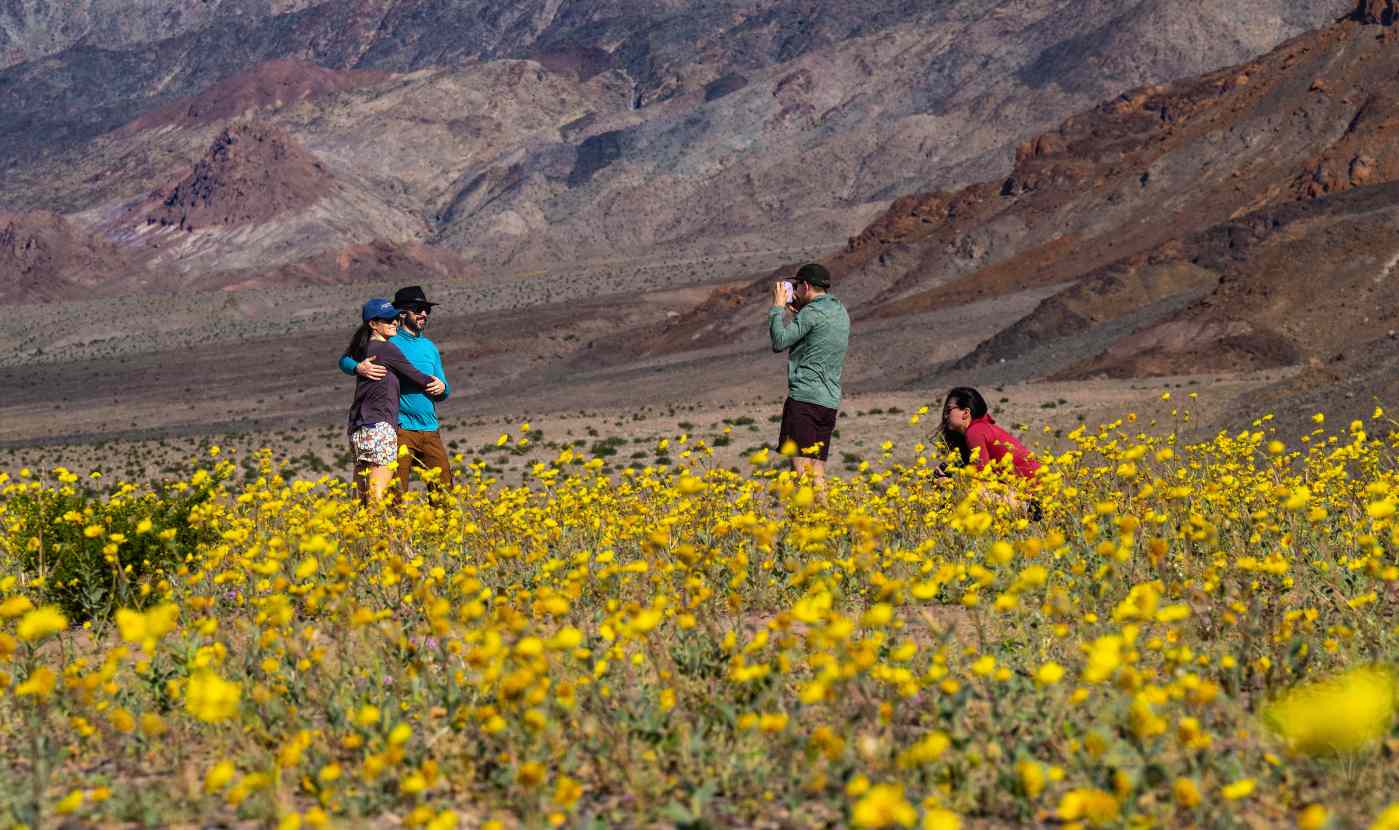
A couple has their picture taken as they and others walk amongst a cluster of desert gold wildflowers blooming near Ashford Junction at the southern end of Death Valley National Park on Saturday Feb. 28, 2026. Low-elevation flowers are blooming throughout the park and will likely persist until mid-late March, depending on the weather. Higher elevations will have blooms April-June according to the National Park Service. Thus far it is the best bloom in the park since 2016. (Photo by Will Lester, Inland Valley Daily Bulletin/SCNG)
Desert gold wildflowers grow through the branches of a bush at the Ashford Mill ruins in Death Valley National Park on Saturday Feb. 28, 2026. Low-elevation flowers are blooming throughout the park and will likely persist until mid-late March, depending on the weather. Higher elevations will have blooms April-June according to the National Park Service. Thus far it is the best bloom in the park since 2016. (Photo by Will Lester, Inland Valley Daily Bulletin/SCNG)
Gravel ghosts bloom along Jubilee Pass Road in the southeast area of Death Valley National Park on Saturday Feb. 28, 2026. Low-elevation flowers are blooming throughout the park and will likely persist until mid-late March, depending on the weather. Higher elevations will have blooms April-June according to the National Park Service. Thus far it is the best bloom in the park since 2016. (Photo by Will Lester, Inland Valley Daily Bulletin/SCNG)
Desert sunflowers bloom below sea level south of Badwater in Death Valley National Park on Saturday Feb.28, 2026. Low-elevation flowers are blooming throughout the park and will likely persist until mid-late March, depending on the weather. Higher elevations will have blooms April-June according to the National Park Service. Thus far it is the best bloom in the park since 2016. (Photo by Will Lester, Inland Valley Daily Bulletin/SCNG)
Desert sunflowers grow out of volcanic rock along Artists Drive in Death Valley National Park on Saturday Feb. 28, 2026. Low-elevation flowers are blooming throughout the park and will likely persist until mid-late March, depending on the weather. Higher elevations will have blooms April-June according to the National Park Service. Thus far it is the best bloom in the park since 2016. (Photo by Will Lester, Inland Valley Daily Bulletin/SCNG)
Visitors walk amongst bunches of brittlebush blooming in large clusters in a wash along Jubilee Pass Road in the southeast area of Death Valley National Park on Saturday Feb. 28, 2026. Low-elevation flowers are blooming throughout the park and will likely persist until mid-late March, depending on the weather. Higher elevations will have blooms April-June according to the National Park Service. Thus far it is the best bloom in the park since 2016. (Photo by Will Lester, Inland Valley Daily Bulletin/SCNG)
Wildflowers bloom along Highway 190 south of Badwater in Death Valley National Park on Saturday Feb. 28, 2026. Low-elevation flowers are blooming throughout the park and will likely persist until mid-late March, depending on the weather. Higher elevations will have blooms April-June according to the National Park Service. Thus far it is the best bloom in the park since 2016. (Photo by Will Lester, Inland Valley Daily Bulletin/SCNG)
A desert five-spot, which is only the size of a quarter, blooms at Ashford Mill in Death Valley National Park on Saturday Feb. 28, 2026. Low-elevation flowers are blooming throughout the park and will likely persist until mid-late March, depending on the weather. Higher elevations will have blooms April-June according to the National Park Service. Thus far it is the best bloom in the park since 2016. (Photo by Will Lester, Inland Valley Daily Bulletin/SCNG)
A visitor drives through Artists Drive in Death Valley National Park on Saturday Feb. 28, 2026. Low-elevation flowers are blooming throughout the park and will likely persist until mid-late March, depending on the weather. Higher elevations will have blooms April-June according to the National Park Service. Thus far it is the best bloom in the park since 2016. (Photo by Will Lester, Inland Valley Daily Bulletin/SCNG)
Visitors to Death Valley National Park stand in a field of gold near Furnace Creek on Saturday Feb. 28, 2026. Low-elevation flowers are blooming throughout the park and will likely persist until mid-late March, depending on the weather. Higher elevations will have blooms April-June according to the National Park Service. Thus far it is the best bloom in the park since 2016. (Photo by Will Lester, Inland Valley Daily Bulletin/SCNG)
Visitors walk out towards ankle deep Lake Manly located 282 feet below sea level at Badwater basin in Death Valley National Park on Saturday Feb. 28, 2026. Low-elevation flowers are blooming throughout the park and will likely persist until mid-late March, depending on the weather. Higher elevations will have blooms April-June according to the National Park Service. Thus far it is the best bloom in the park since 2016. (Photo by Will Lester, Inland Valley Daily Bulletin/SCNG)
A visitor climbs the massive Mesquite Flat Sand Dunes near Stovepipe Wells in Death Valley National Park on Saturday Feb. 28, 2026. Low-elevation flowers are blooming throughout the park and will likely persist until mid-late March, depending on the weather. Higher elevations will have blooms April-June according to the National Park Service. Thus far it is the best bloom in the park since 2016. (Photo by Will Lester, Inland Valley Daily Bulletin/SCNG)
A lone desert sunflower blooms out of the sand near a cluster of desert sand-verbena near Ashford Junction at the southern end of Death Valley National Park on Saturday Feb. 28, 2026. Low-elevation flowers are blooming throughout the park and will likely persist until mid-late March, depending on the weather. Higher elevations will have blooms April-June according to the National Park Service. Thus far it is the best bloom in the park since 2016. (Photo by Will Lester, Inland Valley Daily Bulletin/SCNG)
Visitors stand amongst a cluster of desert gold wildflowers blooming near Ashford Junction at the southern end of Death Valley National Park on Saturday Feb. 28, 2026. Low-elevation flowers are blooming throughout the park and will likely persist until mid-late March, depending on the weather. Higher elevations will have blooms April-June according to the National Park Service. Thus far it is the best bloom in the park since 2016. (Photo by Will Lester, Inland Valley Daily Bulletin/SCNG)
Desert Wildflowers bloom along Highway 190 north of Badwater in Death Valley National Park on Saturday Feb. 28, 2026. Low-elevation flowers are blooming throughout the park and will likely persist until mid-late March, depending on the weather. Higher elevations will have blooms April-June according to the National Park Service. Thus far it is the best bloom in the park since 2016. (Photo by Will Lester, Inland Valley Daily Bulletin/SCNG)
A notch-leaf scorpion weed wildflower blooms south of the Badwater area of Death Valley National Park on Saturday Feb. 28, 2026. Low-elevation flowers are blooming throughout the park and will likely persist until mid-late March, depending on the weather. Higher elevations will have blooms April-June according to the National Park Service. Thus far it is the best bloom in the park since 2016.(Photo by Will Lester, Inland Valley Daily Bulletin/SCNG)
Visitors gaze at the massive Mesquite Flat Sand Dunes near Stovepipe Wells in Death Valley National Park on Saturday Feb. 28, 2026. Low-elevation flowers are blooming throughout the park and will likely persist until mid-late March, depending on the weather. Higher elevations will have blooms April-June according to the National Park Service. Thus far it is the best bloom in the park since 2016. (Photo by Will Lester, Inland Valley Daily Bulletin/SCNG)
Bunches of brittlebush bloom in large clusters along Jubilee Pass Road in the southeast area of Death Valley National Park on Saturday Feb. 28, 2026. Low-elevation flowers are blooming throughout the park and will likely persist until mid-late March, depending on the weather. Higher elevations will have blooms April-June according to the National Park Service. Thus far it is the best bloom in the park since 2016. (Photo by Will Lester, Inland Valley Daily Bulletin/SCNG)
A visitor walks amongst a cluster of desert gold wildflowers blooming near Ashford Junction at the southern end of Death Valley National Park on Saturday Feb. 28, 2026. Low-elevation flowers are blooming throughout the park and will likely persist until mid-late March, depending on the weather. Higher elevations will have blooms April-June according to the National Park Service. Thus far it is the best bloom in the park since 2016. (Photo by Will Lester, Inland Valley Daily Bulletin/SCNG)
Desert gold wildflowers bloom near Ashford Junction at the southern end of Death Valley National Park on Saturday Feb. 28, 2026. Low-elevation flowers are blooming throughout the park and will likely persist until mid-late March, depending on the weather. Higher elevations will have blooms April-June according to the National Park Service. Thus far it is the best bloom in the park since 2016. (Photo by Will Lester, Inland Valley Daily Bulletin/SCNG)
Visitors walk through a field of gold south of the Badwater area in Death Valley National Park on Saturday Feb. 28, 2026. Low-elevation flowers are blooming throughout the park and will likely persist until mid-late March, depending on the weather. Higher elevations will have blooms April-June according to the National Park Service. Thus far it is the best bloom in the park since 2016. (Photo by Will Lester, Inland Valley Daily Bulletin/SCNG)
Desert sunflowers bloom along Highway190 south of Badwater in Death Valley National Park on Saturday Feb. 28, 2026. Low-elevation flowers are blooming throughout the park and will likely persist until mid-late March, depending on the weather. Higher elevations will have blooms April-June according to the National Park Service. Thus far it is the best bloom in the park since 2016. (Photo by Will Lester, Inland Valley Daily Bulletin/SCNG)
Bunches of brittlebush bloom in large clusters in a wash along Jubilee Pass Road in the southeast area of Death Valley National Park on Saturday Feb. 28, 2026. Low-elevation flowers are blooming throughout the park and will likely persist until mid-late March, depending on the weather. Higher elevations will have blooms April-June according to the National Park Service. Thus far it is the best bloom in the park since 2016. (Photo by Will Lester, Inland Valley Daily Bulletin/SCNG)
A visitor to Death Valley National Park walks through a cluster of blooming flowers near Ashfor Junction at the soutern end of the park on Saturday Feb. 28, 2026. Low-elevation flowers are blooming throughout the park and will likely persist until mid-late March, depending on the weather. Higher elevations will have blooms April-June according to the National Park Service. Thus far it is the best bloom in the park since 2016. (Photo by Will Lester, Inland Valley Daily Bulletin/SCNG)
Bunches of brittlebush bloom in large clusters in a wash along Jubilee Pass Road in the southeast area of Death Valley National Park on Saturday Feb. 28, 2026. Low-elevation flowers are blooming throughout the park and will likely persist until mid-late March, depending on the weather. Higher elevations will have blooms April-June according to the National Park Service. Thus far it is the best bloom in the park since 2016. (Photo by Will Lester, Inland Valley Daily Bulletin/SCNG)
Visitors walk out upon ankle deep Lake Manly located 282 feet below sea level at Badwater basin in Death Valley National Park on Saturday Feb. 28, 2026. Low-elevation flowers are blooming throughout the park and will likely persist until mid-late March, depending on the weather. Higher elevations will have blooms April-June according to the National Park Service. Thus far it is the best bloom in the park since 2016. (Photo by Will Lester, Inland Valley Daily Bulletin/SCNG)
Visitors walk out upon ankle deep Lake Manly located 282 feet below sea level at Badwater basin in Death Valley National Park on Saturday Feb. 28, 2026. Low-elevation flowers are blooming throughout the park and will likely persist until mid-late March, depending on the weather. Higher elevations will have blooms April-June according to the National Park Service. Thus far it is the best bloom in the park since 2016. (Photo by Will Lester, Inland Valley Daily Bulletin/SCNG)
A lone desert sunflower blooms amongst a cluster of desert sand-verbena near Ashford Junction at the southern end of Death Valley National Park on Saturday Feb. 28, 2026. Low-elevation flowers are blooming throughout the park and will likely persist until mid-late March, depending on the weather. Higher elevations will have blooms April-June according to the National Park Service. Thus far it is the best bloom in the park since 2016. (Photo by Will Lester, Inland Valley Daily Bulletin/SCNG)
A lone desert sunflower appears to tower over a cluster of desert sand-verbena near Ashford Junction at the southern end of Death Valley National Park on Saturday Feb. 28, 2026. Low-elevation flowers are blooming throughout the park and will likely persist until mid-late March, depending on the weather. Higher elevations will have blooms April-June according to the National Park Service. Thus far it is the best bloom in the park since 2016. (Photo by Will Lester, Inland Valley Daily Bulletin/SCNG)
Bunches of brittlebush bloom in large clusters along Jubilee Pass Road in the southeast area of Death Valley National Park on Saturday Feb. 28, 2026. Low-elevation flowers are blooming throughout the park and will likely persist until mid-late March, depending on the weather. Higher elevations will have blooms April-June according to the National Park Service. Thus far it is the best bloom in the park since 2016. (Photo by Will Lester, Inland Valley Daily Bulletin/SCNG)
A desert sunflower blooms south of the Badwater area of Death Valley National Park on Saturday Feb. 28, 2026. Low-elevation flowers are blooming throughout the park and will likely persist until mid-late March, depending on the weather. Higher elevations will have blooms April-June according to the National Park Service. Thus far it is the best bloom in the park since 2016. (Photo by Will Lester, Inland Valley Daily Bulletin/SCNG)
Desert sunflowers see the last of sunshine for the day as the sun sets south of Badwater in Death Valley National Park on Saturday Feb. 28, 2026. Low-elevation flowers are blooming throughout the park and will likely persist until mid-late March, depending on the weather. Higher elevations will have blooms April-June according to the National Park Service. Thus far it is the best bloom in the park since 2016. (Photo by Will Lester, Inland Valley Daily Bulletin/SCNG)
Desert sunflowers see the last of sunshine for the day as the sun sets south of Badwater in Death Valley National Park on Saturday Feb. 28, 2026. Low-elevation flowers are blooming throughout the park and will likely persist until mid-late March, depending on the weather. Higher elevations will have blooms April-June according to the National Park Service. Thus far it is the best bloom in the park since 2016. (Photo by Will Lester, Inland Valley Daily Bulletin/SCNG)
Desert sunflowers and desert sand-verbenas bloom as the sun sets near Ashford Junction at the southern end of Death Valley National Park on Saturday Feb. 28, 2026. Low-elevation flowers are blooming throughout the park and will likely persist until mid-late March, depending on the weather. Higher elevations will have blooms April-June according to the National Park Service. Thus far it is the best bloom in the park since 2016. (Photo by Will Lester, Inland Valley Daily Bulletin/SCNG)
A lone desert sunflower blooms amongst a cluster of desert sand-verbena near Ashford Junction at the southern end of Death Valley National Park on Saturday Feb. 28, 2026. Low-elevation flowers are blooming throughout the park and will likely persist until mid-late March, depending on the weather. Higher elevations will have blooms April-June according to the National Park Service. Thus far it is the best bloom in the park since 2016. (Photo by Will Lester, Inland Valley Daily Bulletin/SCNG)
Desert sand-verbena bloom out of sand near Ashford Junction at the southern end of Death Valley National Park on Saturday Feb. 28, 2026. Low-elevation flowers are blooming throughout the park and will likely persist until mid-late March, depending on the weather. Higher elevations will have blooms April-June according to the National Park Service. Thus far it is the best bloom in the park since 2016. (Photo by Will Lester, Inland Valley Daily Bulletin/SCNG)
Visitors climb the massive Mesquite Flat Sand Dunes near Stovepipe Wells in Death Valley National Park on Saturday Feb. 28, 2026. Low-elevation flowers are blooming throughout the park and will likely persist until mid-late March, depending on the weather. Higher elevations will have blooms April-June according to the National Park Service. Thus far it is the best bloom in the park since 2016. (Photo by Will Lester, Inland Valley Daily Bulletin/SCNG)
Desert sunflowers and desert sand-verbena bloom south of the Badwater area of Death Valley National Park on Saturday Feb. 28, 2026. Low-elevation flowers are blooming throughout the park and will likely persist until mid-late March, depending on the weather. Higher elevations will have blooms April-June according to the National Park Service. Thus far it is the best bloom in the park since 2016. (Photo by Will Lester, Inland Valley Daily Bulletin/SCNG)
Desert sunflowers and desert sand-verbenas bloom as the sun sets near Ashford Junction at the southern end of Death Valley National Park on Saturday Feb. 28, 2026. Low-elevation flowers are blooming throughout the park and will likely persist until mid-late March, depending on the weather. Higher elevations will have blooms April-June according to the National Park Service. Thus far it is the best bloom in the park since 2016. (Photo by Will Lester, Inland Valley Daily Bulletin/SCNG)
Desert gold wildflowers grow through the branches of a bush at the Ashford Mill ruins in Death Valley National Park on Saturday Feb. 28, 2026. Low-elevation flowers are blooming throughout the park and will likely persist until mid-late March, depending on the weather. Higher elevations will have blooms April-June according to the National Park Service. Thus far it is the best bloom in the park since 2016. (Photo by Will Lester, Inland Valley Daily Bulletin/SCNG)
A visitor walks amongst a cluster of desert gold wildflowers blooming near Ashford Junction at the southern end of Death Valley National Park on Saturday Feb. 28, 2026. Low-elevation flowers are blooming throughout the park and will likely persist until mid-late March, depending on the weather. Higher elevations will have blooms April-June according to the National Park Service. Thus far it is the best bloom in the park since 2016. (Photo by Will Lester, Inland Valley Daily Bulletin/SCNG)