
Supreme Court sets April arguments over whether Trump can be prosecuted for election interference

posted in: Politics | 0

By MARK SHERMAN (Associated Press)

WASHINGTON (AP) — The Supreme Court on Wednesday agreed to decide whether former President Donald Trump can be prosecuted on charges he interfered with the 2020 election and set a course for a quick resolution.

The justices’ order maintains a hold on preparations for a trial focused on Trump’s efforts to overturn his election loss. The court will hear arguments in late April, with a decision likely no later than the end of June.

But even with a timetable that is much faster than usual, the court action calls into question whether a trial for Trump, assuming the justices deny his immunity bid, can be scheduled and concluded prior to the November election.

Trump’s lawyers have sought to put off a trial until after the voting.

By taking up the legally untested question now, the justices have created a scenario of uncertainty that special counsel Jack Smith had sought to avoid when he first asked the high court in December to immediately intervene. In his latest court filing, Smith had suggested arguments a full month earlier than the late April timeframe.

Spokespeople for Trump and Smith did not immediately respond to a message seeking comment.

The court said in an unsigned statement that it will consider “whether and if so to what extent does a former President enjoy presidential immunity from criminal prosecution for conduct alleged to involve official acts during his tenure in office.”

The Supreme Court has previously held that presidents are immune from civil liability for official acts, and Trump’s lawyers have for months argued that that protection should be extended to criminal prosecution as well.

Lower courts have so far rejected Trump’s novel claim that former presidents enjoy absolute immunity for actions that fall within their official job duties. A panel of appellate judges in Washington ruled earlier in February that U.S. District Judge Tanya Chutkan, who would preside over the election interference trial, was right to say that the case could proceed and that Trump can be prosecuted for actions undertaken while in the White House and in the run-up to Jan. 6, 2021, when a mob of his supporters stormed the U.S. Capitol.

The issue reached the high court because the appeals court refused to grant the delay that Trump has sought.

The case is separate from the high court’s consideration of Trump’s appeal to remain on the presidential ballot despite attempts to kick him off because of his efforts following his election loss in 2020. During arguments on Feb. 8, the court seemed likely to side with Trump. A decision could come any time.

The high court also will hear an appeal in April from one of the more than 1,200 people charged in the Capitol riot. The case could upend a charge prosecutors have brought against more than 300 people, including Trump.

The election interference case in Washington is one of four prosecutions Trump faces as he seeks to reclaim the White House. Of those, the only one with a trial date that seems poised to hold is his state case in New York, where he’s charged with falsifying business records in connection with hush money payments to a porn actor. That case is set for trial in March 25, and a judge this month signaled his determination to press ahead.

A separate case charging him with illegally hoarding classified records is set for trial on May 20, but a pivotal hearing Friday seems likely to result in a delay. No date has been set in a separate state case in Atlanta charging him with scheming to subvert that state’s 2020 election.
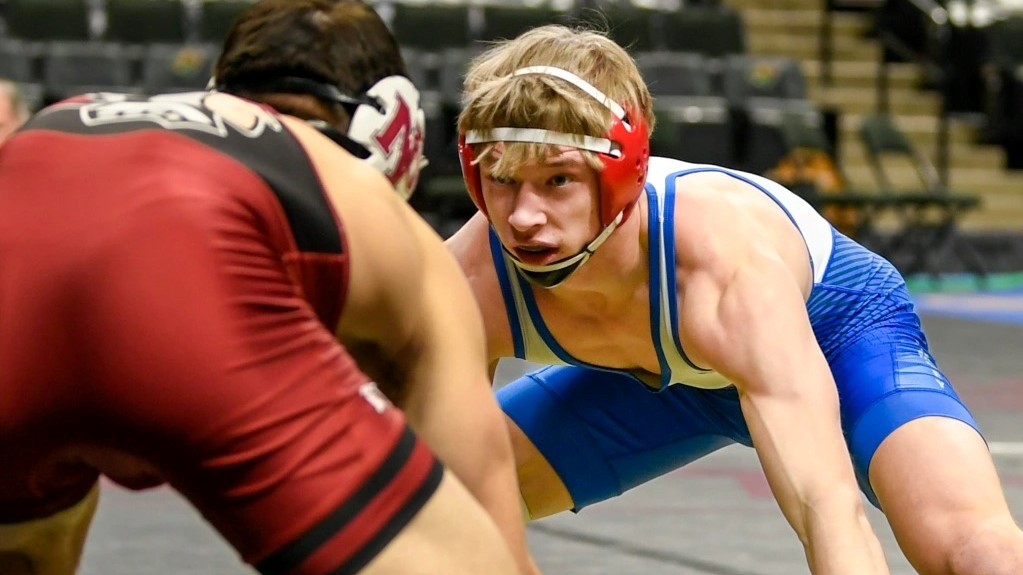
State wrestling: With a chip on its shoulder and ‘no regrets,’ Simley takes aim at a sixth straight title that won’t come easy

posted in: News | 0

Danny Martin was not ranked in the top 10 in the state for most of last season as a junior for Simley wrestling at 170 pounds.

He finished with a 29-22 record, and won a match in his individual state tournament bracket.

But Simley needed more Martin — literally — if the Spartans were to chase a sixth-straight Class 2A team state title.

“I told him, ‘You have to get big enough to wrestle at 189, because we don’t have another guy (at that weight),’” Simley coach Will Short recalled Wednesday. “ ‘And you have to be a force for us at 189.’ ”

Done, and done. Martin, a senior captain, bulked up and is now the sixth-ranked 189-pound wrestler in Class 2A, according to The Guillotine. He’s a 40-match winner this winter.

“It took a lot of time in the weight room, eating the right food, but also just trusting my coaches who were helping me along the way,” Martin said.

The right food?

“Sometimes it wasn’t as clean as I would’ve liked,” Martin said with a laugh. “I was just eating whatever I could. But especially in wrestling season … I was giving up unnecessary food that’s just bad for you. I’ve been trying to eat more clean, (and) I definitely have felt the results.”

Fellow senior captain Derrick Dahmen was slated to wrestle at 160 pounds this season. But Simley has lost three wrestlers this winter — JJ Salas, Amilio Salas and Derek Buck — to season-ending injuries.

To compensate for the major losses and fill up the reconfigured lineup, changes needed to be made. Simley had an adequate 160-pound reserve in Judah Heeg. It had no varsity-ready options at 145 pounds.

So Dahmen went down. And, after winning 24 matches a year ago, he’s a 30-match winner and individual state tournament qualifier this year at 145.

And therein lies the true magic of Simley wrestling.

Yes, the Spartans have stars in the lineup. Turner Ross (107 pounds), Austin Grzywinski (114) and Raymond (152) are all ranked No. 1 at their respective weight classes entering this week’s state tournament.

And Simley did receive an injection of talent when the Heeg family moved into the Twin Cities. Eighth-grader Justus Heeg is a rising star at 133 pounds. Judah, a sophomore, wasn’t expected to be a varsity contributor this year, but has grown into that role out of necessity.

But the program sustainability is born out of the development of others. You don’t compete for a sixth-straight state title — which would be a new program record — without a complete lineup.

Simley (20-1) is the top seed in the Class 2A team tournament, which will play out throughout the day Thursday in St. Paul, starting with a quarterfinal match against Little Falls (19-4), and potentially ending with a state title match at 7 p.m., where Kasson-Mantorville or Totino-Grace likely will be waiting.

Which maybe isn’t something Short would have forecasted a year ago. Because this Simley team isn’t as flush with top-tier talent throughout the lineup. The Spartans of recent years won every match because they were far superior to their opponent.

This year’s team is proving it can be just as successful through different avenues.

Guys are moving around weight classes and raising their games from good to great. Others are performing admirably to simply give Simley a shot at certain weight classes — as Parker Davis and Brandon Kropuenske have done at the heaviest weights.

“The fact that we’re competitive, that we can compete at those weights, wasn’t something that we were sure we could do on a regular basis,” Short said. “We thought we were going to take a long year. But we’ve done a pretty good job at developing guys, and that’s the key.”

That’s how you compete for state titles every year and sustain for the long haul. Simley has been a top-10 team throughout the entirety of the past four decades. Short is committed to maintaining the Inver Grove Heights school’s standard.

Simley currently has 65 kids in its elementary school wrestling program, 30 at the middle school level and 55 in high school.

Those 55 high school wrestlers consist of the varsity and the junior varsity. Short and his coaching staff are constantly making sure the JV kids are getting ample time around the varsity wrestlers so they can see the level of work required to maintain a certain level of excellence.

“Everybody around you is doing the right thing,” Martin said. “If you’re slacking off, it’s really obvious to everyone around you. The coaches will call you out on it, and not only that, some of the guys will be like, ‘Hey, you’ve got to pick it up.’ ”

Short noted for those who are willing to enter that room and go about things in the proper manner, “there is a map and a pathway” for athletes to reach the highest level.

“I think right now, it’s a strong program,” Short said. “And when you have a strong program, you can turn out another set of guys.”

Could Simley win another state title this year? Absolutely. Is that a foregone conclusion? No. It was in past years, but because the talent gap simply doesn’t exist, anything could happen Thursday at Xcel Energy Center. Short loves that. He’s the ultimate fan of the state tournament, but noted it’s an earned experience.

His athletes have done it the hard way. There was a point after all of the injuries that Short could feel his team — and, frankly, even himself — thinking that a sixth-straight title may not be in the cards. That was right around the team’s lone dual-match loss to Mounds View in late January.

“We kind of just sat down and we just made a decision that we were going to commit to taking the guys we’ve got and still achieving our goals,” Martin said. “Just because we lost a few key guys doesn’t take away from anything we have.”

Ever since then, it’s been onward and upward for the Spartans. Short describes this group with a palpable excitement in his voice. He’s giddy about the progress and sacrifice each individual has made for the betterment of the collective.

“We’ve just had a lot of guys step up and make major improvements. I’m really proud of this team. I’m more proud of these guys than I ever have been,” Short said. “This group of guys has really impressed me this year about who they are as people. How Derek and Danny have said, ‘We’re going to be in this, we’re not giving up and we’re going to go try to win a state tournament.’ They’re focused and committed.”

For the first time in awhile, Short said the Spartans have a chip on their shoulders. They’re entering Thursday ready to wrestle, knowing they’ve given themselves the best possible chance to succeed.

“We’ve got no regrets at Simley right now. No one is going to be sitting on the bench going, ‘I wish I’d done this.’ These guys have given everything they’ve got. They’re truly committed to try and win, and they’re going to go put it on the line against every team,” Short said. “They have a little bit of swagger right now and a little bit of a chip on their shoulder like, ‘Hey, you think we’re done? Well, we’re not done.’ ”

Related Articles

High School Sports |


State wrestling tournament primer

Stephen L. Carter: Really, Texas? Don’t punish Black students for their hair

posted in: News | 0

After Ronald Reagan’s 1984 reelection landslide, his inaugural committee advertised for “attractive, clean-cut, all-American” performers to dance and sing at various celebratory events. The description ignited a firestorm on any number of grounds, not the least of which was race: Activists feared that the committee wanted no Black performers — in particular, that “clean-cut” meant not having distinctively Black hair.

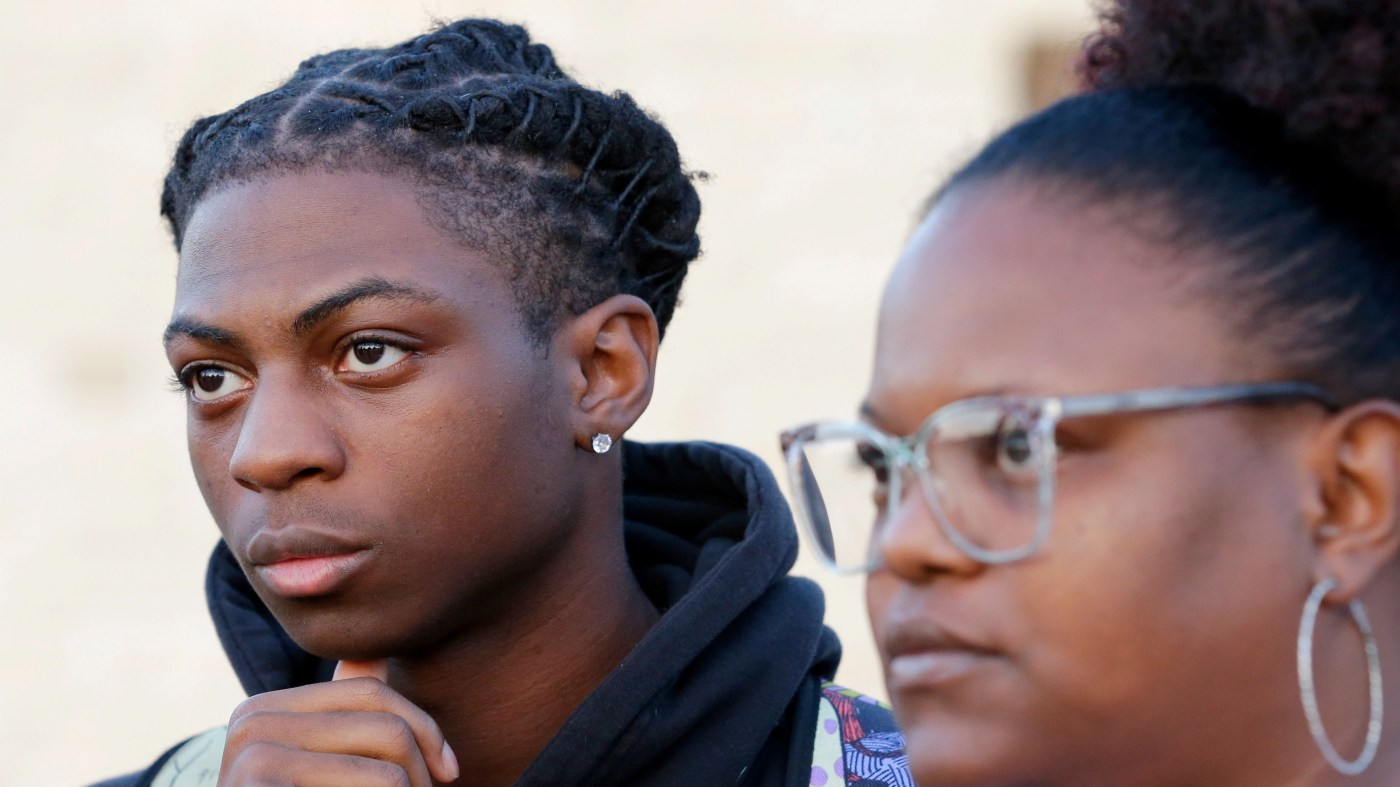
That episode comes to mind in the wake of last week’s decision by a Texas judge to uphold a public school’s suspension of a Black student for refusing to trim his hair. The question before the court was whether the (aptly named) Barbers Hill Independent School District had violated a new state statute forbidding racial discrimination on the basis of hair. Because the district’s rules address length but not style, ruled the judge, the statute isn’t violated.

Where to begin? Perhaps with the New York Times’s delightfully deadpan description of the hair in question: “locs, or long ropelike strands of hair, that he pins on his head in a barrel roll, a protective style that his mother said reflected Black culture.”

What the Times calls “locs” were traditionally “dreadlocks” or simply “locks” — once a symbol of Black rebellion, later a flashpoint for arguments over cultural appropriation, and nowadays simply a way some people wear their hair.

Black people especially.

Texas school districts seem to have gone out of their way to specify that locks are not acceptable, as the sociologist Patricia A. Banks notes in a recent analysis. And Barber Hills, intentionally or not, has plunged willy-nilly into one of the most complex and painful aspects of the nation’s long, tortured history: attitudes toward Black people and their hair.

The nation’s relationship to hair has always been complex. In her excellent book “Foul Bodies: Cleanliness in Early America,” the historian Kathleen M. Brown notes how during the 18th and 19th centuries, hair was thought to carry disease; keeping hair clean and groomed in public was a way to show that you were safe.

Black hair was considered especially dangerous, a fear often shared even by slavery’s opponents. Brown tells us how the abolitionist Fanny Kemble despaired at the way that female slaves covered their children’s “poor little wooly heads” with “half a dozen hot, filthy coverings.” Kemble decreed that on her husband’s plantation, at least, enslaved children would be permitted to wear hats only if their heads were shaved.

True, during the era of enslavement, hairstyling was one of the few areas in which most owners left their human property to decide for themselves. But what appeared atop the head remained a key marker of racial distinction. An 1858 article in a medical journal set forth differences between Black and white hair as evidence that the two races were separate species. In 1896, a Southern newspaper solemnly reported that African hair was curly to “deflect the rays of the tropical sun” and thus prevent “more severe penetration into the brain.” Ten years later, W.E.B. Du Bois would publish “The Health and Physique of the Negro American,” part of which was devoted to illustrating, with copious photographs, the enormous variety of black hair and skin. The report made no difference.

Yet although public display of groomed hair mattered, creating that look was a private matter, one almost of intimacy. Small surprise, then, that long after white shopkeepers yielded to the inevitable and began accepting the custom of the burgeoning Black middle class, white hairdressers and barbers refused. Thus arose the tradition of Black-owned beauty parlors and barber shops. As late as 1953, the decision by an upstate barber to cut a Black child’s hair, in defiance of the “unwritten law,” made the New York Times.

In light of this sad history, how does Barbers Hill justify its rules? In the Houston Chronicle, the superintendent compared the district’s hair requirement with similar rules for those who join the military. Service members, wrote Dr. Greg Poole, “realize being an American requires conformity with the positive benefit of unity, and being a part of something bigger than yourself.”

Indeed they do. But the analogy fails. Service members today are all volunteers; they know what they’re getting into. If Darryl George’s family had sent him to a private school, whose dress and hair regulations they knew in advance, they’d have significantly weaker moral standing to complain. Instead, he attends a public school. That we have public schools is good; but let’s not pretend the kids are present by choice. If they’re forced to be present, they should also feel welcome.

Which brings us back to 1984. When the firestorm erupted, Reagan’s inaugural committee quickly made clear that “clean cut” was not a euphemism for white but rather meant “someone who’s cheerful and outgoing.” The Washington Post subsequently reported that “a large portion of those selected were minorities.”

In short, the group went out of its way to show how welcoming it was to those its rules appeared to exclude — not just in words but in actions. Forty years later, the Barbers Hill school district might consider following Reagan’s example.

Stephen L. Carter is a Bloomberg Opinion columnist, a professor of law at Yale University and author of “Invisible: The Story of the Black Woman Lawyer Who Took Down America’s Most Powerful Mobster.”

Related Articles

Opinion |


Irfan Galaria: I’m an American doctor who went to Gaza. Here’s what I saw

Opinion |


Trudy Rubin: A bad case of Putin-envy prevents Trump from calling out the death of Alexei Navalny

Opinion |


F.D. Flam: Political deepfakes will hijack our brains — if we let them

Opinion |


Noah Feldman: Alito is worried gay rights could upstage religious ones

Opinion |


Noah Feldman: Frozen embryos are now children in Alabama

Pop culture-inspired travel is a serious trend in 2024

posted in: News | 0

Laurie Baratti | TravelPulse (TNS)

A recent study conducted by trip-planning website TripIt reveals that pop culture-inspired travel is set to double in the coming year, with younger generations leading the trend. When we talk of pop culture trips, that might encompass anything from traveling to attend a concert in another city or country to taking a “set-jetting” trip to see the overseas filming locations of a favorite movie or TV series.

In a survey of a representative group of 1,000 Americans, TripIt found that twice as many participants are planning on taking pop culture trips in 2024 than did in 2023 (40% vs. 22%), underscoring a growing trend among U.S. travelers.

Younger generations are at the forefront of this shift, with 41% of Gen Zers and 32% of Millennials having taken a pop culture-related trip over the past year, while only 17% of Gen Xers and 7% of Boomers said the same. And those figures are continuing to rise, with 59% of Gen Zers and 58% of Millennials planning a pop culture trip within the coming year, while Gen Xers trail at 35% and Boomers at 19%.

In a survey of a representative group of 1,000 Americans, TripIt found that twice as many participants are planning on taking pop culture trips in 2024 than did in 2023. (Kiattisak Lamchan/Dreamstime/TNS)

The research also uncovered a correlation between income levels and the likelihood that people will embark on pop culture escapades. Respondents who earn less than $50K per year were found to be more than twice as likely to plan a pop culture trip, while higher-income individuals ($100K+) are only 1.5 times more inclined to do so.

This inclination towards pop culture travel isn’t just a solitary pursuit; it’s a social experience. Approximately 86% of respondents expressed a desire to share their pop culture travel experiences with friends or family, highlighting the communal aspect of these journeys. The survey further revealed that having a companion — whether a friend or family member (41%) or romantic partner (16%) — significantly impacts the decision to embark on a pop culture-inspired getaway, with nearly half (48%) of participants emphasizing the importance of shared experiences that money can’t buy.

Interestingly, music emerges as a prime motivator for pop culture travel. Concerts and music festivals top the list of pop culture activities, attracting 66% of those who have taken pop culture trips in the past year. And more than half of survey respondents (56%) plan on traveling to attend a music event in the near future.

Beyond concert and music festival events, pop culture trips are largely being taken to experience sporting events (43%); locations from a movie, TV show or book (28%); and viral social media locations (16%).

Taylor Swift performs during The Eras Tour at SoFi Stadium in Inglewood, California, Monday, Aug. 7, 2023. (Allen J. Schaben/Los Angeles Times/TNS)

Taylor Swift’s Eras Tour is proving to be a key driver for travel plans in 2024, garnering interest from 39% of respondents who said they would travel to see one of her shows this year. Festivals like Coachella and Lollapalooza also hold significant appeal, particularly among Gen Zers (56%) and Millennials (60%), although Gen Xers (35%) and Boomers (21%) are also tempted to a lesser degree.

Notably, nearly all travelers (94%) who took pop culture trips last year said that the memories they made during their travels lived up to the hype. This may not be as wholesome a sentiment as it initially sounds, though, since their reasons for saying so are less personal than prompted by perceived social standing.

Related Articles

Travel |


Embrace the desert season with a camping trip to Anza-Borrego this winter

Travel |


TSA PreCheck or Clear: Which should you choose?

Travel |


Travelers won’t know where they’re going on this new ‘mystery’ voyage from Windstar Cruises

Travel |


Vacations ‘Taylor’-made for Swifties

Travel |


How to rent a car with points and miles — and get the best deal

Asked about the reasons that these trips lived up to their expectations, nearly half of Gen Zers and Millennials (45%) said it was because their friends were envious, compared to 26% of Gen Xers and Boomers who said the same. Even more (57%) Gen Zers and Millennials cited getting great content for their social media streams as the primary reason why their trips didn’t disappoint, while 26% of Gen Xers and Boomers said the same. And 71% of those younger generations thought that acquiring awesome merchandise during their trip was the clincher, while 55% of the older generations felt the same.

©2024 Northstar Travel Media, LLC. Visit at travelpulse.com. Distributed by Tribune Content Agency, LLC.