Mary Ellen Klas: The White House push to undermine the midterms is gathering steam

posted in: All news | 0

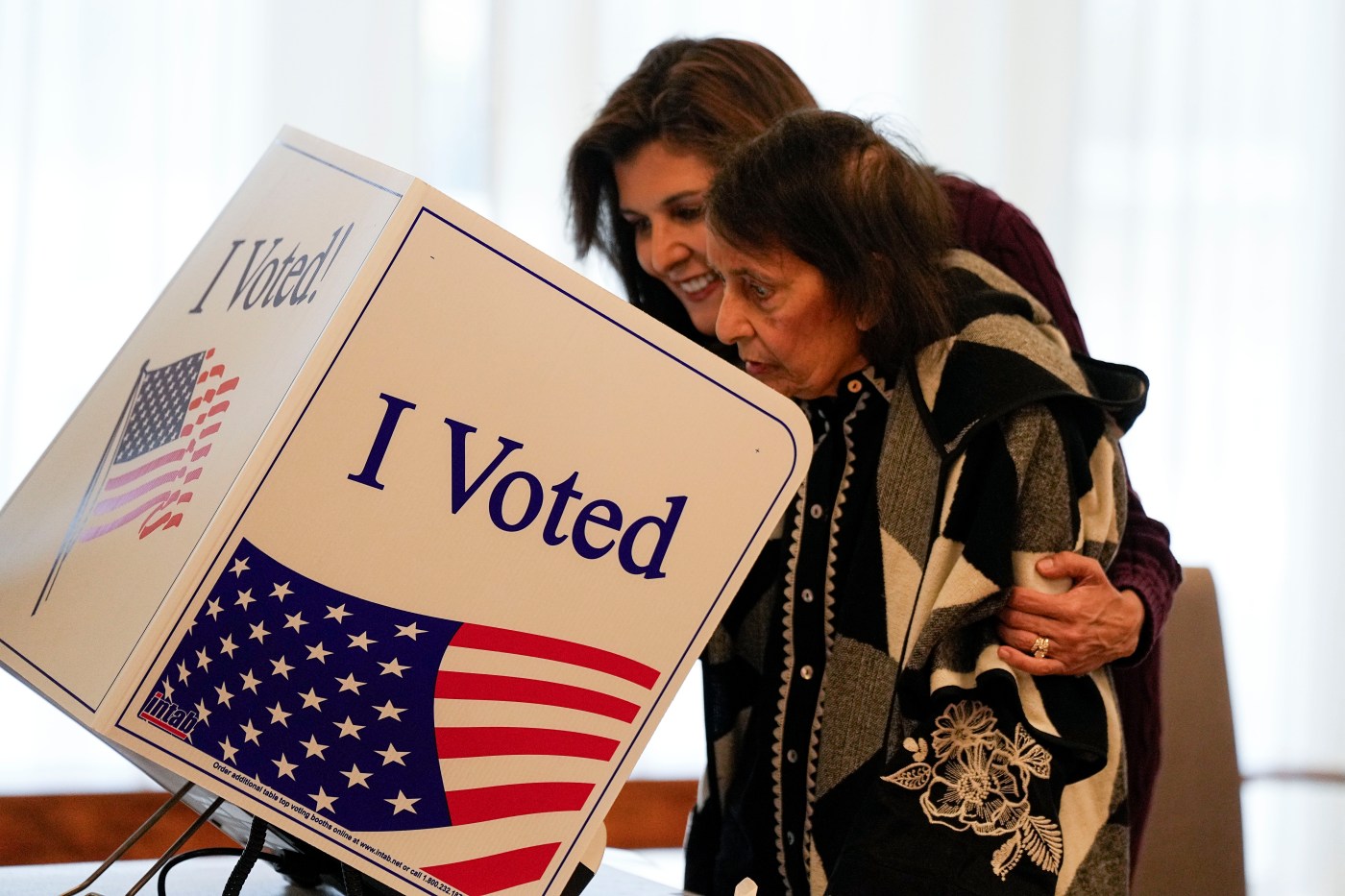
The Department of Justice is assembling a first-ever national voter database. It has demanded that states turn over their complete voter registration lists — loaded with private information such as driver’s license and Social Security numbers linked to names, home addresses and dates of birth.

It has also turned the federal immigration database into what it calls a national “voter verification” tool to remove large numbers of voters from the rolls.

Each of these moves evades federal privacy protections, but they might not seem objectionable to many Americans. After all, the government already knows much of this information, plus our TSA facial profile and our tax and business information.

But the nation’s Founders gave authority over election administration to the states precisely because they were worried about centralizing too much power in the federal government. And in the context of the Trump administration’s other activities — such as the surge of federal immigration agents into blue cities and the president’s unsubstantiated claims that “we have very dishonest elections” — the data grab is downright frightening.

First, there are no safeguards against false matches that wrongly flag eligible voters as noncitizens. A county administrator in Texas warned in a court filing in October that nearly one-fourth of the voters in Travis County were incorrectly identified by the federal program as potential noncitizens.

Second, the DOJ hasn’t said how it will keep the data safe from hackers and cybersecurity breaches, raising the risk that millions of Americans could be exposed to fraud and abuse.

Finally, there is no guarantee that the administration won’t use the voter list to undermine U.S. elections. Once the DOJ has nationwide voter information, it could use insignificant discrepancies to question the validity of election outcomes. (We saw how far President Donald Trump was willing to go down that path after the 2020 election.) And DHS could use the immigration database to send its agents into polling places in the name of “verifying” voters. Naturalized immigrants or Hispanic citizens might decide to stay home rather than risk a confrontation. Trump ally Steve Bannon bragged on his podcast last fall that “since we’re taking control of the cities, there’s going to be ICE officers near polling places.”

The federal government could use the database to go even further, voting experts told me, and seize control of state voting operations or suspend voting in certain states, something that has never happened in U.S. history.

Sound far-fetched? In a recent interview with The New York Times, Trump said “the elections in our country are rigged” and that he regretted not ordering the National Guard to seize voting machines in swing states after he lost the 2020 election. It was just the latest sign that he continues to harbor the long-discredited views that voting machines are dangerous and that the US election system is rife with fraud.

Such scenarios are why 23 states and the District of Columbia — including the Republican-controlled state of Georgia — have pushed back on the DOJ and refused to give it unrestrained access to their voter files. The DOJ has sued them all, and groups like the ACLU, Common Cause and other voting advocacy organizations have sided with the states.

Only eight states have either provided or said they will provide their full statewide voter registration lists, but a dozen others — including the Republican-controlled state of Florida — have only turned over what’s already publicly available, according to the Brennan Center for Justice, which is keeping track.

I’ve spoken to many county and state-based election supervisors over the years and am often impressed that, no matter their party affiliation, they are committed to ensuring that our one-person, one-vote system stays honest. I’ve watched rabid partisans get into the job and mellow once they see the elaborate safeguards in place and the importance of maintaining the public’s trust. They bristle at the president’s unhinged claims.

“If Donald Trump were here right now, I would look at him and I would say, ‘Mr. President, you need to get off of your darn social media and shut up. You are propagating more unrest,’” Alan Hays, a former Republican state legislator who became the supervisor of elections in Lake County, Florida, told me one week before the 2024 elections.

Hays said then that the public had undergone a “loss of confidence” in the elections system because of “just blatant lies that have been propagated across this country by a relatively small, but loudmouth group of people.” He wanted Trump to “shut up,” but the president has since kept talking — and seeding doubt.

Trump’s claims of fraud may be the predicate for the president, now underwater in the polls in every conceivable measure, to claim that if his party loses seats in the midterm elections it is because the voting was “rigged.” What’s worse, he could use such claims to pursue policies that preempt fair elections.

The surge in ICE agents to Minnesota may be the dress rehearsal for November, when armed federal forces could be patrolling polling sites across the country — and treating Americans like enemy combatants.  If Trump succeeds in undermining trust, intimidating voters and disenfranchising American citizens, he will have achieved what all authoritarians desire: Control of the people through the appearance of consent of the governed. It’s the kind of stagecraft Trump might just be able to muster.

But our system is designed to check this kind of power. At least 35 states are resisting so far. Let’s hope they prevail.

Mary Ellen Klas is a politics and policy columnist for Bloomberg Opinion. A former capital bureau chief for the Miami Herald, she has covered politics and government for more than three decades.

 

Minnesota state regulators rule that burning trash and wood can be considered ‘carbon-free’

posted in: All news | 0

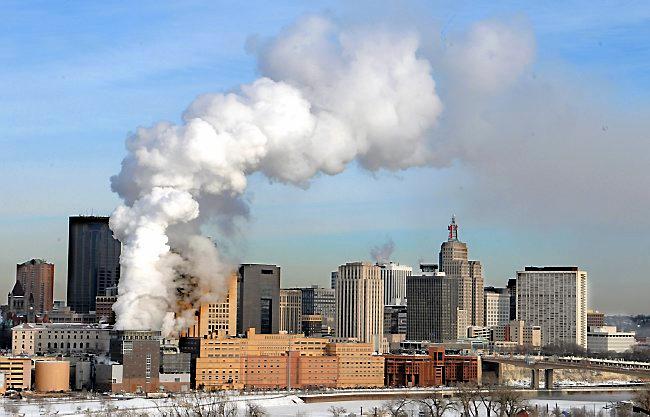
Burning trash and wood to generate electricity will now be considered a carbon-free source under Minnesota’s landmark clean energy law, after a decision by state utility regulators following a contentious hearing on Thursday.

The law that passed in 2023 requires 100% of electricity produced in Minnesota to be generated from carbon-free sources by 2040. The goal was to significantly cut the amount of greenhouse gases the state emits, which contribute to global climate change.

But the law didn’t specify which power sources would qualify. Instead, the legislation defined “carbon-free” as “a technology that generates electricity without emitting carbon dioxide.” Lawmakers left it up to the Minnesota Public Utilities Commission to determine what meets that definition. The commission has held a series of proceedings in the years since the law passed to hash out how to implement the new law.

Technologies like wind and solar are straightforward — they produce electricity without generating any greenhouse gas emissions.

What’s proved controversial is deciding how to treat power plants that burn municipal waste or wood waste, which generate significant amounts of greenhouse gas emissions.

But those materials can also contribute to climate change even if they aren’t burned to create electricity. For example, wood scraps left to decompose release carbon dioxide. Trash in a landfill releases methane, a potent greenhouse gas. That’s why some argue that burning wood and trash for power is still environmentally beneficial.

PUC decision

In a raucous meeting Thursday that was twice interrupted by protesters, the five members of the state PUC ruled that facilities that burn municipal waste or biomass to generate electricity can still be considered carbon-free, even if they emit large amounts of carbon dioxide or other greenhouse gas emissions.

They can do that if they pass a life-cycle analysis that proves that burning trash or biomass in that facility generates fewer greenhouse gases than what would most likely occur if the wood or waste were disposed of in another manner.

Commissioner Audrey Partridge described a hypothetical example of a Minnesota county that collected wood waste from forests damaged by storms and insects. The county recycled 10% of the wood and burned the rest so the pest infestation wouldn’t spread, resulting in the release of 100 tons of carbon into the atmosphere.

A utility wanted to instead burn that wood in a biomass power plant. If a life cycle analysis found that would release fewer than 100 tons of carbon, then that would be considered “carbon-free” under state law.

“If taking this waste and using it to generate electricity provides a climate benefit, then it should qualify,” Partridge said. “I believe that this is the best path for implementing this law and for improving the climate.”

But several environmental groups and attendees in the audience strongly disagreed. The meeting was disrupted twice, with people repeatedly shouting, “This is not the bill the people passed!”

DFL State Sen. John Marty, of Roseville, co-authored the 100% clean energy bill and addressed the PUC during its meeting Thursday. He was one of 42 legislators who wrote a letter to the Commission, urging them to not consider fuels such as biomass and waste incineration to be considered carbon-free under the law.

“I urge you to follow the plain wording of the law and the vision the legislature showed in 2023,” Marty told the commissioners. “It’s not ambiguous.”

“I know you’re looking at the life-cycle analysis,” Marty continued. “But I would suggest that if the Legislature wanted a life-cycle analysis, we could have done so.”

Potential growth of incinerator use

Only about 2% of the electricity generated in Minnesota comes from biomass and trash incineration. But environmental groups worry that this decision will lead to an increased use of incinerators to generate power, increasing the amount of greenhouse gases and particulate matter pollution emitted into the atmosphere.

“It’s possible that some of our biggest coal plants will be converted to partially burn trees, which is terrible for the environment, and it’s just a huge step backwards from the law that was passed in 2023,” said Hudson Kingston, legal director for the environmental group CURE.

Hudson said biomass and waste-to-energy plants should instead be compared against solar and wind projects, which don’t emit any greenhouse gas emissions.

Duluth-based Minnesota Power told the PUC it is considering converting part of the Boswell coal-fired power plant in Cohasset to biomass when that coal facility closes in 2035.

The utility also operates a biomass plant in Duluth that generates about 1 percent of all the electricity it produces. “But it serves an important purpose in terms of reliability and also serves northern Minnesota by providing a safe and sustainable place to dispose of diseased wood and storm debris,” said Minnesota Power spokesperson Amy Rutledge.

The utility said it looks forward to working with state agencies on a life-cycle analysis of the facility.

Future of HERC in Minneapolis

It’s unclear what the decision means for the future of the Hennepin Energy Recovery Center, or HERC, a controversial waste incinerator in downtown Minneapolis that neighborhood activists have tried to shut down for years.

Commissioners Joe Sullivan and Partridge said the state legislature has already determined that electricity produced at the HERC cannot be considered carbon-free.

But community advocates are concerned that the burning of trash there could still be allowed because the HERC is not specifically mentioned in the PUC’s decision.

“We don’t have any faith,” said Nazir Khan with the Zero Burn Coalition in Minneapolis. “What we would have to see is an explicit removal of HERC. I don’t see it in the decision option as it’s laid out, despite what they said.”

The decision could be the subject of litigation. The Minnesota Center for Environmental Advocacy, which has sued over the issue before, said it’s still regrouping after the PUC decision to determine its next steps.

Related Articles


Baytown Township taps state, federal programs for community center solar panels


Calling all Minnesotans: Have you tested your home for radon?


Judge allows a third offshore wind project to resume construction as the industry challenges Trump


Sharks are famous for fearsome teeth, but ocean acidification could make them weaker


Zebra mussel larvae confirmed in Landfall lake

Wild rake in Toronto, blowing past Leafs

posted in: All news | 0

TORONTO – When everything is clicking for the Minnesota Wild, this is what it’s supposed to look like. Patient, disciplined, accurate and effective, all coming together to dominate a foe.

Playing with a somewhat patched together lineup in Canada’s largest hockey markets, the Wild took advantage of everything the Toronto Maple Leafs offered, winning their second game on this three-outing road trip 6-3 on Monday.

Marcus Foligno scored three and Vladimir Tarasenko had a pair of goals for Minnesota, which got 27 saves from Filip Gustavsson in the only visit they will make to Toronto this season.

With two assists in the game, Quinn Hughes became the fastest player to reach 20 points in a Wild uniform, doing so in his 18th game.

The Maple Leafs came in on a heater, having gone 9-1-3 in their previous 13 games, but Minnesota cooled things off quickly.

The Wild were outshot early, but they made their first shot on goal count. On the game’s first power play, Ryan Hartman fed a pass to Tarasenko, alone at the side of the Toronto crease, and the Russian veteran snapped in his 10th goal of the season.

When Hartman scored off a faceoff play in the offensive zone, the crowd got mostly quiet, and the Wild looked content to take their 2-0 lead into the first intermission. It was Hartman’s fifth goal in Minnesota’s past seven games.

But a four-minute high-sticking call on Minnesota captain Jared Spurgeon put the Wild penalty killers to the test and opened the door for Toronto to get the audience re-engaged.

The Leafs needed just 18 seconds of man advantage to get on the board, when former Gophers star Matthew Knies passed from below the goal line to John Tavares for a quick shot.

The Leafs killed a Wild power play early in the middle frame, only to have Foligno tip a Brock Faber shot past Toronto goalie Joseph Woll, putting Minnesota back up by a pair. Then Hughes set up Tarasenko for a breakaway goal, and Foligno tipped another Faber shot to effectively put things away.

Gustavsson, playing in his 200th career game, kept things mostly quiet the rest of the way, allowing a third period goal when he was unable to corral a loose puck in the crease with a pileup of bodies making the task more challenging.

Leafs star Auston Matthews got a breakaway goal late in the third to make it interesting, but Foligno completed his first career hat trick into an empty net.

Woll finished with 24 saves for Toronto in the opening 40 minutes. Dennis Hildeby came on for the third period for the Leafs, who make their only visit to St. Paul on March 15. Hildeby finished with nine saves.

The Leafs were playing without standout forward William Nylander, who is third on the team in goals with 17.

Hackers disrupt Iran state TV to support exiled crown prince as deaths from crackdown exceed 4,000

posted in: All news | 0

By JON GAMBRELL

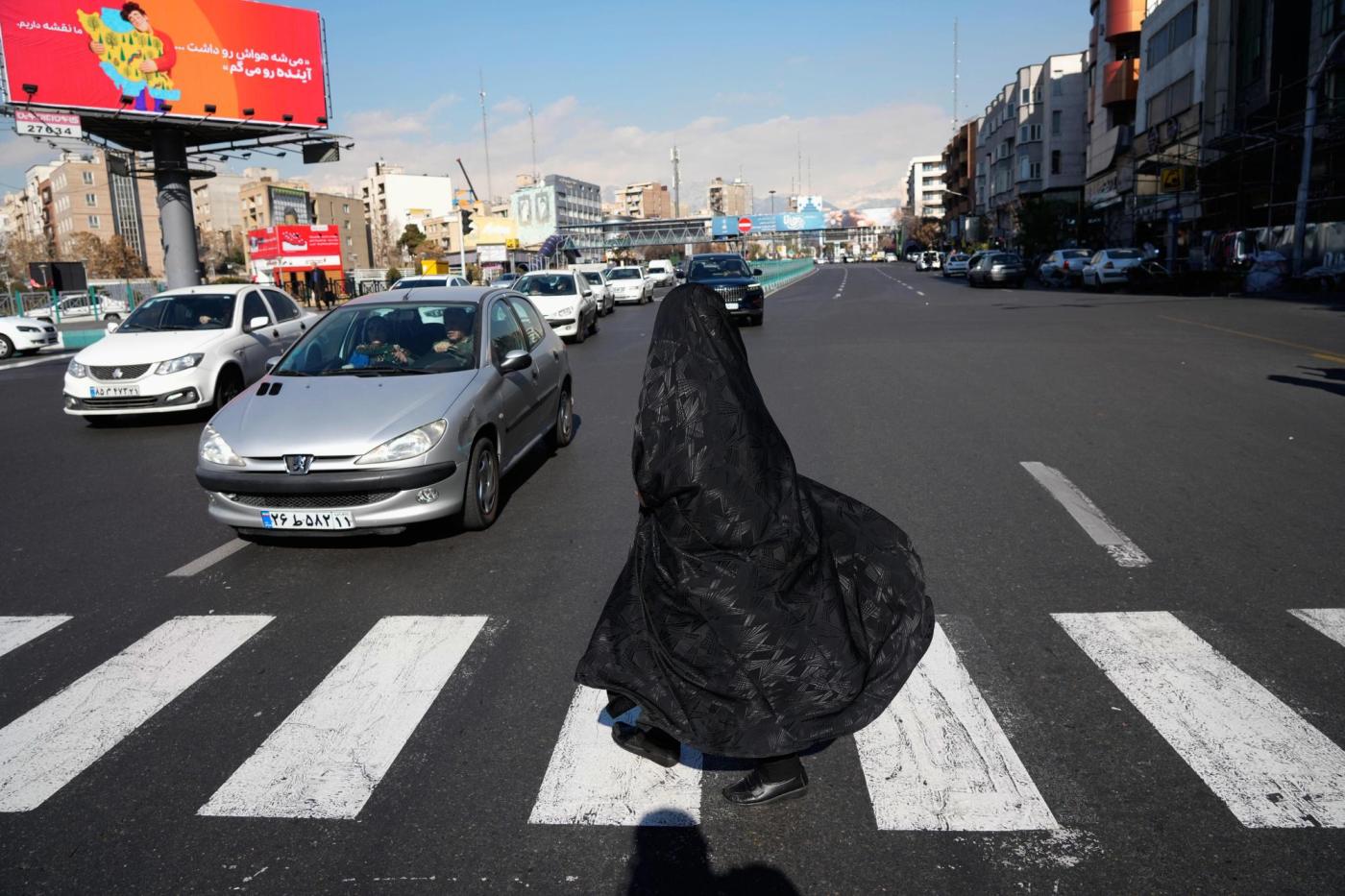
DUBAI, United Arab Emirates (AP) — Hackers disrupted Iranian state television satellite transmissions to air footage supporting the country’s exiled crown prince and calling on security forces to not “point your weapons at the people,” online video showed early Monday, the latest disruption to follow nationwide protests in the country.

Related Articles


China’s population falls again as births drop to lowest rate since 1949 communist revolution


Analysts warn that Iran crisis carries potential nuclear risks


Chile fights wildfires that killed 19 and left 1,500 homeless


Valentino, fashion designer to the jet set, dies aged 93 in Rome


Prince Harry says Daily Mail scoops made him ‘paranoid beyond belief’

The hacking comes as the death toll in a crackdown by authorities that smothered the demonstrations reached at least 4,029 people, activists said. They fear the number will grow far higher as information leaks out of a country still gripped by the government’s decision to shut down the internet. Iran’s Foreign Minister Abbas Araghchi had his invitation to speak at the World Economic Forum at Davos, Switzerland, withdrawn over the killings.

Meanwhile, tensions remain high between the United States and Iran over the crackdown after President Donald Trump drew two red lines for the Islamic Republic — the killing of peaceful protesters and Tehran conducting mass executions in the wake of the demonstrations. A U.S. aircraft carrier, which days earlier had been in the South China Sea, passed Singapore overnight to enter the Strait of Malacca — putting it on a route that could bring it to the Middle East.

State TV disrupted

The footage aired Sunday night across multiple channels broadcast by satellite from Islamic Republic of Iran Broadcasting, the country’s state broadcaster. The video aired two clips of exiled Crown Prince Reza Pahlavi, then included footage of security forces and others in what appeared to be Iranian police uniforms. It claimed without offering evidence others had “laid down their weapons and swore an oath of allegiance to the people.”

“This is a message to the army and security forces,” one graphic read. “Don’t point your weapons at the people. Join the nation for the freedom of Iran.”

The semiofficial Fars news agency, believed to be close to the country’s paramilitary Revolutionary Guard, quoted a statement from the state broadcaster acknowledging that the signal in “some areas of the country was momentarily disrupted by an unknown source.” It did not discuss what had been aired.

A statement from Pahlavi’s office acknowledged the disruption that showed the crown prince. It did not respond to questions from The Associated Press about the hack. How much support Pahlavi has inside of Iran remains an open question, though there have been pro-shah cries at the demonstrations and at night since the crackdown.

Sunday’s hack isn’t the first to see Iranian airwaves disrupted. In 1986, The Washington Post reported that the CIA supplied the prince’s allies “a miniaturized television transmitter for an 11-minute clandestine broadcast” to Iran by Pahlavi that pirated the signal of two stations in the Islamic Republic.

In 2022, multiple channels aired footage showing leaders from the exiled opposition group Mujahedeen-e-Khalq and a graphic calling for the death of Iran’s Supreme Leader Ayatollah Ali Khamenei.

US aircraft carrier possibly on path to Mideast

As tensions remain high between Tehran and Washington, ship-tracking data analyzed by the AP on Monday showed the USS Abraham Lincoln aircraft carrier, as well as other American military vessels, in the Strait of Malacca after passing Singapore on a route that could take them to the Middle East.

The Lincoln had been in the South China Sea with its strike group as a deterrent to China over tensions with Taiwan. Tracking data showed that the USS Frank E. Petersen Jr., the USS Michael Murphy and the USS Spruance, all Arleigh Burke-class guided missile destroyers, were traveling with the Lincoln through the strait.

Multiple U.S. media reports quoting anonymous officials have said the Lincoln, which has its homeport in San Diego, was on its way to the Mideast. It likely would still need several days of travel before its aircraft would be in range of the region. The Mideast has been without an aircraft carrier group or an amphibious ready group, likely complicating any discussion of a military operation targeting Iran given Gulf Arab states’ broad opposition to such an attack.

Meanwhile, the World Economic Forum withdrew its invitation for Araghchi to speak at Davos.

“Although he was invited last fall, the tragic loss of lives of civilians in Iran over the past few weeks means that it is not right for the Iranian government to be represented at Davos this year,” the forum said.

Iran’s ambassador to Switzerland, Mahmoud Barimani, called the decision an “unreasonable act which was no doubt under the pressure and influence of anti-Iranian currents and radical American-Zionists.”

The Munich Security Conference separately withdrew invitation for Iranian government officials over the crackdown.

Death toll from crackdown rises

The death toll exceeds that of any other round of protest or unrest in Iran in decades, and recalls the chaos surrounding the 1979 revolution. The U.S.-based Human Rights Activists News Agency put the death toll Tuesday to at least 4,029, warning it likely would go higher.

It said of the dead, 3,786 were demonstrators, 180 were security forces, 28 were children and 35 were people not demonstrating.

The agency has been accurate throughout the years of demonstrations and unrest in Iran, relying on a network of activists inside the country that confirms all reported fatalities. The AP has been unable to independently confirm the toll.

Iranian officials have not given a clear death toll, although on Saturday, Khamenei said the protests had left “several thousand” people dead and blamed the United States for the deaths. It was the first indication from an Iranian leader of the extent of the casualties from the wave of protests that began Dec. 28 over Iran’s ailing economy.

The agency also reported over 26,000 people had been arrested. Comments from officials have led to fears of some of those detained being put to death in Iran, one of the world’s top executioners.

“While the killers and seditious terrorists will be punished, Islamic mercy and leniency will be applied to those who were deceived and did not have (effective) roles in the terrorist event,” a statement Monday from Iran’s president, its judiciary chief and parliament speaker said.

Associated Press writer Elena Becatoros contributed to this report.