
Homicide rate declines sharply in dozens of US cities, a new report shows

posted in: All news | 0

By CLAUDIA LAUER, Associated Press

Data collected from 35 American cities showed a 21% decrease in the homicide rate from 2024 to 2025, translating to about 922 fewer homicides last year, according to a new report from the independent Council on Criminal Justice.

Related Articles


Wall Street claws for more gains in wake of Greenland de-escalation


Millions of Americans prepare for potentially catastrophic ice storm. Here’s what the numbers show


Watch: Oscar nominations are getting underway. ‘Sinners’ could make history


Auction marking the United States’ 250th birthday features some of its most iconic documents


Today in History: January 22, ‘Unabomber’ Ted Kaczynski pleads guilty

The report, released on Thursday, tracked 13 crimes and recorded drops last year in 11 of those categories including carjackings, shoplifting, aggravated assaults and others. Drug crimes saw a small increase over last year and sexual assaults stayed even between 2024 and 2025, the study found.

Experts said cities and states beyond those surveyed showed similar declines in homicides and other crimes. But they said it’s too early to tell what is prompting the change even as elected officials at all levels — both Democrats and Republicans — have been claiming credit.

Adam Gelb, president and CEO of the council — a nonpartisan think tank for criminal justice policy and research — said that after historic increases in violence during the COVID-19 pandemic, this year brought historic decreases. The study found some cities recorded decades-low numbers, with the overall homicide rate dropping to its lowest in decades.

“It’s a dramatic drop to an absolutely astonishing level. As we celebrate it we also need to unpack and try to understand it,” Gelb said. “There’s never one reason crime goes up or down.”

The council collects data from police departments and other law enforcement sources. Some of the report categories included data from as many as 35 cities, while others because of differences in definitions for specific crimes or tracking gaps, include fewer cities in their totals. Many of the property crimes in the report also declined, including a 27% drop in vehicle thefts and 10% drop in shoplifting among the reporting cities.

The council’s report showed a decrease in the homicide rate in 31 of 35 cities including a 40% decrease or more in Denver, Omaha, Nebraska, and Washington. The only city included that reported a double-digit increase was Little Rock, Arkansas, where the rate increased by 16% from 2024.

Gelb said the broad crime rate decreases have made some criminologists question historic understandings of what drives trends in violent crime and how to battle it.

“We want to believe that local factors really matter for crime numbers, that it is fundamentally a neighborhood problem with neighborhood level solutions,” he said. “We’re now seeing that broad, very broad social, cultural and economic forces at the national level can assert huge influence on what happens at the local level.”

Republicans, many of whom called the decrease in violent crime in many cities in 2024 unreliable, have rushed to say that tough-on-crime stances like deploying the National Guard to cities like New Orleans and the nation’s capital, coupled with immigration operation surges, have all played a role in this year’s drops.

However, cities that saw no surges of either troops or federal agents saw similar historic drops in violent and other crimes, according to the Council’s annual report.

Democratic mayors are also touting their policies as playing roles in the 2025 decreases.

Jens Ludwig, a public policy professor and the Director of the University of Chicago Crime Lab, stressed that many factors can contribute to a reduction in crime, whether that’s increased spending on law enforcement or increased spending on education to improve graduation rates.

“The fact that in any individual city, we are seeing crime drop across so many neighborhoods and in so many categories, means it can’t be any particular pet project in a neighborhood enacted by a mayor,” Ludwig said. And because the decrease is happening in multiple cities, “it’s not like any individual mayor is a genius in figuring this out.”

He said while often nobody knows what drives big swings in crime numbers, the decrease could be in part due to the continued normalization after big spikes in crime for several years during the pandemic. A hypothesis that stresses the declines might not last.

“If you look at violent crime rates in the U.S., it is much more volatile year to year than the poverty rate, or the unemployment rate; It is one of those big social indicators that just swings around a lot year to year,” Ludwig said. “Regardless of credit for these declines, I think it’s too soon for anybody on either side of this to declare mission accomplished.”
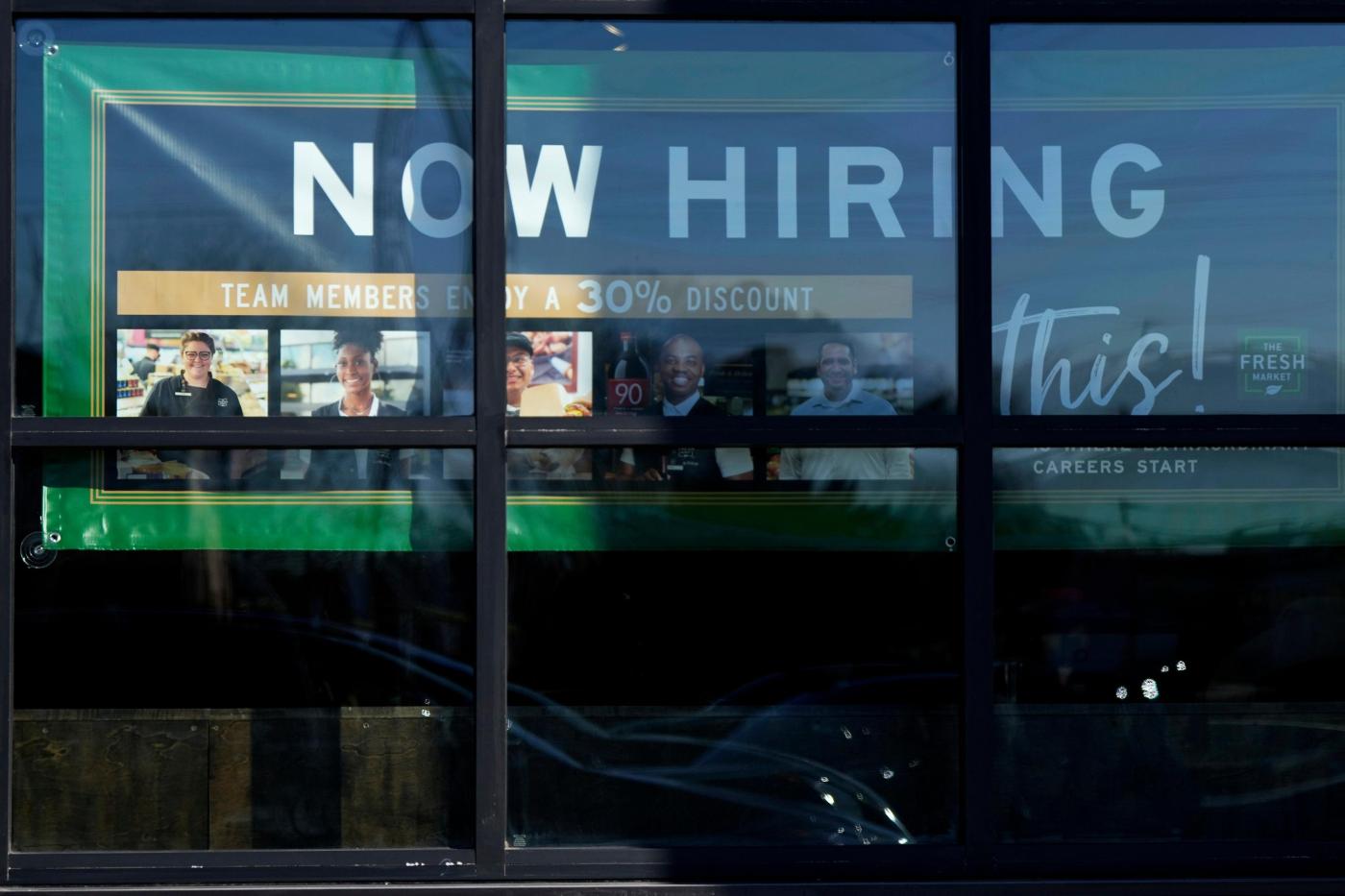

US applications for jobless benefits inch up last week to a still-low 200,000

posted in: All news | 0

By MATT OTT, Associated Press Business Writer

WASHINGTON (AP) — The number of Americans who applied for unemployment benefits inched up last week but U.S. layoffs remain historically low despite signs of a softening labor market.

Related Articles


Consumer spending pushes US economy up 4.4% in third quarter, fastest in two years


Wall Street claws for more gains in wake of Greenland de-escalation


Trump’s Argentine ally welcomes a shipload of Chinese EVs for the first time


Food costs spiked while gas prices cooled. Here’s the latest look at consumer expenses.


Iconic Coney Island hot dog hawker Nathan’s Famous is sold for $450 million

U.S. filings for jobless aid for the week ending Jan. 17 rose by 1,000 to 200,000, up from 199,000 the previous week, the Labor Department reported Thursday. That’s fewer than the 207,000 new applications that analysts surveyed by the data firm FactSet were expecting.

Applications for unemployment benefits are viewed as a proxy for layoffs and are close to a real-time indicator of the health of the job market.

Earlier this month, the government reported that hiring remained sluggish in December, capping a year of weak employment gains that have frustrated job seekers even though layoffs and unemployment remained low.

Employers added just 50,000 jobs last month, nearly unchanged from a downwardly revised figure of 56,000 in November, the Labor Department said. The unemployment rate slipped to 4.4%, its first decline since June, from 4.5% in November, a figure also revised lower.

The Labor Department also recently reported that businesses posted far fewer jobs in November than the previous month, a sign that employers aren’t yet ramping up hiring even as growth has picked up.

Businesses and government agencies posted 7.1 million open jobs at the end of November, down from 7.4 million in October. Layoffs also dropped as companies seem to be retaining workers even as they are reluctant to add staff, a trend economists refer to as “low hire, low fire.”

Recent government data has revealed a labor market in which hiring has clearly lost momentum, hobbled by uncertainty raised by President Donald Trump’s tariffs and the lingering effects of the high interest rates the Fed engineered in 2022 and 2023 to rein in a spike of pandemic-induced inflation.

In an attempt to stabilize a softening labor market, the Federal Reserve last month trimmed its benchmark lending rate by a quarter-point, its third straight cut. Fed officials meet again next week, with most analysts and traders expecting central bank officials to keep the benchmark lending rate where it is.

Fed Chair Jerome Powell said members of the committee are increasingly concerned that the job market is even weaker than it appears. Powell suggested that recent job figures could be revised lower by as much as 60,000, which would mean employers have actually been shedding an average of about 25,000 jobs a month since the spring, when the Trump administration rolled out its sweeping import taxes.

Companies that have recently announced job cuts include UPS, General Motors, Amazon and Verizon.

Thursday’s report from the Labor Department also showed that the four-week average of jobless claims, which softens some of the week-to-week volatility, fell by 3,750 to 201,500.

The total number of Americans filing for jobless benefits for the previous week ending Jan. 10 declined by 26,000 to 1.85 million, the government said.

Consumer spending pushes US economy up 4.4% in third quarter, fastest in two years

posted in: All news | 0

By PAUL WISEMAN, Associated Press Economics Writer

WASHINGTON (AP) — Powered by strong consumer spending, the U.S. economy grew at the fastest pace in two years from July through September, the government said Thursday in a slight upgrade of its first estimate.

Related Articles


US applications for jobless benefits inch up last week to a still-low 200,000


Wall Street claws for more gains in wake of Greenland de-escalation


Trump’s Argentine ally welcomes a shipload of Chinese EVs for the first time


Food costs spiked while gas prices cooled. Here’s the latest look at consumer expenses.


Iconic Coney Island hot dog hawker Nathan’s Famous is sold for $450 million

America’s gross domestic product — the nation’s output of goods and services — rose at a 4.4% annual pace in the third quarter, the Commerce Department reported Thursday, up from 3.8% in the April-June quarter and from the 4.3% growth the department initially estimated. The economy hasn’t grown faster since third-quarter 2023.

Consumer spending, which accounts for 70% of U.S. GDP, grew at a healthy 3.5% pace. Spending on services such as healthcare rose 3.6% versus a 3% uptick on goods spending, including an increase of just 1.6% on so-called durable goods such as cars that are meant to last at least three years. A surge in exports and a drop in imports also contributed to robust third-quarter growth.

Business investment (excluding homebuilding) rose at a 3.2% clip, partly reflecting bets on artificial intelligence.

The economy has remained resilient despite uncertainty caused by President Donald Trump’s economic policies, particularly his double-digit taxes on imports from almost every country on Earth.

Despite the strong growth numbers, many Americans are dissatisfied with the state of the economy and especially the high cost of living.

The gap between how consumers say they feel and the strong spending numbers might reflect what is known as a “ K-shaped economy.” Wealthier Americans are spending more, their incomes boosted by market gains and growing investments, while lower-income households struggle with stagnant pay and high prices.

The job market also looks a lot weaker than the overall economy. Employers have added a lackluster 28,000 jobs a month since March. In the 2021-2023 hiring boom that followed COVID-19 lockdowns, by contrast, they were creating 400,000 jobs a month. Still, the unemployment rate remains low at 4.4%, suggesting a no-hire, no-fire labor market with companies hesitant to bring on new employees but reluctant to let go of the ones they have.

“The United States is experiencing a jobless boom where strong growth is powered by AI investments and consumption by wealthier families, but there is almost no hiring,” said Heather Long, chief economist at Navy Federal Credit Union. “It’s an uneasy situation for many middle-class families. One of the big questions for 2026 is whether the middle class will start to feel the uplift from the boom.”

Wall Street claws for more gains in wake of Greenland de-escalation

posted in: All news | 0

By CHAN HO-HIM and MATT OTT, Associated Press Business Writers

Wall Street was poised to open with gains Thursday, adding to the rally from a day earlier when U.S. President Donald Trump walked back his tariff threats on eight European countries over Greenland and ruled out using military force to take control of the territory.

Related Articles


US applications for jobless benefits inch up last week to a still-low 200,000


Consumer spending pushes US economy up 4.4% in third quarter, fastest in two years


Trump’s Argentine ally welcomes a shipload of Chinese EVs for the first time


Food costs spiked while gas prices cooled. Here’s the latest look at consumer expenses.


Iconic Coney Island hot dog hawker Nathan’s Famous is sold for $450 million

Futures for the S&P 500 gained 0.5% before the bell Thursday while futures for the Dow Jones Industrial Average inched up 0.3%. Nasdaq futures jumped 0.8%. All three rallied to 1.2% gains on Wednesday but are still down for the week.

Shares of the power generator maker Generac are up 3% with a potentially catastrophic ice storm about to slam into a large swath of the U.S.

Procter & Gamble slipped 1.2% after it barely nudged past Wall Street’s second-quarter profit targets and came up just short of revenue projections. The company, which owns a bevy of home and personal care brands such as Pampers and Crest, lowered the range on one measure of its full-year profit guidance.

Spice maker McCormick & Co. slumped 6.8% after it missed profit targets and issued disappointing guidance as it continues to face higher commodity prices.

Railroad operator CSX reports after the closing bell Thursday.

The U.S. will release new data on jobless claims, as well as an updated estimate of third-quarter U.S. gross domestic product. A delayed inflation report for November and December is also landing Thursday.

U.S. markets logged t heir biggest losses since October on Tuesday as investors reacted to Trump’s threat over the weekend to slap tariffs of 10% on Denmark, Norway, Sweden, Germany, France, the United Kingdom, the Netherlands and Finland for opposing U.S. control of Greenland, sparking concerns over worsening relationships between the U.S. and its European allies.

But Trump, attending the World Economic Forum in Davos, Switzerland, backed down on Wednesday and said he would not use force to acquire Greenland. The U.S. president also said in a post on his social media site that he had agreed with the head of NATO on a “framework of a future deal” on Greenland and on Arctic security.

At midday in Europe, Germany’s DAX and France’s CAC 40 each added 1.2%. Britain’s FTSE 100 picked up 0.4%.

Tokyo’s Nikkei 225 climbed 1.7% to 53,688.89, with technology stocks leading gains. SoftBank Group jumped 11.6% and equipment maker Disco Corp. soared 17.1%. Advantest, which makes testing equipment for computer chips, surged 5%.

South Korea’s Kospi closed 0.9% higher at 4,952.44 after crossing the 5,000 mark for the first time, as traders cheered. Technology-related stocks drove the rally. Shares of chipmaker SK Hynix picked up 2%, while Samsung Electronics rose 1.9%.

Hong Kong’s Hang Seng edged less than 0.1% higher to 26,600.68. The Shanghai Composite index edged 0.1% higher to 4,122.58.

In Australia, the S&P/ASX 200 gained nearly 0.8% to 8,848.70.

Taiwan’s Taiex rose 1.6%, while India’s Sensex added 0.2%.

The price of gold fell 0.2% to $4,829.80 per ounce, reflecting investors’ reduced worries, after passing the $4,800 mark ahead of Trump’s reversal of stance on Greenland as many flocked to safe-haven assets.

In the bond market, U.S. Treasury yields also eased following lessened fear among investors as well as a calming of Japan’s bond market turmoil. The yield on the 10-year Treasury eased to 4.25% from 4.29% late Wednesday.

Japan’s long-term bond yields surged to records earlier this week after Prime Minister Sanae Takaichi’s decision to call a snap election in February. That sparked concerns over her pledges to cut taxes and increase spending, which could hinder efforts to rein in government debt.

The U.S. dollar rose to 158.78 Japanese yen from 158.27 yen, prompting analysts to speculate that authorities might intervene if the yen falls any further.

U.S. benchmark crude oil shed 89 cents to $59.73 per barrel. Brent crude, the international standard, fell 92 cents to $64.32 per barrel.