Real World Economics: Why drug monopolies are bad medicine

posted in: News | 0

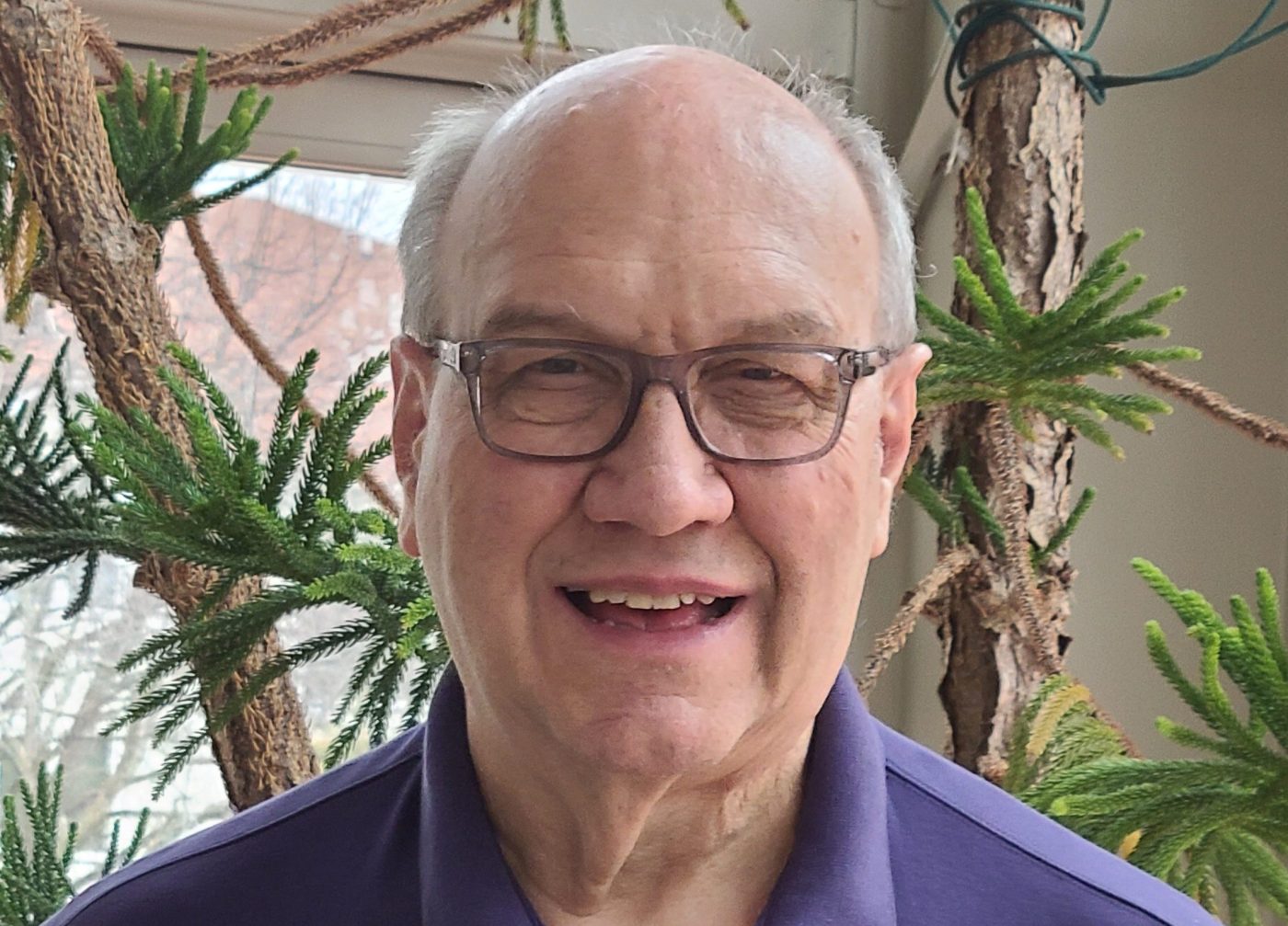
Edward Lotterman

After being ignored for a quarter-century, monopoly power, and how it can harm both customers who buy products or workers who sell their labor, is drawing the attention of the Federal Trade Commission.

Groceries are a case in the news. The FTC is challenging Kroger’s proposed purchase of Albertsons. These are “the No. 1 and No. 2 traditional supermarket chains in the United States” according to the FTC challenge.

Some of the issues would not have popped up 50 years ago. For example, in assessing competition, the FTC had to include the phrase “traditional” because Target, Walmart, Costco and Sam’s Club all sell a lot of groceries, as do stores with a narrower range of products like Aldi.

All of that will get ironed out in legal challenges and an eventual case in federal court. The important thing is that the federal government is once again challenging monopoly power — and that is easier to do before the fact than after.

If only it were so with the pharmaceutical industry. Monopoly power in this exemplifies the difficulties of dealing with an empty stall after the horse disappears. For decades, U.S. administrations were both complacent and complicit as mergers and buyouts sharply reduced the number of drug manufacturers and assorted distribution industries.

There always were collusive acts in the industry, such as fixing the price of the antibiotic Tetracycline in the 1950s, but these were parried by FTC actions. Worldwide, the industry was distributed across several countries with large sectors in Switzerland, Germany, France and Japan in addition to the U.S. There were not great differences between countries in terms of patent and licensing laws.

All this began to change in the 1980s. The Reagan administration had little interest in antitrust. A new thought in jurisprudence attacked government regulation. And pharma lobbies persuaded Congress to change patent laws and enforcement to favor existing firms.

Thus, between 1995 and 2015, the number of major pharma firms shrank from 60 to 10. With the U.S. indifferent to anti-competitive practices, our patent laws more favorable than anywhere else and our government willing to carry water for pharma companies in international trade negotiations, the consolidation often meant U.S. companies absorbing ones from elsewhere. U.S. global market share grew; that of Europe generally declined.

Conservative donors such as the Koch brothers funded organizations supporting a new generation of legal conservatives, such as Supreme court justices John Roberts, Samuel Alito, Neil Gorsuch and Brent Kavanaugh. With GOP administrations naming judges over 20 of the 28 years from 1980 to 2008, federal courts grew more conservative and lost interest in supporting government-enforced competition when challenged.

Democratic President Barack Obama wanted the Affordable Care Act but could only secure passage by giving in to GOP demands for a ban on Medicare bargaining with suppliers over drug prices.

Over the same years, the sharp reduction in health care competition generally included the emergence of “pharmacy benefit managers,” often soon absorbed by insurance firms such as United Healthcare and Cigna. There was a matching consolidation in drug retailing with CVS and Walgreens emerging dominant.

All of this contributed to the high cost of health care in our country with its percentage of GDP well above that in other industrialized market economies. This is an implicit tax on the economy as a whole.

Moreover, the system is mindlessly complex with, for example, Medicare beneficiaries having to choose between a bewildering array of drug plans. Some people, like me, pay almost nothing for the large numbers of meds I take, while others, often poorer than me, are out of pocket hundreds of dollars.

To use a Biblical phrase, “this ought not so to be.”

But once we get ourselves in a mess, it isn’t easy to get back out. Early antitrust actions broke up both Standard Oil and International Harvester. However, doing something similar today in health care would be difficult.

Reform would be easier if Congress understood the economics of drug issues better. Leftist independent Sen. Bernie Sanders of Vermont is an impassioned critic of pharma companies and loves to grill its executives in hearings. On YouTube and other sites one can find multiple video clips of him and other members of Congress doing this.

Their attacks usually start with the same questions: “What do you charge in the U.S. for one patient’s course of drug X? What does it cost you to manufacture that quantity of drug X? What do you get for that same quantity of drug X in Canada or Argentina or South Africa?”

The executive always answers with a high sale price in the U.S., a much lower manufacturing cost and a lower price in other countries than here. This is not irrelevant information, but it is incomplete and misleading.

First, Sanders or other questioners don’t specify what they mean by “cost to manufacture.” Is this just the variable costs of ingredient chemicals, labor and utilities? Is it just the marginal cost, the increase in total costs from turning out one more unit? Or does it include amortizing the fixed costs of the buildings and machines needed for production? What about the labor and research costs that went into developing the products and getting them approved? Drug companies can always argue that if costs are artificially lowered, R&D would suffer, and, by extension, so would sick people.

Those questions would be addressed in an Econ 101 class. But drugs are a industry in which labor, raw materials and utilities often are a small fraction of the company’s total costs. It is, in fact, the research and development of new drugs and all the trials needed to get regulatory approval that dominate costs. And these are largely ”fixed costs” in the economic sense — they don’t change if 10,000 doses are sold each year or 10 million.

Over anything but the very short run, fixed costs must be paid for any firm to stay in business. But pharma is complex. Sen. Sanders could ask, “What did it cost you to develop drug X and get it approved?” But that would only get us a little farther. Only a small minority of new experimental drugs ever get approved or sold. So the discrete number of market successes have to pay the “sunk costs” of all the failures.

Moreover, one does not know beforehand how long any drug will sell. A new one may be a cash cow for decades. Another may be eclipsed by a competitor after a few years. Glitches may arise. The non-sedating antihistamine Seldane was a boon for its manufacturer in the late 1980s, with 100 million patients taking it. But it caused heart problems for some and was off the market almost overnight.

So a drug company has to have a floating set of profitable drugs to bear the costs of all, including the many busts. And it has to price discriminate to maximize revenues. That means charging different prices in different markets to groups with different sensitivities of quantity wanted versus price.

Because of our health care system, demand for drugs in the U.S. is “inelastic;” raise price and you do not cut demand much. It is more “elastic” in Canada for a variety of reasons and so prices are lower there. Demand is even more sensitive to price in poorer countries and hence prices are lower.

Forcing U.S. companies to charge exactly the same price in all countries would, in most cases, raise them sharply in the rest of the world more than lowering them here. It would be devastating to patients in poor countries and would probably lead to a revolt that would overturn the international system of patent protection. That would harm the world economy as a whole and ours in particular.

We have let pharma gain abusive market power. There are ways in which we can, over time, unwind this. But lawmakers need to understand the economics of what they want to change.

Related Articles

Business |


Real World Economics: 75 years of wisdom on national defense should not be discarded

Business |


Real World Economics: Craig’s Social Security bill flawed, but pay attention anyway

Business |


Real World Economics: The tango of bond prices and interest rates

Business |


Real World Economics: Ayn Rand and the Grand Canyon

Business |


Real World Economics: Musings on military conscription, 50 years on

After 10 years of trying, a Palestinian woman had twins. An Israeli strike killed them both

posted in: News | 0

RAFAH, Gaza Strip — It took 10 years and three rounds of in vitro fertilization for Rania Abu Anza to become pregnant, and only seconds for her to lose her five-month-old twins, a boy and a girl.

An Israeli strike hit the home of her extended family in the southern Gaza city of Rafah late Saturday, killing her children, her husband and 11 other relatives and leaving another nine missing under the rubble, according to survivors and local health officials.

She had woken up at around 10 p.m. to breastfeed Naeim, the boy, and went back to sleep with him in one arm and Wissam, the girl, in the other. Her husband was sleeping beside them.

The explosion came an hour and a half later. The house collapsed.

“I screamed for my children and my husband,” she said Sunday, as she sobbed and cradled a baby’s blanket to her chest. ”They were all dead. Their father took them and left me behind.”

She closed her eyes, leaned her head against the wall and patted the bundle in a calming gesture that, finally, she’d had the chance to give.

Israeli airstrikes have regularly hit crowded family homes since the start of the war in Gaza, even in Rafah, which Israel declared a safe zone in October but is now the next target of its devastating ground offensive.

The strikes often come without warning, usually in the middle of the night.

Israel says it tries to avoid harming civilians and blames their deaths on the Hamas militant group because it positions fighters, tunnels and rocket launchers in dense residential areas. But the military rarely comments on individual strikes, which often kill women and children.

The military did not immediately comment on this strike.

Of the 14 people killed in the Abu Anza house, six were children and four were women, according to Dr. Marwan al-Hams, director of the hospital where the bodies were taken. In addition to her husband and children, Rania also lost a sister, a nephew, a pregnant cousin and other relatives.

Farouq Abu Anza, a relative, said about 35 people were staying at the house, some of whom had been displaced from other areas. He said they were all civilians, mostly children, and that there were no militants among them.

Rania and her husband, Wissam, both 29, spent a decade trying to get pregnant. Two rounds of IVF had failed, but after a third, she learned she was pregnant early last year. The twins were born on Oct. 13.

Her husband, a day laborer, was so proud he insisted on naming the girl after himself, she said.

“I didn’t get enough of them,” she said. “I swear I didn’t get enough of them.”

Less than a week earlier, Hamas-led militants had stormed into southern Israel in a surprise attack, rampaging through communities, killing some 1,200 people — mostly civilians — and taking around 250 hostages, including children and a newborn.

Israel responded with one of the deadliest and most destructive military campaigns in recent history. The war has killed over 30,000 Palestinians, according to Gaza’s Health Ministry. Around 80% of Gaza’s population of 2.3 million have fled their homes, and a quarter of the population faces starvation.

The ministry said last month that more than 12,300 Palestinian children and young teens had been killed in the war, about 43% of the overall toll. Women and children together make up three quarters of those killed. The ministry does not differentiate between civilians and combatants in its tallies.

Israel claims to have killed over 10,000 Hamas fighters but has not provided evidence.

For the children who survive, the war has made life hellish, humanitarian workers say, with some in northern Gaza beyond the reach of care.

“The sense of helplessness and despair among parents and doctors in realizing that lifesaving aid, just a few kilometers away, is being kept out of reach, must be unbearable, but worse still are the anguished cries of those babies slowly perishing under the world’s gaze,” UNICEF regional director Adele Khodr said in a statement Sunday.

Until Saturday, the Abu Anza family had been relatively fortunate. Rafah has been spared the immense destruction of northern Gaza and the southern city of Khan Younis, where Israeli tanks and ground troops have fought militants block by block after waves of airstrikes.

Rafah is also in the shrinking area of Gaza where humanitarian aid can still be delivered.

But Israel has said Rafah will be next, and the roughly 1.5 million people who have sought refuge there will be relocated, without saying where.

“We have no rights,” Rania said. “I lost the people who were dearest to me. I don’t want to live here. I want to get out of this country. I’m tired of this war.”

Related Articles

World News |


US military aircraft airdrop thousands of meals into Gaza in emergency humanitarian aid operation

World News |


US says Israel has agreed to the framework for a Gaza cease-fire. Hamas must now decide

World News |


Biden approves military airdrops of aid into Gaza after chaotic encounter left more than 100 dead

World News |


Gaza doctor says gunfire accounted for 80% of the wounds at his hospital from aid convoy bloodshed

World News |


Palestinians say Israeli troops fired at people seeking food. Israel says scene was deadly stampede

Attention, Chicago White Sox fans: SoxFest will return in January 2025

posted in: News | 0

SoxFest will return next year, the Chicago White Sox announced Friday.

The fan event — last held in 2020 — will take place Jan. 24-25, 2025. Location, official on-sale dates, programming and scheduled appearances will be announced later.

SoxFest has been a gathering that provides fans the opportunity to connect with former and current players, coaches and prospects while taking a look toward the upcoming season.

In a release announcing the news, the Sox said SoxFest 2025 “returns with the same community-building spirit, featuring new and reimagined programming and experiences to immerse guests into the world of White Sox baseball.”

The most recent SoxFest — the 28th edition — occurred in late January 2020. The 2021 event was canceled because of the COVID-19 pandemic. 2022 SoxFest also was canceled, with the Sox noting at the time the challenges of projecting and managing COVID-19-related protocols in an indoor setting.

SoxFest did not take place last year “due to several factors,” the Sox said at the time. The Cubs have held their annual fan fest the last two years.

Friday’s announcement comes on the same day of a gathering for season ticket holders at the Field Museum.

The returning SoxFest will mark a pair of milestones in the franchise’s history in 2025 — the 20-year anniversary of the 2005 World Series championship team and the 125-year anniversary of the Chicago White Sox organization.

()

Readers and writers: Your choice from a thriller, short stories and a memoir

posted in: News | 0

Three genres today for your reading pleasure — a new thriller series from an author who’s a champ at writing about sniffer dogs, short stories, and a memoir.

“The Dead Years”: by Jeffrey B. Burton (Severn House, $28)

(Courtesy of the author)

The moniker ‘Dead Night Killer’ was lame, not only because it was inaccurate — he never skulked down midnight lanes checking doors and windows in order to get inside and club slumbering homeowners to death — but also because it sounded like one of those straight-to-video horror flicks he’d seen as a kid. The nickname lacked the over-the-top testosterone of a Jack the Ripper, Night Stalker, or Boston Strangler. It also lacked the provocativeness of the Zodiac Killer, Gray Man, or Son of Sam. — from “The Dead Years”

The killer had been dormant for seven years in this tightly written beginning of a new thriller series featuring brother and sister Crystal and Cory Pratt. Now the killer is again torturing and murdering. His victims seem connected to a Netflix docuseries he feels depicts him in a way that is inaccurate and insulting. He believes he’s much smarter and macho than the script suggests and sets out to eliminate everyone connected with the production. So, bodies begin piling up and the case goes to Crystal, rookie detective in the Chicago police. She sometimes crosses paths on the job with her brother Cory, owner of a dog training school, with whom she lives. The siblings are recovering from the deaths of their parents, which Cory blames on himself. When Cory’s brave and well-trained dogs, bloodhound Alice and springer spaniel Rex, find two bodies, Crystal and Cory team up to catch the person dubbed by the press The Dead of Night Killer, shortened to Dead Night Killer. But the first coordinated attempt at capturing the killer, led by Crystal, goes very wrong and earns her the scorn of local Chicago law enforcement and the FBI.

Minnesota author Jeffrey B. Burton with his canine companions Lucy and Milo. Burton ‘s new K-9 series launches with “The Dead Years.” (Courtesy of the author)

Readers who enjoyed Burton’s three books in his Mace Reid K-9 mystery series will be equally involved with Cory and his loyal canine companions as he and his older sister try to outsmart the killer, who tells his own story in alternate chapters. We know his father has an important job in government and that he is well-to-do. In his double life as serial killer and model citizen, the perp lies to his family about where he is when he’s on a murder mission and often retreats to their vacation home. When Cory and his dogs get too close, Night Killer targets them as his next victims and the way he kills isn’t pretty. But someone else knows what the killer is up to and tries to stop the murders with chilling results.

Burton grew up in St. Paul and lives in Apple Valley. He earned a degree in journalism from the University of Minnesota and his Agent Drew Cady series includes the well-received “The Eulogist.”

“There Will Never Be Another Night Like This”: by John Salter (Slant Books, $19 paperback)

(Courtesy of Slant Books)

He felt a great satisfaction. He had won the night, every step of the way, like pitching a perfect game and never doubting for a moment that you would. But as soon as he thought this, a hard realization followed. There would probably never be another night on earth like this night. The stars could not line up the same way for him. He didn’t need his mother’s astrology charts to understand that. And the dumb thing, he thought, would be thinking it was possible and waiting the rest of his life for a night like this to happen again. That would be kind of pathetic. — from “There Wil Never Be Another Night Like This”

Salter, a former Minnesotan who lives in Fargo, N.D., looks into the hearts of boys and men in the six stories in his new collection of lush prose. A married man has a one-night stand with a tall woman that sends him back to the hotel bar wondering if this is all there is to life. A woman tries to help her husband, who may be on the edge of being manic, to accept their coming divorce. And a man who has taken care of his sick father for months has sex with a flight attendant on an otherwise-empty plane and confronts memories of his dad when he returns home, wondering if he’s on the right path in life. A couple prepares for a big outdoor party to show how classy they are, but the fun does not end well.

Two of the best stories involve a teen named Nils. In the first, he and a friend are hanging out by a river with an older boy of whom Nils is sort of scared. Then the story turns deadly. In the title story we meet Nils again as an older boy who wins a big fight on a night everything goes his way.

Salter co-edited the literary journal North Country when he was a student at the University of North Dakota. His short fiction has appeared in national literary journals and he is a two-time winner of the Minneapolis-based Loft Award in creative prose/McKnight Artist Fellowship.

“The Arrogance of Infinity: Tales of Transition”: by Mike Pickett (Gatekeeper Press, $15 paperback).

We humans live with the arrogance of infinity in our hearts, behaving as if our places and things, processes, ideas, and conditions, were created by — and forever belong to us.” — from “The Arrogance of Infinity”

There are plenty of books about growing up in the 20th century, but St. Paul-based Pickett puts an interesting spin on his 37-tale memoir, giving readers background about what was going on in the country as he grew up attending 11 schools when his family moved around the Twin Cities and suburbs.

Referring to his six siblings and himself, Pickett recalls roaming natural pasture and concrete cities in an age owned by oil and coal, iron and steel. “Somewhere in the middle of the 20th century, the powers began to shift toward New Age,” he says in the introduction to the book’s audio version. “Tubes, transistors, and microchips kicked off a virtual migration to the most progressive era in the history of humanity … so far. These (tales) are the recollections of a Midwestern kid who rubbed up against a wide variety of challenges and blessings during the cyber-makeover. The tales share the experiences of a large, close-knit family, and how we endured challenges such as a house fire, the premature death of a parent, and financial ruin … I want the reader to feel nostalgia and empathy, and to close this book with a sense that it’s never too late to seek — and find — new joys.”

Pickett’s voice is welcoming and easygoing. He writes of meeting astronaut Neil Armstrong in the family’s front yarn and drinking vodka-lemonades with champion golfer Arnold Palmer. (There’s quite a bit about sports in this book.) He even reveals his wife stole the water bowl of Socks, President Bill Clinton’s cat. The Secret Service did not track her down.

Related Articles

Books |


Literary pick for week of March 3: Kate DiCamillo and John Schu

Books |


St. Paul writer Kao Kalia Yang launching two books in March

Books |


Literary calendar for week of Feb. 25

Books |


Readers and writers: Collaboration at the heart of new thriller

Books |


Kaposia Library opens in South St. Paul as Dakota County’s most accessible, inclusive library