Chicago Bears hire Seattle Seahawks assistant Kerry Joseph as their quarterbacks coach

posted in: News | 0

Whatever direction the Chicago Bears go with their quarterback situation, the new infrastructure for development at the position is coming together.

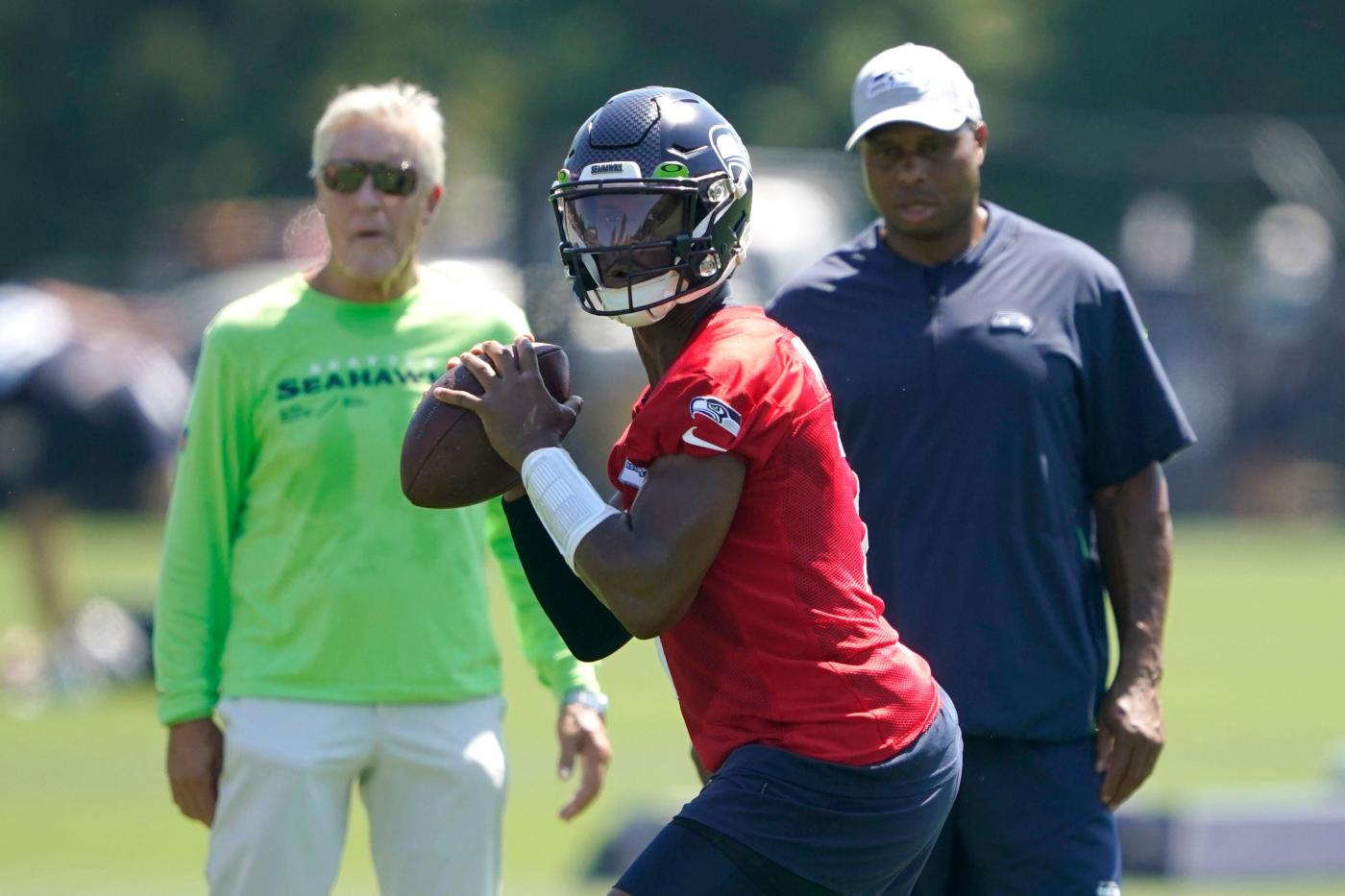
Four days after hiring Shane Waldron as their offensive coordinator, the Bears added another assistant to the mix with Kerry Joseph following Waldron from Seattle to become the new quarterbacks coach on Matt Eberflus’ staff.

The Bears announced the move Friday evening.

Waldron and Joseph coached together for the last three seasons, with Joseph serving as the Seahawks assistant wide receivers coach in 2021 and assistant quarterbacks coach in 2022 and 2023. Now he will take on much bigger responsibilities inside the quarterbacks room at Halas Hall. At a pivotal time for the organization, he will be tasked with overseeing the growth of either three-year starter Justin Fields or a prospect selected in April’s draft.

Joseph was part of the offensive staff in Seattle in 2022, with Waldron and quarterbacks coach Dave Canales, when quarterback Geno Smith revived his career with a Pro Bowl season that also earned him Associated Press Comeback Player of the Year honors.

Joseph, 50, will serve as the quarterbacks coach for the American Team at the Senior Bowl next week. He replaces Andrew Janocko, whom the Bears fired along with coordinator Luke Getsy this month after the team’s passing offense ranked 27th in the NFL averaging 182.1 yards per game.

The Bears still need to hire wide receivers and running backs coaches to fill out their offensive staff. They also are interviewing defensive coordinator candidates.

Sanjay Lal, who spent the last two seasons as the Seahawks passing game coordinator and receivers coach, was in the mix for the Bears receivers coach job but decided Friday to explore other opportunities, according to a source. The Bears remain in competition to fill out their coaching staff, as eight teams entered the month in the hunt for new head coaches. Six of those vacancies have since been filled, with those teams working to fill out their staffs.

Before his time with the Seahawks, Joseph was the passing game coordinator and running backs coach at Southeastern Louisiana in 2019. He began his coaching career at McNeese State, where he was the co-offensive coordinator for three seasons and worked with the wide receivers and quarterbacks.

Joseph was also a quarterback at McNeese State but moved to safety in the NFL. He played in 56 games over four seasons with the Seahawks. He also played quarterback in the Canadian Football League and NFL Europe.

The Bears on Tuesday officially hired Waldron, who was the Seahawks offensive coordinator for three seasons after four seasons with the Los Angeles Rams.

()

Minnesota United’s entanglement as MLS downsizes role in U.S. Open Cup

posted in: News | 0

The closest Minnesota United has gotten to winning a trophy in its MLS era came in the U.S. Open Cup final in 2019.

The Loons’ 2-1 loss to Atlanta United had them leaving Georgia with a heavy cardboard box filled with leftover “finalist” medals. But MNUFC and its supporters enjoyed that run deep in the national tournament, including a thrilling 2-1 semifinal win over Portland Timbers at Allianz Field.

On Friday, MLS upended tradition in nation’s oldest soccer competition, removing all but eight of its 26 U.S. clubs from participating in the Open Cup. MLS will now have 11 additional clubs enter developmental teams from the third tier of U.S. Soccer, including MNUFC2 of the MLS Next Pro league.

When it comes to U.S. Open Cup involvement, MLS is driving this bus, and MNUFC is among passengers bouncing around in the back seats.

Loons leaders want the club to compete for trophies, including U.S. Open Cup, and this decision from MLS clips their wings — at least for 2024.

FC Cincinnati is one of eight MLS clubs exempted from Open Cup competition because it’s competing in the Concacaf Champion Cup. But Cincinnati still spoke up on Friday.

“As we look ahead to 2025, we believe that each MLS franchise should be given the option to decide their own approach to participating in Open Cup,” the club was quoted by the Cincinnati Inquirer.

MNUFC would second Cincinnati’s suggestion, the Pioneer Press understands. The Loons would also want the flexibility to enter the Open Cup as they see fit.

MLS has called on U.S. Soccer to make bigger financial investments in the tournament. “At this point, we’re subsidizing that tournament,” MLS commissioner Don Garber said last month.

Last year, the Loons noted its big financial commitment to travel to Hamtramck, Mich., to play Detroit City in the third round of the Open Cup.

But how MLS is handling this year’s field for the Open Cup is not be considered to be its long-term solution — something MNUFC notes and appreciates.

Even with this format, MNUFC’s first team would not be left out of the Open Cup if they would have played better in 2023. But the Loons finished 21st place in the MLS Supporters Shield standings and that, too, will force them to watch other MLS teams compete in the tournament that started in 1914.

In the short term, the Loons on Saturday had headache-inducing scheduling conflict on March 20.

MNUFC2 will enter the first round of the U.S. Open Cup against Chicago House in Elmhurst, Ill., at 7 p.m. that Wednesday. And MNUFC set a date for an international friendly against Irish club St. Patrick’s Athletic at the same time in St. Paul.

The Loons, which doesn’t have an MLS game scheduled for March 23-24, also expect to have a handful of players missing for the FIFA international window from March 18-26.

If MNUFC can’t move the date for MNUFC2’s Open Cup match, the club will be stretched thin and might need to use players from its youth academy to fill out rosters.

MLS teams have typically entered the Open Cup later on in the tournament. Until MLS’ downsizing, the Loons’ first-team squad was set to come in at the third round on April 16-17.

‘Percy Jackson’ and epic coming-of-age tales are getting their live-action TV moment

posted in: News | 0

LOS ANGELES — While co-creating the live-action TV adaptation of the magical children’s book series “Percy Jackson and the Olympians” for Disney+, Jon Steinberg looked to several classic films starring plucky young heroes for inspiration.

“There were a lot,” Steinberg said, rattling off titles including 1986’s “Flight of the Navigator,” 1985’s “The Goonies” and 1982’s “E.T. the Extra-Terrestrial.”

“That was a genre that I felt like I was frequently, constantly exposed to as a kid. … It’s not talking down to kids in any way. It’s just talking to everybody. And that was sort of the unmeetable ambition that we set out for the show.”

When asked about live-action TV series that informed his approach to “Percy Jackson,” however, Steinberg drew a blank.

“I don’t know that I’d ever quite seen anything like this” on TV, he said.

“Percy Jackson and the Olympians” is among a growing number of epic, coming-of-age stories that are finally getting the live-action TV treatment in the streaming era. For decades, the tween demographic — too old for “Sesame Street” and “Bluey” (rated TV-Y) but not quite old enough for “Stranger Things” and the original “Gossip Girl” (rated TV-14) — has turned to books, animated series and their movie adaptations for larger-than-life storytelling designed specifically for them.

TV was where preteens got their live-action fix of lighthearted, multi-camera sitcoms such as “iCarly” and “Zoey 101” on Nickelodeon or “Lizzie McGuire” and “That’s So Raven” on Disney Channel. Live-action adaptations of world-building, tween-facing intellectual property such as “Percy Jackson,” “Harry Potter” and “Avatar: The Last Airbender” were mostly reserved for the big screen.

That’s starting to change.

All three of those properties, which had previously been adapted into live-action feature films — to mixed results — are now getting a second life on the small screen more than a decade later.

Executives and creatives offered some insight as to what has triggered this resurgence.

For starters, the visual technology needed to convincingly translate these grandiose sagas to live action has “become so much more advanced and so much less expensive” in recent years, said Jabbar Raisani, an executive producer and director on Netflix’s “Avatar: The Last Airbender.” He also credits fantasy sensation “Game of Thrones” with awakening studios to TV’s full potential as a storytelling medium.

As TV has evolved, audiences’ viewing habits and tastes have become more voracious and sophisticated. And children are no exception, added Ayo Davis, president of branded television at Disney.

“These streaming platforms are giving everyone the ability to be more expansive and ambitious in the way that these stories are being told,” Davis said.

“Pulling from these epic tales that are filled with these big heroic adventures is something that can touch [kids] in a meaningful way. And having the ability to do it right on a platform that can reach a global audience simultaneously is really key.”

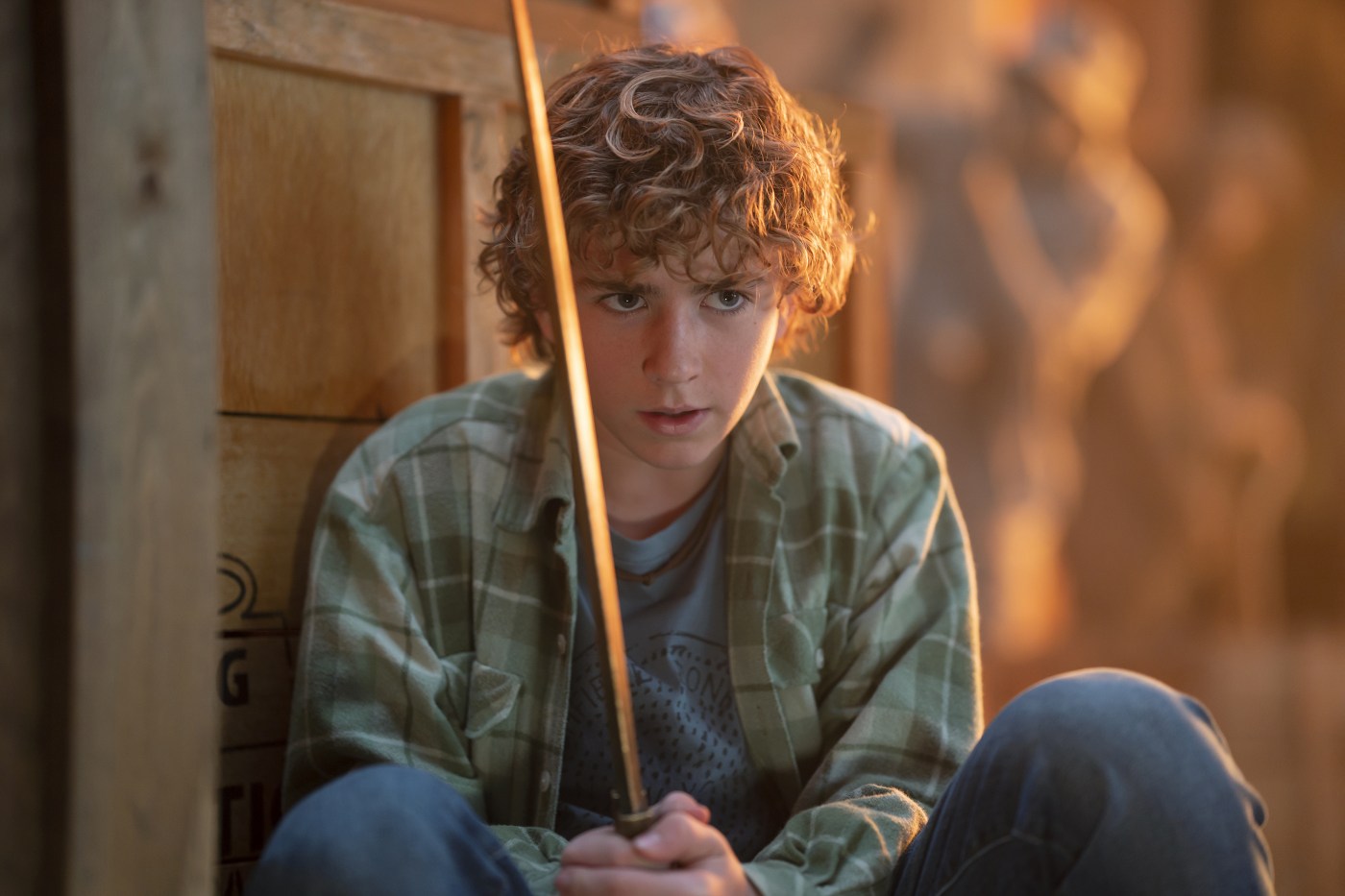
Based on Rick Riordan’s 2005 novel “The Lightning Thief” inspired by Greek mythology, the first season of “Percy Jackson and the Olympians” (TV-PG) follows the 12-year-old demigod son of Poseidon on a dangerous quest to return Zeus’ stolen lightning bolt and restore peace to Mount Olympus.

Following its premiere on Dec. 19, the pilot episode amassed 26.2 million views in its first three weeks on Disney+ and Hulu, according to the company. The entire debut season has racked up more than 110 million hours streamed, reflecting a demand among young audiences for big-budget, live-action TV adaptations. (Reports have speculated that “Percy Jackson” cost between $12 million and $15 million per episode. Disney declined to comment on its budgets.)

It appears that companies such as Disney, Netflix and Warner Bros. Discovery — which recently reaffirmed that it is moving forward with a live-action “Harry Potter” series set to debut on Max in 2026 — are willing to spend big bucks on immersive kids programming despite Wall Street pressure to cut costs in other areas.

That’s because when they work, they have crossover appeal for parents and nostalgic adults eager to reconnect with their childhood heroes.

Research firm Parrot Analytics found that since 2020, the demand for young-adult shows has consistently surpassed supply, suggesting that such a content space is “ripe for further investment,” according to Parrot strategist Brandon Katz.

During its monthlong run, the freshman season of “Percy Jackson” was roughly 19 times more in demand than any other show that aired in that window, landing it in the top 2.7% of series in terms of overall engagement, the research firm found. Disney in February announced it would stream a second season.

“It is arguably Disney+’s biggest hit — and perhaps their most important hit — outside of the Star Wars, Marvel universes,” Katz said. “The fact that they were able to get a live-action series that wasn’t in the Star Wars and Marvel universes to reach such heights bodes well for them moving forward.”

The new “Avatar: The Last Airbender” (TV-PG) has shown early promise as well. The latest live-action take on the acclaimed animated series — created by Michael Dante DiMartino and Bryan Konietzko for Nickelodeon in the early 2000s — was 11.7 times more in demand than the average TV show in the month leading up to its debut, Parrot Analytics said.

Since it arrived Feb. 22 on Netflix, the show — which centers on a powerful 12-year-old who must master the elements of fire, water, earth and air in order to save the world — has racked up more than 21.2 million views and claimed the No. 1 spot on Netflix’s Global Top 10 English TV list, the streamer reported.

Despite their substantial built-in fan bases, costly live-action re-imaginings of “Avatar: The Last Airbender” and “Percy Jackson” were still a bit of a gamble for the studios — if the previous film attempts are any indication.

Elizabeth Yu as Azula in Netflix’s “Avatar: The Last Airbender.” (Robert Falconer/Netflix/TNS)

M. Night Shyamalan’s “The Last Airbender” (2010) was poorly received by fans and critics. And though Chris Columbus’ “Percy Jackson & the Olympians: The Lightning Thief” (also 2010) got a sequel and didn’t provoke the same level of vitriol, it came nowhere close to reaching the status of Columbus’ first “Harry Potter” film.

Adapting the stories into a different live-action medium gave the “Percy Jackson” and “Avatar: The Last Airbender” showrunners a chance to make different choices than the filmmakers did. This time around, for instance, the child actors who play the main trio in “Percy Jackson” actually match the ages of the kids in the books — unlike the movie, which aged the characters up a few years.

Steinberg said that while it’s easy to understand the instinct to avoid certain production complications that come with casting younger actors, “everything changes the moment you’re in a teen story instead of a preteen, adolescent story.”

“It just didn’t feel like it was gonna be honest if it wasn’t coming out of the voice of a kid,” Steinberg said.

Raisani also pointed out that streaming platforms permit creatives to take the time they need to finish and fine-tune all the episodes before the season is released. In linear TV, a season of a show typically begins airing before all of the episodes are filmed and completed.

Because the series was made for streaming, Raisani explained, the “Avatar” team had the “luxury” of being able to go back and tweak earlier episodes — a key advantage when working on an ambitious project with a complex story and heavy visual effects.

For example, Raisaini said that a digital double of the high-flying protagonist, Aang, wasn’t ready by the time “Avatar” started filming. So they blocked out certain scenes during production and inserted the digital replica after the fact.

“That’s the benefit of working in a nonlinear delivery platform,” Raisani said.

Like linear TV, movies have their limitations too.

The makers of Paramount Pictures’ “The Last Airbender” and 20th Century Fox’s “The Lightning Thief” were tasked with condensing several hours and hundreds of pages worth of content respectively into feature-length films.

The eight-episode seasons of the new “Percy Jackson” and “Avatar: The Last Airbender” enabled the creators to cover significantly more ground and potentially deliver more faithful interpretations of the source material.

“There were so many episodes, and there was that depth of character exploration from the original animation,” said Peter Friedlander, head of scripted series at Netflix. “To match that to a live-action [TV series] feels really organic.”

Steinberg speculated that a tender moment in which Percy and his friend Annabeth bond over their blessing-and-curse predicament as demigods while falling asleep on a train would have been the first scene to get cut had “Percy Jackson” been adapted into another film instead.

“There just would have been so much stuff that wouldn’t have fit,” Steinberg said. “The chance to really spend a minute and indulge the emotional story as much as the adventure comes with the format.”

Both Disney’s Davis and Netflix’s Friedlander said their companies are constantly looking for fresh tween-facing IP to adapt and are committed to providing a variety of live-action viewing options for that demographic — from feel-good sitcoms to captivating odysseys.

“It’s not an either-or,” Davis said. “We are doing both.”

Related Articles

Entertainment |


‘Spaceman’ review: Sandler stars in so-so film for grown-ups about inner journey

Entertainment |


How ‘Slow Noodles’ helped a mother tell of escaping the Cambodian genocide

Entertainment |


‘Elsbeth’ review: ‘The Good Wife’ spinoff tries (and fails) to be a quirkier version of ‘Columbo’

Entertainment |


How HBO’s ‘The Regime’ creates comedy from an authoritarian regime

Entertainment |


Who is Jeremiah Brent? Meet the new ‘Queer Eye’ design expert following Bobby Berk’s exit

Charan Ranganath: The surprising way to help your brain remember

posted in: News | 0

In our age of information overload, remembering things can be a daunting task. But as a memory researcher and college professor, I’ve found some hope in that challenge.

In January 2021, like millions of educators and having watched my own daughter struggle with online learning, I worried about teaching through a screen. I had spent two decades basing grades primarily on midterms and finals, but it’s tough to prevent cheating during online tests. So I had to let go of traditional methods of testing to measure learning. Then I realized I could use a different testing system — to drive learning.

In my lab, we were doing brain imaging studies based on decades-old research showing that testing people on recently viewed material dramatically increases their retention over time. Following the model in our experiments, I gave my students a three-day window to take an open-book quiz online every week, after which they could see the correct answers and either learn from their mistakes or reinforce what they got right.

The point of these quizzes wasn’t to torture my students but prompt them to think critically about the material regularly, with my feedback and support. The student response to this approach exceeded my wildest expectations; 85% strongly agreed that weekly quizzes, with feedback, helped them learn. (If you are not a teacher, let me assure you that students almost never say anything positive about any kind of test.)

Testing works as a learning tool because it exploits a simple principle of human brain function. We are wired to learn from our mistakes and challenges, a phenomenon called error-driven learning.

Neuroscience has shown that error-driven learning is key to learning new motor skills: We learn to make skilled movements by observing the difference between what we intend to do and what we actually do. For instance, when musicians practice a song they already know fairly well, some parts will be relatively simple, but others a struggle. Rather than recording a new memory of every part of the song each time it is played, the better solution for the brain is to tweak existing memories to better handle challenging parts.

Error-driven learning can also explain the benefits of actively learning by doing, rather than passively learning by memorizing. When you drive around a new neighborhood, you are going to learn much more about the layout of the area than if you go through the same neighborhood as a passenger in a taxi. Actively navigating a new environment gives you the opportunity to learn in real time from the outcomes of your actions.

A huge number of academic studies show something similar. Comparing test results for students who read material over and over again against those who read it fewer times but repeatedly test their knowledge, it’s the latter who retain the most long-term.

Scientists don’t fully agree on the reasons why testing has such a powerful effect on memory. The simplest explanation is that testing exposes your weaknesses. In general, we tend to be overconfident about our ability to retain information. Those who are tested have the humbling, yet productive, experience of sometimes failing to recall information they thought they had learned well.

Beyond its ability to open our eyes to our weaknesses, the struggle itself may make us better learners. Computers and AI systems learn through trial and error, tweaking the connections between their artificial neurons to get better and better at pulling up the right answer. Cognitive psychologists Mark Carrier and Harold Pashler theorized that humans can learn through a similar struggle.

My lab found evidence to support this in a functional magnetic resonance imaging study, where we found that testing increases activity in the hippocampus, a memory center in the brain. In our study, we used our “hippocampus in a box” computer model that simulates how this brain structure supports learning and memory. We saw that the benefits of testing don’t come from making mistakes per se, but rather from challenging yourself to pull up what you’ve learned.

When you test yourself, you try to generate the right answer, but the result may not be quite perfect. Your brain will come up with a blurry approximation, creating a struggle to get it right that provides opportunities to learn more.

Stress testing your memory like this exposes the weaknesses in connections between neurons so the memory can be updated, strengthening useful connections and pruning the ones getting in the way. Rather than relearning the same thing over and over, it’s much more efficient to tune up the right neural connections and fix just those parts that we are struggling with. Our brains save space and learn quickly by focusing on what we didn’t already know.

Although we usually benefit from error-driven learning, there is one important condition: It works if you eventually get close to the right answer, or at least if you can rule out wrong answers. You don’t benefit from mistakes if you have no idea what you did wrong.

Another influential factor is the timing of your learning. Virtually all students, my past self included, have crammed for exams. While my all-nighters worked in the short run, most of what I had learned would slip away just days after the end of the semester. I’m not alone; a mountain of findings in psychology show that you can generally get much more bang for your buck by putting gaps between learning sessions rather than by spending the same amount of time cramming.

To understand why that might be, suppose you read my latest article on episodic memory while sitting on the couch in your living room, then the next day you reread it at the beach. At first, the hippocampus can pull out the memory of the last time you read the article, but it will struggle a little because you’re seeing the same information in a different context. As a result, coalitions of neurons in the hippocampus reorganize to place more emphasis on the content of what you read, so the information is less tied to where and when you first read it.

Computer modeling helps show how, if you keep returning to the same information periodically, the hippocampus can continually update those memories until they have no discernible context, making it easier to access them in any place at any time.

Error-driven learning tells us that whether you are trying to learn surfing, Spanish or sociology, if it comes effortlessly, you aren’t getting the most out of your experience. Even if it’s not pleasant, struggling with information can be a good thing. It often means you’re really learning.

Charan Ranganath is a professor of psychology and neuroscience at UC Davis. This essay was adapted for the Los Angeles Times from the author’s forthcoming book, “Why We Remember: Unlocking Memory’s Power to Hold on to What Matters.”

Related Articles

Opinion |


Other voices: The Supreme Court’s sticky web

Opinion |


Lionel Laurent: Brain drain from Putin’s Russia is far from over

Opinion |


Ro Khanna: Why President Biden should be re-elected

Opinion |


Nikki Haley: We have a country to save

Opinion |


David French: What is Christian nationalism, exactly?