Netflix revises its offer for Warner Bros. Discovery to make it an all-cash transaction

posted in: All news | 0

By MICHELLE CHAPMAN, Associated Press Business Writer

Netflix is revising its $72 billion offer for Warner Bros. Discovery to make it an all-cash transaction.

Related Articles


US futures and other world shares sink on worries over Trump’s push to claim Greenland


NYSE working on a new platform for trading digital tokens around the clock


Hours after ABC News ran a story about Mischief Toy Store, ICE agents arrived at their door


How to conduct your own portfolio makeover


Inequality and unease are rising as elite Davos event opens with pro-business Trump set to attend

Netflix initially put forth a cash and stock deal valued at $27.75 per Warner Bros. share, giving it a total enterprise value of $82.7 billion, including debt.

Netflix and Warner Bros. said Tuesday that the revised deal simplifies the transaction structure, provides more certainty of value for Warner Bros. stockholders and speeds up the path to a Warner Bros. shareholder vote.

The companies said that the all-cash transaction is still valued at $27.75 per Warner Bros. share. Warner Bros. stockholders will also receive the additional value of shares of Discovery Global following its separation from Warner Bros.

Both companies’ boards approved the amended all-cash deal.

Netflix has been in a tussle with Paramount Skydance for Warner Bros., with Paramount taking another step in its hostile takeover bid of Warner Bros. last week, saying that it would name its own slate of directors before the next shareholder meeting of the Hollywood studio.

Netflix’s stock rose 1.3% before the market open, while shares of Warner Bros. Discovery fell slightly.

Gophers’ 2026 schedule: national champions, trip to Seattle and SEC foe

posted in: All news | 0

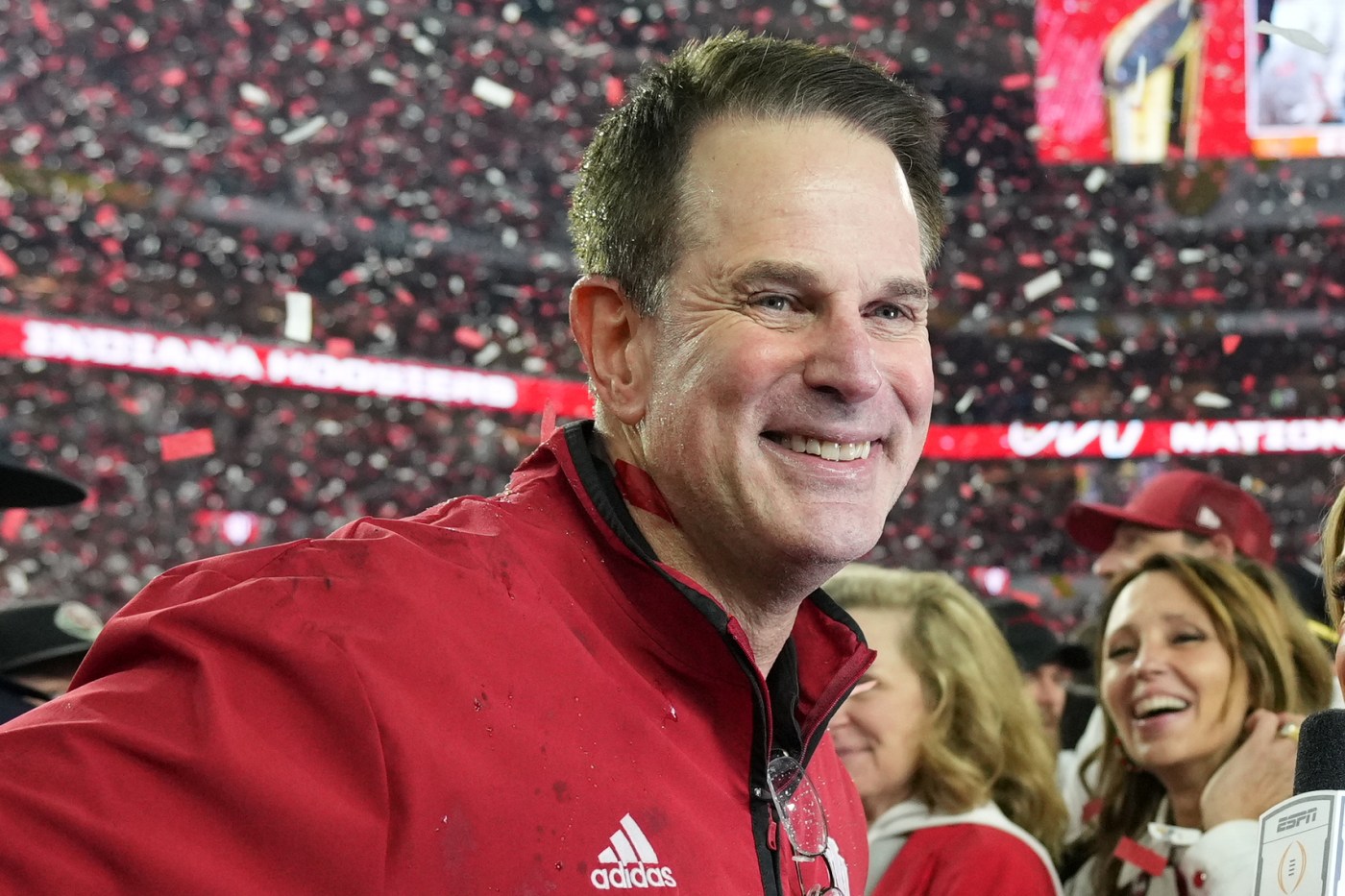
The college football season concluded late Monday night with Indiana edging Miami in the national championship game, so it’s time to turn the page and look ahead to next season.

The Gophers, coming off an 8-5 season in 2025, know their 12 regular-season opponents. They also know the dates for their three nonconference games, but are still waiting for the Big Ten to share when they will play their nine conference matchups.

Here’s an initial look at what lies ahead for Minnesota next fall:

Another champion incoming

For a third straight season, Minnesota will play the reigning national champion, with an upcoming trip to Bloomington to play the Hoosiers.

Coming off a 16-0 season, Indiana head coach Curt Cignetti is expected to reload for 2026 and has brought in a transfer portal class ranked within the top 10 in the nation.

The Hoosiers wave goodbye to Heisman Trophy-winning quarterback Fernando Mendoza as he prepares to be the likely No. 1 pick in the NFL draft in April. Indiana signed TCU transfer quarterback Josh Hoover to take the reins; he is veteran with 9,629 passing yards and 71 touchdown passes in 36 games for the Horned Frogs.

In 2024, Minnesota lost to Michigan 27-24 in Ann Arbor, and in October, the U fell 42-3 to Ohio State in Columbus.

One nonconference test

The U opens next season with Eastern Illinois at home on Thursday, Sept. 3 and close nonconference play with Akron on Sept. 19. But the meat between those two pieces of cheap white bread is a home contest with Mississippi State on Sept. 12.

It’s the Gophers first game against an SEC opponent since the victory over Auburn in the Outback Bowl in New Year’s Day 2020.

Last fall, Mississippi State went 5-8 overall and 1-7 in SEC play. After a rash of teams opted out of bowl games, the Bulldogs took a spot, went to the Duke’s Mayo Bowl and lost to Wake Forest 43-29 in Charlotte.

Sail-gating anyone?

From top to bottom, the Gophers will never have such an outstanding and unique road schedule as they enjoyed last season. They played Northwestern at Wrigley Field, at Iowa’s Kinnick Stadium and Ohio State’s Horseshoe. The U made its first trip to Eugene, Ore., to play the Ducks in Autzen Stadium and went out to the Bay Area to play the California Golden Bears in Berkeley.

For how great the locales were, traveling fans had to endure an 0-5 record in those games.

The 2026 road schedule has one clear-cut gem: a trip to Seattle to play the Washington Huskies. It will be Minnesota’s first trip there since 1976.

Husky Stadium has a picturesque setting on the shores of Lake Washington and instead of tailgating, they are known for sail-gating out on the water.

Next fall, the Gophers will also go on the road to play at Penn State and new head coach Matt Campbell, but likely won’t be the Nittany Lions’ “white out” game in Happy Valley. That tradition went to Minnesota in 2022 and ended in a 45-17 blowout loss.

The U’s upcoming road schedule also includes Purdue and rival Wisconsin after Minnesota kept Paul Bunyan’s Axe with a 17-7 win on Nov. 29.

Tough home games

The toughest home game next season will be Michigan. The Wolverines’ new head coach, Kyle Wittingham, brings a hard-nosed approach over from Utah and will look to stabilize the traditional power after the scandalous exit of Sheronne Moore.

The second-toughest game in Minneapolis will be the Hawkeyes, which Minnesota has beat only one time in the last 10 since 2015.

Minnesota will also host Northwestern, which beat the U 38-35 in Chicago last fall, and UCLA. The Bruins new head coach, Bob Chesney, succeeded Cignetti at James Madison after the 2023 season. He went 21-6 at JMU and took them to the College Football Playoff this season.

Minnesota went 7-0 at home in 2025 and another undefeated more would be a much bigger accomplishment this fall.

Related Articles


Ranking the Gophers’ top 10 transfer portal additions


Koi Perich is going to Oregon. Where are other Gophers transfers headed?


Ex-Gophers star Koi Perich commits to Oregon over Texas Tech


Gophers add fourth defensive lineman to transfer portal class


Gophers take another running back transfer in Elon’s TJ Thomas

Trump’s ICE force is sweeping America. Billions in his tax and spending cuts bill are paying for it

posted in: All news | 0

By LISA MASCARO, Associated Press Congressional Correspondent

WASHINGTON (AP) — A ballooning Immigration and Customs Enforcement budget. Hiring bonuses of $50,000. Swelling ranks of ICE officers, to 22,000, in an expanding national force bigger than most police departments in America.

Related Articles


US futures and other world shares sink on worries over Trump’s push to claim Greenland


Today in History: January 20, FBI orchestrates massive Mafia takedown


Parts of the U.S. could see northern lights Monday


NYSE working on a new platform for trading digital tokens around the clock


100 vehicles pile up in Michigan crash as snowstorm moves across the country

President Donald Trump promised the largest mass deportation operation in U.S. history, but achieving his goal wouldn’t have been possible without funding from the big tax and spending cuts bill passed by Republicans in Congress, and it’s fueling unprecedented immigration enforcement actions in cities like Minneapolis and beyond.

The GOP’s big bill is “supercharging ICE,” one budget expert said, in ways that Americans may not fully realize — and that have only just begun.

“I just don’t think people have a sense of the scale,” said Bobby Kogan, senior director of federal budget policy at the Center for American Progress and a former adviser to the Biden administration’s Office of Management and Budget.

“We’re looking at ICE in a way we’ve never seen before,” he said.

Trump’s big bill creates massive law enforcement force

As the Republican president marks the first year of his second term, the immigration enforcement and removal operation that has been a cornerstone of his domestic and foreign policy agenda is rapidly transforming into something else — a national law enforcement presence with billions upon billions of dollars in new spending from U.S. taxpayers.

ICE agents make use of the facilities at a gas station, Monday, Jan. 19, 2026, in St. Paul, Minn. (AP Photo/Yuki Iwamura)

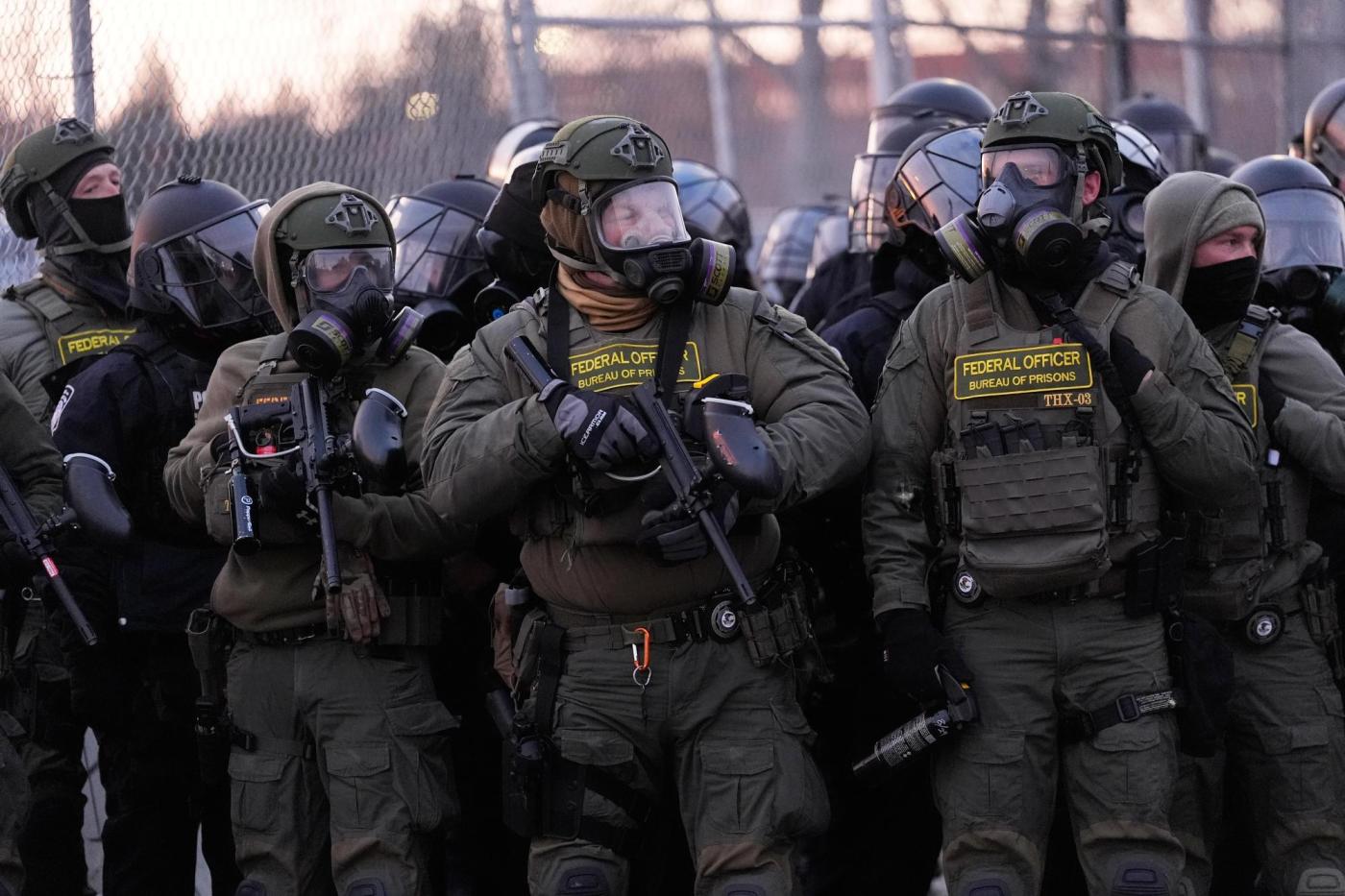
The shooting death of Renee Good in Minneapolis showed the alarming reach of the new federalized force, sparking unrelenting protests against the military-styled officers seen going door to door to find and detain immigrants. Amid the outpouring of opposition, Trump revived threats to invoke the Insurrection Act to quell the demonstrations and the U.S. Army has 1,500 soldiers ready to deploy.

But Trump’s own public approval rating on immigration, one of his signature issues, has slipped since he took office, according to an AP-NORC poll.

“Public sentiment is everything,” said Rep. Nydia M. Velázquez, D-N.Y., at a press conference at the Capitol with lawmakers supporting legislation to impeach Homeland Security Secretary Kristi Noem.

Americans, she said, are upset at what they are seeing. “They didn’t sign on for this,” she said.

Border crossings down, but Americans confront new ICE enforcements

To be sure, illegal crossings into the U.S. at the Mexico border have fallen to historic lows under Trump, a remarkable shift from just a few years ago when President Joe Biden’s Democratic administration allowed millions of people to temporarily enter the U.S. as they adjudicated their claims to stay.

Yet as enforcement moves away from the border, the newly hired army of immigration officers swarming city streets with aggressive tactics — in Los Angeles, Chicago and elsewhere — is something not normally seen in the U.S.

Armed and masked law enforcement officers are being witnessed smashing car windows, yanking people from vehicles and chasing and wrestling others to the ground and hauling them away — images playing out in endless loops on TVs and other screens.

And it’s not just ICE. A long list of supporting agencies, including federal, state and local police and sheriff’s offices, are entering into contract partnerships with Homeland Security to conduct immigration enforcement operations in communities around the nation.

House Speaker Mike Johnson, R-La., has warned Democrats that this is “no time to be playing games” by stirring up the opposition to immigration enforcement officers in Minneapolis and other places.

“They need to get out of the way and allow federal law enforcement to do its duty,” Johnson said at the Capitol.

Noem has said the immigration enforcement officers are acting lawfully. The department insists it’s targeting criminals in the actions, what officials call the worst of the worst immigrants.

However, reports show that non-criminals and U.S. citizens are also being forcibly detained by immigration officers. The Supreme Court last year lifted a ban on using race alone in the immigration stops.

Trump last month called Somali immigrants “garbage,” comments that echoed his past objections to immigrants from certain countries.

The Trump administration has set a goal of 100,000 detentions a day, about three times what’s typical, with 1 million deportations a year.

Money from the big bill flows with few restraints

With Republican control of Congress, the impeachment of Noem or any other Trump official is not a viable political option for Democrats, who would not appear to have the vote tally even among their own ranks.

In fact, even if Congress wanted to curtail Trump’s immigration operations — by threatening to shut down the government, for example — it would be difficult to stop the spend.

What Trump called the “big, beautiful bill” is essentially on autopilot through 2029, the year he’s scheduled to finish his term and leave office.

The legislation essentially doubled annual Homeland Security funding, adding $170 billion to be used over four years. Of that, ICE, which typically receives about $10 billion a year, was provided $30 billion for operations and $45 billion for detention facilities.

“The first thing that comes to mind is spending on this level is typically done on the military,” said Kathleen Bush-Joseph, a policy analyst at the Migration Policy Institute. “Trump is militarizing immigration enforcement.”

Ahead, Congress will need to consider routine funding for Homeland Security by Jan. 30 or risk a partial shutdown in some operations. The GOP’s version of the annual bill would provide about $92 billion for the agency, including $10 billion for ICE. A growing group of Democratic senators and the Congressional Progressive Caucus have had enough. They say they won’t support additional funds without significant changes.

Lawmakers are considering various restrictions on ICE operations, including limiting arrests around hospitals, courthouses, churches and other sensitive locations and ensuring that officers display proper identification and refrain from wearing face masks.

“I think ICE needs to be totally torn down,” said Sen. Ruben Gallego, D-Ariz., on CNN over the weekend.

“People want immigration enforcement that goes after criminals,” he said. And not what he called this “goon squad.”

Big spending underway, but Trump falls short of goals

Meanwhile, Homeland Security has begun tapping the new money at its disposal. The department informed Congress it has obligated roughly $58 billion — most of that, some $37 billion, for border wall construction, according to a person familiar with the private assessment but unauthorized to discuss it.

The Department of Homeland Security said its massive recruitment campaign blew past its 10,000-person target to bring in 12,000 new hires, more than doubling the force to 22,000 officers, in a matter of months.

“The good news is that thanks to the Big Beautiful Bill that President Trump signed, we have an additional 12,000 ICE officers and agents on the ground across the country,” Assistant Secretary Tricia McLaughlin said in a December statement.

The department also announced it had arrested and deported about 600,000 people. It also said 1.9 million other people had “voluntarily self-deported” since January 2025, when Trump took office.


Donald Trump thanks you for your attention to these matters in his second term

posted in: All news | 0

By STEVEN SLOAN, Associated Press

WASHINGTON (AP) — A stunning military intervention in Venezuela. Telling the New York Giants which coach to hire. Threats against IranDenmark, Greenland and Colombia. Posing with someone else’s Nobel Peace Prize. Dangling the potential of deploying U.S. troops in Minneapolis. Flipping off a critic. Announcing an aggressive round of tariffs. Threatening political enemies.

Related Articles


Surrounded by billionaires in Davos, Trump plans to lay out how he’ll make housing more affordable


Trump slams UK deal to hand over Chagos Islands after he previously backed it


Top EU official questions Trump’s trustworthiness over Greenland tariff threat


Trump’s voice in a new Fannie Mae ad is generated by artificial intelligence, with his permission


Judge refuses to block new DHS policy limiting Congress members’ access to ICE facilities

For President Donald Trump, this blizzard was just the first half of January.

If a president’s most valuable currency is time, Trump operates as if he has an almost limitless supply, ever willing to share no matter the day, the hour or the circumstance.

He’s rewritten the role of the presidency in a divided country, commanding constant attention with little regard for consequences. For all his talk about strength, his approach leans more toward virality than virility with social media as his primary accelerant.

“The president exists loudly,” said Sen. John Kennedy, R-La. “The president will play with fire. I haven’t seen him yet play with live hand grenades, but I’ve seen him come damn close. That’s just the way he is, and it’s not going to change.”

At least Trump thanks you in the process.

During his second term, the Republican president has signed off of his social media post with the catchphrase “thank you for your attention to this matter” 242 times, according to data compiled by Roll Call Factba.se. For good measure, he often uses all capital letters and a few exclamation points.

Trump’s decades of seeking attention

He has spent decades seeking attention, first in the New York tabloids and later as a reality television star. Attention, positive or negative, is its own reward. In the attention economy, Trump is what Wall Street might call a market maker.

The gambits often have a tenuous relationship with truth and sometimes involve misogyny or racism. They can step on the administration’s other priorities and don’t always bend political realities in Trump’s favor (see affordability concerns and the Epstein files ).

But they’re hard to ignore.

“He’s saying hello to you in the morning, and he says good night to you at the end of the day,” Republican strategist Ron Bonjean said. “You’re never not going to hear from him.”

In his second term, he observed even fewer constraints on where to assert his presence, with a fondness for sports. During September alone, Trump attended three major sporting events around New York City. His visit to the U.S. Open final forced long security lines and delayed the start of the match. The crowd — dominated by New York’s elite — booed him, but that didn’t matter. He was still on the stadium’s big screen and all over social media.

That’s where some of the biggest changes during Trump’s second term have unfolded.

During his first administration, many Silicon Valley leaders were cold — or outright hostile — to Trump. He was banned from platforms including Twitter and Facebook after the Jan. 6, 2021, attack on the U.S. Capitol.

The leaders of those companies are now openly allied with Trump or at least friendly with him. Twitter is now named X and owned by Elon Musk, who led the Department of Government Efficiency during the first months of the second term and has returned to the president’s orbit after a brief falling-out. Musk and Meta CEO Mark Zuckerberg were among the technology executives who attended Trump’s inauguration last year.

AI quickly produces memes and videos

Trump, who’s not known to use a computer, this time has his own social media platform, where his team relies on fresh artificial intelligence technology to quickly produce memes and videos that keep the president at the forefront of the online conversation. Those posts often veer into crude territory, such as one in October that showed him wearing a crown, flying a plane, dumping excrement on his opponents.

“The social media we’re talking about in Trump’s second term is not the social media of Trump’s first term,” said Nolan Higdon, a lecturer at the University of California, Santa Cruz, where he focuses on critical media literacy.

For now, there are few brakes on Trump’s impulses.

House Speaker Mike Johnson brushed off the excrement post as “satire.” Vice President JD Vance, a devout Catholic, has defended Trump’s posts, including one depicting him as the pope. In an interview with Vanity Fair, White House chief of staff Susie Wiles described Trump, who doesn’t drink, as possessing an “alcoholic’s personality,” meaning he “operates (with) a view that there’s nothing he can’t do.”

Indeed, his approach has been remarkably successful in achieving the disruption he seeks to impose in the U.S. and abroad. He uses social media as a weapon, warning of aid that will be cut off to states that resist him. His posts regarding Greenland and Denmark sparked a genuine diplomatic crisis and raised questions about the long-term sustainability of NATO.

The two nagging exceptions revolve around Epstein and affordability.

After telling his supporters to “not waste Time and Energy on Jeffrey Epstein,” he eventually gave in to congressional pressure and signed a bill that earned overwhelming support on Capitol Hill calling for the files to be made public. The Justice Department has already missed deadlines for the release, and Democrats including Rep. Alexandria Ocasio-Cortez of New York and Gov. JB Pritzker of Illinois have said the flurry of news this month has amounted to a distraction from the Epstein issue.

Trump has similarly struggled to convince the public that he understands and is responding to their concerns about high prices. After calling affordability challenges a “Democratic hoax,” he has tried to take action, including delivering a prime-time address last month. But that speech and more recent efforts, including the mortgage rate push, were quickly drowned by the deluge of more jarring news.

Indeed, a Michigan visit last week to talk about affordability may ultimately be best remembered for images of Trump delivering an obscene gesture at someone who was yelling at him from afar.

Trump’s central challenge

That underscores Trump’s central challenge heading into an election year that will test of his grip on power. While his hard-line approach may delight supporters, it does less to convince a broader swath of Americans that he’s an effective president.

Approval of Trump’s handling of most issues is low, but health care stands out as a particular weakness for him. Only about 3 in 10 U.S. adults approved of the way he was handling health care, according to a December AP-NORC poll. That was slightly lower than his overall approval. He’s also slipped on immigration since the start of his second term, when this stood out as a relative strength. According to a January AP-NORC poll, about 4 in 10 U.S. adults approve of his performance on immigration, down from about half of Americans toward the beginning of his first term.

Meanwhile, Democrats are taking stronger steps toward winning American attention spans. California Gov. Gavin Newsom, a potential 2028 presidential candidate, hosts a podcast and taunts Trump by mocking him on social media.

New York City Mayor Zohran Mamdani is perhaps the most successful Democrat to translate a digital media machine into political success. Over the course of about a year, the 34-year-old went from a relatively unknown state lawmaker to the leader of the nation’s largest city by introducing himself to voters with videos that showed him in unscripted environments, like the course of the New York City marathon.

“They’re learning not to impose an old framework on a new paradigm,” said Basil Smikle, a former executive director of the New York State Democratic Party and a professor at Columbia University.

The long-term question is whether Trump has fundamentally changed the presidency. Ari Fleischer, the White House press secretary under then-President George W. Bush, said Trump “is the definition of unique” and predicted that the next president — regardless of party — will communicate differently.

“Whoever succeeds him,” Fleischer said, “the velocity of the presidency will slow down.”

Associated Press writer Amelia Thomson-DeVeaux contributed to this report.