Column: Best Oscar night in a long time. Here’s why, in 5 easy pieces

posted in: News | 0

For the civilian in me, the one with a 50-year rap sheet of annual Oscar night viewership dating back to “The Sting,” Sunday’s Academy Awards went down nice and easy. Same goes for the critic me. We were both happy.

Best Oscars show in several years. Surprising, yes?

Yes. Especially given the expected and ultimately fulfilled dominance of front-runner “Oppenheimer”seven wins, including for best picture, best director (Christopher Nolan), best actor (Cillian Murphy), best supporting actor (Robert Downey Jr.), plus cinematography, musical score and editing — and hardly any awards constituting an upset. Minimal upsets plus zero train-wreck moments (no Will Smith violence; no envelope mix-up, though I did love the tiny jump scare Al Pacino provoked with his abrupt reveal of the biggest award of the night) typically means bleh TV. So why was the 96th running of the bull Sunday such a surprise, even without actual surprises?

Here are five theories that, stitched together, form one big Frankentheory, in honor of Emma Stone’s Oscar-winning portrayal of Bella Baxter in “Poor Things.”

1. The quality of goods on display: Way up this year. Take the 10 best picture nominees. Even “Maestro,” the one arguably least deserving of inclusion, had some terrific elements and scenes in its corner. The Thanksgiving Day argument between Leonard and Felicia Bernstein (Bradley Cooper, not the evening’s happiest attendee, and best actress nominee Carey Mulligan) made the rest of the movie’s relationship details feel either dodgy, phony or rushed. But look, compared to some of the lesser titles filling out recent best picture nomination lists? “Elvis” in 2022? “Don’t Look Up” in 2021? “Promising Young Woman” in 2020? “Jojo Rabbit” in 2019? “Bohemian Rhapsody” and “Green Book” in 2018?

Actress Emma Stone accepts the award for Best Actress in a Leading Role for “Poor Things” onstage during the 96th Annual Academy Awards at the Dolby Theatre in Hollywood, California on March 10, 2024. (Photo by PATRICK T. FALLON/AFP via Getty Images)

2. The actual, unironic love and respect in the room: So many Oscar ceremonies arrive in righteous sanctimony without much in the way of interesting things to say in between numbers. This year was different, and better. The production itself sold its various presentation concepts, such as rounding up five previous Oscar winners to introduce this year’s performing categories, with a shrewd blend of wit and heart. And when certain winners took the stage and took the opportunity to express a view or two, miraculously it kept the show moving.

3. Now that’s how you go political: Quick, civil but pointed, and move on. Footage of the late Russian dissident, Putin enemy and likely Putin casualty Alexei Navalny, slipped into the show Sunday night in a beautiful and moving way. Also brief. Just right. Elsewhere, winning the international feature Oscar, “Zone of Interest” writer-director Jonathan Glazer referred to his film’s depiction of dehumanization in relation to Hitler’s Third Reich as well as linking it to Israel’s invasion of Gaza: “Right now, we stand here as men who refute their Jewishness and the Holocaust being hijacked by an occupation which has led to conflict for so many innocent people.”  No stridency, no reiterations, just clear opinions eloquently expressed, with one eye on the clock.

Writer Cord Jefferson accepts the award for Best Adapted Screenplay for “American Fiction” onstage during the 96th Annual Academy Awards at the Dolby Theatre in Hollywood, California on March 10, 2024. (Photo by PATRICK T. FALLON/AFP via Getty Images)

4. It’s fair game to take on the local industry on the industry’s biggest night: Oscar winner Cord Jefferson, who adapted (and directed) “American Fiction,” maximized his speech time by calling out the conglomerated, amalgamated, any-old-tentpole-in-a-storm mess that is contemporary Hollywood. Instead of throwing dice at a $200 million franchise burger, Jefferson said, “why not try making twenty $10 million dollar movies?”

5. When a sound designer gets an Oscar-night standing ovation, something is working: For “The Zone of Interest,” designer Johnnie Burn and production sound mixer Tarn Willers created a welter of ghastly everyday horrors, largely unseen but ever-present: furnaces, gunshots, screams, not quite realistic, not quite fantastic. It’s design genius of monstrous subtlety. My friend Eric Lindbom texted me from a Los Angeles Oscar party and said it first, and best: Not since “The Conversation” in 1974 has there been a feature so reliant on such a brilliantly detailed soundscape.

John Mulaney speaks onstage during the 96th Annual Academy Awards at Dolby Theatre on March 10, 2024 in Hollywood, California. (Photo by Kevin Winter/Getty Images)

While we’re on it: When a film as bracing as “The Zone of Interest” garners five Oscar nominations, in an especially rich year, the Academy members are doing something right. They, and we, got an entertaining awards show in the bargain. Four-time MC Jimmy Kimmel? Solid. Coming off Jo Koy’s herniated hosting effort at the Golden Globes two months ago, I’ll take solid and easygoing, no questions asked.

Emily Blunt squared off against Ryan Gosling for a grudge match of a “Barbenheimer” peacekeeping mission. Quite droll. So was Kate McKinnon. And special thanks to John Mulaney for a transcendent non-sequitur riff on “Field of Dreams” dream logic, smack in the middle of introducing the category of best sound design. Long comic odds, for sure. But Mulaney found gold.

I suppose you had to be there, or rather anywhere, somewhere, watching. But this is why morning-after YouTubing has a secure place in this world. And amazingly — for a while longer — so does Oscar.

Michael Phillips is a Tribune critic.

Quick Fix: Irish Inspired Frittata

posted in: Society | 0

Linda Gassenheimer | Tribune News Service (TNS)

When St. Patrick’s Day comes around, I start to think about an Irish-inspired dinner. Here’s a quick festive one that includes sausage, potatoes, eggs and the secret ingredient that brings out the flavors – beer.

The addition of Irish soda bread completes the meal.

HELPFUL HINTS:

Any type of bread can be used.

Any sausage can be used.

Any type of beer can be used.

COUNTDOWN:

Preheat broiler.

Prepare all the ingredients.

Microwave the potatoes.

Complete the recipe.

SHOPPING LIST:

To buy: 1/2 pound red or yellow potatoes, 1 bottle skim milk, 1 package 3 ounce sausage links, 1 bunch chives, 1 small leek, 1 bottle beer, and 1 loaf Irish soda bread (or other bread).

Staples: olive oil, eggs, salt and black peppercorns.

Irish Inspired Frittata

Recipe by Linda Gassenheimer

1/2 pound red or yellow potato cubes (about 2 cups)

4 whole eggs

1/2 cup skim milk

1/4 cup chopped chives

Salt and freshly ground black pepper

2 sausage links, (about 3 ounces each)

2 teaspoons olive oil

1 cup sliced white and pale green parts of leek

1/2 cup beer

2 slices Irish soda bread (or other bread)

Preheat the broiler. Wash potatoes do not and cut into 1/2-inch pieces. Place in a microwave-safe bowl and microwave on high 2 minutes. Set aside. Whisk eggs and milk together and add chives salt and pepper to taste. Cut sausage links into 1/4-inch slices. Heat oil in a large skillet and add the sausage slices, leek and potatoes. Saute 4 to 5 minutes. Add beer and cook to reduce. Add egg mixture lower heat to medium and cook 10 minutes until the mixture starts to set. Place under broiler about 6 inches from the heat. Broil 2 minutes to brown top. Watch to see if it browns and doesn’t burn. Serve with Irish soda bread or any bread.

Yield 2 servings.

Related Articles


Make an easy Spanish-style blistered padron pepper bocadillo


Five-ingredient peanut butter noodles, a weeknight (or midnight) win, and more


Recipes for 3 hearty vegetarian stews that don’t take hours on the stove


Recipe: Make the rustic Irish dish Colcannon for St. Patrick’s Day


Recipe: Korean hand-torn noodle soup with chicken lifts the spirit

Per serving: 576 calories (38 percent from fat), 24.3 g fat (5.9 g saturated, 9.9 g monounsaturated), 459 mg cholesterol, 35.6 g protein, 50.5 g carbohydrates, 3.4 g fiber, 968 mg sodium.

(Linda Gassenheimer is the author of over 30 cookbooks, including her newest, “The 12-Week Diabetes Cookbook.” Listen to Linda on www.WDNA.org and all major podcast sites. Email her at Linda@DinnerInMinutes.com.)

©2024 Tribune Content Agency, LLC

Source: Vikings agree to deal with edge rusher Andrew Van Ginkel

posted in: News | 0

In an effort further solidify their defense, the Vikings agreed to terms with edge rusher Andrew Van Ginkel on Monday. A source confirmed the agreement to the Pioneer Press.

It will be a 2-year, $20 million deal for Van Ginkel, according to ESPN insider Adam Schefter.

The decision to go after Van Ginkel pretty much ensures that star edge rusher Danielle Hunter is on the way out. In addition to Van Ginkel, the the Vikings also agree to terms with edge rusher Jonathan Greenard.

Related Articles

Minnesota Vikings |


Vikings lose Kirk Cousins as he agrees to 4-year deal with Falcons

Minnesota Vikings |


Source: Vikings agree to terms with edge rusher Jonathan Greenard

Minnesota Vikings |


Is this the end of the Kirk Cousins era in Minnesota? We’ll find out soon.

Minnesota Vikings |


Charley Walters: If Kirk Cousins wants to win, Falcons provide easier route

Minnesota Vikings |


Source: Vikings agree to terms with tight end Johnny Mundt

As xylazine surges, some lawmakers want jail time for dealers and people who use the drug

posted in: News | 0

Amanda Hernández | (TNS) Stateline.org

Legislators in a handful of states are offering bills to address the rise in the misuse of xylazine, a cheap animal sedative not intended for human consumption.

Xylazine, or “tranq,” can induce blackouts and cause lesions that sometimes result in severe infections or amputations, and it can even lead to death. The opioid overdose-reversal drug naloxone does not work on xylazine, which drug dealers often find through the dark web and other illicit channels, rather than getting it from veterinary offices. Although xylazine isn’t classified by the federal government as a controlled substance, it also isn’t approved for human use.

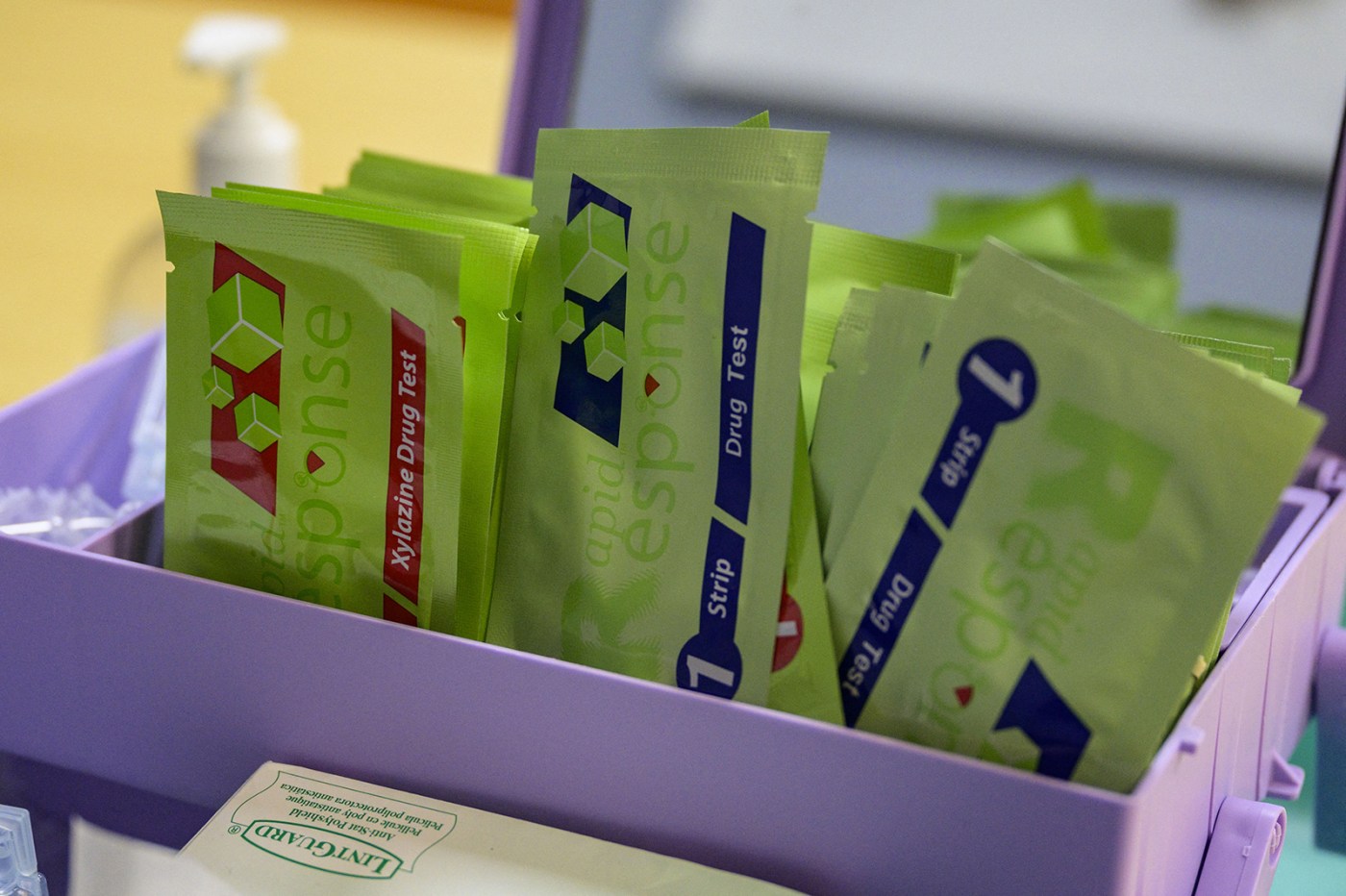
Several states — including Indiana, New York, South Carolina, South Dakota, Virginia and Wisconsin — are considering bills. The legislation ranges from classifying xylazine as a controlled substance to stiffening criminal penalties for possession and distribution, as well as legalizing testing strips so people who intend to take drugs can make sure they aren’t tainted by xylazine.

Other states — Florida, Ohio, Pennsylvania and West Virginia — have already added xylazine to their lists of controlled substances, which adds tighter controls to the storage and movement of the drug for veterinary use.

The accessibility and affordability of xylazine, which can be bought online from Chinese suppliers for $6 to $20 per kilogram, make it an attractive option for drug traffickers, according to the federal Drug Enforcement Administration. Xylazine is frequently used as an adulterant to enhance the psychoactive effects of other drugs, such as fentanyl. Yet many people who use such drugs don’t realize that xylazine has been mixed in.

Public health experts and harm reduction advocates, who work with people who use drugs to help them avoid the worst outcomes, warn that criminalizing xylazine or categorizing it as a controlled substance will just exacerbate the fear and stigma associated with the drug, isolating people who use it and discouraging them from seeking treatment.

“Scheduling drugs and making things illegal has never had any meaningful effect … on people actually ingesting drugs or the amount of drugs showing up in the drug supply,” said Colin Miller, the community liaison and social/clinical research specialist at the University of North Carolina Street Drug Analysis Lab. “Xylazine is just like the latest in a long line of these examples.”

Danielle German, an associate professor at the Johns Hopkins Bloomberg School of Public Health, agreed that ratcheting up penalties will do more harm than good, “even if the legislation is coming from a place of good and wanting to help.”

“That increased perception of penalty — we’ve seen over and over and over again that that’s what pushes people away from the resources that we most want them to be able to access,” German said.

State action

Nevertheless, several states are embracing a get-tough approach.

In South Dakota, Republican Gov. Kristi Noem in February signed legislation classifying xylazine as a controlled substance, with fines and penalties of up to two years in prison for using, manufacturing and distributing the drug, while still allowing for veterinary use.

similar bill is pending in South Carolina, where manufacturing or distributing the drug for other than veterinary use would bring a felony charge and up to 10 years imprisonment. Virginia lawmakers are considering legislation with similar penalties.

In New York state, legislation would place xylazine in the category of the most dangerous controlled substances, which would carry stiffer criminal penalties for both possession and distribution.

In Indiana, a bill making its way through the legislature would criminalize the possession and distribution of xylazine, with potential punishment of jail time. It would add steeper penalties for repeat offenders. The bill exempts use and distribution for veterinary purposes.

“I fully support other harm reduction avenues, such as [the opioid overdose-reversal drug] Narcan and test strips,” said Indiana Republican state Rep. Jennifer Meltzer, the bill’s author. “I just believe that we also need to go after the bad actors. … Having a criminal effect will hopefully deter individuals that are dealing or maybe even individuals who are now only seeking out xylazine, to get the help that they need.”

Another bill in Indiana would have legalized testing strips for all controlled substances, including xylazine, but it died in the Senate. Meltzer, one of the bill’s co-authors, plans to work with the Democratic lead author of that bill to get it passed during the next legislative session.

But in Wisconsin, legislation to legalize xylazine testing strips is awaiting the governor’s signature.

Xylazine’s spread

Xylazine was first detected in other drugs in Puerto Rico in the early 2000s, according to the DEA. Now, the drug can be found across the states, though available research suggests that xylazine-involved overdose deaths are primarily concentrated in the eastern United States, especially in the Northeast.

The University of North Carolina Street Drug Analysis Lab tests drug samples sent by over 150 harm reduction and syringe exchange programs across 35 states and publishes those results publicly. Between January 2021 and February 2024, the lab found xylazine in lab-confirmed fentanyl samples from 15 states. Some of the samples analyzed were submitted to the lab because people suspected the presence of xylazine, Miller wrote in an email to Stateline.

The states with the highest number of fentanyl samples that tested positive for xylazine are North Carolina, 148; New York, 148; Michigan, 66; Pennsylvania, 38; and Washington, 20.

But some harm reduction advocates and public health experts argue that focusing too heavily on xylazine could inadvertently facilitate the entry of other, potentially stronger and more harmful drugs into the illicit drug supply. They warn that what states are doing now to curb xylazine use repeats a strategy that has had limited success with substances such as fentanyl.

“Because we hyper-focused on fentanyl for so long, the criminal drug market responded with a more lethal and potent substance to adulterate and then dominate the supply,” said Sarah Laurel, the founder and executive director of Savage Sisters Recovery, a Philadelphia nonprofit that offers free services to people experiencing homelessness and substance use.

Philadelphia is one of the cities that has been hit hardest by the surge in xylazine use. In 2022, the Philadelphia Department of Public Health found that xylazine was involved in 480, or more than a third, of the 1,413 unintentional overdose deaths. Almost every death in which xylazine was found also involved fentanyl, according to the agency.

“The same thing will happen if we have a new focus on xylazine. They are just going to find a new substance that is going to satisfy the demand,” Laurel said.

Instead, some advocates say states should focus more on expanding access to substance use treatment services and mobile drug-checking equipment, such as mass spectrometers that can analyze ingredients within a drug mixture.

“You can’t say that you want people to stop using drugs and then every time I call for a detox bed, there’s not a bed,” said Alixe Dittmore, the housing and shelter capacity building coordinator with the National Harm Reduction Coalition.

“We have incredibly punitive and prohibitive services,” Dittmore said. “You really have to holistically look at it when you’re worried about how many folks are passing away.”

Stateline is part of States Newsroom, a national nonprofit news organization focused on state policy.

©2024 States Newsroom. Visit at stateline.org. Distributed by Tribune Content Agency, LLC.