Working Strategies: A spring reading list for all seasons

posted in: News | 0

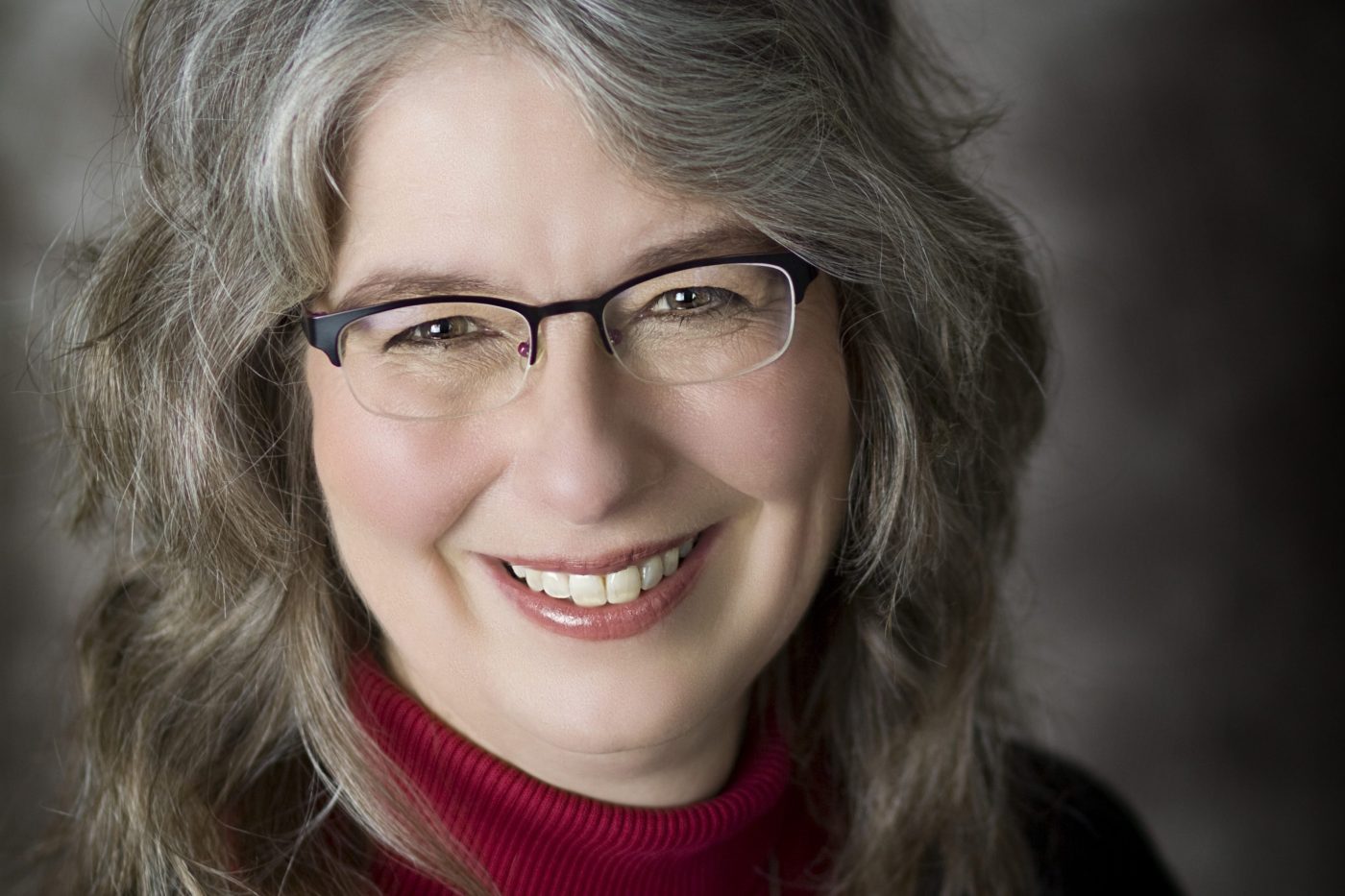
Amy Lindgren

Spring cleaning is a trope I like to use when it suits me: Spring clean your job search! Does your résumé need a spring cleaning? Count on seeing that in a future column, but today I’m still reeling from springing ahead for Daylight Savings Time.

Using “spring” in that context has put me in a different mindset this week. I’m not fussing today about refreshing something. Instead, I’m dreaming about growing a springy Tigger-tail (look that up, under Winnie the Pooh) to help me welcome spring with fresh eyes.

In that spirit, here are four books that have come across my desk recently that made me think new things.

Irreplaceable: How to create extraordinary places that bring people together: by Kevin Ervin Kelley, Matt Holt Books, March 2024, $28. I’m a space junkie — as in physical spaces, not outer space. I love floor plans, blue prints, diagrams and anything that lets me walk my fingers through rooms, imagining where the sun comes in. This book isn’t that. It’s better.

Instead of reprinting floor plans or describing the perfect window for a storefront, architect and designer Kevin Ervin Kelley has written a book to tell us why it all matters. If you believe that well-designed work spaces result in better work (not to mention happier workers), you’re already on board with his message.

In a dozen well-written chapters, Kelley proves the point with stories from decades of designing work spaces, museums, retail stores and other gathering places. His open, inquiring spirit balances well with his practical approach and leads to ways we can all improve the spaces we inhabit.

Running Effective Meetings for Dummies: by Joseph A. Allen and Karin M. Reed, Wiley, 2023, $29.99. And now for something a little more day-to-day in nature: Meetings, and how to make them better (or how to make them disappear, if that’s in your power). If you’re going to strengthen a skill this spring, running meetings isn’t a bad one to tackle.

When I need some skill-building on a practical scale, I often start with a “for dummies” book. As a big-picture person, I like having the whole issue laid out in chapters labeled for the specific problem being solved. This dummies book doesn’t disappoint. The co-authors — a meeting scientist (Allen) and a professional writer (Reed) — have taken care to present the chapters in a logical sequence. I appreciated each of the four sections for different reasons, but pulled together they made a satisfying whole. If you could use a brush-up (or introduction) on running a productive meeting, this is a good tool to have by your side.

How to Make a Few Billion Dollars: by Brad Jacobs, Greenleaf Book Group Press, 2024, $24.95. OK, not interested in the small stuff, like meetings? Let’s zoom ahead to being billionaires! And that’s the last joke I’ll make about this book. Making billions of dollars isn’t something you do without a plan. A plan, strategy, discipline … Jacobs has something to say on each of these points, and yes, he has even included a chapter on running meetings. Turns out, meetings are not small stuff when you’re on the path to billions.

Jacobs writes from his experience as a serial entrepreneur, with all seven of his companies having become billion-dollar or multibillion-dollar corporations. This is the quickest and possibly lightest of today’s book selections in terms of writing style, but the concepts are fascinating. From “How to Rearrange your Brain” to discussions about the importance of over-communicating to your team, Jacobs’ book has the air of authenticity, being told by someone who has walked the walk.

Rise Above the Story — Free yourself from past trauma and create the life you want: by Karena Kilcoyne, BenBella Books, 2024, $26.95. You might imagine that a book about past trauma would be heavy but that is not the case here. Kilcoyne combines storytelling with a step-by-step approach to dealing with the past experiences that might be holding you back.

Kilcoyne is not a trauma therapist. Instead, she developed this book from experience as a trial lawyer specializing in criminal defense. In that field, she saw patterns in the people she defended and the ways they were defined by their trauma stories.

Now, taking a tough but empathetic stance, she counsels a “no victim” approach, where each person takes responsibility for managing their personal trauma story so they can move forward. If trauma issues have been on your mind, this might be the task to spring into (or the spring cleaning to conduct).

Related Articles

Business |


Working Strategies: Leveraging LinkedIn when Changing Careers

Business |


Working Strategies: 11 Reasons to Volunteer between Jobs

Business |


Working Strategies: Exit strategy – following a process for leaving your job

Business |


Working Strategies: Biting the bullet — staying in a job you don’t love

Business |


Working Strategies: Career changers, tailor your résumés

Amy Lindgren owns a career consulting firm in St. Paul. She can be reached at alindgren@prototypecareerservice.com.

Joe Soucheray: ‘If you would shoot at a cop, you would shoot at anybody’

posted in: News | 0

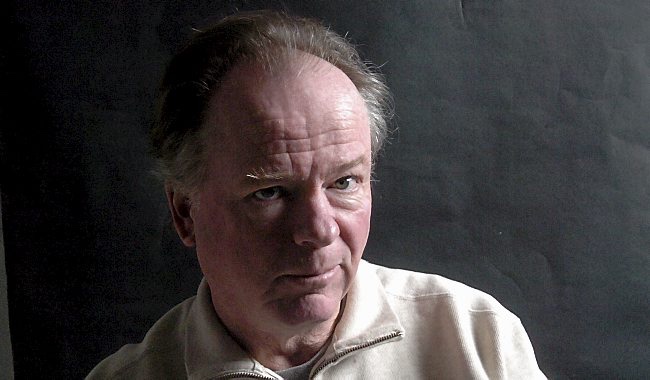
A Ramsey County sheriff’s deputy was shot at two weeks ago in St. Paul. Not accidentally or by happenstance or because he was part of a standoff with a bank robber. No, the deputy, Joe Kill, was shot at while in pursuit of a reckless driver.

St. Paul police initially tried to pull over the reckless driver, but the driver sped off and the St. Paul officer did not give chase, but advertised the problem on his radio. Kill heard the dispatch, saw the car almost immediately, and turned on his lights and siren.

Kill pursued the car. They got to the 900 block of Euclid Street.

The passenger in the fleeing car leaned out the window and fired a rifle at Kill. Multiple shots fired at a sheriff’s deputy. Kill was struck by shrapnel, the plastic and metal bits exploding in his car. He was also struck on the strap of his protective vest. He was not seriously injured, meaning he experienced the thin line between death and getting to go home.

“He tried to kill one of our deputies,” the Ramsey County Sheriff’s Office said.

I don’t know if this episode made the mayor’s State of the City address, or if the city council acknowledged this event, as busy as they are trying to bring peace to Gaza.

But this is the state of the city. As the police chief, Axel Henry, said, “if you would shoot at a cop, you would shoot at anybody.”

The fleeing car was soon enough found, on the 1000 block of Pacific Street. And just a few days ago, St. Paul police carried out a search warrant on the same block and arrested the 20-year-old alleged shooter. Later that same day, a 17-year-old, allegedly the reckless driver, turned himself in. The shooter is charged with attempted murder, first-degree assault and drive-by shooting. The driver is charged with suspicion of aiding and abetting attempted second-degree murder, first-degree assault, attempted second-degree assault and fleeing a police officer.

Maybe this time the charges will stick, although we are not shy of elected and non-elected professional mourners who can produce crocodile tears on demand and tell us just how terribly misunderstood the lads are.

The shooter could have been in jail March 1, where it would have been virtually impossible for him to try to shoot a cop.

Last summer, St. Paul officers saw a Chevrolet Cruz that was wanted for its presence at a shooting in St. Paul, in which 27 shell casings were recovered. Police tried to pull that car over, but it took off and crashed into a parked car. A woman, 19, was driving. Her passenger, identified as the same 20-year-old in the current case, ran. They caught him. His backpack did not contain his Roy Rogers school lunchbox. It contained a handgun with a loaded magazine, another handgun with an extended magazine, a round in the chamber and an obliterated serial number, according to the criminal complaint.

Breaks were cut. He entered an Alford plea, maintaining innocence while acknowledging the prosecution had enough evidence to convict him. His attorney noted the guy had no previous convictions and said the sentencing guidelines for the felony called for a stayed sentence for one year and a day. His attorney asked for a gross misdemeanor. He got it.

The 20-year-old was sentenced in January to 360 days in the workhouse with the sentence stayed for two years. He was placed on probation for two years.

While on probation, he tried to kill a Ramsey County sheriff’s deputy.

Related Articles

Opinion |


Letters: Our health-care centers couldn’t get along without all these people from other countries

Opinion |


Ellen J. Kennedy: How we die matters

Opinion |


Letters: The state of Minnesota shouldn’t be the big boss of local zoning

Opinion |


Real World Economics: Trump’s stated trade policy would have bad tradeoffs

Opinion |


Skywatch: The winter hounds

Richard Williams: The ‘natural’ food debate continues … to get the word wrong

posted in: Society | 0

A bill restricting cultivated meat is moving forward with significant support in Florida. Leaders there, in other states like Alabama, and in the federal government are fighting alternative proteins — milk, cheese, poultry, seafood or meat products not resulting from the old, “natural” cultivation methods — and in many cases calling them “fake.” Does that mean our houses are fake?

Caves are natural but don’t make the best homes, so we cut down trees, make bricks and concrete, toilets, wires and insulation. We also breed and plant seeds, fertilize and water them, harvest them with machines, package and transport and then cook them. Doesn’t that make most foods unnatural, i.e., “fake?”

Did anything on this Earth evolve specifically to be safe or healthy for humans to eat? In fact, the reverse is true. Plants and animals evolved myriad defenses against being eaten, including bad tastes, foul smells, claws and even poisons. We’ve been using plant and animal breeding technologies for tens of thousands of years to overcome evolution and are now in a position to do so much more precisely and rapidly.

The Bible instructs us that “everything created by God is good, and nothing is to be rejected if it is received with thanksgiving.” If we want diets that are both safe and healthy, calling some foods “fake” in a somewhat arbitrary way is zero help.

Cows are not natural. They’ve been bred for over 10,000 years from a now-extinct wild ox called the auroch that was slightly smaller than elephants and lived in Eurasia and Africa. Most cows are raised in factory farms where they can be periodically confined in crowded buildings with no windows where they can barely move. There is nothing whatsoever natural about that.

Love bacon? One practice common with some pork products (called unclean in the Bible) is called “feedback.” Pig poop is fed to females who haven’t given birth yet to help them adapt to germs on farms. (There are so many germs on farms that farm kids are healthier than non-farm kids due to the exposure.) It’s not just the females that get lousy treatment. Male pigs can have their tails and testicles ripped off by hand without anesthesia — you know, naturally.

Regardless, we’re seeing a backlash in our capitals. One Florida representative called one type of the new proteins, cell-cultivated meat, an “affront to nature and creation.” Let there be no doubt, though, that some of the resistance originates with agricultural interests who don’t appreciate the competition.

Maybe with newer and better products coming onto the market, incumbent producers will work their way through the five stages of grief. But instead of denial, anger, bargaining, depression and acceptance, expect denial, anger, depression, regulation (of the interlopers), and finally adding the new products to their own lines.

Currently, there are over 1,000 companies either producing cultivated (made directly from cells) meats, poultry and seafood; precision-fermentation meat, seafood, eggs and dairy products; or plant-based foods. There are over 800 of the latter. These companies are worldwide and they are growing. Over half of all U.S. households are using these products and over 60% among younger generations — Millennials and Gen Z — are trying to incorporate such foods into their diets.

The reasons these products will ultimately be cheaper and succeed are obvious. They are produced in a safer (less exposure to pathogens) environment than farms, do not harm animals, have less environmental impact, can be produced closer to consumers (eliminating huge transportation costs), and do not suffer the same kinds of supply disruptions we saw during COVID. Most importantly, we can control their nutritional composition. One prediction has the global alternative protein market reaching $423 billion by 2033.

We need micronutrients including vitamins and minerals, carbohydrates, fats, protein, fiber and water for energy and to maintain the body’s structure, and microbes that, among other things, protect us from bad bacteria called pathogens, aid in digestion, and help our immune systems. If we do not have to use slow and unpredictable breeding and cultivating techniques, we can make foods precisely to fit our needs.

Just like building a house that shelters us and keeps us healthy, we can, and should, build foods that are both safe and healthy. It’s natural.

Richard Williams is a former director for social sciences at the FDA’s Center for Food Safety and Applied Nutrition and a senior affiliated scholar with the Mercatus Center at George Mason University. He wrote this column for Tribune News Service.

Related Articles

Opinion |


Pamela Paul: Colleges are putting their futures at risk

Opinion |


Other voices: TikTok scapegoated for failure to regulate Big Tech

Opinion |


Thomas Friedman: Netanyahu is making Israel radioactive

Opinion |


Karl W. Smith: If only Congress would focus on the deficit that matters

Opinion |


Stephen L. Carter: The Ivy League is right to revive the SAT

Lily Gladstone’s upset loss to Emma Stone was expected for this reason

posted in: News | 0

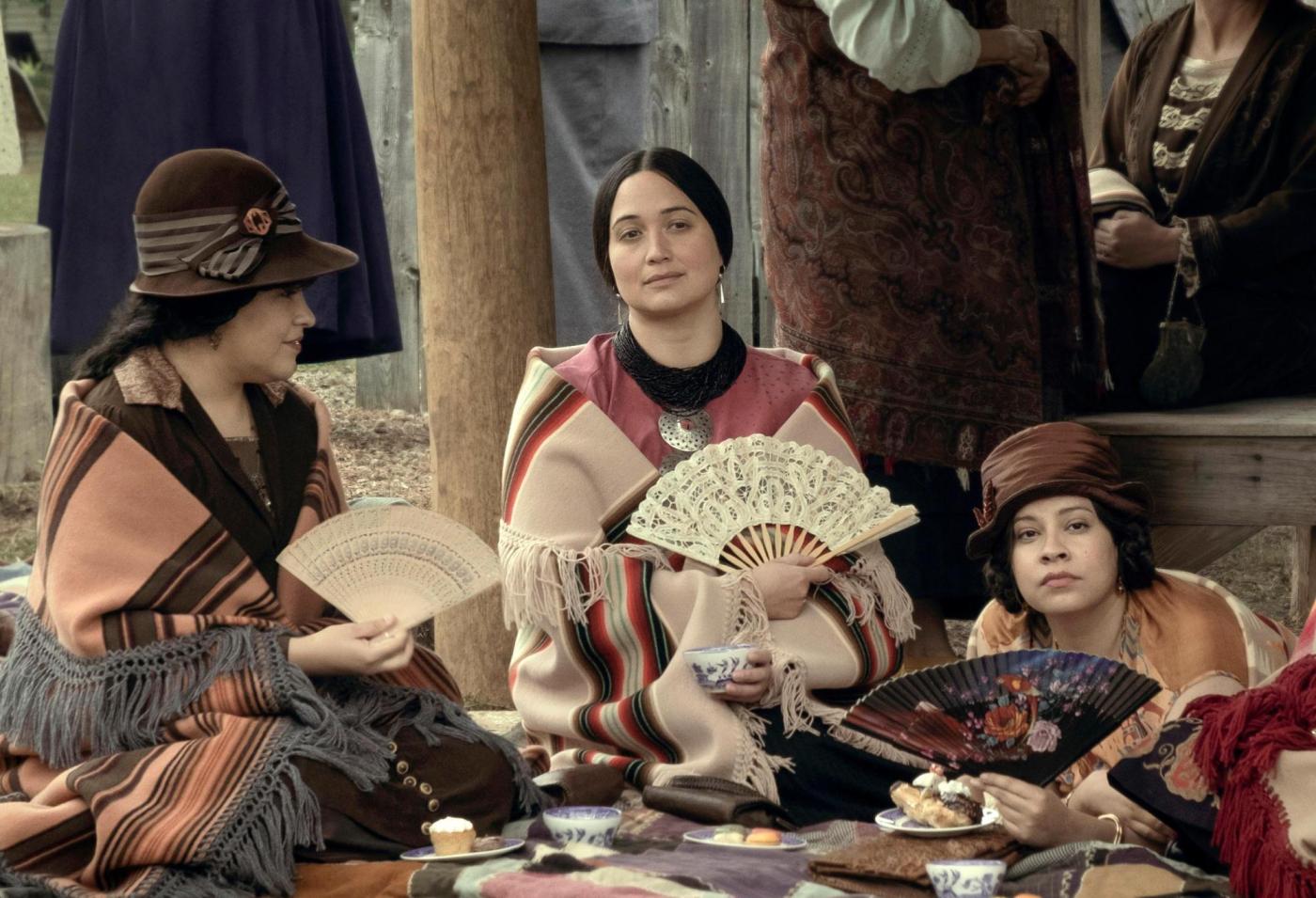
When Emma Stone’s name was announced Sunday night as the winner of best actress at the 96th Academy Awards, she looked genuinely stunned, as many pundits had said that Lily Gladstone was the frontrunner and predicted she would make history as the first Native American woman to win an acting Oscar.

But in the run-up to Sunday’s ceremony, some awards watchers were skeptical. They expressed doubt that Gladstone would achieve this historic milestone and not because she didn’t give a superb performance in “Killers of the Flower Moon.”

They cited the issue of Gladstone’s relatively limited screen time in the Martin Scorsese epic crime drama, set in the Osage Nation in the 1920s, and the view that her character, Mollie Burkhart, wasn’t really the film’s narrative focus.

Gladstone, who has a white mother and whose father is of Blackfeet and Nimíipuu heritage, is on screen for about 56 minutes in a film that’s three hours and 26 minutes long, according to Matthew Stewart, a screen timer expert with Gold Derby.

With that 27% screen time, some critics have argued that the film is more interested in the character played by Leonardo DiCaprio, who is on screen for 1 hour and 49 minutes. Gladstone’s limited screen time also sparked debate months ago over whether her role was supporting and she should have campaigned in the supporting actress category.

On the Hollywood industry podcast “The Town” Thursday, host Matthew Belloni and guest Michael Lasker, a talent manager and Oscars expert, agreed that Gladstone had a supporting role. Mollie is an Osage woman whose relatives are systematically being murdered by her husband, played by DiCaprio, and his uncle, played by Robert De Niro, in a bid to seize her family’s oil-rich Oklahoma land.

Belloni and Lasker compared the Mollie character to Stone’s Bella Baxter, whose story is definitely at the center of “Poor Things,” making it more of a traditional leading role.

“I am on record as saying that Emma Stone is going to win,” Belloni said. “It’s a flashier performance.” In Yorgos Lanthimos’ costume drama, Stone plays a woman who goes on a journey of self-discovery after being brought back to life by an eccentric surgeon. She’s on screen for one hour and 37 minutes, or 69% of “Poor Things” running time.

“I think ultimately voters watch the movies, evaluate the performances and select based on what they think is the best performance,” Belloni continued. “There are other factors that come into it. The representation issue, I think, is a big one. (Gladstone) would be the first Native American actress to win in this category. It would be a great moment on stage at the Oscars, and I do think that comes into a little bit.”

Lasker agreed that it would have been a great Oscars moment for Gladstone to win and to give a moving speech on the historic nature of the honor. He also said she was “amazing” in “Killers of the Flower Moon,” though he, too, noted that she’s only in the movie for about 50 minutes.

“It occurred to me: If they had run Lily in supporting, she probably would have run in a landslide,” Lasker said.

Maybe Gladstone would have won in the supporting category, but she would have had stiff competition: Over the course of the 2023 awards season, Da’Vine Joy Randolph was the overwhelming favorite to win that trophy for her performance in “The Holdovers.”

Some people online wondered if the increasingly international makeup of the Academy’s membership could have favored an Emma Stone win. Others expressed concerns that Gladstone’s loss was due to racism and Hollywood’s unwillingness to rectify its “ugly history” of marginalizing and misrepresenting Indigenous people.

For many others, the results of the race revived debate about the narrative intentions of “Killers of the Flower Moon.” As Scorsese and Gladstone promoted “Killers of the Flower Moon,” they, as well as Gladstone fans and some film critics, insisted that her Mollie character was “the moral center” of the film’s narrative.

“If Mollie is the movie’s conscience, Gladstone is its center of gravity: Even when she shares scenes with A-listers like DiCaprio and De Niro, the film bends to her,” New York Times writer Kyle Buchanan wrote in a profile of Gladstone.

A Goldstone fan also posted on X Sunday night: “lily gladstone was the heart and soul of KotFM. the sheer intensity she commanded was astounding. every look, scream, tear, word that came out of her, i felt it in my bones. a performance for the ages in a film that has cemented its place in film history.”

Certainly, Scorsese tried to deflect criticism that he had created another film that focuses on a group of White male antiheroes or on a White male savior. The legendary director explained in interviews that an early version of the screenplay focused on federal agent Tom White, who led the investigation into the Osage murders. DiCaprio originally was cast in the Tom White role. Scorsese and co-writer Eric Roth adapted the script from the book by David Grann, but the script wasn’t working.

“After a certain point, I realized I was making a movie about all the white guys,” Scorsese told Time. “Meaning I was taking the approach from the outside in, which concerned me.”

The script was retooled to examine Mollie and Ernest’s fraught marriage and how racism fuels hatred and greed, NPR reported.

But some said that Scorsese didn’t go far enough in prioritizing Mollie’s perspective, according to NPR. Upon seeing the film at its Los Angeles premiere, Christopher Coté, one of the Osage language instructors brought on to coach the cast, expressed disappointment to The Hollywood Reporter that Mollie wasn’t really at the center of the movie, while acknowledging that its overarching theme is complicity in white supremacy.

Coté said: “Martin Scorsese not being Osage, I think he did a great job representing our people, but this story is being told almost from the perspective of Ernest Burkhart.”

On Sunday night, the Times’ Buchanan defended the choice for Gladstone to campaign in the leading actress category. “There’s more to a film career than winning an Oscar,” he wrote on X. “By going lead, Lily told Hollywood to treat her like a lead. And she just booked another lead, which many supporting winners struggle to do.” But someone responding to Buchanan’s post argued that it would have been “bad optics” for Gladstone to be considered a supporting actor in a story about the Osage Nation while DiCaprio was pushed as a lead actor.”

Gladstone’s supporters could argue that she had as much right to campaign for a leading acting Oscar as Anthony Hopkins did in 1991, when he won best actor for his 16 minutes of screen time as Hannibal Lecter in “The Silence of the Lambs.” Meanwhile, as her fans expressed disappointment that she didn’t win the Oscar, they said her nomination itself was historic. As the Washington Post reported, Gladstone’s season was “trailblazing,” with her racking up Golden Globe and Screen Actors Guild awards. She also received a standing ovation when she won the SAG award last month.

Some cultural commentators also spoke of the “Lily Gladstone effect,” how her high profile this awards season, standing at podiums to accept multiple honors, would help lift up other Native talent in the industry, the Christian Science Monitor reported.

“Lily Gladstone not winning does not take away from the fact that she gave one of the best performances of the year,” said Variety editor Jazz Tangcay on X. “Her performance and the film will live on long after tonight is over. Her wins have been historic and trailblazing. She already made history.”

Related Articles

Entertainment |


How Kacey Musgraves opened herself back up to love

Entertainment |


‘Nolly’ review: On Masterpiece, Helena Bonham Carter plays a soap star who’s been sacked

Entertainment |


Calling all ‘Top Chef’ nerds: Here are 6 more ways to feed your inner foodie

Entertainment |


What to watch: Kristen Stewart sizzles in wild ‘Love Lies Bleeding’

Entertainment |


St. Patrick’s Day Parades land on Saturday, not Sunday, and other tips o’ the Irish to keep in mind