Names to know for the Chicago Bears in this week’s Senior Bowl, including a top edge rusher and a bevy of centers and wide receivers

posted in: News | 0

The quarterback conversation will dominate chatter for the Chicago Bears leading up to the NFL draft in three months, and that ought to be a major focus this week at the Senior Bowl in Mobile, Ala.

Even though top prospects such as USC’s Caleb Williams, North Carolina’s Drake Maye, LSU’s Jayden Daniels and Michigan’s J.J. McCarthy are not in the game, it will be a chance to get a close look at Washington’s Michael Penix Jr. and Oregon’s Bo Nix.

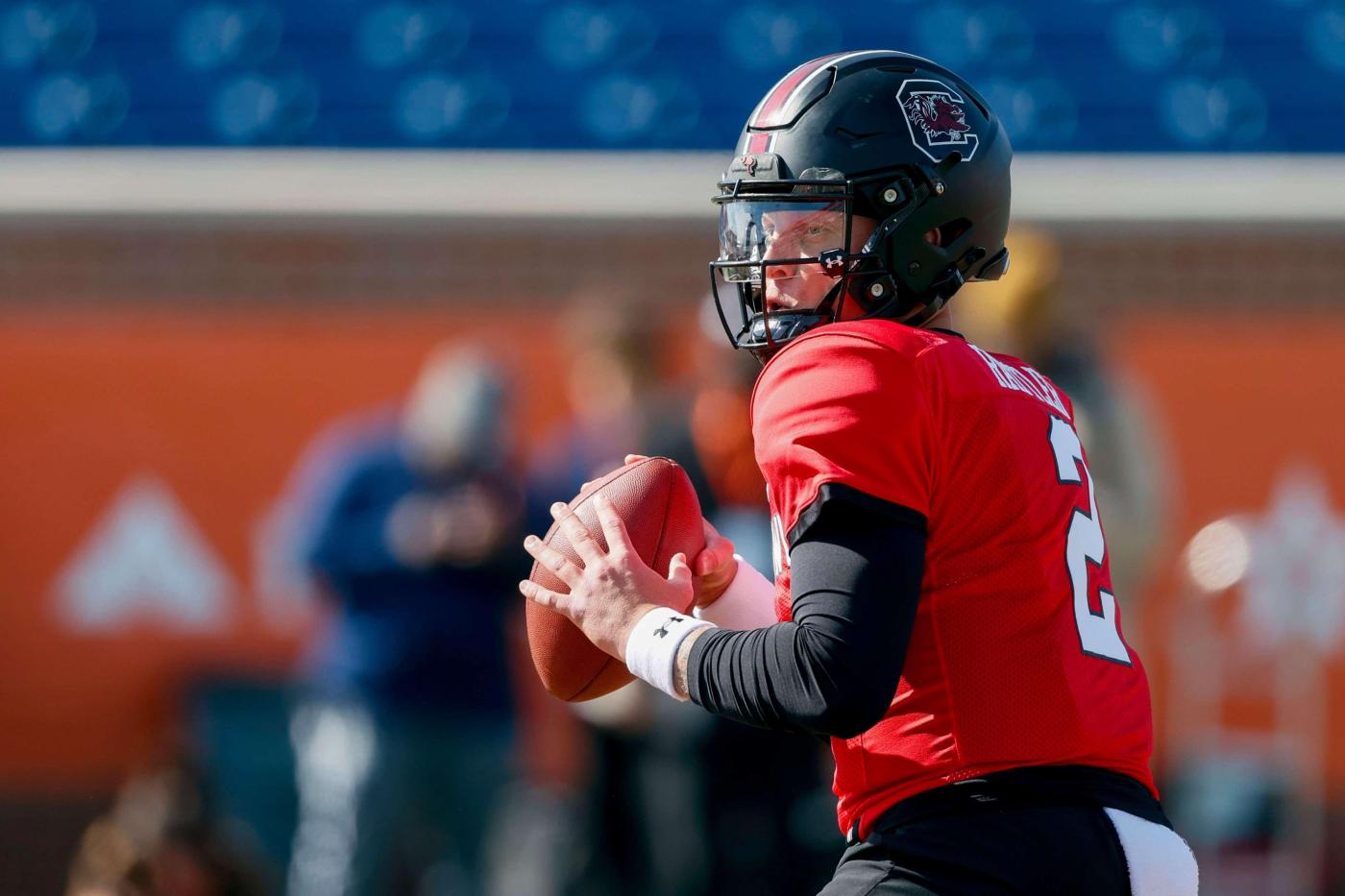
Add Tulane’s Michael Pratt, South Carolina’s Spencer Rattler and Notre Dame’s Sam Hartman — who aren’t candidates to be the No. 1 pick — and it would be an intriguing bunch of passers in any draft cycle.

The Bears will be able to see Penix and Nix up close four weeks before the scouting combine, and general manager Ryan Poles likely has a detailed plan to vet all options.

Penix threw for 9,504 yards over the last two seasons at Washington, and teams will have plenty of questions about knee and shoulder injuries that interrupted his first four years at Indiana. Nix also thrived after transferring, passing for 8,101 yards and 74 touchdowns with only 10 interceptions at Oregon the last two years after three up-and-down seasons at Auburn.

The Bears drafted four players who participated in the Senior Bowl last year, all in the first four rounds: right tackle Darnell Wright (first round, 10th pick), cornerback Tyrique Stevenson (second round), defensive tackle Zacch Pickens (third) and running back Roschon Johnson (fourth). They also signed undrafted quarterback Tyson Bagent, who improved his stock with a week in Mobile.

The Senior Bowl was loaded with talent last year, when 36 of the first 100 draft picks participated in the game. Overall, 100 players who were in Mobile were drafted, accounting for 39% of all selections.

While it’s unlikely the first pick in this year’s draft will be in Mobile, you can’t rule out the possibility the ninth pick — which the Bears also own — will be on display.

UCLA edge rusher Laiatu Latu is one of the highest-regarded prospects committed to the Senior Bowl. Latu had 23 1/2 sacks over the last two seasons for the Bruins, and NFL teams will have a chance to see him perform in practice and the game.

They will have a lot of medical questions for Latu that will require due diligence at the combine, as he briefly retired from football with a neck injury after beginning his college career at Washington. Latu proved to be durable at UCLA, though, and for teams comfortable with his health, he could emerge as the top edge rusher in the draft.

That’s certainly a position the Bears need to figure out as they seek a presence opposite Montez Sweat. It’s not a great draft for pass rushers overall, but Alabama’s Chris Braswell, coming off a 10 1/2-sack season, is regarded as a potential Day 2 pick and is playing in the Senior Bowl.

Center figures to be a primary need for the Bears, and there’s an interesting crop of hopefuls. Before we dive into the names, it’s worth wondering what philosophy the Bears will take. If they plan on drafting a quarterback, would they hesitate to have a rookie snapping the ball? Given the option, a lot of teams would prefer a veteran center to aid a rookie quarterback with pre-snap reads and calls.

But if Poles and the coaching staff believe there’s a savvy prospect who can be an asset to a young quarterback — assuming the Bears draft one — perhaps they like the idea of more youth on the line.

In that case, West Virginia’s Zach Frazier, Oregon’s Jackson Powers-Johnson and Duke’s Graham Barton — a left tackle in college who is expected to play center this week — are interesting possibilities. Add Georgia’s Sedrick Van Pran and Wisconsin’s Tanor Bortolini, and there’s no shortage of options.

Top wide receivers rarely head to Mobile, and you won’t see any of the elite prospects such as Ohio State’s Marvin Harrison Jr., LSU’s Malik Nabers or Washington’s Rome Odunze. But it’s not only a top-heavy wide receiver class; there’s also tremendous depth. And that’s where players such as South Carolina’s Xavier Legette, North Carolina’s Tez Walker, Arizona’s Jacob Cowing, Louisville’s Jamari Thrash and Western Kentucky’s Malachi Corley come into play.

The Bears, for the first time in a while, have the No. 1 receiver spot figured out with DJ Moore. With Darnell Mooney coming out of contract, they don’t have a No. 2 and could use some competition for Tyler Scott, who just completed his rookie season. Considering the wealth of options, the draft would seem to make more sense than a splurge in free agency, where proven options will be available.

Free safety looms as a question on defense, and Miami’s Kamren Kinchens will be in the spotlight as a potential late first-round pick. He made 11 interceptions the last two seasons for the Hurricanes, and while there are questions about his consistency, few draft options possess the kind of range he has.

Teams are always seeking talent for the defensive line, and Texas’ Byron Murphy is an undersized player (6-foot-1, 297 pounds) who could be a nice fit for the Bears as a disruptive interior player. He had 15 sacks in three seasons for the Longhorns with 8 1/2 this past season.

It might be more of a want than a need — and the Bears were pleased with the development of 2023 second-round pick Gervon Dexter — but there’s no such thing as too many quality defensive linemen.

()

House GOP launches new probe of Jan. 6 and tries shifting blame for Capitol attack away from Trump

posted in: Society | 0

By Lisa Mascaro, Associated Press LISA MASCARO (AP Congressional Correspondent)

WASHINGTON (AP) — House Republicans are launching a vast reinvestigation of the Jan. 6, 2021, attack on the U.S. Capitol, seeking to push the blame away from Donald Trump, who has been indicted over his actions or his supporters in the mob siege trying to overturn the 2020 election.

As Trump campaigns to return to the White House, the House Administration subcommittee on oversight held the first of what is expected to be regular public hearings revisiting the official account, which had aired in great detail in 2022 by the House’s Select Committee on Jan. 6.

Chairman Barry Loudermilk, R-Ga., called Jan. 6 a “dark day” in U.S. history as he opened Tuesday’s hearing to delve into the investigation of pipe bombs that were left outside Republican and Democratic party headquarters that day. But, he said, “we still have many unanswered questions.”

The panel’s work comes as Trump and President Joe Biden are galloping toward a 2020 rematch this fall, and Republicans, some once skeptical of Trump’s return to the White House, have quickly been falling in line to support the former president. The House GOP’s high-profile impeachment inquiry into Biden has stalled without a clear path forward.

Speaker Mike Johnson said House Republicans intend to release a final report on Jan. 6 “to correct the incomplete narrative” advanced by the previous work of the Select Committee on the Jan. 6 attack.

Related Articles

National Politics |


Judge dismisses some charges against Trump in the Georgia 2020 election interference case

National Politics |


Trump wins delegates needed to become GOP’s presumptive nominee for third straight election

National Politics |


President Joe Biden has won enough delegates to clinch the 2024 Democratic nomination

National Politics |


Fact check: Biden is right. The US generally pays double that of other countries for prescription drugs

National Politics |


Asked to clear up abortion bans, GOP leaders blame doctors and misinformation for the confusion

With newly released testimony and an 80-plus page report of initial findings, the House Administration subcommittee has outlined a roadmap ahead for its probe — including revisiting key testimony from White House aide Cassidy Hutchinson, who delivered a bombshell account of Trump’s actions that day.

The panel’s report draws on many of the conspiracy theories circulating about Jan. 6 — from the formation of the Select Committee by then-Speaker Nancy Pelosi, D-Calif., to newer questions about the unidentified people who erected the hangman’s scaffolding outside the Capitol.

“Democrats wasted no time before pointing fingers at President Trump for the events of January 6, 2021,” the initial findings of the report said.

At the first hearing, Republicans grilled the U.S. Capitol Police about why a bomb-sniffing K9 unit did not initially detect the pipe bombs found outside party headquarters and why police didn’t respond faster to seal off the area.

U.S. Capitol Police Assistant Chief Sean Gallagher told the panel it was “chaotic” that day as the mob of Trump supporters descended on the Capitol.

“I want to be upfront and honest, U.S. Capitol Police haven’t shied away from the failures of that day,” Gallagher said about the well-documented leadership problems spelled out in their own report.

He described the fighting on the West and East fronts of the Capitol as police tried to hold back the mob — “our officers were suffering injuries” — and calls coming in, including a pick-up truck loaded with Molotov cocktails, machetes, rifles, handguns and ammunition parked nearby.

Five people died in the riot and its immediate aftermath, including a police officer, and other officers died later by suicide. More than 1,200 people have been charged in the riot, with hundreds convicted.

“For context, I would gladly give up a perimeter not being perfect to be able to get officers responding to help their brothers and sisters who were calling for help at the U.S. Capitol,” Gallagher testified.

Rep. Norma Torres of California, the panel’s ranking Democrat and a former 911 dispatcher, questioned the premise of the hearing, particularly as federal investigations are underway: “What exactly is it that we’re doing here?”

“Maybe it is to peddle crazy right-wing conspiracy theories about the Jan. 6 pipe bombs spreading in the dark corners of the Internet?” she asked.

“Or maybe we are here so this subcommittee can once again try to muddle our history, villainize law enforcement and undo the efforts of the bipartisan Jan. 6 Select Committee,” she said, “all to distract from the simple fact that the former president and Republican nominee for president orchestrated a corrupt scheme to overturn the results of a free and fair election.”

Trump, who exhorted his supporters to “fight like hell” before they swarmed the Capitol, has been indicted on federal charges of conspiracy to defraud Americans and obstruction of an official proceeding over Jan. 6. The Supreme Court is considering his claim of immunity.

House Republicans criticize the Select Committee and they claim it didn’t turn over all aspects of its work.

On Tuesday, a previously undisclosed transcript of the Select Committee’s interview with an unnamed Secret Service officer who drove the presidential SUV on Jan. 6 provided new information about Trump’s actions that day. It was obtained by The Associated Press.

That transcript of the presidential limo driver contradicted some of Hutchinson’s testimony but corroborated other aspects of her account, including Trump’s attempt to join the mob scene at the Capitol.

Trump had told his supporters during the Jan. 6 “Stop the Steal” rally at the Ellipse near the White House to walk down Pennsylvania Avenue to the Capitol, and said he would be right there with them, as Congress was certifying the 2020 election and Biden’s victory.

But his security detail refused to take him there and instead took him back to the White House.

Hutchinson, who at the time was an aide to Mark Meadows, then the White House chief of staff, had testified in June 2022 that she was told by another official that Trump fought for control of the presidential SUV and demanded to be taken to the Capitol as the insurrection began.

Hutchinson testified that she was told that Bobby Engel, the head of security in the car with him, had grabbed Trump’s arm to prevent him from gaining control of the armored vehicle, and Trump then used his free hand to lunge at Engel. She worked inside the White House, and said that when she was told of the altercation immediately afterward, Engel was in the room and didn’t dispute the account at the time.

In the newly obtained transcript, the driver confirms: “The President was insistent on going to the Capitol.”

The driver explained that Trump and Engel got in the car after the rally, and Trump started asking Engel about going to the Capitol. When Engel suggested they couldn’t do that, Trump kept pushing.

“Certainly his voice was raised,” the driver testified, “but it did not seem to me like he was irate, certainly not — certainly didn’t seem as irritated or as agitated as he had on the way to the Ellipse.”

The driver said, “The thing that sticks out most was he kept asking why we couldn’t go?”

But the driver said he did not see the altercation that Hutchinson described.

“He never grabbed the steering wheel. I didn’t see him, you know, lunge to try to get into the front seat at all,” the driver testified.

“You know, what stood out was the irritation in his voice more than — more than his physical presence, which would have been pretty obvious if he was trying to insert himself between the two front seats,” the driver said.

The driver said he told other colleagues at the White House what had happened as he waited outside with the vehicles.

Lisa Mascaro is the Associated Press’ congressional correspondent.

Biden and Trump are now their parties’ presumptive nominees. What does that mean?

posted in: Politics | 0

By Meg Kinnard Associated Press

COLUMBIA, S.C. (AP) — President Joe Biden and former President Donald Trump have officially secured the requisite numbers of delegates to be considered their parties’ presumptive nominees.

It was a foreseeable outcome. Biden faced token opposition in the Democratic primary. Several high-profile Republicans ran against Trump but didn’t come close to knocking him off course in his third straight Republican bid.

Here is a look at what that means, what’s changed, and what still needs to happen before Biden and Trump can drop “presumptive” and just be their parties’ official standard-bearers:

‘Presumptive nominee:’ What does it mean?

The Associated Press only uses the “presumptive nominee” designation once a candidate has captured the number of delegates needed to win a majority vote at the national party convention this summer. For Republicans, that number this year is 1.215. On the Democratic side of things, it’s 1,968.

The marker essentially ends the presidential primary season, though both Biden and Trump have been largely focusing their energies on each other for months already.

Do the political parties function any differently?

Sort of.

Generally, the national Democratic and Republican parties start coordinating directly with their presumptive nominees once their status is clear, although there have been some exceptions.

Related Articles

National Politics |


Judge dismisses some charges against Trump in the Georgia 2020 election interference case

National Politics |


Trump wins delegates needed to become GOP’s presumptive nominee for third straight election

National Politics |


President Joe Biden has won enough delegates to clinch the 2024 Democratic nomination

National Politics |


Fact check: Biden is right. The US generally pays double that of other countries for prescription drugs

National Politics |


Asked to clear up abortion bans, GOP leaders blame doctors and misinformation for the confusion

Last week, the Republican National Committee ushered in new leadership handpicked by Trump, in the form of a new chairman, co-chair and party chief of staff. Trump’s installed leaders then moved to fire dozens of RNC staff.

After Trump won both the Iowa caucuses and New Hampshire primary — but still faced GOP opponents — an RNC member who is a longtime Trump ally floated a resolution that would have allowed the party to consider him its “presumptive nominee” and allowed some of that coordination earlier.

Trump actually spoke out against the measure — although he said it likely would have succeeded — which was ultimately withdrawn.

As for the Democratic National Committee, Biden is the de facto leader of the party, although any official leadership changes have to go through structured channels. During the 2020 campaign, the DNC shuffled its leadership and entered into a joint fundraising agreement with Biden in April, even though the candidate didn’t clinch the Democratic nomination until June.

When do presumptive nominees become official?

A presidential candidate doesn’t officially become the Republican or Democratic nominee until winning the vote on the floor of the nominating convention, which takes place this summer. Delegates’ casting of votes is mostly a ceremonial procedure, but it hasn’t always been this way.

Decades ago, presidential candidates might have run in primaries and caucuses, but the eventual nominees weren’t known until delegates and party bosses hashed things out themselves at the conventions.

Meg Kinnard can be reached at http://twitter.com/MegKinnardAP.

Judge dismisses some charges against Trump in the Georgia 2020 election interference case

posted in: Politics | 0

By KATE BRUMBACK (Associated Press)

ATLANTA (AP) — The judge overseeing the Georgia 2020 election interference case on Wednesday dismissed some of the charges against former President Donald Trump and others, but many counts in the sweeping racketeering indictment remain intact.

Fulton County Superior Court Judge Scott McAfee wrote in an order that six of the counts in the indictment must be quashed, including three against Trump, the presumptive 2024 Republican presidential nominee. But he left in place other charges, and he said prosecutors could seek a new indictment on the charges he dismissed.

The ruling is a blow for Fulton County District Attorney Fani Willis, whose case has already been on shaky ground with an effort to have her removed from the prosecution over her romantic relationship with a colleague. It’s the first time charges in any of Trump’s four criminal cases have been dismissed, with the judge saying prosecutors failed to provide enough detail about the alleged crime.

The sprawling indictment charges Trump and more than a dozen other defendants with violating Georgia’s Racketeer Influenced and Corrupt Organizations Act, known as RICO. The case uses a statute normally associated with mobsters to accuse the former president, lawyers and other aides of a “criminal enterprise” to keep him in power after he lost the 2020 election to Democrat Joe Biden.

Lawyers for Trump did not immediately respond to a text message seeking comment Wednesday. A Willis spokesperson also did not immediately respond to a request for comment.

The six charges in question have to do with soliciting elected officials to violate their oaths of office. That includes two charges related to the phone call Trump made to Georgia Secretary of State Brad Raffensperger, a fellow Republican, on Jan. 2, 2021.

“All I want to do is this. I just want to find 11,780 votes, which is one more than we have,” Trump said during that call.

The ruling comes as McAfee is considering a bid to have Willis disqualified from the case over what defense attorneys have alleged is a conflict of interest due to her romantic relationship with special prosecutor Nathan Wade. Willis, who has said their relationship ended months ago, has said there is no conflict of interest and no reason to remove her from the case.

The nearly 100-page indictment details dozens of acts by Trump or his allies to undo his defeat, including harassing an election worker who faced false claims of fraud and attempting to persuade Georgia lawmakers to ignore the will of voters and appoint a new slate of Electoral College electors favorable to Trump.

Other defendants include former White House chief of staff Mark Meadows; Trump attorney and former New York City Mayor Rudy Giuliani; and a Trump administration Justice Department official, Jeffrey Clark, who aided the then-president’s efforts to undo his election loss in Georgia. They have pleaded not guilty.

McAfee’s order leaves Meadows facing only a RICO charge. Jim Durham, a lawyer for Meadows, declined to comment.

Related Articles

National News |


David French: Why Haley voters should support Biden

National News |


Trump wins delegates needed to become GOP’s presumptive nominee for third straight election

National News |


Matthew Yglesias: Now Biden needs to show his moderate side

National News |


Trump supporters submit petitions to recall Wisconsin Assembly speaker

National News |


Donald Trump wants New York hush money trial delayed until Supreme Court rules on immunity claims