Shots fired near Dar Al-Farooq center in Bloomington after a dispute

posted in: Society | 0

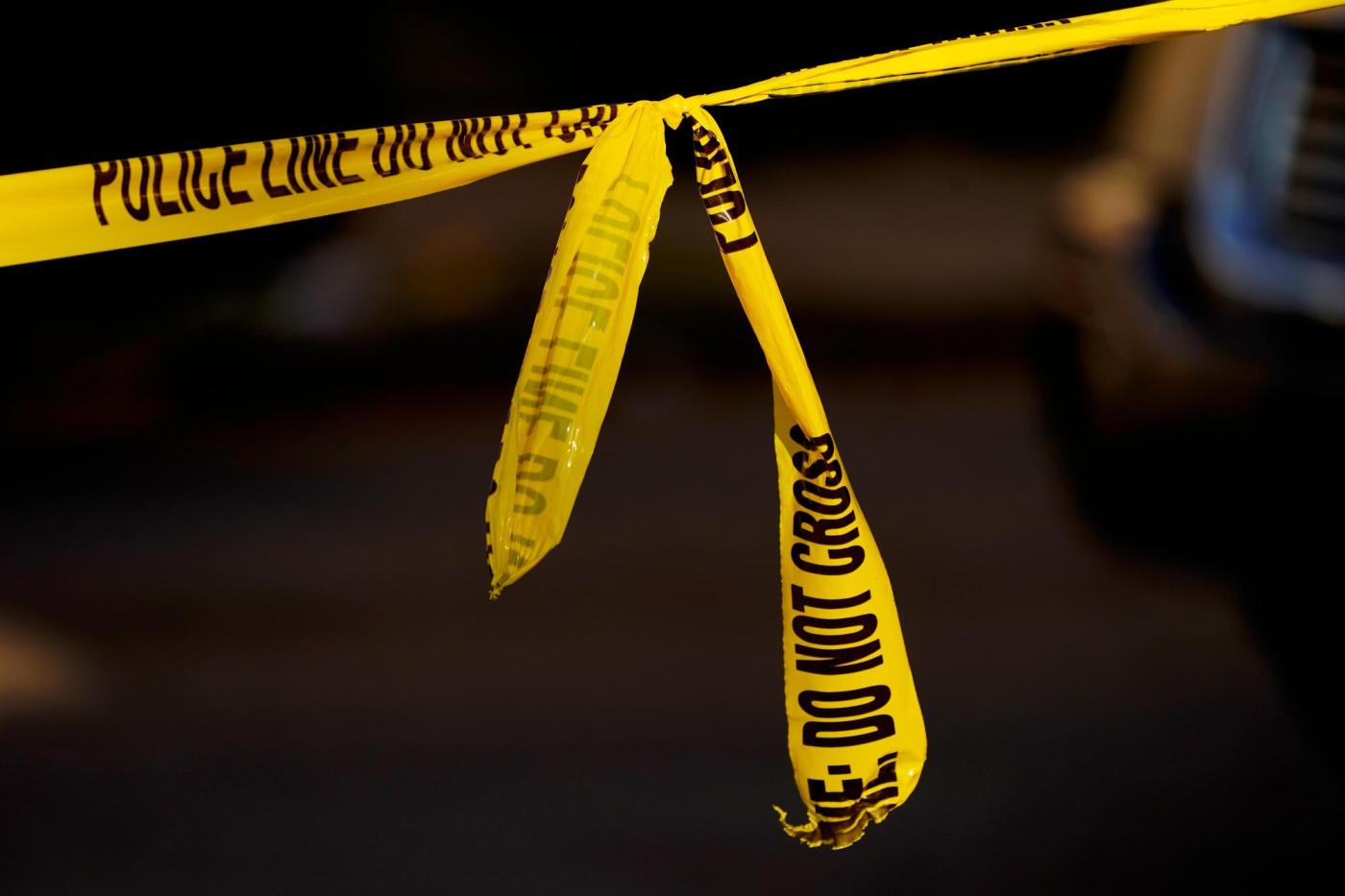
Police say gunshots were fired in the parking lot of the Dar Al-Farooq Center on Saturday night.

It was about 10:40 p.m. on Saturday, according to a news release, when authorities say they received reports of shots fired on the 8200 block of Park Avenue near the Dar Al-Farooq Islamic Center mosque.

When officers arrived, several vehicles were reportedly leaving the area. Witnesses said that there had been an argument between people inside a restroom in the center and several people were asked to leave and escorted out of the building. Shortly after, gunshots were fired, authorities say.

Police report that there weren’t any gunshot victims at the scene when they arrived and that the shooters had fled, according to the press release.

Shell casings were found in the parking lot.

The investigation is continuing and police ask anyone with information about the argument or shooting to call the Bloomington Police Department at 952-563-4900.

Related Articles

Crime & Public Safety |


New program gives St. Paul-Ramsey County sex assault victims more options — and control

Crime & Public Safety |


Bill would bar LGBTQ+ panic defense from Minnesota courts

Crime & Public Safety |


Joe Soucheray: ‘If you would shoot at a cop, you would shoot at anybody’

Crime & Public Safety |


Owner of Willmar massage business charged with forcing woman into prostitution

Crime & Public Safety |


Terminated St. Paul firefighter loses appeal over subduing patient with neck pressure points

Stephen L. Carter: What leash laws for dogs tell us about humans

posted in: News | 0

Pity the poor dog owners! As warm weather descends, communities from California to Arizona to Michigan have announced stricter enforcement of leash laws.

I don’t have a dog in this particular fight, but I do have an interest in bits of social history that tend to be overlooked. And a glance at the history of leash laws tells us why they’re likely to stick around: Because someone always comes up with a new reason why they’re important.

Leashes have been known since ancient times, but requiring them is a more recent development. A leash was traditionally a sign distinguishing wild from domesticated dogs. George Vest’s 1870 “Eulogy of the Dog” — often cited, inaccurately, as the origin of the cliché that dog is man’s best friend — was actually delivered in court, where Vest was arguing on behalf of a farmer whose unleashed hunter, Old Drum, had been shot dead by a neighbor who feared the animal was a stray about to prey on his livestock. (Attacks on livestock by stray dogs still happen.)

Leash laws became common in the U.S. not to protect animals but to protect people. An 1891 article in The Lancet urged that unleashed dogs be captured and, if not claimed, killed to reduce the spread of rabies, which at the time was rampant. A 1903 report from Colorado Agricultural College noted despairingly that the disease had been “positively proven” in about half the states “and probably exists in all.”

Reformers demanded mandates, but while town councils dithered, judges found ways to encourage leashes. In 1904, for instance, a New York court ruled that taking an unleashed dog home and treating it as your own was not larceny; the fault rested upon the owner, who should not have let Fido roam. And even in the absence of formal requirements, the courts routinely took the side of people injured by dogs running free of their owners.

Though I’ve found no data on the precise prevalence of leash laws, it’s clear that during the first third of the 20th century, the rabies panic caused them to spread rapidly. As fear of the disease faded, many of communities began to consider repeal. But government decrees take on lives of their own, and supporters began developing new arguments to keep the mandates on the books.

Letters to the editor warned of canine threats to backyard gardens and other household pets. The July 1946 issue of Safety Bulletin (a federal newsletter) defended leash laws on the ground that they protected “over 100,000 mail men daily subjected to this hazard” — the hazard in question being bites. A classic 1956 letter to the San Francisco Chronicle argued that leashes were necessary to shield the dogs themselves against “stupid” owners who let them run free to be struck by cars.

That era being more like ours than we care to remember, there were also challenges to the constitutionality of the leash laws. (They failed.)

In recent decades, support has come from environmentalists, who argue that unleashed dogs disrupt the habitats of wildlife, introduce canine-spread diseases, and kill other animals — particularly their young. Is this argument correct? There’s some evidence that leash laws make little difference in the degree of biodiversity, but most studies find quite the opposite.

Perhaps the difficulty in pinning down a clearer answer is because the laws are widely ignored. A 2017 study of a lakeside recreation area found a compliance rate of just 16%. A 2019 study of a regulated beach (in Australia) concluded from the area dogs covered and the speeds at which they moved that few were under the control of their owners.

Support for leash laws may depend on just whose territory is being fouled. A 2023 study of an Oregon recreation area found that visitors who lived nearby were much more supportive of leash laws than visitors from farther away.

And a lot of people just don’t like dogs. Judge Richard Posner, in a famous example of how easy it is to tell a lie, imagines a chance encounter with an acquaintance whom he then compliments on his new dog, even though it’s “a little yappy thing” that he secretly finds “hideous.” Many a dog owner, on the other hand, prefers what an anti-leash Canadian legislator back in 1916 called “the privilege of taking a stroll and have his dog with him if he likes without any other formality.”

As for the annual spring crackdown, it’s generally a bad idea to have laws that are all bark and no bite. But whether you love leash laws or hate them, I wonder whether we’re fighting over the environment or the dogs themselves. Depending on the answer, one might just say that the contretemps is a case of the tail wagging the … well, you know.

Stephen L. Carter is a Bloomberg Opinion columnist, a professor of law at Yale University and author of “Invisible: The Story of the Black Woman Lawyer Who Took Down America’s Most Powerful Mobster.”

Related Articles

Opinion |


Andreas Kluth: Don’t fear AI in war, fear autonomous weapons

Opinion |


Richard Williams: The ‘natural’ food debate continues … to get the word wrong

Opinion |


Pamela Paul: Colleges are putting their futures at risk

Opinion |


Other voices: TikTok scapegoated for failure to regulate Big Tech

Opinion |


Thomas Friedman: Netanyahu is making Israel radioactive

Real World Economics: Why a coup at the Fed is highly unlikely

posted in: News | 0

Edward Lotterman

We as a country are more politically divided now than at any time since the Civil War. More so, I’d say, even than the turbulent Vietnam Era 1960s.

Because even then the foundations of our system were still generally accepted.

We are now eight months from a presidential election with two unpopular candidates, one of whom — along with many of his followers — openly question Constitutional norms and the objective rule of law.

And the platforms of both campaigns face monetary policy issues. Which leads us to discuss the influence and fate of the Federal Reserve.

Democrat Joe Biden is blamed for ongoing inflation in his first term but does not want a recession to combat inflation before or after the election. This delicate balance has been deftly handled by the Fed, at least so far.

Republican Donald Trump proposes to use executive power to impose 10% tariffs on all imports into our country — except for those from China that would face a 60% rate. If actually implemented, these tariffs would be the largest tax increase both in absolute and relative terms in the history of our country.

Taken alone, such tariffs would force the general price level higher — a fact conveniently ignored by Republicans who pin inflation on Biden’s policies.

Our central bank, the Federal Reserve, could moderate such price rises, but whether and how it does so might depend on the degree it is controlled by either the president or Congress. For now, this appears to be a moot point. The reality is that, to the extent its leaders are willing to stand to their guns, no one at either end of Pennsylvania Avenue can tell the Fed what to do. That is no guarantee of stable prices or stable output, but it does mean that, excluding the power to appoint, no politician can make key monetary decisions.

The U.S. central bank has a uniquely odd governance system that sprang from a series of events and political compromises that go back to when George Washington was president. The Fed is partly government, though not exactly a government institution, yet it also is not entirely private. The president does appoint members of a key seven-member Board of Governors. These must be confirmed by the Senate like Cabinet members or federal judges. They are subject to the same salary limits as Cabinet secretaries, members of Congress and Supreme Court justices. They serve 14-year terms that start in January of even numbered years.

But these governors do not have power to make monetary policy on their own. Moreover, politicians have no statutory power to fire the chair of the Board of Governors, currently Jerome Powell — and there actually is a historical case in which a Fed chair refused to step down at the direction of a president.

So whatever plans Trump aide Stephen Miller, who got into government as an aide to former Minnesota Rep. Michelle Bachman, or others have in planning a drastic Trump II Inauguration-afternoon restructuring the federal government decide, the Fed would be a hard nut to crack.

The 1913 Federal Reserve Act, with significant amendments in 1935, establishes the current governance.

So either Biden or Trump, elected in 2024 but inaugurated in January 2025, will not have even one appointee voting until January 2026. They will not get a second until January 2028, 10 months before the following presidential election. Since neither could serve a third term, that would end their influence on the board.

But couldn’t Trump simply fire the whole board the afternoon of his inauguration, or thereafter, and name their replacements? Such an act certainly would create a Constitutional crisis. President Ronald Reagan could fire all striking air traffic controllers despite their civil service status, because a statutory clause forbade their going on strike. But there is nothing in any statute that gives the president the power to remove Fed board members. Certainly, if Trump or Biden called for Powell or any other board member to step down, as Trump hinted during his term, they would be under tremendous pressure. But if they refused to do so, the president has no legal recourse.

Of course, couldn’t one simply send U.S. Marshals to physically remove the defiant governor from the premises and usher in a replacement, as U.S. agents walked Black students into Little Rock High School and Old Miss decades ago in defiance of states’ segregation laws? But that defiance of a structure created very deliberately 90 years ago would throw financial markets into a tizzy worldwide.

And even if the chair or other governors stepped down in the face of pressure from the Oval Office, the White House still would not be able to dictate interest rates or the money supply — even by proxy through loyal replacements.

That’s because these decisions are made by a Federal Open Market Committee that includes the presidents of five of the 12 district Federal Reserve banks serving in a rotation. These bank presidents are not government employees or appointees in any way. They are hired by the private corporations that these 12 banks legally are. They are chosen by boards of directors of these private businesses and usually are the conservative element on policy decisions.

If a U.S. president had convinced all of these governors to step down and had replaced them with flunkies, there would be a 7-5 majority that might do the president’s bidding. Again, such a revolutionary and reckless act to give a president control of monetary policy would throw global financial markets into turmoil.

And yes, if a president has filibuster-proof majorities in both houses of Congress, they could rescind the Federal Reserve Act entirely and create a new central bank to their liking, even one run out of a cubby hole in the West Wing. Even these most radical actions might happen at some very low level of probability.

Yet people should rest with some assurance.

When President Richard Nixon took office in January 1969, he called Fed Chair Willian McChesney Martin into the Oval Office and told him to resign because Nixon was naming Arthur Burns as a replacement. Martin responded that he had another year in his term as chair and was not going to resign. Burns did not take over until a year later and that is where our era of great inflation began. Nixon was angered, but knew it would roil financial markets and rile key Wall Street campaign donors if he started a public fight to fire a Fed chair. Whether Trump has such trust or awe of such institutional norms is an open question.

Powell — appointed chair by Trump, by the way — has a four-year term as chair that runs into 2026. He well might follow Martin in declining any order to resign that post.

Powell’s term as a member of the board runs into 2028. Because of resignations, five of the seven current governors are Biden nominees. One of the others, Christopher Waller, a Bemidji State grad who came out of the St. Louis Fed, is not likely to be a Trump lackey.

So a new president could seize control of monetary policy by a series of unprecedented extra-statutory acts or by having a rubber stamping Congress. Anything could happen. But citizens, voters and Wall Street do not want financial chaos that becomes economic chaos. Expect even the most reckless president to shy away from overthrowing the Fed.

Related Articles

Business |


Real World Economics: Trump’s stated trade policy would have bad tradeoffs

Business |


Real World Economics: Why drug monopolies are bad medicine

Business |


Real World Economics: 75 years of wisdom on national defense should not be discarded

Business |


Real World Economics: Craig’s Social Security bill flawed, but pay attention anyway

Business |


Real World Economics: The tango of bond prices and interest rates

St. Paul economist and writer Edward Lotterman can be reached at stpaul@edlotterman.com.

Chicago Bears working on a deal to hire Shane Waldron as their new offensive coordinator

posted in: News | 0

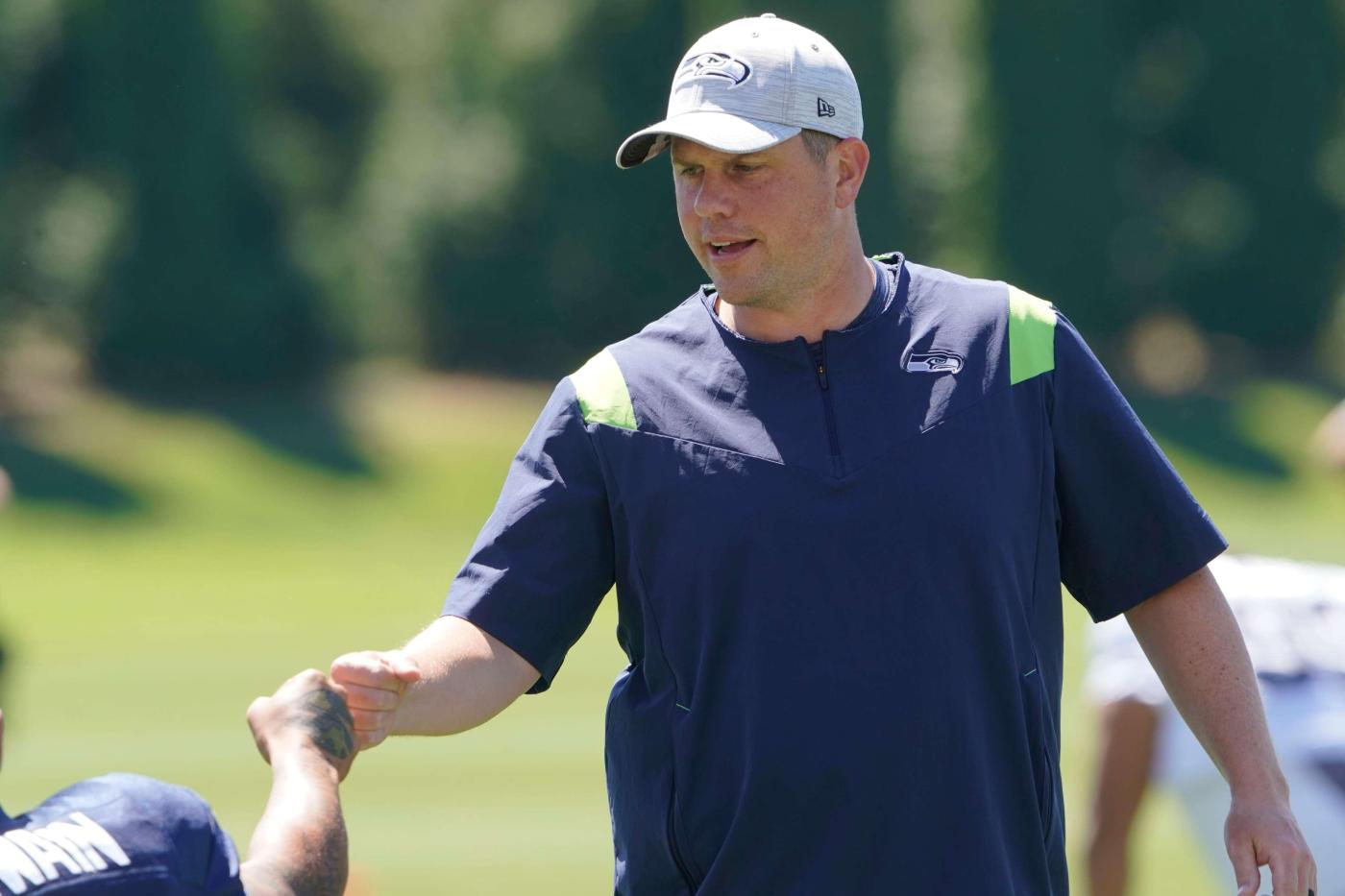
The Chicago Bears are working on a deal to hire Shane Waldron as their new offensive coordinator, multiple league sources confirmed Monday morning.

Waldron has been the Seattle Seahawks offensive coordinator for the last three seasons and helped quarterback Geno Smith to a comeback season in 2022. Before that, Waldron spent four seasons with the Los Angeles Rams as the passing game coordinator, quarterbacks coach and tight ends coach.

He is well-respected inside league circles as a young, energetic coach on the rise and a strong teacher with a creative mind and — especially important to the Bears — three seasons of play-calling experience.

NFL Network first reported the Bears are planning to hire Waldron.

The Bears reportedly interviewed at least nine candidates for the opening, including San Francisco 49ers passing game coordinator Klint Kubiak, former Baltimore Ravens offensive coordinator Greg Roman, former Carolina Panthers offensive coordinator Thomas Brown and former Arizona Cardinals head coach Kliff Kingsbury.

Waldron would replace Luke Getsy, whom coach Matt Eberflus fired earlier this month after two seasons at the helm of the Bears offense. In the search for Getsy’s replacement, Eberflus emphasized his desire to find a new offensive coordinator who is a “great teacher.”

“That’s important because you know he has to coach the coaches to coach the position, and I think that’s the No. 1 trait of any great coach,” Eberflus said. “You have to be able to have the innovation to really look at the players you have and be able to help enhance and put those guys in position to succeed and to get explosive (plays) and to move the ball down the field.”

Waldron would take over a Bears offense that has major decisions ahead this offseason at quarterback. General manager Ryan Poles must decide whether to use the No. 1 draft pick to select a quarterback — potentially USC’s Caleb Williams — or to stick with Justin Fields, the Bears starter for the last three seasons.

Poles said he expected to ask candidates for their plans to coach different kinds of quarterbacks.

“I love it because what are you going to do for these four different types of quarterbacks,” Poles said. “I want to hear that, and I think it’s really important to hear the versatility and adaptability in their teaching, in the way they implement a plan, scheme, adjust. It actually makes it pretty dynamic in terms of the interview process.”

Waldron called plays in 2021 for a Seahawks offense piloted by Russell Wilson. In 2022, after Wilson was traded to the Denver Broncos, the Seahawks pivoted to Smith and won nine games while earning a wild-card berth.

Smith, in his 10th NFL season, was honored as the league’s Comeback Player of the Year after throwing for 4,282 yards and 30 touchdowns. Both marks would be single-season franchise records for the Bears.

This season the Seahawks ranked 21st in total offense (322.9 yards per game) and 14th in passing (230 ypg). They averaged 21.4 points, ranked 17th. That was down from 2022, when they averaged 351.5 yards (13th) and 23.9 points (ninth).

The Seahawks staff is looking for new jobs after the organization and coach Pete Carroll parted ways after a 14-year union.

In addition to working closely with Wilson and Smith, Waldron worked with quarterback Jared Goff for three seasons with the Rams.

Waldron served as an offensive assistant with the New England Patriots (2008-09) and Washington (2016) and worked in operations with the Patriots early in his career. He also has coached in college, high school and the UFL.

Waldron and the Bears must hire assistants to coach the quarterbacks, wide receivers and running backs after the team dismissed Andrew Janocko, Tyke Tolbert and Omar Young earlier this month. Offensive line coach Chris Morgan and tight ends coach Jim Dray remain on the staff.

The Bears also are seeking a defensive coordinator, and NFL Network reported Monday they will interview Tennessee Titans defensive pass game coordinator Chris Harris. Harris played safety in the NFL for eight seasons, including two stints with the Bears, and started for the 2006 Bears team that went to the Super Bowl.

More Bears news

Bears Q&A: Did GM Ryan Poles miss a chance at a big-name coach? How desirable are the coordinator openings?
Column: Keeping Jaylon Johnson is paramount for the Bears — but will they make him the NFL’s highest-paid cornerback?
5 player decisions besides QB facing the Bears, including Jaylon Johnson’s contract and Darnell Mooney’s future
Bears GM Ryan Poles staying ‘open-minded’ as he evaluates whether to keep Justin Fields or draft a QB at No. 1
Caleb Williams declares for the NFL draft — and the Bears, picking No. 1, ‘can’t be scared of the unknown,’ analyst says
Column: How can GM Ryan Poles fix the cycle that has plagued the Bears forever? Pick the right quarterback.
Bears President Kevin Warren says building a ‘magnificent’ downtown stadium remains a possibility