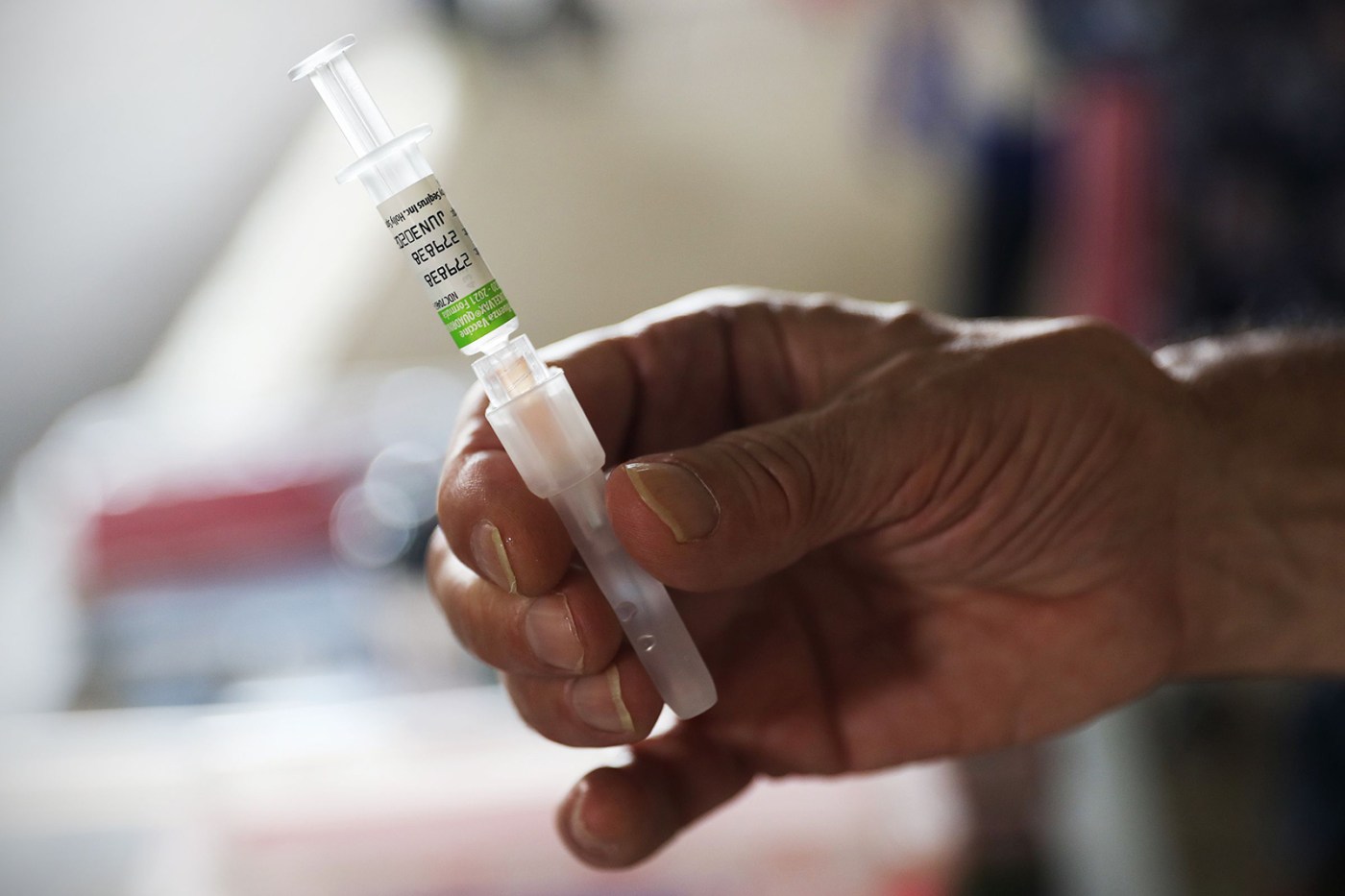
Hack poses financial problems for community health centers

posted in: Society | 0

Jessie Hellmann | (TNS) CQ-Roll Call

Community health centers and organizations that primarily serve low-income people are being disproportionately hurt by the biggest hack in health care history, which has disrupted payments for thousands of health care providers for a month now.

The hack, which crippled Change Healthcare, the clearinghouse for 30% of medical claims in the United States, has forced providers to find alternative funding sources to stay afloat. For large providers, like many health care systems, that comes in the form of reserves set aside for emergencies.

But for smaller providers, like many community health centers, that can mean taking out lines of credit, which can come with large interest rates, missing payments to vendors and seeking a hodgepodge of support from insurers that are willing to front payments.

“It’s been very tough for us,” said Robert Hilliard Jr., chief executive officer of Legacy Community Health, based in Houston.

Legacy, which has 57 clinics across Texas, processes about half of its claims through Change Healthcare. It currently has about eight figures in unpaid claims waiting to be processed, he said.

“We’ve had to extend a line of credit with a bank because we’ve had no funds” and negotiate with vendors on missed payments, Hilliard said.

The debate surrounding the Change Healthcare hack has largely been dominated by the impact on large health care systems, which move billions of dollars a day in claims. Americans spent $1.4 trillion on hospital care in 2022.

But in many cases, hospitals have more resources to weather emergencies like this. An analysis by KFF of 274 nonprofit hospitals and health systems found an average of 218 days’ cash on hand.

Fewer resources

But that’s not the case for many community health centers, which primarily see Medicaid patients, rely on grants and have thin operating margins. The national average of cash on hand for health centers in 2016 was 64 days, according to the latest data available.

UnitedHealth Group, which owns Change Healthcare, began testing systems this week for submitting claims. But the timeline for when it will be fully operational again is unclear. And processing claims that have been sitting around for a month will take time.

“I do worry that as big health care organizations come back online that people will stop caring as much about the impact on everybody who is left,” said Julia Skapik, medical director for informatics at the National Association of Community Health Centers.

While the Biden administration this week asked insurers to target advance payments to small, rural and safety-net health care providers facing cash flow issues, Skapik said that directive should have come earlier.

The federal government has been criticized for its slow response to the attack. While it has allowed providers to submit requests for advance Medicare fee-for-service payments, it can only encourage the private industry to do the same. That includes Medicare Advantage plans, which cover half of Medicare beneficiaries, and Medicaid Managed Care plans, which cover about 90% of Medicaid beneficiaries.

It’s not yet clear how successful the government’s request has been. Aside from UnitedHealth Group, which said it has directed $2 billion to providers, insurers have not publicly released information about how much financial assistance they have sent out.

Alliance of Community Health Plans, Association for Community Affiliated Plans, America’s Health Insurance Plans and Blue Cross Blue Shield Association wrote in a letter to Biden administration officials this week that they commit to “providing targeted advance payments to impacted providers in need.” They also wrote that they will engage in “proactive and data-driven outreach” to remaining providers facing operational challenges with claims processing or reimbursement and support providers switching to alternative services.

Blue Cross Blue Shield also told CQ Roll Call it is advancing payments to in-network providers.

In a separate letter, Medicaid Health Plans of America, which represents Medicaid managed care plans, also said its members are “committed to making targeted advance payments.” But those payments will need to be repaid and are only intended to make up for unpaid claims, not to cover costs associated with the fallout from the hack, like interest charges associated with taking out loans.

“There’s been no effort to talk about how to relieve us from those costs,” Hilliard said.

Unpaid claims

Providers have also said while they appreciate the assistance, the amount being offered is small compared with how much they are experiencing in unpaid claims.

Hilliard said UnitedHealth Group has offered money, and while it came quickly, it is less than 10% of what is being held up in claims right now.

Peggy Anderson, president and CEO of Third Street Family Health Services, based in Mansfield, Ohio, said revenue dropped from an average of $650,000 per week to $180,000 per week.

“That’s a pretty significant loss for us not knowing when things will be up and running again,” she said.

Third Street Family Health Services was able to get approved for $100,000 in assistance from Optum, $80,000 of which has come through so far. The center has been able to use some of its cash on hand and took out a line of credit.

“While the $100,000 is wonderful, we’re close to a million dollars now that’s just sitting there, and that’s revenue that we fully anticipated getting in,” Anderson said. She hopes policymakers recognize the need for a “safety net” system that can back up critical health care providers when emergencies like this happen in the future.

Some providers have had more luck.

Berinna Doggett, executive vice president of health care and community resources for So Others Might Eat, which has two health care clinics in Washington, D.C., said they have switched clearinghouses and received checks from Medicaid managed care plans over the past few weeks.

The problem occurs if insurers haven’t switched clearinghouses. Also, the process can move slowly.

“It’s minimal. It’s nowhere where we were,” Doggett said.

___

Egg and chocolate prices are hopping — just in time for Easter

posted in: News | 0

By Taryn Phaneuf | NerdWallet

It wouldn’t be Easter without colorful eggs and chocolate bunnies. But threats to the supply of these holiday essentials are pushing prices up at a time when shoppers are worn out by years of high inflation.

Here’s a look at why inflation is having an outsized impact on your Easter basket.

Cocoa prices soar with no relief in sight

Chocolate prices have risen nearly 38% since 2020, the year before inflation started heating up, according to NielsenIQ market research data provided to NerdWallet. Recently, price hikes have stemmed from the soaring cost of chocolate’s key ingredient: cocoa.

A series of bad weather events, as well as disease, have devastated cocoa crops in West Africa, where about 70% of the world’s cocoa is grown. As a result, cocoa prices are at record highs.

So far, there aren’t any signs of cocoa prices turning a corner, says Billy Roberts, food and beverage economist with CoBank, a Colorado-based lender specializing in agriculture. Initial reports on next season’s harvest — which occurs in late summer and early fall — aren’t as optimistic as the industry hoped. Until crop yields improve, cocoa prices will likely stay high.

Roberts says chocolate makers have realized ever-higher chocolate prices aren’t sustainable. While shoppers spent more money on chocolate in each of the past two years, they did so while buying less of it, according to NielsenIQ data.

But that doesn’t mean prices will come down. Instead, Roberts says, packages will shrink. “It’s not necessarily that they’re trying to fool the consumer, but they’re trying to deliver a product at a price point that consumers are comfortable paying.”

Egg prices have increased 47% since August

While chocolate might be an indulgent purchase by grocery shoppers, eggs are a staple. So, even when it isn’t Easter, consumers tend to watch egg prices closely, says Brian Earnest, an animal protein economist with CoBank.

“People know the last dozen eggs, what it cost them, just like they remember the last time they filled up the gas tank,” Earnest says.

Just like with gas prices in recent years, there’s been a lot to watch. The average cost of a dozen Grade A large eggs was $2.02 around Easter 2020, according to data from the U.S. Bureau of Labor Statistics, retrieved from the Federal Reserve Bank of St. Louis’ FRED site, a 38% jump from January of that year. That short-lived spike was brought on by sudden changes in consumer demand because of the COVID-19 pandemic.

By Easter 2021, the average price of a dozen eggs was $1.62. The next year, it jumped to $2.52, and prices continued to skyrocket through 2023.

Eggs have been expensive the past two years primarily because of a highly contagious and deadly avian flu that has wreaked havoc on the U.S. egg supply. The virus is the main reason U.S. consumers saw the average price of a dozen eggs more than doubled between January 2022 and January 2023, when it peaked at $4.82.

Related Articles

Business |


Selling your home could boost your nest egg — but is it worth it?

Business |


Sold a home recently? Here’s what you’ll get from the $418 million Realtor settlement

Business |


Tailpipe emission rules give automakers more time to ramp up EVs

Business |


Easter candy price increases are just the start as cocoa soars

Business |


Driving to Mexico? Make sure you have the right car insurance

Prices descended to an average of $3.27 per dozen around Easter last year and continued that way until the fall. That was partly owed to the fact that egg producers weren’t seeing new cases of bird flu and had an opportunity to rebuild their flocks. But farmers reported a new outbreak in November.

Over the past six months, egg prices have marched upward. In February, the average cost of a dozen eggs was $3 — 47% higher than the August price of $2.04.

Earnest doesn’t expect this outbreak to push prices as high as they were in 2022 and 2023, in part because chicken farmers have made changes to better protect their flocks. But now it’s spring again, and that brings more than the Easter bunny to chicken farms. Migratory birds, which have caused outbreaks of avian flu by spreading the deadly virus to stock animals, are a threat once again as they fly north.

Despite fewer new cases of bird flu in recent weeks, “we’re still in a period of seasonally higher risk to the flocks,” Earnest says.


Taryn Phaneuf writes for NerdWallet. Email: tphaneuf@nerdwallet.com.

Rapid rise in syphilis hits Native Americans hardest

posted in: News | 0

Cecilia Nowell | (TNS) KFF Health News

From her base in Gallup, New Mexico, Melissa Wyaco supervises about two dozen public health nurses who crisscross the sprawling Navajo Nation searching for patients who have tested positive for or been exposed to a disease once nearly eradicated in the U.S.: syphilis.

Infection rates in this region of the Southwest — the 27,000-square-mile reservation encompasses parts of Arizona, New Mexico, and Utah — are among the nation’s highest. And they’re far worse than anything Wyaco, who is from Zuni Pueblo (about 40 miles south of Gallup) and is the nurse consultant for the Navajo Area Indian Health Service, has seen in her 30-year nursing career.

Syphilis infections nationwide have climbed rapidly in recent years, reaching a 70-year high in 2022, according to the most recent data from the Centers for Disease Control and Prevention. That rise comes amid a shortage of penicillin, the most effective treatment. Simultaneously, congenital syphilis — syphilis passed from a pregnant person to a baby — has similarly spun out of control. Untreated, congenital syphilis can cause bone deformities, severe anemia, jaundice, meningitis, and even death. In 2022, the CDC recorded 231 stillbirths and 51 infant deaths caused by syphilis, out of 3,761 congenital syphilis cases reported that year.

And while infections have risen across the U.S., no demographic has been hit harder than Native Americans. The CDC data released in January shows that the rate of congenital syphilis among American Indians and Alaska Natives was triple the rate for African Americans and nearly 12 times the rate for white babies in 2022.

“This is a disease we thought we were going to eradicate not that long ago, because we have a treatment that works really well,” said Meghan Curry O’Connell, a member of the Cherokee Nation and chief public health officer at the Great Plains Tribal Leaders’ Health Board, who is based in South Dakota.

Instead, the rate of congenital syphilis infections among Native Americans (644.7 cases per 100,000 people in 2022) is now comparable to the rate for the entire U.S. population in 1941 (651.1) — before doctors began using penicillin to cure syphilis. (The rate fell to 6.6 nationally in 1983.)

O’Connell said that’s why the Great Plains Tribal Leaders’ Health Board and tribal leaders from North Dakota, South Dakota, Nebraska, and Iowa have asked federal Health and Human Services Secretary Xavier Becerra to declare a public health emergency in their states. A declaration would expand staffing, funding, and access to contact tracing data across their region.

“Syphilis is deadly to babies. It’s highly infectious, and it causes very severe outcomes,” O’Connell said. “We need to have people doing boots-on-the-ground work” right now.

In 2022, New Mexico reported the highest rate of congenital syphilis among states. Primary and secondary syphilis infections, which are not passed to infants, were highest in South Dakota, which had the second-highest rate of congenital syphilis in 2022. In 2021, the most recent year for which demographic data is available, South Dakota had the second-worst rate nationwide (after the District of Columbia) — and numbers were highest among the state’s large Native population.

In an October news release, the New Mexico Department of Health noted that the state had “reported a 660% increase in cases of congenital syphilis over the past five years.” A year earlier, in 2017, New Mexico reported only one case — but by 2020, that number had risen to 43, then to 76 in 2022.

Starting in 2020, the covid-19 pandemic made things worse. “Public health across the country got almost 95% diverted to doing covid care,” said Jonathan Iralu, the Indian Health Service chief clinical consultant for infectious diseases, who is based at the Gallup Indian Medical Center. “This was a really hard-hit area.”

At one point early in the pandemic, the Navajo Nation reported the highest covid rate in the U.S. Iralu suspects patients with syphilis symptoms may have avoided seeing a doctor for fear of catching covid. That said, he doesn’t think it’s fair to blame the pandemic for the high rates of syphilis, or the high rates of women passing infections to their babies during pregnancy, that continue four years later.

Native Americans are more likely to live in rural areas, far from hospital obstetric units, than any other racial or ethnic group. As a result, many do not receive prenatal care until later in pregnancy, if at all. That often means providers cannot test and treat patients for syphilis before delivery.

In New Mexico, 23% of patients did not receive prenatal care until the fifth month of pregnancy or later, or received fewer than half the appropriate number of visits for the infant’s gestational age in 2023 (the national average is less than 16%).

Inadequate prenatal care is especially risky for Native Americans, who have a greater chance than other ethnic groups of passing on a syphilis infection if they become pregnant. That’s because, among Native communities, syphilis infections are just as common in women as in men. In every other ethnic group, men are at least twice as likely to contract syphilis, largely because men who have sex with men are more susceptible to infection. O’Connell said it’s not clear why women in Native communities are disproportionately affected by syphilis.

“The Navajo Nation is a maternal health desert,” said Amanda Singer, a Diné (Navajo) doula and lactation counselor in Arizona who is also executive director of the Navajo Breastfeeding Coalition/Diné Doula Collective. On some parts of the reservation, patients have to drive more than 100 miles to reach obstetric services. “There’s a really high number of pregnant women who don’t get prenatal care throughout the whole pregnancy.”

She said that’s due not only to a lack of services but also to a mistrust of health care providers who don’t understand Native culture. Some also worry that providers might report patients who use illicit substances during their pregnancies to the police or child welfare. But it’s also because of a shrinking network of facilities: Two of the Navajo area’s labor and delivery wards have closed in the past decade. According to a recent report, more than half of U.S. rural hospitals no longer offer labor and delivery services.

Singer and the other doulas in her network believe New Mexico and Arizona could combat the syphilis epidemic by expanding access to prenatal care in rural Indigenous communities. Singer imagines a system in which midwives, doulas, and lactation counselors are able to travel to families and offer prenatal care “in their own home.”

O’Connell added that data-sharing arrangements between tribes and state, federal, and IHS offices vary widely across the country, but have posed an additional challenge to tackling the epidemic in some Native communities, including her own. Her Tribal Epidemiology Center is fighting to access South Dakota’s state data.

In the Navajo Nation and surrounding area, Iralu said, IHS infectious disease doctors meet with tribal officials every month, and he recommends that all IHS service areas have regular meetings of state, tribal, and IHS providers and public health nurses to ensure every pregnant person in those areas has been tested and treated.

IHS now recommends all patients be tested for syphilis yearly, and tests pregnant patients three times. It also expanded rapid and express testing and started offering DoxyPEP, an antibiotic that transgender women and men who have sex with men can take up to 72 hours after sex and that has been shown to reduce syphilis transmission by 87%. But perhaps the most significant change IHS has made is offering testing and treatment in the field.

Today, the public health nurses Wyaco supervises can test and treat patients for syphilis at home — something she couldn’t do when she was one of them just three years ago.

“Why not bring the penicillin to the patient instead of trying to drag the patient in to the penicillin?” said Iralu.

It’s not a tactic IHS uses for every patient, but it’s been effective in treating those who might pass an infection on to a partner or baby.

Iralu expects to see an expansion in street medicine in urban areas and van outreach in rural areas, in coming years, bringing more testing to communities — as well as an effort to put tests in patients’ hands through vending machines and the mail.

“This is a radical departure from our past,” he said. “But I think that’s the wave of the future.”

___

(KFF Health News is a national newsroom that produces in-depth journalism about health issues and is one of the core operating programs of KFF — the independent source for health policy research, polling and journalism.)

©2024 KFF Health News. Distributed by Tribune Content Agency, LLC.

As extension kicks in, Twins ace Pablo López out to prove he’s one of baseball’s best pitchers

posted in: News | 0

KANSAS CITY, Mo. — The Twins and Pablo López were in the infancy stages of their relationship when the two sides decided to commit to each other long term.

López had spent months learning about his new organization. He saw how many staff members were from Minnesota, how long they had been a part of the organization. He noticed all the Twins legends — like Bert Blyleven, Joe Mauer and his childhood hero, Johan Santana — who still hung around, long after their playing careers had ended. He felt, very quickly, that the entire organization was built on family values.

The Twins had spent those same months learning about López, whom they acquired in a trade in January 2023. They noted his work ethic, how he was the first one in the building. His makeup was off the charts. His ability was, too.

On April 21, the Twins officially announced they had signed López to a four-year contract extension worth $73.5 million. They had never given a pitcher that much money in franchise history.

But this, they believed, was the right pitcher — and person — to invest in.

The extension kicks in this year, and López, who will take the ball on Thursday afternoon for Opening Day against the Kansas City Royals and lead the Twins into the 2024 season, is out to prove he’s worth every penny.

“It meant a lot to me,” López said. “Every time teams are willing to make investments in players … there’s responsibility that comes with it, but there’s the aspect like it’s a mutual decision to have a relationship, a long-lasting one that hopefully we can turn into something special and we’re able to then accomplish a lot of things on the field.”

López already knew what the Twins thought of him. When they traded Luis Arraez, the reigning American League batting champion, to the Miami Marlins to get him, it told him how highly they valued him and instilled some confidence in him, as well.

“That already made me aware of, ‘OK, these people must see something in me. They have to be mindful of something that maybe I’m not mindful of right now,’ ” López said.

The Twins believed that they had acquired one of the best pitchers in baseball.

They worked with him to introduce a sweeper, an offering that quickly became one of his most effective pitches (opponents hit just .173 against it last year). They showed their faith in him once more by naming him the 2023 Opening Day starter for the first time in his career. He responded with 5 1/3 scoreless innings against the Royals, striking out eight.

Just a few weeks into the regular season, the two sides came to their agreement.

“You’re not going to make that kind of investment in someone, especially before you have to, unless you feel very highly about their ability. But when you combine the ability with really very much absolute, top-of-the-scale character and makeup and work ethic and desire and all of these other factors, then it actually became a pretty easy decision on our end,” manager Rocco Baldelli said.

All of these “other factors” quickly became apparent once coaches and teammates started spending time around him. They saw how he meticulously planned, how he set his schedule and the executed it to a T. Everything he did was intentional and aimed at improvement.

“He works harder than anybody. This guy is the first one to show up to the clubhouse every day and the last one to leave, and I really mean that,” shortstop Carlos Correa said. “A lot of people say that just to say it, but it’s true. I show up early, and when I think I’m too early, he’s already sweating.”

That work ethic might have even kicked into overdrive after signing the extension. Lopez couldn’t help but put some extra pressure on himself. He felt the need to justify the team’s investment in him.

As a self-proclaimed overthinker, the Twins’ ace said he “went down that hole” and had to remind himself that the job hadn’t changed and neither should he.

The only thing that changed was that he and his wife, Kaylee, had the certainty of knowing where they would be living, a luxury in an industry in which players are constantly on the move.

“I really had to understand, take a step back and realize it’s just a very beautiful opportunity to come to the field with a little less pressure on things that take a lot of toll on our minds sometimes and then obviously come to the field and just play the game a little more freely,” López said. “Now I get to focus more attention to my craft, to what I do on the mound.”

And what that is, is being one of the best pitchers in baseball.

In his first year in Minnesota, López posted a 3.66 earned-run average in 194 innings. He finished the year tied for third in the majors with 234 strikeouts, and helped lead the Twins in the postseason, giving up one run across 12 2/3 innings in the two games he started.

Last year, he finished the season seventh in American League Cy Young voting. This year, he’s among the favorites to win the award, which would further cement him as one the sport’s elite.

“Most decisions that are going to cost you a lot of money are difficult decisions,” Baldelli said of Lopez’s extension. “I think that was probably one of the easiest decisions that we made to invest in a person like Pablo López, who also happens to be one of the best pitchers anywhere.”

Related Articles

Minnesota Twins |


Twins’ roster nearly set as team wraps up spring training

Minnesota Twins |


‘It’s where he belongs’: Twins teammates excited to have Byron Buxton back in outfield

Minnesota Twins |


Twins reliever Daniel Duarte impresses this spring in push for roster spot

Minnesota Twins |


Royce Lewis, Twins looking forward to his first full season in the big leagues

Minnesota Twins |


After strong 2023, Twins catcher Ryan Jeffers looking to ride hot spring into season