Minnesota United 2 bows to Michigan Stars in U.S. Open Cup

posted in: News | 0

Minnesota United’s developmental team, with a handful of MLS players, were upset at home by the Michigan Stars 2-0 in the U.S. Open Cup on Tuesday.

MNUFC2 was bounced from the national tournament by a club in the low-level National Independent Soccer Association at a cold Allianz Field. NISA is considered a third-tier league in U.S. soccer.

Michigan Stars scored a pair of goals in added extra time, including off a corner kick when Sacko Konate headed it past MLS backup goalkeeper Clint Irwin in the 100th minute. Michigan scored an insurance goal in the 107th minute.

“Set pieces: We knew before going into the game that they were going to be well organized and experienced,” MNUFC2 head coach Jeremy Hall said. “Obviously they have some veterans on their team and we knew on set pieces that was going to be the difference.”

Michigan’s experience included former MLS player Justin Meram. A younger MNUFC2 team, which competed in the 2024 U.S. Open Cup instead of MNUFC, beat Chicago House 3-0 in the first round on March 20. The Loons finished Tuesday’s match with a handful of academy players on the field.

Besides Irwin, MNUFC2 also had MLS players Carlos Harvey, Jordan Adebayo-Smith, Derek Dodson and Moses Nyeman on the pitch. First-round draft pick Hugo Bacharach made his first appearance for the Loons.

“I’m actually very, very happy to have played my first game with Minnesota, it’s something that I was really looking forward (to),” Bacharach said. “I was really sad with the result.”

Related Articles

Soccer |


Loons’ unbeaten start ended in 2-0 loss to Philadelphia

Soccer |


Loons midfielder Caden Clark credits mentor Chad Greenway for aiding career reboot

Soccer |


Forward Jordan Adebayo-Smith ‘buzzing’ over opportunity with Minnesota United

Soccer |


Jordan Adabayo-Smith hat trick seals MNUFC2 win in U.S. Open Cup

Soccer |


Four intriguing Loons in line for more playing time in U.S. Open Cup or St. Patrick’s friendly

St. Paul police investigating overnight homicide in Frogtown

posted in: Politics | 0

Police are investigating an overnight homicide in St. Paul’s Frogtown neighborhood.

A person was shot in the area of Thomas Avenue and Grotto Street, police announced early Wednesday.

The police department plans to release additional information soon.

Related Articles

Crime & Public Safety |


Willmar hospital employee stabbed by combative patient, police say

Crime & Public Safety |


Manslaughter charge: After reporting friend’s suicide, man tells police he accidentally shot him

Crime & Public Safety |


Stillwater teen’s mom, friend who recorded stabbing give emotional testimony in Nicolae Miu murder trial

Crime & Public Safety |


Burnsville High School student arrested after loaded gun found in backpack

Crime & Public Safety |


Burnsville man charged after neighbor, 17, struck by bullet as she slept

Bodies of 6 foreign aid workers slain in Israeli strikes are transported out of Gaza

posted in: News | 0

By MOHAMMAD JAHJOUH and SAMY MAGDY (Associated Press)

RAFAH, Gaza Strip (AP) — The bodies of six foreign aid workers killed in a series of Israeli strikes were transported out of the Gaza Strip and into Egypt on Wednesday ahead of their repatriation, Egypt’s state-run Qahera TV reported.

The deadly strikes have renewed criticism of Israel’s conduct in the nearly six-monthlong war with Hamas, and highlighted the perilous conditions aid workers face in trying to deliver food to the besieged enclave, where experts say nearly a third of the population is on the brink of starvation.

The three British citizens, a Polish citizen, an Australian and a Canadian American dual citizen worked for World Central Kitchen, an international charity founded by celebrity chef José Andrés. Their Palestinian driver was also killed, and his remains were handed over to his family for burial in Gaza.

The other bodies were driven into Egypt through the Rafah crossing.

The seven were distributing food that had been brought into Gaza through a newly established maritime corridor late Monday when Israeli airstrikes targeted their three vehicles, killing everyone inside.

Israel said it carried out the strikes by mistake and that it has launched an independent investigation into how it happened.

Some of Israel’s closest allies, including the United States, condemned the deaths, which led the World Central Kitchen and other charities to suspend food deliveries, citing the dire security situation.

Cyprus, which has played a key role in setting up the maritime corridor, said the ships that had arrived Monday were returning to the Mediterranean island nation with some 240 tons of undelivered aid. But it also said the sea deliveries would continue.

Israel faces growing isolation as international criticism of its Gaza assault has mounted. On the same day as the deadly airstrikes, Israel stirred more fears by apparently striking Iran’s consulate in Damascus, killing two Iranian generals. The government also moved to shut down a foreign media outlet — Qatari-owned Al Jazeera television.

The hit on the charity’s convoy highlighted what critics have called Israel’s indiscriminate bombing and lack of regard for civilian casualties in Gaza.

In an op-ed published by Israel’s mass-circulation Yediot Ahronot newspaper on Wednesday, Andrés wrote that “the Israeli government needs to open land routes to food and medicine today. It needs to stop killing civilians and aid workers today.”

Andrés, whose organization has provided aid in war and disaster zones all over the world, including to Israelis after Hamas’ Oct. 7 attack that triggered the war, said the strikes “were not just some unfortunate mistake in the fog of war.”

“It was a direct attack on clearly marked vehicles whose movements were known by the (Israeli military). It was also the direct result of (the Israeli) government’s policy to squeeze humanitarian aid to desperate levels,” Andrés wrote.

Israel has severely restricted access to northern Gaza, where experts say famine is imminent.

The deaths of the World Central Kitchen workers threatened to set back efforts by the U.S. and other countries to open a maritime corridor for aid from Cyprus to help ease the desperate conditions in northern Gaza.

U.S. President Joe Biden issued an unusually blunt criticism of Israel by its closest ally, suggesting that the incident demonstrated that Israel was not doing enough to protect civilians.

“Incidents like yesterday’s simply should not happen,” he said. “The United States has repeatedly urged Israel to deconflict their military operations against Hamas with humanitarian operations, in order to avoid civilian casualties.”

Israel’s military chief, Lt. Gen. Herzi Halevi, announced the results of a preliminary investigation early Wednesday.

“It was a mistake that followed a misidentification -– at night during a war in very complex conditions. It shouldn’t have happened,” he said. He gave no further details. He said an independent body would conduct a “thorough investigation” that would be completed in the coming days.

World Central Kitchen said it had coordinated with the Israeli military over the movement of its cars. Three vehicles moving at large distances apart were hit in succession. They were left incinerated and mangled, indicating multiple targeted strikes.

At least one of the vehicles had the charity’s logo printed across its roof to make it identifiable from the air, and the ordnance punched a large hole through the roof. A video showed the bodies at a hospital in the central Gaza town of Deir al-Balah, several of them wearing protective gear with the charity’s logo.

Nearly 33,000 Palestinians have been killed in the war, around two-thirds of them women and children, according to Gaza’s Health Ministry, which does not distinguish between civilians and combatants in its count.

The war began when Hamas-led militants stormed into southern Israel in a surprise attack on Oct. 7, killing some 1,200 people and taking around 250 hostage. Israel responded with one of the deadliest and most destructive offensives in recent history.

Hamas is still holding an estimated 100 hostages and the remains of around 30 others, after most of the rest were freed last year in exchange for Palestinians imprisoned in Israel. The United States, Qatar and Egypt have spent months trying to broker another truce and hostage release.

___

Magdy reported from Cairo.

Related Articles

World News |


What is World Central Kitchen and how has it helped people in Gaza?

World News |


With famine looming, aid group halts food delivery in Gaza after Israeli strike kills 7 workers

World News |


Israelis stage largest protest since war began to increase pressure on Netanyahu

World News |


Israeli troops withdraw from Shifa Hospital, Gaza’s largest, after 2-week raid

World News |


Doctors visiting a Gaza hospital are stunned by the war’s toll on Palestinian children

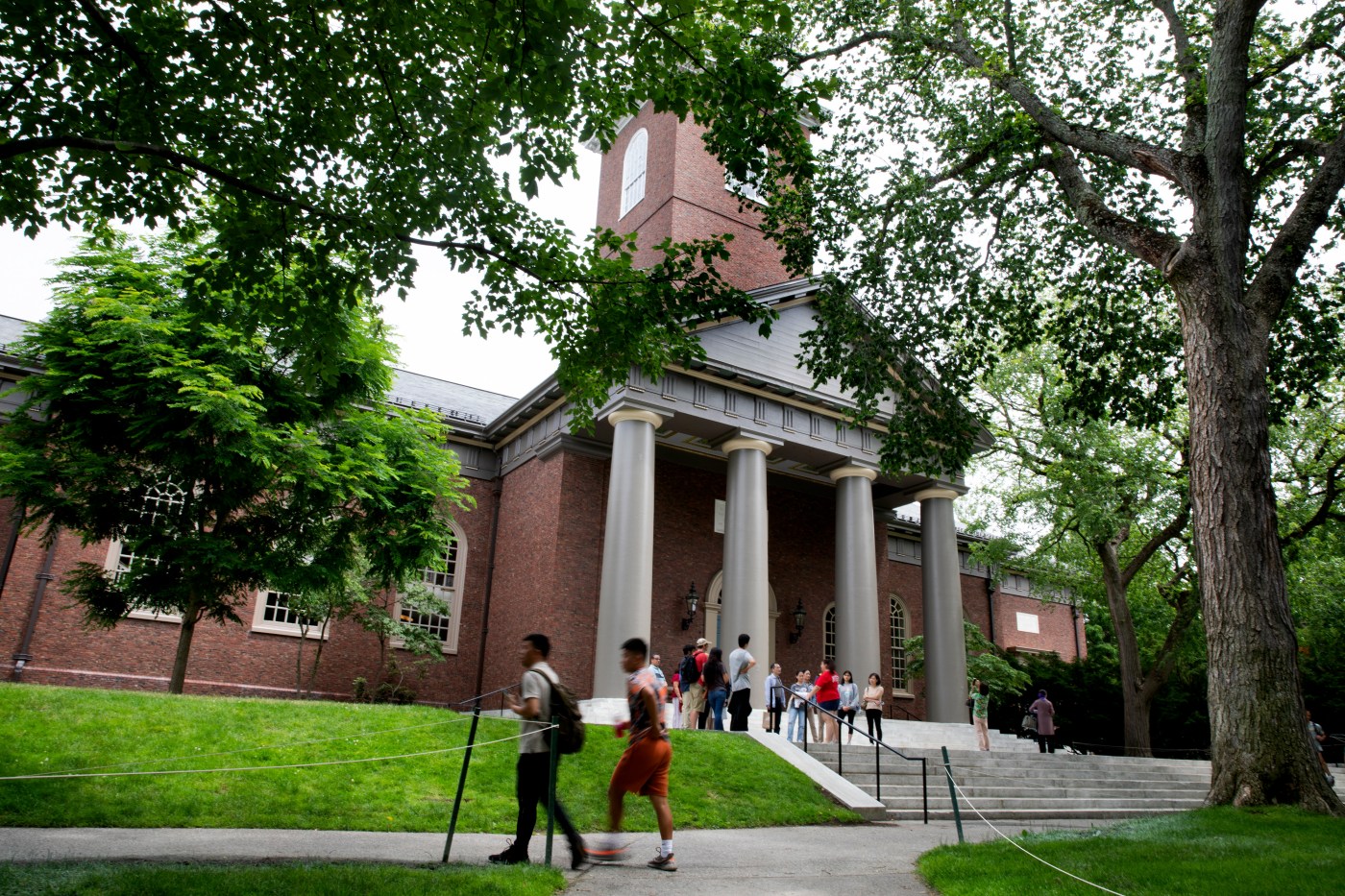
Tyler Cowen: Indiana can’t make universities more conservative with a law

posted in: News | 0

Indiana’s Republican governor has just signed new law that introduces “intellectual diversity” as a standard for tenure decisions in state universities. Under the law, campus boards of trustees will determine what intellectual diversity consists of, and lack of such diversity can be grounds for denying tenure. Intellectual diversity also must be considered in the post-tenure review process.

The background context here, in case you don’t already know, is that professors largely support the Democratic Party, or they are left-wing rather than conservative. The data are overwhelming. For instance, one study of top universities found that out of 7,243 faculty only 314 registered as Republican. In my personal experience, I have found that libertarians are scarce as well.

As a libertarian-leaning professor, I am unhappy about this state of affairs. That said, I fear the Indiana law will make matters worse rather than better.

Keep in mind that academic hiring is a highly idiosyncratic process. There is a tiny selection of open jobs and a very large number of applicants. A hired assistant professor then labors for years, trying to publish articles and receive high teaching evaluations to — perhaps — one day receive tenure through departmental and university committee votes, ultimately ratified by a Board of Trustees.

The first and perhaps most important point is that university processes, especially for state universities, operate at a large scale. For instance, Indiana University claims over 89,000 degree-seeking students and 21,000 faculty and staff. Review methods, including for tenure, are based on measurable publications, citations and letters of recommendation. The process is standardized in such a way that any interference, for instance by the overseeing Board of Trustees, comes as a kind of shock, replete with concomitant controversy and also publicity.

If we add an intellectual diversity requirement, we likely will have more professors publishing articles on John Locke, Adam Smith, Rene Girard, or whatever will count as a relevant marker of intellectual diversity. Yet it is unlikely that such publications will change what professors say in the classroom, what their politics are, or the main conclusions from their most influential pieces of research.

You might think that universities will be more likely to hire people who really do count as right-wing thinkers. I am skeptical, as I expect that over time the monitoring will shift toward what can be shown on paper, namely nominal markers of “diversity obedience,” if only to forestall employment-related lawsuits. In the third year of a professor’s career, he may publish an article on Milton Friedman, critical in the footnotes, but sufficiently vague in broad presentation that it can count as contributing to intellectual diversity. Who exactly is to step up and say this shouldn’t count?

Under some scenarios, right-wing and conservative professors could easily end up worse off under this new system. For purposes of argument, let’s assume the worst of a left-leaning academic department, namely that they intentionally prevent conservative professors from getting tenure. Under the new law, there is a chance that a Board of Trustees might grant tenure to a conservative voted down by the department. How would a department of committed lefties address that problem? They’d avoid hiring conservative professors at all, for fear of having their tenure decisions overturned.

Even if you think a Board of Trustees can intervene in tenure decisions in a meaningful and informed manner, they cannot run a job search, which involves going through hundreds or even thousands of applications. The bias merely will be shifted to some other part of the process.

Another danger is that this law will entrench the view that academic life is and should be politicized. You might think that already has happened, but I assure you matters always can get worse. It would become virtually mandatory to discuss the politics, or at least the nominal political slant, of intended hires and tenure decisions. That might scare even more conservative and libertarian scholars away from academia, because many on the right believe that politicization of a sphere of activity benefits the left.

Further issues arise from how the law creates a channel that students and university employees can use to complain about the political orientations of faculty members. The net effect will be to shift power to students, which means easier classes and more grade inflation. Are those trends likely in the longer run to support conservative or classical education values in our universities? As a long-time teacher for almost 40 years, I suspect not.

If we are looking to shift the political orientation of universities, I suggest a simple first step. Let the pressures of higher salaries and undergraduate enrollments shift more slots toward STEM (science, technology, engineering and math) and also business-related majors, including economics (my own field). In those latter fields, faculty lean less toward left-wing political views. For a more radical change, let us also try creating some new universities based on different, experimental principles. (Disclosure: I am on the advisory board of one of these, the University of Austin).

Conservative legal scholars often have criticized race-based affirmative action, claiming it will create a marked class of lower-performing individuals, who received their jobs only because of the law. Here is not the place to evaluate such a charge, but surely it would be ironic — and likely mistaken — if conservatives sought out that mantle for themselves.

Tyler Cowen is a Bloomberg Opinion columnist, a professor of economics at George Mason University and host of the Marginal Revolution blog.

Related Articles

Opinion |


Zeynep Tufekci: You don’t need to freak out about Boeing planes (but Boeing does)

Opinion |


Karl W. Smith: Raising Social Security’s retirement age is the least bad option

Opinion |


Ludwig, Miller: We are seeing a lethal shift in America’s shooting crisis

Opinion |


Allison Schrager: What are the odds of enjoying March Madness now?

Opinion |


Lisa Jarvis: Parents alone can’t protect kids from social media