More women are drinking themselves sick. The Biden administration is concerned

posted in: News | 0

Lauren Sausser | KFF Health News (TNS)

When Karla Adkins looked in the rearview mirror of her car one morning nearly 10 years ago, she noticed the whites of her eyes had turned yellow.

She was 36 at the time and working as a physician liaison for a hospital system on the South Carolina coast, where she helped build relationships among doctors. Privately, she had struggled with heavy drinking since her early 20s, long believing that alcohol helped calm her anxieties. She understood that the yellowing of her eyes was evidence of jaundice. Even so, the prospect of being diagnosed with alcohol-related liver disease wasn’t her first concern.

“Honestly, the No. 1 fear for me was someone telling me I could never drink again,” said Adkins, who lives in Pawleys Island, a coastal town about 30 miles south of Myrtle Beach.

But the drinking had caught up with her: Within 48 hours of that moment in front of the rearview mirror, she was hospitalized, facing liver failure. “It was super fast,” Adkins said.

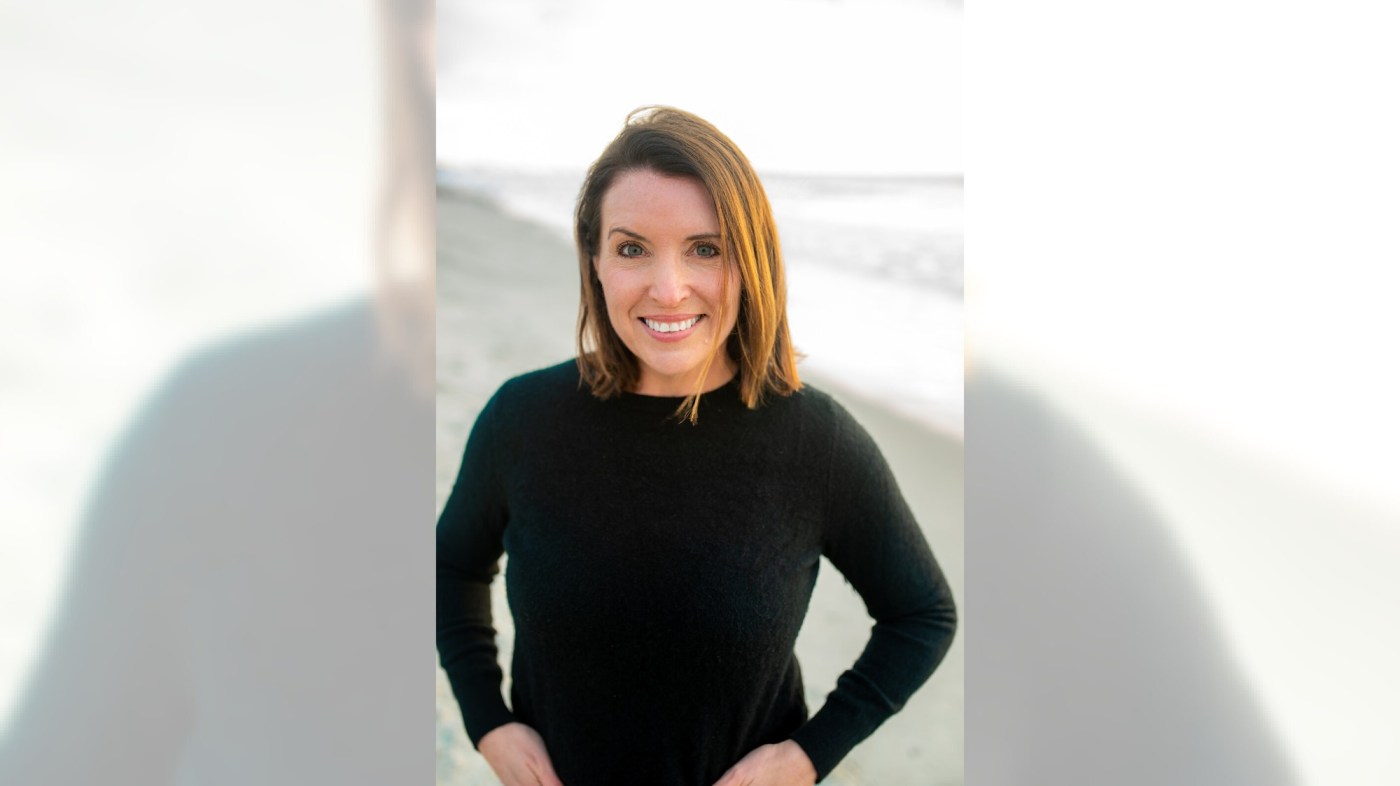
Karla Adkins works as a coach to help people quit drinking alcohol. After she nearly died from liver failure 10 years ago, she thought her social life was over. “Honestly, the No. 1 fear for me was someone telling me I could never drink again.” (Allison Duff/TNS)

Historically, alcohol use disorder has disproportionately affected men. But recent data from the Centers for Disease Control and Prevention on deaths from excessive drinking shows that rates among women are climbing faster than they are among men. The Biden administration considers this trend alarming, with one new estimate predicting women will account for close to half of alcohol-associated liver disease costs in the U.S. by 2040, a $66 billion total price tag.

It’s a high-priority topic for the Department of Health and Human Services and the Department of Agriculture, which together will release updated national dietary guidelines next year. But with marketing for alcoholic beverages increasingly geared toward women, and social drinking already a huge part of American culture, change isn’t something everyone may be ready to raise a glass to.

“This is a touchy topic,” said Rachel Sayko Adams, a research associate professor at the Boston University School of Public Health. “There is no safe level of alcohol use,” she said. “That’s, like, new information that people didn’t want to know.”

Over the past 50 years, women have increasingly entered the workforce and delayed motherhood, which likely has contributed to the problem as women historically drank less when they became mothers.

“Parenthood tended to be this protective factor,” but that’s not always the case anymore, said Adams, who studies addiction.

More than 600,000 people in the U.S. died from causes related to alcohol from 1999 to 2020, according to research published in JAMA Network Open last year, positioning alcohol among the leading causes of preventable death in this country behind tobacco, poor diet and physical inactivity, and illegal drugs.

The World Health Organization and various studies have found that no amount of alcohol is safe for human health. Even light drinking has been linked to health concerns, like hypertension and coronary artery disease and an increased risk of breast and other cancers.

More recently, the COVID-19 pandemic “significantly exacerbated” binge-drinking, said George Koob, director of the National Institute on Alcohol Abuse and Alcoholism at the National Institutes of Health, as people used alcohol to cope with stress. That is particularly true of women, who are more likely to drink alcohol because of stress than men, he said.

But women are also frequently the focus of gender-targeted advertising for alcoholic beverages. The growth of rosé sales and low-calorie wines, for example, has exploded in recent years. New research published by the International Journal of Drug Policy in February found that the “pinking of products is a tactic commonly used by the alcohol industry to target the female market.”

Also at play is the emergence of a phenomenon largely perpetuated by women on social media that makes light of drinking to deal with the difficulties of motherhood. The misperception of “mommy wine culture,” said Adams, is that “if you can drink in a normal way, a moderate way, if you can handle your alcohol, you’re fine.”

Related Articles

Health |


A paramedic was skeptical about this treatment for stopping repeat opioid overdoses. Then he saw it help

Health |


St. Paul life science incubator appoints new executive director

Health |


Why are Black people more likely to develop glaucoma? Scientists discover new clues

Health |


Some Medicaid providers borrow or go into debt amid ‘unwinding’ payment disruptions

Health |


Overdosing on chemo: A common gene test could save hundreds of lives each year

And while it’s unclear to what extent memes and online videos influence women’s drinking habits, the topic merits further study, said Adams, who with colleagues last year found that women without children at age 35 are still at the highest risk for binge-drinking and alcohol use disorder symptoms among all age groups of women. But over the past two decades, the research concluded, the risk is escalating for both childless women and mothers.

These factors at play, coupled with the pressure to fit in, can make excessive drinking a difficult conversation to broach.“It’s a very taboo topic,” Adams said.

And when it does come up, said Stephanie Garbarino, a transplant hepatologist at Duke Health, it’s often surprising how many patients are unaware how their drinking affects their health.

“Often, they didn’t know there was anything wrong with what they’re doing,” she said. She is more frequently seeing younger patients with liver disease, including men and women in their 20s and 30s.

And public health and addiction experts fear that alcohol-related liver disease among women will become a costly issue for the nation to address. Women accounted for 29% of all costs associated with the disease in the U.S. in 2022 and are expected to account for 43% by 2040, estimated a new analysis published in the American Journal of Gastroenterology in February.

National dietary guidelines advise women to drink no more than one alcoholic drink a day. Those guidelines are up for a five-year review next year by the USDA and HHS, which has called a special committee to examine, among other questions, the relationship between alcohol consumption and cancer risks. The report will be made public in 2025.

When Canada published guidance in 2023 advising that drinking any more than two alcoholic beverages a week carried health risks, Koob sparked backlash when his comments to the Daily Mail suggested that U.S. guidelines might move in the same direction. The CDC report published in February suggested that an increase in alcohol taxes could help reduce excessive alcohol use and deaths. Koob’s office would not comment on such policies.

It’s a topic close to Adkins’ heart. She now works as a coach to help others — mostly women — stop drinking, and said the pandemic prompted her to publish a book about her near-death experience from liver failure. And while Adkins lives with cirrhosis, this September will mark 10 years since her last drink.

“The amazing thing is, you can’t get much worse from where I got,” said Adkins. “My hope is really to change the narrative.”

(KFF Health News is a national newsroom that produces in-depth journalism about health issues and is one of the core operating programs of KFF — the independent source for health policy research, polling and journalism.)

©2024 KFF Health News. Distributed by Tribune Content Agency, LLC.

Disney shareholders back CEO Iger, rebuff activist shareholders who wanted to shake up the company

posted in: News | 0

BURBANK, Calif. (AP) — Disney shareholders rallied behind longtime CEO Robert Iger, voting Wednesday to rebuff activist investor Nelson Peltz and his ally, former Disney Chief Financial Officer Jay Rasulo, who had sought seats on the company’s board.

The company had recommended a slate of directors that did not include Peltz or Rasulo.

The dissident shareholders had said in a preliminary proxy filing that they wanted to replace Iger at Disney and align management pay with performance. Despite their loss, they declared a victory of sorts following the vote, noting that since Peltz’s company, Trian Partners, started pushing Disney in late 2023, the entertainment giant has engaged in a flurry of activity by adding new directors, and announcing new operating initiatives and capital improvement plans for its theme parks.

“Over the last six months, Disney’s stock is up approximately 50% and is the Dow Jones Industrial Average’s best performer year-to-date,” Trian said in a statement.

Disney announced in November 2022 that Iger would come back to the company as its CEO to replace his hand-picked successor, Bob Chapek, whose two-year tenure had been marked by clashes, missteps and weakening financial performance.

Iger was Disney’s public face for 15 years as chief executive before handing the job off to Chapek in 2020, a stretch in which Iger compiled a string of victories lauded in the entertainment industry and by Disney fans. But his second run at the job has not won him similar accolades.

St. Paul brewery Burning Brothers to celebrate 10th anniversary with — what else? — beer and a fire-breathing show

posted in: News | 0

Burning Brothers Brewing, the state’s first gluten-free brewery — started by two former Renaissance Festival fire-eaters, no less — is celebrating its 10th anniversary this weekend.

Festivities run from noon to 10 p.m. Saturday, April 6, an appropriate ten-hour time span, and will include a fire-eating show from co-owners Dane Breimhorst and Thom Foss near the end of the night.

Gluten-free State Fair food truck Auntie M’s will be at the brewery for the afternoon, and Smug Pug food truck will be there in the evening. Twin Cities ROCK, a local chapter of the national group Raising Our Celiac Kids, is holding a cookie-decorating event early in the afternoon, and a custom-made Trivia Mafia game starts at 7 p.m.

Plus beer, of course. They’ll have about 20 varieties on tap, Breimhorst said, including a special 10th-anniversary dark IPA. (As a numerical nod to the decade, it’s 10 percent ABV and 100 IBUs, a bitterness metric that refers to the hops content.) Breimhorst is also brewing batches of previous beers that are no longer offered regularly, including a tart cherry sour, a grapefruit IPA and a lime shandy, he said.

Breimhorst and Foss were drawing up plans for a beer business in the early 2010s when Breimhost was diagnosed with Celiac disease, a strong autoimmune reaction to gluten. So the duo, who have known each other since they were teens, changed their plans.

But almost nobody else was making gluten-free craft beer at the time, so Breimhorst and Foss didn’t have any reference points or experienced brewers to show them the ropes when they opened in 2014.

“You just had to learn how to do it yourself, and that’s what we did,” Foss said.

Since then, the gluten-free beer scene has grown. As a beer drinker just as much as a beer brewer, Breimhorst sees it as a welcome development rather than competition.

“As somebody who has Celiac, I absolutely love the fact that there’s a much bigger spectrum,” he said. “It’s great to be able to make your own beer however you want to and drink it, but when somebody else makes it, it’s fun. Something you don’t get to try everyday.”

And as for the fire-eating show…

“Oh god,” Breimhorst said, laughing.

It’s a central part of Breimhorst and Foss’ personal history and the history of the brewery, but neither of them have performed the trick since the brewery’s 5th anniversary party, they said. Breathing fire means you have to put fuel in your mouth, which doesn’t taste great, to put it mildly, and it’s hard on performers’ bodies.

“Nothing like burping up kerosene all night,” Breimhorst joked.

Plus, the experience of spitting fireballs as a 50-year-old father is different from doing so as an attention-seeking 20-something Renaissance Festival performer, both men said. It’ll be fun to show it off, though, especially to their young kids who might not remember the last time they did it.

“This sounds a little bit cliche, but it’s like riding a bicycle,” Foss said. “Once you learn to stick a flaming torch in your mouth, you don’t forget.”

If you go

What: Burning Brothers Brewing, the state’s first gluten-free brewery, is celebrating its 10th anniversary.

Where: Their taproom at 1750 W. Thomas Ave; contact 651-444-8882; burnbrosbrew.com

When: Noon to 10 p.m., Saturday, April 6

Food, drink, activities: Two food trucks (Auntie M’s and Smug Pug), plenty of beer including special releases, and Trivia Mafia at 7 p.m.

Don’t miss: Co-owners Dane Breimhorst and Thom Foss, both former Renaissance Festival performers, are putting on a fire-eating show later in the evening.

Related Articles

Restaurants, Food and Drink |


Now open: Club Throw Down, a new sober bar on the East Side, owned by a reiki master and wellness practitioner

Restaurants, Food and Drink |


Following a rent dispute, Tattersall’s original Northeast Minneapolis cocktail room will close at the end of the year

Restaurants, Food and Drink |


3 fun and festive cocktails for Valentine’s Day

Restaurants, Food and Drink |


Locally made nonalcoholic options are better than ever

Restaurants, Food and Drink |


Surly’s Taylor and Travis beers use same base, different yeasts

Solar Eclipse 2024: What You Need to Know to See it in New York

posted in: Politics | 0

City Limits’ reporters are excited to see the eclipse. Here’s a roundup of local viewing parties, where to get free glasses and how to access the state’s sun- and moon-themed playlist.

Mike Groll/Office of Governor Kathy Hochul

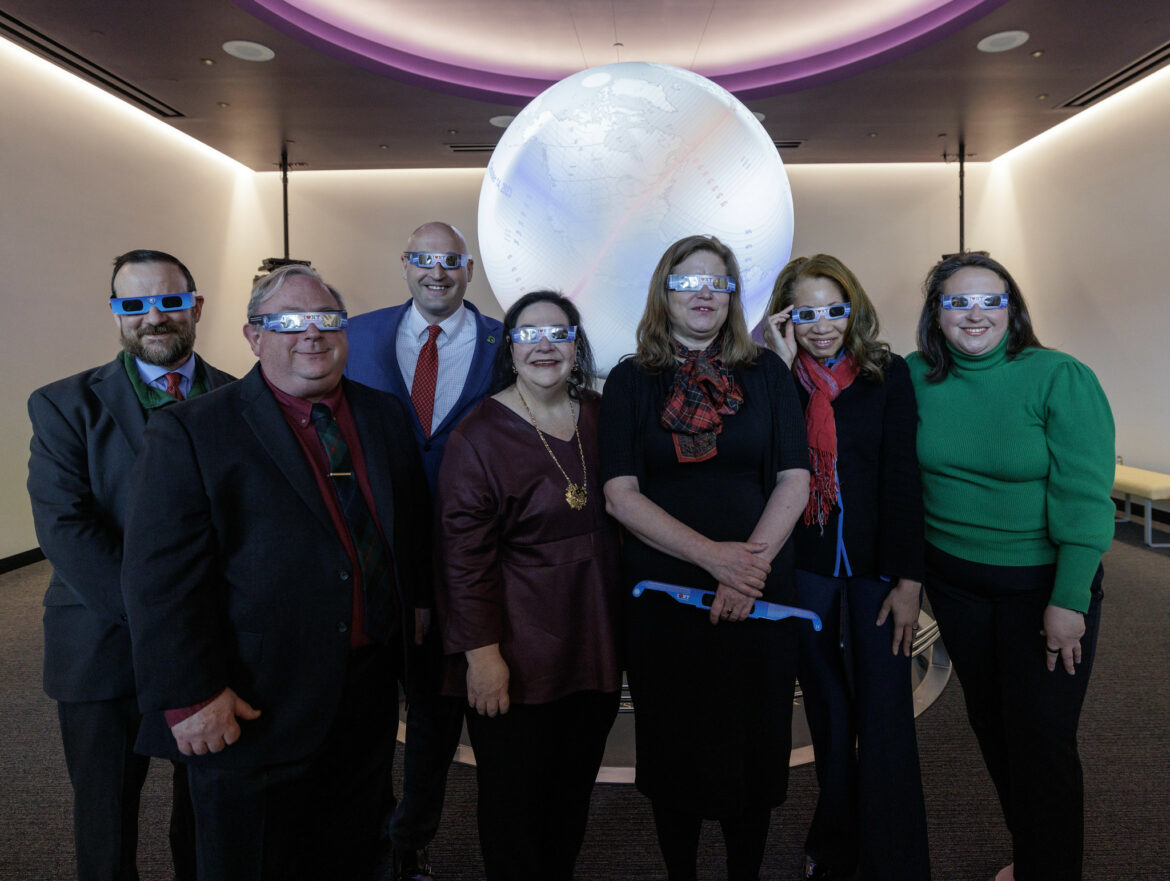
Commissioners from Governor Kathy Hochul’s administration don viewing glasses at a recent press conference about preparations for the eclipse.

The last time New York state saw a total solar eclipse was 99 years ago.

On the afternoon of April 8, the empire state will once again witness the moon pass between the sun and earth and completely obscure the sun’s light. For those counties that are in the eclipse’s path of totality, where it’s possible to see the moon block the sun’s light entirely, day will become night for about four minutes.

Watching the eerie phenomena unfold in the sky will be a unique opportunity since a total eclipse won’t be seen on the East Coast again until 2045. Last time an eclipse spanned the United States in 2017, New York was outside the path of totality.

The total eclipse will encompass 29 counties in the western and northern parts of the state, reaching cities like Buffalo, Rochester and Syracuse. In the areas with most coverage, the window for complete darkness will take place some time between 3:17 and 3:30 p.m., according to the state’s eclipse tracker. Residents can also check if they’re in the path of totality using this NASA-sponsored tool.

But in areas like New York City that will only witness a partial eclipse “there will still be 88 percent to over 99 percent coverage,” of the sun according to Gov. Kathy Hochul’s press office.

In the Big Apple, the best time to see it will be between 2:45 and 3:30 p.m., the New York City’s Department of Parks and Recreation told City Limits.And parks are the best places to get an unobstructed view.

“Based on the amount of sky that you’re gonna be able to see in our parks versus in some of the denser parts of the city, the parks are the best place to be,” said New York City Urban Parks Ranger Ben Young III. “Hopefully our parks will be looking at some record crowds.” 

Looking at the sun during an eclipse can be dangerous: it can burn the retina and cause permanent damage to your vision. Those who plan to watch must wear glasses with an ISO rating, an internationally recognized standard for filtering out harmful ultraviolet light.

Five city-owned parks will make viewing glasses and a telescope available to anyone who wants to watch the eclipse on a first-come, first-serve basis. The telescope uses a solar filter with a higher degree of filtration than the glasses, allowing viewers to look directly at the eclipse with the naked eye.

The city sponsored viewing events will take place at  Van Cortlandt Park in the Bronx and Inwood Hill Park in Manhattan, Bowling Green Cottage in Brooklyn, Beach 44th Street in the Rockaways and Freshkills Park in Staten Island. 

Shirley Chisholm State Park in southeastern Brooklyn is also hosting a solar eclipse viewing party and hike between 2 and 4 p.m. 

And across the state, other preparations are already underway. 

Gov. Hochul boasted  that she has been gearing up for the event since the fall of 2022. An interagency task force “comprised of nearly two dozen state agencies and authorities, has been collaborating on plans to ensure a safe and memorable viewing experience for New York State’s residents and visitors,” a press release said. 

That includes the creation of a Spotify playlist featuring 84 sun and moon-themed songs. Hochul also launched a statewide effort last month to distribute limited-edition “I LOVE NY” eclipse glasses at 30 locations throughout the state. In New York City, they can be picked up at Moynihan Train Hall in Penn Station at the MTA Long Island Rail Road ticket windows. Glasses are limited to two pairs per person while supplies last, according to a spokesperson.

The city’s public libraries are also making glasses available at branches on a first-come, first-serve basis. But be aware: they only distribute one pair per person.

Some New Yorkers have been stocking up on glasses and preparing for the eclipse for months.

“I’ve been nerding out”, said Dorian Batt, a 40-year-old anesthesiologist who picked up a pair of glasses at the New York Public Library branch at Lincoln Center.

She didn’t know the city was handing them out for free,and had already bought a case on Amazon a few weeks earlier to share with colleagues at work. 

“I’m excited for this because it’s a once in a generation experience,” she added.

To reach the reporter behind this story, contact Mariana@citylimits.org. To reach the editor, contact Jeanmarie@citylimits.org

Want to republish this story? Find City Limits’ reprint policy here.