Progressive candidates are increasingly sharing their own abortion stories after Roe’s demise

posted in: News | 0

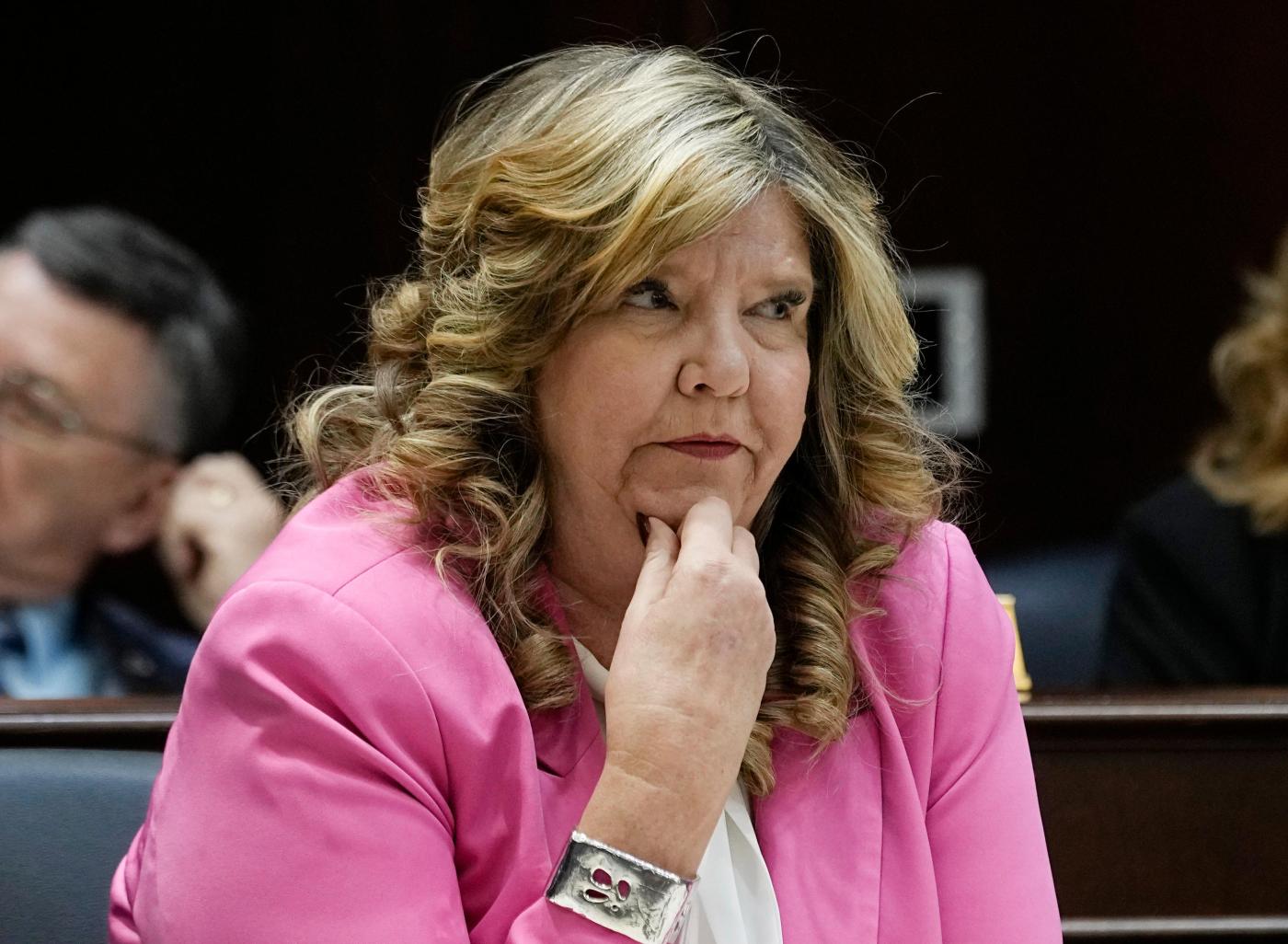
NASHVILLE, Tenn. — For decades, only three people knew Gloria Johnson had had an abortion.

But a year of watching women and doctors agonize under Tennessee’s strict abortion ban kicked up a fire in the longtime Democrat. She watched in dismay as her Republican colleagues in the General Assembly dismissed concerns that the law was harming women. Many GOP lawmakers argued that only on rare occasions was an abortion needed to save a life.

So without telling her legislative staff or family in advance, the then-60-year-old state representative stood before a Republican-controlled House panel in March 2023 and testified about the abortion she had at age 21. She made the decision to have an abortion, she said, as a newly married college student after being diagnosed with an aortic aneurysm. That would likely have killed her if she did nothing, but might have harmed the baby if Johnson got the treatment she needed to save her own life.

“The reality is that we’re in a situation where people act like stories like mine are one in a million when actually they happen every day,” Johnson said in a recent interview, nearly a year after her dramatic testimony.

Johnson, now running as a Democrat for the U.S. Senate against Republican incumbent Marsha Blackburn, has joined the growing ranks of progressive candidates choosing to tell their own abortion stories. They are doing so more frequently in states that have banned abortion in the aftermath of the U.S. Supreme Court’s 2022 decision to overturn Roe v. Wade.

Democrats think that even in many strongly Republican states voters support their view that such personal choices should be left to women to make for themselves and that showing voters how hard their own decisions were will help make that case.

Recent elections suggest the fight for abortion rights may have real currency. Statewide ballot measures supporting reproductive rights have won big since the high court’s ruling in Dobbs v. Jackson Women’s Health Organization, including in GOP strongholds such as Kansas and Kentucky.

Reproductive rights supporters celebrated last month after Marilyn Lands won a special election in Alabama, claiming a legislative seat long held by Republicans. Alabama currently bans abortion at all stages of pregnancy, with almost no exception.

Lands made abortion rights central to her campaign, releasing a video in which she disclosed having an abortion after testing determined that her baby had a genetic disorder and could not survive.

Lands made a comparison to Alyssa Gonzales, a woman denied the same care just months after Dobbs despite having almost the same diagnosis as Lands. Gonzales traveled 10 hours out of state to Washington, D.C., to get the help she needed.

“Our media consultant did say, ‘Marilyn, you don’t have to do this, the issue is compelling enough on its own,’” Lands said. “I think they wanted to be sure that I really was comfortable with it, and I was. … It was absolutely the right thing to do.”

For the most part, though, election victories have been slower to come for pro-choice candidates than when they are framed in a ballot measure. Measures legalizing recreational marijuana and Medicaid expansion also have won in conservative states but have not translated into many wins for candidates supporting them.

That leaves political experts watching races such as Johnson’s Tennessee Senate bid to see if telling more personal stories will make a difference.

“If these candidates continue to be successful, it’ll just once again show us that people are unhappy with state abortion policies but also that abortion is a big enough deal to them that they may vote for someone they may not otherwise,” said Mary Ruth Ziegler, a law professor at the University of California, Davis.

Heather Williams, president of the Democratic Legislative Campaign Committee, which works to elect Democrats to state legislatures, said Lands’ victory was a “political earthquake in Alabama.”

“In red states, when candidates share these stories, it helps voters see there’s someone championing the things they care about, who shares their experiences,” she said.

While the majority of candidates and lawmakers who have shared abortion stories have been Democrats, Republican Sam Brown has chosen to revisit his wife’s abortion as he vies for a U.S. Senate seat in Nevada. Earlier this year, Brown’s wife talked candidly about the abortion she had before the two met. Brown said he would oppose a federal abortion ban while supporting Nevada’s current law protecting the right to an abortion up to 24 weeks — roughly the standard nationally under Roe v. Wade.

Even before the right to abortion was struck down, there were hints that politicians’ personal stories could make a difference.

In Georgia, Democrat Shea Roberts first ran for the state House in 2018 but lost to Republican Deborah Silcox. In 2020, Roberts shared her abortion story while running once again and won.

Roberts started talking about her decision to terminate her nonviable pregnancy — first before small groups of voters and then at news conferences. She said she owed her win to that decision.

“I regretted not being braver the first time around,” she said.

At the federal level, Democratic Reps. Cori Bush of Missouri, Pramila Jayapal of Washington state and Barbara Lee of California have shared their abortion stories openly since speaking about them at a House committee hearing in 2021 on abortion rights.

And as the future of Roe v. Wade hung in the balance after the Supreme Court’s draft ruling leaked, Democratic Reps. Marie Newman of Illinois and Gwen Moore of Wisconsin also spoke openly about their abortions.

In Arizona, state Sen. Eva Burch told fellow lawmakers from the Senate floor last month that she was going to get an abortion because her pregnancy was no longer viable. In a nearly 10-minute speech, the 43-year-old first-term lawmaker, who previously worked as a nurse practitioner at a women’s health clinic, described a “rough journey” with fertility and an earlier miscarriage.

Burch criticized Arizona’s restrictions as out of touch, saying state law requires an ultrasound that her doctor did not order. She also said she was given bad information about alternative treatments.

“I think a lot of people wish they could tell their story, but either they don’t have the platform or they don’t want to and they shouldn’t have to,” Burch said later. “If that’s something that I can do for people, I’m going to do it in whatever capacity I possibly can.”

In Wisconsin, Dr. Kristin Lyerly, an obstetrician and gynecologist who performs abortions, entered the race last week for an open congressional seat in a Republican district. Minnesota state Sen. Kelly Morrison, a practicing OB-GYN, is running for Congress and promoting her support for abortion rights.

Back in Tennessee, which severely limits exemptions to its abortion ban, Gloria Johnson isn’t the only candidate sharing her story.

At 19 weeks pregnant, Allie Phillips learned she had a nonviable pregnancy, but she did not meet the requirements to receive an abortion in the state despite the many complications she was having. Her account of traveling outside Tennessee with her husband to get the services she needed has circulated widely on social media.

Phillips has since joined a group of women challenging the legality of Tennessee’s abortion law. She announced her candidacy for the state House against a Republican who she says played down her story when she met with him last year.

Johnson says reproductive rights are a priority for Democrats and Republicans. She knows Tennessee voters have not elected a Democrat to statewide office in nearly 20 years but thinks being open will help her connect with anyone who cares about how women are treated.

“I’m absolutely setting myself apart. I’m letting you know that I’m a woman who cares about women’s reproductive choice,” she said. “To me it’s about equality and rights.”

Related Articles

National Politics |


Trump pushes Arizona lawmakers to ‘remedy’ state abortion ruling that he says ‘went too far’

National Politics |


Shouts of ‘Shame! Shame!’ erupt in Arizona House as fight over abortion ban engulfs lawmakers

National Politics |


Trump says leave abortion to the states. That’s where it gets complicated

National Politics |


As medical perils from abortion bans grow, so do opportunities for Democrats in a post-Roe world

National Politics |


What to know about abortion in Arizona under the near-total 1864 ban

Fernando reported from Chicago.

Working Strategies: Getting experience in your new career path

posted in: News | 0

Amy Lindgren

Second Sunday Series – Editor’s Note: This is the eighth of 12 columns on making a career change which appear the second Sunday of each month, from September through August. Last month’s column discussed LinkedIn for career-changers, while the months before focused on resume strategies; the back-to-school decision; career change steps in your 60s; 10 ideas for choosing a new career; a sample timeline; and questions to consider when changing careers. 

Everyone’s heard the familiar lament: If you need experience to get hired, how do you get the experience? It’s a momentum-killing puzzle for any job seeker, let alone for career-changers.

In this monthly series we’ve been looking at different challenges you’ll need to manage if you leave one career path for another. Aside from choosing your direction, perhaps no other task will be as important as gaining experience in the new field.

This exposure will not only build skills and knowledge but it will also provide valuable information about the work itself. The first benefit could help you enter the field at a higher level, while the second might guide you in choosing the specific area you’d prefer.

Here are ways to gain needed experience as you move forward on your career-change path.

Leverage current work: You may think your current job is as far from the new field as you can get, but in truth there are almost always overlaps between any two occupations — or at least, there’s the opportunity to create overlap.

Take, for example, an over-the-road trucker who has been studying communications online while waiting for loads at different terminals. Can this person write articles for the transit company’s newsletter? Or start an employee page on the company website? Perhaps the driver could create safe-driving tools, to be used later as work samples in interviews.

If this person were making a less dramatic switch — say from driving to being a dispatcher, or perhaps the logistics coordinator — he or she might ask for cross-training or the opportunity to use unpaid time to job shadow or apprentice in the role.

Whatever the career paths in question, a lot depends on the workplace and on the worker’s willingness to let others know about the pending career change. But if those factors line up, the in-house route can be the smoothest way to learn tasks relevant to a new career.

Work part-time in the new field: If your schedule allows, a part-time job might be the perfect way to gain experience. Part-time roles are usually easier to land than full-time, and are often closer to entry level. They also provide an advantage for later job search: You may have access to internal leads and a built-in network to help you land the full-time job you eventually seek.

As a pro tip, remember that part-time work adjacent to your desired career can also be helpful. For example, if you’re training to become a physician’s assistant, you won’t likely be hired in that role until you’ve completed required coursework or testing. But you can still gain benefit (and points with later employers) if you pick up hours as a clinic receptionist or another position exposing you to medical documentation, patient service, and other aspects of health care professions.

Enroll in training with an internship: Speaking of required coursework … some fields are only open to those who have completed an approved training program. If this includes your new career, be sure your training program provides at least one internship. Even if the profession doesn’t require this extra element, it’s one of the best ways to transition from student to employee when entering a new field.

Build your own work experience: This route has become easier than ever in our world of side hustles and instant entrepreneurs. For example, the truck driver changing to communications could start a blog or newsletter on any topic. Or, he or she could volunteer to do that for a nonprofit or startup company. Becoming a self-employed consultant is another option that could result in testimonials and work samples — as well as pocket money.

One caution if you choose this pathway to gaining experience: It’s easy to lose momentum if you don’t find a project to dive into. Give yourself just a month or two for your gig to bear fruit and then switch to a different option on this list.

Remember that the goal is the experience, and you want to get that one way or the other so you can move forward with your larger goal of changing careers.

Related Articles

Business |


Working Strategies: Mastering the art of persuasion

Business |


Working Strategies: Coming back from a setback

Business |


Working Strategies: Nine career management steps for women

Business |


Working Strategies: A spring reading list for all seasons

Business |


Working Strategies: Leveraging LinkedIn when Changing Careers

Movie review: ‘Don’t Tell Mom the Babysitter’s Dead’ a surprisingly fun remake

posted in: News | 0

The hazards of remaking a beloved film are well known. While the 1991 comedy “Don’t Tell Mom the Babysitter’s Dead,” starring Christina Applegate, didn’t exactly thrill critics 30 years ago, it’s become a cult classic, especially for elder millennials who grew up on the movie. It’s the ideal text for a remake — the source material isn’t regarded as untouchable, the name recognition is high, and it can be easily adaptable to a modern milieu while still stoking those childhood memories for those who love the original.

Nostalgia can be a trap, one that writer Chuck Hayward and director Wade Allain-Marcus fortunately sidestep in their remake. There are enough nods to the first film to please fans looking for those Easter eggs, but they don’t get in the way of the story itself, a teen comedy that keeps it real, despite the heightened circumstances. They also update the family from white to Black, which brings a new layer of stakes to the situation.

After their mother (Patricia “Ms. Pat” Williams) suffers a nervous breakdown at work, the Crandell siblings are left in the care of a Mrs. Sturak (June Squibb), a sweet old lady who reveals herself to be a nagging, racist, slut-shaming tyrant. In her advanced age, the wild rager that the kids throw in the house is too much for her to bear, and she (as the title suggests) drops dead from shock, or perhaps secondhand smoke. Hoping to evade authorities, the Crandell siblings get rid of her body — along with her purse filled with cash from mom.

Without wanting to disturb their mentally fragile mother, shipped off to a meditation retreat in Thailand, it’s up to big sis Tanya (Simone Joy Jones) to get a big-girl job and provide for her siblings. So much for a fun summer, she’s now learning the joys of a Los Angeles morning commute and cutthroat office politics at a fashion company called Libra. Meanwhile, her skater brother Kenny (Donielle T. Hansley Jr.) has to get his slacker act together to hold down the fort at home.

Much of the appeal of the first film came from star Applegate in her first major film role (she was already well-known thanks to the sitcom “Married… With Children”), playing eldest sister Sue Ellen. Jones is similarly charming, in a different way. She sells a performance of a likable teen who is in over her head but gamely manages to thrive in a professional working environment.

The script by Hayward is not exactly breaking new ground (it is a remake after all) but it establishes the siblings as unique and distinctive characters, including smart and weird little bro Zack (Carter Young) and morbid gamer tween sis Melissa (Ayaamii Sledge). Their interactions are funny and natural, and their healthy skepticism of the police has real consequences and informs their questionable decision-making.

The only weak link in the family is Williams, a stand-up comedian whose small, underwritten role as mom to the Crandell kids doesn’t play to her strengths. She’s in a handful of scenes, and Tanya’s role model is filled by Nicole Richie playing her boss at Libra, Rose. Richie is so dynamic and energizing on screen you wonder why she doesn’t act more, and she has genuine chemistry with Jones.

This is the first major feature film directed by Allain-Marcus, an actor who co-starred on “Insecure,” and he does a lot to demonstrate his abilities and influences as a director here. The cinematography by Matt Clegg is crisp and saturated, utilizing a lot of complex tracking shots, and there are nods to ‘70s-style filmmaking and retro touches like the yellow title font that drops about 18 minutes into the film. Some of these flourishes are slightly inconsistent with the material, but demonstrate a new filmmaker excited to experiment with the form of the teen comedy.

“Don’t Tell Mom the Babysitter’s Dead” is surprisingly authentic and fun for this kind of nostalgia-baiting remake material, which is naturally formulaic. It’s the focus on character and allowing the actors to shine that makes this one sing, and it should make a star out of Jones, who, like her character, manages to hold it all together.

‘Don’t Tell Mom the Babysitter’s Dead’

2.5 stars (out of 4)

MPA rating: R (for teen drug use, language and some sexual references)

Running time: 1:38

How to watch: In theaters Friday

Related Articles

Entertainment |


The US might ban TikTok. Record labels are cutting ties. What’s music’s Plan B?

Entertainment |


How Tori Kelly’s ‘crazy’ blood clot health scare influenced new album

Entertainment |


‘Diarra from Detroit’ review: Defying categorization, this new BET+ series is sardonic and self-deprecating

Entertainment |


How HBO transformed Viet Thanh Nguyen’s novel ‘The Sympathizer’ into a series

Entertainment |


Movie review: ‘Civil War’ well-crafted but has nothing to say

North Shore streams, and their steelhead trout, are running

posted in: Society | 0

KNIFE RIVER, Minn. — Two feet of snow melting fast, coupled with a half-inch of rain Monday, were just the ticket to finally loosen the last ice on North Shore streams, sending water tumbling down into Lake Superior and sending fish upstream.

Todd Boche, of Bloomington, Minn., casts a spawn bag for steelhead trout on the Knife River along the North Shore of Lake Superior on Tuesday, April 9, 2024. Boche was hoping recent rain and snowmelt would draw the migratory trout out of Lake Superior to spawn upstream. (John Myers / Duluth Media Group)

Streams closer to Duluth opened the first week in April, while streams farther up the shore opened this week, said Cory Goldsworthy, Lake Superior fisheries manager for the Minnesota Department of Natural Resources.

DNR crews captured their first spawning steelhead rainbow trout of the season in a North Shore river fish trap Monday. Many more will follow soon.

“They’re in the river. It’s started,” Goldsworthy said.

The rush of water — the first this spring — was also enough to blow gravel bars out of the mouths of several North Shore rivers, like the Lester, where the rocks had been blocking fish passage upstream.

While the first few days of open water usually see rivers run fast and dirty, that period is passing quickly this spring because the streams and their headwaters were so low before the late-March snowstorm and because the ground was so dry and able to soak up much of the moisture.

The Knife River skyrocketed from frozen just over a week ago to 1,600 cubic feet per second during Monday’s rain but then dropped back quickly to a fishable 800 CFS by Tuesday afternoon.

“Conditions are just about perfect right now. The water is high, but it’s normal-high for spring runoff,” Goldsworthy said. “We haven’t had normal for a few years.”

As air temperatures reach the 50s and water temperatures into the 40s, and with ample flow but no flooding, steelhead will begin moving out of Lake Superior and upstream to spawn, starting on streams closest to Duluth at first, then, later, farther up the North Shore.

“It still needs to warm up a little more,” Goldsworthy said Tuesday. “The magic water temperature is 40 degrees for it to really get going. We were at 36.5 degrees today. But the forecast looks good. … When I was growing up, we always said if the temperature outside is in the 50s and we get a little rain, grab your fishing pole and go.”

A little rain every few days helps keep the rivers at the right level.

The next two weeks in April could be the peak of the steelhead run, Goldsworthy said. That’s very different from last year, when deep snow on the ground lasted into May in some areas and the spawning run was a month later than usual.

On Tuesday, after the rain ended, eager anglers were already showing up on the Stewart and Knife rivers.

“It’s early, I know, and it’s still pretty high,” said Todd Boche of Bloomington, who was trying his hand for steelhead on the Knife River on Tuesday morning. “But my wife and I needed to get out of the Cities for a few days. … And there’s a chance one or two fish will be moving up. So why not try?”

You can keep these, eventually

DNR crews this week are stocking 140,000 clipped-fin, hatchery-raised steelhead trout in the Lester and French rivers that came from the eggs of wild Lake Superior steelhead caught in DNR fish traps in recent years.

Those 2-year-old stocked trout were about 6 inches long and will be legal to keep when they get bigger, probably in two more years. Those fish must be 16 inches to keep, and some of the fish from the stocking program, which began in 2018, should be returning to rivers to spawn now and should be big enough to keep this spring.

It is illegal to keep any wild, unclipped steelhead in Minnesota.

Smelt? Not yet, but soon

The very first reports of smelt beginning to show up along the South Shore of Lake Superior were filtering in early this week, but both the big lake and tributary stream temperatures are still too cold for a major run near the Twin Ports.

“When we hear that they are hitting over in Ashland, and we haven’t seen much of that yet, then it’s usually about a week or two until they start showing up over here,” near the Twin Ports, Goldsworthy said.

It won’t be long until net-dippers are out in force on the Lester River in Duluth hoping to land bucket loads of smelt, like these anglers in 2023. The annual spawning run should begin any day now as waters warm in mid-April 2024. The beaches at Minnesota Point and Wisconsin Point are also popular places for seining smelt. (Clint Austin / Duluth Media Group)

North Shore streams are popular destinations for smelters with dip nets while the waters off Wisconsin Point and Minnesota Pont sand beaches can be a good place for large hauls using seines.

The smelt show up in earnest when the water temperature hits 40 degrees. “And we aren’t there yet,” Goldsworthy said.

Lake ice-out still ahead of normal

The recent precipitation provided a needed spurt of energy not just for the streams and their fish but also to help finish opening up northern Minnesota lakes.

Most lakes in the southern two-thirds of Minnesota opened a month or more earlier than average and most of those set all-time records for early ice out, topping even 2012, which had held many records until now.

Island Lake Reservoir just north of Duluth lost its ice on March 17, a record-early date and five weeks ahead of the April 17 median date, according to data from the Minnesota DNR’s State Climatology Office.

Lake Osakis in western Minnesota, which has 157 years of records — among the longest in the state — dating back to 1867, set a record early ice-out date of March 8. That’s nearly six weeks ahead of the median date of April 19 and more than two months earlier than the latest ice-out of May 14 in 1950.

Big Sandy Lake north of McGregor set a record early ice-out on March 16, exactly one month earlier than the April 16 median date in the 94 years since records have been kept, starting in 1930.

As is usual, lakes in far Northeastern Minnesota are losing their ice later, where thicker ice, a bit more snow and colder temperatures hung on longer. Little Jessie Lake in Itasca County lost its ice on April 8, another record but only 16 days ahead of its median date.

Fewer records will likely be set in the Arrowhead region, unable to match the non-winter and warm spring of 2012. But even Arrowhead lakes are still expected to lose their ice a couple of weeks earlier than normal this year, especially with temperatures into the 60s in the forecast.

Large swathes of Lake Vermilion were open as of Wednesday but, with some ice still floating around, official ice-out hadn’t been declared. The big lake won’t set a record — that was March 28, 2012 — but will beat its median ice-out date of April 30. The latest Vermilion has lost its ice was May 23, 1960.

Greenwood Lake in Cook County is, on average, the last lake in Minnesota to lose its ice, with a median date of May 9. It has happened as late as May 24 (2014) and as early as April 10 (2012).

The latest ice-out on record in Minnesota is for Gunflint Lake, on the Ontario border, which didn’t lose its ice until June 3 in 1936.

Related Articles

Outdoors |


Are big changes coming to the Boundary Waters?

Outdoors |


Want to catch and release big fish with minimal harm? DNR has tips.

Outdoors |


Minnesota DNR is rewriting its statewide muskie plan

Outdoors |


New viruses, including coronavirus, found in Wisconsin fish

Outdoors |


State issues fish consumption advisory for Mississippi River from St. Paul Park to Wabasha